CVSHealth Eyes Breakup: A Reckoning for Corporate Health Care’s Vertical Empire

In a surprising turn of events, sources say that CVS Health is exploring the possibility of breaking up its business empire — a move that could unravel years of aggressive vertical integration, including its $70 billion acquisition of health insurer Aetna back in 2017.

While details are still slim, such a move signals just how dire the situation has become for CVSHealth as it navigates mounting financial and regulatory pressures on multiple fronts.

It’s yet another chapter in a story that has seen CVSHealth evolve from a retail pharmacy chain into a health care behemoth — but perhaps one that grew too big, too fast. And to be honest, I’m not surprised. I’ve seen this movie before. In fact, I saw it many times – although each time with different stars – during my 20 years in the health insurance business. One of the most memorable featured Aetna, which in the late 1990s and early 2000s had to retrench, at Wall Street’s insistence, after a buying spree of smaller health insurers that brought the company a ton of unprofitable accounts and disappointing bottom lines. Aetna followed its buying spree with a purging spree, dumping as many as eight million health plan enrollees in short order to get back into Wall Street’s good graces.

It seems that CVSHealth also bought too much too fast. The results? Rising expenses, frustrated patients, and now potential cracks in the corporate structure itself.

CVS: A Cautionary Tale of Vertical Integration

Large corporations like CVS and its peers have used their size to dominate various aspects of health care—whether it’s insurance, retail pharmacy, physician practices and clinics, and controlling the drug supply chain. But as these mega-corporations continue to grow, they also become harder to manage, and their inefficiencies start to become evident. 

CVS’s acquisition of Aetna was hailed at the time as a strategic masterstroke — a way to streamline health care by bringing together the different parts of the system under one corporate umbrella. It was supposed to deliver “efficiencies” that would benefit both the company and patients. 

But it’s not just the purchase of Aetna. From pharmacy benefit manager Caremark to Aetna to health care providers Signify Health and Oak Street Health — CVS’s business model has become increasingly complex, making it difficult to navigate regulatory scrutiny, rising costs and fierce competition in the retail pharmacy space.

The latest reports suggest that CVS’s board is trying to figure out where Caremark would land in the event of a breakup. Would it stay with the retail side or with the insurance arm?

This isn’t just an internal debate; it’s emblematic of the broader issue—CVS has built a vertically integrated structure that was supposed to work together to improve care, but investors are now questioning how and even if these pieces should fit together. 

It’s Been a Hard Few Years for CVS

Federal Trade Commission’s Legal Action Against CVS’s Caremark and Other PBMs

Instead, those supposed efficiencies have largely translated into higher costs for consumers and increased scrutiny from regulators, especially with CVS’s Caremark at the center of anti-competitive practices allegations by the Federal Trade Commission (FTC). PBMs like Caremark control the drug pricing landscape in ways that lack transparency and disproportionately affect patients and independent pharmacies.

Now, as CVS grapples with rising medical costs within its Aetna business — just like its biggest competitors, UnitedHealth and Humana —the company’s management appears to be in damage control mode. While nothing is certain, discussions about splitting the business have reached the boardroom level, according to sources familiar with the matter. This comes as activist investors, like Glenview Capital, push for structural changes to improve CVS’s declining financial performance.

CVS’s Aetna Medicare Advantage Loss in New York City

New York City Mayor Eric Adams had a plan to force city municipal retirees out of traditional Medicare and into a corporate Aetna Medicare Advantage plan. The NYC Organization of Public Service Retirees vehemently opposed the move and spent months fighting it.

In August, a Manhattan Supreme Court judge permanently halted the mayor and Aetna’s attempts.

Wall Street Woes

For CVS Health, 2024 started off bad. CVS missed Wall Street financial analyst’s earnings-per-share expectations for the first quarter of 2024 by several cents. Shareholders’ furor sent CVS’ stock price tumbling from $67.71 to a 15-year low of $54 at one point. 

An astonishing 65.7 million shares of CVS stock were traded that day. The company’s sin: paying too many claims for seniors and people with disabilities enrolled in its Medicare Advantage plans

Also in August, CVS Health cut its 2024 forecast for a third time, citing troubles covering seniors via the company’s private Medicare Advantage business. Operating income for CVS Health’s insurance arm, Aetna, dropped a whopping 39% in Q3, which forced the company to shake up its leadership – moving CEO Karen Lynch into the role of managing insurance and publicly firing one of her lieutenants, Executive Vice President Brian Kane.

What’s Next?

The notion that CVS could split its operations would effectively unwind one of the most high-profile health care mergers in recent memory. A split up of the company would mark the end of an era in which health care conglomerates could grow unchecked. CVS’s struggle isn’t happening in isolation—other companies, like Walgreens and Rite Aid, are facing similar financial difficulties and structural questions.

CVS’s potential breakup could signal a broader industry trend toward unwinding massive, vertically integrated health care corporations. 

Whether CVS breaks up or not, it’s clear that the model of health care mega-mergers, designed to consolidate power and increase corporate profits, is facing serious headwinds. Cigna recently announced that it is getting out of the Medicare Advantage business and Humana is getting out of the commercial insurance market. UnitedHealth, meanwhile, so far seems to be weathering those headwinds, but it, too, will be facing even more scrutiny by lawmakers and regulators in the months and years ahead.
FTC: Big Insurance’s PBMs “Profit at the Expense of Patients by Inflating Drug Costs and Squeezing Main Street Pharmacies”

Regular readers of HEALTH CARE un-covered know that I write frequently about the huge amounts of money the health insurance industry’s pharmacy benefit managers (PBMs) extract from the prescription drug supply chain. I also submitted a comment letter to the Federal Trade Commission two and a half years ago urging it to launch an investigation into PBM business practices that have contributed to the closure of hundreds of independent pharmacies across the country and to millions of Americans walking away from the pharmacy counter without their medications. 

On a bipartisan basis, the FTC did launch an inquiry into the PBM business, and today the Commission issued a damning interim report that confirmed what industry critics, including me, have been saying:

Just six companies now control 95% of the pharmacy benefit market, and these Big Insurance-owned middlemen “profit at the expense of patients by inflating drug costs and squeezing Main Street pharmacies.” Below you’ll find the commission’s statement on its preliminary findings.

Last year, we also published a profile of one of the industry’s most vocal critics in Congress, Rep. Earl L. “Buddy” Carter (R-Ga.), a pharmacist by trade who has seen PBM’s profiteering firsthand. In a press release this morning, Carter said:

Since day one in Congress, I’ve been calling on the FTC to investigate PBMs, which use deceptive and anti-competitive practices to line their own pockets while reducing patients’ access to affordable, quality health care. I’m proud that the FTC launched a bipartisan investigation into these shadowy middlemen, and its preliminary findings prove yet again that it’s time to bust up the PBM monopoly. We are losing more than one pharmacy per day in this country, causing pharmacy deserts and taking the most accessible health care professionals in America out of people’s communities. I am calling on the FTC to promptly complete its investigation and begin enforcement actions if – and when – it uncovers illegal and anti-competitive PBM practices.

Carter and several other members of Congress have introduced bipartisan bills to rein in PBMs. The House has passed PBM reform legislation but the Senate has not yet done so, but there is growing support in both chambers to enact one or more bills by the end of the year. The FTC’s interim report should make that more likely to happen.

Read the FTC’s full press release below:

FTC Releases Interim Staff Report on Prescription Drug Middlemen

Report details how prescription drug middleman profit at the expense of patients by inflating drug costs and squeezing Main Street pharmacies

The Federal Trade Commission today published an interim report on the prescription drug middleman industry that underscores the impact pharmacy benefit managers (PBMs) have on the accessibility and affordability of prescription drugs.

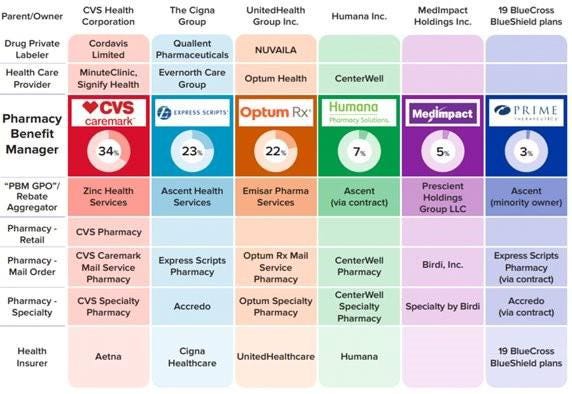
The interim staff report, which is part of an ongoing inquiry launched in 2022 by the FTC, details how increasing vertical integration and concentration has enabled the six largest PBMs to manage nearly 95 percent of all prescriptions filled in the United States.

This vertically integrated and concentrated market structure has allowed PBMs to profit at the expense of patients and independent pharmacists, the report details. 

“The FTC’s interim report lays out how dominant pharmacy benefit managers can hike the cost of drugs—including overcharging patients for cancer drugs,” said FTC Chair Lina M. Khan. “The report also details how PBMs can squeeze independent pharmacies that many Americans—especially those in rural communities—depend on for essential care. The FTC will continue to use all our tools and authorities to scrutinize dominant players across healthcare markets and ensure that Americans can access affordable healthcare.”

The report finds that PBMs wield enormous power over patients’ ability to access and afford their prescription drugs, allowing PBMs to significantly influence what drugs are available and at what price. This can have dire consequences, with nearly 30 percent of Americans surveyed reporting rationing or even skipping doses of their prescribed medicines due to high costs, the report states.

The interim report also finds that PBMs hold substantial influence over independent pharmacies by imposing unfair, arbitrary, and harmful contractual terms that can impact independent pharmacies’ ability to stay in business and serve their communities. 

The Commission’s interim report stems from special orders the FTC issued in 2022, under Section 6(b) of the FTC Act, to the six largest PBMs—Caremark Rx, LLC; Express Scripts, Inc.; OptumRx, Inc.; Humana Pharmacy Solutions, Inc.; Prime Therapeutics LLC; and MedImpact Healthcare Systems, Inc. In 2023, the FTC issued additional orders to Zinc Health Services, LLC, Ascent Health Services, LLC, and Emisar Pharma Services LLC, which are each rebate aggregating entities, also known as “group purchasing organizations,” that negotiate drug rebates on behalf of PBMs.

PBMs are part of complex vertically integrated​ health care conglomerates, and the PBM industry is highly concentrated. As shown in the below image, this concentration and integration gives them significant power over the pharmaceutical supply chain. The percentages reflect the amount of prescriptions filled in the United States.

The interim report highlights several key insights gathered from documents and data obtained from the FTC’s orders, as well as from publicly available information:

  • Concentration and vertical integration: The market for pharmacy benefit management services has become highly concentrated, and the largest PBMs are now also vertically integrated with the nation’s largest health insurers and specialty and retail pharmacies.
    • The top three PBMs processed nearly 80 percent of the approximately 6.6 billion prescriptions dispensed by U.S. pharmacies in 2023, while the top six PBMs processed more than 90 percent.
    • Pharmacies affiliated with the three largest PBMs now account for nearly 70 percent of all specialty drug revenue.
  • Significant power and influence: As a result of this high degree of consolidation and vertical integration, the leading PBMs now exercise significant power over Americans’ ability to access and afford their prescription drugs.
    • The largest PBMs often exercise significant control over what drugs are available and at what price, and which pharmacies patients can use to access their prescribed medications.
    • PBMs oversee these critical decisions about access to and affordability of life-saving medications, without transparency or accountability to the public.
  • Self-preferencing: Vertically integrated PBMs appear to have the ability and incentive to prefer their own affiliated businesses, creating conflicts of interest that can disadvantage unaffiliated pharmacies and increase prescription drug costs.
    • PBMs may be steering patients to their affiliated pharmacies and away from smaller, independent pharmacies.
    • These practices have allowed pharmacies affiliated with the three largest PBMs to retain high levels of dispensing revenue in excess of their estimated drug acquisition costs, including nearly $1.6 billion in excess revenue on just two cancer drugs in under three years.
  • Unfair contract terms: Evidence suggests that increased concentration gives the leading PBMs leverage to enter contractual relationships that disadvantage smaller, unaffiliated pharmacies.
    • The rates in PBM contracts with independent pharmacies often do not clearly reflect the ultimate total payment amounts, making it difficult or impossible for pharmacists to ascertain how much they will be compensated.
  • Efforts to limit access to low-cost competitors: PBMs and brand drug manufacturers negotiate prescription drug rebates some of which are expressly conditioned on limiting access to potentially lower-cost generic and biosimilar competitors.
    • Evidence suggests that PBMs and brand pharmaceutical manufacturers sometimes enter agreements to exclude lower-cost competitor drugs from the PBM’s formulary in exchange for increased rebates from manufacturers.

The report notes that several of the PBMs that were issued orders have not been forthcoming and timely in their responses, and they still have not completed their required submissions, which has hindered the Commission’s ability to perform its statutory mission. FTC staff have demanded that the companies finalize their productions required by the 6(b) orders promptly. If, however, any of the companies fail to fully comply with the 6(b) orders or engage in further delay tactics, the FTC can take them to district court to compel compliance.

The FTC remains committed to providing timely updates as the Commission receives and reviews additional information.

The Commission voted 4-1 to allow staff to issue the interim report, with Commissioner Melissa Holyoak voting no. Chair Lina M. Khan issued a statement joined by Commissioners Rebecca Kelly Slaughter and Alvaro Bedoya. Commissioners Andrew N. Ferguson and Melissa Holyoak each issued separate statements.  The Federal Trade Commission develops policy initiatives on issues that affect competition, consumers, and the U.S. economy. The FTC will never demand money, make threats, tell you to transfer money, or promise you a prize. Follow the FTC on social media, read consumer alerts and the business blog, and sign up to get the latest FTC news and alerts.

Judge dismisses FTC’s antitrust suit against Welsh Carson

Regulators sued the PE firm last year for consolidating anesthesiology services in Texas with its portfolio company, U.S. Anesthesia Partners. Now, a judge is holding Welsh Carson blameless.

A Texas federal judge has dismissed the Federal Trade Commission’s antitrust lawsuit against Welsh, Carson, Anderson and Stowe in a big win for the private equity firm. However, the government’s suit against Welsh Carson’s portfolio company U.S. Anesthesia Partners was allowed to continue.

Last year, the FTC sued Welsh Carson and USAP, alleging they pursued a buying spree of anethesiology practices in Texas to create a dominant provider that used its market power to suppress competition and increase the cost of anesthesiology services.

Welsh Carson, which formed USAP in 2012, has since whittled down its ownership of the provider from more than 50% to 23%, and argued that precludes it from being included in the suit. The FTC argued the firm effectively remains in control of USAP.

However, U.S. District Judge Kenneth Hoyt granted Welsh Carson’s motion to dismiss the suit on Tuesday, essentially finding that private equity firms are not liable for the actions of their portfolio companies.

The FTC was unable to prove “any authority for the proposition that receiving profits from an entity that may be violating antitrust laws is itself a violation of antitrust laws,” Hoyt wrote in his opinion.

Hoyt found that Welsh Carson holding a minority share in USAP does not reduce competition, despite USAP’s acquisitions potentially being anticompetitive themselves. In addition, comments from Welsh Carson executives expressing a desire to consolidate other healthcare markets don’t show that the PE firm plans to violate antitrust laws.

If Welsh Carson signals “beyond mere speculation and conjecture” that it’s actually about to violate the law, the FTC can lodge a new lawsuit, the judge wrote.

A spokesperson for Welsh Carson said the firm is “gratified” that the court dismissed the case.

”As we have said from the beginning, this case was without factual or legal basis,” the spokesperson said.

However, Hoyt denied USAP’s motion to dismiss.

The FTC is arguing that USAP — which is the largest anesthesia practice in Texas — leveraged its size to raise prices in the state, resulting in patients, employers and insurers paying tens of millions of dollars more each year for anesthesia services. In addition, USAP allegedly paid a competitor, Envision Healthcare, $9 million to stay out of the Dallas market for five years.

USAP has been criticized for using similar practices to grow in other states, including Colorado.

USAP argued the FTC was overreaching its authority, and regulators’ allegations of anticompetitive conduct were meritless. Hoyt disagreed, pointing out that USAP continues to own the acquired anesthesia groups and continues to charge high prices, including under price-setting agreements. Overall, USAP’s “monopolization scheme remains intact,” according to the opinion.

“The FTC has plausibly alleged acquisitions resulting in higher prices for consumers, along with a market allocation and price-setting scheme. It would be premature to dismiss these claims at this stage,” Hoyt said.

Either way, the dismissal against Welsh Carson is a setback for the FTC, which has taken a more aggressive stance against anticompetitive behaviors in the healthcare industry under the Biden administration.

In December, the FTC and the Department of Justice finalized new guidelines for merger reviews taking aim at previously overlooked practices. Those include private equity roll-ups, when firms acquire and merge multiple small businesses into one larger company — like Welsh Carson’s strategy to grow USAP.

PE firms have acquired hundreds of physician practices across the U.S. in recent years, despite controversy over negative effects on medical quality and cost. One study from 2022 found when private equity took over physician practices, they raised prices by 20% on average.

The FTC declined to comment for this story.

FTC bans noncompete agreements for workers

The Federal Trade Commission banned noncompete agreements for most U.S. workers Tuesday with a new rule that will bar employers from enforcing clauses that restrict workers from switching employers within their industry, which the agency said suppresses wages and gums up labor markets.

The FTC voted 3 to 2 Tuesday to issue the rule it proposed more than a year ago. The new rule makes it illegal for employers to include the agreements in employment contracts and requires companies with active noncompete agreements to inform workers that they are void. The agency received more than 26,000 comments about the rule after it was proposed some 16 months ago. The rule will take effect after 180 days, although business groups have promised to challenge it in court, which could delay implementation.

Scholars cite a body of research that shows the agreements suppress worker pay and entrepreneurship while also imposing costs on firms wanting to hire workers bound by the agreements. A Labor Department study published in June 2022 estimated that 18 percent of Americans are bound by noncompete agreements, while other research suggests it could be closer to 5o percent. They are used in a wide range of industries, including technology, hairstyling, medicine and even dance instruction, while imposing restrictions on both high- and low-wage earners.

The FTC estimates that banning noncompete agreements could create jobs for 30 million Americans and raise wages by nearly $300 billion per year.

“I think the FTC has done a real public service here by compiling all this evidence, making a really strong case for a complete ban and establishing a new gold standard for policymaking in this area,” said Sandeep Vaheesan, legal director at the Open Markets Institute, which proposed a noncompete ban to the agency in 2019. “No employee or professional should be made to sign one of these contracts.”

Business groups opposed to the rule, such as the U.S. Chamber of Commerce, have said that the contracts are necessary to protect proprietary information and training, and justify investing in workers who might otherwise immediately jump to a competitor. The Chamber has argued the rule represents a “radical expansion” of the FTC’s authority and has vowed the challenge the rule in court.

Noncompete agreements have been prohibited in three states — California, North Dakota and Oklahoma — for more than a century. In recent years, 11 states and Washington, D.C., have passed laws that prohibit the agreements for hourly wage workers or those who fall below a salary threshold.

But the patchwork nature of the legal landscape has made bans difficult to enforce. Some legal experts said that companies include noncompete clauses in employee contracts regardless of state prohibitions, knowing workers and competitors will be wary of litigation.

Some observers fear that employers will also find workarounds to the FTC rule, but Vaheesan said that a federal rule will provide legal clarity and send a strong message.

“It establishes, in the place of this mushy standard that exists in most states, a bright line,” he said. “So everyone will know these contracts are illegal.”

Justice Department conducting antitrust probe against UnitedHealth Group

https://mailchi.mp/fc76f0b48924/gist-weekly-march-1-2024?e=d1e747d2d8

The Department of Justice (DOJ) has been investigating UHG for anticompetitive behavior since last October, as first revealed by the Examiner News earlier this week and subsequently confirmed by the Wall Street Journal

The DOJ is reportedly interested in Optum’s acquisitions of physician groups and how their relationships with UHG’s health plans affects competition.

The probe appears to be wide-ranging, but there are no indications of if or when the DOJ plans to file charges. UHG is no stranger to antitrust attention: the DOJ failed to block its purchase of Change Healthcare in 2022, and its planned acquisition of home healthcare company Amedisys is still subject to a federal probe. 

The Gist: The Biden administration has made antitrust scrutiny a key plank of its policy platform, having recently launched high-profile investigations into several large companies including Apple, Amazon, and Google. 

Although these probes span major sectors of the US economy, healthcare consolidation has been a particular focus for the White House. 

As the nation’s both largest employer of physicians and largest health insurance company, UHG is an unsurprising target within the healthcare industry. Recently finalized federal merger guidelines have changed how the DOJ and Federal Trade Commission (FTC) gather M&A information, but not the laws or legal precedent upon which cases are ruled, so it remains to be seen if regulators’ new approach will translate into stronger enforcement.

US Anesthesia Partners settles with Colorado regulators

https://mailchi.mp/fc76f0b48924/gist-weekly-march-1-2024?e=d1e747d2d8

Dallas, TX-based US Anesthesia Partners (USAP), one of the nation’s largest providers of anesthesia services, reached a settlement with the Colorado Attorney General’s Office, which had alleged that USAP engaged in anticompetitive behavior in the state.

Although it denies any wrongdoing, USAP agreed to relinquish exclusive contracts with five Colorado hospitals and revise its practice of adding noncompete agreements to its physician contracts.

This settlement is separate from the similar FTC suit against USAP and its creator-turned-minority owner, private-equity (PE) firm Welsh, Carson, Anderson, and Stowe. That suit, filed in federal district court in Texas in September 2023, alleges that USAP monopolized the Texas anesthesiology market in order to drive up prices unlawfully. 

The Gist: USAP isn’t the only large anesthesia group in the news this week for allegations of anticompetitive behavior—hospitals in New York and Florida are suing North American Partners in Anesthesia, claiming it stifles competition by forcing its physicians to sign noncompete agreements. 

Health systems and regulators are increasingly dissatisfied with the highly concentrated anesthesia provider market, which has become dominated by large, PE-backed groups. 

Because the Colorado case was settled out of court, no precedent has been established for antitrust enforcement, but the result of the ongoing FTC suit against USAP may have significant ramifications for other large, PE-backed physician organizations.

Has U.S. Healthcare reached its Tipping Point?

Last week was significant for healthcare:

  • Tuesday, the, FTC, and DOJ announced creation of a task force focused on tackling “unfair and illegal pricing” in healthcare. The same day, HHS joined FTC and DOJ regulators in launching an investigation with the DOJ and FTC probing private equity’ investments in healthcare expressing concern these deals may generate profits for corporate investors at the expense of patients’ health, workers’ safety and affordable care.
  • Thursday’s State of the Union address by President Biden (SOTU) and the Republican response by Alabama Senator Katey Britt put the spotlight on women’s reproductive health, drug prices and healthcare affordability.
  • Friday, the Senate passed a $468 billion spending bill (75-22) that had passed in the House Wednesday (339-85) averting a government shutdown. The bill postpones an $8 billion reduction in Medicaid disproportionate share hospital payments for a year, allocates $4.27 billion to federally qualified health centers through the end of the year and rolls back a significant portion of a Medicare physician pay cut that kicked in on Jan. 1. Next, Congress must pass appropriations for HHS and other agencies before the March 22 shutdown.
  • And all week, the cyberattack on Optum’s Change Healthcare discovered February 21 hovered as hospitals, clinics, pharmacies and others scrambled to manage gaps in transaction processing. Notably, the American Hospital Association and others have amplified criticism of UnitedHealth Group’s handling of the disruption, having, bought Change for $13 billion in October, 2022 after a lengthy Department of Justice anti-trust review. This week, UHG indicates partial service of CH support will be restored. Stay tuned.

Just another week for healthcare: Congressional infighting about healthcare spending. Regulator announcements of new rules to stimulate competition and protect consumers in the healthcare market.  Lobbying by leading trade groups to protect funding and disable threats from rivals. And so on.

At the macro level, it’s understandable: healthcare is an attractive market, especially in its services sectors. Since the pandemic, prices for services (i.e. physicians, hospitals et al) have steadily increased and remain elevated despite the pressures of transparency mandates and insurer pushback. By contrast, prices for most products (drugs, disposables, technologies et al) have followed the broader market pricing trends where prices for some escalated fast and then dipped.

While some branded prescription medicines are exceptions, it is health services that have driven the majority of health cost inflation since the pandemic.

UnitedHealth Group’s financial success is illustrative

it’s big, high profile and vertically integrated across all major services sectors. In its year end 2023 financial report (January 12, 2024) it reported revenues of $371.6 Billion (up 15% Year-Over-Year), earnings from operations up 14%, cash flows from operations of $29.1 Billion (1.3x Net Income), medical care ratio at 83.2% up from 82% last year, net earnings of $23.86/share and adjusted net earnings of $25.12/share and guidance its 2024 revenues of $400-403 billion. They buy products using their scale and scope leverage to  pay less for services they don’t own less and products needed to support them. It’s a big business in a buyer’s market and that’s unsettling to many.

Big business is not new to healthcare:

it’s been dominant in every sector but of late more a focus of unflattering regulator and media attention. Coupled with growing public discontent about the system’s effectiveness and affordability, it seems it’s near a tipping point.

David Johnson, one of the most thoughtful analysts of the health industry, reminded his readers last week that the current state of affairs in U.S. healthcare is not new citing the January 1970 Fortune cover story “Our Ailing Medical System”

 “American medicine, the pride of the nation for many years, stands now on the brink of chaos. To be sure, our medical practitioners have their great moments of drama and triumph. But much of U.S. medical care, particularly the everyday business of preventing and treating routine illnesses, is inferior in quality, wastefully dispensed, and inequitably financed…

Whether poor or not, most Americans are badly served by the obsolete, overstrained medical system that has grown up around them helter-skelter. … The time has come for radical change.”

Johnson added: “The healthcare industry, however, cannot fight gravity forever. Consumerism, technological advances and pro-market regulatory reforms are so powerful and coming so fast that status-quo healthcare cannot forestall their ascendance. Properly harnessed, these disruptive forces have the collective power necessary for U.S. healthcare to finally achieve the 1970 Fortune magazine goal of delivering “good care to every American with little increase in cost.”

He’s right.

I believe the U.S. health system as we know it has reached its tipping point. The big-name organizations in every sector see it and have nominal contingency plans in place; the smaller players are buying time until the shoe drops. But I am worried.

I am worried the system’s future is in the hands of hyper-partisanship by both parties seeking political advantage in election cycles over meaningful creation of a health system that functions for the greater good.

I am worried that the industry’s aversion to price transparency, meaningful discussion about affordability and consistency in defining quality, safety and value will precipitate short-term gamesmanship for reputational advantage and nullify systemness and interoperability requisite to its transformation.

I am worried that understandably frustrated employers will drop employee health benefits to force the system to needed accountability.

I am worried that the growing armies of under-served and dissatisfied populations will revolt.

I am worried that its workforce is ill-prepared for a future that’s technology-enabled and consumer centric.

I am worried that the industry’s most prominent trade groups are concentrating more on “warfare” against their rivals and less about the long-term future of the system.

I am worried that transformational change is all talk.

It’s time to start an adult conversation about the future of the system. The starting point: acknowledging that it’s not about bad people; it’s about systemic flaws in its design and functioning. Fixing it requires balancing lag indicators about its use, costs and demand with assumptions about innovations that hold promise to shift its trajectory long-term. It requires employers to actively participate: in 2009-2010, Big Business mistakenly chose to sit out deliberations about the Affordable Care Act. And it requires independent, visionary facilitation free from bias and input beyond the DC talking heads that have dominated reform thought leadership for 6 decades.

Or, collectively, we can watch events like last week’s roll by and witness the emergence of a large public utility serving most and a smaller private option for those that afford it. Or something worse.

P.S. Today, thousands will make the pilgrimage to Orlando for HIMSS24 kicking off with a keynote by Robert Garrett, CEO of Hackensack Meridian Health tomorrow about ‘transformational change’ and closing Friday with a keynote by Nick Saban, legendary Alabama football coach on leadership. In between, the meeting’s 24 premier supporters and hundreds of exhibitors will push their latest solutions to prospects and customers keenly aware healthcare’s future is not a repeat of its past primarily due to technology. Information-driven healthcare is dependent on technologies that enable cost-effective, customized evidence-based care that’s readily accessible to individuals where and when they want it and with whom.

And many will be anticipating HCA Mission Health’s (Asheville NC) Plan of Action response due to CMS this Wednesday addressing deficiencies in 6 areas including CMS Deficiency 482.12 “which ensures that hospitals have a responsible governing body overseeing critical aspects of patient care and medical staff appointments.” Interest is high outside the region as the nation’s largest investor-owned system was put in “immediate jeopardy” of losing its Medicare participation status last year at Mission. FYI: HCA reported operating income of $7.7 billion (11.8% operating margin) on revenues of $65 billion in 2023.

What a Biden-Trump Re-Match means for Healthcare Politics: How the Campaigns will Position their Differences to Voters

With the South Carolina Republican primary results in over the weekend, it seems a Biden-Trump re-match is inevitable. Given the legacies associated with Presidencies of the two and the healthcare platforms espoused by their political parties, the landscape for healthcare politics seems clear:

Healthcare IssueBiden PolicyTrump Policy
Access to Abortion‘It’s a basic right for women protected by the Federal Government’‘It’s up to the states and should be safe and rare. A 16-week ban should be the national standard.’
Ageism‘President Biden is alert and capable. It’s a non-issue.’‘President Biden is senile and unlikely to finish a second term is elected. President Trump is active and prepared.’
Access to IVF Treatments‘It’s a basic right and should be universally accessible in every state and protected’‘It’s a complex issue that should be considered in every state.’
Affordability‘The system is unaffordable because it’s dominated by profit-focused corporations. It needs increased regulation including price controls.’‘The system is unaffordable to some because it’s overly regulated and lacks competition and price transparency.’
Access to Health Insurance Coverage‘It’s necessary for access to needed services & should be universally accessible and affordable.’‘It’s a personal choice. Government should play a limited role.’
Public health‘Underfunded and increasingly important.’‘Fragmented and suboptimal. States should take the lead.’
Drug prices‘Drug companies take advantage of the system to keep prices high. Price controls are necessary to lower costs.’‘Drug prices are too high. Allowing importation and increased price transparency are keys to reducing costs.’
Medicare‘It’s foundational to seniors’ wellbeing & should be protected. But demand is growing requiring modernization (aka the value agenda) and additional revenues (taxes + appropriations).’‘It’s foundational to senior health & in need of modernization thru privatization. Waste and fraud are problematic to its future.’
Medicaid‘Medicaid Managed Care is its future with increased enrollment and standardization of eligibility & benefits across states.’‘Medicaid is a state program allowing modernization & innovation. The federal role should be subordinate to the states.’
Competition‘The federal government (FTC, DOJ) should enhance protections against vertical and horizontal consolidation that reduce choices and increase prices in every sector of healthcare.’‘Current anti-trust and consumer protections are adequate to address consolidation in healthcare.’
Price Transparency‘Necessary and essential to protect consumers. Needs expansion.’‘Necessary to drive competition in markets. Needs more attention.’
The Affordable Care Act‘A necessary foundation for health system modernization that appropriately balances public and private responsibilities. Fix and Repair’‘An unnecessary government takeover of the health system that’s harmful and wasteful. Repeal and Replace.’
Role of federal government‘The federal government should enable equitable access and affordability. The private sector is focused more on profit than the public good.’‘Market forces will drive better value. States should play a bigger role’

My take:

Polls indicate Campaign 2024 will be decided based on economic conditions in the fall 2024 as voters zero in on their choice. Per KFF’s latest poll, 74% of adults say an unexpected healthcare bill is their number-one financial concern—above their fears about food, energy and housing. So, if you’re handicapping healthcare in Campaign 2024, bet on its emergence as an economic issue, especially in the swing states (Michigan, Florida, North Carolina, Georgia and Arizona) where there are sharp health policy differences and the healthcare systems in these states are dominated by consolidated hospitals and national insurers.

  • Three issues will be the primary focus of both campaigns: women’s health and access to abortion, affordability and competition. On women’s health, there are sharp differences; on affordability and competition, the distinctions between the campaigns will be less clear to voters. Both will opine support for policy changes without offering details on what, when and how.
  • The Affordable Care Act will surface in rhetoric contrasting a ‘government run system’ to a ‘market driven system.’ In reality, both campaigns will favor changes to the ACA rather than repeal.
  • Both campaigns will voice support for state leadership in resolving abortion, drug pricing and consolidation. State cost containment laws and actions taken by state attorneys general to limit hospital consolidation and private equity ownership will get support from both campaigns.
  • Neither campaign will propose transformative policy changes: they’re too risky. integrating health & social services, capping total spending, reforms of drug patient laws, restricting tax exemptions for ‘not for profit’ hospitals, federalizing Medicaid, and others will not be on the table. There’s safety in promoting populist themes (price transparency, competition) and steering away from anything more.

As the primary season wears on (in Michigan tomorrow and 23 others on/before March 5), how the health system is positioned in the court of public opinion will come into focus.

Abortion rights will garner votes; affordability, price transparency, Medicare solvency and system consolidation will emerge as wedge issues alongside.

PS: Re: federal budgeting for key healthcare agencies, two deadlines are eminent: March 1 for funding for the FDA and the VA and March 8 for HHS funding.

The rising danger of private equity in healthcare

Private equity (PE) acquisitions in healthcare have exploded in the past decade. The number of private equity buyouts of physician practices increased six-fold from 2012-2021. At least 386 hospitals are now owned by private equity firms, comprising 30% of for-profit hospitals in the U.S. 

Emerging evidence shows that the influence of private equity in healthcare demands attention. Here’s what’s in the latest research.

What is private equity?

There are a few key characteristics that differentiate private equity firms from other for-profit companies. At a 2023 event hosted by the NIHCM Foundation, Assistant Professor of Health Care Management at The Wharton School at the University of Pennsylvania Dr. Atul Gupta explained these factors:

  1. Financial engineering. PE firms primarily use debt to finance acquisitions (that’s why they’re often known as “leveraged buyouts”). But unlike in other acquisitions, this debt is placed on the balance sheet of the the target company (ie. the physician practice or hospital). 
  2. Short-term goals. PE firms make the majority of their profits when they sell, and they look to exit within 5-8 years. That means they generally look for ways to cut costs quickly, like reducing staff or selling real estate. 
  3. Moral hazard. PE companies can make a big profit even if their target firm goes bankrupt. This is different from most investments where the success of the investor depends on how well the target company does.

The nature of private equity itself has serious implications for healthcare, in which the health of communities depends on the long-term sustainability and quality improvement of hospitals and physician practices. But are these concerns borne out in the real world?   

PE acquisition and adverse events

recent study in JAMA from researchers at Harvard Medical School and the University of Chicago analyzed patient mortality and the prevalence of adverse events at hospitals acquired by private equity compared to non-acquired hospitals. The study used Medicare claims from more than 4 million hospitalizations from 2009-2019, comparing claims at 51 PE-acquired hospitals and 249 non-acquired hospitals to serve as controls.

In-hospital mortality decreased slightly at PE-acquired hospitals compared to controls, but not 30-day mortality. This may be because the patient mix at PE-acquired hospitals shifted more toward a lower-risk group, and transfers to other acute care hospitals increased. 

However, there were concerning results for patient safety. The rate of adverse events at PE-acquired hospitals compared to control hospitals increased by 25%, including a 27% increase in falls, 38% increase in central line-associated bloodstream infections (CLABSI), and double the rate of surgical site infections. The authors found the rates of CLABSI and surgical site infections at PE-acquired hospitals alarming because overall surgical volume and central line placements actually decreased. 

What could be behind these higher rates of adverse events after PE acquisition? In a Washington Post op-ed, Dr. Ashish Jha, dean of the School of Public Health at Brown University, writes that it’s down to two things: staffing levels and adherence to patient safety protocols. “Both cost money, and it is not a stretch to connect cuts in staffing and a reduced focus on patient safety with an increased risk of harm for patients,” he writes.   

Social responsibility impact

Private equity acquisitions may have a negative effect on patient safety, but what about social responsibility? In a recent report from PE Stakeholder on the impact of Apollo Global Management’s reach into healthcare, the authors use the Lown Institute Hospitals Index to understand hospitals owned by Apollo perform on social responsibility. Lifepoint Health, a health system owned by Apollo, was ranked 222 out of 296 systems on social responsibility nationwide. And in Virginia, North Carolina, and Arizona, some of the worst-ranked hospitals in the state for social responsibility are those owned by Lifepoint Health, the PE Stakeholder report shows.

Apollo Global Management is the second largest private equity firm in the United States, with $598 billion total assets under management, according to the report. The PE stakeholder report outlines concerning practices by Apollo, including putting high levels of debt that lowers hospitals’ credit ratings and increases their interest rates, cutting staff and essential healthcare services, and selling off real estate for a quick buck. If we care about hospital social responsibility we should clearly be concerned about private equity acquisitions. 

The bigger picture

Private equity buyouts did not come from out of nowhere, so what does this trend tell us about our healthcare system? PE acquisitions are in many ways a symptom of larger issues in healthcare, such as increasing administrative burden, tight margins, and lack of regulation on consolidation. For owners of private physician practices that face a lot of administrative work, deciding to sell to a PE firm to reduce this workload and focus on patient care (not to mention, getting a hefty payout) is a tempting proposal

In the Washington Post, Ashish Jha describes what made his colleague decide to sell his practice to a PE firm: “The price he was getting was very good, and he was happy to outsource the headache of running the business (managing billing, making sure there was adequate coverage for nights and weekends, etc.).”

In many ways, private equity is both a response to and an accelerator of broader health system trends – one in which consolidation is happening quickly, care is being delivered by larger and larger entities, and corporate influence is growing.”Jane M. Zhu, MD, MPP, MSHP, Associate Professor of Medicine at Oregon Health & Science University, at NIHCM Foundation Event

PE buyouts are also indicative of a larger trend, what some researchers call the “financialization” of health. As Dr. Joseph Bruch at the University of Chicago and colleagues describe in the New England Journal of Medicine, financialization refers to the “transformation of public, private, and corporate health care entities into salable and tradable assets from which the financial sector may accumulate capital.”  

Financialization is a sort of merging of the financial and healthcare sectors; not only are financial actors like private equity buying up healthcare providers, but healthcare institutions are also acting like financial firms. For example, 22 health systems have investment arms, including nonprofit system Ascension, which has its own private equity operation worth $1 billion. The financialization of healthcare is also reflected in the boards of nonprofit hospitals. A 2023 study of US News top-ranked hospitals found that a plurality of their board members (44%) were from the financial sector. 

What we can do about it?

What can we do to mitigate harms caused by PE acquisitions? In Health Affairs Forefront, executive director of Community Catalyst Emily Stewart and executive director of the Private Equity Stakeholder Project Jim Baker provide some policy ideas to stop the “metastasizing disease” of private equity:

  • Joint Liability. Currently PE firms can put all of their debt on the balance sheet of the firm they acquire, letting them off the hook for this debt and making it harder for the acquired company to succeed. “Requiring private equity firms to share in the responsibility of the debt…would prevent them from making huge profits while they are saddling hospitals and nursing homes with debts that ultimately impact worker pay and cut off care to patients,” write Stewart and Baker.
  • Regulate mergers. Private equity acquisitions often go under the radar because the acquisitions are small enough to not be reported to authorities. But the U.S. Federal Trade Commission could be more aggressive in evaluating mergers and buyouts by PE, as they have done recently in Texas, where a PE firm has been buying up numerous anesthesia practices. 
  • Transparency of PE ownership. It can be hard to know when hospitals are bought by a PE firm. The Department of Health and Human Services could require disclosure of PE ownership for hospitals as they have done for nursing homes.
  • Remove tax loopholes. The carried interest loophole allows PE management fees to be taxed at as capital gains, which is a lower rate than corporate income. Closing this loophole would remove a big incentive that makes PE buyouts so attractive for firms.  

“It is clear that the problem is not the lack of solutions but rather the lack of political will to take on private equity,” write Steward and Baker.

We need not to not only stem the tide of PE acquisitions sweeping through healthcare, but address the financialization of healthcare more broadly, to put patients back at the center of our health system.

Jefferson, Lehigh Valley Health plan to merge into 30-hospital system

Pennsylvania health systems Jefferson and Lehigh Valley Health Network have signed a non-binding letter of intent to combine.

Philadelphia-based Jefferson and Allentown, Pa.-based LVHN announced the letter Dec. 19 in a news release, with expectations to close the transaction in 2024. Combined, Jefferson and LVHN would form a system with 30 hospitals, more than 700 sites of care and more than 62,000 employees. 

Jefferson CEO Joseph Cacchione, MD, will serve as CEO of the expanded system — dubbed for now as Jefferson Enterprise — and LVHN President and CEO Brian Nester, DO, will serve as its executive vice president and COO. Dr. Nester will also serve as president of the legacy LVHN, reporting directly to Dr. Cacchione. An integrated board of trustees and leadership team will be made up of members from both systems, specifics of which are expected in the definitive agreement.

“The healthcare landscape and our communities’ needs are changing; it is critical leading systems evolve and make investments in the future of care and wellness — growing and protecting access to enhanced, affordable, high-quality and innovative care, particularly for historically underserved patients,” Dr. Cacchione said in the release. 

The merger is another development out of Jefferson, which has seen a year of change. Dr. Cacchione assumed the CEO post in September 2022, and the system has since welcomed a new president, CFO, and dean of its medical school and physicians group. Earlier this year, Jefferson rolled out a reorganization plan to operate as three divisions instead of five, which involved layoffs affecting executives and a later workforce reduction of about 400 positions.  

Cost-cutting has been in effect at LVHN, too. The 13-hospital system, which includes nearly 3,000 physicians and advanced practice clinicians, eliminated approximately 240 positions as part of restructuring this fall. 

“In Jefferson, we have found an ideal partner that shares our culture and commitment to excellence in clinical care and a learning environment, and that has done a fabulous job in establishing a highly successful health plan with a sharp focus on the well-being of Medicaid and Medicare beneficiaries,” Dr. Nester said. “The expertise derived from these operations is becoming a crucial competency for health systems to deliver on their mission, and Jefferson Health Plans will help drive improvements in health outcomes, especially in vulnerable populations. We are also very excited about the opportunity to expand academic and talent development programs that will further bolster our provider pipeline and enhance our ability to attract and retain top talent to the benefit of the communities we both serve.”