Americans with coronavirus were flown home over CDC objections: report

https://thehill.com/policy/healthcare/483925-americans-with-coronavirus-flown-home-over-cdc-objections-report?utm_source=&utm_medium=email&utm_campaign=27749

Image result for Americans with coronavirus were flown home over CDC objections: report

More than a dozen Americans who had tested positive for coronavirus and were flown home alongside others without the virus were transported despite objections from the Centers for Disease Control and Prevention (CDC), The Washington Post reported on Thursday.

The 14 Americans who tested positive were among more than 300 who arrived back in the United States earlier this week after being evacuated from the Diamond Princess cruise ship in Japan, which has been the center of scrutiny over a coronavirus outbreak on board.

When those individuals tested positive for the virus, U.S. officials had to make a choice as to whether to let them fly home alongside the other passengers.

The State Department and some Department of Health and Human Services (HHS) officials decided to allow it while the CDC objected, warning of the risk of the disease spreading on the plane, the Post reported.

The plane did have a plastic-lined enclosure that allowed the 14 people with the virus to be separated from the others, according to the newspaper.

The State Department and HHS explained the decision to allow the flights with sick passengers in a statement earlier this week, without mentioning the CDC objections.

The Post reported that the CDC asked to be taken off the press release.

“These individuals were moved in the most expeditious and safe manner to a specialized containment area on the evacuation aircraft to isolate them in accordance with standard protocols,” the departments said in the earlier statement.

“Every precaution to ensure proper isolation and community protection measures are being taken, driven by the most up-to-date risk assessments by U.S. health authorities,” they added.

All of the Americans evacuated from the cruise ship will be quarantined on military bases for 14 days to ensure they do not spread the disease to others.


House Democrats ask Trump to ensure affordability of future coronavirus vaccine

https://thehill.com/policy/healthcare/483888-house-democrats-ask-trump-to-ensure-affordability-of-future-coronavirus?utm_source=&utm_medium=email&utm_campaign=27749

House Democrats ask Trump to ensure affordability of future coronavirus vaccine

Dozens of House Democrats wrote to President Trump Thursday to ask that he ensure any future coronavirus vaccines and treatments be “accessible, available and affordable.” 

The Department of Health and Human Services (HHS) will help fund efforts by Janssen — a drug company owned by Johnson & Johnson — to create a coronavirus vaccine and treatment. HHS is also partnering with French drugmaker Sanofi to produce a potential coronavirus vaccine.

Rep. Jan Schakowsky (D-Ill.) led 45 House Democrats in warning that HHS should not give an exclusive license to any private manufacturer or risk making the vaccines or treatments unaffordable.

“Providing exclusive monopoly rights could result in an expensive medicine that is inaccessible, wasting public resources and putting public health at risk in the United States and around the globe,” the lawmakers wrote. 

“If HHS or any other federal agency moves forward with such a proposal, we urge you to instead issue a limited license and implement requirements that a vaccine or treatment be made available at an affordable price.”

The efforts are in the early stages, and it could take years for a vaccine to be available to the public. 

“Americans deserve to know that they will benefit from the fruits of their public investments,” the lawmakers wrote.

“That goal cannot be met if pharmaceutical corporations are given authority to set prices and determine distribution, putting profit-making interests ahead of public health priorities.”

But the concern from House Democrats comes as lawmakers increase their scrutiny of drugmakers over rising prescription costs.

“You have repeatedly called for action to lower drug prices and know that unjustifiably high drug prices are one of the most pressing public health concerns we face today,” the lawmakers wrote to Trump.

“We should not grant any manufacturer a blank check to monopolize a coronavirus vaccine or treatment developed with public, taxpayer support.”


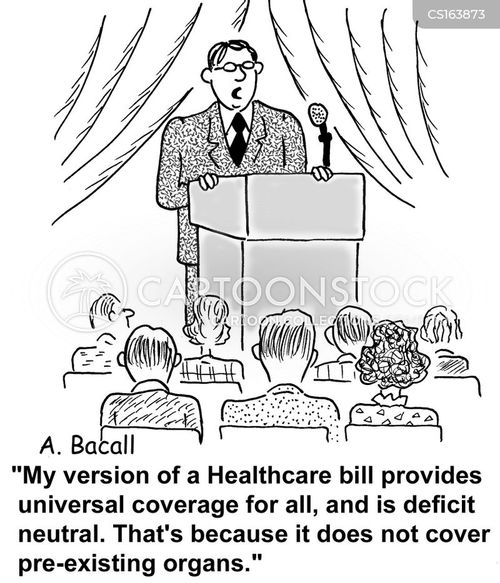
Cartoon – Modern Health Insurance Coverage

Image result for cartoon inadequate health insurance coverage


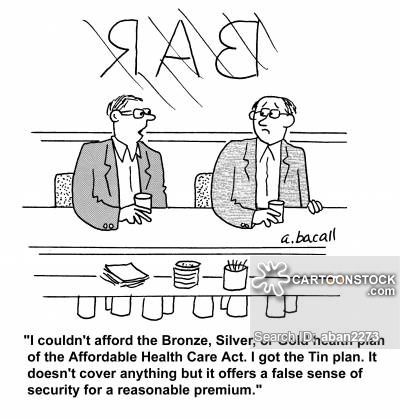
Cartoon – The Tin Plan

Image result for cartoon inadequate health insurance coverage

Cartoon – Acme Health Insurance

Image result for cartoon inadequate health insurance coverage

Trump Medicaid proposal sparks bipartisan warnings

Trump Medicaid proposal sparks bipartisan warnings

Image result for Medicaid cuts

Republicans and Democrats alike are warning that a recent proposal from the Trump administration could lead to billions of dollars in cuts to Medicaid, forcing states to eliminate benefits, reduce enrollment or cut payments to health providers.

In a rare sign of unity, hospitals, insurers, patient advocates and members of both political parties are on the same page in their opposition to the Trump administration’s plan, and most have urged the administration to withdraw a proposal they say would “cripple” Medicaid, the federal-state partnership that provides health care for the poor.

The proposal hasn’t received as much attention as the administration’s other efforts to reform Medicaid, such as implementing work requirements, but it could have the most damaging effect because of how far-reaching it is, experts argue.

“This is high stakes,” said Matt Salo, executive director of the National Association of Medicaid Directors, whose board urged the administration to completely withdraw the proposal.

Trump allies have also voiced their concerns.

“The Medicaid fiscal accountability rule is a concern to my governor, and the stakeholders are worried the rule as proposed could lead to hospital closures, problems with access to care and threaten the safety net,” Sen. John Cornyn (R-Texas) told Department of Health and Human Services Secretary Alex Azar last week during a hearing on the agency’s fiscal 2021 budget request.

Sen. Mark Warner (D-Va.) warned during the same hearing that the proposal could “dramatically affect Medicaid eligibility” and “wreak havoc on budgets in red states and blue states all across the country.”

The proposal would overhaul the complex payment arrangements states use to raise money for their Medicaid programs — funding that is then matched by the federal government.

The administration argues some states use questionable methods of raising funds so they can leverage more money from Washington. One approach used by states consists of taxing providers who stand to benefit from more Medicaid funds flowing into the state.

But governors and state Medicaid directors argue those long-standing arrangements are both legal and necessary as states look for ways to keep up with escalating health care costs.

The proposal would allow the Centers for Medicare and Medicaid Services (CMS) to limit the extra payments from states to providers serving high numbers of uninsured patients or Medicaid patients. Opponents say such changes could result in providers deciding not to accept Medicaid patients.

Dozens of states wrote public comments to CMS Administrator Seema Verma, urging her to withdraw the proposal, including conservative states that are typically supportive of her work.

“If the rule is finalized as proposed, it will immediately disrupt the Medicaid program in Alabama and we believe across the country,” wrote Stephanie McGee Azar, commissioner of the Alabama Medicaid Agency, who is not related to Alex Azar. She added that it would have “unintended consequences that will affect access to care in Alabama to our most vulnerable populations.”

Florida Gov. Ron DeSantis’s (R) administration warned the effect of the proposal would be “immediate and crippling.”

Meanwhile, a letter signed by state Medicaid officials in Michigan, Missouri, New York, Oregon, Pennsylvania, South Carolina, Tennessee, Illinois, Louisiana, Colorado, Pennsylvania and Washington argued the proposal would likely “force states to cut Medicaid eligibility, benefits and/or provider payments, which would have the effect of decreasing low-income individuals’ access to important health care services.”

The public comment period closed Jan. 31. CMS now needs to go through the 4,000 comments before deciding whether to finalize the rule.

Verma and her supporters argue the proposal is not intended to cut Medicaid but instead aims to improve transparency and accountability in the $600 billion a year program.

“It’s not surprising providers and the states are objecting when they are getting federal money for free,” argued Brian Blase, who previously served on President Trump’s National Economic Council, where he worked on health care issues. “They don’t want transparency and they don’t want their financing gimmicks checked.”

Blase predicted the rule, if implemented as proposed, would reduce Medicaid spending by a “very small amount.”

Verma also pushed back on opponents, criticizing a study commissioned by the American Hospital Association that estimated the rule could reduce Medicaid funding by as much as $49 billion annually.

“This proposed rule is not intended to reduce Medicaid payments, and alarmist estimates that this rule, if finalized, will suddenly remove billions of dollars from the program and threaten beneficiary access are overblown and without credibility,” she wrote in a blog post last week.

Some experts disagree with her, pointing to other actions the administration has taken on Medicaid, including work requirements.

“I think one should view this rule not in isolation, but in combination with the broader agenda of this administration on Medicaid,” said Edwin Park, a research professor at Georgetown University McCourt School of Public Policy. “Their ultimate agenda is about cutting the Medicaid program, changing the Medicaid program as it currently stands.”

State officials have complained that they were not asked for their input before the proposal was released, nor did CMS conduct a regulatory analysis of potential effects.

A nonpartisan agency that advises Congress on Medicaid policy wrote to Alex Azar advising he not implement the rule because CMS has not fully assessed the possible effects.

“The Commission is concerned that the proposed changes could reduce payments to providers in ways that could jeopardize access to care for Medicaid enrollees,” the advisory group wrote.

For example, Maine’s Department of Health and Human Services has planned to make $86 million in supplemental payments to hospitals in fiscal 2020, which began July 1.

The rule “would require significant changes to MaineCare and could force the State to cut back on eligibility or services,” Jeanne Lambrew wrote in the department’s public comment.

The administration hasn’t given any signals that it plans to back down from the proposal, despite considerable pushback from stakeholders, states and bipartisan members of Congress.

“We will work with states to help them recreate their practices in ways that are in conformity with the statute and try to be fair and equitable in all our dealings with states,” Alex Azar told lawmakers last week on Capitol Hill.


It’s Not Just Hospitals That Are Quick To Sue Patients Who Can’t Pay

https://www.npr.org/sections/health-shots/2020/02/19/798894062/its-not-just-hospitals-that-are-quick-to-sue-patients-who-cant-pay?utm_source=The+Fiscal+Times&utm_campaign=59b997dc59-EMAIL_CAMPAIGN_2020_02_19_10_03&utm_medium=email&utm_term=0_714147a9cf-59b997dc59-390702969
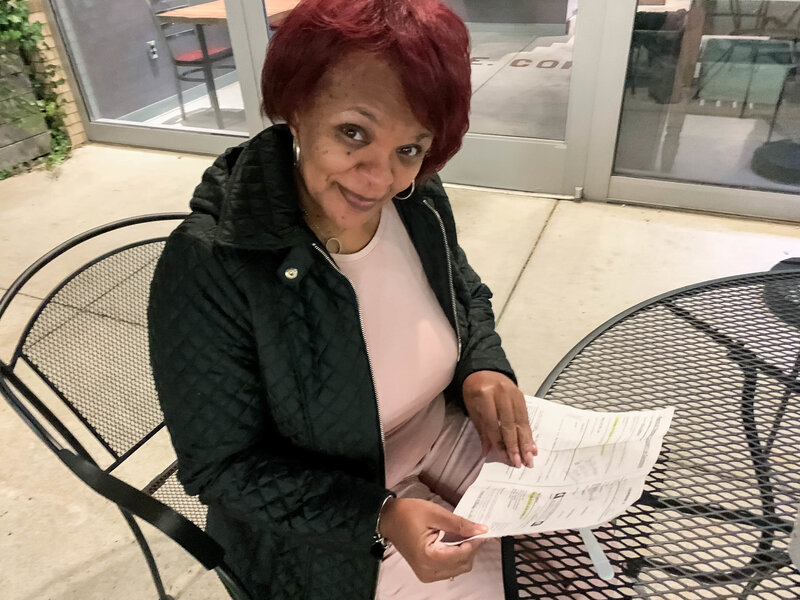
Social worker Sonya Johnson received a civil warrant to appear in court when the company that runs Nashville General Hospital’s emergency room threatened to sue her over a $2,700 ER bill — long after she’d already negotiated a reduced payment schedule for the rest of her hospital stay.

Nashville General Hospital is a safety net facility funded by the city. For a patient without insurance, this is supposed to be the best place to go in a city with many hospitals. But for those who are uninsured, it may have been the worst choice in 2019.

Its emergency room was taking more patients to court for unpaid medical bills than any other hospital or practice in town. A WPLN investigation finds the physician-staffing firm that runs the ER sued 700 patients in Davidson County during 2019.

They include patients such as Sonya Johnson, a 52-year-old social worker and single mother.

By juggling her care between a nonprofit clinic and Nashville General, Johnson had figured out how to manage her health problems, even though she was, until recently, uninsured. In 2018, she went in to see her doctor, who charges patients on a sliding scale. Her tongue was swollen and she was feeling weak. The diagnosis? She was severely anemic.

“He called me back that Halloween day and said, ‘I need you to get to the emergency [room], stat — and they’re waiting on you when you get there,’ ” she recalls.

Nashville General kept her overnight and gave her a blood transfusion. They wanted to keep her a second night — but she was worried about the mounting cost, so asked to be sent home.

Staying overnight even the one night meant she was admitted to the hospital itself, and the bill for that part of her care wasn’t so bad, Johnson says. The institution’s financial counselors offered a 75% discount, because of her strained finances and because her job didn’t offer health insurance at the time.

But emergency rooms are often run by an entirely separate entity. In Nashville General’s case, the proprietor was a company called Southeastern Emergency Physicians. And that’s the name on a bill that showed up in Johnson’s mailbox months later for $2,700.

“How in the world can I pay this company, when I couldn’t even pay for health care [insurance]?” Johnson asks.

Johnson didn’t recognize the name of the physician practice. A Google search doesn’t help much. There’s no particular website, though a list of Web pages that do turn up in such a search suggest the company staffs a number of emergency departments in the region.

Johnson says she tried calling the number listed on her bill to see if she could get the same charity-care discount the hospital gave her, but she could only leave messages.

And then came a knock at her apartment door over the summer. It was a Davidson County sheriff’s deputy with a summons requiring Johnson to appear in court.

“It’s very scary,” she says. “I mean, [I’m] thinking, what have I done? And for a medical bill?”

Nashville General Hospital was no longer suing patients

Being sued over medical debt can be a big deal because it means the business can get a court-ordered judgment to garnish the patient’s wages, taking money directly from their paycheck. The strategy is meant to make sure patients don’t blow off their medical debts. But this is not good for the health of people who are uninsured, says Bruce Naremore, the chief financial officer at Nashville General.

“When patients owe money, and they feel like they’re being dunned all the time, they don’t come back to the hospital to get what they might need,” he says.

Under Naremore’s direction in the past few years, Nashville General had stopped suing patients for hospital fees. He says it was rarely worth the court costs.

But Southeastern Emergency Physicians — which, since 2016, has been contracted by the hospital to run and staff its emergency department — went the other way, filing more lawsuits against patients than ever in 2019.

Naremore says the decision on whether to sue over emergency care falls to the company that staffs the ER, not Nashville General Hospital.

“It’s a private entity that runs the emergency room, and it’s the cost of doing business,” he says. “If I restrict them from collecting dollars, then my cost is going to very likely go up, or I’m going to have to find another provider to do it.”

This is a common refrain, says Robert Goff. He’s a retired hospital executive and board member of RIP Medical Debt. The nonprofit helps patients who are trapped under a mountain of medical bills, which are the No. 1 cause of personal bankruptcy.

“So the hospital sits there and says, ‘Not my problem.’ That’s irresponsible in every sense of the word,” Goff says.

The practice of suing patients isn’t new for Southeastern Emergency Physicians or its parent company, Knoxville-based TeamHealth. But such lawsuits have picked up in recent years, even as the company has stopped its practice of balance billing patients.

TeamHealth is one of the two dominant ER staffing firms in the nation, running nearly 1 in 10 emergency departments in the United States. And its strategy of taking patients to court ramped up after it was purchased by the private equity giant Blackstone, according to an investigation by the journalism project MLK50 in Memphis.

Under pressure from journalists, TeamHealth ultimately pledged to stop suing patients and to offer generous discounts to uninsured patients.

Officials from TeamHealth declined WPLN’s request for an interview to answer questions about how widespread its practice of suing patients for ER doctors’ services and fees has been.

“We will work with patients on a case by case basis to reach a resolution,” TeamHealth said in an email.

According to court records obtained by WPLN, the firm filed about 700 lawsuits against patients in Nashville in 2019. That’s up from 120 in 2018 and just seven in 2017. Its only contract in the city is with Nashville General’s ER, and the patients reached by WPLN say they were uninsured when they were sued.

What’s surprising to Mandy Pellegrinwho has been researching medical billing in Tennessee at the nonpartisan Sycamore Institute, is that it was all happening at Nashville General — where treating uninsured patients is part of the hospital’s mission.

“It is curious that a company that works for a hospital like that might resort to those sorts of actions,” Pellegrin says.

TeamHealth halts suits, pledges to drop cases

As for Sonya Johnson — she eventually went to court and worked out a payment plan of $70 a month over three years.

And now TeamHealth tells WPLN that its intent is to drop pending cases.

“We will not file additional cases naming patients as defendants and will not seek further judgments,” a TeamHealth spokesperson says in an emailed statement. “Our intent is not to have these pending cases proceed. We’re working as expeditiously as possible on resolving individual outstanding cases.”

Johnson says she’s been told that the lawsuit Southeastern Emergency Physicians filed against her will be dropped — but that she still owes the $2,700 bill.


Seattle Children’s sues to block release of health records; top official resigns

https://www.beckershospitalreview.com/infection-control/seattle-children-s-sues-to-block-release-of-health-records-top-official-resigns.html?utm_medium=email

Image result for seattle children's hospital

Seattle Children’s Hospital has filed a lawsuit to block the release of health department records regarding mold at its facility, according to court documents cited by King 5. 

The hospital’s legal team filed an amended complaint in an attempt to block the release of state and county health records.

Documents previously released to the media through a public records request revealed a nearly 20-year history of Aspergillus mold in the air handling system of the hospital’s operating rooms.

Most recently, an infant at Seattle Children’s Hospital died Feb. 12 after she developed a mold-related infection acquired at the facility, the seventh mold-related death since 2001.

The health records sought by the media are “confidential and sensitive,” Adrian Urquhart Winder, attorney for Seattle Children’s, said, according to King 5. The attorney cited a state law that says records produced for quality improvement purposes cannot be publicly disclosed.

On Jan. 10, Mark Del Beccaro, MD, former CMO and senior vice president of Seattle Children’s Hospital, resigned, according to a hospital spokesperson. King 5 could not reach Dr. Del Beccaro for comment.