Healthcare Executives See a Mixed Outlook

https://www.jpmorgan.com/commercial-banking/insights/healthcare-mixed-outlook

Image result for Healthcare Executives See a Mixed Outlook

In a recent survey of healthcare leaders, most were confident about their own organizations going into the new year. But respondents expressed concern about a range of evolving industry-wide challenges, including costs, technology and talent.

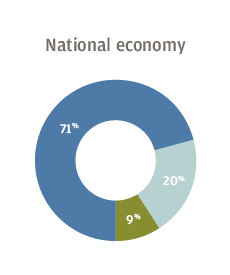
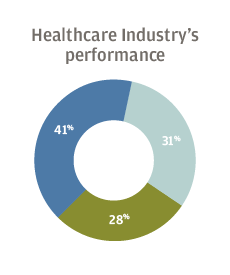
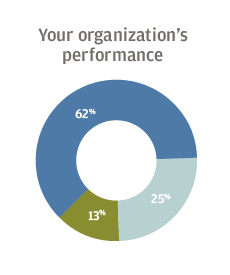
A majority of US healthcare executives surveyed by J.P. Morgan said they were optimistic about the financial performance of their own organizations going into 2019, as well as the national and local economies. But most were less positive about the outlook for the industry as a whole, with 28 percent expressing pessimism and another 31 percent merely neutral.

National economy 71% optimistic, 20% neutral, 9% pessimistic
Healthcare Industry's performance 41% optimistic, 31% neutral, 28% pessimistic
Your organization's performance 62% optimistic, 13% neutral, 25% pessimistic
Legend - Optimistic, Blue
Legend: Neutral Gray
Legend: Pessimistic, Green

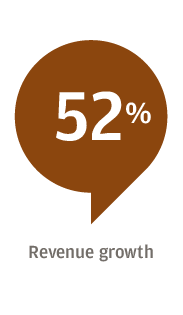
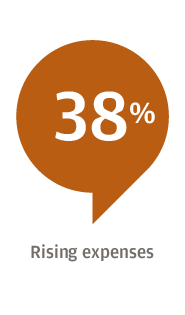
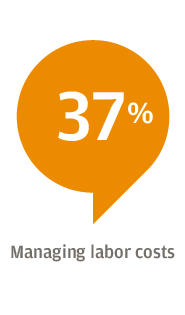
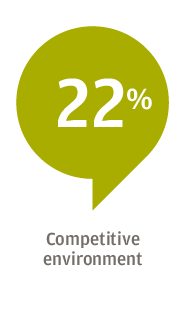
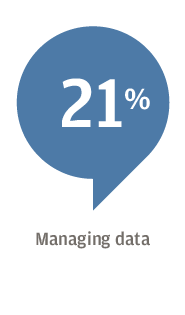
Respondents to the survey, conducted Oct. 16 to Nov. 2 of 2018, said their biggest concerns were revenue growth, rising expenses and labor costs. The executives said their organizations plan to invest the most in information technology and physician recruitment.

Healthcare Changes Shape Perceptions

The pessimism about the industry likely stems, in part, from regulatory uncertainty and an ongoing shift from a fee-for-service model toward a value-based payment system, said Will Williams, Senior Healthcare Industry Executive within J.P. Morgan’s Commercial Banking Healthcare group. “Healthcare is going through the most transition of any industry in the country right now,” he said. Amid this upheaval, healthcare organizations face a combination of challenges, including lower reimbursement rates for Medicaid and Medicare patients, increased competition, and higher costs for labor, pharmaceuticals and technology investments.

The optimism that executives feel about their own hospital or healthcare group may come from a sense that an individual organization can adapt to industry changes, said Jenny Edwards, Commercial Banker in the healthcare practice at J.P. Morgan. “You can control certain factors, and make adjustments to compensate for the headwinds.”

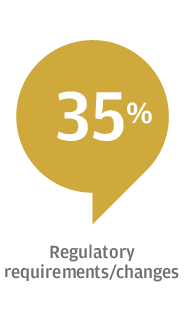
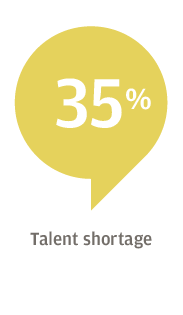
Biggest Challenges for the New Year

Growth Strategies

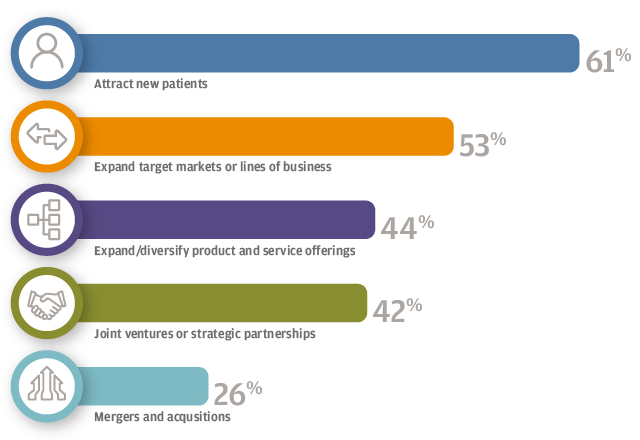
For 61 percent of respondents, the focus is on attracting new patients, followed by expanding target markets or lines of business (53 percent), and expanding or diversifying product and service offerings (44 percent). Hospitals, for example, have worked to add more patients to their broader healthcare system by opening clinics for urgent care or physical therapy, Edwards said.

As patient habits change, hospital systems have needed to become more consumer-focused, Edwards said. Patients are more likely to shop around for their care, expect transparent pricing and review healthcare workers on social media sites. This “retail-ization” trend in healthcare is accelerating, Edwards said. “You can shop for healthcare like you would a new pair of jeans.”

Skilled Talent Wanted

The talent shortage is top of mind for many healthcare executives, with 92 percent of survey respondents saying they were at least somewhat concerned with finding candidates with the right skill set. For 35 percent of respondents, the talent shortage is one of their top three challenges.

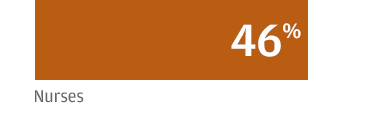
For those respondents who expressed concern, the most difficulty arises in filling positions for physicians (52 percent) and nurses (46 percent). To address the challenge, 76 percent said they expect to increase compensation of their staff over the next 12 months. According to 37 percent of respondents, the talent pool’s high compensation expectations factor into the shortage.

Most Challenging Positions to Fill

52%
46%
38%
29%
21%
21%

The talent shortage is an issue across the industry, Williams said, and burnout among doctors and nurses presents an ongoing problem. One contributing cause could be evolving changes in daily practice, with considerably more time today spent on electronic medical record entries and less on patient care. Williams said, “Doctors are getting frustrated. The problem is trying to replace those doctors as they quit practicing.”

Healthcare executives are particularly concerned about shortages of primary care professionals. “Rural communities already have these shortages,” said Brendan Corrigan, Vice Chair of the J.P. Morgan Healthcare Council.

Labor costs tend to be higher in healthcare than in other sectors, Williams said, as a hospital must have coverage for all of its major roles 24 hours a day. When asked where they struggle with workforce management, the survey respondents cite staff turnover and its associated cost (47 percent), the ability to flex staff based on patient volumes (41 percent), and the cost of overtime and premium labor (36 percent). These workforce issues not only represent specific challenges; they all contribute to labor costs, which, as noted above, rank in the top three challenges for 2019.

Investments for a Changing Industry

A majority (51 percent) of organizations plan to invest in IT over the next 12 months. Other areas for investment included physician recruitment (44 percent) and new or replacement facilities (36 percent).

Since healthcare organizations manage a large amount of private patient health information, data security remains a large part of IT expenditures. “It’s a huge focus—they’re spending a lot of time and money on preventing a breach,” Edwards said. She goes on to note that the transition to patient EMR systems brings another big IT expense—more than $1 billion for the largest healthcare systems.

Overall, the survey showed healthcare executives grappling with rising costs and structural changes that affect the entire industry. “Healthcare is trying to figure out how to fix themselves,” Williams said.


Healthcare’s Leading Financial Challenges and Opportunities in 2019

https://www.jpmorgan.com/commercial-banking/insights/healthcare-financial-challenges-2019

Image result for Healthcare’s Leading Financial Challenges and Opportunities in 2019

Faced with slim margins and rising costs, the healthcare industry is looking to blockchain, data analytics and innovation to help drive savings and unlock new revenue.

The healthcare industry is facing an urgent need to reduce costs and increase revenue. Research from the Healthcare Advisory Council reveals the not-for-profit health system will need between $40 million and $44 million annually in cost avoidance over the next eight years to maintain a sustainable margin. The challenge is significant, but emerging technologies and innovative strategies are creating opportunities for greater efficiency, better patient care and decreased costs, according to executives and other leaders in healthcare.

Making a Margin on Medicare

Health systems with the best margin sustainability pursue effective cost-avoidance practices, including:

  • Embedding cost discipline throughout the organization
  • Escalating spending decisions
  • Reducing unnecessary hires
  • Matching patient acuity to the level of care
  • Reducing drug formulary costs

But even with these practices, cost avoidance is challenging—particularly when it comes to Medicare-reliant seniors, who often require frequent medical treatments and hospital admissions. Turning to advanced electronic medical records (EMRs) that are designed around a health system’s risk and workflow can improve treatment decisions and continuity of care, leading to decreased admissions, better cost effectiveness and a greater profit margin.

Simultaneously, some health systems are looking to a pre-paid, value-based medicine model, as opposed to the more common fee-for-service model. Value-based medicine moves the payment upstream, incentivizing providers to focus on maintaining patient health rather than on providing medical interventions. Decreasing the amount of care needed to keep patients healthy has a direct impact on the size of an organization’s margins.

Blockchain: The Potential to Change Healthcare

One of the most common inefficiencies in healthcare is how physicians are credentialed. The months-long process for clinician credentialing commands significant time and costs. Emerging blockchain technology may be one solution to this persistent point of inefficiency.

With blockchain, rather than sending a clinician credentialing application to several organizations for verification, the physician and all credentialing locations—as members of a dedicated blockchain network—can have access to the physician’s highly encrypted log. Any changes to the physician’s log can be transmitted to the network and validated by private keys known only to each party and with algorithms agreed upon by the network. In this, trust transfers from a third-party clearinghouse to the network as a whole.

In the blockchain world, the physician could provide access codes to the hospital to review their verified credentials. This could save as much as 80 percent of the current cost and time invested in physician credentialing. Using the same technology and process, blockchain may also be a valuable tool for finding efficiencies when working with patient records.

Venture Capital: Strategic Investing 2.0

Healthcare system-based venture capital funds are growing rapidly. In 2017, more than 150 distinct corporate venture groups operated within the healthcare arena, according to Health Enterprise Partners, and these groups participated in 38 percent of all healthcare IT financing.

There are four common objectives for starting such a fund:

  • Generate new income sources not subject to healthcare reimbursement pressure
  • Identify promising companies that executives might not otherwise encounter
  • Create a vehicle to enhance brand integrity and expand market reach
  • Foster a culture of innovation

Once healthcare investors establish their fund objectives (or mix of objectives), they define their investment approach. This includes establishing a decision-making chain with operational leaders and board members that can allow decisions to be made quickly and in an established pattern. It also includes building infrastructure and could mean adopting a rigorous information environment system, like a healthcare customer relationship management (CRM) system, as well as developing stringent custody and accounting procedures for securities.

Funds should gather resources to support the interactions between the investment fund and the companies in which they invest. At the outset, they should decide the relationship they will have with their investment targets and whether return on investment is a primary or secondary goal. As a part of choosing investment targets, it is important that funds address an important problem of the parent organization and in a way that the organization supports.

Time Is Money: Accelerating the Pace of Care

For health systems, every patient hour costs $250 in direct operating costs, more than half of which owe to labor. By this, improving efficiency and decreasing the time needed for tasks can save money and support a healthy margin. A mix of advanced analytical data and targeted interpersonal relations can help reduce the time required for common hospital and health system tasks. Predictive analytic modeling software can help yield clearer insight into operations, revealing ways to break down barriers between departments and more effectively manage census levels. This optimizes census distribution inside a complex medical center.

Another rich source of potential healthcare savings lies in the staff hiring process. Successful staff hiring for all income levels is one of the great challenges for health systems, but data analytics can help make the hiring process more efficient. With models built on the characteristics of successful hires, predictive analytics can point to applicants with the best potential for success, improving confidence in hiring decisions. Importantly, while analytics and automation can play a big part in finding the best applicants, once a candidate becomes an employee, important decisions like promotions or relocations require direct personal contact.

Data and Dollars Innovation

As health systems explore avenues for increased efficiency, lower costs and better margins, J.P. Morgan has developed digital innovations to support healthcare investment, strategy and operation. Two of the most applicable include:

  • Enhanced Healthcare Lockbox: J.P. Morgan has supercharged its lockbox technology with machine learning. The auto-posting rate has increased by nearly one-fifth, allowing hospitals and health systems to redeploy assets to other revenue-generating sectors like denial management. The high-tech upgrade has also saved three to four days in clients’ working capital.
  • Corporate Quick Pay: The need for hospitals and health systems to collect an increasing amount of money directly from patients has resulted in an explosion in low-dollar patient refunds. This creates a problem for the accounts payable departments of healthcare institutions, which were not designed to issue thousands of small checks to patients. J.P. Morgan’s Corporate Quick Pay solution allows health systems to send payments directly to a patient’s bank account using email or text message.

These innovations in artificial intelligence and machine learning drive efficiency across a range of areas. Consider the benefits one client enjoyed by virtue of J.P. Morgan’s digital tools:

  • 70,000 paper-based claims converted to electronic
  • 99.3 percent lift rate for all paper received in lockbox
  • 18 percent increase in auto-posting after implementation
  • Three to four days’ improvement to working capital

Going forward, emerging technologies and strategies are indispensable for healthcare systems striving to grow margins in a time when health costs and needs are increasing. Ultimately, hospitals and health systems that find pathways to greater profitability will be best positioned to achieve their primary goal: delivering better care that leads to better patient outcomes.


Stanford’s $2B hospital to open in October

https://www.beckershospitalreview.com/facilities-management/stanford-s-2b-hospital-to-open-in-october.html?origin=cfoe&utm_source=cfoe

After more than a decade of planning and construction, Palo Alto, Calif.-based Stanford Health Care plans to open a $2 billion hospital in late October, according to the Palo Alto Weekly.

The 824,000-square-foot facility will house an expanded level 1 trauma center and emergency department, 368 private patient rooms, 20 operating rooms and five gardens with native California plants. It will be next to the hospital’s current facility.

After the new hospital opens, the old facility will be renovated at brought up to earthquake-resistant standards. Together, the two buildings will house 600 patient rooms. 

More than 4,000 medical staff will be trained this summer to familiarize themselves with the new facility before it opens to patients, hospital officials said.

Read the full report here.


Nobel Economist Says Inequality is Destroying Democratic Capitalism

Nobel Economist Says Inequality is Destroying Democratic Capitalism

Image result for Nobel Economist Says Inequality is Destroying Democratic Capitalism

At the launch of the IFS Deaton Review, a 5-year review of rising inequalities in the UK, Sir Angus Deaton decried extreme inequality and the system that allows it. “As it is, capitalism is not delivering to large fractions of the population.”

We are about to embark on a large, ambitious, and open-ended review of inequalities. We are bringing together a distinguished group of scholars and writers from different disciplines. Each thinks about inequality differently, and together they encompass a wide range of methodological, political, and philosophical perspectives. At a first stage, currently underway, the guiding panel is asking each member of this larger group to write about one or other aspect of the topic; this collective effort will be one of our main products. At the second stage, the panel will write a synthetic volume. We will think about inequalities broadly—note my use of “inequalities” rather than “inequality”—and will not be confined to the traditional economic concerns with measures of the distribution of income and wealth, important although those are. Our main focus is the United Kingdom, but there is a great deal of recent thinking and evidence from other countries, particularly the United States, Scandinavia, and other European countries, and we shall repeatedly have to assess its relevance, and are often asking authors or combinations of authors to make the links.

As at no other time in my lifetime, people are troubled by inequality. In 2016, Theresa May, in her first speech as Prime Minister, said “we believe in a union not just between the nations of the United Kingdom but between all of our citizens, every one of us, whoever we are and wherever we’re from. That means fighting against the burning injustice that, if you’re born poor, you will die on average 9 years earlier than others.” Jeremy Corbyn has called for a new economics to address what he called “Britain’s grotesque inequality.” President Obama said that he believed that the defining challenge of our time is to make sure that the US economy works for every American. Across the rich world, not only in America, large groups of people are currently questioning whether their economies are working for them. The same can be said of politics. Two-thirds of Americans without a college degree believe that there is no point in voting, because elections are rigged in favor of big business and the rich. Britain is divided as never before and, once again, many believe that their voice doesn’t count either in Brussels or in Westminster. And one of the greatest miracles of the 20th century, the miracle of falling mortality and rising lifespans, is no longer delivering for everyone, and is now faltering or reversing.

Yet when people say that they are worried about inequality, it is frequently unclear what they mean or why they care. Economists think they know what they mean when they talk about inequality, and they produce charts of gini coefficients of income and of wealth, and when other social scientists say that they have wider concerns, economists—among whom I count myself—have often been too ready to tell them that they don’t know what they are talking about. What we would like to do in this review, even with its large quota of economists, is to get a better understanding of exactly what it is that bothers people about inequality.

We will also think about how we might address concerns about inequality and which concerns need to be addressed. If the concern with inequality is simply envy—as is often claimed by the right—it is perhaps better to address the concern than the inequality. If the inequality comes from incentives that work for a few but benefit many, then we may want to do a better job of documenting the need for incentives and what they do for the economy as a whole. If working people are losing out because corporate governance is set up to favor shareholders over workers, or because the decline in unions has favored capital over labor and is undermining the wages of workers at the expense of shareholders and corporate executives, then we need to change the rules. Why are the myriad differences between men and women so persistent and so difficult to erase?

Given that we are just starting, it is perhaps presumptuous of me to say anything substantive at this point. But what I am going to say is what I myself think, or at least what I think today, and I look forward to changing my mind as we go; I wouldn’t be chairing this review if I didn’t expect that to happen. I am also perhaps too much influenced by my own work—particularly my recent work with Anne Case—and this work is primarily about the United States, though we have been doing quite a bit of thinking about how it applies to Britain.

At the risk of grandiosity, I think that today’s inequalities are signs that democratic capitalism is under threat, not only in the US, where the storm clouds are darkest, but in much of the rich world, where one or more of politics, economics, and health are changing in worrisome ways. I do not believe that democratic capitalism is beyond repair nor that it should be replaced; I am a great believer in what capitalism has done, not only to the oft-cited billions who have been pulled out of poverty in the last half-century, but to all the rest of us who have also escaped poverty and deprivation over the last two and a half centuries. It also provides our jobs and the cornucopia of goods and services that we take for granted. And Milton Friedman, whose starry-eyed view of capitalism has much to answer for, was not entirely wrong when he extolled the freedom that free markets can bring. Though history has not been kind to his view that equality would be guaranteed by using markets to pursue freedom.

But we need to think about repairs for democratic capitalism, either by fixing what is broken, or by making changes to head off the threats; indeed, I believe that those of us who believe in social democratic capitalism should be leading the charge to make repairs. As it is, capitalism is not delivering to large fractions of the population; in the US, where the inequalities are clearest, real wages for men without a four-year college degree have fallen for half a century, even at a time when per capita GDP has robustly risen. Mortality rates are rising for the less-educated group at ages 25 through 64, and by enough that life expectancy for the entire population has fallen for three years in a row, the first time such a reversal has happened since the end of the first world war and the great influenza epidemic. Less educated Americans are dying by their own hands, from suicide, from alcoholic liver disease, and from overdoses of drugs. Morbidity is rising too, and they are also suffering from an epidemic of chronic pain that, for many, makes a misery of daily life.

In Britain, these inequalities are not so stark, at least not yet. But median real wages in Britain have not risen for more than a decade. One decade is much better than five decades, but we surely do not want to wait to find out whether the American experience will be replicated here. There have also been prolonged periods of real wage stagnation in recent years in Italy and in Germany. In those countries too, increasing overall prosperity is not reaching everyone. And as I noted above, democracy too does not seem to be working for everyone. The sense of being left behind, of not being represented at Westminster, is much the same as the sense of not being represented in Washington.

In Clement Attlee’s 1945 cabinet—the cabinet that implemented the Beveridge Report and built the first modern welfare state—there were seven men who had begun their working lives at the coal face. When labor MPs from Glasgow set off to London, local bands and choirs came to the station to see them off as if they were going to war, which indeed they were. Only three percent of MPs elected in 2015 were ever manual workers, compared with sixteen percent as recently as 1979. The union movement, which once produced talents like those in Attlee’s cabinet, has been gutted by the success of postwar meritocracy. Attlee’s warriors would today have gone to university and become professionals; they would never have been down the pit, nor in a union hall. Meritocracy has many virtues, but, as predicted by Michael Young in 1958, it has deprived those who didn’t pass the exams, not only of social status and of the higher incomes that degrees bring, but even of the kind of political representation that comes from having people like themselves in parliament. Young wrote, “The bargaining over the distribution of national expenditure is a battle of wits, and defeat is bound to go to those who lost their clever children to the enemy.” He referred to the less educated group as “the populists” who, in turn, refer to the elite as “the hypocrisy.”

What does history tell us? Not surprisingly, we have been here before. There have been several episodes where capitalism seemed broken, but was repaired, either on its own, or by deliberate policy, or by a combination of the two.

In Britain at the beginning of the 19th century, inequality was vast compared with today. The hereditary landowners not only were rich, but also controlled parliament through a severely limited franchise. After 1815, the notorious Corn Laws prohibited imports of wheat until the local price was so high that people were at risk of starving; high prices of wheat, even if they hurt ordinary people, were very much in the interests of the land-owning aristocracy, who lived off the rents supported by the restriction on imports. The Industrial Revolution had begun, there was a ferment of innovation and invention, and national income was rising. Yet working people were not benefitting. Mortality rates rose as people moved from the relatively healthy countryside to stinking, unsanitary cities. Each generation of military recruits was shorter than the last as their childhood nutrition worsened, from not getting enough to eat and from the nutritional insults of unsanitary conditions. Churchgoing fell, removing a major source of community and support for working people, if only because churches were in the countryside, not in the new industrial cities. Wages were stagnant and would remain so for half a century. Profits were rising, and the share of profits in national income rose at the expense of labor. It would have been hard to predict a positive outcome of this process.

Yet by century’s end, the Corn Laws were gone, the rents and fortunes of the aristocrats had fallen along with the world price of wheat. Reform Acts had extended the franchise, from one in ten males at the beginning of the century to more than a half by its end, though the enfranchisement of women would wait until 1918. Wages had begun to rise in 1850, and the more than century-long decline in mortality had begun. All of this happened without a collapse of the state, without a war, or a pandemic, through a gradual change in institutions that slowly gave way to the demands of those who had been left behind.

America’s first Gilded Age is another case. It also shows that the fundamental rules of the game can be changed. In the Progressive Era, four constitutional amendments were passed, all designed to limit inequality of one form or another. One instituted the income tax, one gave women the vote, one prohibited alcohol—strongly supported by women, who believed that alcohol abuse was an instrument of their oppression—and one an electoral reform that instituted the direct election of senators, as opposed to their previous appointment by state legislatures that were often dominated by business.

I have already mentioned the case that is most on my mind, the construction of the modern welfare state by Attlee’s government after the Second World War. The Great Depression, like the stagnation of wages in the early 1800s, spawned a large literature on how to modify or abolish capitalism, and according to one version of the story, it was Attlee’s government that tamed the beast and that made it possible for the tamed beast to deliver the unprecedented shared growth that many of us grew up on. Joe Stiglitz has recently written that he grew up in the golden age of capitalism though, as he wryly notes, it was only later that he discovered that it was the golden age. And, of course, it wasn’t a golden age—at least in terms of material living standards or in terms of health—but perhaps it was such in terms of the rules of the game that allowed growing prosperity to be widely shared. I don’t think that anyone would argue that the late 1940s was a golden age in Britain— there was bread rationing, petrol rationing, and to a young Angus Deaton, the terrible deprivation of sweet rationing, but the safety net that was built in those years played a role in fairly sharing, and perhaps even in helping generate, the prosperity that was to come.

That safety net is needed just as much today. Globalization and automation are challenging us today just as they did in the early 19th century. Safety nets are most needed when change is rapid, and it is one of the reasons why America is doing so much worse—most obviously in deaths of despair—than are wealthy European countries. But what is happening today is also a real threat to Britain and to Europe.

The argument that Anne Case and I are making in our new book is that less-educated white men and women in America have had their lives progressively undermined, starting in the 1970s, and showing up, since 1990, in rising numbers of deaths from suicide, alcoholic liver disease, and drug overdoses. African Americans experienced a similar disaster thirty years earlier and the improvements in their lives since then have protected them to an extent. In the face of globalization and innovation, many of us would argue that American policy, instead of cushioning working people, has instead contributed to making their lives worse, by allowing more rent-seeking, reducing the share of labor, undermining pay and working conditions, and changing the legal framework in ways that favor business over workers. Inequality has risen not only due to wealth generation from innovation or creation, but also through upward transfers from workers. It is not inequality itself that is hurting people, but the mechanisms of enrichment.

How much is this a threat in Britain? Some of the mechanisms of enrichment are not operative here. The US wastes about a trillion dollars a year on a healthcare system that is very good at enriching providers, hospitals, device manufacturers, and pharmaceutical companies, but very bad at delivering health. You do not have that problem. The US has licensed pharma companies to sell opioids to the general public, including for chronic pain, which ignited an epidemic of addiction and death with a cumulative death toll larger than all Americans lost in both World Wars. You too use opioids, but usually in hospitals, not in the general population. Yet the opioid manufacturers are following the model of tobacco manufacturers, and working hard, when blocked in the US, to expand elsewhere. Purdue Pharma has a subsidiary, Mundipharma, that agitates on behalf of the greater pain relief that they argue opioids can bring. As I write this, Matt Hancock, the Minister of Health, noted that “things are not as bad here as in America, but we must act now to protect people from the darker side of painkillers.” The BBC news report on this carries a chart showing the extraordinary geographical inequality in opioid prescriptions in England, with prescription rates five times larger in Cumbria and the North East than in London. As the briefing note for this launch shows, deaths of despair are rising in Britain, particularly in less successful parts of Britain, just as they are in other English-speaking countries, though the numbers (and death rates) are small compared with the US.

What about wages? The US has extensive business lobbying, which the UK does not have, or at least not in the same overt form. (The US also had very little prior to 1970, so it could happen here too.) As in the US, unions have become much less powerful in Britain, a decline that many have welcomed, but their countervailing power in boardroom decisions may have protected wages and working conditions. Unions provided social life and political power for many people who have less of both today. The replacement of stakeholder capitalism by shareholder value maximization is widespread in the US and has been remarked on here, too. Paul Collier has noted that Imperial Chemical Industries, once the crown jewel of British industry, used to boast “we aim to be the finest chemical company in the world,” but that, before it was lost to takeovers and mergers in 2006, it had changed its slogan to “we aim to maximize shareholder valuation.”

In Britain, as in America, some cities and towns are doing much better than other cities and towns, and the easy mobility that tended to keep these differences in check seems to have been much reduced. America has no city that is as dominant or as uniquely prosperous as is London.

Political dysfunction in Britain is different, but there is a common thread that many voters believe that they are not well represented. And there are sharp differences across groups, with age, education, ethnicity, gender and geography important in both countries.

I think that people getting rich is a good thing, especially when it brings prosperity to others. But the other kind of getting rich, “taking” rather than “making,” rent-seeking rather than creating, enriching the few at the expense of the many, taking the free out of free markets, is making a mockery of democracy. In that world, inequality and misery are intimate companions.


Proposed merger would create 14-hospital system

https://www.beckershospitalreview.com/hospital-transactions-and-valuation/proposed-merger-would-create-14-hospital-system.html

Related image

Peoria, Ill.-based OSF HealthCare and Evergreen Park, Ill.-based Little Company of Mary Hospital and Health Centers are negotiating a full merger, according to a July 17 announcement.

OSF HealthCare, a 13-hospital system, and Little Company of Mary Hospital and Health Centers, a single-hospital system, will spend the next several months finalizing an agreement. The two Catholic healthcare organizations expect the merger, which is subject to regulatory and canonical approvals, to be completed in early 2020.

“Partnership development, particularly with other mission-driven organizations, is a key component of how we are successfully responding to the call to share our Ministry,” OSF HealthCare CEO Bob Sehring said in a press release. “We have long admired the strong Catholic heritage and commitment to the gift of life demonstrated by Little Company of Mary, and believe that together, we can create better health and deliver value for our communities.”

The merger of OSF HealthCare and Little Company of Mary Hospital and Health Centers would create a 14-hospital system with nearly 24,000 employees.


Hackers try to reroute payroll deposits at Texas health system

https://www.beckershospitalreview.com/cybersecurity/hackers-try-to-reroute-payroll-deposits-at-texas-health-system.html

Image result for phishing

After Wise Health System fell victim to a phishing attack, the hackers used the information to access an employee’s information in an attempt to reroute direct deposit checks, according to the Wise County Messenger.

The Decatur, Texas-based health system said the hackers tried to change around 100 payroll direct deposits. Wise County Messenger discovered the breach on April 5 because the hospital’s payroll system requires paper checks be printed for payrolls after any changes are made by employees.

When payroll was being processed, Wise Health System discovered an unusual number of checks that needed to be printed. This red flag spurred an investigation that found hackers gained access to the system through a phishing attack in March, Wise Count Messenger reports.

There has been no indication that the information was misused. All employees were still payed on time, and the health system required employees to change passwords immediately.

Because the security breach occurred through a phishing attack, Wise Health System has notified 35,000 patients whose information was stored in the email account that was affected. The email may have included patients’ medical record numbers, diagnostic and treatment information and potentially insurance information.

Wise Health System is offering affected patients identity theft protection services. All affected have been notified of the breach, reports Wise County Messenger.


Charting the consolidation of US healthcare

https://infogram.com/1t0dvy02dplrpma82vpx7od14rf3z3g0qel

 
As much discussion as there’s been about consolidation in the hospital industry recently, there are surprisingly few good sources of data on the scope and scale of multi-hospital systems in the US. One very helpful resource is the Compendium of US Health Systems, a project sponsored by the Agency for Healthcare Quality and Research (AHRQ), which is part of the Department of Health and Human Services (HHS).

First launched in 2016, the compendium includes downloadable data on 626 health systems, with information about location, number of beds, number of discharges, and other key characteristics. This spring, AHRQ supplemented the data set with new information about participation in payment reform pilots and provider-sponsored health plan activity. Drawing on this information, we constructed the interactive graphic below—click on the chart or follow this link to explore the data. A few highlights indicate how consolidated the hospital sector has become.

Health systems account for more than 90 percent of all discharges in the US, with the largest 11 systems accounting for a quarter of discharges, and the largest 67 accounting for half. Nonprofit systems dominate the landscape, and many of those are multi-state enterprises. And the trend toward consolidation continues apace. When AHRQ first released the data set in 2016, there were 626 systems on the list; the last two years have seen that number decrease to 591, with several large systems merging together. We’ll continue to mine this rich resource for more insights in the weeks to come.


4 health systems team up to save Philadelphia hospital

https://www.beckershospitalreview.com/finance/4-health-systems-team-up-to-save-philadelphia-hospital.html

Image result for St. Christopher's Hospital for Children

Four healthcare organizations based in Philadelphia have created a consortium to collectively negotiate with American Academic Health System for the potential purchase of St. Christopher’s Hospital for Children in Philadelphia.

St. Christopher’s, along with Philadelphia-based Hahnemann University Hospital, was included in a June 30 Chapter 11 bankruptcy case filed by Philadelphia Academic Health System, a subsidiary of AAHS.

The four consortium institutions — Einstein Healthcare Network, Jefferson Health, Philadelphia College of Osteopathic Medicine and Temple Health — said July 17 they plan to submit a letter of intent to AAHS for the purpose of keeping St. Christopher’s open.

“In a time of difficult transition for healthcare in Philadelphia, four healthcare organizations stepping up to do what’s right by St. Christopher’s patients is truly emblematic of neighbors helping neighbors,” said Achintya Moulick, MD, CMO at St. Christopher’s as well as its chairman of cardiothoracic surgery. “This will ensure continuity of care and service to the children of the community it serves, especially the underserved population.”

The four healthcare organizations formed the consortium as AAHS continues to wind down services at Hahnemann University Hospital. Under a closure timeline released July 16, Hahnemann will shut down Sept. 6.


Optum aims to help John Muir Health System thrive in Bay Area

https://www.beckershospitalreview.com/strategy/optum-aims-to-help-john-muir-health-system-thrive-in-bay-area.html?oly_enc_id=2893H2397267F7G

Image result for John Muir Health System

UnitedHealth Group’s Optum is partnering with John Muir Health to help the system remain independent and become more competitive in California, according to CNBC.

“Optum’s expertise and capabilities will help us expand upon the high-quality patient care we provide to the Bay Area community,” Cal Knight, president and CEO of Walnut Creek, Calif.-based John Muir Health, said in a news release. “We share common values with Optum, and this new relationship will help us further deliver on our mission to improve the health of the people we serve. We are committed to remaining independent while embracing partnerships that help us grow and serve more patients.”

Optum, based in Eden Prairie, Minn., will take over John Muir’s information technology, revenue cycle management, analytics, purchasing, claims processing and other nonclinical functions. Optum and John Muir representatives said Optum will also be involved in John Muir’s physician network ambulatory care coordination and utilization management services.

Optum will hire about 540 John Muir employees as part of the partnership.

Optum, which offers various technologies and analytic tools, told CNBC the partnership provides a model under which it can help small, struggling hospitals remain independent.

Nick Howell, Optum senior vice president, told the TV business news channel: “Optum is not in the business of owning and operating health systems. We see this kind of partnership as a model. A lot of health systems out there are facing similar cost pressures and  are trying to find ways to remain independent. We believe this is a new third option for them.”

Optum has been a big contributor to revenue growth for UnitedHealth. It also has emerged as a competitor for some hospitals as it expands its physician workforce.