Is a ‘cash pay revolution’ coming for hospitals?

https://www.advisory.com/daily-briefing/2022/10/19/cash-pay-hospitals

Amid new price transparency laws and growing consumer demand, more hospitals are adding cash pay options for certain health care services instead of just accepting insurance, Nora Tepper writes for Modern Healthcare—and some hospital officials say these offerings are “only going to go up” in the future.

How an ‘anomaly’ is becoming more common

Providers advertising cash pay rates for their services used to be considered an “anomaly,” Tepper writes. Now, the No Surprises Act, the federal price transparency law, and changing consumer expectations may make cash-only payments for health care services more common.

“The market is going there,” said Larry Van Horn, associate professor of management, law, and health policy and executive director of health affairs at Vanderbilt University. “You’ve got direct primary care, you’ve got physicians going and moving into cash pay. You’re gonna have to sit there at some point and say, ‘Wait a minute, they’re taking my business.'”

Although some hospitals and health systems that serve certain populations—such as Pomerene Hospital in Ohio with Amish and Anabaptist patients and the University of Texas MD Anderson Cancer Center with medical tourists—have long had cash-pay systems, it is still a relatively new concept for most providers in the United States.

According to data from Medscape, which surveyed more than 17,000 clinicians, just 17% of clinicians used cash-only, concierge, or direct-pay primary care models in 2020. Primary care providers (PCPs) made up the largest proportion of providers accepting cash pay, with 10% of practices charging patients a flat monthly fee for unlimited services.

“[S]ome providers embracing the cash pay revolution say their bottom line benefits from faster reimbursement, lower administration costs and higher patient retention,” Tepper writes.

In a 2020 report from the Society of Actuaries, almost all PCPs who operated under self-pay models reported “better or much better” personal and professional satisfaction compared to those under a traditional fee-for-service system. In addition, 34% of respondents reported “better or much better” earnings under a direct payment model.

How patients could benefit from cash-pay systems

According to Tepper, hospitals generally offer self-paying patients, who have typically been uninsured individuals or those with high-deductible health plans, lower rates for services compared to commercial insurers since they don’t have to handle administrative work or collections.

In a 2021 study published in JAMA Network Open, researchers analyzed rates for “shoppable” services at 922 hospitals and found that the proportion of hospitals that had lower cash prices than their median commercial negotiated rate ranged from 38.4% for liver tests to 68.5% for C-sections.

During the pandemic, more insured patients began to inquire about what services they could pay cash for, leading some health systems to create new payment models for certain procedures.

For example, Deaconess Health System launched an in-house bundled payment program, which includes cardiology, radiology, and urgent care services, in July 2020. The first year, the health system sold 130 bundled services, which increased to 351 in 2021, and 489 as of August 2022.

For any services not covered by the program, Deaconess offers a 50% discount on cash payments compared to its insurer rate. However, self-paying patients are required to pay the full cost of a procedure upfront.

“The patient has decided to take a bet on themselves,” said Steve Russell, VP and chief revenue cycle officer at Deaconess. “They have a high deductible, they don’t think they’re going to reach that threshold and their thought is, ‘If I don’t use my insurance, what kind of discount can you give me?'”

Separately, CommonSpirit Health‘s Catholic Health Initiatives (CHI) launched its own bundled cash price program in 2018 after noticing that many patients with high-deductible plans would defer care due to affordability concerns. The health system also advertises and sells its services on MDsave, an online marketplace that allows consumers to shop for health care procedures.

“With the No Surprises Act and the price transparency regulations, this has to be something that we offer,” said Jeanette Wojtalewicz, SVP and CFO at CHI Health’s Midwest division. “You’ll see more of this coming.”

The future of cash-pay systems in hospitals

According to Aaron Miri, SVP and chief digital and information officer at Baptist Health South Florida, although few patients are currently paying directly for health care services, the industry is heading towards that direction, which means health systems need to be prepared to meet the demand.

“When you look at the directionality of demand, this is only going to go up,” Miri said. “Patients are going to start seeing their total estimated bill and say, ‘I want to spend my $500 at a health system that was really transparent with me, and made me feel comfortable, versus the health system down the road that I’ve always gone to, but that simply can’t tell me what my actual amount due is.”

To make it easier for patients to directly pay for procedures, some health systems, including Baptist Health, have updated their payment options by adding Apple Pay, Google Pay, or other online payment systems instead of just accepting payment in-person or by phone.

However, even as direct payment models become more common, some insurers are “using their leverage to slow adoption of cash pay,” Tepper writes.

Kimberly Scaccia, VP of revenue management at MercyHealth, said some of the health system’s contracts with insurers prohibit it from offering cash discounts to insured patients.

“Some of the smaller payers, they’re fine with removing [cash pay restrictions],” Scaccia said. “Some of the very, very large payers, they simply will not allow it.”

In addition, Matthew Fiedler, a senior fellow of economic studies at the USC-Brookings Schaeffer Initiative for Health Policy, said clinicians may also be concerned about insurers asking to pay the lower cash rate during contract renewals or jeopardizing a provider’s network position.

“An insurer could say, ‘We’re gonna put this provider out-of-network, but we’re gonna put them in a preferred out-of-network position in our benefit design, where the cost-sharing is not that onerous, because we know they have this really good cash price,'” Fiedler said.
Virtual care solidifying its post-COVID role 

https://mailchi.mp/4587dc321337/the-weekly-gist-october-14-2022?e=d1e747d2d8

After COVID restrictions introduced millions of Americans to telehealth, it became an open question whether virtual care would revolutionize healthcare delivery, or turn out to be a flash in the pan. Using commercial claims data from Fair Health, the graphic above reveals that roughly one in twenty commercial medical claims are now for virtual care, a rate that has held fairly steady since dropping from its early pandemic peak. (These use rates likely extend to Medicare, as a Kaiser Family Foundation analysis showed that the virtual share of outpatient visits barely differed between those younger and older than 65.) 

What could be considered a true revolution is virtual care’s impact on behavioral healthcare, which makes up nearly two-thirds of overall virtual care volume. According to Zocdoc, an online marketplace booking both in-person and virtual care services, 85 percent of psychiatric appointments booked in the first half of 2022 were for virtual care, dwarfing the virtual visit levels of the other top specialties.

Meanwhile, consumers have incorporated virtual care into their lives as a useful option, though not as the sole way they access care. A recent survey found that a near-majority of consumers have accessed care both virtually and in-person, far more than the number who rely exclusively on one channel or the other. The pandemic changed consumers’ baseline expectation of what care could be delivered at home. The ability to deliver accessible, efficient virtual visits and connect that care to in-person care delivery will be a competitive advantage in the “hybrid” care environment sought by many consumers.

CommonSpirit confirms large-scale ransomware attack

https://mailchi.mp/4587dc321337/the-weekly-gist-october-14-2022?e=d1e747d2d8

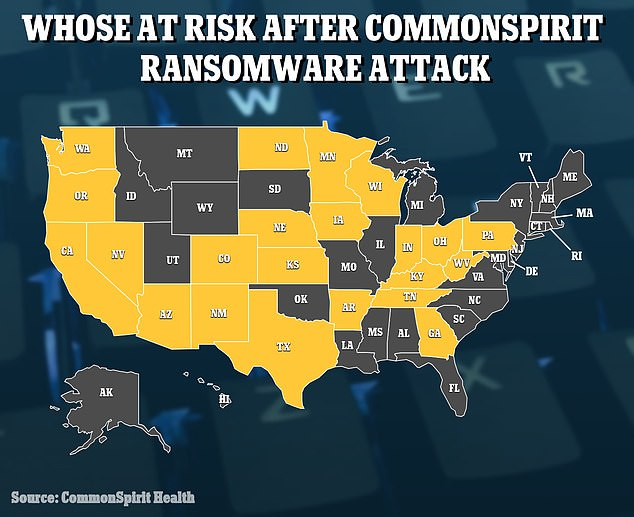
The fourth-largest US hospital system, Chicago-based CommonSpirit Health, is struggling with the impact of a major cyberattack, more than a week after it began disrupting electronic health record access and delaying care in multiple regions across the country. Beyond confirming the attack, the system has not provided many details, other than that it took immediate steps to protect its systems and has begun an investigation.

The Gist: Healthcare hacking is on the rise—our industry experienced the largest increase in cyberattacks of any in 2021. Sitting on troves of valuable patient data, health systems must ready themselves for the reality that hacking attempts are no longer a question of “if,” but “when.” Now is the time not only to ensure proper safeguards are in place to prevent such attacks, but also to prepare response plans for once a hack is confirmed, to be able to continue patient care amid disruption when time is of the essence and patient lives are at stake. 

In Defense of Value: A Response to Ken Kaufman

In an Oct. 5, 2022, commentary, Ken Kaufman offers a full-throated and heartfelt defense of non-profit healthcare during a time of significant financial hardship. Ken describes 2022 as “the worst financial year for hospitals in memory.” His concern is legitimate. The foundations of the nonprofit healthcare business model appear to be collapsing. I’ve known and worked with Ken Kaufman for decades. He is the life force behind Kaufman Hall, a premier financial and strategic advisor to nonprofit hospitals and health systems. The American Hospital Association uses Kaufman Hall’s analysis of hospitals’ underlying financial trends to support its plea for Congressional funding. Beyond the red ink, Ken laments the “media free-for-all challenging the tax-exempt status, financial practices, and ostensible market power of not-for-profit hospitals and health systems.” He is referring to three recent investigative reports on nonprofits’ skimpy levels of charity care (Wall Street Journal), aggressive collection tactics (New York Times) and 340B drug purchasing program abuses (New York Times). Ken has never been timid about expressing his opinions. He’s passionate, partisan and proud. His defense of nonprofit healthcare chronicles their selfless care of critically ill patients, the 24/7 demands on their resources and their commitment to treating the uninsured. These “must have clinical services…don’t just magically appear.” Nonprofit healthcare needs “our support and validation in the face of extreme economic conditions and organizational headwinds. ”Given his personality, it’s not surprising that Ken’s strident rhetoric in defending nonprofit healthcare reminds me of the famous “You can’t handle the truth” exchange between Lieutenant Kaffee (Tom Cruise) and Colonel Jessup (Jack Nicholson) from the 1992 movie “A Few Good Men.” Kaffee presses Jessup on whether he ordered a “code red” that led to the death of a soldier under his command. When Kaffee declares he’s entitled to the truth, Jessup erupts,… I have neither the time nor the inclination to explain myself to a man that rises and sleeps under the blanket of the very freedom I provide and then questions the manner in which I provide it. I would rather you say, “thank you” and be on your way. Should American society just say “thank you” to nonprofit healthcare and provide the massive incremental funding required to sustain their current operations?
Truth and Consequences
(Download PDF here)The social theorist Thomas Sowell astutely observed, “If you want to help someone, tell them the truth. If you want to help yourself, tell them what they want to hear.” In this commentary, Ken Kaufman is telling nonprofit healthcare exactly what they want to hear. The truth is more nuanced, troubling and inconvenient. Healthcare now consumes 20 percent of the national economy and the American people are sicker than ever. Despite the high healthcare funding levels, the CDC recently reported in U.S. life expectancy dropped almost a full year in 2021. Other wealthy nations experienced increases in life expectancy. Combining 2020 and 2021, the 2.7-year drop in U.S. life expectancy is the largest since the early 1920s. During an interview regarding the September 28, 2022, White House Conference on Hunger, Nutrition and Health, Senator Cory Booker highlighted two facts that capture America’s healthcare dilemma. One in three government dollars funds healthcare expenditure. Half of Americans suffer from diabetes or pre-diabetes.As a nation, we’re chasing our tail by prioritizing treatment over prevention. Particularly in low-income rural and urban communities, there is a breathtaking lack of vital primary care, disease management and mental health services. Instead of preventing disease, our healthcare system has become adept at keeping sick people alive with a diminished life quality. There is plenty of money in the system to amputate a foot but little to manage the diabetes that necessitates the amputation. Despite mission statements to the contrary, nonprofit healthcare follows the money. The only meaningful difference between nonprofit and for-profit healthcare is tax status. Each seeks to maximize treatment revenues by manipulating complex payment formularies and using market leverage to negotiate higher commercial payment rates. According to Grandview Research, the market for revenue cycle management in 2022 is $140.4 billion and forecasted to grow at a 10% annual rate through 2030. By contrast, Ibis World forecasts the U.S. automobile market to grow 2.6% in 2022 to reach $100.9 billion. Unbelievably, in today’s America, processing medical claims is far more lucrative than manufacturing and selling cars and trucks. According to CMS’s National Expenditure Report for 2020, hospitals (31%) and physicians and clinical services (20%) accounted for over half of national healthcare expenditures. This included $175 billion allocated to providers through the CARES Act. Despite the massive waste embedded within healthcare delivery, the CARES Act funding gave providers the illusion that America would continue to fund its profligate and often ineffective operations. It’s not at all surprising that healthcare providers now want, even expect, more emergency funding. Change is hard. Not even during COVID did providers give up their insistence on volume-based payment. Providers did not embrace proven virtual care and hospital-at-home business practices until CMS guaranteed equivalent payment to existing in-hospital/clinic service provision. Even with parity payment and the massive CARES Act funding, there was uneven care access for COVID patients. Particularly in low-income communities, tens of thousands died because they did not receive appropriate care. More of the same approach to healthcare delivery will yield more of the same dismal results. Healthcare providers have had over a decade to advance value-based care (VBC). I define VBC as the right care at the right time in the right place at the right price. Instead of pursuing VBC, providers have doubled-down on volume-driven business models that attract higher-paying commercially-insured patients. Despite the relative ease of migrating service provision to lower-cost settings, providers insist on operating high-cost, centralized delivery models (think hospitals). They want society, writ large, to continue paying premium prices for routine care. It’s time to stop. As a country, we need less healthcare and more health.
A Fourth Question
(Download PDF here)

When I give speeches to healthcare audiences, I typically begin with three yes-or-no questions about U.S. healthcare to establish the foundation for my subsequent observations. Here they are. Question #1: The U.S. spends 20% of its economy on healthcare. The big country with the next highest percentage spend is France at 12%. How many believe we need to spend more than 20% of our economy to provide great healthcare to everyone in the country? No one ever raises their hand. Question #2: The CDC estimates that 90% of healthcare expenditure goes to treat individuals with chronic disease and mental health conditions. How many believe we’re winning the war against chronic disease and mental health conditions? No one ever raises their hand. Question #3: Given the answer to the previous two questions, how many believe the system needs to shift resources from acute and specialty care into health promotion, primary care, chronic disease management and behavioral health? Everyone raises their hands. This short exercise is quite revealing. It demonstrates that healthcare doesn’t have a funding problem. It has a distribution problem. It also demonstrates that providers aren’t adequately addressing our most critical healthcare challenge, exploding chronic disease and mental health conditions. Finally, the industry needs major restructuring.

The real questions about reforming healthcare are less about what to reform and more about how to undertake reform. The increasing media scrutiny that Ken Kaufman references as well as growing consumer frustrations with healthcare service provision, demonstrate that healthcare is losing the battle for America’s hearts and minds.

Markets are unforgiving. The operating losses most nonprofit providers are experiencing reflect a harsh reality. Their current business models are not sustainable. An economic reckoning is underway. The long arc of economics points toward value. As healthcare deconstructs, the nation’s acute care footprint will shrink, hospitals will close and value-based care delivery will advance. The process will be messy.

The devolving healthcare marketplace led me to ask a fourth question recently in Nashville during a keynote speech to the Council of Pharmacy Executives and Suppliers. Here it is. Question #4: As the healthcare system reforms, will that process be evolutionary (reflecting incremental change) or revolutionary (reflecting fundamental change). Two-thirds voted that the change would be revolutionary. That response is just one data point but it reflects why post-COVID healthcare reform is different than the reform efforts that have preceded it. The costs of maintaining status-quo healthcare are simply too high. From a policy perspective, either market-driven healthcare reforms will drive better outcomes at lower costs (that’s my hope) or America will shift to a government-managed healthcare system like those in Germany, France and Japan.

Like Ken Kaufman, I admire frontline healthcare workers and believe we need to make their vital work less burdensome. I also sympathize with health system executives who are struggling to overcome legacy business practices and massive operating deficits. Unfortunately, most are relying on revenue-maximizing playbooks rather than reconfiguring their operations to advance consumerism and value-based care delivery.

Unlike Ken Kaufman, I believe it’s time for some tough love with nonprofit healthcare providers. Payers must tie new incremental funding to concrete movement into value-based care delivery. This was the argument Zeke Emanuel, Merrill Goozner and I made in a two-part commentary (part 1part 2) in Health Affairs earlier this year. It’s also why the HFMA, where I serve on the Board, has made “cost effectiveness of health (CEoH)” its new operating mantra.

While this truth may be hard, it also is liberating. Freeing nonprofit organizations from their attachment to perverse payment incentives can create the impetus to embrace consumerism and value. Kinder, smarter and affordable care for all Americans will follow.

Will agency labor needs become permanent? 

https://mailchi.mp/b1e0aa55afe5/the-weekly-gist-october-7-2022?e=d1e747d2d8

“A few months ago, I was confident we would be able to wean our system off travel nurses. But now I’m not so sure,” a chief nursing officer recently shared with us. Like most health systems, they had seen their use of agency nurses decline from peaks during the Delta and Omicron waves of the pandemic, and were encouraged by anecdotes of nurses returning to staff after stints as travelers. But today they remain “persistently stuck with a quarter of the agency nurses we needed at the peak”. 
 
Seeing nurses returning from travel roles makes sense. It’s naturally a time-limited job—eventually the desire to be home wins out over the earning potential on the road. But another nursing leader shared his fear that a stint as a traveler could become an expected part of the arc of a nurse’s career. And from a hospital operations perspective, agency nursing needs are no longer connected to COVID, but are instead driven by general capacity needs in a tight labor market, keeping the operating rooms, emergency department, and ICUs open.

Health systems and physician groups continue to face labor costs that are up to 40 percent higher than 2019. A permanent need for agency nurses will frustrate efforts to rein in labor costs, through both the dollars spent on premium labor, and the resulting need to boost staff nurse salaries when a portion of their colleagues’ pay is anchored at the “traveling rate”.