Steward Files for Bankruptcy and It Feels All Too Familiar

https://www.kaufmanhall.com/insights/blog/steward-files-bankruptcy-and-it-feels-all-too-familiar
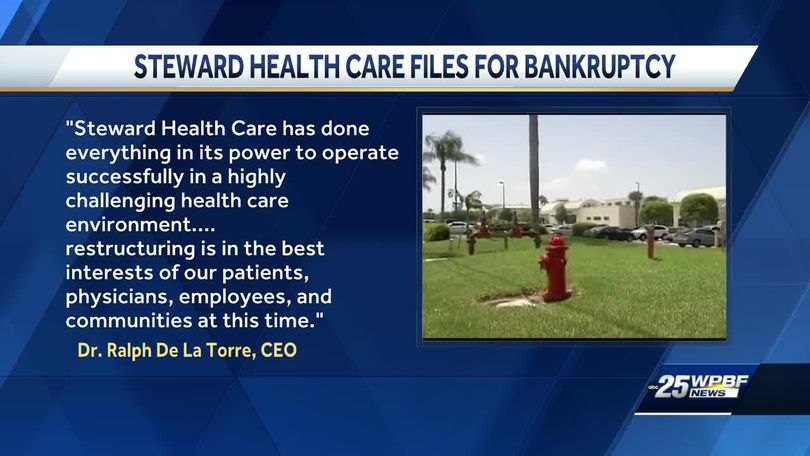
Steward Health Care’s Chapter 11 bankruptcy filing on May 6, 2024, brought back bad memories of another large health system bankruptcy.

On July 21, 1998, Pittsburgh-based Allegheny Health and Education Research Foundation (AHERF) filed Chapter 11. AHERF grew very rapidly, acquiring hospitals, physicians, and medical schools in its vigorous pursuit of scale across Pennsylvania. Utilizing debt capacity and spending cash, AHERF quickly ran out of both, defaulted on its obligations, and then filed for bankruptcy. It was one of the largest bankruptcy filings in municipal finance and the largest in the rated not-for-profit hospital universe.

Steward Health Care is a for-profit, physician-owned hospital company, but its long-standing roots were in faith-based not-for-profit healthcare. Prior to the acquisition by Cerberus Capital Management in 2010, Caritas Christi Health Care System was comprised of six hospitals in eastern Massachusetts. Caritas was a well-regarded health system, providing a community alternative to the academic medical centers in downtown Boston. Over the next 14 years, Steward grew rapidly to 31 hospitals in eight states, most recently bolstered through an expansive sale-leaseback structure with a REIT. Per the bankruptcy filings, the company reported $9 billion in secured debt and leases on $6 billion of revenue.

Chapter 11 bankruptcy filings in corporate America are a means to efficiently sell assets or a path to re-emergence as a new streamlined company. A quick glance at Steward’s organizational structure shows a dizzying checkerboard of companies and LLCs that will require a massive untangling. Further, its capital structure includes both secured debt for operations and a separate and distinct lease structure for its facilities, and in bankruptcy, that signals significant complexity. Bankruptcy filings in not-for-profit healthcare are less common, although it is surprising that the industry did not see an increase after the pandemic. Not-for-profit hospitals that are in distress seem to hang on long enough to find a buyer, gain increased state funding, attain accommodations on obligations, or find some other escape route to avoid a payment default or filing.

Details regarding Steward’s undoing will unfold in the coming weeks as it moves through an auction process. But there are some early takeaways the not-for-profit industry can learn from this:

  1. Remain essential in your local market. Hospitals must prove their value to their constituents, including managed care payers, especially in competitive urban markets, as Steward may have learned in eastern Massachusetts and Miami. Prior strategies of making a margin as an out-of-network provider are no longer viable as patients must shoulder more of the financial burden. Simply put, your organization should be asking one question: does a managed care plan need our existing network to sell a product in our market? If the answer is no, you need to develop strategies that make your hospital essential.
  2. Embrace financial planning for long-term viability. Without it, a hospital or health system will be unable to afford the capital spending it needs to maintain attractive, patient-friendly, state-of-the art facilities or absorb long-term debt to fund the capital. Annual financial planning is more than just a trendline going forward. The scenarios and inputs must be well-founded, well-grounded in detail, and based on conservative assumptions. Increasing attention has to be paid to disrupters, innovators, specialized/segmented offerings, and expansion plans of existing and new competitors. Investors expect this from not-for-profit borrowers. Higher-performing hospitals and health systems of all sizes do this well.
  3. Build capital capacity through improved cash flow. It is undoubtedly clear that Steward, like AHERF, was unable to afford the capital and debt they thought they could, either through flawed financial planning of its future state or, more concerning, the complete absence of it. Or they believed that rapid growth would solve all problems, not detailed financial planning, the use of benchmarks, or a sharp focus on operations. Increasing that capacity through sustained financial performance will allow an organization to de-leverage and build capital capacity.

When the case studies are written about Steward, a fact pattern will be revealed that includes the inability or unwillingness to attain synergies as a system, underspending on facility capital needs given a severe liquidity crunch, labor challenges, and a rapid payer mix shift.

Underlying all of this will undoubtedly be a failure of governance and leadership as we saw with AHERF. It will also likely indicate that one of the most precious assets healthcare providers may have is the management bandwidth to ensure strategic plans are appropriately made, tested, monitored, and executed.

While Steward and AHERF may be held up as extreme cases, not-for-profit hospital governance must continue to focus on checks-and-balances of management resources. Likewise, management must utilize benchmarks, data, and strong financial planning, given the challenges the industry faces.

The Do’s and Don’ts of Navigating the Health System when you Need It: My First-Hand Experience

I fell down a flight of stairs at 4 a.m. last Wednesday.

It was totally my fault.

Since then, I have used hospital emergency departments in 2 states, a freestanding imaging center and a large orthopedic clinic and I’m just getting started. Six days in, I’m lucky to be alive but I still don’t know the extent of my injuries, my chances of playing golf again nor what I will end up spending on this ordeal. But nonetheless, it could have been worse. I’m alive.

Surprises in all aspects of life are never anticipated fully and always disruptive. This one, for me, is no exception. I am frustrated by my accident and uncomfortable with sudden dependence on others to help navigate my recovery.

But this is also a teachable moment., As I am navigating through this ordeal, I find myself reflecting on the system—how it works or doesn’t—based on what I am experiencing as a patient.

Here’s my top three observations thus far:

The patient experience is defined by the support team:

The heroes in every setting I’ve used are the clerks, technicians, nurses and support staff who’ve made the experiences tolerable and/or reassuring. Patients like me are scared. Emotional support is key: some of that is defined by standard operating procedures and checklists but, in other settings, it’s cultural. Genuineness, empathy and personal attention is easy to gauge when pain is a factor. By the time physicians are on the scene, reassurance or fear is already in play. Care teams include not just those who provide hands-on care, but the administrative clerks and processes that either heighten patient anxiety or lessen fear. The health and well-being of the entire workforce—not just those who deliver hands-on care—matters. And it’s easy to see distinctions between organizations that embrace that notion and those that don’t.

Navigation is no-man’s land:

The provider organizations I’ve used thus far have 3 different owners and 3 different EHR systems. Each offers written counsel about ‘patient responsibility’ and each provides a list of do’s and don’ts for each phase of the process. Sharing test results across the 3 provider organizations is near impossible and coordination of care management is problematic unless all parties agree and protocols facilitating sharing in place.  Perhaps because it was a holiday weekend, perhaps because staffing levels were less than usual, or perhaps because the organizations are fierce competitors, navigating the system has been unusually difficult. Navigating the system in an emergency is essential to optimal outcomes: processes to facilitate patient navigation are not in place.

What’s clear is hospitals, clinics and imaging facilities on different EHR systems don’t exchange data willingly or proactively. And, at every step, getting approvals from insurers a major step in the processes of care.

Price transparency is a non-issue in emergency care: 

The services I am receiving include some that are “shoppable” and many that aren’t. I have no idea what I will end up spending, my out-of-pocket obligations nor what’s to come. I know among the mandatory forms I signed in advance of treatment in all 3 sites were consent forms for treatment and my obligation for payment. But in an emergency, it’s moot: there’s no way to know what my costs will be or my out-of-pocket responsibility. So, the hospital and insurer price transparency rules (2021, 2022) might elevate awareness of price distinctions across settings of care but their potential to bend the cost curve is still suspect.

Patients, like me, have to fend for ourselves. I am a number. Last Wednesday, waiting 85 minutes to be seen was frightening and frustrating though comparatively fast. Duplicative testing, insurer approvals, work-shift transitions, bedside manners, team morale, and sterile care settings seem the norm more than exception.

So, for me, the practical takeaways thus far are these:

  • Don’t have an accident on a holiday weekend.
  • Don’t expect front desk and check-out personnel to engage or answer questions. They’re busy.
  • Don’t expect to start or leave without paying something or agreeing you will.
  • Don’t expect waiting areas and exam rooms to be warm or inviting.
  • Do have great neighbors and family members who can help. For me, Joe, Jordan, Erin and Rhonda have been there.

The health system is complicated and relationships between its major players are tense. Not surprisingly and for many legitimate reasons, my experience, thus far, is the norm. We can do better.

Paul

P.S. As I have reflected on the event last week, I found myself recalling the numerous times I called on “my doctors” to help my navigation of the system. They include Charles Hawes (deceased), Ben Womack, Ben Heavrin, David Maron, David Schoenfeld and Blake Garside. And, in the same context, the huge respect I have for clinicians I’ve known through Vanderbilt and Ohio State like Steve Gabbe and Andy Spickard who personify the best the medical profession has to offer. Thanks gentlemen. What you do matters beyond diagnoses and treatments.  Who you are speaks volumes about the heart and soul of this industry now struggling to re-discover its purpose.

29 hospitals, health systems cutting jobs

A number of hospitals and health systems are reducing their workforces or jobs due to financial and operational challenges. 

Below are workforce reduction efforts or job eliminations announced this year. 

Editor’s Note: This webpage was created Jan. 19 and updated May 10. 

May

White Rock Medical Center in Dallas laid off nearly 35% of its staff. The hospital temporarily stopped taking patients transported by emergency medical services due to the layoffs, The Dallas Morning News reported. It has since resumed accepting those patients.

Oakland-based Kaiser Foundation Hospitals is laying off 76 workers in California. The layoffs primarily affect employees in IT and marketing, according to regulatory documents filed with the state May 1.

April

Pittsburgh-based UPMC will lay off approximately 1,000 employees. The layoffs, which represent more than 1% of the health system’s 100,000 workforce will primarily affect nonclinical, administrative and non-member-facing employees. 

Union Springs, Ala.-based Bullock County Hospital laid off 95 employees beginning April 9, according to regulatory documents filed with the state. The layoffs occurred as Bullock seeks to become a rural emergency hospital and is ending psychiatric services as part of the shift, AL.com reported April 25.

Jackson Health System reduced compensation programs for senior leaders; laid off fewer than 25 people, including one hospital CEO; and froze many vacant positions, especially in support and nonclinical areas, a spokesperson for the Miami-based organization confirmed to Becker’s. President and CEO Carlos Migoya shared these efforts in a message to staff, citing financial challenges.

Coos Bay, Ore.-based Bay Area Hospital plans to conduct layoffs as it outsources its revenue cycle management operations, a spokesperson for the hospital confirmed to Becker’s. The transition will affect 27 positions.

Manchester, N.H.-based Catholic Medical Center plans to cut 142 positions, including 54 layoffs. An April 18 letter to employees from CMC president and CEO Alex Walker, obtained by Becker’s, said cuts would occur through the 54 staff eliminations, open position cuts, reduced hours, planned departures, and resource redeployment in satellite locations for CMC.

Marshfield (Wis.) Clinic Health System will lay off furloughed staff, effective in early May. The health system furloughed about 3% of its workforce in January, affecting positions mostly in non-patient-seeing departments, including leadership roles. 

Norwalk, Ohio-based Fisher-Titus Medical Center laid off some workers in nonclinical roles and reduced hours for others. Seven employees, about 0.5% of the health system’s workforce, were laid off  April 1. Work hours were reduced for another 10 positions, a hospital spokesperson told Becker’s.

March

Robbinsdale, Minn.-based North Memorial Health is laying off 103 employees in clinical and nonclinical roles, citing financial challenges. The layoffs affect several services across the two-hospital system. 

AHMC’s San Gabriel (Calif.) Valley Medical Center is laying off 62 workers, according to regulatory documents filed with the state March 13. The layoffs take effect May 13.

Miami-based North Shore Medical Center, part of Steward Health Care, started conducting layoffs as part of cuts to some of its programs amid the Dallas-based health system’s continued financial struggles. Around 152 workers represented by 1199SEIU were laid off, a union spokesperson confirmed. However that number could be higher as their members do not represent every employee at NSMC, the spokesperson said.

Oakland, Calif.-based Kaiser Foundation Hospitals is laying off more than 70 employees. The layoffs primarily affect those in IT roles.

February

Lion Star, the group that operates Nacogdoches (Texas) Memorial Hospital, is closing four of its clinics on March 22, which will result in fewer than 50 layoffs, a Lion Star spokesperson confirmed to Becker’s. No additional layoffs are planned.

Little Rock-based Arkansas Heart Hospital has laid off fewer than 50 employees since the beginning of 2024, citing low reimbursement rates. The layoffs affected lower-paying positions, Bruce Murphy, MD, CEO of the hospital, said, according to Arkansas Business.

Cincinnati-based Mercy Health will lay off some call center positions. The system attributed the move to its partnership with a third party to operate its enterprise contact center for primary care scheduling.

Ridgecrest (Calif.) Regional Hospital announced more layoffs to avoid closure. It is laying off 31 more employees, including seven licensed vocational nurses and four registered nurses, two months after it announced plans to lay off nearly 30 others and suspend its labor and delivery unit, Bakersfield.com reported Feb. 15.

Medford, Ore.-based Asante health system laid off about 3% of its workforce. The layoffs primarily affected administrative and support roles and were necessary to offset “financial headwinds” over the past several years, according to a report from NBC affiliate KOBI-TV, which is based on an internal memo sent to staff Feb. 9. 

Oakdale, Calif.-based Oak Valley Hospital District is scaling back services and laying off workers to improve its finances. The hospital said in a Feb. 2 statement shared with Becker’s that it will close its five-bed intensive care unit, discontinue its family support network department and lay off 28 employees, including those in senior management and supervisor positions. 

Chicago-based Rush University System for Health laid off an undisclosed number of workers in administrative and leadership positions, citing “financial headwinds affecting healthcare providers nationwide.” No additional information was provided about the layoffs, including the number of affected employees.

University of Chicago Medical Center laid off about 180 employees, or less than 2% of its roughly 13,000-person workforce. The majority of affected positions are not direct patient facing, the organization said in a statement shared with Becker’s.

Fountain Valley, Calif.-based MemorialCare laid off 72 workers due to restructuring efforts at its Long Beach (Calif.) Medical Center and Long Beach, Calif.-based Miller Children’s and Women’s Hospital. The layoffs include 13 positions at Long Beach Medical Center’s outpatient retail pharmacy, which is closing Feb. 2, a spokesperson for MemorialCare said in a statement shared with Becker’s.

January

George Washington University Hospital in Washington, D.C., part of King of Prussia, Pa.-based Universal Health Services, is laying off “less than 3%” of its employees. The move is attributed to restructuring efforts.

Amarillo-based Northwest Texas Healthcare System, also part of Universal Health Services, announced plans to lay off a “limited number of positions.” The move is attributed to restructuring efforts. 

Lehigh Valley Health Network is cutting its chiropractic services and laying off 10 chiropractors. The layoffs are effective April 12 and due to restructuring. The Allentown, Pa.-based health system has 10 chiropractic locations, according to its website

Central Maine Healthcare is laying off 45 employees as part of management reorganization. The Lewiston-based system, which also ended urgent care services at its Maine Urgent Care on Sabattus Street in Lewiston on Jan. 12, has 3,100 employees total.

University of Vermont Health Network, based in Burlington, is cutting 130 open positions. The move is part of the health system’s efforts to reduce expenses by $20 million.

Med-Trans, a medical transport provider based in Lewisville, Texas, closed its UF Health ShandsCair base serving Gainesville, Fla.-based UF Health Shands Hospital on Jan. 10 due to decreased transportation demands. The move also resulted in layoffs, a spokesperson for UF Health, the hospital’s parent company, told Becker’s in a statement. 

RWJBarnabas Health, based in West Orange, N.J., is laying off 79 employees, according to documents filed with the state on Jan. 8. The layoffs are effective March 31 and April 5. A spokesperson for the health system told Becker’s that 74 of the positions were “time-limited information technology training job functions.” The other layoffs were due to closure of an urgent care center.

‘No silver bullets’ to improve margins, OSF CFO says

Peoria, Ill.-based OSF HealthCare has seen drastic improvements to its financial performance over the last two years, a performance that has allowed the health system to see revenue growth and expand its M&A footprint.

OSF was able to turn around a $43.2 million operating loss (-4.5% margin) in the first quarter ended Dec. 31, 2022, to a $0.9 million gain over the same period in 2023.

But the health system didn’t stop there and, in the first six months ended March 31, 2023, transformed a $60.9 million operating loss to an $8.9 million gain for the same period in 2024.

OSF HealthCare CFO Michael Allen connected with Becker’s to discuss the strategies that helped OSF get to a more steady financial place and some of their plans for the future. 

Question: What strategies has OSF HealthCare implemented to help it turn the corner financially? 

Michael Allen: OSF Healthcare has improved operating results by more than $70 million compared to FY2023, after seeing an even larger improvement from FY2022 to FY2023. After a very difficult FY2022, from a financial perspective, the organization launched a series of initiatives to return to positive margins. 

There has been a focus on reducing the reliance on contract labor, nursing and other key clinical positions, with better recruiting and retaining initiatives. The organization is actively implementing automation for repeatable tasks in hard-to-recruit administrative functions and is actively managing supply and pharmaceutical costs against inflationary pressures.

OSF has also seen revenue growth from patient demand, expanding markets, capacity management and improved payment levels from government and commercial payers.

Q: KSB Hospital and OSF HealthCare recently entered into merger negotiations. How do you expect hospital consolidation to evolve in your market as many small, independent providers continue to face financial challenges and struggle to improve their bottom lines?

MA: The economics of the healthcare delivery system model is challenging in most markets, but particularly difficult for small and independent hospitals and clinics. Given the structure of the payment system and the rising operating costs, I don’t see this pressure easing any time soon.  

OSF is looking forward to our opportunity to extend our healthcare ministry to KSB and the greater Dixon area and continue their great legacy of patient care.

Q: What advice would you have for other health system financial leaders looking to get their margins up this year?

MA: There are no silver bullets to improving margins. It’s the daily work of using our costs wisely and executing on important strategies that will win the day. Automation, elimination of non-value-added costs and continuously looking for opportunities to get the best care, patient engagement and workforce engagement is where OSF and other health systems will continue to focus.

Q: An increasing number of hospitals and health systems across the U.S. are dropping some or all of their commercial Medicare Advantage contracts. Where do you see the biggest challenges and opportunities for health systems navigating MA?

MA: As more and more patients and payers are entering Medicare Advantage, we continue to watch our metrics on payment levels to ensure we are being paid fairly and within contract terms for our payer partners. 

There does appear to be a trend of increasing denials that often aren’t justified or are not within our contract terms, and we will continuously work to rectify those issues with our payers to ensure our patients receive the appropriate care and OSF is paid fairly for services provided. 

A Different Way of Thinking About Hospital Closures

https://www.kaufmanhall.com/insights/thoughts-ken-kaufman/different-way-thinking-about-hospital-closures

For several decades, the economics, demographics, and technology of healthcare have been fueling a trend toward closure of inpatient hospitals.

In the past ten years, from 2014 through 2023, 229 hospitals closed without being converted into other facilities, while only 118 new hospitals opened, according to data provided by MedPAC in its March 2020 and March 2024 reports to Congress.

Rural closures have generated significant concern—justifiably so due to the risk of reduced access to care. Of the 229 hospitals that closed in the past decade, 68 were rural, with an additional 48 closing and converting into other types of care facilities, according to the Sheps Center for Health Services Research at the University of North Carolina. Although the number of rural closures is high, the numbers also show that the issue is by no means confined to rural areas.

Continued closures appear to be inevitable.

Kaufman Hall’s research shows that a significant number of hospitals have signs of financial distress, with 40 percent losing money from operations and many more with unsustainably low margins. In 2023, almost one-third of announced hospital transactions involved a distressed party—the highest percentage in the past five years.

The circumstances leading to hospital closures are as serious as they are familiar: rising operating expenses, labor shortages, shifts from inpatient to outpatient care, high-cost technology, flattening reimbursement, an aging population, and population migration.

At the same time these forces are driving some hospitals toward financial distress, they can also create clinical and even safety concerns—including inpatient volume that is reduced to the point where quality may be compromised and an inability to maintain aging physical plants.

These forces are inexorable. Attempting to maintain the status quo is simply not a viable strategy. Unfortunately, a desire to protect the status quo is often what health systems encounter when attempting to close a hospital. This impulse toward protectionism is understandable. Community groups are concerned about losing access to care. Labor groups are worried about losing jobs. Political leaders are concerned about both, and about the continued economic strength of their localities.

In too many cases, these understandable concerns have the unintended consequence of keeping open a hospital that no longer effectively serves its community. In other cases, they make the process of necessary change unnecessarily painful and protracted.

The challenge for healthcare executives and community leaders alike is to figure out a new path forward—one that creates a clinically, operationally, and economically viable approach to providing needed access to high quality care but offers an alternative to complete hospital closure or to a facility continuing to exist in a state of distress.

Recently, we came across a man named Scott Keller, who has spent the past 28 years shaping and implementing what looks to me like a creative and workable path forward for many communities facing hospital closures.

The intellectual underpinning of Scott’s approach is to combine community health, economic development, and neighborhood planning. Through that lens, Scott and his team at Dynamis look to transform hospitals that are no longer viable into community hubs that he calls “Healthy Villages®.”

These hubs address a range of community needs that include some traditional healthcare services, but also social and other community services. They bring these services together—under one roof and extending into the neighborhood—into a careful system that creates an opportunity to develop new care models built on the foundation of value-based, population-based care, prioritizing health, prevention, and elimination of disparities and barriers to care. The aim is to treat the whole person in a walkable, thriving community.

At a macro level, Scott’s approach involves consolidating treatment services into a fraction of the square footage of the existing facility and leasing the remaining space to partners focused on social determinants of health, much like a successful multifaceted retail environment creates an excellent consumer experience.

From there, the hub integrates with other neighborhood partners such as senior housing providers, financial institutions for social-impact financing, and education providers to support workforce training.

Scott explained to us that the approach can be applied in settings from challenged urban neighborhoods to rural towns, at scales from neighborhoods to full towns, and in concert with initiatives such as a health system’s service-line planning. In addition, some of these hubs have unique sources of funding that support the community, funding not typically available to a traditional hospital.

Perhaps the most attractive quality of Scott’s approach is to shift the conversation about a distressed hospital from the binary close-or-don’t close to a thoughtful consideration of what it means to deliver healthcare in a setting that has difficulty supporting a particular hospital.

In doing so, Scott helps us focus on the true issue at hand. America’s economic, demographic, and technological forces are aligned in certain markets to challenge the adequacy of the traditional hospital. The question is not whether this group of hospitals will change, but how they will change.

In too many instances and too many locations, that hospital change becomes an enemy to be fought against, resulting in a transformation that is protractedly painful and that often ends poorly for all concerned. Scott’s approach is a welcome example of how organizations and communities, rather than clinging to the status quo, can apply creative thinking, broad participation, and systematic planning to shape a future that may turn out to be not an enemy, but a real and lasting improvement.

The state of state physician noncompete bans

https://www.kaufmanhall.com/insights/blog/gist-weekly-may-17-2024

With the Federal Trade Commission (FTC) issuing a final rule last month that bans noncompete agreements nationwide, the graphic above is our attempt to categorize the current status of complex state noncompete laws that affect physicians. 

Except in the event of a business sale, five states—California, North Dakota, Minnesota, Nebraska, and Oklahoma—ban all noncompete agreements for all employees, and at least 19 states either ban them for physicians or place varying limits on them for physicians. 

Examples of these limits include a narrow law in Florida that allows noncompetes to be voided if there is only one employer of a physician specialty in a county, and a Tennessee law that only permits physician noncompetes that bar a physician from practicing at facilities where their former employer provides services. 

As a noncompete agreement can restrict a physician’s ability to practice near a former employer for years, bans on physician noncompete agreements have been shown to improve community access to care. One study found that, compared to places that allow them, places that banned noncompetes for physicians saw increased physician employment, the opening of more physician practices, and a lower likelihood of practice closures. 

Should the new FTC ban survive the mounting legal challenges it faces, its effect on the physician labor market may be limited, as not-for-profit organizations fall outside the FTC’s traditional enforcement jurisdiction. However, the agency has indicated a willingness to reevaluate an entity’s not-for-profit status and stated that “some portion” of tax-exempt hospitals could fall under the final rule’s purview.

Days Cash on Hand Does Not Tell the Full Liquidity Story

https://www.kaufmanhall.com/insights/blog/days-cash-hand-does-not-tell-full-liquidity-story

Days cash on hand is one of the most important metrics in hospital credit analysis. The ratio calculates an organization’s unrestricted cash and investments relative to daily operating expenses.

Here’s a computation commonly used to calculate days cash on hand:

[Unrestricted cash and investments*365 days] / [Annual operating expenses – non-cash expenses]

Math aside, let’s unpack what days cash on hand really tells us. Days cash on hand gives an indication of a hospital’s flexibility and financial health. Essentially, it tells us how long a hospital could continue to operate if cash flow were to stop. From a ratings perspective, the higher the days cash, the better, to create a cushion or rainy-day fund for unexpected events.

While the sheer abatement of cash flow feels like a doomsday scenario, we don’t have to look far back to see examples. The shutdown in the early days of Covid and the recent Change Healthcare cyberattack are examples of events that can materially impact cash flow. While these may be considered extreme, there are plenty of more common events that can disrupt cash flow, including a delay in supplemental funding, an IT installation, a change in Medicare fiscal intermediary, an escalation in construction costs, or the bankruptcy of a payer.

Size and diversified business enterprises can impact days cash on hand. For example, small hospitals with outsized cash positions relative to operations often report a dizzying level of days cash on hand. Health systems with wholly owned health plans often show lower days cash when compared to like-sized peers without health plans. Analysts will also review a hospital’s cash-to-debt ratio, which is an indication of leverage and compares absolute unrestricted cash to long-term obligations. Cash-to-debt creates a more comparable ratio across the portfolio.

In the years leading up to the pandemic, the days cash on hand median increased steadily as the industry went through a period of stable financial performance and steady equity market returns. Hospitals took advantage of an attractive debt market to fund large capital projects or reimburse for prior capital spending. The median crested over 200 days. As discussed during our March 20, 2024, rating agency webinar, days cash median for 2023 is expected to decline or remain flat at best, not because of an increase in capital spending or deficit operations, but because daily expenses (mainly driven by labor) will grow faster than absolute cash. Expenses will outrun the bear, so to speak.

Days cash on hand will remain a pillar liquidity ratio for the industry, but equally important is the concept of liquidity. Days cash on hand doesn’t tell the whole story regarding liquidity. A hospital may compute that it has, say, 200 days cash on hand, but that calculation is based on total unrestricted cash and investments, which usually includes long-term investment pools. A sizable portion of that 200 days may not be accessible on a daily basis.

Recall that during the 2008 liquidity crisis, many hospitals had large portions of their unrestricted investment pools tied up in illiquid investments. When you needed it the most, you couldn’t get it. 2008 was a watershed moment that starkly showed the difference between wealth and liquidity and the growing importance of the latter. Days cash on hand didn’t necessarily mean “on hand.” Many hospitals scrambled for liquidity, which came in the form of expensive bank lines because liquidating equity investments in a down market would come at a huge cost.

Nearly overnight, daily liquidity became a fundamental part of credit analysis.

While the events were different, Covid and Change Healthcare followed the same fact pattern: crisis occurred, cash flow abated, and hospitals scrambled for liquidity, drawing on lines of credit to fund operating needs. Within a quick minute healthcare went “back to the future,” and undoubtedly, there will be another liquidity crisis ahead.

Rating reports now include information on investment allocation and diversification within those investments, and report new ratios such as monthly liquidity to total cash and investments. A hospital with below average days cash on hand or cash-to-debt may receive more attention in the rating report regarding immediately accessible funds.

Irrespective of a high or low cash position or rating category, providing rating analysts with a schedule highlighting where management would turn to when liquidity is needed would be well received. For example, do you draw on lines of credit, hit depository accounts, pause capital, extend payables, or liquidate investments, and in what order? Some health systems are taking this a step further with an in-depth sophisticated analysis to quantify their operating risks and size their liquidity needs accordingly, which we call Strategic Resource Allocation. This analysis would boost an analyst’s confidence in management’s preparedness for the next crisis with the segmenting of true cash “on hand.” It would also help ensure that, when the next crisis arrives, management will know where to turn to maintain liquidity and meet daily cash needs.

Hospital Price Transparency: Is the Juice worth the Squeeze?

Last week, RAND issued its latest assessment of hospital prices concluding…

“In 2022, across all hospital inpatient and outpatient services (including both facility and related professional claims), employers and private insurers paid, on average, 254% of what Medicare would have paid for the same services at the same facilities. State-level median prices have remained stable across the past three study rounds: 254 %of Medicare prices in 2018 (Round 3), 246%in 2020 (Round 4), and 253% in 2022 (Round 5—the current study).”

Like clockwork, the American Hospital Association issued its “Rebuke” of the report:

“In what is becoming an all too familiar pattern, the RAND Corporation’s latest hospital price report oversells and underwhelms. Their analysis — which despite much heralded data expansions — still represents less than 2% of overall hospital spending. This offers a skewed and incomplete picture of hospital spending. In benchmarking against woefully inadequate Medicare payments, RAND makes an apples-to-oranges comparison that presents an inflated impression of what hospitals are actually getting paid for delivering care while facing continued financial and other operational challenges. 

In addition to the ongoing flaw of relying on a self-selected sample of data, their analysis is suspiciously silent on the hidden influence of commercial insurers in driving up health care costs for patients….”

It’s the 5th Edition of RAND’s Employer Transparency Report, each featuring slight methodology changes using Sage Transparency Commercial Claims Data developed for the Employer Forum of Indiana.

The debate over hospital prices is not new nor is RAND the only investigator. Since the Trump administration enacted its Executive Order 13877 (Improving Price and Quality Transparency in American Healthcare) June 24, 2019, numerous organizations have introduced price transparency tools to enable hospital price shopping i.e. Turquoise, Milliman, Leapfrog et al. The Biden administration continued the rule increasing its penalties for non-compliance and Congress has passed 3 laws with bipartisan support widening its application.

However, best-case results reflected as articulated by Larry Levitt, senior vice president of the Kaiser Family Foundation, have not been realized:

“App developers will go crazy developing shopping tools for patients, and patients will use those tools to search for the best deals. The public availability of prices will shame high-priced hospitals into lowering their prices because they’ll be so embarrassed.”

My take:

Academic researchers and economists have concluded that hospital price transparency has not led to reduced heath spending overall nor lower hospital prices. Per a recent systematic review: “No evidence was found for impact on the outcomes volume, availability or affordability. The overall lack of evidence on policies promoting price transparency is a clear call for further research…  Price-aware patients chose less costly services that led to out-of-pocket cost savings and savings for health insurers; however, these savings did not translate into reductions in aggregate healthcare spending.  Disclosure of list prices had no effect, however disclosure of negotiated prices prompted supply-side competition which led to decreases in prices for shoppable services.”

Per Wall Street Journal actuaries, hospital price increases account for 23% of annual health spending increases but vary widely based on factors other than their underlying costs. Determining how hospital prices are set remains beyond the scope of conventional pricing models.

Nonetheless, hospital price transparency is here to stay: public attention is likely to grow and sources– both accurate and misleading– will multiply. It’s safe for elected officials because it’s popular with voters. Per Patient Rights Advocate survey (December 2023), 93% of adults think hospitals should be required to post all prices ahead of scheduled services. It’s clearly seen as foundational to the Federal Trade Commission doctrines of consumer protection and competition. And it’s important to privately insured consumers—the majority of Americans– since 73% of their claims are for “shoppable services” though they trust payers more than hospitals for estimates of their out-of-pocket obligations in these transactions (61% vs. 22%).

In July 2018, I wrote:” Arguing price transparency in healthcare is a misguided effort is like arguing against clean air and healthy eating: it’s senseless.” It’s still true. Making the case that price transparency has a long way to go based on current offerings and utilization is legitimate.

The price transparency movement is gaining momentum in healthcare: though it still lacks widespread impact on spending today, it soon will.”

Hospitals are 30% of total U.S. health spending and almost 40% of the population uses at least one hospital service every year. Promoting “whole person care,” while touting quality war while disregarding affordability and price transparency for consumers seems inconsistent.  Enabling consumers to easily access accurate prices—not just out-of-pocket estimates– is imperative for hospitals seeking long-term relevance and sustainability. And state and federal lawmakers, along with employers, should structure benefits that reward consumers directly for shopping discipline instead of allowing insurers to benefit alone.

Is the Juice worth the Squeeze for hospital price transparency efforts? To date, proponents say yes, opponents say no, and each side has valid concern about use by consumers. But unless one believes the role of consumers as purchasers and users of the system’s service will diminish in coming years, the safe bet is hospital price transparency will play a bigger role.

Medicare Advantage two-midnight rule contributing to higher outpatient revenues

More than 20% of Medicare Advantage patients could be affected by the rule, report finds.

The Centers for Medicare and Medicaid Services’ January expansion of the two-midnight rule to include Medicare Advantage plans has contributed to higher inpatient volumes and revenue growth in the first quarter of the year, according to a Strata Decision Technology report.

This is because inpatient services have higher reimbursement levels compared to outpatient services and the two-midnight rule concerns inpatient care.

CMS published the final rule in April 2023, which for the first time expanded the rule to include Medicare Advantage plans. The rule requires patients to be admitted as an inpatient if the treating clinician determines they require hospital care that extends beyond two midnights, rather than being held under observation status as an outpatient.

The expansion now includes more than 30 million people enrolled in Medicare Advantage managed care plans. Prior to the final rule, the two-midnight rule only explicitly applied to traditional Medicare.

More than 20% of Medicare Advantage patients could be affected by the rule, the report found. An analysis of Medicare Advantage encounters from 2023 – before the rule was expanded to those patients – found that 22.3% were held in observation status for two days or more. By comparison, 8.7% of Medicare patients and 11.3% of patients covered by commercial plans had observation lengths of stay of two days or more in 2023.

WHAT’S THE IMPACT?

Looking at trends in hospital gross revenues, year-over-year growth in inpatient revenue surpassed outpatient revenue in March for the first time in more than two years. Inpatient revenue rose 3.7% versus March 2023, while outpatient revenue was up 2.4% year-over-year.  Overall gross operating revenue increased 3.1% and 2.2% over the same periods, respectively.

March marked the 11th consecutive month of year-over-year increases for all three metrics, which contributed to stronger margins in recent months, data showed.

Revenue growth varied widely for hospitals in different regions. For example, hospitals in the Northeast and Mid-Atlantic areas saw inpatient revenue jump 5.4% year-over-year in March, while outpatient revenue was nearly flat, down just 0.1%.

Adjusted revenues increased year-over-year, but were down month-over-month. Net patient service revenue per adjusted discharge increased 2.5% year-over-year, and decreased 1.7% versus the previous month, while NPSR per adjusted patient day rose 4.9% from March 2023 to March 2024, and was down 0.5% from February to March 2024.

Hospital operating margins showed strong performance throughout the first quarter. The median year-to-date operating margin was 4.7% for the month, down slightly from a peak of 5.2% in January, but up significantly compared to margins of less than 1% in early 2023.

While actual operating margin increased overall, the median change in the metric was nearly flat both year-over-year and month-over-month when looking at the national data. The median change in operating margin decreased 0.1 percentage point from March 2023 to March 2024, and was down 0.3 percentage point compared to February 2024. The median change in operating earnings before interest, taxes, depreciation, and amortization (EBITDA) margin decreased 0.4% year-over-year and 0.5% versus the prior month.

THE LARGER TREND

CMS initially implemented the two-midnight Rule for Medicare in 2013 to help remove barriers to patients receiving medically necessary care.

Medicare’s two-midnight rule states that inpatient services are generally payable under Medicare Part A if a physician expects a patient to require medically necessary hospital care that spans at least two midnights.

Jefferson, Lehigh Valley Health Network ink definitive agreement to merge

Philadelphia-based Jefferson and Allentown, Pa.-based Lehigh Valley Health Network have signed a definitive agreement to merge into a 30-hospital system with more than 700 care sites. 

The two shared plans to unite in December after signing a non-binding letter of intent.

Under the agreement, Jefferson and LVHN will integrate identity, clinical care and operations. The integrated system will comprise more than 65,000 employees and offer new educational opportunities to existing physicians and allow for recruitment opportunities, according to a joint May 15 news release.

The merger will also expand health plan access and improve financial stability that will allow for more investments and new technologies and improved patient outcomes.

Jefferson CEO Joseph Cacchione, MD, will maintain his existing role upon the transaction closure. LVHN president and CEO Brian Nester, DO, will serve as executive vice president and COO of Jefferson and president of the legacy LVHN. He will report to Dr. Cacchione, according to the release.

Baligh Yehia, MD, will serve as Jefferson’s executive vice president and chief transformation officer. Dr. Yehia will also serve as president of the legacy Jefferson health and report to Dr. Cacchione. 

An integrated leadership team and board of trustees will comprise leaders from both health systems.

Jefferson and LVHN will operate as independent parties until the merger, the release said.