Centene quietly lobbying Congress to let states partially expand Medicaid

https://www.healthcaredive.com/news/centene-quietly-lobbying-congress-to-let-states-partially-expand-medicaid/568742/

Centene, the nation’s largest Medicaid managed care provider, wants Congress to change the eligibility requirements around Medicaid, the government-sponsored safety net program that covers one in five low-income Americans.

Its proposal would ultimately push more people onto the Affordable Care Act exchanges by allowing states to adopt a partial Medicaid expansion, an idea typically embraced by red states.

CEO Michael Neidorff told Healthcare Dive the company has been quietly talking to lawmakers on both sides of the aisle on Capitol Hill about the plan, though he emphasized nothing of substance will happen until after the 2020 election.  

Centene says its proposal is an attempt to strengthen the ACA markets by increasing the pool of people while enticing holdout states to partially expand their Medicaid programs.

“I think there’s a way to get it done,” Neidorff told Healthcare Dive. “We have a very powerful Washington office and they’ve been working with leadership and their staff.”

Centene filed lobbying forms totaling about $2 million in spending in the congressional lobbying database for 2019, as of Dec. 11. ​In 2018, the payer reported spending roughly $2.5 million. 

However, policy experts caution that it would result in increased spending for the federal government and fewer protections for those enrolled in Medicaid who are then pushed into the exchanges.

It’s unclear how receptive Congress will be, but experts were skeptical of any consensus on the polarizing health law.

“It would be a very major change. I certainly don’t see that happening. It’s opening up the ACA and as we know from past history, it’s a battle royale when you go into the ACA,” Joan Alker, executive director and co-founder of the Center for Children and Families at Georgetown University, told Healthcare Dive.

Centene’s proposal

Under the ACA, states can expand their Medicaid programs to cover all adults whose annual incomes does not exceed 138% of the federal poverty level, or $17,236 for an individual.

Centene’s proposal calls for lowering that income ceiling from 138% to 100%, or $12,490 for an individual.

That would shrink the pool of who is eligible for Medicaid and push those people into the exchanges. Neidorff said the move would grow the exchange pool and ultimately drive down prices. High costs have attracted criticism as they play a role in forcing those who are not subsidized to leave the market.

Credit: Samantha Liss/Healthcare Dive

For Centene, it would be a notable shift because its core business has long been in Medicaid. The insurance exchanges only became a viable business beginning in 2013 with the advent of the ACA. It’s a nod to how important the exchange business has become for the payer.

Centene arguably stands to benefit the most as the nation’s largest insurer on the exchanges in terms of enrollment, plus the exchanges generate higher profit margins than its Medicaid book of business.

“You move those lives into exchange and your profitability is higher,” David Windley, an analyst with Jefferies, told Healthcare Dive.​

In the states that have not expanded Medicaid, there are about 2 million people with incomes between 100% and 138% of the federal poverty level, according to the Kaiser Family Foundation.

Hospitals and providers are likely to favor the proposal because Medicaid plans tend to pay less than commercial ones. The idea could garner support from states with tight budgets as some, even Massachusetts, have already expressed a desire to adopt a partial expansion. (Both the Trump and Obama’s administrations have denied providing the enhanced match rate for states seeking partial expansions).

Who benefits the most?

Still, there are potential drawbacks, according to analysts and policy experts. For example, the plan could potentially cost taxpayers more if there is a greater shift to the exchanges away from Medicaid coverage.

“Medicaid is broadly accepted as the cheapest coverage vehicle in the country,” Windley said, noting that the exchanges are typically a more expensive insurance product than Medicaid coverage.

Plus, because of the way the ACA was written, the federal government would be forced to pick up the entire tab of the subsidies for those between 100% and 138% of FPL. 

“As a result, the states save money for every beneficiary whom they can move from Medicaid into their exchanges,” according to a previous paper in the New England Journal of Medicine.

However, policy experts warn the proposal may not be in the best interest of Medicaid members who would migrate to the exchanges.

These members are better off with Medicaid, Alker said.

“From a beneficiary perspective it’s problematic because there are no premiums in Medicaid for that group, 100-138 [FPL]. The cost sharing is very limited,” she said.

Plus, there are benefits in Medicaid members would no longer have access to if they move to the exchanges, Adrianna McIntyre, a health policy researcher at Harvard University, told Healthcare Dive, including non-emergency transportation and retroactive eligibility.

Centene argues many states have avoided expanding Medicaid because of cost concerns, which then leaves some residents without access to affordable care, particularly those in the coverage gap, or those with incomes below 100% of FPL.

If a partial option convinces some holdout states to expand “that’s a tradeoff some may be willing to make,” McIntyre said.

Some states that did expand are looking for ways to curb costs and have decided to implement work requirements, Neidorff noted. He believes the proposal is the answer to both these problems for states.

Centene’s plan comes as a slate of Democratic presidential contenders are calling for “Medicare for All,” a single-payer or public-option healthcare system.

Not surprisingly as such a plan would at a minimum sideline private plans and at the extreme eliminate private payers, Neidorff dismissed the idea.

He estimates his plan would cost $6 billion a year, which he characterized as “very affordable” when compared to a Medicare for All plan, which some studies estimate could cost as much as $32 trillion over 10 years.

Still, some policy experts say the change being proposed by Centene is a tall order.

Though the changes may seem small, the consequences of adopting a partial expansion are large, researchers wrote in a NEJM report: “The damage to Medicaid beneficiaries, the exchange population, and the federal budget could be serious.”


Provider of the Year: Providence St. Joseph Health

https://www.healthcaredive.com/news/provider-providence-st-joseph-health-dive-awards/566477/

The 51-hospital system, which traces its roots back to the 1850s,​ has maintained a stable ratings outlook amid industry headwinds and pursued tech partnerships this year to bolster its portfolio.

Providence St. Joseph Health, the fourth-largest U.S. nonprofit health system by number of hospitals, marked a busy 2019 with multiple efforts to dive into the tech sector and seek out partnerships to tackle the industry’s biggest challenges.

The Catholic system now operates 51 hospitals in eight states as the result of a July 2016 merger of Providence Health and Services and St. Joseph Health. While the organization is the dominant inpatient provider in all its markets, no single area accounts for more than 30% of its net operating revenue, showing good portfolio diversification, ratings agency have noted.

The system, which can trace its roots back to the 1850s when the Sisters of Providence set up hospitals, schools and orphanages throughout the Northwest, posted $24 billion in operating revenue last year. That metric has shown year-over-year increases since the $18 billion posted in 2014.

Providence CEO Rod Hochman told Healthcare Dive the health system hasn’t shied away from seeking partnerships as the industry swings toward value based care and other systemic changes.

“I think the message is: ‘You can’t do it alone,'” he said. “You can’t go out there and just do it yourself — you don’t have the scale to do it.”

In that vein, the system (which is formally rebranding to Providence over the next few years) was one of the founding members of generic drug company Civica Rx, which opened its headquarters and made its first delivery this year. That’s a coalition of hospitals working to make their own drugs, starting with antibiotics.

It’s also grouping up with One Medical to increase access to primary care and teaming with Cedars-Sinai to build a patient tower in southern California. And in February, the organization launched the population health management company Ayin Health Solutions to provide benefits management as well as risk evaluation and care coordination tools.

Providence has maintained a stable outlook from the three main ratings agencies even as other nonprofits struggled to stay above water. Kevin Holloran, senior director at Fitch Ratings, said the system has managed to think about margins the way a public company must while still adhering to the mission-driven thought process nonprofit organizations trumpet.

“Blending those two thoughts together sounds easy, but it’s not,” Holloran told Healthcare Dive. “It’s hard to do.”

Moody’s Investors Service issued a credit opinion recently on Providence, finding the system’s integrated structure that includes a health plan and 7,600 employed physicians creates “further cashflow diversification, and strengthens the organization’s competitive position.”

The analysts wrote they expect operating margins to continue to improve going into next year as it implements dozens of initiatives updating operating practices, cost structures and revenue systems. They note, however, the organization faces a challenge in transitioning disparate EHRs and its numerous joint ventures “may also entail a certain amount of execution and integration risk.”

Holloran pointed to two relatively recent hires as leading the way for Providence — both poaches from Microsoft. CFO Venkat Bhamidipati joined the organization two years ago and CIO B.J. Moore came on in January.

They migrated from the tech world to the traditionally loathe-to-change healthcare landscape, and have made a difference for Providence.

It puts the company in a strategic place for growth, Holloran said. “Now they’re sort of adding that missing piece, which is optimizing what they’ve got,” he said. “And a big piece of that is the technology, and they’re doing it in a unique and interesting way.”

This year, Providence acquired Lumedic, which uses blockchain tools for revenue cycle management, and Bluetree, an Epic consultancy. The health system also allows patients to schedule appointments through Amazon’s smart speaker Alexa.

In July, the health system announced an agreement with Microsoft to use the tech giant’s cloud and artificial intelligence tools in an effort to foster interoperability, improve outcomes and drive down costs.

The organization still has traditional struggles, however. Hochman, who is also the incoming chairman of the American Hospital Association, said the ongoing litigation surrounding the Affordable Care Act, coupled with payment changes and other CMS changes, creates a chaotic environment for providers.

“Every day they come up with something new, and it’s been the lack of predictability that’s been the biggest problem for us,” he said.


Nonprofit hospitals get bump in Moody’s ratings for 2020

https://www.healthcaredive.com/news/nonprofit-hospitals-get-bump-in-moodys-ratings-for-2020/568739/

UPDATE: Dec. 11, 2019: Fitch Ratings also changed its sector outlook for the U.S. nonprofit health systems market to stable from negative for 2020 in a report released Tuesday.

Dive Brief:

  • Next year should be kinder to nonprofit hospitals and health systems, with Moody’s Investors Service forecasting a 2% to 3% growth in operating cash flow next year, driven by stronger provider revenue due to Medicare and commercial reimbursement raises and growth in patient volumes.
  • Moody’s revised its 2020 outlook for the not-for-profit provider sector from negative to stable as a result, and expects to see increased consolidation as hospitals bid to gain “negotiating leverage with commercial insurers, achieve savings through economies of scale, and ensure a foothold in emerging offerings such as urgent care and telemedicine,” analysts wrote.​
  • That’s not to say health systems won’t continue to contend with sharp industry headwinds like rising labor costs and the aging population, along with uncertainty from up-in-the-air legislation, regulation and lawsuits.

Dive Insight:

High Medicare reimbursement rates should, along with slightly more favorable commercial reimbursements, drive sector revenue to jump 4% to 5%, Moody’s predicts. Medicare payment rates in 2020 are the most industry-friendly in a while, analysts say, at 3.1% for overall inpatient rates and 2.6% for outpatient.

Fitch Ratings, which also revised its sector outlook from negative to stable, noted balance sheet measures for the providers are now at levels not seen since before the Great Recession in 2007.

Expense management is also forecast to improve cash flow, though provider shortages will cause labor costs to grow.

A growth in the number of uninsured is projected to curb some of the gains expected under this positive forecast, however. The uninsured rate reached 13.7% at the end of 2018, ticking up from 12.2% in 2017 and a low of 10.6% in 2016, according to Gallup. Policy experts blame the elimination of the Affordable Care Act’s individual mandate, along with other Trump administration policies destabilizing the market.

Other regulatory waves could also impact hospital margins next year.

Cuts to Medicaid disproportionate share payments are likely to be postponed until late 2020 at least, which will help hospitals serving a large number of low-income patients. The $4 billion payment reduction was supposed to go into effect in 2014, but lawmakers have delayed the unpopular cuts annually since.

On Nov. 21, the Senate approved a continuing resolution to fund the federal government through Dec. 20. The CR once again pushed back the trims to the Medicaid payments.

Trump administration policy requiring payers and providers to post secret negotiated rates online could help some hospitals and hurt others, with some health experts arguing it would stimulate competition through transparency and others warning it could cause prices across the board to rise.

Hospital lobbies filed a lawsuit Dec. 4 to stop the rule, arguing it violates the First Amendment and would put overly onerous administrative burdens on providers.

Cuts to the 340B Drug Discount program, meant to prop up hospitals with a large amount of uncompensated care, could also hurt the sector. The program generated an average savings of almost $12 million across all U.S. hospitals last year.

In May, a federal judge struck down planned HHS cuts to 340B, arguing the change was outside of the agency’s authority. However, CMS has said it plans to go through with the payment reductions in the final outpatient rule for 2020.

On the legislative side, the Republican state-led initiative to find the Affordable Care Act unconstitutional would shear an estimated 20 million Americans from coverage and raise premiums on millions more, hitting both hospitals and the consumer hard. ​

“The fate of the ACA will likely again rest with the Supreme Court,” Moody’s analysts said. “An adverse ruling there would have painful implications for hospitals if millions of individuals lose insurance,” and “coverage gains from Medicaid expansion would likely be lost.”


Benefit design, higher deductibles will increase bad debt for hospitals

https://www.healthcarefinancenews.com/node/139468

Legislative proposals could reduce bad debt, but would likely introduce additional complexity to billing processes.

Changes in insurance benefit design that shift greater financial responsibility to the patient, rising healthcare costs and confusing medical bills will continue to drive growth in bad debt — often faster than net patient revenue, according to a new report from Moody’s.

Legislative proposals to simplify billing have the potential to reduce bad debt, but the downside for hospitals is that they’ll likely introduce additional complexity to billing processes and complicate relationships with contracted physician groups. A recent accounting change will reduce transparency around reporting bad debt.

Higher cost sharing and rising deductibles are the main contributors to the trend of patients assuming greater financial responsibility, a trend that’s been occurring for more than a decade, and that will further increase the amount of uncollected payments. Hospitals and providers are responsible for collecting copays and deductibles from patients, which may not always be possible at the time of service; the longer the delay between providing service and collecting payment, the less likely a hospital is to collect payment.

On top of that, the higher an individual’s deductible is, the greater the share of reimbursement that a hospital has to collect. The prevalence of general deductibles increased to 85% of covered workers in 2018, up from 55% in 2006, and the amount of the annual deductible almost tripled in that time to an average of $1,573.

Multiple factors are driving the trend toward higher cost sharing, including a desire among employees and employers for stable premium growth despite steadily rising healthcare costs and the growing popularity of high deductible health plans.

WHAT’S THE IMPACT

Hospitals face an uphill battle when it comes to reducing bad debt. Strategies include point-of-service collections, enhanced technology to better estimate a patient’s responsibility for a medical bill, and offering low-cost financing or payment plans.

A common feature of these approaches is educating patients about what portion of a medical bill is their responsibility, after taking into account the specifics of their insurance plan. But hospitals often find it hard to provide reliable cost estimates for a given service, which can thwart efforts to provide patients with an accurate estimate of their financial responsibility.

One difficulty is that medical bills partly depend on the complexity of service and amount of resources consumed — which may not be known ahead of time. There’s also the need to incorporate specific benefits of the patient’s own insurance plan. A certain amount of bad debt is likely to arise from patients accessing emergency care given the insufficient time to determine insurance coverage.

Another difficulty in billing is surprise medical bills, received by insured patients who inadvertently receive care from providers outside their insurance networks, usually in emergency situations. While the term “surprise medical bills” refers to a specific, narrow slice of healthcare costs, they have become part of the broader debate about the affordability and accessibility of U.S. healthcare.

THE LARGER TREND

To minimize surprise bills, Congress is considering proposals to essentially “bundle” all of the services a patient receives in an emergency room into a single bill. Under a bundled billing approach, the hospital would negotiate a set charges for a single or “bundled” episode of care in the emergency room. The hospital would then allocate payments to the providers involved.

This approach, which major hospital and physician trade groups oppose, has the potential to significantly affect hospitals and disrupt the business models of physician staffing companies, according to Moody’s. Many hospitals outsource the operations and billing of their emergency rooms or other departments to staffing companies. Bundling services would require a change in the contractual relationship between hospitals and staffing companies.

Another recent proposal in Congress would require in-network hospitals to guarantee that all providers operating at their facilities are also in network. This approach adds significant complexity because many physicians and ancillary service providers are not employed or controlled by the hospitals where they work. Some hospitals would likely seek to employ more physicians, leading to increases in salaries, benefits and wages expense.


9 health systems with strong finances

https://www.beckershospitalreview.com/finance/9-health-systems-with-strong-finances-120919.html

Here are nine health systems with strong operational metrics and solid financial positions, according to recent reports from Fitch Ratings, Moody’s Investors Service and S&P Global Ratings.

Note: This is not an exhaustive list. Health system names were compiled from recent credit rating reports and are listed in alphabetical order.

1. Advocate Aurora Health, a 27-hospital system with dual headquarters in Downers Grove, Ill., and Milwaukee, has an “Aa3” rating and positive outlook with Moody’s. The health system has a favorable liquidity position, low leverage, and healthy margins, according to Moody’s. The credit rating agency expects the health system to continue to benefit from its position as a market leader within two large service areas.

2. Morristown, N.J.-based Atlantic Health System has an “Aa3” rating and stable outlook with Moody’s. The five-hospital system has healthy liquidity and solid operating margins, according to Moody’s. The credit rating agency expects strong patient volume, low reliance on governmental funding and other factors to continue to support Atlantic Health System’s financial metrics.

3. Fountain Valley, Calif.-based MemorialCare has an “AA-” rating and stable outlook with Fitch and S&P. The health system has a strong balance sheet and financial profile, according to Fitch. The credit rating agency expects MemorialCare’s cash flow to improve due to its market strategy, which focuses on revenue diversification.

4. Portland-based Oregon Health & Science University has an “Aa3” rating and stable outlook with Moody’s and an “AA-” rating and stable outlook with S&P. OHSU, which is the only academic medical center in Oregon, has favorable operating performance, strong philanthropy and its clinical offerings draw patients from across Oregon and neighboring states, according to Moody’s. The credit rating agency expects OHSU’s revenue to continue to grow.

5. Albuquerque, N.M.-based Presbyterian Healthcare Services has an “Aa3” rating and stable outlook with Moody’s. The health system has strong revenue growth, good market share for acute care services and a favorable balance sheet. The credit rating agency expects the health system’s insurance plan, which is already a dominant health plan in New Mexico, to continue to grow.

6. Appleton, Wis.-based ThedaCare has an “AA-” rating and stable outlook with Fitch. The health system has solid cash flow and a leading market position in a stable service area, according to Fitch. The credit rating agency expects ThedaCare’s operating performance to continue to improve.

7. Livonia, Mich.-based Trinity Health has an “AA-” rating and stable outlook with Fitch and S&P. The health system has a significant market presence in several states and a strong financial profile, according to Fitch. The credit rating agency expects the health system’s operating margins to continue to improve.

8. Chapel Hill-based University of North Carolina Hospitals has an “Aa3” rating and stable outlook with Moody’s. UNC Hospitals, part of UNC Health Care System, has an excellent market position and strong financial performance, according to Moody’s. The credit rating agency expects UNC Hospitals to continue to grow patient volumes and maintain strong financial performance.

9. Philadelphia-based University of Pennsylvania Health System has an “Aa3” rating and stable outlook with Moody’s. The health system has a strong market position, and substantial investments in facilities will allow the health system to capitalize on its prominent reputation and wide patient draw, according to Moody’s.


Rethinking the model for managing chronic disease

https://mailchi.mp/1d8c22341262/the-weekly-gist-the-spotify-anxiety-edition?e=d1e747d2d8


As we’ve discussed before, the greatest challenge facing health system economics is demographics. Simply put, with 80M Boomers entering their Medicare years, hospitals beds will fill with elderly patients receiving treatment for exacerbations of congestive heart failure (CHF), diabetes, or other chronic conditions, of which the average Medicare beneficiary has four. It’s easy to envision the hospital becoming a giant nursing facility, with the vast majority of beds occupied by Medicare patients receiving nursing care and drugs, only to be sent home until their chronic disease flares again and the cycle repeats, four or five times a year.

Health systems must create a new model for managing Medicare patients with multiple chronic conditions, one that does not rely on care delivered in an inpatient setting. In the graphic below, we outline two approaches for managing a Medicare patient with advanced CHF. The top path illustrates today’s legacy model, where limited support for ongoing care management leaves the patient vulnerable to exacerbations, leading to numerous ED visits and admissions for diuresis, after which the patient returns home to a sub-optimal diet and lifestyle and is likely to return.

A better alternative is illustrated in the second path. Here our CHF patient has access to the ongoing support of a care team, which regularly monitors her status from home with the help of remote monitoring and can communicate with the patient to adjust therapy if early symptoms are detected. At Gist, we’re working with clinicians to understand just how to build this system of care and maximize its impact.

One example: a leading heart failure specialist told us that admissions for CHF could be reduced by one-third if patients with severe heart failure were monitored with a CardioMEMS implantable device, which can detect changes in pressure before the patient has symptoms, allowing for very early intervention. Developing these kind of care approaches to manage chronic disease outside the hospital will be the key to sustainable health system economics—and may have the greatest impact on lowering the total cost of care for the growing Medicare population.


What Makes A Non-Profit Hospital?

What Makes A Non-Profit Hospital?

Image result for What Makes A Non-Profit Hospital?

What are non-profit hospitals and what is the community benefit standard?

Recently, several news outlets including ProPublicaKaiser Health News, and Wall Street Journal have published stories on non-profit hospitals’ medical debt collection practices and the effects on low income patients. These news stories prompted me to take a closer look at non-profit hospitals, their tax-exempt status, the community benefits they must fulfill to qualify for it, and the impact on care.

This is the first piece of two posts that consider the requirements that non-profit hospitals need to fulfill to qualify for their tax-exempt status and the impact of these standards on non-profit hospitals and the communities they seek to serve.

Has the definition of a non-profit hospital evolved over time?

Short answer: yes.

To date, non-profit hospitals have significantly benefited from their tax-exempt status, saving $24.6 billion in taxes in 2011. Originally, hospitals were granted tax-exempt status because of affiliations with religious institutions and for serving a charitable purpose. It wasn’t necessarily related to medical care. However, in 1956, the Internal Revenue Service (IRS) implemented the charity care standard requiring hospitals to offer uncompensated care to patients unable to pay in order to qualify as a charitable organization under Internal Revenue Code 501c3.

Many believed charity care would no longer be necessary after the implementation of Medicare and Medicaid in 1965. Policymakers assumed the two programs would ensure insurance coverage for most people, obviating the need for a charity care standard. This wasn’t the case, and over the next decade, two events led to the elimination of the charity care standard and the introduction of its successor, the community benefit standard, in 1969.

First, the House of Representatives released a report citing concerns about the execution of the charity care standard and its effectiveness. Second, a hospital that did not provide free or discounted health care mounted a legal challenge. The hospital asserted that, because it had an emergency room open to all community members, it was already providing a charitable service and should qualify for non-profit, or 501c3, status. The courts agreed with the hospital, stating that the provision of an open-access emergency room promoted the health of the community. This fulfilled a charitable purpose according to its legal definition. Ultimately, the IRS agreed with the court’s decision and deemed it necessary to change the charity care standard to accommodate this decision.

Consequently, the IRS issued Ruling 69-545, introducing the community benefit standard. From its implementation and onwards instead of being judged solely on the provision of free or discounted care, a hospital’s 501c3 status would be based on whether it “promoted the health of a broad class of individuals in the community,” including but not limited to just providing free or discounted care.

In 2010, additional requirements were included in the community benefit standard. Non-profit hospitals are now required to perform a community health needs assessment every three years and have both an accessible Financial Assistance Policy and Emergency Medical Care Policy (a charge limit for people who qualify for financial assistance and a billings) and a collections system that determines if individuals are eligible for financial assistance prior to engaging in extraordinary collection actions (applies to all emergency and medically necessary care).

What does non-profit status mean for hospitals?

Short answer: tax-exempt with charity donations required.

Most hospitals in the United States are recognized as charitable organizations, with 78 percent qualifying for 501c3 status. This means they are exempt from most taxes and benefit from tax-deductible charity donations and tax-exempt bond financing but they must meet general Internal Revenue Code requirements, including the community benefit standard aimed at improving the health of the surrounding community.

A variety of activities qualify as community benefits. Some examples are charity care, unreimbursed costs through means-tested programs (Medicaid, Medicare, CHIP, etc.), unreimbursed health professions education, unfunded research, and cash and in-kind contributions for community benefits. Hospitals must submit IRS Form 990 Schedule H annually to demonstrate their community benefit expenditures and maintain their 501c3 designations.

Are non-profit hospitals behaving like their for-profit counterparts?

Short answer: often times, yes.

Seven of the ten most profitable hospitals in the country are non-profits. Many of these exhibit for-profit characteristics such as being part of a larger hospital system, being located in urban areas, and not having a teaching program.

But these aren’t the only features of non-profit hospitals that resemble for-profits.study conducted by the Kellogg School of Management found that non-profits regularly behaved like for-profits after financial shocks. In response to financial crises, non-profits cut back on unprofitable services to offset losses instead of increasing prices. This is not what we expect; the study authors argue that we should expect them to do the latter — forgoing financial gain by starting with lower prices with room to increase in times of financial stress. That they don’t suggests that non-profits are already maximizing profits, similar to for-profit hospitals.

While it is unusual for non-profit hospitals to experience large financial profits, it does happen. The question is whether these gains are then reinvested into the hospital’s charity care and community health and wellbeing initiatives.

How much of a non-profit hospital’s revenue goes back into care and its community?

Short answer: some.

Herring, et al. found that, on average, 7.6 percent of non-profit hospitals’ 2012 total expenses were community benefit expenditures, 3 percent were unreimbursed Medicaid costs, and about 2 percent were charity care. (These findings are consistent with past studies.)

In some cases, non-profit hospitals receive tax benefits that far outweigh their community benefit investments. For example, in fiscal year 2011-2012, the University of Pennsylvania Medical Center made approximately $1 billion in profits, spent less than $20 million on charity care, and received $200 million in tax benefits. Cases like these have increased public scrutiny on hospitals’ non-profit status and whether current 501c3 requirements go far enough to ensure that hospitals provide sufficient charity care and community benefits.

Non-profit hospitals maintain their tax exempt status through the fulfillment of the community benefits standard. In the next piece we will look at the impact of these standards on the hospitals and the communities they serve.


An ex-NFL player became a hospital CEO. Feds questioned his qualifications

https://www.beckershospitalreview.com/hospital-management-administration/an-ex-nfl-player-became-a-hospital-ceo-feds-questioned-his-qualifications.html

Image result for An ex-NFL player became a hospital CEO. Feds questioned his qualifications

The CEO of North Tampa Behavioral Health did not meet the requirements to lead the Wesley Chapel, Fla.-based psychiatric hospital, according to a report cited by the Tampa Bay Times.

Bryon Coleman Jr., the former CEO of North Tampa Behavioral, is no longer leading the hospital. Instead, he is in another position within Acadia Healthcare, the Franklin, Tenn.-based parent company of North Tampa Behavioral.

In October, lawmakers called on federal officials to look into North Tampa Behavioral after the Tampa Bay Times published an investigative report that found Mr. Coleman had no healthcare experience. The report also raised quality concerns, claiming North Tampa Behavioral boosted revenues by using a loophole in Florida’s mental health law to hold some patients longer than a 72-hour limit. The hospital rejected the claims.

In November, federal inspectors discovered serious problems at the psychiatric hospital, according to the Tampa Bay Times. Inspectors said medical staff hadn’t been held accountable for poor care. Inspectors also found “no evidence” that Mr. Coleman “met the education or experience requirements defined in the position description” for the CEO role. Officials threatened to end the facility’s federal funding if the issues aren’t addressed by Feb. 19.

Mr. Coleman became CEO of Tampa Behavioral Health in 2018. Prior to that, he quarterbacked for the Green Bay Packers practice squad, managed sales for a trucking company and oversaw employee benefits at an insurance firm, according to the Tampa Bay Times.

In a statement to the Tampa Bay Times, a spokesperson from Acadia denied that federal officials threatened to cut public funding from the hospital and said officials didn’t find Mr. Coleman lacked requirements for his job.

Read the full article here.


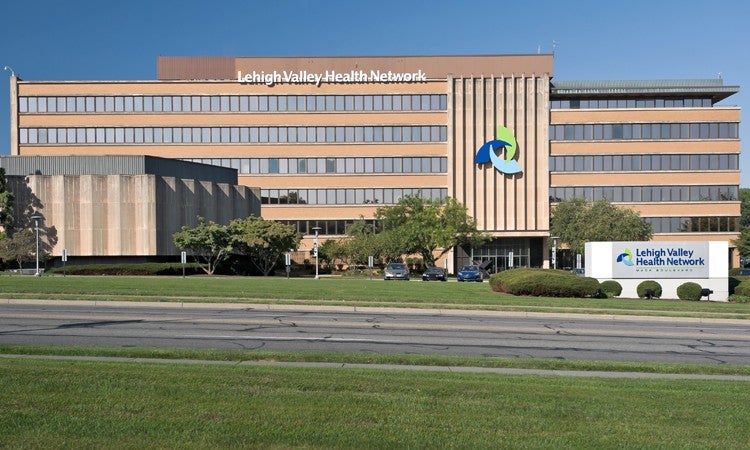
Lehigh Valley Health Network’s net income more than triples to $115M

https://www.beckershospitalreview.com/finance/lehigh-valley-health-network-s-net-income-more-than-triples-to-115m.html

Image result for lehigh valley health network headquarters

Allentown, Pa.-based Lehigh Valley Health Network saw its net income more than triple from $35.1 million in fiscal year 2018 to $115.3 million in fiscal year 2019, according to financial documents released Dec. 4. 

The health system saw its revenue increase year over year to $2.96 billion in the 12 months ended June 30. In the same period in 2018, the system reported revenue of $2.73 billion.

In fiscal year 2019, Lehigh Valley Health reported expenses of $2.86 billion, up from $2.68 billion in 2018.

Expense growth resulted from several factors, including an increase in salaries and wages and supply costs.

Lehigh Valley Health System attributed the net income increase to cutting back on contract workers and overtime and reducing costs on readmissions and contracts, according to The Morning Call. 


UPMC to close hospital in 2020

https://www.beckershospitalreview.com/finance/upmc-to-close-hospital-in-2020.html

Image result for upmc susquehanna sunbury

Pittsburgh-based UPMC will close its hospital in Sunbury, Pa., on March 31, 2020, according to The Daily Item.

The health system cited dwindling patient volume as one of the reasons it is closing UPMC Susquehanna Sunbury.

“This decision was made with careful consideration and analysis of the use of hospital services in the region,”  UPMC Susquehanna President Steven Johnson said, according to The Daily Item. “According to market data, patients are utilizing facilities other than UPMC Susquehanna Sunbury for their care. UPMC must prudently examine opportunities to integrate and consolidate functions balanced against the needs of the community.”

The hospital, previously named Sunbury Community Hospital, has been open for nearly 125 years. Jody Ocker, Sunbury city administrator, said she’s concerned local residents won’t have access to care after the hospital closes.

“I’m very concerned about our residents’ access to care,” she told TV station WNEP. “We have people that are getting around on their electric scooters and their bicycles. They don’t have access to reliable transportation.”

About 150 people will lose their jobs when UPMC Susquehanna Sunbury closes, according to WNEP. UPMC said it will try to relocate employees to other hospitals in the area.