47-hospital Sanford Health, based in Sioux Falls, SD, and 11-hospital Fairview Health Services, based in Minneapolis, MN, have signed a letter of intent to form a combined $14B health system that would retain Sanford’s name. Sanford has been seeking a health system partner for several years; most recently it was in talks with Intermountain Health, before they ended the process following a COVID-masking controversy with Sanford’s then-CEO. An announced merger with Iowa-based UnityPoint Health was also called off in 2019. Sanford had earlier attempted to combine with Fairview, in 2013, but abandoned plans after receiving pushback from Minnesota’s Attorney General, who was concerned that services could be cut, and that the system’s long-term partnership with University of Minnesota could be at risk.
The Gist: Perhaps Sanford has finally found its dance partner, one that gives it access to the booming Minneapolis metropolitan area, which the largely rural health system lacks. Like many recent mergers, the deal brings together two systems across non-overlapping markets, making it likely to pass antitrust scrutiny.
Fairview has posted losses for the last two consecutive years, making it an easier pickup for Sanford, which can now introduce its 220K member health plan to a new market. We expect more health system mergers like this in 2023, as margin pressures are motivating many to seek the promise of shelter in scale.
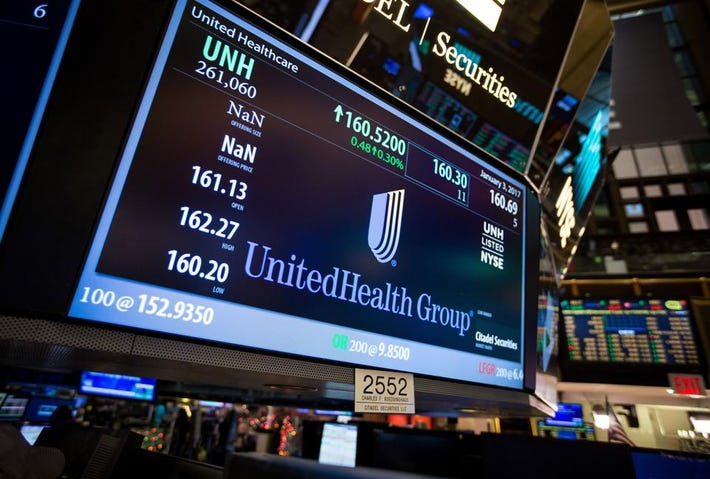
UHG closed its $13B acquisition of data analytics company Change in early October, just weeks after the Justice Department failed in its bid to block the sale on antitrust grounds. In court proceedings, UHG denied it intended to use Change data to give its insurance arm, UnitedHealthcare, a competitive advantage against the rival insurers who use Change as an electronic data interchange clearinghouse.
But a new ProPublica report highlights how communications between UHG and consulting firm McKinsey & Co. point to this potential data advantage as one of the clear upsides from acquiring Change. The McKinsey report was explicitly dismissed by the US District Court judge who, in his ruling in UHG’s favor, was persuaded by testimony from senior executives and evidence of UHG’s history of maintaining internal data firewalls.
The Gist: UHG has a longstanding business interest in maintaining the trust of rival insurers that use its data analytics unit, OptumInsight. Voluntary and internally imposed firewalls between the UHG’s insurance arm and its other businesses are key to maintaining this trust. Although Justice Department lawyers could not provide convincing evidence that UHG has or intends to breach its firewalls, there is still reason to monitor any such activity closely.
The failure of the McKinsey report to sway the court against the deal illustrates how difficult it is for the Justice Department to challenge vertical mergers, even when there is compelling evidence that such deals may impact competition.
Private equity groups have invested about $1 trillion into nearly 8,000 healthcare transactions in the past decade, and some experts are pushing for more scrutiny of its increasing influence on the industry amid concern it may be causing higher medical bills and diminished quality of care, a Nov. 14 Kaiser Health News report said.
Because such investment groups typically invest less than $101 million, such transactions do not attract automatic antitrust reviews at the federal level, the report continued. That represents more than 90 percent of private equity investments in the industry.
Nevertheless, companies owned or managed by private equity groups have agreed to pay fines of more than $500 million since 2014 in over 30 lawsuits under the False Claims Act, which deals with false billing submissions, KHN’s investigation found.
The problem may be most acute in certain specialist fields and in certain metropolitan areas. While private equity, for example, plays a role in just 14 percent of gastroenterology practices nationwide, it controls about 75 percent of that market in at least five metropolitan areas across five states, including Texas and North Carolina, according to research from UC Berkeley’s Nicholas C. Petris Center.
And private equity pockets may be getting deeper. In 2021 alone, over $206 billion was invested by such groups in healthcare, and there is plenty of “dry powder” around for more, KHN reported. The Healthcare Private Equity Association, for example, which boasts about 100 investment companies as members, says the firms have $3 trillion in assets awaiting allocation.
Private equity, like everything else, may have some poor performers but it doesn’t help to generalize as groups “vary tremendously” in how they operate their healthcare investments, Robert Homchick, a Seattle attorney, told KHN.
“Private equity has some bad actors, but so does the rest of the [healthcare] industry,” he said. “I think it’s wrong to paint them all with the same brush.”
Concerns remain, however, that, at least in some cases, private equity involvement is simply a vehicle for maximizing returns, often at the expense of patients. In addition to the $500 million fines, there is also evidence of some private equity groups pushing through additional testing and mandated patient numbers to boost returns, often in medically questionable scenarios, the report said, citing the example of National Spine and Pain Centers previously owned by private equity group Sentinel Partners.
In that case, National Spine paid $3.3 million in a whistleblower case related to allegations of unnecessary treatment and testing, KHN said.
The scope of such private equity dominance in some markets worries many industry observers, and much more needs to be done to help reel in such potential abuses, they say.
“We’re still at the stage of understanding the scope of the problem,” said Laura Alexander, former vice president of policy at the nonprofit American Antitrust Institute, which collaborated on the Petris Center research. “One thing is clear: Much more transparency and scrutiny of these deals is needed.”
The Illinois Health Facilities and Services Review Board unanimously approved a plan to change ownership for 10 Advocate Aurora facilities in the state covered by the system’s plan to merge with Charlotte, N.C.-based Atrium Health, the Chicago Tribune reported Nov. 14.
Atrium and Advocate Aurora, dually headquartered in Milwaukee and Downers Grove, Ill., announced plans to merge into a 67-hospital system with upward of $27 billion in revenue in May. The merger would create one of the largest health systems in the country, with more than 1,000 sites of care across Illinois, Wisconsin, North Carolina, South Carolina, Georgia and Alabama, according to the report.
The approval comes after the board voted in September to delay the approval. Board members’ concerns stemmed from the availability of information and their understanding about the deal.
Since that meeting, Advocate Aurora has answered many of the board’s questions, such as the reasons for the combination and the proposed governance structure, according to the report. Some board members said they still wanted more information, but the board is required by law to approve certain types of applications as long as they are complete.
The board’s approval was needed for the merger because the affiliation is considered a change of 50 percent or more of the voting members of a nonprofit corporation’s board of directors that controls a healthcare facility’s operation, license, certification or physical plant and assets. The board of directors of Advocate Health — the combined system’s new name — will be made up of an equal number of members from Advocate Aurora and Atrium Health.
Advocate Aurora shared the following statement with Becker’s on the board’s approval:
“Securing the Illinois Health Facilities and Services Review Board’s approval brings us one step closer to coming together with Atrium Health, which will allow us to improve the lives of our patients, the health of our communities and the opportunities for our team members. We look forward to closing, which we anticipate before the end of the year.”
Atrium shared the following statement with Becker’s:
“We are pleased to see that the process continues to move forward and remain optimistic our combination with Advocate Aurora Health will be finalized before the end of the year.”
South Dakota-based Sanford Health and Minnesota-based Fairview Health Services unveiled plans Tuesday to merge and form a 58-hospital juggernaut serving rural and urban patients across the Midwest.
The nonprofits have signed a nonbinding letter of intent as they proceed with due diligence and regulatory antitrust reviews, they said in a press release. Each would maintain their own regional presence, leadership and regional boards but operate as a single integrated system under Sanford Health’s banner.
The organizations said they anticipate closing their deal sometime next year.
“Our organizations are united by a shared commitment to advance the health and well-being of our communities,” Sanford Health President and CEO Bill Gassen said in the release. “As a combined system, we can do more to expand access to complex and highly specialized care, utilize innovative technology and provide a broader range of virtual services, unlock greater research capabilities and transform the care delivery experience to ensure every patient receives the best care no matter where they live.”
Gassen is teed up to serve as the president and CEO of the new entity should the merger go through, while Fairview CEO James Hereford would serve as co-CEO for one year following the deal’s close.
Headquarted in Sioux Falls, Sanford Health describes itself as the country’s largest rural health system with nearly 48,000 employees, 47 medical centers, 224 clinics and hundreds of other facilities. It serves over 1 million patients and 220,000 health plan members, according to its website, and each year logs 5.2 million outpatient or clinic visits, nearly 83,000 admissions, about 128,000 surgeries and procedures and roughly 195,000 emergency department visits.
Minneapolis-based Fairview Health Services employs 31,000 people across 11 hospitals as well as dozens of clinics, pharmacies and other facilities. It boasts a network of over 5,000 doctors after merging a few years back with fellow Twin Cities system HealthEast and due to partnerships with University of Minnesota Health specialists.
The two systems said their planned merger will improve care quality, outcomes, patient experience and health equity across their patient populations. New efficiencies will also help the systems offer more affordable care, they noted, while their workforces will benefit from stronger recruitment and advancement opportunities.
“With Sanford Health, Fairview Health Services has found a partner that shares our Midwestern values and our commitment to affordable, accessible and equitable care delivery,” Hereford said in the release. “Our complementary capabilities mean that together, we are uniquely positioned to improve clinical outcomes, develop new care delivery models, expand opportunities for employees and clinicians across our broader operational footprint, and apply our combined resources to positively impact the well-being of our patients and communities today and for decades to come.”
Sanford and Fairview’s news lands about six months after Advocate Aurora Health and Atrium Health announced their own nonprofit megamerger. That deal continues to move through the necessary regulatory hurdles and, if closed, would yield a 67-hospital with strong presences in the nearby Chicago and Milwaukee markets.
According to reporting from Bloomberg, primary care company VillageMD, which is majority-owned by Walgreens, is engaged in talks to merge with New Jersey-based Summit Health, a large medical group network and urgent care chain backed by private equity firm Warburg Pincus.
In 2019, Summit merged with CityMD, a New York City-based urgent care chain, and operates over 370 clinic locations based in and around New York City, as well as in central Oregon. The combined entity would be valued between $5B and $10B.
The Gist: Should this deal go through, it would epitomize recent trends in healthcare M&A:a well-established independent medical group using private equity funding to rapidly expand its operations before selling off to an industry giant.
If that industry giant ends up being VillageMD, Walgreens would finally have a physician practice with deep experience in managing risk, on which they can anchor their larger ambitions in care provision. And if the deal with Walgreens falls through, Summit, with its combination of mostly suburban value-based care practices and largely urban urgent care chains, is sure to attract plenty of other suitors, including any of the major national insurers.
In a recent STAT News article, reporters Tara Bannow and Bob Herman took an in-depth look at private-equity firm Welsh, Carson, Anderson & Stowe, examining the performance of four of its healthcare portfolio companies. They show how the firm’s A-list partners, clients, and board members have promoted controversial business practices—often at the expense of publicly funded healthcare programs—that conflict with its well-curated public image.
The Gist: This article emphasizes how the complex and opaque regulatory structure of American healthcare allows motivated parties like PE firms to find technically legal, though ethically suspect, business models, which can easily tip over into outright illegality.
It highlights the “revolving door” flow of executives between industry and government, which allows investment firms to play a long game by actively shaping the regulatory landscape and lobbying to create business opportunities where none previously existed. Justified backlash at “gotcha” business models and profit-seeking at the expense of vulnerable patients may swamp any positive contribution that PE investment and rollups may make to the business of healthcare.
The FTC is investigating US Anesthesia Providers (USAP), a private equity (PE)-backed group with 4.5K physicians working in nine states, over concerns of monopoly power in certain markets. The inquiry is focused on USAP’s acquisition history, which has followed the PE “playbook” of rolling up small anesthesiology groups into a single entity large enough to exert leverage in contract negotiations. USAP’s presence in Texas and Colorado is likely to be of particular interest, as it controls at least 30 percent of the anesthesiology market in both states.
The Gist:Like many other PE-backed physician groups, USAP achieved market power mostly through myriad acquisitions too small to warrant regulatory attention on their own. The probe is in line with recent government scrutiny of private equity influence in the healthcare sector, and will no doubt be closely watched by investors and PE-backed groups.
If USAP is forced to divest from certain markets, the precedent could prove especially damaging to other rapidly growing investor-backed physician groups, particularly those staffing hospital functions, who are already being rocked by ramifications of the No Surprises Act.
Amazon and several other major companies have made numerous attempts to “disrupt” health care over the years without much success. But new acquisitions in primary care, home health care, and more may allow them to more successfully expand into the industry, David Wainer writes for the Wall Street Journal.
Competition heats up in the health care industry
According to Wainer, the United States spends a greater proportion of its economy on medical services than any other developed nation, making health care “too big of an opportunity to ignore” for many companies, including those in technology, retail, and more.
For example, Amazon has launched several forays into health care in recent years, although not all of them have been successful. Some of these health care efforts include its now defunct partnership with Berkshire Hathaway and JPMorgan Chase, as well as Amazon Care, the company’s primary care service that will shut down at the end of the year.
Amazon has also acquired several smaller health care companies in an effort to expand its reach. In 2018, Amazon purchased PillPack for $1 billion as a way to expand its online pharmacy business. Similarly, Amazon in July reached an agreement to acquireOne Medical, a primary care company, for roughly $3.9 billion.
Several other companies, including retailers like Walmart and Walgreens and large insurers like UnitedHealth Group* (UHG) and CVS Health‘s Aetna, are also looking to expand their health care offerings. In fact, CVS announced last week that it had purchased home health care company Signify Health for roughly $8 billion—beating out several other competitors.
So far, “[s]hifting social attitudes and market conditions have helped fuel the wave” of health care acquisitions from major companies, Wainer writes, and more are likely to occur going forward.
What companies are targeting in health care
In contrast to the more traditional fee-for-service model, many health care startups are moving toward value-based care, which encourages providers to help prevent illnesses, rather than just treat them.
According to Wainer, UHG, which includes a pharmacy benefit manager, an insurance business, and 60,000 physicians, has made the most progress transitioning to value-based care so far. For example, many of the multi-specialty physician practices UHG has purchased through its medical provider arm Optum Care focus on proactively providing patients home, virtual, and on-site care to help them stay out of the hospital.
In addition, UHG and Walmart last week announced a partnership to provide services and “improve the patient experience” for certain Medicare Advantage enrollees. Through the partnership, UHG will use analytics to help Walmart clinics deliver value-based care to patients.
Aside from value-based care, many companies, including Amazon and CVS, are looking to expand their businesses into primary care. Currently, there is a nationwide shortage of primary care doctors, which has led to worse health outcomes for many Americans.
By providing primary care services directly to consumers, Amazon and other companies are hoping to use the relationship between patients and their providers to sell even more services, such as prescription drug deliveries and more.
Overall, “staying healthy probably will never be the sort of frictionless, one-click experience that Amazon pioneered,” Wainer writes, but the company’s current involvement in the health care industry “is a testament to the fact that there’s a lot of money to be made by fixing America’s broken system.” (Wainer, Wall Street Journal, 9/9)
*Advisory Board is a subsidiary of Optum, a division of UnitedHealth Group. All Advisory Board research, expert perspectives, and recommendations remain independent.






 HENRY KOTULA