$5B offer to North Carolina hospital gives it ‘best of both worlds,’ Novant CEO says

https://www.beckershospitalreview.com/hospital-transactions-and-valuation/5b-offer-to-north-carolina-hospital-gives-it-best-of-both-worlds-novant-ceo-says.html?utm_medium=email

Novant Health: Transforming Revenue Cycle Services in the ...

Novant Health presented its proposal June 10 to partner with New Hanover Regional Medical Center, a county-owned hospital in Wilmington, N.C. The Winston-Salem, N.C.-based health system is one of three organizations interested in securing the deal. 

During the public presentation, Novant Health President and CEO Carl Armato highlighted the system’s financial strength and its potential partnership with Chapel Hill, N.C.-based UNC Health, according to WilmingtonBiz.

In May, Novant, UNC Health and UNC School of Medicine signed a letter of intent to enhance clinical services and medical education at New Hanover Regional if the hospital chooses to form a joint venture with, affiliate with or sell to Novant.  

“We are binging, I believe, the best of both worlds: one of the largest not-for-profit health care systems in the country, that’s financially strong, along with UNC Health Care and UNC medical school to really enhance and grow the economic development of Wilmington,” Mr. Armato said, according to WilmingtonBiz.

The 15-hospital system is offering up to $2 billion to New Hanover County, $50 million to the hospital’s foundation to fund unmet community needs and an investment of $3.1 billion in capital projects over the next decade, according to the report. 

“We actually proposed a very significant financial commitment to New Hanover Regional Medical Center, that local board, that management team, that community — your community,” Mr. Armato said, according to the report. “And we want you to know that we have the resources to back that up.”

Novant made its proposal the day after Durham, N.C.-based Duke Health pitched its deal for New Hanover Regional. Charlotte, N.C.-based Atrium Health, the third health system trying to secure a deal with the hospital, will make its presentation June 11. 


Duke Health pitches $3B deal for North Carolina hospital

https://www.beckershospitalreview.com/hospital-transactions-and-valuation/duke-health-pitches-3b-deal-for-north-carolina-hospital.html?utm_medium=email

Duke Clinic... - Duke University Health System Office Photo ...

Duke Health presented its proposal on June 9 to purchase New Hanover Regional Medical Center in Wilmington, N.C. The Durham, N.C.-based system is one of three organizations trying to secure the deal.  

During the presentation, Duke Health officials proposed purchasing the hospital for $1.4 billion and investing $1.9 billion in capital improvements over the next five years, according to TV station WWAY. The health system would also bring its graduate medical school programs to New Hanover Regional and keep all hospital employees on staff for at least one year, according to the report.

The other two health systems interested in acquiring the hospital — Winston-Salem, N.C.-based Novant Health and Charlotte, N.C.-based Atrium Health — will present their proposals on June 10 and June 11. 

Access the full WWAY article here.


R1 RCM buys Cerner’s revenue cycle outsourcing business for $30M

https://www.fiercehealthcare.com/tech/r1-rcm-buys-cerner-s-revenue-cycle-business-30m-deal?mkt_tok=eyJpIjoiTXpReVptRTBOemxoWW1OaCIsInQiOiJcL0FZVXVvVmhwQWpxdFBoV1VKRjhON29CaWhLY3g2bXFhT0doXC9tWVFpWTd0blh3TEY3MTN0M3lsZEs3K002d0hLS25BNld4dlk0b3NhWDBYaUhWYkNTUGc5SVRlRjBEMERoS01kWlZER1hVMmhFTkczdTAzMDhxWWpIaWxORk1mIn0%3D&mrkid=959610

Cerner's headquarters are in Kansas City, Missouri

R1 RCM plans to pay $30 million for health IT giant Cerner’s revenue cycle business.

Chicago-based R1, a leading revenue cycle management technology vendor, is acquiring Cerner RevWorks’ services business and commercial, nonfederal client relationships. The deal, which was announced Wednesday, does not include RevWorks’ federal clients.

R1 said it plans to hire Cerner RevWorks employees once the deal closes in the third quarter of 2020.

Both companies have committed to a seamless integration between the company’s technology-enabled services platform and Cerner’s software, R1 said in a press release.

As part of the transaction, Cerner said it will extend R1’s revenue cycle capabilities and expertise to Cerner clients and new prospects, helping drive sustainable financial improvements for providers while enhancing their patients’ overall experience.

The closing of the acquisition is expected to take place in the third quarter of 2020, subject to customary closing conditions.

According to R1’s filing with the U.S. Securities and Exchange Commission (SEC), the deal is valued at $30 million inclusive of working capital, financed with cash on the balance sheet.

The acquisition price will be paid in three installments, according to the SEC filing.

R1’s stock rose 12% Wednesday following the news.

The deal further establishes R1’s footprint across the acute and ambulatory markets, the company said in the SEC filing. The RevWorks business brings in approximately $80 million in annual revenue across more than 150 customers.

“We look forward to working collaboratively with Cerner to deliver superior results for healthcare providers and the communities they serve,” said Gary Long, executive vice president and chief commercial officer of R1. “With our interoperable technology and end-to-end platform, we are well-positioned to serve Cerner’s customers, as well as other healthcare organizations across the country.”

“Cerner’s overall goal is to deliver client success and accelerate our ability to deliver scalable innovations,” said Brenna Quinn, senior vice president of revenue cycle management at Cerner, in a statement.

In a statement provided by the company, Cerner executives said the deal with R1 will bring its commercial, nonfederal clients a total solution that pairs “Cerner’s advanced technology with R1’s world-class revenue services, ultimately optimizing financial performance for health systems.”

“Cerner remains committed to and heavily invested in its revenue cycle solutions to help our clients combine clinical, financial, and operational health information when and where it’s needed,” the company said.

Centerview Partners LLC acted as financial adviser, and Kirkland & Ellis LLP acted as legal adviser to R1. Greenhill & Co. acted as an adviser to Cerner.

Earlier this year, R1 acquired SCI Solutions, a provider of SaaS-based scheduling and patient access solutions, for approximately $190 million in cash.

The RCM vendor’s revenue grew 16.2% in the first quarter of 2020, up $44.6 million to reach $320.5 million.

However, during its first-quarter earnings call in May, R1 executives said the company is expecting to see revenue decline by $10 million to $20 million in the second quarter, driven by lower patient volumes for its smaller physician customers.

Cerner’s revenue cycle business took a hit last year when Adventist Health terminated its revenue cycle outsourcing contract with the company, resulting in a $60 million impairment charge for Cerner in the third quarter of 2019, the company reported during its third-quarter earnings call.

Adventist transitioned all its revenue cycle operations to Huron Consulting Group. At the time, about 1,700 Cerner employees transitioned over to Adventist and Huron.

During the company’s fourth-quarter and year-end 2019 earnings call in February, Cerner Chief Financial Officer Marc Naughton hinted at a potential sell-off of the RevWorks business.

“Those areas that we don’t think are the growth areas for the company we want to focus on, we’re going to consider divesting as one of the options,” Naughton said during a Q&A with analysts. “It will be an existing business that we will basically go out to market and look for opportunities to say here is this asset, it’s something we’re willing to let go and some of these assets have significant value.”


Physicians acquire 35-hospital health system from private equity firm

https://www.beckershospitalreview.com/hospital-transactions-and-valuation/physicians-acquire-35-hospital-health-system-from-private-equity-firm.html?utm_medium=email

Sources: Boston-based Steward Health Care System to relocate ...

The 35-hospital system announced June 2 that a management group of Steward physicians led by the company’s CEO and founder acquired a controlling interest of Steward from Cerberus Capital Management, a private equity firm. The physicians will control 90 percent of the company and Medical Properties Trust will maintain its 10 percent stake. 

“The COVID-19 global pandemic has exposed serious deficiencies in the world’s health care systems, with a disproportionate impact on underserved communities and populations,” Steward CEO and Founder Ralph de la Torre, MD, said in a news release. “We believe that future health care management must completely integrate long-term clinical needs with investments. As physicians first, we will focus on creating structures and timelines that meet the long-term needs of our communities and the short-term needs of our patients.”

Steward was founded more than a decade ago, and Cerberus invested in the company in 2010. Today, Steward has 35 hospitals in nine states and more than 40,000 employees. 


Beaumont, Summa Health cancel $6.1B merger plan

https://www.beckershospitalreview.com/hospital-transactions-and-valuation/beaumont-summa-health-cancel-6-1b-merger-plan.html?utm_medium=email

Summa Health's deal with Beaumont: 5 things you need to know ...Beaumont Health to acquire Ohio's Summa Health system

Southfield, Mich.-based Beaumont Health announced May 29 that it is calling off a proposed merger with Akron, Ohio-based Summa Health. 

The health systems are ending talks about five months after signing a definitive agreement, under which Summa Health would have become a subsidiary of Beaumont. The health systems announced in April that they were delaying the deal due to the COVID-19 pandemic.

“The organizations are now finalizing details and next steps to end the planned partnership,” reads a joint statement from Beaumont and Summa. “Throughout this process, each of the organizations has continued to operate independently, and each will continue to focus on providing exceptional health care services for their respective markets.”

The proposed deal, which had already received all necessary regulatory approvals, would have created a nonprofit system with 12 hospitals and $6.1 billion in annual revenue. 

Beaumont and Summa’s announcement comes just three days after four Chicago hospitals called off their plans to merge. Several other deals have been canceled or delayed since Jan. 1. 


Insurers continue to pay rebates while providers struggle

https://mailchi.mp/f2774a4ad1ea/the-weekly-gist-may-22-2020?e=d1e747d2d8

Reform Brings More Health Insurance Rebates | Bankrate.com

Blue Cross Blue Shield of Michigan became the latest health insurer to announce plans to refund money to its enrollees, as reimbursement for healthcare services dropped in the wake of the coronavirus pandemic, with many hospitals and physicians curtailing operations. The company will return $100M to enrollees, in the form of premium discounts and refunds, and said it might increase that amount later in the year depending on how quickly health spending picks up again.

UnitedHealthcare (UHC), Cigna, and Humana are among the other insurers who have recently announced similar plans, with UHC alone slated to give back $1.5B to purchasers. Under the Affordable Care Act, plans must spend between 80 and 85 percent of the premiums they collect on medical care, depending on the segment of the market they cover, and must return excess profits to purchasers if they do not. Insurers are getting ahead of this requirement by returning money now to their employer and individual-market customers.

Meanwhile, some industry observers have begun to question why insurers, who have weathered the pandemic in good financial shape, are not spending more to stabilize the operations of struggling hospitals and physicians in their networks. For instance, Harvard researchers Leemore Dafny and Michael McWilliams proposed this week that insurers extend a “primary care boost” of 50 percent to their payments to doctors through the end of this year. Getting plans to act in concert to support providers will prove to be challenging, of course, and the temptation to free-ride on others’ generosity and instead “spend” excess premium dollars to return cash to customers may prove too strong for its public relations and loyalty benefits.

Or perhaps there are more Machiavellian motives at play: allowing physician practices to suffer financially could result in lower practice valuations, as insurers set their sights on further “vertical integration” plays in the months to come.


10 hospital deals called off, delayed

https://www.beckershospitalreview.com/hospital-transactions-and-valuation/10-hospital-deals-called-off-delayed.html?utm_medium=email

Beaumont, Summa Health Delay Hospital Merger Until After COVID-19

Below are 10 hospital transactions or partnerships that have been delayed or called off since Jan. 1, beginning with the most recent:

1. Pandemic delays UMass Memorial’s acquisition of Harrington HealthCare
The COVID-19 pandemic has pushed back UMass Memorial Health Care’s acquisition of Harrington HealthCare, a Southbridge, Mass.-based system comprising a 119-bed hospital,  satellite location and three medical office buildings.

2. Jefferson Health, Temple call off cancer center deal
Thomas Jefferson University will no longer purchase the Fox Chase Cancer Center from Temple University due to the “devastating economic impact of COVID-19.”

3. St. Luke’s takeover of Kansas hospital pushed back amid COVID-19 crisis
The date that St. Luke’s Health System will take over Allen County Regional Hospital in Iola, Kan., has been pushed back due to the COVID-19 pandemic.

4. Astria Health cancels sale of hospitals as COVID-19 affects markets 
Yakima, Wash.-based Astria Health, which filed for Chapter 11 bankruptcy in 2019, has taken its hospitals off the market.

5. Beaumont, Summa Health delay merger
Southfield, Mich.-based Beaumont Health is delaying its merger with Akron, Ohio-based Summa Health due to the COVID-19 pandemic, Beaumont CEO John Fox said during a news briefing April 21.

6. North Carolina health systems call off partnership talks
Citing uncertainties brought on by the COVID-19 pandemic, Greensboro, N.C.-based Cone Health has ended talks to become a successor to Asheboro, N.C.-based Randolph Health after Randolph emerges from bankruptcy.

7. New York hospital to split with Ascension after 18 years
St. Mary’s Healthcare in Amsterdam, N.Y., became an independent hospital after 18 years as a member of St. Louis-based Ascension.

8. Geisinger, AtlantiCare sever merger
Danville, Pa.-based Geisinger and Atlantic City, N.J.-based AtlantiCare have agreed to part ways, the two health systems announced March 31.

9. Home healthcare providers abandon $1.25B deal amid FTC probe 
Two home healthcare providers, Aveanna Healthcare and Maxim Healthcare Services, have terminated their proposed acquisition agreement, the Federal Trade Commission said.

10. FTC sues to block Jefferson Health-Einstein Healthcare merger
The Federal Trade Commission will sue to block the merger of Philadelphia-based Jefferson Health and Einstein Healthcare Network, a deal that has been pending since 2018. The commission said it will seek a temporary restraining order and a preliminary injunction to prevent the deal.


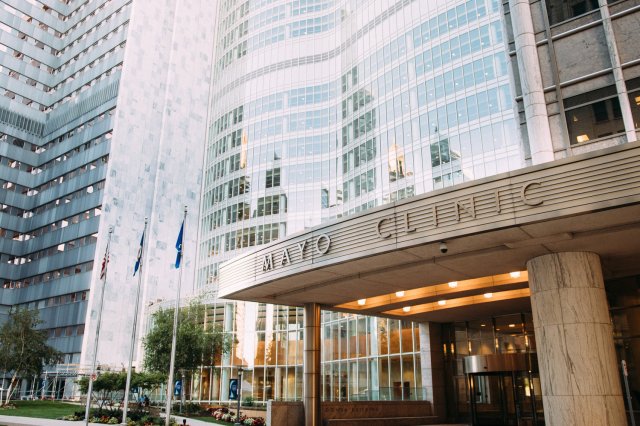
COVID-19 pushes Mayo Clinic’s operating income into free fall

https://www.healthcaredive.com/news/covid-19-pushes-mayo-clinics-operating-income-into-free-fall/578191/

Farrugia calls 2019 'a year of remarkable growth' as Mayo reports ...

Dive Brief:

  • Prior to the onset of the novel coronavirus, Mayo Clinic was cruising along with a healthy operating margin of 6.7% during the first two months of the quarter. But by the close of the period, the operating margin was squeezed to just 0.9% while net operating income fell off a cliff, free falling 88% to $29 million compared to the first quarter of 2019.
  • Due to contracting services and the near closure of its outpatient business in response to the pandemic, revenues for the quarter declined nearly 4% while expenses rose 3% compared to the prior-year period.
  • The fluctuation in the financial markets caused a downturn in Mayo’s investment portfolio, leading to an overall net loss of $623 million for the Rochester, Minnesota-based nonprofit health system.

Dive Insight:

Mayo Clinic is the latest hospital operator to report it first quarter results have been battered by the pandemic.

The system, which took in more than $1 billion in operating income in 2019, joins other major hospital operators that reported a dip in volumes amid the public health crisis, including HCA and CommonSpirit.

The second quarter is not likely to look better, according to Fitch Ratings. The second quarter looks bleak as the ratings agency issued an ominous report predicting it would be the “worst on record” for most nonprofit hospitals.

Yet, some of the for-profit hospital operators see May as the beginning of the recovery. Both Tenet and CHS executives seemed upbeat about the prospects for this month, noting it was the start of resuming elective procedures that had been put off.

Despite the hospital sector as a whole taking a major hit from the pandemic, big wealthy systems like Mayo have significant rainy day funds. Mayo reported cash and investments of more than $10.6 billion as of March 30 with 252 days cash on hand.

In April, Mayo issued a voluntary notice about how the virus was taking on its business, noting reduced salaries for executives and physicians, furloughs and a hiring freeze, among other efforts.​

In its first quarter report, Mayo detailed the ways in which it’s tackling the novel coronavirus on the medical front, including leading a program, approved by the FDA, that gives severely sick COVID-19 patients plasma from those who were previously sickened but have since recovered from the virus.

Mayo said it’s preparing the program’s first safety report on the first 5,000 patients to receive the infusion. As of May 12, more than 9,300 patients have been infused, Mayo said.

The system also runs COVID-19 testing, and said it is now able to administer 8,500 molecular tests and 20,000 serologic tests, which look for antibodies to the virus in those that may have been previously infected, daily.


CommonSpirit posts $1.4B loss, says full COVID-19 impact unknown

https://www.healthcaredive.com/news/commonspirit-posts-14b-loss-too-soon-to-project-long-term-covid-19-impac/578100/

Locations | CommonSpirit Health

Dive Brief:

  • CommonSpirit Health, sprung from last year’s merger of California-based Dignity Health and Colorado-based Catholic Health Initiatives, reported a loss topping $1.4 billion in the fiscal third quarter ending March 31, although adjusted revenues were flat compared to the third quarter of 2019. The biggest proportion of losses were tied to investments, as its portfolio dropped in value by nearly $1.1 billion. Its total net assets are down nearly $2.5 billion from a year ago.
  • Like many other hospital systems, CommonSpirit reported a drop in patient volumes that began in mid-March as states began issuing lockdown orders. Acute admissions dropped more than 5% for the quarter compared to a year ago.
  • CommonSpirit did receive more than $700 million in Coronavirus Aid, Relief, and Economic Security Act funds, although since it was received on March 31 it will be booked into its fiscal fourth quarter financial statements. The system received another $2.6 billion in accelerated payments from CMS and anticipates receiving another $410 million in disaster relief funding and from the Paycheck Protection Program.​

Dive Insight:

The COVID-19 pandemic is continuing to ravage the bottom lines of providers, and the nation’s largest not-for-profit hospital system, CommonSpirit Health, is no exception.

Its first full year as a unified system is 2020, and the COVID-19 pandemic is challenging the 134-hospital organization in ways it likely never anticipated. Admissions are down for the foreseeable future, coupled with the need to spend tens of millions of dollars on personal protective equipment, respirators and to divert a significant amount of resources toward treating coronavirus patients.

Fitch Ratings said COVID-19 is to blame for the worst second quarter for most U.S. hospitals and systems.

For the third quarter of 2020, CommonSpirit reported an operating loss of $145 million, compared to a pro forma $124 million loss reported by Dignity and CHI for the first quarter of 2019.

CommonSpirit posted a net loss of $1.4 billion for the third quarter, compared to a pro forma net gain of $9.7 billion for the third quarter of 2019. However, $9.2 billion of that came from what CommonSpirit termed a “contribution from business combination,” the net assets received from both parties by merging with one another. For the first nine months of fiscal 2020, CommonSpirit lost $1.1 billion on revenue of $22.4 billion, compared to a net gain of $9.5 billion on revenue of $21.6 billion over the same period in fiscal 2019.

And despite receiving some $3.7 billion in federal assistance, CommonSpirit said in its quarterly financial disclosures that it remains too soon to tell what the impact of COVID-19 will be on the organization over the long-term.

Prior to the pandemic, CommonSpirit’s financial position was trending stronger compared to its pre-merger state. Seven of its 14 operating divisions reported a jump in revenue during the quarter compared to 2019.


For-profit, higher-margin hospitals at advantage when it comes to CARES funding

https://www.healthcaredive.com/news/for-profit-higher-margin-hospitals-at-advantage-when-it-comes-to-cares-fun/577941/

Understanding the CARES Act student loan relief | Sanford Center ...

Dive Brief:

  • Hospitals that tend to have a higher mix of private payer revenue are likely to receive more novel coronavirus federal grant money compared to hospitals that rely on government payers such as Medicare and Medicaid, a new analysis from the Kaiser Family Foundation found.
  • The study aims to analyze the implications of tying the latest round of $50 billion in federal bailout money to providers’ net patient service revenue. It examined hospital financial data and used the HHS’ grant formula to determine the amount of grant money hospitals were likely to receive.
  • KFF found that hospitals with the highest share of private insurance revenue, or those in the top 10%, received $44,321 per hospital bed, or more than double the hospitals in the bottom 10%.

Dive Insight:

This latest analysis reveals some hospitals may be at a disadvantage when it comes to receiving federal funding that is meant to serve as a lifeline for them during the COVID-19 pandemic.

The study found that hospitals with the highest share of private insurance revenue — and those set to receive more in bailout money — were less likely to be teaching hospitals and more likely to be for-profit. Also, they were more likely to have higher operating margins and provided less uncompensated care as a share of operating expenses.

In short, KFF explains that the funding package is skewed toward hospitals with higher revenue from private payers.

“These hospitals’ large share of private reimbursement may be due either to having more patients with private insurance or charging relatively high rates to private insurers or a combination of those two factors. All things being equal, hospitals with more market power can command higher reimbursement rates from private insurers and therefore received a larger share of the grant funds under the formula HHS used,” according to the analysis.

The study points out that a community health center that sees a small portion of patients with private pay would receive less funding than a private physician office that sees the same total number of patients but treats more with private pay.

“With HHS expected to release additional relief fund grants and Congress considering additional stimulus, this analysis demonstrates that the formula used to distribute funding has significant consequences for how funding is allocated among providers,” according to KFF.

Hospitals have been battered by the outbreak of the novel coronavirus. They’ve halted elective procedures and routine care in an effort to preserve needed medical supplies and in an attempt to snuff out the spreading virus.

That has caused hospital volumes and revenues to plummet as care is deferred, so the federal government has sent financial aid in response as part of the Coronavirus Aid, Relief, and Economic Security Act.

This latest round of funding was designed to be a more targeted approach than the initial wave. The first $30 billion released was distributed based on a facility’s share of Medicare fee-for-service. That put facilities with a small slice of Medicare fee-for service business, such as children’s hospitals, at a disadvantage. However, the first round was one way to get money out the door quickly, which officials have acknowledged, knowing a more targeted approach would follow.