Inside the Midyear Panic at UnitedHealth

https://healthcareuncovered.substack.com/p/inside-the-midyear-panic-at-unitedhealth

Imagine you’re facing your midyear performance review with your boss. You dread it, even though you’ve done all you thought possible and legal to help the company meet Wall Street’s profit expectations, because shareholders haven’t been pleased with your employer’s performance lately.

Now let’s imagine your employer is a health insurance conglomerate like, say, UnitedHealth Group. You’ve watched as the stock price has been sliding, sometimes a little and on some days crashing through lows not seen in years, like last Friday (down almost 5% in a single day, to $237.77, which is down a stunning 62% since a mid-November high of $630 and change).

You know what your boss is going to say. We all have to do more to meet the Street’s expectations. Something has changed from the days when the government and employers were overly generous, not questioning our value proposition, always willing to pick up the tab and pay many hidden tips, and we could pull our many levers to make it harder for people to get the care they need. 

Despite government and media reports for years that the federal government has been overpaying Medicare Advantage plans like UnitedHealth’s – at least $84 billion this year alone – Congress has pretended not to notice. There is evidence that might be changing, with Republicans and Democrats alike making noises about cracking down on MA plans. 

Employers have complained for ages about constantly rising premiums, but they’ve sucked it up, knowing they could pass much of the increase onto their workers – and make them pay thousands of dollars out of their own pockets before their coverage kicks in. Now, at least some of them are realizing they don’t have to work with the giant conglomerates anymore.

Doctors and hospitals have complained, too, about burdensome paperwork and not getting paid right and on time, but they’ve largely been ignored as the big conglomerates get bigger and are now even competing with them.

UnitedHealth is the biggest employer of doctors in the country. But doctors and hospitals are beginning to push back, too. 

Since last fall, UnitedHealth and its smaller but still enormous competitors have found that “headwinds” are making it harder for them to maintain the profit margins investors demand. That is mainly because, despite the many barriers patients have to overcome to get the care they need, many of them are nevertheless using health care, often in the most expensive setting – the emergency room. They put off seeing a doctor so long because of insurers’ penny-wise-pound-foolishness that they had some kind of event that scared them enough to head straight to the ER. 

It’s not just you who is dreading your midyear review. Everybody, regardless of their position on the corporate ladder, and even the poorly paid folks in customer service, are in the same boat. And so is your boss. Nobody will put the details of what has to be done in writing. They don’t have to. Your boss will remind you that you have to do your part to help the company achieve the “profitable growth” Wall Street demands, quarter after quarter after quarter. It never, ever ends. You know this because you and most other employees watch what happens after the company releases quarterly financials. You also watch your 401K balance and you see the financial consequences of a company that Wall Street isn’t happy with. And Wall Street is especially unhappy with UnitedHealth these days.

And when things are as bad as they are now at UnitedHealth’s headquarters in Minnesota, you know that a big consulting firm like McKinsey & Company has been called in, and that those suits will recommend some kind of “restructuring” and changes in leadership to get the ship back on course. You know the drill. Everybody already is subject to forced ranking, meaning that at the end of the year, some of your colleagues, regardless of job title, will fall below a line that means automatic termination. You pedal as fast as you can to stay above that line, often doing things you worry are not in the best interest of millions of people and might not even be lawful. But you know that if you have any chance of staying employed, much less getting a raise or bonus, you have to convince your superiors you are motivated and “engaged to win.” No one is safe. Look what happened to Sir Andrew Witty, whose departure as CEO to spend more time with his family (in London) was announced days after shareholders turned thumbs down on the company’s promises to return to an acceptable level of profitability. 

If you are at UnitedHealth, you listened to what the once and again CEO, Stephen Hemsley, and CFO John Rex, who got shuffled to a lesser role of “advisor” to the CEO last week, laid out a new action plan to their bosses – big institutional investors who have been losing their shirts for months now. You know that what the C-Suite promised on their July 29 call will mean that you will have to “execute” to enable the company to deliver on those promises. And you know that you and your colleagues will have to inflict a lot more pain on everybody who is not a big shareholder – patients, taxpayers, employers, doctors, hospital administrators. That is your job. And you will try to do it because you have a mortgage, kids in college and maxed-out credit cards.  

Here’s what Hemsley and his leadership team said, out loud in a public forum, although admittedly one that few people know about or can take an hour-and-a-half to listen to:

  • Even though UnitedHealth took in billions more in revenue, its margins shrank a little because it had to pay more medical claims than expected.
  • Still, the company made $14.3 billion in profits during the second quarter. That’s a lot but not as much as the $15.8 billion in 2Q 2024, and that made shareholders unhappy.
  • Enrollment in its commercial (individual and employer) plans increased just 1%, but enrollment in its Medicare Advantage plans increased nearly 8%. That’s normally just fine, but something happened that the company’s beancounters couldn’t stop.
  • Those seniors figured out how to get at least some care despite the company’s high barriers to care (aggressive use of prior authorization, “narrow” networks of providers, etc.)

To fix all of this, Hemsley and team promised:

  • To dump 600,000 or so enrollees who might need care next year
  • To raise premiums “in the double digits” – way above the “medical trend” that PriceWaterhouseCoopers predicts to be 8.5% (high but not double-digit high)
  • Boot more providers it doesn’t already own out of network
  • Reduce benefits

Throughout the call with investors (actually with a couple dozen Wall Street financial analysts, the only people who can ask questions), Hemsley and team went on and on about the “value-based care” the company theoretically delivers, without providing specifics. But here is what you need to know: If you are enrolled in a UnitedHealth plan of any nature – commercial, Medicare or Medicaid or VA (yes, VA, too) – expect the value of your coverage to diminish, just as it has year after year after year.  

The term for this in industry jargon is “benefit buydown.”

That means that even as your premiums go up by double digits, you will soon have fewer providers to choose from, you likely will spend more out-of-pocket before your coverage kicks in, you might have to switch to a medication made by a drug company UnitedHealth will get bigger kickbacks from, and you might even be among the 600,000 policyholders who will get “purged” (another industry term) at the end of the year.

Why do we and our employers and Uncle Sam keep putting up with this?

Yes, we pay more for new cars and iPhones, but we at least can count on some improvements in gas mileage and battery life and maybe even better-placed cup holders. You can now buy a massive high-def TV for a fraction of what it cost a couple of years ago. Health insurance? Just the opposite. 

As I will explain in a future post, all of the big for-profit insurers are facing those same headwinds UnitedHealth is facing. You will not be spared regardless of the name on your insurance card. If you still have one come January 1. Pain is on the way. Once again. 
DOJ Questions UnitedHealth Doctors Re: Medicare Advantage Upcoding

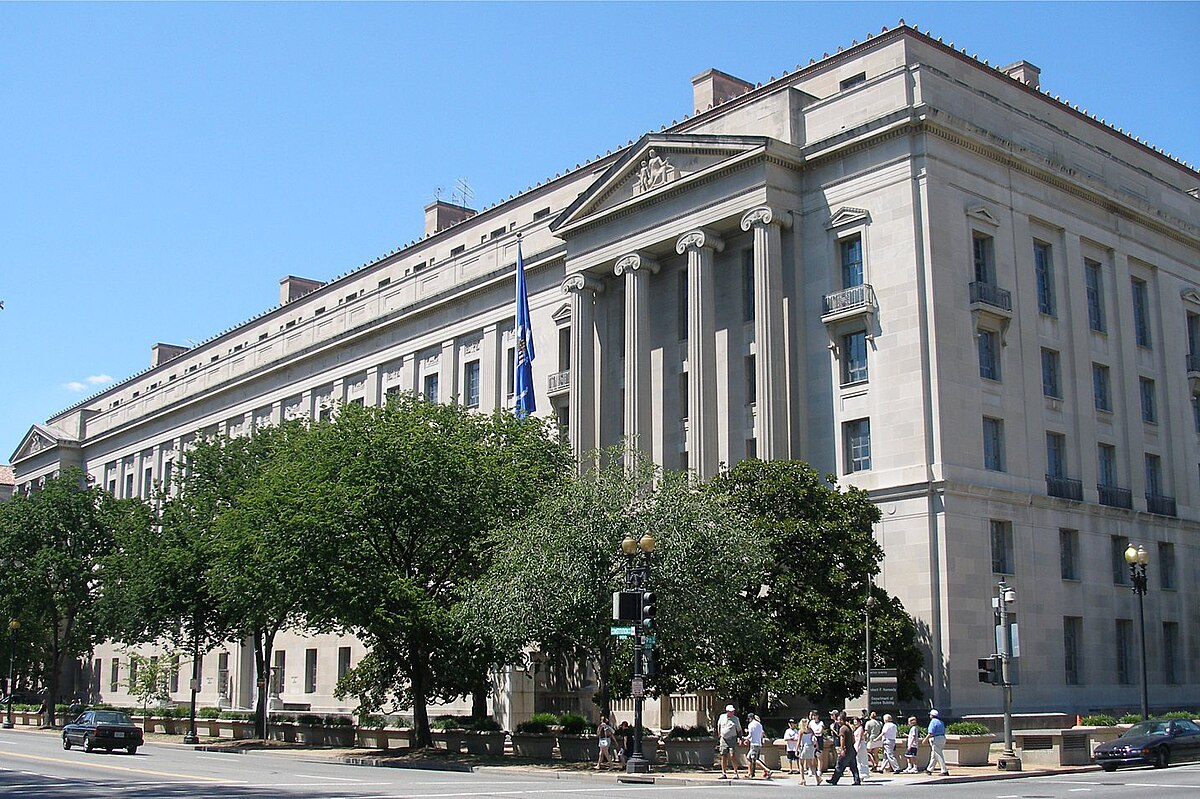
I’ve been at this for so long and have seen so much. And it’s hard to overstate how significant the latest revelations from The Wall Street Journal are. According to its reporting, the U.S. Department of Justice’s criminal health care-fraud unit is questioning former UnitedHealth Group employees about the company’s Medicare billing practices regarding how the company records diagnoses that trigger higher payments from taxpayers.

For years, independent policy experts and *some* regulators have warned that the private Medicare Advantage program has become a breeding ground for upcoding and tax dollar waste. The tactic being scrutinized by the DOJ is called “upcoding.” Essentially, Medicare Advantage companies have an incentive to “find” new illnesses — even among patients who might not need additional treatment because the more serious the diagnoses, the bigger the government payouts to the company.

According to the Journal, prosecutors, FBI agents, and the Health and Human Services Inspector General have been asking ex-employees about special training for doctors, software that flags profitable conditions, and even bonuses for physicians who recode patient files. One former UnitedHealth doctor told the Journal that prosecutors inquired about pressure to use certain diagnosis codes and bonus pay for certain health care decisions that financially favored UnitedHealth. 

The Journal’s data shows that UnitedHealth’s members received certain lucrative diagnoses at higher rates than patients in other Medicare Advantage plans — billions of extra dollars that ultimately come from taxpayers. In one example, they reportedly pulled in about $2,700 more taxpayer dollars per patient visit when nurses went into seniors’ homes to hunt for additional conditions.

In a statement, UnitedHealth insists they “remain focused on what matters most: delivering better outcomes, more benefits, and lower costs for the people we serve.”

This latest criminal investigation joins at least two other DOJ probes into UnitedHealth’s billing and potential antitrust violations. And it’s yet another reminder that the Medicare Advantage program — which, much to many advocates alarm, now covers more than half of all Medicare enrollees – is desperately in need of real oversight.

If there’s any silver lining, it’s that courageous former employees are speaking up. They know what I know: This “profit-maximizing” through “upcoding” and “favorable selection” drains billions that could be better spent on actual patient care and pad Wall Street profits.

Democrats urge Republicans to focus on Medicare Advantage upcoding instead of Medicaid cuts

https://www.healthcaredive.com/news/democrats-urge-republicans-focus-medicare-advantage-upcoding/747627/

Dive Brief:

  • Democrat lawmakers are urging Republicans debating cuts to Medicaid to focus instead on fraud, waste and abuse in another federal healthcare program: Medicare Advantage.
  • Curbing upcoding in the privatized Medicare plans, wherein insurers exaggerate the health needs of their members to inflate government reimbursement, is a better avenue for saving federal dollars than restricting benefits or cutting eligibility in Medicaid, the 36 Democrats wrote in a letter to GOP leadership on Wednesday.
  • The letter was addressed to Senate Majority Leader John Thune, R-S.D, and House Speaker Mike Johnson, R-La., and comes as Republicans debate different policies to reach savings targets.

Dive Insight:

Republicans in Congress are aiming to extend tax cuts from President Donald Trump’s first term. Their budget directs the House Energy and Commerce Committee to cut $880 billion in spending — a goal that’s impossible to reach without touching Medicaid, which (along with its sister program for children) provides safety-net insurance to some 80 million Americans.

Now, Democrats in both chambers are urging Republicans to redirect their attention from Medicaid to MA, privatized plans for Medicare seniors that can provide additional benefits but also restrict care in a way traditional Medicare is not allowed to do. Still, the plans have steadily grown in popularity and now cover more than half of the 68 million Americans in Medicare.

“Your directive to cut federal health care spending should come from reducing waste, fraud, and abuse like upcoding by for-profit insurance companies, not by cutting health care benefits for American families who rely on Medicaid to make ends meet,” the Democrats’ letter reads.

The letter cites a Wall Street Journal investigation into upcoding published last year that found MA insurers frequently added diagnoses for their members for which their members never received treatment or that went against doctors’ observations. The practice drove a total of $50 billion in additional payments to the private insurers over three years, according to the investigation.

Similarly, influential congressional advisory group MedPAC found CMS paid MA insurers $84 billion more in 2024 than the government would have if those members had been in traditional Medicare. Upcoding was responsible for almost half of those overpayments.

Traditionally, Republicans broadly support MA, which was created on the premise that private insurers could help the government manage Medicare more economically. However, there’s been rising bipartisan support for reforming the program in light of growing evidence of practices like upcoding that inflate government reimbursement to plans without helping enrollees.

In his confirmation hearing, Dr. Mehmet Oz, the surgeon and television personality tapped by Trump as the administrator of the CMS, agreed that tackling fraud, waste and abuse in MA was a “rational” way of lowering federal healthcare spending.

“We’re actually apparently paying more for Medicare Advantage than we’re paying for regular Medicare. So it’s upside down,” Oz said in front of the Senate Finance Committee in March.

Republicans in the House are currently trying to figure out how to achieve desired savings without slashing Medicaid, given the program’s political popularity, including among Republican voters.

GOP leadership recently appeared to rule out two Medicaid policies that would cause significant upheaval for enrollees in the program: lowering the portion of Medicaid costs borne by the federal government for the Medicaid expansion population, and per-capita caps on benefits for beneficiaries in expansion states.

More moderate policies Republicans are considering include requirements tying eligibility to work, education or volunteering hours or curbing financing arrangements that allow states to draw more funds from the federal government. Policies on the table would still result in millions of Americans losing Medicaid coverage.

“Moving forward with this dangerous plan to rip health care away from low- and middle-income Americans would be a man-made disaster for the health of the nation and the economy,” the Democrats’ letter reads. “We urge you instead to listen to Administrator Oz and tackle real fraud, waste, and abuse by private, for-profit health insurers in MA.”

House E&C is expected to hold its reconciliation markup next week.

UnitedHealth’s Reckoning: Wall Street Isn’t Buying the Blame Game

UnitedHealth executives made a valiant attempt yesterday to persuade investors that they have figured out how to improve customer service and keep Congress and the incoming Trump administration from passing laws that could shrink the company’s profit margins – and maybe even the company itself – but Wall Street wasn’t buying.

During their first call with investors since the murder of UnitedHealthcare CEO Brian Thompson, the company’s top brass pointed the finger of blame for rising health care costs everywhere but at themselves – primarily at hospitals and pharmaceutical companies – and made statements that simply were not true. Investors clearly did not find their comments reassuring or credible. By the end of the day shares of UnitedHealth’s stock were down more than 6% to $510.59. That marked a continuation of a slide that began after the stock price peaked at $630.73 on November 11 – a decline of almost 20%. 

In a little more than two months, the company has lost an astonishing $110 billion in market capitalization, and shareholders have lost an enormous amount of the money they invested in UnitedHealth. 

Earlier yesterday morning, the company released fourth-quarter and full-year 2024 earnings, which were slightly higher on a per share basis than Wall Street financial analysts had expected: $6.81 per share in the fourth quarter compared to analysts’ consensus estimate of $6.73 for the quarter. But the company posted lower revenue during the last three months of 2024 than analysts had expected. While revenue was up 7% over the same quarter in 2023, to $100.8 billion, analysts had expected revenue to grow to $101.6 billion.

And on a full-year basis, the company’s net profits fell an eye-popping 36%, from $22.4 billion in 2023 to $14.4 billion last year.

Bottom line: the company, which until last year had grown rapidly, actually shrank in some respects, especially in the division that operates the company’s health plans. UnitedHealthcare, which Thompson led, saw its revenue increase slightly but its profits fall. The other big division, Optum, which among other things owns and operates numerous physician practices and clinics and one of the country’s largest pharmacy benefit managers (PBMs), fared much better.

While Optum’s 2024 revenue was lower than UnitedHealthcare’s ($253 billion and $298 respectively), it made far more in profits on an operating basis ($16.7 billion and $15.6 respectively).

Optum’s operating profit margin was 6.6% while UnitedHealthcare’s was 5.2%.

The company’s executives blamed higher health care utilization, especially by people enrolled in its Medicare Advantage plans, for the decline in profits.

Witty and CFO John Rex pointed the finger of blame at hospitals and drug companies for rising medical prices. And they obscured the huge amounts of money the company’s PBM, Optum Rx, extracts from the pharmacy supply chain. While the company chose not to break out exactly how much of Optum’s revenues of $298 billion came from Optum Rx, it appears that more than half of it was contributed by the PBM. The company did note that Optum Rx revenues increased 15% during 2024.

Nevertheless, Witty and Rex blamed drug makers for high prices.

They also said that they would be changing the PBM’s business practices to pass through rebate discounts from drug makers to its customers, claiming that it already passes through 98% of them and will reach 100% by 2028. That clearly was a talking point aimed at Washington, where there is significant bipartisan support for legislation that would require all PBMs to do so. Despite UnitedHealth’s claim, there is no external verification to back up that they are passing 98% of rebates back to customers.

Another claim the executives made that is not true is that the Medicare Advantage program saves taxpayers money. Numerous government reports have shown the opposite, that the federal government spends considerably more on people enrolled in Medicare Advantage plans than those enrolled in the traditional Medicare program.

Reports have estimated that UnitedHealthcare, which is the largest Medicare Advantage company, and other MA plans are overpaid between $80 billion and $140 billion a year.

There is also growing bipartisan support to reform the Medicare Advantage program to reduce both the overpayments and the excessive denials of care at UnitedHealthcare and other MA insurers.

While company executives might be hoping that their fortunes will improve during the second Trump administration, Trump recently joined some Republican members of Congress, like Rep. Buddy Carter of Georgia, who are calling for significant reforms, especially to pharmacy benefit managers. 

At a news conference last month, Trump promised to “knock out” those middlemen in the pharmacy supply chain.  

“We are paying far too much, because we are paying far more than other countries,” he said. “We have laws that make it impossible to reduce [drug costs] and we have a thing called a ‘middleman’ … that makes more money than the drug companies, and they don’t do anything except they’re middlemen. We are going to knock out the middleman.”

Medicare Advantage’s $64 Billion Supplemental Benefits Slush Fund

Medicare spends huge sums financing the dental, vision and other benefits offered by Medicare Advantage plans. A new government report sounds the alert about their potential misuse.

In mid-March, the Medicare Payments Advisory Commission (MedPAC), which advises Congress on Medicare policy, made a bombshell disclosure in its annual Medicare report. The rebates that Medicare offers Medicare Advantage plans for supplemental benefits like vision, dental, and gym membership were at “nearly record levels”, more than doubling from 2018 to nearly $64 billion in 2024, but the government “does not have reliable information about enrollees’ actual use of these benefits at this time.”

In other words: $64 billion is being spent to subsidize private Medicare Advantage plans to provide benefits that are not available to enrollees in traditional Medicare, and the government has no idea how they are being spent.

Not only is this an enormous potential misallocation of taxpayer resources from the Medicare trust fund, it is also a critical part of Medicare Advantage’s marketing scam. The additional benefits offered in Medicare Advantage plans are what entice people to give up traditional Medicare, where there is no prior authorization, closed networks, or care denials.

But, as MedPAC states in the report, even though the Centers for Medicare and Medicaid Services (CMS) does not collect the data on utilization of supplemental benefits, what little data there is does not paint a pretty picture, with MedPAC noting that, “Limited data suggest that use of non-Medicare-covered supplemental benefits is low.”

HEALTH CARE un-covered is among the first media outlet to report MedPAC’s findings.

A 2018 study by Milliman, an actuarial firm, found that just 11 percent of Medicare Advantage beneficiaries had claims for dental care in that year, and that “multiple studies using survey data have found that beneficiaries with dental coverage in MA are not more likely to receive dental services than other Medicare beneficiaries.” A study from the Consumer Healthcare Products Association found that just one-third of eligible participants in Medicare Advantage plans used an over-the-counter medication benefit at pharmacies, leaving $5 billion annually on the table for insurers to pocket. Elevance Health, formerly Anthem, has 42 supplemental benefits available to Medicare Advantage beneficiaries. They analyzed a subset of 860,000 beneficiaries. For six of the 42 benefits, the $124 billion insurer could not report utilization data. For the other 36 supplemental benefits, the bulk of those covered used fewer than four benefits, with a full quarter not using any benefits at all and a majority using one or less benefits.

Medpac added that it had “previously reported that while these benefits often include coverage for vision, hearing, or dental services, the non-Medicare supplemental benefits are not necessarily tailored toward populations that have the greatest social or medical needs. The lack of information about enrollees’ use of supplemental benefits makes it difficult to determine whether the benefits improve beneficiaries’ health.”

With studies already showing that Medicare Advantage is associated with increased racial disparities in seniors’ health care, the massive subsidies provided to supplemental benefits appears to be an inadvertent driver of this problem:

the $64 billion—at least the portion of it that is actually being spent as opposed to deposited into insurer coffers—is likely not going to the populations that actually need it.

Amber Christ is the managing director of health policy for Justice in Aging, which advocates for the rights of seniors. “Health plans are receiving a large amount of dollars to provide supplemental benefits through rebates to plans. Clearly the offering have expanded, but the extent that they are being used is a black box,” she said. What little we do know, she said, indicates a “real lack of utilization.”

Christ pointed out that the Biden administration has taken some significant steps forward. “We’ve seen some good things coming out of CMS that will bring some transparency—the plans are going to have to report spending and utilization data, and in 2026 they will have to start sending notices to enrollees at the six-month point, letting people know what benefits they have used and what’s available. Those are all good moves.”

What’s missing from the proposed rule-making, however, is how the colossal outlays to supplemental benefits impact the goal of health equity, Christ said. “What we would have wanted to see more is demographics around utilization. Are there disparities in access?”

Of particular concern to advocates is the way that Medicare Advantage plans use supplemental benefits to market to “dual eligibles,” people who are eligible for Medicaid and Medicare. Medicare Advantage plans have taken to offering what amounts to cash benefits to dual eligibles, which provides a very strong incentive for people to sign up for Medicare Advantage.

But it’s effectively a trap, as being in both Medicare Advantage and Medicaid can not only result in prior authorization, care denials, and losing access to one’s physician, but also making care endlessly complex.

“Medicaid offers a bunch of supplemental benefits, either fully or often more comprehensively than Medicare Advantage. Seniors get lured into these health plans for benefits that they already have access to. But because benefits between Medicare Advantage and Medicaid aren’t coordinated people experience disruptions to their access to care. If they are dually enrolled it should go above and beyond, not duplicate coverage or making it more difficult to access coverage,” Christ said. 

David Lipschutz, the associate director of the Center for Medicare Advocacy, related an experience he had with a state health official who counseled a senior against enrolling in Medicare Advantage. The official “was able to stop them and help them think through their choices. She wanted to enroll in a Medicare Advantage plan that offered a flex benefit,” which is basically restricted cash (Aetna, for example, restricts its recipients to spending the money at stores owned by CVS Health, its parent company). “None of her five doctors contracted with the Medicare Advantage plan. Had it not been with that interaction with the health counselor. She would have traded the flex card for no access to her current physicians. It’s an untenable situation.”

Lipschutz added that Medicare Advantage insurers contract with community organizations to administer supplemental benefits, which helps to insulate the industry from political pressure from advocates in Washington. “This whole new range of supplemental benefits has also at the same time pulled in a lot of community based organizations. They need the cash that the plans are offering. It creates a welcome dynamic for insurance companies trying to make community organizations dependent on their money. But it’s not a good situation to be in when you’re trying to reign in Medicare Advantage overpayments.”

Bid/Ask

The core of the financing of supplemental benefits is through a bid system, in which CMS sets a benchmark based on area fee-for-service Medicare spending, and then invites insurers to submit a bid, and then receives a rebate for supplemental benefits based on the benchmark. The essential problem is that the average person in traditional Medicare is sicker than someone in a Medicare Advantage plan—the research shows that when patients get sick, they leave Medicare Advantage for traditional Medicare if they can. And Medicare Advantage plans aggressively market to healthier patients—the oft-touted gym membership supplemental benefit only works for those who actually work out at the gym regularly. (Well under one-third of those 75 and over.)

And in counties with low traditional Medicare spending, the benchmark is at 115 or 107.5 percent—an unreasonable and massive subsidy written into the Affordable Care Act at the behest of the insurance lobby. The lowest benchmark is at 95 percent of FFS spending for areas with high costs.

“The way the payment is set up leads to this excessive amount of rebate dollars,” said Lipschutz. “It’s a fundamentally flawed payment system which is in dire need of reform.” Lipschutz’s position jives with the MedPAC report, which states that: “A major overhaul of MA policies is urgently needed.”

Supplements For Half

“You shouldn’t have to enroll in a private plan just to access these benefits,” said Lipschutz. But that’s exactly the choice millions of seniors are faced with. Forty-nine percent of seniors remain in traditional Medicare.

And for that group, Medicare offers no supplemental benefits, Christ said. “As a foundational principle spending all this money for Medicare Advantage to give supplemental benefits doesn’t make sense. This is the Medicare trust fund. Half of Medicare has “access,” and the other half, in traditional Medicare, doesn’t. Wouldn’t those dollars be better spent giving everyone access? Especially when we understand that Medicare Advantage has narrower providers and prior authorization.

There’s a recognition that these supplemental benefits have positive impacts on quality of life, but we’re not offering it in traditional Medicare—even though Medicare Advantage is not doing a better job than traditional Medicare.”

House of Cards?

new lawsuit, filed in April, could substantially impact the incentives that plans have to offer supplemental benefits. To manage costs, many Medicare Advantage plans have value-based care arrangements with providers—meaning that they share some of their revenues with hospitals and other health providers to ensure access to networks and to smooth costs out in the long run.

But as part of this arrangement, providers bear some of the costs of the plans—including the cost of supplemental benefits. Bridges Health Partners, which is a clinically integrated network of doctors and hospitals, sued Aetna to block the allocation of supplemental benefits to the expenses that they bear the cost of, due to a 20-fold increase in their costs.

Combined with the 2026 requirement from CMS that participants be informed as to what benefits they haven’t used, insurers’ ability to offer these supplemental benefits and still retain sky-high profit margins could be curtailed.

MA plans were overpaid $9.3B annually from 2017 to 2020, study finds

Favorable selection of healthier beneficiaries led to overpayments in counties with high Medicare Advantage penetration, but benchmark changes could mitigate the impact.

Dive Brief:

  • Favorable selection of beneficiaries in Medicare Advantage is throwing off benchmarks used to set payments to those plans, resulting in billions of overpayments to the privatized insurance program for seniors, according to a study published this week in Health Affairs. 
  • Healthier people are more likely to enroll in MA compared to traditional Medicare, leading to overpayment in counties with high levels of MA participation and underpayment in counties with less MA market penetration, the study found.
  • Overall, MA plans were overpaid by an average of $9.3 billion per year between 2017 and 2020. As seniors increasingly turn to MA plans, setting payment benchmarks based on traditional Medicare spending has become “less tenable” and requires reform, researchers argued.

Dive Insight: 

Overpayments to MA plans are a growing concern for regulators and researchers as more seniors choose the increasingly popular coverage option. More than half of the eligible Medicare population is now enrolled in MA, a stark increase from 19% of the eligible population enrolled in 2007. 

One analysis from the USC Schaeffer Center for Health Policy and Economics found overpayments could reach more than $75 billion this year due to the favorable selection of healthier beneficiaries, aggressive coding and quality bonuses. 

MA plans are administered by private insurers and paid a set amount each month regardless of beneficiaries’ use of healthcare services. Those payment rates are set by benchmarks in each county every year alongside quality payments and risk scores based on beneficiaries’ health needs.

But those benchmarks, which are tied to risk-adjusted spending in traditional Medicare, may be contributing to overpayments to MA plans, as healthier people are more likely to choose MA and sicker seniors switch to traditional Medicare plans.

The distribution of MA beneficiaries has also shifted toward counties that were overpaid, according to the study. 

In benchmark year 2020, 31.4% of MA beneficiaries lived in underpaid counties, while 68.6% lived in counties that were overpaid, the study found. There were more than 2,700 underpaid counties compared with just over 330 overpaid counties, highlighting the concentration of beneficiaries in counties with high MA market penetration. 

In underpaid counties, underpayments totaled a loss of $407 per beneficiary, while overpayments reached an extra $762 per beneficiary in overpaid areas.

Overall, the Health Affairs study estimated that overpayments to MA plans reached $37.3 billion between 2017 and 2020.

The CMS could take action to improve its risk adjustment methodology, which doesn’t take into account favorable selection dynamics for MA, according to the study. 

“The simplest strategy would be to allow risk adjustment to vary according to MA penetration, thereby flattening the relationship between traditional Medicare risk and spending across levels of MA penetration,” the authors wrote. 

Federal regulators have moved to audit MA plans and are attempting to claw back billions in overpayments.

Insurers have pushed back on the rule. Humana, one of the largest providers of MA plans in the country, sued the HHS last week, arguing the regulation is unfair and should be vacated. 

CMS softened proposed rate changes, but strengthened prior authorization rules for MA plans

https://mailchi.mp/c9e26ad7702a/the-weekly-gist-april-7-2023?e=d1e747d2d8

Last Friday, the Centers for Medicare and Medicaid Services (CMS) announced that it will begin phasing in major Medicare Advantage (MA) risk-adjustment changes over a three-year period, slower than previously anticipated. Thanks to this delay in full implementation, MA plans will see an average 3.3 percent payment increase in 2024, up from the one percent projected in the earlier draft notice.

CMS also finalized regulations this week that aim to limit MA prior authorizations and denials by requiring that coverage decisions align with traditional Medicare.

The Gist: After CMS began proposing changes to MA payment formulas last year, aimed at reining in pervasive abuses and fraud, 

the insurance industry responded with a $13M marketing blitz to oppose the changes. 

The ads, one of which aired during the Super Bowl, tied Medicare Advantage “cuts” to the time-tested “Hands Off My Medicare” messaging directed at seniors. 

With MA enrollment projected to overtake traditional Medicare this year, the federal government finds itself walking a tightrope in clamping down on overpayments to MA plans, given that any reductions will impact a growing number of seniors.

Tackling Medicare Advantage overpayments

Republicans divided over tackling Medicare Advantage overpayments

Hard-pressed to come up with significant savings to reduce the deficit, some Senate Republicans are taking a closer look at reforms to Medicare Advantage in light of reports that insurance companies are collecting billions of dollars in extra profits by over-diagnosing older patients.  

But the idea of cracking down on Medicare Advantage overpayments to insurance companies divides Republicans, who have traditionally championed the program. 

Proponents of Medicare Advantage reform anticipated it will face strong opposition from the insurance industry, one of the most powerful special interest groups in Washington.  

Sen. Bill Cassidy (La.), the top-ranking Republican on the Senate Health, Education, Labor and Pensions Committee, is leading the push to reduce Medicare overpayments.  

“Medicare is going insolvent. If we don’t do anything, it’s going to go insolvent. We have a whole package of things, all of them bipartisan, and we’re doing it essentially to have something out there so that if somebody decides to do something, there will be things that are examined, considered and bipartisan” to vote on, he said.  

“I come up with lots of stuff. We thought it through policy and think it’s policy that can make it all the way through,” he said.

Cassidy’s office says his bill could extend the solvency of Medicare by saving as much as $80 billion in federal funds over the next decade without cutting benefits.

He emphasizes that it would not cut Medicare Advantage benefits, but critics of the legislation are sure to challenge that claim.  

“We’re not undermining Medicare Advantage,” he said.  

“In fact, I would say this is a better alternative than what CMS is doing by rule,” he added, referring to a new rule-making action by the Biden administration to recover overpayments in Medicare Advantage through the Centers for Medicare & Medicaid Services.

The Medicare Payment Advisory Panel estimates that Medicare Advantage plans collected $124 billion in overpayments from 2008 to 2023. They collected an estimated $44 billion overpayments in 2022 and 2023 alone, according to MedPAC. 

Unlike traditional fee-for-service Medicare, Medicare Advantage plans are offered by private companies. Both are funded by taxpayers through general revenues, payroll taxes and beneficiaries’ premiums. 

Cassidy is also leading a bipartisan working group to reform Social Security to extend its solvency. Members include Sens. Angus King (I-Maine) and Mitt Romney (R-Utah).  

“To have a significant impact on fiscal policy, you’d have to look at entitlements,” said Romney, who called Medicare Advantage “an area we’re going to be looking at very shortly — the committee will be looking at Medicare Advantage,

the cost of Medicare Advantage …. It’s become more expensive than the old fee-for-service Medicare.”  

In a follow-up interview Thursday, Romney said senators are also looking at reforms to Pharmacy Benefit Managers, the companies that serve as middle-men between drug manufacturers, insurance companies and pharmacies.  

Romney said, “in the past, Medicare Advantage has been a lower-cost way of providing Medicare than fee-for-service Medicare.” 

“If that’s changing, I’d like to understand why and make sure we don’t create impediments to the lower-cost Medicare Advantage,” he said.  

Sen. Mike Braun (R-Ind.) said Medicare Advantage overpayment “definitely” is a “reform issue.” 

“I’ve been the loudest voice on reforming health care and that’s a commonsense idea,” he said. “Whatever it takes to bring down health care costs.

“I’m one of the most free-market people here, but the health care industry is not a free market. It’s like an unregulated utility,” he said. “There’s so much opaqueness.”  

But some Republicans are already trying to paint efforts to reduce overpayments as cuts to Medicare Advantage.  

The problem with Medicare Advantage is President Biden is cutting $540 per member per year. That’s the problem. Medicare Advantage has been very successful,” said Sen. Roger Marshall (R-Kan.), an OB/GYN who practiced medicine for more than 25 years.  

National Republican Senatorial Committee Chairman Steve Daines (R-Mont.) accused Biden of “proposing Medicare Advantage cuts” when the president accused some Republicans of wanting to sunset Medicare at his Feb. 7 State of the Union address.  

Medicare Advantage is getting more popular among Democrats as well as the number of blue state enrollees in the program soars. The number of Americans enrolled in Medicare Advantage has nearly doubled over the last 12 years, according to the Kaiser Family Foundation.

Cassidy’s proposal, which he introduced with progressive Sen. Jeff Merkley (D-Ore.) on Monday, could draw broader interest from Republicans.

Sen. John Cornyn (R-Texas), an adviser to the Senate GOP leadership, called Medicare Advantage a “success.”

“That doesn’t mean that it should be immune from oversight, so I’ll be interested to see what they have to say,” he said.  

Cassidy and Merkley say that Medicare Advantage plans have a financial incentive to make beneficiaries appear sicker than they are because they are paid a standard rate based on the health of individual patients. Their bill, the No Unreasonable Payment, Coding or Diagnoses for Elderly (No Upcode Act) would require risk models based on more extensive diagnostic data over a period of two years.  

It would also limit the ability of insurance companies to use old or unrelated medical conditions to inflate the cost of care and ensure that Medicare is only charged for treatment related to relevant medical conditions, according to a summary provided by the senators’ offices.Biden administration approves California’s electric truck mandateFlorida transgender bathroom bill passes committee

The goal is to narrow the disparity in how patients are assessed by traditional Medicare and Medicare Advantage.  

Studies and audits conducted by CMS and the Department of Health and Human Services’ inspector general found that insurance companies collected billion of dollars in overpayments because of diagnoses that were not later supported by enrollees’ medical records.

The Kaiser Family Foundation reported in August that more than 28 million people — or about 48 percent of the eligible Medicare population — were enrolled in Medicare Advantage plans in 2022. They accounted for $427 billion or 55 percent of total federal Medicare spending.