Health systems are rightly concerned about Republican plans to cut Medicaid spending, end ACA subsidies and enact site neutral payments, says consultant Michael Abrams, managing partner of Numerof, a consulting firm.
“Health systems have reason to worry,” Abrams said shortly after President Donald Trump was inaugurated on Monday.
While Trump mentioned little about healthcare in his inauguration speech, the GOP trifecta means spending cuts outlined in a one-page document released by Politico and another 50-pager could get a majority vote for passage.
Of the insurers, pharmaceutical manufacturers and health systems that Abrams consults with, healthcare systems are the ones that are most concerned, Abrams said.
At the top of the Republican list targeting $4 trillion in healthcare spending is eliminating an estimated $2.5 billion from Medicaid.
“There’s no question Republicans will find savings in Medicaid,” Abrams said.
Medicaid has doubled its enrollment in the last couple of years due to extended benefits made possible by the Affordable Care Act, despite disenrolling 25 million people during the redetermination process at the end of the public health emergency, according to Abrams.
Upward of 44 million people, or 16.4% of the non-elderly U.S. population are covered by an Affordable Care Act initiative, including a record high of 24 million people in ACA health plans and another 21.3 million in Medicaid expansion enrollment, according to a KFF report.Medicaid expansion enrollment is 41% higher than in 2020.
The enhanced subsidies that expanded eligibility for Medicaid and doubled the number of enrollees are set to expire at the end of 2025 and Republicans are likely to let that happen, Abrams said. Eliminating enhanced federal payments to states that expanded Medicaid under the ACA are estimated to cut the program by $561 billion.
If enhanced subsidies end, the Congressional Budget Office has estimated that the number of people who will become uninsured will increase by 3.8 million each year between 2026 and 2034.
The enhanced tax subsidies for the ACA are set to expire at the end of 2025. This could result in another 2.2 million people losing coverage in 2026, and 3.7 million in 2027, according to the CBO.
WHY THIS MATTERS
For hospitals, loss of health insurance coverage means an increase in sicker, uninsured patients visiting the emergency department and more uncompensated care.
“Health systems are nervous about people coming to them who are uninsured,” Abrams said. “There will be people disenrolled.”
The federal government allowed more people to be added to the Medicaid rolls during the public health emergency to help those who lost their jobs during the COVID-19 pandemic, Numerof said. Medicaid became an open-ended liability which the government wants to end now that the unemployment rate is around 4.2% and jobs are available.
An idea floating around Congress is the idea of converting Medicaid to a per capita cap and providing these funds to the states as a block grant, Abrams said. The cost of those programs would be borne 70% by the federal government and 30% by states.
This fixed amount based on a per person amount would save money over the current system of letting states report what they spent.
Another potential change under the new administration includes site neutral Medicare payments to hospitals for outpatient services.
The HFMA reported the site neutral policy as a concern in a list it published Monday of preliminary federal program cuts totaling more than $5 trillion over 10 years. The 50-page federal list is essentially a menu of options, the HFMA said, not an indication that programs will actually be targeted leading up to the March 14 deadline to pass legislation before federal funding expires.
Other financial concerns for hospitals based on that list include: the elimination of the tax exemption for nonprofit hospitals, bringing in up to $260 billion in estimated 10-year savings; and phasing out Medicare payments for bad debt, resulting in savings of up to $42 billion over a decade.
Healthcare systems are the ones most concerned over GOP spending cuts, according to Abrams. Pharmacy benefit managers and pharmaceutical manufacturers also remain on edge as to what might be coming at them next.
THE LARGER TREND
President Donald Trump mentioned little about healthcare during his inauguration speech on Monday.
Trump said the public health system does not deliver in times of disaster, referring to the hurricanes in North Carolina and other areas and to the fires in Los Angeles.
Trump also mentioned giving back pay to service members who objected to getting the COVID-19 vaccine.
He also talked about ending the chronic disease epidemic, without giving specifics.
“He didn’t really talk about healthcare even in the campaign,” Abrams said.
However, in his consulting work, Abrams said, “The common thread is the environment is changing quickly,” and that healthcare organizations need to do the same “in order to survive.”
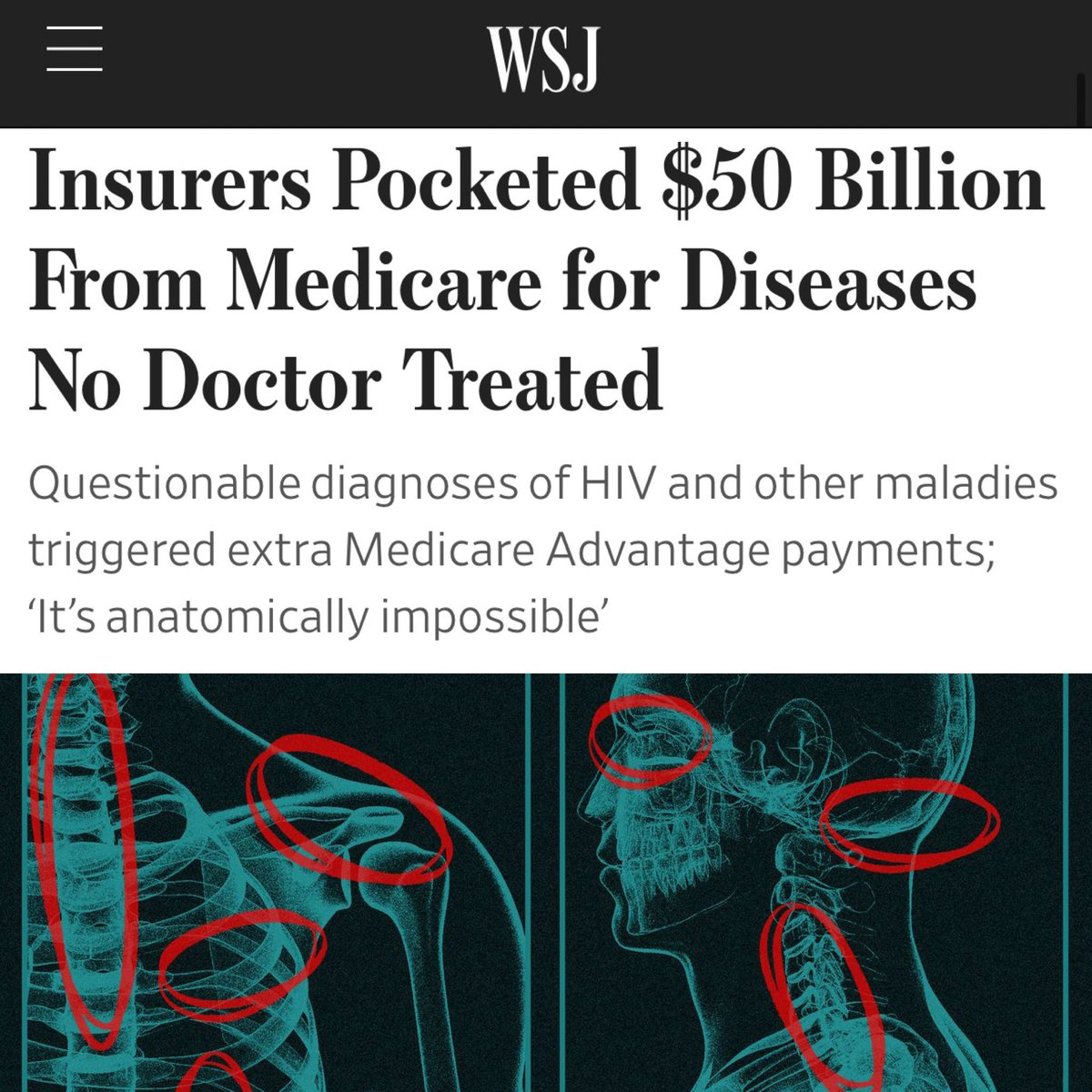
Medicare Advantage plans received $50 billion in payments between 2018 and 2021 for diagnoses insurers added to medical records, a Wall Street Journal investigation published July 8 has found.
The Journal investigated billions of Medicare Advantage records and found that some conditions were diagnosed at a much higher rate among Medicare Advantage beneficiaries than among traditional Medicare beneficiaries. For example, diabetic cataracts were diagnosed much more often among Medicare Advantage beneficiaries than among traditional Medicare beneficiaries, the Journal found.
The federal government pays Medicare Advantage plans a rate per beneficiary based on their diagnoses.
CMS does not reimburse MA plans for beneficiaries with non-diabetic cataracts, a common condition among older adults, according to the Journal. The government does reimburse for diabetic cataracts. CMS paid Medicare Advantage plans more than $700 million for diabetic cataracts diagnoses between 2018 and 2021, the investigation found.
A spokesperson for UnitedHealth, the largest Medicare Advantage insurer, told the Journal its analysis was “inaccurate and biased.” Medicare Advantage plans code diagnoses more completely and ensure diseases are caught earlier, the spokesperson told the outlet.
The Journal’s investigation also found some Medicare Advantage beneficiaries were diagnosed with serious diseases in their medical records, but no evidence of treatment for the disease appeared in these patients’ records. Among beneficiaries who had a diagnosis of HIV added to their record by their insurer, just 17% received treatment for the disease, according to the investigation. Among beneficiaries who were diagnosed with HIV by their physician, 92% received treatment.
The Journal’s investigation is the latest examining upcoding by MA plans. A 2022 report in The New York Times alleged some insurers incentivized employees or physicians to add diagnoses to patients’ reports. Nearly every major payer has been accused of overbilling by a whistleblower, the federal government or an investigation by HHS’ Office of Inspector General.
MedPAC, which advises the government on Medicare issues, estimates the federal government will spend $83 billion more on Medicare Advantage beneficiaries than if they were enrolled in fee-for-service Medicare. Coding intensity in MA will be 20% higher than in fee-for-service in 2024, according to the commission.
Medicare spends huge sums financing the dental, vision and other benefits offered by Medicare Advantage plans. A new government report sounds the alert about their potential misuse.
In mid-March, the Medicare Payments Advisory Commission (MedPAC), which advises Congress on Medicare policy, made a bombshell disclosure in its annual Medicare report. The rebates that Medicare offers Medicare Advantage plans for supplemental benefits like vision, dental, and gym membership were at “nearly record levels”, more than doubling from 2018 to nearly $64 billion in 2024, but the government “does not have reliable information about enrollees’ actual use of these benefits at this time.”
In other words: $64 billion is being spent to subsidize private Medicare Advantage plans to provide benefits that are not available to enrollees in traditional Medicare, and the government has no idea how they are being spent.
Not only is this an enormous potential misallocation of taxpayer resources from the Medicare trust fund, it is also a critical part of Medicare Advantage’s marketing scam. The additional benefits offered in Medicare Advantage plans are what entice people to give up traditional Medicare, where there is no prior authorization, closed networks, or care denials.
But, as MedPAC states in the report, even though the Centers for Medicare and Medicaid Services (CMS) does not collect the data on utilization of supplemental benefits, what little data there is does not paint a pretty picture, with MedPAC noting that, “Limited data suggest that use of non-Medicare-covered supplemental benefits is low.”
HEALTH CARE un-covered is among the first media outlet to report MedPAC’s findings.
A 2018 study by Milliman, an actuarial firm, found that just 11 percent of Medicare Advantage beneficiaries had claims for dental care in that year, and that “multiple studies using survey data have found that beneficiaries with dental coverage in MA are not more likely to receive dental services than other Medicare beneficiaries.” A study from the Consumer Healthcare Products Association found that just one-third of eligible participants in Medicare Advantage plans used an over-the-counter medication benefit at pharmacies, leaving $5 billion annually on the table for insurers to pocket. Elevance Health, formerly Anthem, has 42 supplemental benefits available to Medicare Advantage beneficiaries. They analyzed a subset of 860,000 beneficiaries. For six of the 42 benefits, the $124 billion insurer could not report utilization data. For the other 36 supplemental benefits, the bulk of those covered used fewer than four benefits, with a full quarter not using any benefits at all and a majority using one or less benefits.
Medpac added that it had “previously reported that while these benefits often include coverage for vision, hearing, or dental services, the non-Medicare supplemental benefits are not necessarily tailored toward populations that have the greatest social or medical needs. The lack of information about enrollees’ use of supplemental benefits makes it difficult to determine whether the benefits improve beneficiaries’ health.”
With studies already showing that Medicare Advantage is associated with increased racial disparities in seniors’ health care, the massive subsidies provided to supplemental benefits appears to be an inadvertent driver of this problem:
the $64 billion—at least the portion of it that is actually being spent as opposed to deposited into insurer coffers—is likely not going to the populations that actually need it.
Amber Christ is the managing director of health policy for Justice in Aging, which advocates for the rights of seniors. “Health plans are receiving a large amount of dollars to provide supplemental benefits through rebates to plans. Clearly the offering have expanded, but the extent that they are being used is a black box,” she said. What little we do know, she said, indicates a “real lack of utilization.”
Christ pointed out that the Biden administration has taken some significant steps forward. “We’ve seen some good things coming out of CMS that will bring some transparency—the plans are going to have to report spending and utilization data, and in 2026 they will have to start sending notices to enrollees at the six-month point, letting people know what benefits they have used and what’s available. Those are all good moves.”
What’s missing from the proposed rule-making, however, is how the colossal outlays to supplemental benefits impact the goal of health equity, Christ said. “What we would have wanted to see more is demographics around utilization. Are there disparities in access?”
Of particular concern to advocates is the way that Medicare Advantage plans use supplemental benefits to market to “dual eligibles,” people who are eligible for Medicaid and Medicare. Medicare Advantage plans have taken to offering what amounts to cash benefits to dual eligibles, which provides a very strong incentive for people to sign up for Medicare Advantage.
But it’s effectively a trap, as being in both Medicare Advantage and Medicaid can not only result in prior authorization, care denials, and losing access to one’s physician, but also making care endlessly complex.
“Medicaid offers a bunch of supplemental benefits, either fully or often more comprehensively than Medicare Advantage. Seniors get lured into these health plans for benefits that they already have access to. But because benefits between Medicare Advantage and Medicaid aren’t coordinated people experience disruptions to their access to care. If they are dually enrolled it should go above and beyond, not duplicate coverage or making it more difficult to access coverage,” Christ said.
David Lipschutz, the associate director of the Center for Medicare Advocacy, related an experience he had with a state health official who counseled a senior against enrolling in Medicare Advantage. The official “was able to stop them and help them think through their choices. She wanted to enroll in a Medicare Advantage plan that offered a flex benefit,” which is basically restricted cash (Aetna, for example, restricts its recipients to spending the money at stores owned by CVS Health, its parent company). “None of her five doctors contracted with the Medicare Advantage plan. Had it not been with that interaction with the health counselor. She would have traded the flex card for no access to her current physicians. It’s an untenable situation.”
Lipschutz added that Medicare Advantage insurers contract with community organizations to administer supplemental benefits, which helps to insulate the industry from political pressure from advocates in Washington. “This whole new range of supplemental benefits has also at the same time pulled in a lot of community based organizations. They need the cash that the plans are offering. It creates a welcome dynamic for insurance companies trying to make community organizations dependent on their money. But it’s not a good situation to be in when you’re trying to reign in Medicare Advantage overpayments.”
Bid/Ask
The core of the financing of supplemental benefits is through a bid system, in which CMS sets a benchmark based on area fee-for-service Medicare spending, and then invites insurers to submit a bid, and then receives a rebate for supplemental benefits based on the benchmark. The essential problem is that the average person in traditional Medicare is sicker than someone in a Medicare Advantage plan—the research shows that when patients get sick, they leave Medicare Advantage for traditional Medicare if they can. And Medicare Advantage plans aggressively market to healthier patients—the oft-touted gym membership supplemental benefit only works for those who actually work out at the gym regularly. (Well under one-third of those 75 and over.)
And in counties with low traditional Medicare spending, the benchmark is at 115 or 107.5 percent—an unreasonable and massive subsidy written into the Affordable Care Act at the behest of the insurance lobby. The lowest benchmark is at 95 percent of FFS spending for areas with high costs.
“The way the payment is set up leads to this excessive amount of rebate dollars,” said Lipschutz. “It’s a fundamentally flawed payment system which is in dire need of reform.” Lipschutz’s position jives with the MedPAC report, which states that: “A major overhaul of MA policies is urgently needed.”
Supplements For Half
“You shouldn’t have to enroll in a private plan just to access these benefits,” said Lipschutz. But that’s exactly the choice millions of seniors are faced with. Forty-nine percent of seniors remain in traditional Medicare.
And for that group, Medicare offers no supplemental benefits, Christ said. “As a foundational principle spending all this money for Medicare Advantage to give supplemental benefits doesn’t make sense. This is the Medicare trust fund. Half of Medicare has “access,” and the other half, in traditional Medicare, doesn’t. Wouldn’t those dollars be better spent giving everyone access? Especially when we understand that Medicare Advantage has narrower providers and prior authorization.
There’s a recognition that these supplemental benefits have positive impacts on quality of life, but we’re not offering it in traditional Medicare—even though Medicare Advantage is not doing a better job than traditional Medicare.”
House of Cards?
A new lawsuit, filed in April, could substantially impact the incentives that plans have to offer supplemental benefits. To manage costs, many Medicare Advantage plans have value-based care arrangements with providers—meaning that they share some of their revenues with hospitals and other health providers to ensure access to networks and to smooth costs out in the long run.
But as part of this arrangement, providers bear some of the costs of the plans—including the cost of supplemental benefits. Bridges Health Partners, which is a clinically integrated network of doctors and hospitals, sued Aetna to block the allocation of supplemental benefits to the expenses that they bear the cost of, due to a 20-fold increase in their costs.
Combined with the 2026 requirement from CMS that participants be informed as to what benefits they haven’t used, insurers’ ability to offer these supplemental benefits and still retain sky-high profit margins could be curtailed.
Sometimes a health policy story comes along that should be shouted from the rafters — well at least reported by media that cover the subject. Brett Arends’ story for Dow Jones’ MarketWatch is one of those stories.
The revelations about overpayments come from the Medicare Payment Advisory Commission, MedPAC for short, some of whose recommendations over the years have resulted in high rate increases for Advantage plan sellers that helped make it possible for them to offer groceries, bits of dental care, and other goodies seniors have snapped up. The media’s role in revealing and dissecting those overpayments is long overdue.
The last several months news outlets have been paying more attention to the downsides of Medicare Advantage plans.
Arends’ story focused on one thread in the story: MedPAC’s latest report to Congress that revealed something health policy wonks — but not the public — have known for a long time. Medicare Advantage plans are taking advantage of the federal gravy train.
“The private insurers who now run more than half of all Medicare plans are overcharging the taxpayers by a staggering $83 billion a year,” Arends wrote. “They are charging us taxpayers 22% more than it would cost us to provide the same health insurance to seniors directly if we just cut out the private insurance companies as middlemen.”
MedPAC was set up by the Balanced Budget Act of 1997, “back when people in Washington were actually doing their jobs,” Arends points out. The commission’s job is to advise Congress on issues involving Medicare. MedPAC reports discuss the financial situation of the Medicare trust funds, and over the years those reports often revealed that the private health plans have been overpaid. Until recently, there has been little to no pushback from the government or most of the media, in effect leaving the insurance industry a clear path to sell Medicare Advantage plans to more than half of the Medicare market. The media have recently begun to ask why.
Arends calls the Medicare Advantage arrangement “a rip-off, pure and simple,” noting that what sellers of the plan are paid “is more than twice as much as it would cost simply to provide free dental, hearing and vision care to all traditional Medicare beneficiaries, not just those in private ‘Medicare Advantage’ plans.”
I have covered Medicare for decades now and have often asked the experts why there couldn’t be a level playing field that would allow beneficiaries in the traditional program to receive vision and dental benefits. The answer was always, “We can’t afford that.”
Arends debunks that thinking by directly quoting the MedPAC report:
“It reads: ‘We estimate that Medicare spends approximately 22 percent more for MA enrollees than it would spend if those beneficiaries were enrolled in FFS (fee for service or traditional) Medicare, a difference that translates into a projected $83 billion in 2024.’ MedPAC reported that its review of private plan payments suggests that over the 39-year history with private plans, they “have never yielded aggregate savings for the Medicare program. Throughout the history of Medicare managed care, the program (Medicare Advantage) has paid more than it would have paid if beneficiaries had been in FFS (fee for service) Medicare.”
I checked in with Fred Schulte, who now writes for KFF Health News, and who over his career has written many prize-winning stories documenting the shenanigans insurers have used to enhance their reimbursements from Medicare, such as upcoding. That’s the practice of billing Medicare for ailments that are more serious than what patients actually have. “For example, instead of reporting a patient has diabetes, the insurers would say diabetes with neuropathy or eye problems and receive higher reimbursement,” he explained.
“It took a very long time for the government and the Justice Department to understand what was going on here with this coding,” Schulte said. “The codes just kept getting higher and higher, and profits kept going up and up.”
A year ago, Paul Ginsburg, a senior fellow at the University of Southern California’s Schaffer Center, said, “The current Medicare Advantage structure results in overpayments, markedly higher than previously understood.”
Even Michael Chernow, who heads the Medicare Payment Advisory Commission authorized by Congress in 1997, recently admitted on Twitter that Medicare Advantage “has never saved Medicare money.” But he added, “that doesn’t mean Medicare Advantage isn’t a key pillar of Medicare sustainability. At its best it can provide better care at lower cost.”
Arends’ story doesn’t sound hopeful about the direction of Medicare. He concludes, “Medicare Advantage isn’t making the rest of Medicare better. It is putting the rest of Medicare out of business. And not by being more efficient, but by being less efficient. It is driving up the overall cost of Medicare by 22%. And not by being more efficient but by being less efficient.
The logical outcome is that traditional Medicare ceases to exist and that Medicare dollars pass through the hands of private insurance companies at 122 cents on the dollar.”
Arends’ prediction may well come true, but perhaps not without a fight. David Lipschutz, associate director at the Center for Medicare Advocacy, says a “confluence of factors have come together to make it harder to ignore the problems of Medicare Advantage by the press and policymakers.”
After covering the Medicare privatization crisis for over two years, an investigative reporter takes a step back and examines what’s at stake.
Medicare, the country’s largest and arguably most successful health care program, is under duress, weakened by decades of relentless efforts by insurance companies to privatize it.
A rapidly growing Medicare Advantage market — now 52% of Medicare beneficiaries, up from 37% in 2018 — controlled by some of the largest and most powerful corporations in the world, threatens to both drain the trust fund and eliminate Medicare’s most important and controversial component: its ability to set prices.
It is not an overstatement to call it a heist of historic proportions, endangering the health not only of the more than 65 million seniors and people with disabilities who depend on Medicare but all Americans who benefit from the powerful role that Medicare has historically played in reining in health care costs.
The giant corporations that dominate Medicare Advantage have rigged the system to maximize payments from our government to the point that they are now being overpaid between $88 billion and $140 billion a year. The overpayments could soar to new heights if the insurers get their way and eliminate traditional Medicare.
All of America’s seniors and disabled people who depend on Medicare could soon be moved to a managed care model of ever-tightening networks, relentless prior authorization requirements and limited drug formularies. The promise of a humane health care system for all would be sacrificed at the altar of the almighty insurer dollar.
The Medicare Payments Advisory Commission (MedPAC), the independent congressional agency tasked with overseeing Medicare, last month released a searing report which found that Medicare spends 22% more per beneficiary in Medicare Advantage plans than if those beneficiaries had been enrolled in traditional fee-for-service Medicare. That’s up from a 6% estimate in the prior year.
A similar cost trend exists for diagnosis coding.
Medicare Advantage plans and their affiliated providers increasingly upcoded diagnoses to get higher reimbursements. In 2024, overpayments due to upcoding could total $50 billion, according to MedPAC, up from $23 billion in 2023. These enormous overpayments drive up the cost of premiums — MedPAC’s conservative estimate is that the premiums paid to Medicare out of seniors’ Social Security checks will be $13 billion higher in 2024 because of those overpayments.
There is evidence that Americans and lawmakers are starting to wake up.
Medicare Advantage enrollment growth slowed considerably in 2023. Support within the Democratic Party for Medicare Advantage is cratering. In 2022, 147 House Democrats signed an industry-backed letter supporting Medicare Advantage. This year, just 24 House Democrats signed the letter. Earlier this month, the Biden administration cut Medicare Advantage base payments for the second year in a row(while still increasing payments overall), over the fierce opposition of the insurance lobby. The investment bank Stephens called Biden’s decision a “highly adverse” outcome for insurers. Wall Street has taken note, punishing the stock price of the largest Medicare Advantage insurers, with Barron’s noting that Wall Street’s “love affair” with Humana is “ending in tears.” The cargo ship is turning. It is up to us to determine if that will be enough.
We can’t attack a problem if we don’t know how to diagnose it. I spoke with some of the most knowledgeable critics of Medicare Advantage about the danger the rapid expansion of Medicare privatization presents to the American public.
Rick Gilfillan is a medical doctor who in 2010 became the first director of the Center for Medicare and Medicaid Innovation (CMMI). He would go on to serve as CEO of Trinity Health from 2013 to 2019. In 2021 he launched an effort to halt the involuntary privatization of Medicare benefits.
“Right now, all investigations are finding tremendous overpayments,” Gilfillan said. “The overpayments are based on medical diagnoses that may or may not be meaningful from a patient care standpoint. Insurers are using chart reviews, nurse home visits and AI software to find as many diagnoses as possible and thereby inflate the health risks of the patients and the premium they get from Medicare. The overpayments are just outrageous,” he said.
The problem could get worse if the Supreme Court curtails the powers of regulatory agencies, as it may do this year. “It would make a huge difference in what CMS would be able to do,” Gilfillan said.
The logic behind Medicare privatization is that seniors and people with disabilities use too much care, egged on by their doctors. If true, a solution could have been to enforce the Stark Law, which bans physicians from having financial relationships with providers they refer to, or other anti-kickback statutes. States could also enforce laws 33 of them have enacted that prohibit the “corporate practice of medicine.”
Instead, health insurers were invited and incentivized by previous administrations to compete with the original Medicare program and “manage” beneficiaries’ care. Under this model— set in its modern form in 2003 — Medicare Advantage insurers are paid a rate based on a complex risk modeling process and estimated costs.
But Medicare Advantage plans have never been cheaper than traditional Medicare, as MedPAC has repeatedly pointed out.
This is a far more complex approach than the fee-for-service model in which CMS sets prices in health care in a public and transparent manner, Gilfillan notes. The prices negotiated by Medicare Advantage companies, by contrast, are not disclosed.
“With fee-for-service, a patient is provided a service, treatment or medication. The physician who provides the service charges a specific amount for that service,” Gilfillan said. “And then Medicare pays whatever it decided it was worth for that service. The benefit is you pay for what you get.”
Some Medicare Advantage plans use a “capitated” approach in paying primary care physicians. The amount is based on the premium they receive for the patient. The more codes submitted, the higher the capitation, the greater the profit. That approach is having far-reaching economic impacts on health care, said Hayden Rooke-Ley, an Oregon-based lawyer and health care consultant who co-authored a recent New England Journal of Medicine article on the corporatization of primary care. It is the capitation model, he says, that drives the rampant upcoding among Medicare Advantage plans.
From Horizontal to Vertical
“An undercovered aspect of Medicare Advantage is the way it is fueling vertical consolidation” in the insurance business, Rooke-Ley added, noting that until recent years, insurers bulked up by buying smaller competitors (known as horizontal integration). “With so much government money, we’re seeing insurance companies restructuring themselves as vertically integrated conglomerates [through the acquisition of physician practices, clinics and pharmacy operations] to become even more profitable, especially in Medicare Advantage.”
“A key part of this strategy is to own primary care practices,” he said, citing Humana’s partnership with the private-equity firm Welsh Carson to become the largest owner of Medicare-based primary care, CVS/Aetna’s acquisition of Oak Street, and UnitedHealth’s roll up of doctors practices across the country.
As Rooke-Ley explained, control of primary care allows insurance companies to more easily manipulate “risk scores” to increase payments from the government by claiming patients are in worse health than they really are.
“The easiest way to increase risk scores, short of simply fabricating diagnosis codes, is to control the behavior of physicians and other clinicians,” he said.
“When an insurance company owns the physician practice, it can configure workflows, technology, and incentives to drive risk coding.
UnitedHealth, for example, can preferentially schedule Medicare Advantage patients – and it can choose to reach out to health plan enrollees it identifies with its data as having high ‘coding opportunities.’ It can require its doctors to go to risk-code training, and it can prohibit doctors from closing their notes before they address all the ‘suggested’ diagnosis codes.”
“While Medicare Advantage insurance companies tout all their provider acquisitions as investments in value-based care, the concern is that it’s really just looking like a game of financialization,” Rooke-Ley said. “MA was supposed to save Medicare money, but the exact opposite has happened.
According to MedPAC, the government will over-subsidize MA to the tune of $88 billion this year, with $54 billion of that due to excess risk coding relative to what we see in traditional Medicare. That’s a staggering amount of money that could go directly to patients and clinicians by strengthening traditional Medicare.”
Two Possible Futures
There are two options for the future of Medicare, said Dr. Ed Weisbart, former chief medical officer of the pharmacy benefit manager Express Scripts, which Cigna bought in 2018, who now leads the Missouri chapter of Physicians for a National Health Program.
In one future, he said, “We will change the trajectory and get rid of the profiteers, and manage to divert the funds that are being profiteered to patient care.”
In another future, the business practices of Medicare Advantage plans “will be unfettered and more damaging and harmful than they are today,” he said. “If we continue on this course we’ll find an increasingly polarized health care system that caters increasingly to the wealthy and privileged. The barriers to care will be worse.”
Last week, the Centers for Medicare and Medicaid Services (CMS) issued the final 2024 Physician Fee Schedule, which reduces overall payment rates for physicians by 1.25 percent, including a 3.4 percent decrease in the conversion factor for relative value units, compared to 2023.
The rule also implements a new add-on payment for complex evaluation and management visits, which is expected to boost pay for primary care physicians.
The American Medical Association (AMA) strongly opposes these cuts and immediately appealed to Congress for a reprieve. In response, the Senate Finance Committee unanimously advanced a bill to the Senate floor that would reduce the conversion-factor rate cut from 3.4 percent to 2.15 percent, while also delaying reductions in Medicaid disproportionate share funding for safety-net hospitals. Senate Majority Leader Chuck Schumer (D-NY) has indicated he intends to assemble a broad healthcare bill, including some or all of these provisions, by the end of this year.
The Gist: Physicians were hopeful that inflation’s toll on labor and supply costs would earn them a break from continued Medicare pay cuts, but CMS remains committed to reductions within its budget neutrality framework.
Earlier this year, the Medicare Payment Advisory Commission (MedPAC) recommended for the first time that physician payments be tied to an index of physician practice inflation, but that would require legislative intervention, which Congress has not taken up.
The AMA calculated that Medicare physician pay has lagged inflation by 26 percent since 2001, pointing to burnout and large numbers of physicians exitingthe profession as a result.
Until calls for Medicare payment reform are heeded, physicians, like health systems, will have to adopt new, lower-cost models of care to cope with what they will continue to see as insufficient reimbursements.
Physicians at the American Medical Association Annual Meeting called for an overhaul of the Medicare payment system, arguing that it is outdated and threatens the survival of independent practices and patients’ access to care.
“This cannot wait; we are past the breaking point. Congress must urgently address physician concerns about Medicare to account for inflation and the post-pandemic economic reality facing practices nationwide,” AMA President Jack Resneck Jr., MD, said in a June 12 news release. “Our patients are counting on us to deliver the message that access to health care is jeopardized by Medicare’s payment system. Being mad isn’t enough. We will develop a campaign — targeted and grass roots — that will drive home our message.”
Inflation, the pandemic, declining reimbursements and rising cost are making it more challenging for independent physicians to maintain their autonomy and are jeopardizing access to care, according to the AMA, which argues that CMS physician payments have declined 26 percent from 2001 to 2023 after accounting for inflation.
In January, the Medicare Payment Advisory Commission called for a physician payment update tied to the Medicare Economic Index for the first time, and, in April, a group of House members introduced a bill that would provide annual inflation updates to the Medicare fee schedule based on the index.
“Duct-taping the widening cracks of a dilapidated payment system has put us in this precarious situation,” Dr. Resneck said. “Physicians are united in our determination to build a solid foundation rather than further jury-rigging the system.”
The Medicare Advisory Payment Commission recommends a higher-than-current-law fee-for-service payment update in 2024 for acute care hospitals and positive payment updates for clinicians paid under the physician fee schedule. It recommends reductions in base payment rates for skilled nursing facilities, home health agencies and inpatient rehabilitation facilities.
MedPAC gave Congress recommendations on payment rates in both traditional fee-for-service and Medicare Advantage for 2024, satisfying a legislative mandate comparing per enrollee spending in both programs.
MedPAC estimates that Medicare spends 6% more for MA enrollees than it would spend if those enrollees remained in fee-for-service Medicare.
In their March 2023 Report to the Congress: Medicare Payment Policy, commissioners said they were acutely aware of how providers’ financial status and patterns of Medicare spending varied in 2020 and 2021 due to COVID-19 and were also aware of higher and more volatile cost increases.
However, they’re statutorily charged to evaluate available data to assess whether Medicare payments are sufficient to support the efficient delivery of care and ensure access to care for Medicare’s beneficiaries, commissioners said.
FEE-FOR-SERVICE RATE RECOMMENDATIONS
MedPAC’s payment update recommendations are based on an assessment of payment adequacy, beneficiaries’ access to and use of care, the quality of the care, the supply of providers, and their access to capital, the report said. As well as higher payments for acute care hospitals and clinicians, MedPAC recommends positive rates for outpatient dialysis facilities.
It recommends providing additional resources to acute care hospitals and clinicians who furnish care to Medicare beneficiaries with low incomes. It also recommends a positive payment update in 2024 for hospice providers concurrent with wage adjusting and reducing the hospice aggregate Medicare payment cap by 20%.
It recommends negative updates, which are reductions in base payment rates, for skilled nursing facilities, home health agencies and inpatient rehabilitation facilities.
Acute care
For acute care hospitals paid under the inpatient prospective payment system, commissioners recommend adding $2 billion to current disproportionate share and uncompensated care payments and distributing the entire amount using a commission-developed “Medicare SafetyNet Index” to direct funding to those hospitals that provide care to large shares of low-income Medicare beneficiaries.
This recommendation got pushback from America’s Essential Hospitals.
“We appreciate the Medicare Payment Advisory Commission’s desire to define safety net hospitals for targeted support, but the commission’s Medicare safety net index (MSNI) could have the perverse effect of shifting resources away from hospitals that need support the most,” said SVP of Policy and Advocacy Beth Feldpush. “The MSNI methodology fails to account for all the nation’s safety net hospitals by overlooking uncompensated care and care provided to non-Medicare, low-income patients – especially Medicaid beneficiaries. Any practical definition of a safety net provider must consider the care of Medicaid and uninsured patients, yet the MSNI misses on both counts.”
Feldpush urged policymakers to develop a federal designation of safety net hospitals and to reject the MSNI.
“Further, policymaking for these hospitals should supplement, rather than redistribute, existing Medicare DSH funding, which reflects a congressionally sanctioned, well-established methodology,” she said.
Physicians and clinicians
For clinicians, the commission recommends that Medicare make targeted add-on payments of 15% to primary care clinicians and 5% to all other clinicians for physician fee schedule services provided to low-income Medicare beneficiaries.
The American Medical Association commended MedPAC, but also said that an update tied to just 50% of the Medicare Economic Index would cause physician payment to chronically fall even further behind increases in the cost of providing care. AMA president Dr. Jack Resneck Jr. urged Congress to pass legislation providing for an annual inflation-based payment update.
MedPAC has long championed a physician payment update tied to the Medicare Economic Index, Resneck said. Physicians have faced the cost of inflation, the COVID-19 pandemic and growing expenses to run medical practices, jeopardizing access to care, particularly in rural and underserved areas.
“Not only have Medicare payments failed to respond adequately, but physicians saw a 2% payment reduction for 2023, creating an additional challenge at a perilous moment,” Resneck said. “As one of the only Medicare providers without an inflationary payment update, physicians have waited a long time for this change. When adjusted for inflation, Medicare physician payment has effectively declined 26% from 2001 to 2023. These increasingly thin or negative operating margins disproportionately affect small, independent, and rural physician practices, as well as those treating low-income or other historically minoritized or marginalized patient communities. Our workforce is at risk just when the health of the nation depends on preserving access to care.”
The AMA and 134 other health organizations wrote to congressional leaders urging for a full inflation-based update to the Medicare Physician Fee Schedule.
MGMA’s SVP of Government Affairs Anders Gilberg said, “Today’s MedPAC report recommends Congress provide an inflationary update to the Medicare base payment rate for physician and other health professional services of 50% of the Medicare Economic Index (MEI), an estimated annual increase of 1.45% for 2024. In the best of times such a nominal increase would not cover annual medical practice cost increases. In the current inflationary environment, it is grossly insufficient.”
MGMA urged Congress to pass legislation to provide an annual inflationary update based on the full MEI.
Ambulatory surgical centers and long-term care hospitals
Previously, the commission considered an annual update recommendation for ambulatory surgical centers (ASCs). However, because Medicare does not require ASCs to submit data on the cost of treating beneficiaries, the commissioners said they had no new significant data to inform an ASC update recommendation for 2024.
Commissioners also previously considered an annual update recommendation for long-term care hospitals (LTCHs). But as the number of cases that qualify for payment under Medicare’s prospective payment system for LTCHs has fallen, they said they have become increasingly concerned about small sample sizes in the analyses of this sector.
“As a result, we will no longer provide an annual payment adequacy analysis for LTCHs but will continue to monitor that sector and provide periodic status reports,” they said in the report.
MEDICARE ADVANTAGE
Commissioners said that overall, indicators point to an increasingly robust MA program. In 2022, the MA program included over 5,200 plan options, enrolled about 29 million Medicare beneficiaries (49% of eligible beneficiaries), and paid MA plans $403 billion (not including Part D drug plan payments).
In 2023, the average Medicare beneficiary has a choice of 41 plans offered by an average of eight organizations. Further, the level of rebates that fund extra benefits reached a record high of about $2,350 per enrollee, on average.
Medicare payments for these extra benefits – which are not covered for beneficiaries in FFS – have more than doubled since 2018. For 2023, the average MA plan bid to provide Medicare Part A and Part B benefits was 17% less than FFS Medicare would be projected to spend for those enrollees.
However, the benefits from MA’s lower cost relative to FFS spending are shared exclusively by the companies sponsoring MA plans and MA enrollees (in the form of extra benefits). The taxpayers and FFS Medicare beneficiaries (who help fund the MA program through Part B premiums) do not realize any savings from MA plan efficiencies.
Medicare should not continue to overpay MA plans, MedPAC said. Over the past few years, the commission has made recommendations to address coding intensity, replace the quality bonus program and establish more equitable benchmarks, which are used to set plan payments, the report said. All of these would stem Medicare’s excess payments to MA plans, helping to preserve Medicare’s solvency and sustainability while maintaining beneficiary access to MA plans and the extra benefits they can provide.
PART D
Medicare’s cost-based reinsurance continues to be the largest and fastest growing component of Part D spending, totaling $52.4 billion, or about 55% of the total, according to the report.
As a result, the financial risk that plans bear, as well as their incentives to control costs, has declined markedly. The value of the average basic benefit that is paid to plans through the capitated direct subsidy has plummeted in recent years.
In 2023, direct subsidy payments averaged less than $2 per member per month, compared with payments of nearly $94 per member, per month, for reinsurance. To help address these issues, in 2020 the commission recommended substantial changes to Part D’s benefit design to limit enrollee out-of-pocket spending; realign plan and manufacturer incentives to help restore the role of risk-based, capitated payments; and eliminate features of the current program that distort market incentives.
In 2022, Congress passed the Inflation Reduction Act, which included numerous policies related to prescription drugs. One such provision is a redesign of the Part D benefit with many similarities to the commission’s recommended changes.
The changes adopted in the IRA will be implemented over the next several years, and are likely to alter the drug-pricing landscape, commissioners said.
A top Medicare advisory board did not recommend any new payment hikes for acute care hospitals or doctors for 2023, stating that targeted relief funding has helped blunt the impact of the COVID-19 pandemic.
The Medicare Payment Advisory Commission (MedPAC), which makes recommendations to Congress and the federal government on Medicare issues, voted on the payment changes to Congress during its Thursday meeting. The panel decided against recommending any pay hikes.
The commission unanimously voted to update 2023 rates for acute care hospitals by the amounts determined under current law. The Centers for Medicare & Medicaid Services will publish its update to the current law payment rates this summer.
MedPAC estimated that the rates will increase 2% and that there would be 3.1% growth in hospital wages and benefits, but these “may be higher or lower by the time this is finalized,” said MedPAC staff member Alison Binkowski.
She added there will be another estimated 0.5% increase in inpatient rates.
MedPAC decided not to recommend any pay rates beyond current law after looking at the financial picture for hospitals and found the indicators of payment adequacy are generally positive.
“Hospitals maintained strong access to capital thanks to substantial federal support, including targeted federal relief funds to rural hospitals which raised their all-payer total margin to a near-record total high,” Binkowski said.
She added fewer hospitals closed, and facilities continued to have positive marginal Medicare profits.
It was also difficult to interpret changes in quality that traditionally would determine whether a payment boost would be needed.
“For example, mortality rates increased in 2020, but this reflects the tragic effects of the pandemic on the elderly rather than a change in the quality of care provided to Medicare beneficiaries or the adequacy of Medicare payments,” Binkowski said.
Even though commission members agreed with the recommendation for hospitals, they were concerned whether it was enough to help facilities meet drastic increases in labor expenses.
“With labor, it is more than just a salary increase these hospitals are seeing,” said commission member Brian DeBusk.
He noted that hospitals haven’t just seen an increase in rates for contract or temporary nurses, but in nursing education as well.
MedPAC also recommended no changes to the statutory payment update for dialysis facilities and shouldn’t give a payment update to ambulatory surgery centers (ASCs) due to confidence in payment adequacy for the facilities.
“Despite the public health emergency, the number of ASCs increased by 2% in 2020,” said MedPAC staff member Daniel Zabinski. “The growth that we saw in the number of ASCs also suggests access to capital remains adequate.”
Physician fee schedule recommendation
The commission decided to take a similar estimate with the physician fee schedule, calling for any update to be tied to current law, which is estimated to have no change in spending.
Medicare payments to clinicians declined by $9 billion in 2020 but were offset thanks to congressional relief funds. Physicians also got a 4% bump to payments through 2022 compared to prior law.
The temporary rate hike is expected to go away at the start of 2023, but physician groups are likely to lobby Congress to keep the pay bump intact.
Physician groups already blasted the recommendation from MedPAC.
Anders Gilberg, senior vice president of government affairs for the Medical Group Management Association, tweeted that the recommendation was out of touch, especially after new reports of inflation.
“Hard to conceive of a more misguided recommendation to Congress at a time when practices face massive staffing shortages and skyrocketing expenses,” he tweeted.
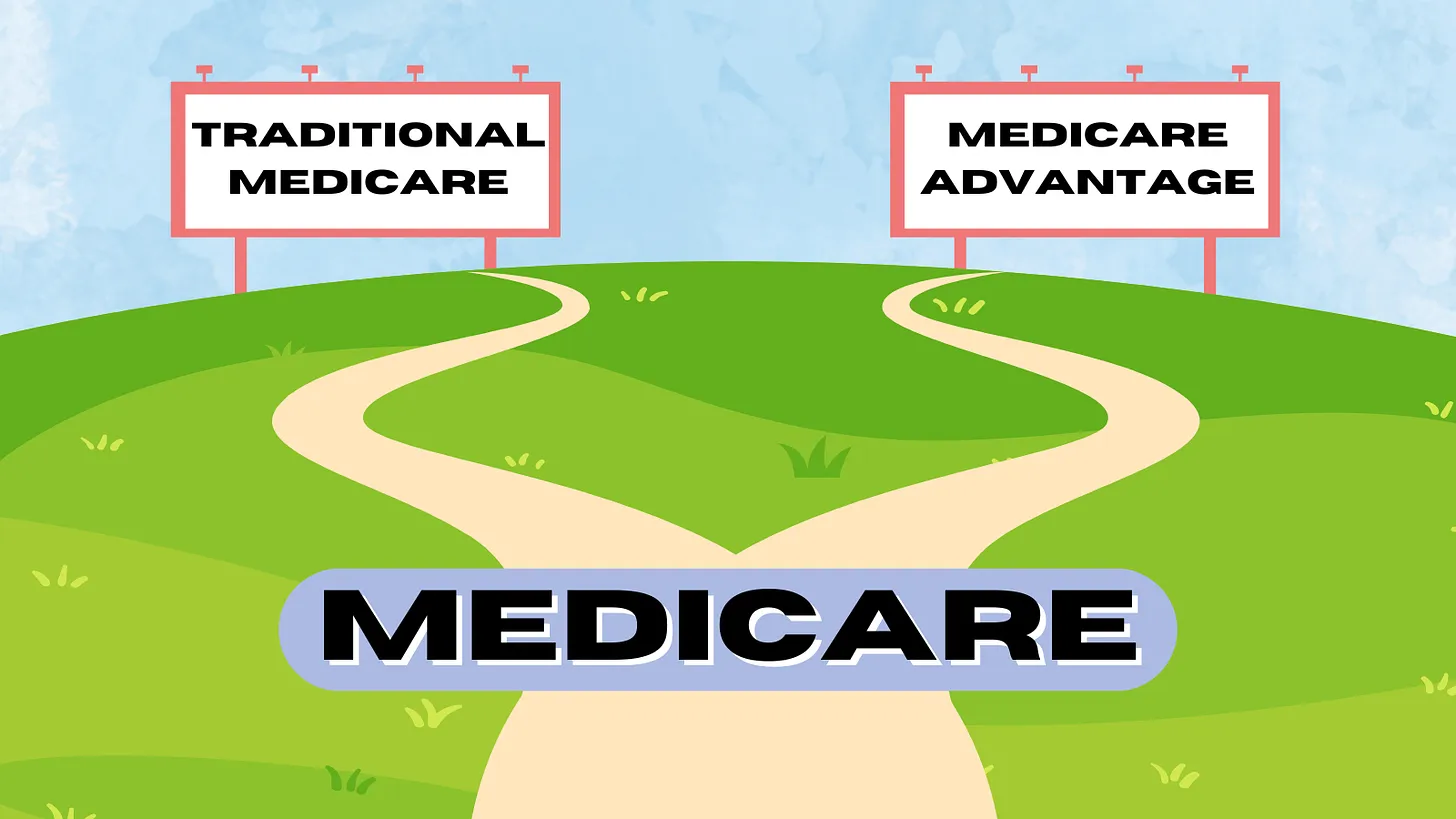
Enrollment in Medicare Advantage plans is increasing rapidly, and many insurers are expanding their MA offerings in a bid to grab larger portions of the market share. Medicare Advantage touts itself as having certain advantages over traditional Medicare, such as fitness benefits, coverage for hearing aids and eyeglasses, and limits on out-of-pocket spending.
This begs the question: Are enrollees in the two versions of Medicare fundamentally different, and what are their experiences like in terms of satisfaction?
New analysis from the Commonwealth Fund found that Medicare Advantage enrollees do not differ significantly from beneficiaries in traditional Medicare in terms of their age, race, income, chronic conditions, satisfaction with care, or access to care, after excluding Special Needs Plan (SNP) enrollees.
Both groups reported waiting more than a month for physician office visits, while similar shares of Medicare Advantage and traditional Medicare enrollees report that their out-of-pocket costs make it difficult to obtain care.
Ultimately, MA and traditional Medicare are serving similar populations, with beneficiaries having comparable healthcare experiences. The care management services provided by Medicare Advantage plans appear to neither impede access to care nor reduce concerns about costs.
WHAT’S THE IMPACT?
Beneficiaries weigh a number of trade-offs when deciding whether to enroll in Medicare Advantage plans or traditional Medicare. Unlike the latter, MA plans are required to place limits on enrollees’ out-of-pocket spending and to maintain provider networks. The plans also can provide benefits not covered by traditional Medicare, such as eyeglasses, fitness benefits and hearing aids.
Medicare Advantage plans are intended to manage and coordinate beneficiaries’ care. Some MA plans specialize in care for people with diabetes and other common chronic conditions, including Special Needs Plans. SNPs also focus on people who are eligible for both Medicare and Medicaid and on those who require an institutional level of care.
Traditional Medicare and MA enrollees have historically had different characteristics, with MA enrollees somewhat healthier. Black and Hispanic beneficiaries and those with lower incomes have tended to enroll in MA plans at higher rates than others, while traditional Medicare has historically performed better on beneficiary-reported metrics, such as provider access, ease of getting needed care, and overall care experience.
The Commonwealth Fund found that, after excluding beneficiaries in SNPs, beneficiaries enrolled in traditional Medicare do not differ significantly from MA enrollees on age, income, or receipt of a Part D low-income subsidy (LIS), which helps low-income individuals pay for prescription drugs. But beneficiaries in traditional Medicare are significantly more likely than MA enrollees to reside in a metropolitan area and more likely to live in a long-term-care or residential facility.
Beneficiaries in SNPs are different. Given the eligibility criteria for these plans, it’s not surprising that enrollees tend to have significantly lower incomes and a greater likelihood of receiving Medicaid benefits or LIS than other Medicare beneficiaries.
Enrollment in SNPs for people who require an institutional level of care has been growing rapidly, leading to a similar share of SNP enrollees and beneficiaries in traditional Medicare living in a long-term-care facility.
There are some areas in which Medicare Advantage plans appear to perform better than traditional Medicare. In particular, MA enrollees are more likely than those in traditional Medicare to have a treatment plan, to have someone who reviews their prescriptions, to have someone they can contact for help, and to receive a response to a health query relatively quickly.
By providing this additional help, Medicare Advantage plans are making it easier for enrollees to get the help they need to manage their healthcare conditions, the report found. Medicare experts have suggested providing a similar service to beneficiaries in traditional Medicare through care coordinators.
The results also raise questions about whether Medicare Advantage plans are receiving appropriate payments. MedPAC estimates that plans are paid 4% more than it would cost to cover similar people in traditional Medicare.
On the one hand, Medicare Advantage plans seem to be providing services that help their enrollees manage their care, and this added care management could be of significant value to both plan enrollees and the Medicare program. On the other hand, rates of hospitalizations and emergency room visits are similar for beneficiaries in Medicare Advantage plans and traditional Medicare. This calls into question the impact of the added services on healthcare use, spending and outcomes.
THE LARGER TREND
Insurers are expanding their Medicare Advantage offerings at a decent clip, with Humana announcing last week it would debut a new Medicare Advantage PPO plan in 37 rural counties in North Carolina in response to market demand in the eastern part of the state.
Just last week, UnitedHealthcare, which already has significant market control with its MA plans, said it will strengthen its foothold in the space by expanding its MA plans in 2022, adding a potential 3.1 million members and reaching 94% of Medicare-eligible consumers in the U.S.
And for the third straight year, health insurer Cigna is expanding its Medicare Advantage plans, growing into 108 new counties and three new states – Connecticut, Oregon and Washington – which will increase its geographic presence by nearly 30%.
Centene is also getting in on the act, expanding MA into 327 new counties and three new states: Massachusetts, Nebraska and Oklahoma. In all, this represents a 26% expansion of Centene’s MA footprint, with the offering available to a potential 48 million beneficiaries across 36 states.
The Centers for Medicare and Medicaid Services said in late September that the average premium for Medicare Advantage plans will be lower in 2022 at $19 per month, compared with $21.22 in 2021. However, Part D coverage is rising to $33 per month, compared with $31.47 in 2021.
Enrollment in MA continues to increase, CMS said. In 2022, it’s projected to reach 29.5 million people, compared with 26.9 million enrolled in a Medicare Advantage plan in 2021.








 HENRY KOTULA