Democrats are making Republican arguments about health care. Why?

https://www.washingtonpost.com/opinions/2019/07/26/democrats-are-making-republican-arguments-about-health-care-why/?fbclid=IwAR1mA1uEcNMiO12elygl_lSLxDD12kvHhzfYOO78Z50u7HAEv56yEVGL2Pc&utm_term=.e2f83bcb12ec

Image result for Democrats are making Republican arguments about health care. Why?

The Democratic argument over health care is beginning to get heated, which unfortunately means that things are becoming more problematic. In fact, the candidates making what is arguably the most sensible policy choice are justifying it with some absolutely abominable arguments — arguments that should warm the heart of the Republican Party.

Right now there’s a divide within the party, with some of the presidential candidates including Bernie Sanders and Elizabeth Warren supporting single payer (though Warren hasn’t been specific), and most of the others including Joe Biden, Amy Klobuchar and Pete Buttigieg suggesting some form of public option that would be voluntary, not Medicare For All but Medicare For All Who Want It.

I’ve come to believe that for all the benefits of a single payer system, trying to move immediately to one is a task with such overwhelming political obstacles and policy complications that it’s probably a better idea to achieve universal coverage through a dramatic expansion of public insurance while, for the moment, leaving substantial portions of the private system intact, even if that’s in many ways distasteful. I realize many readers will disagree with that, which is fine; we should continue to debate it.

But let’s at least grant that it’s a reasonable position to take. The problem with what’s happening now is that some advocates of the public option approach are sounding a lot like, well, Republicans.

Their most common talking point when defending their plan is some variation of “We can’t kick 150 million people off their insurance,” referring to the number of people who are covered by employer plans:

  • “We should have universal health care, but it shouldn’t be the kind of health care that kicks 150 million Americans off their health care,” says John Delaney.
  • Beto O’Rourke says Medicare-for-all “would force 180 million Americans off their insurance.”
  • “I am simply concerned about kicking half of America off their health insurance within four years, which is what [Medicare-for-all] would do,” says Amy Klobuchar.

The generous interpretation of this line is that it’s warning about widespread disruption; the other interpretation is that it’s meant to stoke the fear that if you now have coverage and single payer passes, you could be left with no insurance at all, which is just false. If we passed single payer, you’d move from your current plan to a different plan, one that depending on how it’s constructed would probably offer as good or better coverage at a lower cost.

The further danger is that that kind of talk inevitably leads one toward the promise that got Barack Obama into such trouble, “If you like your plan, you can keep it.” In fact, here’s O’Rourke saying that under his plan, “For those who have private, employer-sponsored insurance or members of unions who have fought for health care plans … they’ll be able to keep that.” And here’s Biden saying much the same thing: “If you like your health care plan, your employer-based plan, you can keep it. If in fact you have private insurance, you can keep it.”

Haven’t they learned anything?

While there may be political value in communicating to people that a public option would be voluntary, we have to tell them the truth, which is that if you’re going to open it to employers and not just individuals, some people will be moved to the public plan whether they want to or not, since their employers will make that choice for them. That’s how employer coverage works: What plan you’re on is seldom up to you, it’s a decision made by your employer.

And the broader truth is that no one, I repeat, no one gets to keep their plan if they like it even under the status quo. “If you like your plan, you can keep it” is a fantasy. If you have insurance through your employer, you’ve probably had the experience of your employer changing insurers or changing plans; many do it every year. Sometimes the new plan is better; often it’s not. But if you liked your plan, you didn’t get to keep it.

That’s even true of people on public insurance plans, though to a far lesser degree. Medicare and Medicaid go through changes, and benefits are added or taken away. It’s not up to you.

The trouble is that we have a situation where change is constant yet everyone is afraid of change, which makes it awfully tempting to encourage that fear. But the more we propagate the fiction that Americans, especially those with private insurance, aren’t vulnerable under the current system, the easier it will be to crush any reform effort.

Apart from the praise of the Affordable Care Act, this video could almost have been scripted by the Republican National Committee, with its paeans to private health insurance. Of particular note is the woman’s explanation of how she and her husband “earned” health coverage through decades of work, which implies that health care is not a right, as most Democrats believe, but a privilege one has to earn.

To top it off, Biden’s caption to the video says that “Because a union fought for their private health insurance plan, Marcy and her husband were able to retire with dignity and respect,” which is why Biden wants to let them stay on their existing insurance.

Let me suggest a crazy idea: What if retiring with dignity and respect wasn’t something you only got if you were lucky enough to be represented by a union (as a mere 1 in 10 American workers is, and 1 in 16 private sector workers), and only if that union happened to be successful in its fight to get you health benefits? What if everybody got dignity and respect? Isn’t that the world Joe Biden is trying to create?

You can make a strong case for both a single payer plan and one built around a public option. But please, Democrats, when you’re arguing for your preferred solution, don’t undermine the entire philosophical approach your party takes to health care. That only makes the job of reform more difficult.




As HHS muses more MA flexibility, payers see roadblocks to nonmedical benefits

https://www.healthcaredive.com/news/as-hhs-muses-more-ma-flexibility-payers-see-roadblocks-to-nonmedical-benef/559350/

Image result for medicare advantage

New regulatory flexibility letting Medicare Advantage plans sell supplemental benefits has opened up a new world of services, from transportation to nutrition, for tens of millions of beneficiaries. But implementation challenges, uncertain return on investment and a lack of clarity on what benefits are allowed may be giving payers, especially the smaller ones, pause on offering the options, experts say.

CMS expanded supplemental benefits in the popular privately-run Medicare plans in an April final rule. Now, Medicare Advantage plans can offer a host of non-traditional benefits, such as at-home grocery delivery, non-emergency medical transportation to doctor appointments or home modifications like installing air conditioning for beneficiaries with asthma and home renovations for fall-prone elderly.

And the department wants to go further than the MA supplemental benefits introduced in April, HHS Secretary Alex Azar said this week at a Better Medicare Alliance annual conference. Because MA plans have budgetary restrictions and a higher risk appetite, the government is comfortable granting them more leeway if it lowers costs and boosts health outcomes.

“We want to open up more opportunities for MA plans and entities they work with, including creative value-based insurance design arrangements, moving care to the home and community and new ways for MA plans to improve a patients’ health over the long term,” Azar said Tuesday.

A number of payers have increased their MA offerings recently to till the fertile ground set up by CMS, including startups Bright Health and Oscar along with heftier players like Centene and UnitedHealthcare.

Currently, MA plans enroll more than one-third of all Medicare beneficiaries, and enrollment is rising steadily every year. At least 40% of those plans offered non-medical benefits in the current plan year at no additional cost to beneficiaries, according to consultancy Avalere.

But further flexibility could present a problem for payers already struggling to assimilate to the increased flexibility and the administrative burden it entails.

Not enough time, money or guidance

Though it approved of the flexible benefit options, payer lobby America’s Health Insurance Plans was concerned in April about the regulatory changes coming just two months before the submission deadline for plan offerings for the 2020 plan year.

That’s because shaping a new benefit can take two to three years, Robert Saunders, research director at the Duke-Margolis Center for Health Policy, told Healthcare Dive. Plans have to work with their actuaries to price what a potential benefit is worth and then incorporate that into their bid.

“Just because you have policy flexibility doesn’t mean you can just now, tomorrow, offer new services,” Saunders said.

While the April rule also increased MA payment rates by 2.5% in 2019 (and rates are expected to hike another 1.6% for 2020), payers also have only a finite amount of funds they can pay back toward medical care. Medicare reimburses MA plans a fixed amount each month, so to provide auxiliary benefits payers have to trim down in other areas.

“If you’re paying for groceries, what else is getting cut?” Jennifer Callahan, executive director of MA product strategy and implementation for Aetna, said. “Is groceries more important than dental coverage? We don’t know.”

Under the CMS regulatory guidance, MA organizations can only develop and offer non-traditional medical benefits if they have a reasonable expectation the services will boost health. That has injected a lot of confusion into the system for payers that may not know what that means, how to measure it and whether they’ll be penalized for slipping up.

“Health plans, especially the small ones, are still looking for clarification on what’s actually allowed,” Nick Johnson, principal at actuarial and consulting firm Milliman, said. Smaller payers often don’t have a large enough sample size to draw conclusions about the positives and negatives of offering specific supplemental benefits, especially in light of substandard quality measures issued from CMS.

A subset of the expanded nonmedical benefits that address social determinants of health factors are officially called “Special Supplemental Benefits for the Chronically Ill” (SSBCI) and can only be offered to an “eligible chronically ill enrollee”: those who have at least one chronic condition and a high risk of hospitalization or adverse health outcomes and require coordinated care.

MA plans can currently offer nonmedical benefits to enrollees for a limited duration of time — typically four weeks, a CMS spokesperson told Healthcare Dive. But only under SSBCI can plans provide these benefits over the long term.

That pigeonholes MA plans from providing additional benefits for a wider spectrum of patients — for example, a person recuperating with serious injuries following a fall who can’t go out and get groceries themselves might appreciate getting them delivered.

However, “just because you were perfectly healthy before, you by definition don’t qualify,” Aetna’s Callahan said. “For me that’s one of the biggest gaps.”

More flexibility unlikely to help rural enrollees

Another concern is that the supplemental benefits could potentially exacerbate health disparities, including the divide between services offered in rural versus urban areas. Non-metropolitan markets tend to be highly concentrated, meaning just one or two insurers dominate the space.

MA is no different. In 619 U.S. counties that account for 4% of overall Medicare beneficiaries, no more than 10% of beneficiaries are enrolled in the privately-run Medicare plans, according to the Kaiser Family Foundation. Many of these low-penetration counties are in rural areas, and less competition means less reason to offer diversified, comprehensive coverage.

“At a national level, what we’re seeing is other places in the country where there’s at least one new benefit offered tend to be urban,” Saunders said.

Many of the add-on services require a specialty workforce — for example, at-home caregivers for long-term services and supports or drivers for non-emergency medical transportation. That makes it harder for plans to introduce them in rural areas that may already be suffering from workforce shortages, a lack of primary care physicians or health facilities, experts said.

For non-emergency medical transportation, companies like Uber and Lyft are combating lower use in rural areas with scheduled rides. Larger NEMT brokers will also partner with transportation companies in the community.

But offering supplemental benefits such as NEMT must be profitable for the insurer and its local partners, experts said. Initiatives that don’t yield a strong return on investment will likely be phased out for the next plan year.

“It’s a really difficult space to be in terms of scalability right now,” Callahan said. “It’s going to take some time.”


Healthcare Executives See a Mixed Outlook

https://www.jpmorgan.com/commercial-banking/insights/healthcare-mixed-outlook

Image result for Healthcare Executives See a Mixed Outlook

In a recent survey of healthcare leaders, most were confident about their own organizations going into the new year. But respondents expressed concern about a range of evolving industry-wide challenges, including costs, technology and talent.

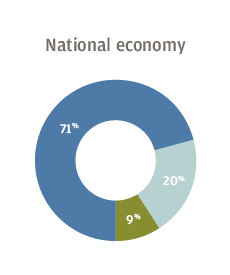
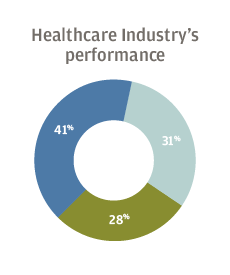
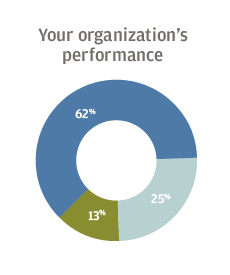
A majority of US healthcare executives surveyed by J.P. Morgan said they were optimistic about the financial performance of their own organizations going into 2019, as well as the national and local economies. But most were less positive about the outlook for the industry as a whole, with 28 percent expressing pessimism and another 31 percent merely neutral.

National economy 71% optimistic, 20% neutral, 9% pessimistic
Healthcare Industry's performance 41% optimistic, 31% neutral, 28% pessimistic
Your organization's performance 62% optimistic, 13% neutral, 25% pessimistic
Legend - Optimistic, Blue
Legend: Neutral Gray
Legend: Pessimistic, Green

Respondents to the survey, conducted Oct. 16 to Nov. 2 of 2018, said their biggest concerns were revenue growth, rising expenses and labor costs. The executives said their organizations plan to invest the most in information technology and physician recruitment.

Healthcare Changes Shape Perceptions

The pessimism about the industry likely stems, in part, from regulatory uncertainty and an ongoing shift from a fee-for-service model toward a value-based payment system, said Will Williams, Senior Healthcare Industry Executive within J.P. Morgan’s Commercial Banking Healthcare group. “Healthcare is going through the most transition of any industry in the country right now,” he said. Amid this upheaval, healthcare organizations face a combination of challenges, including lower reimbursement rates for Medicaid and Medicare patients, increased competition, and higher costs for labor, pharmaceuticals and technology investments.

The optimism that executives feel about their own hospital or healthcare group may come from a sense that an individual organization can adapt to industry changes, said Jenny Edwards, Commercial Banker in the healthcare practice at J.P. Morgan. “You can control certain factors, and make adjustments to compensate for the headwinds.”

Biggest Challenges for the New Year

Growth Strategies

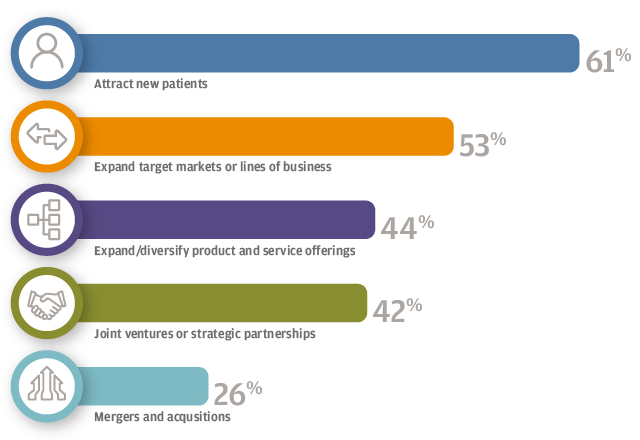
For 61 percent of respondents, the focus is on attracting new patients, followed by expanding target markets or lines of business (53 percent), and expanding or diversifying product and service offerings (44 percent). Hospitals, for example, have worked to add more patients to their broader healthcare system by opening clinics for urgent care or physical therapy, Edwards said.

As patient habits change, hospital systems have needed to become more consumer-focused, Edwards said. Patients are more likely to shop around for their care, expect transparent pricing and review healthcare workers on social media sites. This “retail-ization” trend in healthcare is accelerating, Edwards said. “You can shop for healthcare like you would a new pair of jeans.”

Skilled Talent Wanted

The talent shortage is top of mind for many healthcare executives, with 92 percent of survey respondents saying they were at least somewhat concerned with finding candidates with the right skill set. For 35 percent of respondents, the talent shortage is one of their top three challenges.

For those respondents who expressed concern, the most difficulty arises in filling positions for physicians (52 percent) and nurses (46 percent). To address the challenge, 76 percent said they expect to increase compensation of their staff over the next 12 months. According to 37 percent of respondents, the talent pool’s high compensation expectations factor into the shortage.

Most Challenging Positions to Fill

52%
46%
38%
29%
21%
21%

The talent shortage is an issue across the industry, Williams said, and burnout among doctors and nurses presents an ongoing problem. One contributing cause could be evolving changes in daily practice, with considerably more time today spent on electronic medical record entries and less on patient care. Williams said, “Doctors are getting frustrated. The problem is trying to replace those doctors as they quit practicing.”

Healthcare executives are particularly concerned about shortages of primary care professionals. “Rural communities already have these shortages,” said Brendan Corrigan, Vice Chair of the J.P. Morgan Healthcare Council.

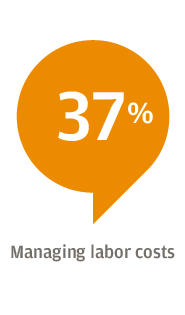
Labor costs tend to be higher in healthcare than in other sectors, Williams said, as a hospital must have coverage for all of its major roles 24 hours a day. When asked where they struggle with workforce management, the survey respondents cite staff turnover and its associated cost (47 percent), the ability to flex staff based on patient volumes (41 percent), and the cost of overtime and premium labor (36 percent). These workforce issues not only represent specific challenges; they all contribute to labor costs, which, as noted above, rank in the top three challenges for 2019.

Investments for a Changing Industry

A majority (51 percent) of organizations plan to invest in IT over the next 12 months. Other areas for investment included physician recruitment (44 percent) and new or replacement facilities (36 percent).

Since healthcare organizations manage a large amount of private patient health information, data security remains a large part of IT expenditures. “It’s a huge focus—they’re spending a lot of time and money on preventing a breach,” Edwards said. She goes on to note that the transition to patient EMR systems brings another big IT expense—more than $1 billion for the largest healthcare systems.

Overall, the survey showed healthcare executives grappling with rising costs and structural changes that affect the entire industry. “Healthcare is trying to figure out how to fix themselves,” Williams said.


Medicaid should be a bigger part of the “Medicare for All” debate

https://www.axios.com/medicare-for-all-bernie-sanders-medicaid-states-b3c5eceb-0f3c-4c4b-9317-6a1f9434232b.html?utm_source=newsletter&utm_medium=email&utm_campaign=newsletter_axiosvitals&stream=top

Illustration of a pills capsule opening with state-shaped pills falling out

The fact that “Medicare for All” would eliminate Medicaid hasn’t gotten nearly as much attention as its elimination of private insurance. But it’s a move that would largely eliminate states’ role in the health care system.

Why it matters: State Medicaid programs are leaders in experimenting with delivery and payment reforms, efforts to control drug costs, and addressing social causes of ill health, such as poverty and poor housing. All of those projects would still be important in a single-payer world.

How it works: Sen. Bernie Sanders’ bill would move most Americans into its new single-payer system, including people with private insurance but also virtually all of the 73 million people covered by Medicaid and the Children’s Health Insurance Program.

Winners: States would reap huge savings. Medicaid is the single largest item in most state budgets.

  • The effects on safety-net hospitals and clinics would vary, depending largely on how payment rates under the new plan compare to today’s Medicaid rates.
  • The uninsured in states that have not expanded Medicaid also would be big winners.

Yes, but: The change would all but eliminate states’ role in health care, where they have been leaders not just in providing coverage, but also driving efficiency and testing new models of care.

  • Those reforms — and the idea of states as laboratories of reform — would pretty much disappear, and the balance of federalism in health would fundamentally change.

The bottom line: For advocates of a single national plan, eliminating the patchwork of state Medicaid programs would be progress. For fans of a federal-state balance, it’s a big problem.

  • Either way, Medicaid is a large and generally popular program, and its future at least deserves a bigger role in the debate.


How much does Medicare spend on prescription drugs?

https://usafacts.org/reports/facts-in-focus/medicare-part-d-prescription-drug-cost?utm_source=EM&utm_medium=email&utm_campaign=medicaredive

Image result for drug spending

As of 2017, the government now spends more on prescription drugs than private insurers or individuals out-of-pocket. Medicare payments alone account for 30% of the $333 billion spent on prescription drugs. In 2005, Medicare was responsible for just 2% of prescription spending.

Medicare’s expanding role at the pharmacy came with the 2006 creation of Medicare Part D, a program that offers supplemental prescription drug coverage plans to Medicare enrollees. The federal government tracks all claims paid for through Medicare Part D.

Sifting through the data allows one to see how spending on drug brands and drug types has changed for Medicare.

The graphs below show how spending has changed. Spending per claim, or simply the cost of a prescription, have gone up in drugs used for cancer treatments or diabetes. Meanwhile, prescription costs have gone down for blood pressure drugs, even as total claims for those drugs go up.

During 2017, Medicare Part D beneficiaries took out 1.4 billion prescription drug claims on 2,878 different brands of prescription drugs. The total spend, before rebates and discounts kick in, was $152 billion.

All those figures are up from 2013, when Medicare prescription drug spending stood at $102 billion on 1.2 billion claims on 2,294 different drugs. Between 2013 and 2017, prescription drug spending increased 15%, claims increased 18% and spending per claim increased 29% from $81.02 per claim to $104.56 per claim

The Centers for Medicare & Medicaid Services documents drug spending for three programs: Medicare Part B (drugs administered by health professionals), Medicare Part D (prescription drugs patients generally administer themselves) and Medicaid (prescription drugs).

The interactive graphic below shows Part D total spending (combining out-of-pocket costs with Medicare payments) and claims from 2013 to 2017.


Why have Medicare costs per person slowed down?

https://usafacts.org/reports/medicare-cost-slowed-down-hospital-baby-boomers?utm_source=EM&utm_medium=email&utm_campaign=medicaredive

Image result for Why have Medicare costs per person slowed down? Baby boomers and fewer hospital stays

The 65+ population now makes up 16% of the US population, up from 11% in 1980. In response to an aging population, Medicare costs are going up. Benefits totaled $713 billion in 2018, 25% higher than in 2009, and Medicare spending accounts for a fifth of all healthcare spending as of the latest year of data.

However, while program costs are increasing, there is an interesting counter-trend – the per person cost for insuring someone through Medicare has actually decreased.

In 2018, the overall cost of Medicare per enrollee was $13,339 per year, about $30 less than it was in 2009, adjusting for inflation. That’s even as benefits across Medicare totaled $713.4 billion, $144.4 billion more than in 2009.

Why are the costs of insuring someone through Medicare going down? A combination of demographics and policy changes may point to an answer.

THE AVERAGE MEDICARE BENEFICIARY IS GETTING YOUNGER

The average age fell from 76 to 75 between 2007 and 2017Enrollment in all types of Medicare increased 29% during that period from 44.4 million to 58.5 million.

That one year drop in average age is significant for Medicare costs.

An influx of Baby Boomers enrolling in Medicare is playing a role in slowing down an increase in costs for Medicare Part A, which funds hospital stays, skilled nurse facilities, hospice and parts of home health care. In 2008, the share of Original Medicare (Part A or B) beneficiaries who were 65 to 74 years old was 43%. In 2017, 65- to 74-year-olds made up 48% of beneficiaries, the group’s highest share in the 21st century.

A 2015 Congressional Budget Office study showed that we spend 73% more on an enrollee in the 75 to 84 bracket than we do on those in the 65 to 74 bracket.

Our analysis below show how demographics factor into Medicare costs, especially age.

In 2017, there were 38,347,556 Medicare Part A enrollees, making up 100.0% of total enrollees. The federal government spent $188,093,274,340 on program payments for this group, 100.0% of the total Total Part A program payments for this type of enrollee changed from $5,052 in 2013 to $4,905 in 2017, a -2.9% change.

With Medicare Part B there were 33,562,359 enrollees, making up 100.0% of total enrollees. The federal government spent $188,886,121,627 on program payments for this group, 100.0% of the total Total Part B program payments for this type of enrollee changed from $5,287 in 2013 to $5,628 in 2017, a 6.4% change.


Why is healthcare such an attractive target for private equity?

https://www.managedhealthcareexecutive.com/articles/why-healthcare-such-attractive-target-private-equity

Image result for private equity healthcare

Thanks to TV shows and movies, we tend to think of
private equity bidding wars as involving fast-growing
Silicon Valley companies. But when Oak Street Health,
a Chicago-based network of seven primary care clinics,
began looking for investors last year, more than a dozen
firms flew to Chicago to court the physicians and most of
them ended up bidding for the group of seven primary care clinics, according to a report in Modern Healthcare.

Oak Street is not alone — almost any independent
physician group of scale these days is likely to be an
attractive target for so-called “smart money,” investors
and their advisers.

Increased regulatory requirements and complexity has led
many independent small groups to “throw up their hands
and decide to sell to or join larger entities,” says Andrew
Kadar, a managing director in L.E.K. Consulting’s healthcare
services practice, which advises private equity groups.
While many such physicians sell to a health system and
become salaried employees, investor-backed practice management groups may have certain advantages, Kadar says. “Each private equity firm has its own approach, but in general they tend to give physicians a continued degree of independence and are willing to invest in new tools and technology.”

What is private equity up to? What attracts these
titans of capitalism to one of the most bureaucratic,
heavily regulated industries in the United States? And
what does the acquisition spree mean for physicians?

Here are five things to know about private equity and
healthcare in 2019.

1. The feeding frenzy is just ramping up

The driving force behind investors’ interest in healthcare
is the amount of “dry powder” in the industry — the term
market watchers use for funds sitting idle and ready to
invest, which McKinsey estimates at around $1.8 trillion

Investors are hungry for deals, and healthcare providers
are an attractive target for multiple reasons:

• The healthcare industry is growing faster than the
GDP. Healthcare is a relatively recession-proof industry
(demand remains constant even during downturns).

Many providers are currently not professionally
managed, and many specialties remain fragmented.

Investors see an opportunity to create value by
increasing efficiencies and consolidating market power.

Thus, with many independent providers still competing
on their own, there remains ample opportunity to
roll up practices into a single practice-management
organization owned by investors. “A lot of deals are
making the headlines, but when you look closely you’ll
see that most specialties aren’t highly penetrated yet by
investors,” says Bill Frack, a former managing director at
L.E.K. Consulting who is now leading a new healthcare
delivery venture. “We are still at the beginning.”

2. Investors have various strategies for creating value

Far from the leveraged-buyout days of the 1980s, which
relied primarily on financial engineering to generate
returns, almost all private equity deals today require
investors to find ways to add value to organizations over
the course of their holding period (typically around five
to seven years). By and large, in healthcare they follow
two strategies for doing so.

The most prevalent play is to buy high-volume, high margin specialist groups such as anesthesiologists,
dermatologists, and orthopedic surgeons. The PE
group then looks to maximize fee-for-service revenue
in the group by ensuring that the team is correctly
and exhaustively coding patient encounters (via ICD10) and encouraging physicians to see more patients.

Simultaneously, they work to improve revenue-cycle
management and drive efficiencies of scale into sales
and back-office administration.

Private equity firms may also look to vertically integrate
by acquiring providers of services for which their
specialists were previously referring out. For instance, oncologist groups might buy radiation treatment centers;
orthopedic surgeons might acquire rehab centers;
dermatologists might acquire pathology labs to process
biopsies, and so on.

Investors exit either through a sale to a larger PE group or,
for the largest groups, through an initial public offering.
Consolidating fee-for-service providers “is a very mature
strategy, and there’s not a single specialty you could
name where an investor wouldn’t have an incentive to
[form a roll-up],” says Brandon Hull, who serves on the
advisory council of New Mountain Capital, a private
equity firm that is investing in healthcare, and is a longtime board member at athenahealth.

Hull says investors are starting to take another approach
to creating value — which he argues “is more virtuous
and aligned with social goals.” In this strategy, investors buy up general medicine specialists — such as internal
medicine, pediatrics, or ob-gyns — and then negotiate
value-based contracts from payers.

To succeed under these contracts, investor-backed medical
groups identify the most cost-effective proceduralists
and diagnosticians in their network and instruct general
practitioners to refer only to them; and they work hard
to play a larger role in patients’ health and thus keep
healthcare utilization down. Groups that employ this
approach include Privia and Iora Health. In this strategy,
investors typically exit by selling the organization to a
larger PE group, a payer, or a health system.

Interestingly, groups that pursue the first strategy often
transition to the second – for instance, an efficiently run
orthopedic group might start with a focus on growing
revenue by maximizing fee-for-service opportunities,
but then consider pursuing bundled payments for hip
replacements. Or an investor-backed oncology group
confident in its treatment protocols and ability to keep
operational costs down might accept capitated payments
for treating patients recently diagnosed with cancer.

3. Private equity can be a great deal for physicians

How these deals are structured depends on whether a
specialty group is the first group acquired by investors —

what is known in private-equity lingo as “the platform”—
or whether it’s being added to an existing group, what is
known as a “tuck-in.”

Physicians in the platform practice are often offered
substantial equity and can benefit from the group’s
appreciation — while, of course, being exposed to the risk that
their share-value may decrease if the group fails to deliver on
its intended value proposition. Physicians in subsequent tuckin groups tend to have simpler contracts with a salary base
and added incentives tied to productivity and other measures.
L.E.K.’s Frack says both models can be attractive, but
that a more simple employment model is probably best
suited to most physicians. “I would tell docs that if they
have a strong group of doctors, they don’t have much to
lose. Even if the deal falls flat for investors, the doctors
will likely just be acquired by another investor, and they
won’t be left holding the bag.”

4. Technology underpins it all

A similar private-equity healthcare frenzy in the 1990s failed
spectacularly. One reason for the collapse was that the
technology did not exist for investors to realize back-office
efficiencies and handle the complexity of value-based contracts.

Today, cloud-based EHR and revenue-cycle management
systems harness the power of network effects to help
provider organizations handle complex and unique
payer contracts, improve back-office efficiency through
automation and machine-learning, implement best practices
for care, and quickly onboard the new practices they acquire.

Technology is particularly important for the general
medicine specialist groups looking to win under fee-for-value contracts. “The moment you start to care about
a patient’s entire episode of care, you need a massive
upgrade of your back-end systems, including full
visibility into what’s happening to your patient outside
your office. Now the technology exists to truly achieve
care coordination,” New Mountain Capital’s Hull says.

5. Public perception can be a problem

Even if physicians believe a private equity deal is their
best option, there’s a public relations risk in tying a medical practice to capitalists whose ultimate goal is to earn a return. Most coverage of private equity in mainstream media outlets questions whether investors’ profit motive is bad for patients. Physician associations and medical journals have also raised concerns in a very public way.

Such public skepticism should worry anyone who
remembers the crash of the first private-equity wave in
the 1990s, says New Mountain Capital’s Hull, who ties
that crash to the failure of managed care. “The American
consumer perceived that doctors were getting bonuses
for denying them care; this became the grim punchline
of late-night talk shows, and the whole thing fell apart.”
Frack advises investors and physicians to “monitor
quality data like a hawk, so that the group can counter
anecdotal accounts of bad care.”

Hull adds that savvy investors should take a page from
the many healthcare startups that are laser-focused on building trust with patients, particularly when it comes
to end-of-life decisions and hospice care. “They know
that success in healthcare depends on patients trusting
their doctors to help them make the best medical
decisions,” Hull says.

Positioned to accommodate uncertainty L.E.K.’s Kadar argues out that whatever direction Washington decides to take healthcare, an efficient, professionally managed group practice with advantages
of scale is well-positioned to succeed — and private
equity is one way for physician groups to reach that goal.

“These groups can adapt more quickly than smaller,
independent practices, whether progressives or
conservatives are in power,” he says. As an example,
Kadar imagines a scenario in which Medicare-for-all
comes to pass. “It turns out that most [PE-backed] groups
do very well on Medicare Advantage contracts. If your
group is focused on delivering more efficient, effective care, with strong operations, you’re in a good position no matter what happens.”


Healthcare Reform: “150 million Americans won’t give up their private health insurance to get Medicare for all.” Really?

Healthcare Reform: “150 million Americans won’t give up their private health insurance to get Medicare for all.” Really?

Former Representative Jim Delaney (D-Md) threw down the gauntlet to the left-leaning attendees at the California Democratic convention on June 2 by challenging Medicare-for-all.

”The problem with Medicare for all, it’s actually really simple, is that it makes private insurance illegal. And 150 million Americans have private insurance, and 70% of them like it according to polling. So if we want to actually create universal health care, we’re never going to do it by trying to get 150 million Americans to give up what they want.”

The crowd booed at first, but then gave him a respectful hearing. Pundit George Will and commentator Charlie Sykes think Delaney has a good point politically. But let’s look at Delaney’s claim through the apolitical lens of this blog.

1. Why Did Delaney make this claim?

Two reasons:  He wanted to move the debate over U.S. healthcare from sound bites to substance. And Rep. Delaney wanted to distinguish himself from the rest of the pack of Democrat Presidential contenders and position himself as a moderate on this and other issues.

2. Does Medicare-for-all mean making private health insurance illegal?

Clearly for Sen. Bernie Sanders the answer is yes. But not for any of the other Democrat Presidential candidates, at least not right away.  Some like Mayor Pete Buttigieg and entrepreneur Andrew Yang contemplate a gradual path, eventually leading to a single public payer. In Yang’s case, he expects that public health insurance will eventually out-compete private insurance, not that it will be outlawed. Others like Senators Cory Booker and Amy Klobuchar, Governors Hickenlooper and Inslee, and Rep. Eric Swalwell contemplate using public insurance, alongside private insurance, as the means to get to universal coverage, more like “Medicare for all who want it.”  This month’s Kaiser Family Foundation poll found that 55% do not perceive that Medicare-for-all would mean abolishing private insurance.

3. How many Democratic candidates advocate Medicare-for-all?

Of the 24 Democrats who have announced their candidacy (25, if you count former Sen. Mike Gravel), 13 advocate some version of Medicare-for-all, but 10 prefer some other approach to achieve universal coverage. Former Vice-President Joe Biden has not put forward a clear position yet. (Sen. Gravel supports universal healthcare “like Medicare.”)

4. What about Republicans?

Many Republicans, including the President himself, have at times given lip service to universal healthcare coverage. Most of them also advocate “protecting” Medicare, in some cases by scaling it back and limiting it. However, the President and Senate Republicans are once again pledging to “repeal and replace Obamacare” with a new plan, touted as “phenomenal” (though no details so far). At first the new plan was promised “in a very short period of time,” then “in next 2 months,” and now most recently “after the 2020 election.” For them, opposition to Medicare-for-all is a political matter of faith, not just a strategy for preserving private health insurance for those who want it.

5. How many Americans have private health insurance?

Private employer-based insurance covered 181 million Americans in 2017. According to the Census Bureau the full 2017 breakdown is:

  • Any insurance at least part-year           295 million
    • Employer-based, private              181 million
    • Direct purchased, private              52 million
    • Government                                  122 million

(Note: Some individuals had more than one type of insurance during year)

  • Uninsured entire year                              29 million

6. Are Americans satisfied with their own private employer-based healthcare insurance?

Americans currently rate the “coverage” (69%) and “quality” (80%) for their own individual health plans as “good” or “excellent,” according to a December 2018 Gallup poll.

7. How does this compare with Medicare satisfaction statistics?

For Medicare recipients the ratings for “coverage” (88%) and “quality” (88%) are even better, in the same poll.

8. Do Americans see any downside to having employer-based healthcare insurance?

Many Americans feel locked into their current jobs lest they lose health benefits. This is especially so if they have chronic pre-existing conditions. Fear of losing coverage subtly puts them at the mercy of the employer for wages and work conditions. In addition, employees are shouldering a larger share of premiums and copays with each passing year.  A Rand study showed that in the first decade of the 2000s, workers gains in productivity were offset by higher healthcare costs, holding their take-home wages flat.  Increasingly, employees are switching to plans with high deductibles and less doctor choice.

Americans also express dissatisfaction with the wider system, even if they are satisfied with their own plans.  They rate “coverage” at 34% and “quality” at 55% nationally.

Americans polled by Gallup are especially dissatisfied with costs. Only 58% are satisfied with cost of their own plan, while a low 20% are satisfied with overall cost in the national system.

9. Who are other stakeholders in the healthcare debate besides employees with employer-based insurance?

All Americans have a stake in healthcare reform.  But here are some stakeholder sub-groups with special issues:

  • small business
  • big business
  • federal, state and local government employers
  • healthcare insurers
  • healthcare systems
  • healthcare professionals
  • other healthcare suppliers (of equipment, drugs, software, subcontractors)
  • healthcare academia.

The uninsured are special stakeholders, as well.

10. Which of these stakeholders have the most to lose with Medicare-for-all?

In the first instance, healthcare insurers would be most directly affected. On closer look, I predict that several functions would not change much at all under a single-payer. There would still be enrollments, benefits management, claims processing, chronic disease management, contract negotiation, and customer service. These functions would continue, either in the form of subcontracts with government payers or in the form of direct government employment. Meanwhile, some would say that insurance companies have abdicated their job of true risk management, and have simply become pass-throughs for local health system monopolies and oligopolies. Under Medicare-for-all administrative complexities would be simplified, and inflated profits and salaries would be constrained, with resultant cost savings for the overall system

11. Which of these stakeholders have the most to gain with Medicare-for-all?

Big business and public sector employers probably have the most to gain from Medicare-for-all or other healthcare reform.  In 1991, Sam Walton famously railed to his managers, “These people are skinnin’ us alive not just here in Bentonville but everywhere else, too….They’re charging us five and six times what they ought to charge us….So we need to work on a program where we’ve got hospitals and doctors…saving our customers money and our employees money.” Walmart and others like Bezos, Buffet and Dimon’s innovative Haven healthcare management enterprise are taking matters into their own hands out of frustration with traditional insurance’s inability to control healthcare costs and deliver value.

Small businesses also stand to gain much from jettisoning healthcare costs and administrative burdens under a single payer system. Small businesses feel a disproportionate brunt of current high healthcare costs.  For them, a single sick employee can jack up their experience-rating. Tracking payments and maintaining regulatory compliance saps valuable administrative time. For these reasons, just 29 percent of small businesses with fewer than 50 employees provided group health insurance in 2016.  Many dropped insurance for their employees and referred them to the public exchanges instead.

12. Is Medicare-for-all the end goal for its supporters, or only the means to a further goal?

Democrat candidates base their arguments for Medicare-for-all, or for their alternative approaches, primarily on achieving universal coverage. This is a worthy goal in itself. Having healthcare insurance has been linked to quality of life, life expectancy, worker productivity, and financial security.

But this blog has argued that an even more critical goal is constraining costs. Climbing healthcare costs are consuming an ever-greater share of the GDPdiverting resources from other worthy projects, and stressing household, corporate and public budgets.

This blog, thus, sees single payer as a means to the end of leveraging cost containment.

 13. If Medicare-for-all in some form would give government the ability to finally constrain costs, who would be the biggest losers?

Clearly, potentially the biggest losers would be the healthcare industry, from front-line workers to professionals to health system CEOs.  However, many could shift into higher-value healthcare activities. Others could transition to equivalent jobs in other service industries. True, a few might need to accept cuts in their bloated incomes. Since healthcare currently comprises almost one-fifth of all economic activity, these transitions should be done slowly. Leaders should do some industrial policy planning to facilitate changes and mitigate disruptions. Having said that, we should keep in mind that healthcare professionals are generally well educated, motivated, adaptable and resourceful, thus able to successfully navigate change.

Conclusion

Rep. Delaney asks a good question:  Whether Americans with current employer-based health insurance would trade it for Medicare-for-all.  Would they recognize that Medicare gets better quality and coverage ratings than private insurance? Would they view changing to Medicare-for-all as a fair bargain to achieve universal access for all? Do they think that single-payer would give the government leverage to finally constrain costs?  Do they recognize that the total cost of healthcare – whether in the form of out-of-pocket payments, paycheck deductions, or new “$30 trillion” healthcare taxes  – comes out of their wallets, one way or another?

On the other hand, could a larger public insurer (Medicare-for-all-who-want-it) gain sufficient reach and clout to tame the healthcare tapeworm without a Sanders-style single payer system?  This blog will tackle that question in another post.

Now, take action.


A Large Employer ‘Frames’ The ‘Medicare For All’ Debate

https://www.healthleadersmedia.com/finance/large-employer-frames-medicare-all-debate

As health costs continue to grow, straining employer budgets and slowing wage growth, the business community is beginning to take the option more seriously.


KEY TAKEAWAYS

More than 156 million Americans get employer-paid healthcare, making it by far the single-largest form of coverage.

Medicare-for-all supports say the health system overall would see savings from a coordinated effort to lower prices and administrative costs and eliminate insurance company profits.

While large business lobbying groups strongly oppose Medicare for all, the resolve of many in the business community — especially among smaller firms — may be shifting.

Walk into a big-box retailer such as Walmart or Michaels and you’re likely to see MCS Industries’ picture frames, decorative mirrors or kitschy wall décor.

Adjacent to a dairy farm a few miles west of downtown Easton, MCS is the nation’s largest maker of such household products. But MCS doesn’t actually make anything here anymore. It has moved its manufacturing operations to Mexico and China, with the last manufacturing jobs departing this city along the Delaware River in 2005. MCS now has about 175 U.S. employees and 600 people overseas.

“We were going to lose the business because we were no longer competitive,” CEO Richard Master explained. And one of the biggest impediments to keeping labor costs in line, he said, has been the increasing expense of health coverage in the United States.

Today, he’s at the vanguard of a small but growing group of business executives who are lining up to support a “Medicare for All” national health program. He argues not that healthcare is a human right, but that covering everyone with a government plan and decoupling healthcare coverage from the workplace would benefit entrepreneurship.

In February, Master stood with Rep. Pramila Jayapal (D-Wash.) outside the Capitol after she introduced her Medicare for All bill. “This bill removes an albatross from the neck of American business, puts more money in consumer products and will boost our economy,” he said.

As health costs continue to grow, straining employer budgets and slowing wage growth, others in the business community are beginning to take the option more seriously.

While the influential U.S. Chamber of Commerce and other large business lobbying groups strongly oppose increased government involvement in healthcare, the resolve of many in the business community — especially among smaller firms — may be shifting.

“There is growing momentum among employers supporting single-payer,” said Dan Geiger, co-director of the Business Alliance for a Healthy California, which has sought to generate business support for a universal healthcare program in California. About 300 mostly small employers have signed on.

“Businesses are really angry about the system, and there is a lot of frustration with its rising costs and dysfunction,” he said.

Geiger acknowledged the effort still lacks support from any Fortune 500 company CEOs. He said large businesses are hesitant to get involved in this political debate and many don’t want to lose the ability to attract workers with generous health benefits. “There is also a lingering distrust of the government, and they think they can offer coverage better than the government,” he said.

In addition, some in the business community are hesitant to sign on to Medicare for All with many details missing, such as how much it would increase taxes, said Ellen Kelsay, chief strategy officer for the National Business Group on Health, a leading business group focused on health benefits.

Democrats Propel the Debate

For decades, a government-run health plan was considered too radical an idea for serious consideration. But Medicare for All has been garnering more political support in recent months, especially after a progressive wave helped Democrats take control of the House this year. Several 2020 Democratic presidential candidates, including Sens. Bernie Sanders and Elizabeth Warren, strongly back it.

The labor unions and consumer groups that have long endorsed a single-payer health system hope that the embrace of it by employers such as Master marks another turning point for the movement.

Supporters of the concept say the health system overall would see savings from a coordinated effort to bring down prices and the elimination of many administrative costs or insurance company profits.

“It’s critical for our success to engage employers, particularly because our current system is hurting employers almost as much as it is patients,” said Melinda St. Louis, campaign director of Medicare for All at Public Citizen, a consumer-rights group based in Washington.

Master, a former Washington lawyer, worked on Democratic Sen. George McGovern’s presidential campaign before returning to Pennsylvania in 1973 to take over his father’s company, which made rigid paper boxes. In 1980, he founded MCS, which pioneered the popular front-loading picture frame and steamless fog-free mirrors for bathrooms. The company has grown into a $250 million corporation.

Master frequently travels to Washington and around the country to talk to business leaders as he seeks to build political support for a single-payer health system.

In the past four years, he has produced several documentary videos on the topic. In 2018, he formed the Business Initiative for Health Policy, a nonprofit group of business leaders, economists and health policy experts trying to explain the financial benefits of a single-payer system.

Dan Wolf, CEO of Cape Air, a Hyannis, Mass.-based regional airline that employs 800 people calls himself “a free market guy.” But he also supports Medicare for All. He said Master helps turn the political argument over single-payer into a practical one.

“It’s about good business sense and about caring for his employees and their well-being,” he said, adding that employers should no longer be straddled with the cost and complexity of healthcare.

“It makes no more sense for an airline to understand health policy for the bulk of its workers than for a health facility to have to supply all the air transportation for its employees,” he said.

Employers are also an important voice in the debate because 156 million Americans get employer-paid healthcare, making it by far the single-largest form of coverage.

Master said his company has tried various methods to control costs with little success, including high deductibles, narrow networks of providers and wellness plans that emphasize preventive medicine.

Insurers who are supposed to negotiate lower rates from hospitals and doctors have failed, he added, and too many premium dollars go to covering administrative costs. Only by having the federal government set rates can the United States control costs of drugs, hospitals and other health services, he said.

“Insurance companies are not watching the store and don’t have incentives to hold down costs in the current system,” he said.

Glad The Boss Is Trying To Make A Difference

What’s left of MCS in Pennsylvania is a spacious corporate office building housing administrative staff, designers and a giant distribution center piled high with carton boxes from floor to ceiling.

MCS pays an average of $1,260 per month for each employee’s healthcare, up from $716 in 2009, the company said. In recent years, the company has reduced out-of-pocket costs for employees by covering most of their deductibles.

Medicare for All would require several new taxes to raise money, but Master said such a plan would mean savings for his company and employees.

MCS employees largely support Master’s attempt to fix the health system even if they are not all on board with a Medicare for All approach, according to interviews with several workers in Easton.

“I think it’s a good idea,” said Faith Wildrick, a shipper at MCS who has worked for the company 26 years. “If the other countries are doing it and it is working for them, why can’t it work for us?”

Wildrick said that even with insurance her family struggles with health costs as her husband, Bill, a former MCS employee, deals with liver disease and needs many diagnostic tests and prescription medications. Their annual deductible has swung from $4,000 several years ago to $500 this year as the company has worked to lower employees’ out-of-pocket costs.

“I’m really glad someone is fighting for this and trying to make a difference,” said Wildrick.

Jessica Ehrhardt, the human resources manager at MCS, said the effort to reduce employees’ out-of-pocket health costs means the company must pay higher health costs. That results in less money for salary increases and other benefits, she added.

Asked about Medicare for All, Ehrhardt said, “It’s a drastic solution, but something needs to happen.”

For too long, Master said, the push for a single-payer health system has been about ideology.

“The movement has been about making healthcare a human right and that we have a right to universal healthcare,” he said. “What I am saying is this is prudent for our economy and am trying to make the business and economic case.”


“This is prudent for our economy and am trying to make the business and economic case.”


Supreme Court rejects HHS’ Medicare DSH changes

https://www.modernhealthcare.com/legal/supreme-court-rejects-hhs-medicare-dsh-changes?utm_source=modern-healthcare-alert&utm_medium=email&utm_campaign=20190603&utm_content=hero-readmore

The U.S. Supreme Court on Monday ruled that HHS improperly changed its Medicare disproportionate share hospital payments when it made billions of dollars in cuts.

In a 7-1 decision, the justices said HHS needed a notice-and-comment period for the Medicare DSH calculation change. Justice Neil Gorsuch wrote in the decision that HHS’ position for not following the procedure was “ambiguous at best.”

“Because affected members of the public received no advance warning and no chance to comment first, and because the government has not identified a lawful excuse for neglecting its statutory notice-and-comment obligations, we agree with the court of appeals that the new policy cannot stand,” Gorsuch wrote.

The case was highly technical, and hinged on a dueling interpretations of agency activity that constitutes a “substantive legal standard” in a payment policy change to Medicare.

Under the new Medicare DSH formula, the CMS began to lump Medicare Advantage enrollees in with traditional Medicare enrollees to calculate a hospital’s DSH payment.

But Medicare spending is about $700 billion per year, and the program covers nearly one-fifth of Americans.
“Not only has the government failed to document any draconian costs associated with notice and comment, it also has neglected to acknowledge the potential countervailing benefits,” Gorsuch wrote. “Notice and comment gives affected par-ties fair warning of potential changes in the law and an opportunity to be heard on those changes—and it affords the agency a chance to avoid errors and make a more informed decision.”

The majority opinion also emphasized the size and scope of Medicare, noting that “even seemingly modest modifications to the program can affect the lives of millions.” “As Medicare has grown, so has Congress’s interest in ensuring that the public has a chance to be heard before changes are made to its administration,” Gorsuch wrote.

During oral arguments in the case in January, Gorsuch and Justice Sonia Sotomayor doubled down on the economic magnitude of the change, which HHS estimated to be between $3 billion and $4 billion between fiscal 2005 and 2013.

Justice Stephen Breyer dissented from the majority, and Justice Brett Kavanaugh recused himself because he participated in the U.S. Court of Appeals for the D.C. Circuit ruling that the Supreme Court upheld.

Breyer wrote he believed the government had the legal grounds to skip the public comment period in this policy.
“The statutory language, at minimum, permits this interpretation, and the statute’s history and the practical consequences provide further evidence that Congress had only substantive rules in mind,” he wrote. “Importantly, this interpretation of the statute, unlike the court’s, provides a familiar and readily administrable way for the agency to distinguish the actions that require notice and comment from the actions that do not.”