Another round of debate over hospital consolidation

Image result for Another round of debate over hospital consolidation
 
Are hospital mergers a good thing or a bad thing?

Much of the answer to that question depends on what happens after the merger—does the combined organization provide better, more efficient care, or does it use its increased leverage to raise prices? Yet another round of back and forth on this issue took place this week, as the American Hospital Association (AHA) released the results of a study it commissioned from economic analysis firm Charles River Associates (CRA), while a group of academic antitrust specialists countered with their own briefing in response.

The AHA study, based on interviews with select health system leaders and econometric analysis by CRA, shows (surprise, surprise) that consolidation decreases hospital expenses by 2.3 percent, reduces mortality and readmissions, and reduces revenue per admission by 3.5 percent—indicating that the “savings” from consolidation are being passed along to purchasers. The economists, including Martin Gaynor at Carnegie Mellon, Zack Cooper at Yale, and Leemore Dafny at Harvard, countered in their briefing (surprise, surprise) that CRA’s research was biased in favor of hospitals, and cited numerous academic studies that indicate that hospital consolidation drives overall healthcare costs higher.

Beyond the predictable debate, our view is that consolidation can and should lead to better quality and lower prices—but that it largely hasn’t delivered on that promise. The prospect of “integrated care” that’s often touted by consolidation advocates hasn’t materialized in most places, both because hospital executives haven’t pushed hard enough on strategies to produce it, and because the market lacks sufficient incentives to encourage it.

Many Americans clueless about out-of-pocket medical costs, study finds

https://www.beckershospitalreview.com/finance/many-americans-clueless-about-out-of-pocket-medical-costs-study-finds.html?origin=cfoe&utm_source=cfoe

Image result for cartoon clueless on out-of-pocket medical costs

When it comes to out-of-pocket medical costs, many people are unaware of their potential financial burden, according to a new study released by Discover Personal Loans, a provider of banking tools and resources across various financing options.

For the study, researchers examined the average cost of certain medical procedures and compared them to perceptions of costs from 969 surveyed U.S. residents.

Four takeaways from the study:

1. Researchers found that a three-day hospitalization, knee replacement surgery and an appendectomy had the greatest variation of average actual costs compared to average perceived costs.

2. For example, surveyed Americans perceived the average cost of a three-day hospitalization to be $11,013, while the actual average cost posted on Healthcare.gov is about $30,000. That’s a variation of 63 percent.

3. The variation between average actual cost and average perceived cost for a knee replacement surgery and an appendectomy were 34 percent and 32 percent, respectively.

4. Surveyed Americans anticipate spending $2,016 for an emergency room visit, up 5 percent from the average actual cost from the Health Care Cost Institute and cited by CNN, $1,917.

Read more about the study here.


Recession could come in 6 to 9 months, Morgan Stanley says

https://www.beckershospitalreview.com/strategy/recession-could-come-in-6-to-9-months-morgan-stanely-says.html?origin=cfoe&utm_source=cfoe

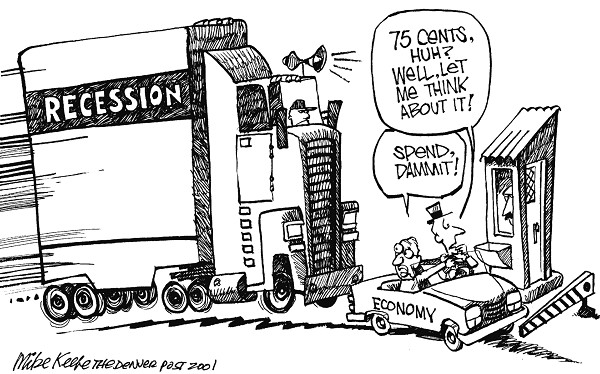
Image result for cartoon recession

Recent moves from President Donald Trump to raise tariffs on Chinese goods are leading the global economy closer to the brink of recession, according to a Morgan Stanley note cited by Newsweek.

In a recent research note, Morgan Stanley said if President Trump goes through with proposals to raise existing tariffs and China responds, the global economy would fall into recession in the next six to nine months. Specifically, Morgan Stanley’s U.S. public policy lead, Michael Zezas, said the tariffs would be what pushes the global economy into recession.

“Friday’s escalation of tariffs between the U.S. and China suggests they’ve not moved any closer on the key negotiation points that have separated them since May 5,” he said, according to Newsweek. “Neither side sees the benefit to cooperating as better than hanging tough. … We expect that tensions will continue to escalate at least until the costs of doing so are too big to ignore.”

The president said Aug. 23 that he plans to raise existing tariffs to 30 percent from 25 percent on $250 billion of Chinese goods starting Oct. 1. Additionally, he proposed tariffs on another $300 billion of Chinese imports to increase from 10 percent to 15 percent over the coming months. The president’s proposals come after China said it will impose tariffs on another $75 billion of U.S. imports, and that it would reinstate tariffs on auto products that were previously suspended.

Read more here.


The plight of America’s rural health care

https://www.axios.com/the-plight-of-americas-rural-health-care-a34b6c66-7674-4f78-abdc-33f8e711a601.html

Illustration of a tractor plowing a field in the shape of a heart monitor that is petering out

Rural America is stuck in a cycle of increasingly vulnerable patients with declining access to health care.

Why it matters: Rural patients often can’t afford care, are being hounded by hospitals and collection agencies over their unpaid bills, and are facing the reality of life in communities where the last hospital has closed.

Rural Americans tend to be older, sicker and lower-income than urban Americans. They suffer from higher rates of obesity, mental health issues, diabetes, cancer and opioid addiction, as my colleagues Stef Kight and Juliet Bartz reported.

  • They’re also more likely to be uninsured or covered by Medicare or Medicaid, which pay doctors and hospitals less than private insurance does.
  • A small and shrinking population, mostly covered by insurance plans that don’t pay very much, many of whom need a lot of care, puts more financial pressure on providers, especially hospitals. Physician shortages are common.

What they’re saying: “Rural hospitals have long been right there on the edge on average, and we’re seeing more and more of them flip over to red,” said Mark Holmes, a professor at UNC-Chapel Hill and director of the Cecil G. Sheps Center for Health Services Research.

And hospital closures often exacerbate the problems communities were already facing.

  • Hospitals are often the largest or second-largest employer in a rural community.
  • 113 rural hospitals have closed since 2010, according to the Sheps Center.
  • These are disproportionately located in the South — the region with the nation’s worst health outcomes, and where most states haven’t expanded Medicaid — leaving hospitals with more uninsured patients.
  • A 2018 study in Health Affairs found that Medicaid expansion is “associated with improved hospital financial performance and substantially lower likelihoods of closure, especially in rural markets.”

The bottom line: “What we have here is not one root cause; there’s multiple things going on here,” Holmes said. “All these sort of modest kind of trends are adding up to something that’s quite considerable.”

Go deeper:

  • Bloomberg Businessweek reported on eastern Montana’s sole psychiatrist, despite being the state with the nation’s highest suicide rate.
  • The Washington Post detailed a hospital in Missouri’s practice of suing its patients for payment — money that the hospital needed but patients generally don’t have.
  • Kaiser Health News and NPR have profiled the fallout in a rural community in Kansas after its sole remaining hospital closed, which included a 2-week lapse in nearby emergency care.


Rates for Affordable Care Act plans aren’t going up much

https://www.axios.com/affordable-care-act-plans-premiums-arent-going-up-much-1bfabbbe-5b97-400b-8c19-023bd7e4e545.html

Image result for Rates for Affordable Care Act plans aren't going up much

Premiums for Affordable Care Act coverage are going down in some places, and barely rising in others.

The big picture: Health insurers raised ACA rates dramatically over the past few years, largely due to political chaos. But their plans have still proven to be extremely profitable. Now many companies are lowering premiums as they expect to send money back to their customers.

Driving the news: Blue Cross Blue Shield of North Carolina is reducing the average premium for ACA plans by 5.5% in 2020.

  • Nationally, average ACA premiums are basically flat for next year and are going down in a handful of states, according to an analysis by ACA tracker Charles Gaba.

Between the lines: Insurers jacked up ACA premiums after the Trump administration cut off cost-sharing subsidies and nullified the individual mandate, and as Republicans threatened to eradicate the entire law, among other things. Now, they’re correcting for that overpricing.

  • BCBS of North Carolina CEO Patrick Conway said in an interview premiums are falling because the plan cut some providers from its already narrow network and changed the way it pays some hospitals. But he also said the company has “more expertise in the market than when we started.”
  • BCBS of North Carolina’s ACA plans have been extremely lucrative — in fact, too lucrative. The ACA requires insurers to spend at least 80% of their premiums on medical care, or rebate the difference back to their customers.
  • In the first quarter of this year, BCBS of North Carolina spent just 67 cents of every premium dollar on care for most of its ACA plans, according to financial documents.
  • Many other insurers are in the same boat.

The bottom line: ACA plans for many middle-class people remain prohibitively expensive — often around $600 a month for individuals who get no subsidies. But for those who get financial help, “this is a stable, functional, mature market,” said David Anderson, a health policy researcher at Duke University.


Health care costs as much as a new car

https://www.axios.com/health-care-costs-insurance-premiums-deductibles-car-580fa6c8-0dd2-427b-8dda-c898d568e51e.html

Illustration of a car key with a health plus on the unlock button.

Buying a new car every year would be a very impractical expense. It would also be cheaper than a year’s worth of health care for a family.

Why it matters: The cost-shifting and complexity of health insurance can hide its high cost, which crowds out families’ other needs and depresses workers’ wages.

By the numbers: Health care for a family covered by a large employer cost, on average, $22,885 last year.

  • That’s $2,000 more than the sticker price for a brand-new Volkswagen Beetle.
  • If the iconic Beetle isn’t your style, $22,885 would also be more than enough to get you a Ford Focus ($17,950), a Toyota Corolla ($18,600) or a Hyundai Sonata ($22,050).

Between the lines: Roughly $15,000 of that $22,885 comes from employers’ contribution to their workers’ premiums. That share alone is enough to buy a basic sedan.

  • Workers chip in an average of $4,706 per year premiums, and then spend an additional of $3,020 out of pocket. Combined, that’s almost 4 times more than the average family spends on gas in a year.

The Beetle is being discontinued in the U.S. after this year. But as health care costs continue to rise, they’ll be comparable to even fancier cars. They’re already inching up toward the cheapest Cadillac — a familiar car metaphor.

  • The Affordable Care Act’s “Cadillac tax” was intended to put downward pressure on prices by taxing the most generous health plans. But it actually affects a broad range of plans, and Congress has delayed the tax until 2022. The House has voted to repeal it altogether.


The fight over the future of our most expensive drugs

https://www.axios.com/the-fight-over-the-future-of-our-most-expensive-drugs-034b6e4d-b596-4f48-9b53-6e2c267e01e3.html

An illustration of a hammer and a concrete pill.

The market designed to create competition for biologics — typically our most expensive drugs — has been slow to take off, but some experts say that even its best-case scenario doesn’t do enough to lower drug prices.

Why it matters: While wonks debate the future of biosimilars in policy journals and on editorial pages, the argument is reflected in the political divide over whether enhanced drug competition or price regulation is the best way to address drug prices.

The big picture: Congress created the pathway for biosimilars to come to market knowing that they’d look different than small-molecule generics, and even their most ardent supporters say biosimilars will never achieve the steep discounts that generics do.

  • That’s because biosimilars are much harder to make than normal generics, meaning that drug companies have to charge enough to make their endeavor worthwhile.
  • Nevertheless, the Biosimilars Council says on its website that biosimilars could lead to more than $54 billion in savings over the next decade. A recent analysis by the Pacific Research Institute found that biosimilars could save $7.2 billion a year under the most optimistic modeled scenario.

Yes, but: Some experts are arguing that that’s not enough, and that biosimilars aren’t the best way to control biologic prices.

  • Last week, Memorial Sloan Kettering Cancer Center’s Peter Bach and MIT’s Mark Trusheim published an editorial in the Wall Street Journal arguing that biosimilars don’t produce enough savings and that the resources spent developing them would be better used to bring new, innovative drugs to market.
  • Bach and Trusheim proposed that the government instead regulate the price of older biologics after they’ve been on the market for a certain period of time, which they wrote could save around $50 billion a year.

The other side: Former FDA Commissioner Scott Gottlieb wrote an editorial in the WSJ yesterday in response, arguing that Congress should speed up the use and development of biosimilars instead of regulating prices.

  • “Among other dangers, [price regulation] could trigger shortages of the drugs. It would also discourage investment in manufacturing, as few drugmakers would want to produce complex drugs in perpetuity for little profit,” Gottlieb writes.

The bottom line: This argument isn’t just for the academics. The leading Democratic presidential candidates are also arguing for drug price regulation, a major shift left for the party.

  • “Price regulation may be a tough sell in some quarters, but it’s the best way to keep the promise of America’s extraordinary pharmaceutical industry alive,” Bach and Trusheim write.


Nonprofit hospitals in Virginia garnish wages more often than for-profit hospitals, yielding only small payoffs

https://www.healthcarefinancenews.com/news/nonprofit-hospitals-virginia-garnish-wages-more-often-profit-hospitals-yielding-only-small

More than 70% of Virginia hospitals that garnish wages are nonprofit, and the money collected is only a tiny percentage of revenue.

Nonprofit hospitals in Virginia are more likely to garnish patients’ wages if they don’t pay their medical bills than for-profit hospitals in the state, and ultimately, the practice does little to drive revenue for those hospitals, according to a JAMA study published this week.

Researchers examined Virginia court records from 2017 that dealt with completed “warrant in debt” lawsuits, or cases where a party sues an individual for unpaid debt. They examined how hospital characteristics link to wage garnishments, and found that 71% of hospitals in Virginia that garnished wages were nonprofit.

A recent ProPublica report highlighted Methodist Le Bonheur Healthcare, which it said filed more than 8,300 lawsuits from 2014 through 2018. Methodist isn’t alone. The JAMA researchers unearthed more than 20,000 debt lawsuits filed by various Virginia hospitals in 2017; more than 9,300 garnishment cases took place that year, and almost three in four were liked to nonprofits.

Some even sue their own employees. Again looking at Methodist, ProPublica found the hospital has sued more than 70 of its employees for unpaid medical bills since 2014, including a suit brought against a hospital housekeeper in 2017 for $23,000 — $7,000 more than her annual salary.

Methodist responded by pointing out its considerable charity care, with community contributions estimated at more than $226 million annually. The federal government expects nonprofit hospitals to provide charity care and financial assistance since those hospitals are exempt from local, state and federal taxes.

WHAT’S THE IMPACT

Just five hospitals — four of them nonprofit — were responsible for more than half of the garnishment cases in the state, JAMA researchers found. Overall, 48 out of 135 Virginia hospitals garnished patient wages, amounting to 36 percent.

Despite the high prevalence of the practice, the money collected from garnishments comprised a minuscule share of hospital revenue. Hospitals that garnished wages collected annual gross revenue that averaged out to $806 million, while garnishments accounted for $722,342. That’s about 0.1% of gross revenue.

The garnishments, which ranged from $24.80 to $25,000, averaged $2783.15 per patient, researchers found.

According to a report filed by NPR, nonprofit Mary Washington Hospital in Fredericksburg was the hospital that sued the most patients in Virginia in 2017 — so much so that Fredericksburg General District Court reserved a morning each month to hear its cases.

The day after NPR published its report, Mary Washington announced its intention to suspend the practice of suing patients for unpaid bills, saying it was committed to a “complete re-evaluation of our entire payment process.”

The JAMA study found that, of those whose wages were garnished, Walmart, Wells Fargo, Amazon and Lowes were the most common employers.

THE LARGER TREND

Though researchers focused on Virginia, suing patients over medical debt is not a trend that’s unique to the state. Arizona hospitals have gone to court over personal injury claims, and Johns Hopkins Hospital in Baltimore, Maryland, was recently presented with a petition from citizens and unions to drop medical debt lawsuits.


I’ve lived the difference between US and UK health care. Here’s what I learned

https://www.cnn.com/2019/08/07/opinions/single-payer-healthcare-beers/index.html?utm_source=Sailthru&utm_medium=email&utm_campaign=Newsletter%20Weekly%20Roundup:%20Healthcare%20Dive%2008-10-2019&utm_term=Healthcare%20Dive%20Weekender

Image result for conflict of interests

Earlier this year, I shattered my elbow in a freak fall, requiring surgery, plates and screws. While I am a US citizen, several years ago I married an Englishman and became a UK resident, entitled to coverage on the British National Health Service. My NHS surgeon was able to schedule me in for the three-hour surgery less than two weeks after my fall, and my physical therapist saw me weekly after the bone was healed to work on my flexion and extension. Both surgery and rehab were free at the point of use, and the only paperwork I completed was my pre-operative release forms.

Compare that to another freak accident I had while living in Boston in my 20s. I spilled a large cup of hot tea on myself, suffered second degree scald burns, and had to be taken to the hospital in an ambulance. In the pain and chaos of the ER admission, I accidentally put my primary insurance down as my secondary and vice versa. It took me the better part of six months to sort out the ensuing paperwork and billing confusion, and even with two policies, I still paid several hundred dollars in out-of-pocket expenses.
With debate raging in the US among Democrats about whether to push for a government health care system such as Medicare for All, there is no doubt in my mind that the NHS single-payer health care system is superior to the American system of private insurance.
As someone who suffers from chronic illness, is incredibly clumsy and accident-prone, and has two young children, I spend an inordinate amount of time in doctors’ offices and hospitals. When my family is in our home in York, England, our health care is paid for principally through direct taxation, and we have zero out of pocket costs.
In contrast, when we are in the US, we are on my employer-based insurance plan. After years with one provider, rising costs pushed the premiums alone to above 10% of my gross salary for the family plan, and I recently opted to switch to a new provider, whose premiums are a more modest but still eye-watering 7% of my salary. I have had to switch our family doctor and specialists, with the attendant hassle of applying to have our medical records released and transferred to our new providers. In addition to my premiums, both plans include significant co-pays, although my new provider does not have a deductible.

In Britain, I am not entitled to the annual well patient and women’s health check-ups that Americans can now receive without a co-pay or deductible thanks to the Affordable Care Act. As an asthma sufferer, I do, however, have regular annual reviews of my condition. When one of my children becomes ill, I am usually able to receive same-day treatment in both countries, although in both cases this involves showing up early for the urgent care clinic.
The comparative ease and security of the NHS is why the system retains such high levels of support from the British public, despite frustrations with wait times and other aspects of service provision. A recent poll found that 77% of respondents felt that “the NHS is crucial to British society and we must do everything we can to maintain it,” and nearly 90% agreed that that the NHS should be free at the point of delivery, provide a comprehensive service available to everyone, and be primarily funded through taxation. Britons’ affection for their NHS was dramatically enacted in Danny Boyle’s 2012 Olympic opening ceremony extravaganza.
Yet, while I share my adopted countrymen’s support for the NHS, I can see almost no chance of America adopting a single-payer health care system of the kind described by Sens. Sanders and Warren any time soon. Sanders, Warren and other single-payer advocates not only face a strong and entrenched adversary in the American insurance industry, they also lack the broad public support for reform which characterized post-WWII Britain.
That broad public support for reform was crucial. Britain’s NHS system was very nearly defeated by opposing interests when it was introduced in the 1940s. It was initially opposed by the municipal and voluntary authorities, who controlled the 3,000 hospitals which Health Secretary Aneurin Bevan sought to bring under national administration, by the various Royal Colleges of surgeons and specialists, and by British Medical Association (BMA), the professional body representing the vast majority of the nation’s general practitioners, who stood to lose control of their private practices and become state employees.
At a meeting of doctors following the publication of Bevan’s proposals in January 1946, one physician claimed that “This Bill is strongly suggestive of the Hitlerite regime now being destroyed in Germany,” and another described the proposed nationalization of the hospitals as “the greatest seizure of property since Henry VIII confiscated the monasteries.” The BMA hostility persisted through rounds of negotiations lasting two years. Less than six months before the bill was set to come into effect on July 5, 1948, the BMA’s membership voted by a margin of 8 to 1 against the NHS, sparking serious fears within the government that GPs would refuse to come on board, effectively scuppering the NHS.
Bevan insisted that he would not cave but he did have to make several costly concessions to bring the doctors on board. First, he cleaved off the specialists (who were closely tied to the hospitals), by promising them that, if they signed on, they could continue to treat private patients in NHS-run hospitals in addition to their NHS patients, whom they would be paid to treat on a fee-for-service basis. Then, he offered the general practitioners a generous buyout to give up their stake in their private practices (effectively purchasing their patient lists), if they came on board. And finally, he promised them that the government would not be able to compel them to become fully salaried employees of the state without the passage of new legislation.
At the same time that Bevan offered the carrot of economic concessions, he also wielded the stick of public opinion against the doctors. Speaking in the House of Commons in February 1948, Bevan positioned single-payer healthcare as an issue of middle class survival, in language whose substance, if not its style, would not sound out of place in a 2020 Democratic primary debate: “Consider that social class which is called the “middle class.” Their entrance into the scheme, and their having a free doctor and a free hospital service, is emancipation for many of them. There is nothing that destroys the family budget of the professional worker more than heavy hospital bills and doctors’ bills.”
Bevan spoke for a public exceptionally united in support of an expanded state welfare policy as a result of the socially unifying experience of World War II. Fear of public backlash combined with economic incentives ultimately brought the medical establishment to heel.
Many were shocked when Bevan succeeded, but the BMA was arguably a less formidable threat to reform then than the American insurance industry is now. Insurance companies stand to be the biggest losers from a switch to single-payer health care, which seeks to achieve economies in large part through cutting out the profit-making middle man. As Elizabeth Warren noted in last Tuesday’s debate, US insurance companies reported $23 billion in profits last year. And the insurance lobby is determined to protect its position. That is why insurance companies are major donors in both state and federal election campaigns. The insurance industry has put massive resources into ensuring continued public and political opposition to the introduction of a single-payer system.
It’s possible that, if Americans were presented with an arguably cheaper and less bureaucratic health care system, they might decide that they liked it and were committed to doing everything they could to maintain it. But given the constellation of political forces in 21st century America, that just isn’t going to happen any time soon.

Republicans ready to revive ACA repeal talks

https://www.beckershospitalreview.com/hospital-management-administration/republicans-ready-to-revive-aca-repeal-talks.html

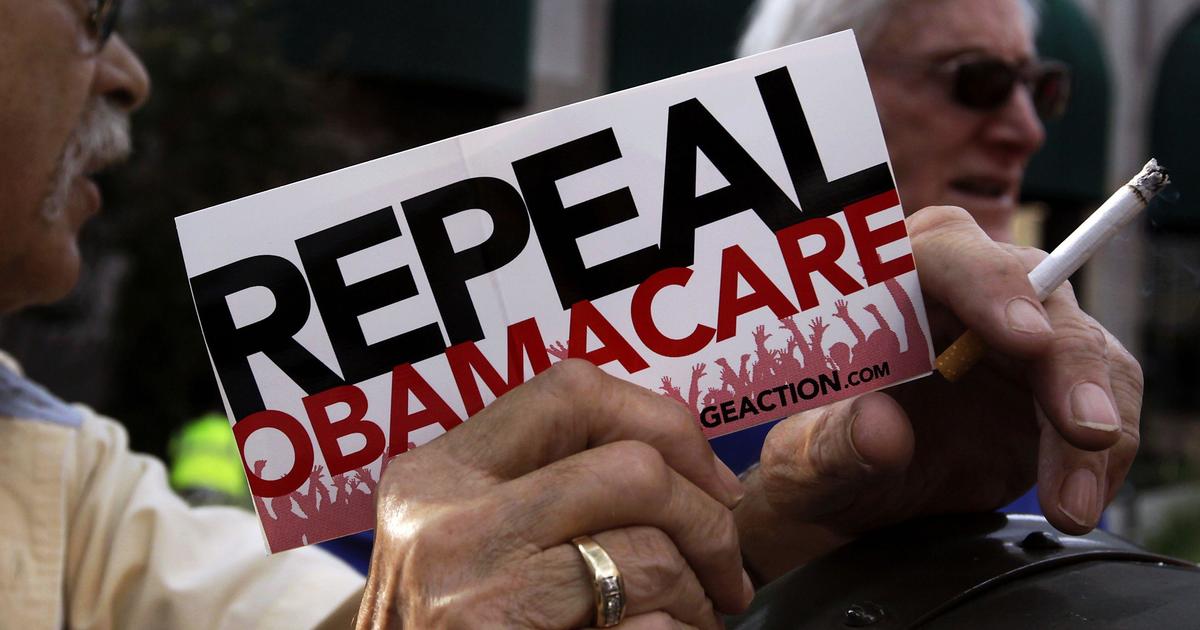
Image result for aca repeal

Sen. Lindsey Graham, R-S.C., promised to revive ACA repeal in Congress if Republicans can win back a majority in the House and reelect President Donald Trump in 2020, according to an interview on South Carolina radio show “The Morning Answer with Joey Hudson,” featured by The Hill

“This is what 2020 is about: If we can get the House back, and keep our majority in the Senate, and President Trump wins reelection, I can promise you, not only are we going to repeal Obamacare, we are going to do it in a smart way where South Carolina would be the biggest winner,” Mr. Graham said.

Mr. Graham, who failed to pass an ACA repeal plan in 2017, called “Medicare for All” and other Democratic presidential candidates’ healthcare plans “crazy.”  

“Medicare for All is $30 trillion, and it’s going to take private sector healthcare away from 180 million Americans,” he said. Instead, he proposed giving states the power to determine healthcare policy through block grants and other smaller reforms. This would allow states to test conservative healthcare policies against liberal ones, he said. 

“This election has got a common thing: Federalism versus socialism,” Mr. Graham said. “What I want to do is make sure the states get the chance to administer this money using conservative principles if you are in South Carolina, and if you want Medicare for All in California, knock yourself out.”