A hospital employee outside Milwaukee deliberately spoiled more than 500 doses of coronavirus vaccine by removing 57 vials from a pharmacy refrigerator, hospital officials announced Wednesday, as local police said they were investigating the incident with the help of federal authorities.
Initiating an internal review on Monday, hospital officials said they were initially “led to believe” the incident was caused by “inadvertent human error.” The vials were removed Friday and most were discarded Saturday, with only a few still safe to administer, according to an earlier statement from the health system. Each vial has enough for 10 vaccinations but can sit at room temperature for only 12 hours.
Two days later, the employee acknowledged having “intentionally removed the vaccine from refrigeration,” the hospital, Aurora Medical Center in Grafton, Wis., said in a statement late Wednesday.
The employee, who has not been identified, was fired, the hospital said. Its statement did not address the worker’s motives but said “appropriate authorities” were promptly notified.
Wednesday night, police in Grafton, a village of about 12,000 that lies 20 miles north of Milwaukee, said they were investigating along with the FBI and the Food and Drug Administration. In a statement, the local police department said it had learned of the incident from security services at Aurora Health Care’s corporate office in Milwaukee. The system serves eastern Wisconsin and northern Illinois, and includes 15 hospitals and more than 150 clinics.
Leonard Peace, an FBI spokesman in Milwaukee, would not comment on the Bureau’s involvement but said of the episode, “We’re aware of it.” The FDA did not immediately respond to a request for comment.
The tampering will delay inoculation for hundreds of people, Aurora Health officials said, in a state where 3,170 new cases were reported and 40 people died Wednesday of covid-19, the disease caused by the coronavirus, according to The Washington Post’s coronavirus tracker.
“We are more than disappointed that this individual’s actions will result in a delay of more than 500 people receiving the vaccine,” the health system said in a statement.
The Wisconsin incident comes as states continue to grapple with a bumpy rollout of the first doses of the Moderna and Pfizer-BioNTech vaccines, which were approved less than a month ago and prioritized for health-care workers and residents and staff of long-term care facilities. So far, distribution has lagged well behind federal projections, raising doubts about whether the outgoing administration will meet its already revised goal of 20 million vaccines distributed by the end of the year.
As of Wednesday, the Centers for Disease Control and Prevention said 12.4 million doses of the vaccine had been distributed across the United States, but only 2.6 million of those had been administered.(This means that just 1 in 125 Americans has received the first dose of the vaccine.) Trump administration officials have said these numbers lag behind the actual pace of vaccination, which they also vowed would accelerate starting next week.
The Moderna and Pfier-BioNTech vaccines, the first two regimens to gain regulatory approval for emergency use, are two-shot protocols with intricate logistical requirements. Moderna’s vaccine doesn’t require subarctic temperatures, as does the Pfizer product, but it does need to be kept cold. It can be stored at freezer temperatures for six months, the company says, and kept at regular refrigerated conditions for 30 days. It can be maintained at room temperature for only 12 hours, though, and can’t be refrozen once thawed.
Complex storage requirements are among the reasons state officials are imploring providers to administer vaccine quickly once it is received.
In its original statement, Aurora Health said it had successfully vaccinated about 17,000 people over the previous 12 days. Its initial review, it said, had found that the 57 vials were simply not returned to the refrigerator after “temporarily being removed to access other items.”
The hospital apologized, saying, “We are clearly disappointed and regret this happened.”
It is not clear what motive the employee may have had to spoil the vaccine doses. The hospital said it would release more details about its investigation Thursday.
The annual New Year’s eve ball drop celebration in Times Square actually began with dynamite.
It was 1904. Adolph Ochs, the owner of the New York Times, had just finished construction of a towering new headquarters on 42nd Street.
Ochs was very proud of this new building. He even published a 48-page special supplement to celebrate a structure that, as the paper put it, “reaches higher toward the clouds than anything within twelve miles.”
To celebrate the new building and the calendar flipping to 1905, the paper invited New Yorkers to celebrate at the new tower with fireworks and a performance by Francesco Fanciulli’s band. Throngs have gathered in Times Square ever since, except for two years during World War II — and this year, because of the coronavirus pandemic.
“There are absolutely no spectators allowed in Times Square,” Police Chief Terence A. Monahan warned Wednesday at a news conference.
In 1904, massive crowds began to gather as the sun set, lured by the Times promise that “Bombs will burst 1,000 feet in the air, and not a feature of the exhibition will be hidden to Greater New York or the surrounding country.”
“Broadway seemed the thoroughfare to which all faces were turned,” the Times reported the next day. “And when the time approached when another year should be inscribed upon the century book the crush was so great that progress was well nigh impossible in any direction.”
It was very loud.
“Every known device for making noise was pressed into service,” the Times said. “There were horns of all shapes and sizes — horns which wailed with an almost human note and horns which carried an ear-shattering volume of sound. One of the favorite kinds of horns was fashioned in the semblance of a champagne bottle and gave forth a series of notes which sounded the scale from top to bottom.”
As the clock struck midnight, “another bomb and another” shot up from the tower.
“No more beautiful picture was ever limned in fire on the curtain of midnight,” the Times reported. “As the first bomb ascended in a graceful arc, and burst 1,000 feet in the air, the city knew that 1904 had passed, and from factory, locomotive, and steamship whistles welcomed its successor.”
The launching of dynamite from the Times Building to celebrate the New Year continued until 1907, when the city, perhaps concluding that firing explosives over thousands of people and scores of other rising skyscrapers was unsafe, refused to issue a permit.
In search of another way to celebrate, Ochs hired Artkraft Strauss, the preeminent Times Square signmaker, to build him a giant time ball — a precisely calibrated device invented in the early 19th century to tell time in city centers and on naval ships.
Ochs would use his time ball — “a 700-pound wood-and-iron ball, five feet in diameter and illuminated by 100 25-watt bulbs,” according to the Times — to countdown the final minute of the year. Over the year, the ball has changed, but the tradition has not.
“Today, the drop is initiated by a laser-cooled atomic clock in Colorado, the primary time standard for the United States,” according to the New Yorker. “It continues to be our most spectacular display of public time-keeping.”
But this year there will be no throngs of cold revelers in Times Square. There will be no noise, no ticker tape, no couples kissing to ring in the new year. But still, one year will pass into the next — 2020, to 2021.
And maybe next year things will be different.
Maybe Times Square will sound and feel and be alive again like it was that December evening in 1904, when, as the Times recorded, “the spirit of the occasion was one of good fellowship” and the sky “took on all colors of the rainbow.”
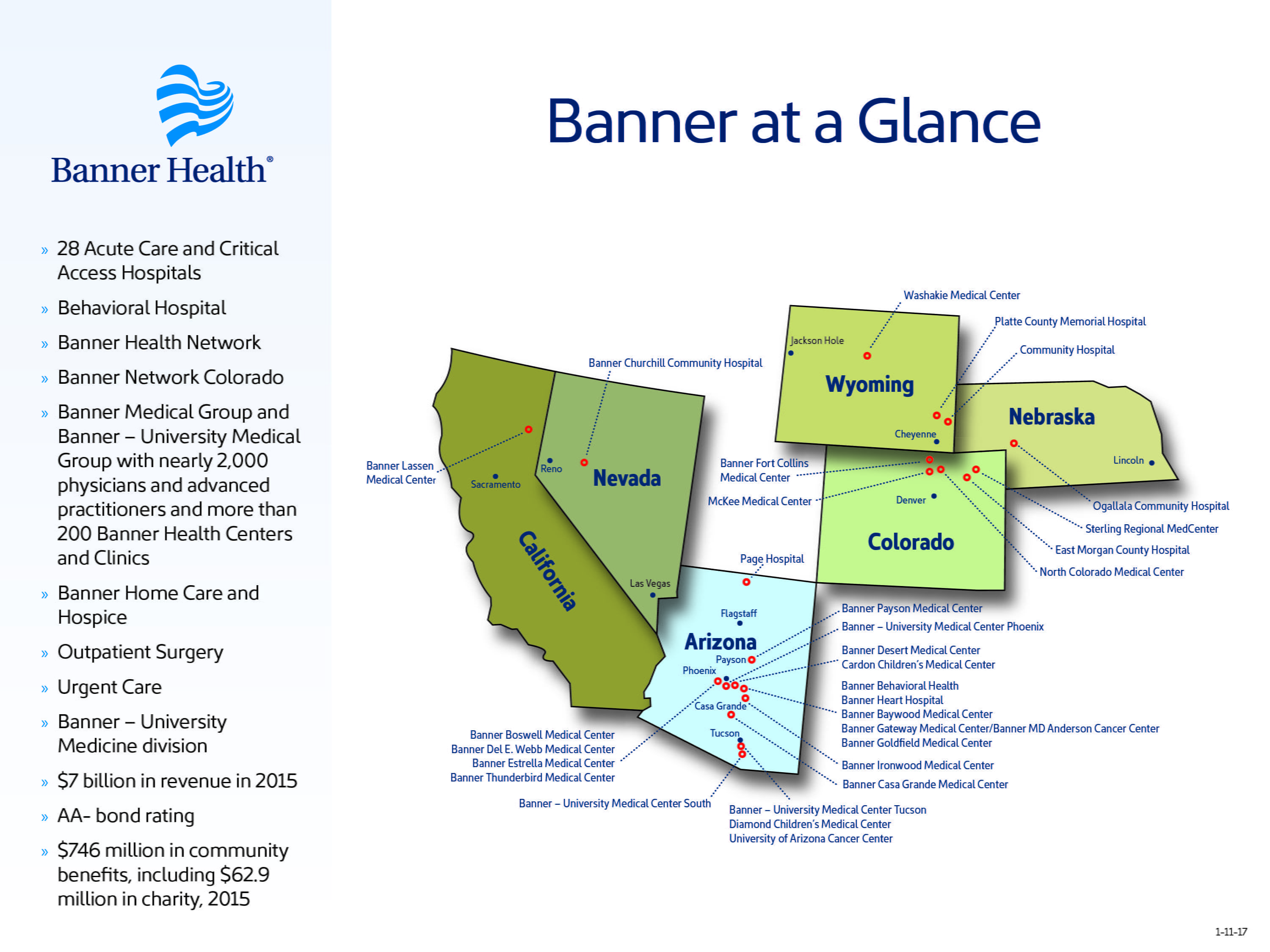
Banner Health will pause elective surgeries Jan. 1, the Phoenix-based system announced Dec. 30.
The health system is suspending nonurgent elective surgeries that can reasonably be postponed for 30 to 60 days without a negative impact on the patient’s health, according to TV station CBS 5.
Banner’s hospitals are facing a surge of COVID-19 patients. As of Dec. 29, the system was at 104 percent licensed bed capacity, Banner Chief Clinical Officer Marjorie Bessel, MD, said Dec. 30, according to TV station ABC 15. Some Banner hospitals have exceeded 120 percent licensed bed capacity.
Because of a backlog of patients, some Banner hospitals are diverting incoming ambulance transports.
“This diversion activity is an early indication that triage may soon be necessary if volumes continue to increase like they did this past week,” Dr. Bessel said, according to CBS 5. “What triage would look like, would be that we might, if we got to that point, be unable to care for everybody.”
California reported its first case of a new variant of the coronavirus that may be more transmissible, AP reports.
The big picture:California is the second state to document a confirmed case of the variant — which originated in the United Kingdom — after Colorado reported the first case in the United States on Tuesday.
California Gov. Gavin Newsom announced the infection during an online conversation with Anthony Fauci, head of the National Institute of Allergy and Infectious Diseases, according to AP.
The governor said the case was located in Southern California, but he did not provide any other details about the person who was infected.
“I don’t think Californians should think that this is odd. It’s to be expected,” Fauci said Wednesday, per AP.
Of note:There is thus far no evidence that the new variant is more deadly — only that it appears more transmissible. There is also no evidence that COVID-19 vaccines will be less effective against the new variant.
A non-peer reviewed study by the Centre for Mathematical Modelling of Infectious Diseases at the London School of Hygiene and Tropical Medicine found that the variant is 56% more transmissible than other strains.
The British government previously warned that a new variant could be up to 70% more transmissible.
Travelers boarding a flight during the pandemic might consider it unlikely that anyone sick with the coronavirus would make it onboard. But the reality is that travelers are boarding planes with covid-19, putting their fellow passengers at risk of contracting the illness.
Beyond the danger those infected passengers are creating to the people around them, they also pose a sizable risk to themselves when they board their planes. Doctors say that flying is a high-risk activity for coronavirus-positive individuals because of low air pressure in the cabin and that multiple passengers have now died because of it.
When a man infected with the coronavirus died of acute respiratory failure on a United Airlines flight from Orlando to Los Angeles on Dec. 14, he was not the first individual to die of covid-19 on a plane. In July, a Texas woman died of the disease on a Spirit Airlines flight that was diverted when she was found to be unresponsive and not breathing. In both cases, the passengers were given CPR on the plane but could not be revived.
The likely medical problem in both these instances, doctors say, is that low air pressure — which is standard in plane cabins — creates dangerously low blood-oxygen levels in people with respiratory conditions. Covid-19, the illness caused by the coronavirus, is a respiratory disease that often attacks the lungs and heart.
Nicholas Hill, pulmonary chief at Tufts Medical Center in Boston, says there is “no question” that the air condition in plane cabins poses a risk to passengers with covid-19 and that flying was probably factor in the deaths of the passengers infected with the virus.
“If you get on a plane with covid, or anything else respiratory-related, you are going to be at a considerably higher risk when you go to altitude,” Hill says. “This is not something unique to covid; it’s true of anybody that’s got an acute or respiratory condition. This change in oxygen from sea level can provoke crises in the air.”
Plane cabins are pressurized so passengers are able to breathe at altitudes over 30,000 feet, but the air pressure is still about 25 percent lower in a plane cabin than it is at sea level. Flying has long given respiratory-troubled patients medical crises in the air. Covid-19 is no different. Flying with it can impact blood oxygen levels to a degree that requires immediate medical attention.
David Freedman, an epidemiologist at the University of Alabama at Birmingham, says covid-infected patients are at the same risk as people with non-coronavirus lung and heart conditions that impact their breathing. Airlines are prepared for those kinds of respiratory emergencies with supplemental oxygen onboard.
“The oxygen concentration [on planes] is much lower than on the ground, and all patients with severe lung or heart disease know this and know that they will need supplemental oxygen on board even if they don’t require it normally,” Freedman says. “All planes do carry an oxygen tank on board for emergencies like this.”
Delta Air Lines says that respiratory emergencies make up about 10 percent of in-flight medical events and that all aircraft are equipped with supplemental oxygen.
All airline flight attendants receive annual training in CPR, Taylor Garland, a spokesperson for the Association of Flight Attendants labor union, told The Washington Post in an email. Flight crew are also in close contact with medical services on the ground that can meet the aircraft in the event of an emergency landing.
But those efforts all fell short in the July and December deaths. Hill says passengers do not necessarily need to be experiencing shortness of breath before takeoff to become breathing-impaired in-flight. Blood oxygen levels can be low in covid-19 patients who are not experiencing trouble breathing, making getting on a plane with the virus — even if you’re pre-symptomatic or asymptomatic — a high-risk endeavor.
“Early on in the pandemic there were descriptions of ‘happy hypoxia’ patients, covid patients who come in with pretty low oxygen levels but wouldn’t be short of breath,” Hill says. “Most people who have low oxygen levels are also complaining of shortness of breath, but it is possible initially to not have those symptoms.”
On the July Spirit Airlines flight, a crew member who administered CPR to the unresponsive woman passed out from exhaustion, according to reporting by The Post. Contact tracers reportedly never notified passengers on the plane of the positive coronavirus case onboard.
Tony Aldapa, an off-duty medical worker on the Dec. 14 United flight who gave chest compressions to the unresponsive man, said last week that he was experiencing coronavirus symptoms after helping the flight crew with CPR. He was not notified about his exposure to the virus by contact tracers until 10 days after the flight.
“I knew we were pretty far from where we needed to land at, and CPR is exhausting with one person or two people. Even with three or four people, it’s not an easy thing to do,” Aldapa, 31, told the Los Angeles Times of the incident. “Regardless of COVID … he needed CPR to save his life.”
Hospitals in Southern California will need to start rationing care if more action isn’t taken by the community to mitigate the spread of COVID-19, Chris Van Gorder, president and CEO of Scripps Health, wrote in a Dec. 28 op-ed for The San Diego Union-Tribune.
As of Dec. 29, 20,642 California residents were hospitalized with COVID-19. The state’s hospital bed capacity is 72,511. In San Diego County, where Scripps is headquartered, 18 intensive care unit beds were available as of Dec. 28, “not even enough to handle a single mass casualty incident,” Mr. Van Gorder wrote. Out of Scripps’ 173 ICU beds, seven staffed beds were available as of Dec. 28.
“This past weekend, one of our community hospitals ran out of room in their morgue. We are nearing the point where we have to make the decision of who gets care and who does not,” Mr. Van Gorder wrote.
He pleaded with the San Diego and California community to adhere to mask-wearing and social distancing guidelines, especially as the New Year’s Day holiday approaches. He called on residents to stay home for New Year’s, wear a mask, wash their hands, and not eat or drink with people who aren’t in their immediate family household.
Mr. Van Gorder’s commentary comes as Kaiser Permanente hospitals in Northern California are suspending elective, non-urgent procedures through Jan. 4 as they continue to face a surge in COVID-19 hospitalizations. The Oakland, Calif.-based system announced the suspension Dec. 26, days after Chair and CEO Greg Adams said during a news conference, “We simply will not be able to keep up if the COVID surge continues to increase. We’re at or near capacity everywhere.”
As the coronavirus sickens tens of thousands of Americans while pressuring the bottom lines of medical providers, analysts worry the pandemic could also hit pause on the decades-long march toward value-based care, as hospitals and doctors look to recoup revenue in the short-term instead of putting more dollars at risk.
Massive health systems and independent physician offices alike are diverting funds to shore up resources like personal protective equipment, ventilators and staff to prepare for an expected influx of COVID-19 patients or to cope with those already there. Expenses are skyrocketing as providers halt non-essential visits including lucrative elective procedures like joint replacements, winnowing down a major source of revenue.
Clinicians in value-based payment arrangements face higher levels of financial risk than their fee-for-service counterparts. Money spent preparing for the coronavirus and treating COVID-19 patients will be a sunk cost and they could be dinged financially again at the end of the year when their spending and performance is evaluated.
Already, the coronavirus is leading providers to think about exiting the models.
A survey published this week of more than 220 accountable care organizations nationwide found almost 60% are likely to drop out of their risk-based model to avoid financial losses. Some 77% are “very concerned” about the coronavirus’ impact on their 2020 performance.
“The value-based movement is at a critical juncture,” wrote National Association of ACOs CEO Clif Gaus in a letter to CMS Administrator Seema Verma last month.
Fee-for-service still dominates — roughly 40% of healthcare payments made in 2018 were under fee-for-service, according to the Health Care Payment Learning & Action Network (LAN) — but it’s been on the downswing. One in three healthcare payments currently flows through some sort of alternative payment model, and that has been projected to grow.
Among the four main types of value-based arrangements — shared risk, global capitation, bundled care and shared savings — most require an upfront financial commitment. And providers are unlikely to put more capital at risk given the current economic situation, analysts told Healthcare Dive, instead focusing on making up the losses they sustained during the outbreak by ramping up capacity.
Doctor’s offices and hospitals will reschedule delayed procedures and even operate on weekends to recapture as much revenue as possible before they’re likely to consider taking on more risk.
“Even if you’re not in the hotspots, you are preparing right now. This puts on hold a lot of the initiatives that have been on the value-based side of things,” Jefferies senior healthcare analyst Brian Tanquilut told Healthcare Dive. “I don’t think the value-based discussion goes away, but I think it will take a recovery of the hospital system before it can go there.”
Pleas for loss waivers
The National Association of ACOs told CMS in mid-March that ACOs in Medicare’s flagship ACO program the Shared Savings Program, along with other shared risk models like the Next Generation ACO model and the upcoming Direct Contracting initiative, could face losses beyond their control because of the pandemic.
CMS did pause some reporting requirements for value-based initiatives late last month. The agency pushed back the deadline for groups participating in the Medicare ACO program, Merit-based Incentive Payment System and the Hospital Readmissions Reduction Program to report quality data, or waived reporting entirely for the fourth quarter of 2019. The relaxation was framed as a way to help value-based organizations free up time and resources amid the pandemic.
But provider groups including NAACOS and the American Hospital Association have lobbied aggressively for the Trump administration to forgive all ACO losses for 2020. CMS is reviewing their request.
But all normal rules have gone out the window, experts say, and it’s almost impossible to move the needle toward value in the future when providers are facing a tsunami of patients now.
“This is not about managing a population. This is about doing everything you can to keep these people alive,” Dean Ungar, vice president of Moody’s Investors Service, told Healthcare Dive. “Coronavirus is really a five-alarm fire. But if your building’s on fire, that doesn’t really tell you how to maintain your business in normal circumstances.”
Silver lining?
Some, however, are more optimistic that the unique financial challenges brought on by the pandemic highlight the problems with the traditional fee-for-service model and could even nudge providers toward value-based arrangements down the line.
“If all of your revenue is based on patients walking in the door, when they can’t walk in the door anymore, you’re kind of up the creek without a paddle,” Dan Bowles, SVP of growth and network operations at accountable care organization Aledade told Healthcare Dive. “You need to find a way to create non-visit-based revenue.”
Some hope the pandemic could help the value-based movement in the long term as practices look for ways to uncouple revenue from patient volume. And, as medical costs continue to rise, accounting for 19% of the country’s GDP, any pause in the shift to value-based care due to the coronavirus is likely to be a short detour, not a complete derailment.
“Maybe some providers are going to see it in a different light when their business kind of dries up — see that there’s a benefit to it,” Ungar said. “Ultimately, it’s a trend of where things are going, but it’s a big ship and it’s moving slowly.”
And value-based care arrangements were built predominantly for the populations being hit hardest by the coronavirus: those with serious underlying medical conditions like chronic lung disease or severe obesity.
If those vulnerable patients were being treated in value-based arrangements, it’s possible more COVID-19 cases could have been caught earlier before they became life-threatening, Moody’s analyst Stefan Kahandaliyanage told Healthcare Dive. That could renew industry’s focus on managing the health of those most at-risk from novel infectious diseases in the future.
“Costs are very high and there’s been a pandemic,” Kahandaliyanage said. “Let’s get more healthy before the next pandemic comes.”
The Centers for Disease Control and Prevention reported on Monday that 2.1 million doses of coronavirus vaccines have been administered in two weeks. While this might sound like an impressive number, it should set off alarms.
Let’s start with the math. Anthony S. Fauci, the government’s top infectious-disease doctor, estimates that 80 to 85 percent of Americans need to be vaccinated to reach herd immunity. Both the Pfizer and Moderna vaccines require two doses. Eighty percent of the American population is around 264 million people, so we need to administer 528 million doses to achieve herd immunity.
At the current rate, it would take the United States approximately 10 years to reach that level of inoculation. That’s right — 10 years. Contrast that with the Trump administration’s rosy projections: Earlier this month, Health and Human Services Secretary Alex Azar predicted that every American will be able to get the vaccine by the second quarter of 2021 (which would be the end of June). The speed needed to do that is 3.5 million vaccinations a day.
There’s reason to believe the administration won’t be able to ramp up vaccination rates anywhere close to those levels. Yes, as vaccine production increases, more will be available to the states. And Brett Giroir, assistant secretary for health at HHS, argued on Sunday that the 2.1 million administered vaccines figure was an underestimate due to delayed reporting. So let’s be generous and say the administration actually administered 4 million doses over the first two weeks.
But even that would still fall far short of the 3.5 million vaccinations needed per day. In fact, it falls far short of what the administration had promised to accomplish by the end of 2020 — enough doses for 20 million people. And remember, the first group of vaccinations was supposed to be the easiest: It’s hospitals and nursing homes inoculating their own workers and residents. If we can’t get this right, it doesn’t bode well for the rest of the country.
Here’s what concerns me most: Instead of identifying barriers to meeting the goal, officials are backtracking on their promises. When states learned they would receive fewer doses than they had been told, the administration said its end-of-year goal was not for vaccinations but vaccine distribution. It also halved the number of doses that would be available to people, from 40 million to 20 million. (Perhaps they hoped no one would notice that their initial pledge was to vaccinate 20 million people, which is 40 million doses, or that President Trump had at one point vowed to have 100 million doses by the end of the year.) And there’s more fancy wordplay that’s cause for concern: Instead of vaccine distribution, the administration promises “allocation” in December. Actual delivery for millions of doses wouldn’t take place until January, to say nothing of the logistics of vaccine administration.
The vaccine rollout is giving me flashbacks to the administration’s testing debacle. Think back to all the times Trump pledged that “everyone who wants a test can get one.” Every time this was fact-checked, it came up false. Instead of admitting that there wasn’t enough testing, administration officials followed a playbook to confuse and obfuscate: They first attempted to play up the number of tests done. Just like 2 million vaccines in two weeks, 1 million tests a week looked good on paper — until they were compared to the 30 million a day that some experts say are needed. The administration then tried to justify why more tests weren’t needed. Remember Trump saying that “tests create cases” or the CDC issuing nonsensical testing guidance?
When that didn’t work, Trump officials deflected blame to the states. Never mind that there should have been a national strategy or that states didn’t have the resources to ramp up testing on their own. It was easier to find excuses than to admit that they were falling short and do the hard work to remedy it.
Instead of muddying the waters, the federal government needs to take three urgent steps. First, set up a real-time public dashboard to track vaccine distribution. The public needs to know exactly how many doses are being delivered, distributed and administered. Transparency will help hold the right officials accountable, as well as target additional resources where they are most needed.
Second, publicize the plan for how vaccination will scale up so dramatically. States have submitted their individual plans to the CDC, but we need to see a national strategy that sets ambitious but realistic goals.
Third, acknowledge the challenges and end the defensiveness. The public will understand if initial goals need to be revised, but there must be willingness to learn from missteps and immediately course-correct.
I remain optimistic that vaccines will one day end this horrific pandemic that has taken far too many lives. To get there, we must approach the next several months with urgency, transparency and humility.
Colorado officials on Tuesday reported the first known case in the United States of a person infected with the coronavirus variant that has been circulating rapidly across much of the United Kingdom and has led to a lockdown of much of southern England.
Scientists have said the variant is more transmissible but does not make people sicker.
The Colorado case involves a man in his 20s, who is in isolation in Elbert County, about 50 miles southeast of Denver, and has no travel history, according to a tweet from the office of Gov. Jared Polis (D).
“The individual has no close contacts identified so far but public health officials are working to identify other potential cases and contacts through thorough contact tracing interviews,” the statement said.
A federal scientist familiar with the investigation said the man’s lack of known travel — in contrast with most confirmed cases outside the United Kingdom — indicates this is probably not an isolated case. “We can expect that it will be detected elsewhere,” said the official, who spoke on the condition of anonymity to discuss the broader context of the announcement.
The Centers for Disease Control and Prevention confirmed as much in a statement Tuesday afternoon, saying additional cases with the new variant will be detected in the United States in coming days. The variant’s apparent increase in contagiousness “could lead to more cases and place greater demand on already strained health care resources,” the agency said in a statement.
Researchers have detected the more transmissible variant in at least 17 countries outside the United Kingdom, including as far away as Australia and South Korea, as of Tuesday afternoon. Officials in Canada had previously said they had identified two cases.
Although the U.K. variant appears more contagious, it is not leading to higher rates of hospitalizations or deaths, according to a report from Public Health England, a government agency. Nor is there any sign that people who were infected months ago with the coronavirus are more likely to be reinfected if exposed to the variant, according to the report. All available evidence indicates that vaccines, and immunity built up in the population, should be protective against this variant.
The Colorado case occurred in a county of about 27,000, which is currently classified, along with much of the state, in the “red” level for the virus, denoting serious but not extreme risk.
Two weeks ago, several hundred people gathered at a community church in the county seat of Kiowa to consider whether to pursue legal actions against Polis and other state officials for imposing coronavirus-related restrictions, according to the Elbert County News. County commissioners and the county sheriff have declined to enforce restrictions emanating from Denver.
“I was expecting to see it in ski country first because those areas are where people from across Colorado, the U.S. and internationally, gather,” said Elizabeth Carlton, an assistant professor of environmental and occupational health at the Colorado School of Public Health. The absence of any apparent travel history associated with the infected person, she said, suggests he “can’t be the only case in Colorado.”
Polis, in his statement, called on Coloradans to do everything they could to prevent transmission by wearing masks, standing six feet apart when gathering with others, and interacting only with members of their immediate households.
The arrival of the new variant “doesn’t fundamentally change the nature of the threat,” said Justin Lessler, an epidemiologist at Johns Hopkins Bloomberg School of Public Health. “It’s no more deadly than the virus was before, and it doesn’t look like it infects people who are immune.”
Lessler echoed others, saying he would be “astounded” if this was the only chain of transmission of the new variant in the United States. “We know that the virus spreads easily and quickly between countries,” he said, and the fact that the infected person had no travel history indicates “this strain has gotten here sometime in the past, and there are chains of transmission ongoing.”
The variant has a higher attack rate, according to the U.K. report, which bolsters the hypothesis that the variant has out-competed other versions of the coronavirus and is now the dominant variant across much of the United Kingdom. Among people known to have been exposed to someone already infected with the variant, 15.1 percent became infected. People exposed to someone infected with the non-variant version had a 9.8 percent infection rate.
That difference suggests the variant is more transmissible, though Public Health England said more investigation is needed to bolster the hypothesis.
The working theory among many scientists is that the increased transmissibility of the variant, known as B.1.1.7, is driven by mutations that have altered the spike protein on the surface of the virus. The variant has 17 mutations — eight of which alter the spike protein.
Precisely how those changes are leading to more infections is unknown. The virus may be binding more easily to receptor cells in the human body, or replicating more easily and driving higher viral loads, enhancing viral shedding by someone who is infected. Another possibility is that people are shedding the virus for a longer period, increasing the chances of passing it along.
“Preliminary evidence suggests that the new variant does not cause more severe disease or increased mortality,” Susan Hopkins, a senior medical adviser to Public Health England, said in a statement released Tuesday.
The newly published data echo the findings in a separate study published last week, based on modeling and hospitalization data — and not yet peer-reviewed — that estimated that the variant is 56 percent more transmissible but does not appear to alter the lethality of the virus.
“The good news is that B.1.1.7 does not seem to cause much more severe disease, and there’s no evidence that it is managing to evade the immune system, which means vaccines are expected to protect against it,” William Hanage, an epidemiologists at the Harvard T.H. Chan School of Public Health, said Tuesday after reviewing the new report. “The bad news is that B.1.1.7 does appear to be much more transmissible.”
Officials in the United States have been signaling since last week that the new variant was probably already present in this country.
“I’m not surprised,” Anthony S. Fauci, director of the National Institute of Allergy and Infectious Diseases, said Tuesday. “I think we have to keep an eye on it, and we have to take it seriously. We obviously take any kind of mutation that might have a functional significance seriously. But I don’t think we know enough about it to make any definitive statements, except to follow it carefully and study it carefully.”
Research findings on coronavirus variants have been ambiguous at times, and scientists say they are still trying to extract reliable signals from noisy data. There have been several false alarms sounded about virus mutations in the past. A major challenge is discerning whether a virus variant is spreading rapidly because it has a competitive advantage based on genetic and structural differences, or because it is simply lucky, having arrived early to a location or leveraged a few superspreader events to gain dominance.
But with the United Kingdom seeing a severe winter surge of infections, public officials are taking no chances and have effectively locked down southern England, including London. Other countries have banned travelers from the United Kingdom.
The United States, despite having the world’s highest number of documented infections, has a weak track record in publishing genomic sequences, the process that enables researchers to track changes in the virus. Most sequences have been published by academic or private research institutions. By comparison, the United Kingdom has a national health system with a robust surveillance system.
“The U.K. made the decision in the spring to do this. The U.S. has sequencing equipment and infrastructure. As with many things in this pandemic, it was not executed the way it should have been,” said Neville Sanjana, a geneticist at New York University.
All viruses mutate randomly, and over time some of those mutations appear to confer some kind of advantage to the virus as it adapts to the human species. The novel coronavirus, SARS-CoV-2, mutates at a slow rate, and scientists do not think the genetic changes seen in the variant so far are sufficient to allow it to elude the vaccines now being administered to millions of people in many countries. But the coronavirus is a moving target and these mutations require surveillance.
Many scientists call the arrival of more transmissible mutations a wake-up call. “The lack of virus sequencing and case tracking in the USA is a scandal,” said Jeremy Luban, a virologist at the University of Massachusetts Medical School.
Francois Balloux, who directs the Genetics Institute at University College London, on Twitter predicted that within two weeks, enough data will accumulate to determine whether this new variant is indeed more transmissible. Previously, Balloux and his colleagues combed through genome sequences, looking for evidence that common variants had increased transmissibility.
“We don’t see much,” he said, referring to a report published in the journal Nature in November that found no signs of mutations that helped the virus to spread more easily. However, he said he “wouldn’t underestimate the evolutionary potential of SARS-CoV-2.”








 HENRY KOTULA