Winter is coming: Why America’s window of opportunity to beat back Covid-19 is closing

Winter is coming: Why America’s window of opportunity to beat back Covid-19 is closing

Winter is coming: Why America's window of opportunity to beat back ...

The good news: The United States has a window of opportunity to beat back Covid-19 before things get much, much worse.

The bad news: That window is rapidly closing. And the country seems unwilling or unable to seize the moment.

Winter is coming. Winter means cold and flu season, which is all but sure to complicate the task of figuring out who is sick with Covid-19 and who is suffering from a less threatening respiratory tract infection. It also means that cherished outdoor freedoms that link us to pre-Covid life — pop-up restaurant patios, picnics in parks, trips to the beach — will soon be out of reach, at least in northern parts of the country.

Unless Americans use the dwindling weeks between now and the onset of “indoor weather” to tamp down transmission in the country, this winter could be Dickensianly bleak, public health experts warn.

“I think November, December, January, February are going to be tough months in this country without a vaccine,” said Michael Osterholm, director of the Center for Infectious Diseases Research and Policy at the University of Minnesota.

It is possible, of course, that some vaccines could be approved by then, thanks to historically rapid scientific work. But there is little prospect that vast numbers of Americans will be vaccinated in time to forestall the grim winter Osterholm and others foresee.

Human coronaviruses, the distant cold-causing cousins of the virus that causes Covid-19, circulate year-round. Now is typically the low season for transmission. But in this summer of America’s failed Covid-19 response, the SARS-CoV-2 virus is widespread across the country, and pandemic-weary Americans seem more interested in resuming pre-Covid lifestyles than in suppressing the virus to the point where schools can be reopened, and stay open, and restaurants, movie theaters, and gyms can function with some restrictions.

“We should be aiming for no transmission before we open the schools and we put kids in harm’s way — kids and teachers and their caregivers. And so, if that means no gym, no movie theaters, so be it,” said Caroline Buckee, associate director of the Center for Communicable Disease Dynamics at Harvard’s T.H. Chan School of Public Health.

“We seem to be choosing leisure activities now over children’s safety in a month’s time. And I cannot understand that tradeoff.”

While many countries managed to suppress spread of SARS-CoV-2, the United States has failed miserably. Countries in Europe and Asia are worrying about a second wave. Here, the first wave rages on, engulfing rural as well as urban parts of the country. Though there’s been a slight decline in cases in the past couple of weeks, more than 50,000 Americans a day are being diagnosed with Covid-19. And those are just the confirmed cases.

To put that in perspective, at this rate the U.S. is racking up more cases in a week than Britain has accumulated since the start of the pandemic.

Public health officials had hoped transmission of the virus would abate with the warm temperatures of summer and the tendency — heightened this year — of people to take their recreational activities outdoors. Experts do believe people are less likely to transmit the virus outside, especially if they are wearing face coverings and keeping a safe distance apart.

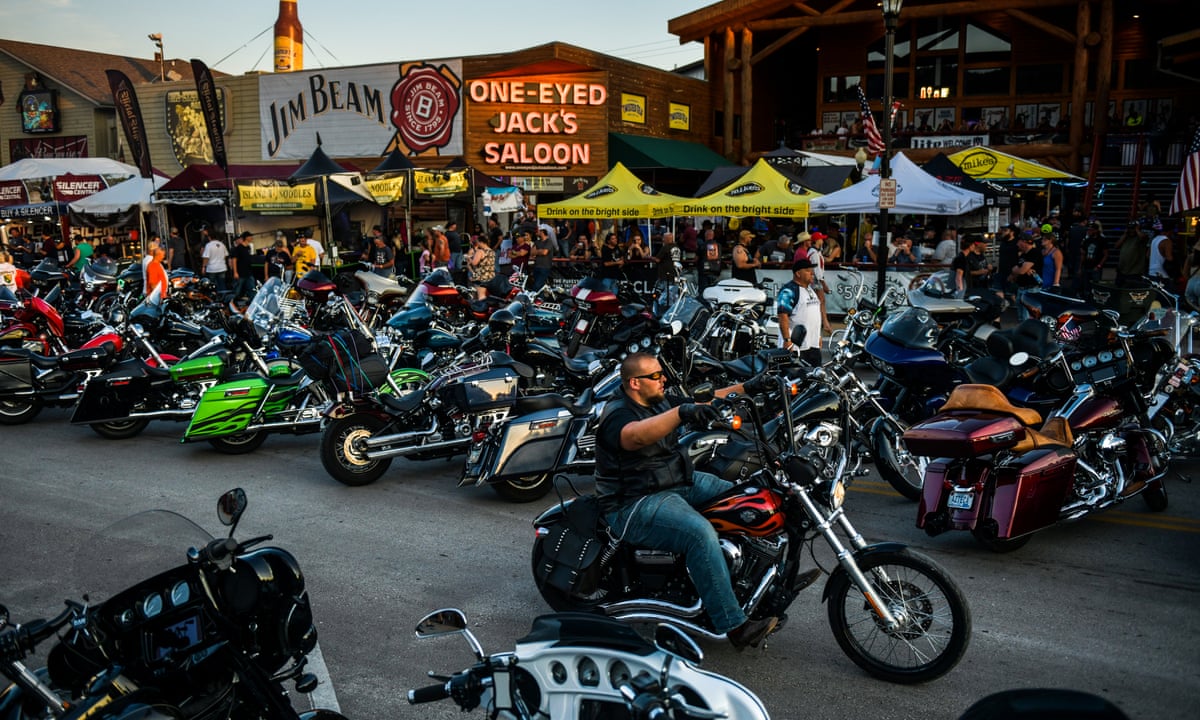
But in some places, people have been throwing Covid cautions to the wind, flouting public health orders in the process. Kristen Ehresmann, director of infectious disease epidemiology, prevention, and control for the Minnesota Department of Health, points to a large, three-day rodeo that was held recently in her state. Organizers knew they were supposed to limit the number of attendees to 250 but refused; thousands attended. In Sturgis, S.D., an estimated quarter of a million motorcyclists were expected to descend on the city this past weekend for an annual rally that spans 10 days.

Even on smaller scales, public health authorities know some people are letting down their guard. Others have never embraced the need to try to prevent spread of the virus. Ehresmann’s father was recently invited to visit some friends; he went, she said, but wore his mask, elbow bumping instead of shaking proffered hands. “And the people kind of acted like, … ‘Oh, you drank that Kool-Aid,’ rather than, ‘We all need to be doing this.’”

Ehresmann and others in public health are flummoxed by the phenomenon of people refusing to acknowledge the risk the virus poses.

“Just this idea of, ‘I just don’t want to believe it so therefore it’s not going to be true’ — honestly, I have not really dealt with that as it relates to disease before,” she said.

Buckee, the Harvard expert, wonders if the magical thinking that seems to have infected swaths of the country is due to the fact many of the people who have died were elderly. For many Americans, she said, the disease has not yet touched their lives — but the movement restrictions and other response measures have.

“I think if children were dying, this would be … a different situation, quite honestly,” she said.

Epidemiologist Michael Mina despairs that an important chance to wrestle the virus under control is being lost, as Americans ignore the realities of the pandemic in favor of trying to resume pre-Covid life.

“We just continue to squander every bit of opportunity we get with this epidemic to get it under control,’’ said Mina, an assistant professor in Harvard’s T.H. Chan School of Public Health and associate medical director of clinical microbiology at Boston’s Brigham and Women’s Hospital.

“The best time to squash a pandemic is when the environmental characteristics slow transmission. It’s your one opportunity in the year, really, to leverage that extra assistance and get transmission under control,” he said, his frustration audible.

Driving back transmission would require people to continue to make sacrifices, to accept the fact that life post-Covid cannot proceed as normal, not while so many people remain vulnerable to the virus. Instead, people are giddily throwing off the shackles of coronavirus suppression efforts, seemingly convinced that a few weeks of sacrifice during the spring was a one-time solution.

Osterholm has for months warned that people were being misled about how long the restrictions on daily life would need to be in place. He now thinks the time has come for another lockdown. “What we did before and more,” he said.

The country has fallen into a dangerous pattern, Osterholm said, where a spike in cases in a location leads to some temporary restraint from people who eventually become alarmed enough to start to take precautions. But as soon as cases start to plateau or decline a little, victory over the virus is declared and people think it’s safe to resume normal life.

“It’s like an all or nothing phenomenon, right?” said Anthony Fauci, director of the National Institute for Allergy and Infectious Diseases. “You all locked down or you get so discouraged with being lockdown that you decide you’re going to be in crowded bars … you can have indoor parties with no masks. You can do all the things that are going to get you in trouble.”

Osterholm said with the K-12 school year resuming in some parts of the country or set to start — along with universities — in a few weeks, transmission will take off and cases will start to climb again. He predicted the next peaks will “exceed by far the peak we have just experienced. Winter is only going to reinforce that. Indoor air,” he said.

Buckee thinks that if the country doesn’t alter the trajectory it is on, more shutdowns are inevitable. “I can’t see a way that we’re going to have restaurants and bars open in the winter, frankly. We’ll have resurgence. Everything will get shut down again.”

Fauci favors a reset of the reopening measures, with a strong messaging component aimed at explaining to people why driving down transmission now will pay off later. Young people in particular need to understand that even if they are less likely to die from Covid-19, statistically speaking, transmission among 20-somethings will eventually lead to infections among their parents and grandparents, where the risk of severe infections and fatal outcomes is higher. (Young people can also develop long-term health problems as a result of the virus.)

“It’s not them alone in a vacuum,” Fauci said. “They are spreading it to the people who are going to wind up in the hospital.”

Everyone has to work together to get cases down to more manageable levels, if the country hopes to avoid “a disastrous winter,” he said.

“I think we can get it under much better control, between now and the mid-to-late fall when we get influenza or we get whatever it is we get in the fall and the winter. I’m not giving up,” said Fauci.

But without an all-in effort “the cases are not going to come down,” he warned. “They’re not. They’re just not.”


Indoor air is the next coronavirus frontline

https://www.axios.com/airborne-transmission-coronavirus-covid-indoor-c47e2763-a62d-4861-84e7-fc19feace3fc.html

Indoor air is the next coronavirus frontline - Axios

A growing body of research has made it clear that airborne transmission of the coronavirus is possible.

Why it matters: That fact means indoor spaces can become hot spots. Those spaces also happen to be where most business and schooling takes place, so any hope for a return to normality will require better ways of filtering indoor air.

What’s happening: After a concerted campaign by scientists, the WHO last month updated its guidelines on COVID-19 to include the possibility that the coronavirus could be airborne.

  • That marked a shift from initial assumptions that the virus was mostly transmitted via contaminated surfaces and respiratory droplets emitted at close range, like an infected person coughing near someone susceptible.
  • More evidence was added to the airborne hypothesis last week, when researchers at the University of Nebraska Medical Center reported in a paper published in Nature that they had found coronavirus-filled aerosols — small airborne particles of fluid — in the air of COVID-19 patients’ hospital rooms.
  • It’s still not clear just how much or how often the airborne transmission happens, a question Anthony Fauci has said the White House coronavirus task force will examine.

Context: If coronavirus-contaminated aerosols can indeed hang in the air, perhaps for hours, then “mitigating airborne transmission should be at the front of our disease-control strategies for COVID-19,” Joseph Allen of Harvard’s Healthy Building program wrote in the Washington Post.

  • Schools in particular “definitely present a challenge,” says Barry Po, president of connected solutions for mCloud Technologies, a provider of cloud-based remote HVAC management. Many school buildings in the U.S. are old and poorly ventilated, which makes them prime locations for indoor transmission.

The good news is there are existing technologies that can filter out or destroy coronavirus trapped in indoor air.

  • The easiest way is simply opening windows whenever possible, which dilutes the amount of virus in the air. In Japan windows are kept open in subway trains, which has helped prevent outbreaks in the country’s crowded transit system.
  • Portable HEPA filters, which can cost as little as a few hundred dollars, are capable of capturing particles as small as the novel coronavirus and could be used to clean individual classrooms.
  • Commercial HVAC systems can be adjusted to increase the number of times they exchange air per hour, analysts from McKinsey said in a report last month.

The catch: Increasing ventilation decreases energy efficiency, and Po estimates that net energy costs for buildings could increase by at least 10% in the COVID-19 era.

A more high-tech solution involves the use of specialized UV light to deactivate coronavirus in the air or on surfaces.

  • Fred Maxik, the founder of Healthe Lighting, developed Far UVC 222, a short-wave UV light spectrum that the company reports can neutralize 99.9% of coronavirus in a space. The UV light breaks the chemical bonds in the virus, Maxik says, making it incapable of replicating.
  • Unlike the UVB rays in sunlight that can damage DNA and cause skin cancer, Far UVC 222 doesn’t penetrate the human body.
  • The Healthe system has been installed in Seattle’s reopening Space Needle, as well as the practice facilities of the Miami Dolphins. “This is one of the only methodologies where we can continually clean a space in real time,” says Maxik.

The bottom line: Despite the runs early in the pandemic on Clorox wipes, it may be the air we breathe more than the surfaces we touch that need to be kept clean.


How to do smarter coronavirus testing

https://www.axios.com/smarter-coronavirus-testing-69c9042c-f9d4-4dc2-b4c9-84106b3c33e0.html

I got a positive COVID-19 antibody test. What do I do with that ...


With testing once again a huge vulnerability to America’s coronavirus response, public health officials are calling for a revamped strategy that features the use of more tests, even if they’re imperfect.

Why it matters: The system is overwhelmed by the demand for tests, and yet prolific testing is key to identifying asymptomatic or pre-symptomatic coronavirus cases. Experts say the solution is smarter testing — which doesn’t require perfect accuracy.

The big picture: Most coronavirus diagnostic tests right now are PCR tests, which are highly accurate, but relatively slow and expensive. But other kinds of tests exist; they just carry the risk of more false negatives.

  • Some experts argue that, when doing mass testing, the tests don’t need to be 100% accurate. Catching, for example, even 50% of unidentified cases is better than the much-lower percentage that we’re catching today.

Between the lines: Strategy is key, and who gets which test matters.

  • In a white paper calling for a national testing strategy, former FDA Commissioner Mark McClellan, Johns Hopkins’ Caitlin Rivers and Duke’s Christina Silcox last week wrote that symptomatic patients and people who are close contacts of known cases should still receive PCR or other highly-accurate diagnostic tests.
  • But “for people without symptoms, we also need broad availability of more rapid but sometimes less accurate screening tests … to detect outbreaks sooner and give people more confidence in their workplaces and schools,” they write.

Details: There are several alternative testing options. Antigen tests are faster and cheaper than PCR tests, but less accurate. The FDA has already authorized two companies to sell antigen tests, per Science, and others are in the pipeline.

  • Pool testing is another way to stretch limited resources.

Yes, but: Many insurers don’t pay for tests that aren’t “medically necessary,” which generally includes screening or surveillance testing.

  • The absence of a guaranteed demand could be depressing the creation and mass production of these alternative tests.
  • “Without clear funding or screening protocols, test manufacturers are not getting a clear signal for investing in much larger testing capacity for the months ahead,” McClellan, Rivers and Silcox write.

What we’re watching: Six states announced last week that, in the absence of a national testing strategy, they’re banding together in partnership with the Rockefeller Foundation to buy 3 million rapid point-of-care antigen tests.

  • If this goes well, it could provide a model for how states — or even the federal government — can evolve their testing strategies.


Executive Orders won’t cut it. Congress needs to make a deal.

https://www.washingtonpost.com/opinions/trumps-executive-orders-wont-cut-it-congress-needs-to-make-a-deal/2020/08/08/3ad733d4-d98e-11ea-9c3b-dfc394c03988_story.html

One $1,200 stimulus check won't cut it. Give Americans $2,000 a ...

AN INK-BLOT test of sorts on the U.S. economic situation, the July unemployment numbers can be seen optimistically or pessimistically. The jobless rate of 10.2 percent and the net total of new jobs created of 1.76 million were both slightly better than forecast. At the same time, the rate of recovery was slower than in June, when 4.8 million jobs came back.

The rational response for both Democrats and the White House is to stay focused on the big picture: however you look at last month, total employment is 13 million below what it was in February, the last full month before pandemic-related business shutdowns began. The economy remains too weak to recover its lost ground without another substantial injection of federal money.

Yet an impasse continues between congressional Democrats, who previously passed a $3.4 trillion package, and the White House, whose position is in flux but was at least partly defined in a $1.1 trillion bill unveiled by Senate Majority Leader Mitch McConnell (R-Ky.) last month. In hindsight, everyone would have been better off if Mr. McConnell had engaged earlier this year. Sensing the national political tide flowing their way, House Speaker Nancy Pelosi (D-Calif.) and Senate Minority Leader Charles E. Schumer (D-N.Y.) are driving a hard bargain, refusing, for now, to compromise on a key issue: how to renew the $600-per-week unemployment insurance (UI) supplement.

President Trump, desperate for negotiating leverage, and a political comeback, announced Saturday that he was resorting to executive action to impose a scaled-back version of UI, renewing the supplement at a reduced rate. The president also said he intends to suspend the payroll tax, beginning next month, which even Republicans in Congress regard as an ineffective trickle of relief. Even if Mr. Trump can be do these things lawfully — a doubtful proposition — they are likely to create more uncertainty at a time when the economy, and the country, need the opposite. Congress should continue working toward a permanent fix on UI and other pressing needs.

Those needs are clear and far from fully addressed by Mr. Trump’s unilateral action: a renewal of unemployment benefits at an elevated rate without disincentives to work; help to state and local governments ; support for small businesses; money for safe school reopenings where possible; funding for safe and fair elections in this unique public health environment; and an enhancement to housing and nutrition programs, targeted at the poorest Americans.

Though a faction of congressional Republicans oppose such spending, based on selective concern about the federal debt, others recognize the need — if only to aid the party’s dwindling chances of holding the White House and Senate. Democratic leaders on Friday indicated a willingness to reduce their bill’s cost by $1 trillion over 10 years, if Republicans would raise theirs by the same amount. That would mean a roughly $2 trillion deal. It’s a place to start when talks get serious, which they should have long ago.


Cartoon – Unemployment Insurance vs. Raising the Minimum Wage

If you make less than $600 week, you’re underpaid. Period.

No photo description available.

‘If We Get It, We Chose to Be Here’: Despite Virus, Thousands Converge on Sturgis for Huge Rally

Thousands of bikers heading to South Dakota rally to be blocked at ...

Tens of thousands of motorcyclists roared into the western South Dakota community on Friday, lining Main Street from end to end, for the start of the annual Sturgis Motorcycle Rally.

Tens of thousands of motorcyclists roared into the western South Dakota community of Sturgis on Friday, lining Main Street from end to end, for the start of an annual rally that kicked off despite objections from residents and with little regard for a public health emergency ravaging the world.

It could have been any other past summer rally in Sturgis, with herds of R.V.s, bikers and classic cars converging for the Sturgis Motorcycle Rally, a 10-day affair that was expected to attract roughly 250,000 enthusiasts this year — about half the number who attended last year but a figure that puts it on track to be among the country’s largest public gatherings since the first coronavirus cases emerged in the spring.

Save for a few hard-to-spot hand-sanitizer stations, it could have been any other major festival in pre-pandemic times.

Hot Leathers Screw Covid Lets Ride Coronavirus Motorcycle T-Shirt

“Screw Covid I went to Sturgis,” read a black T-shirt amid a sea of Harley Davidson and Trump 2020 outfits sported by the throng of people walking along Main Street. Their gear did not include face masks, and social distancing guidelines were completely ignored.

South Dakota is among several states that did not put in place a lockdown, and state officials have not required residents to wear masks, giving attendees who rode in from outside the state fewer restrictions than they may have had back home.

Attendance on Friday was on par with previous years, said Dan Ainslie, City Manager for Sturgis.

“It’s kind of like a typical rally,” Mr. Ainslie said of the number of people coming into town, “and the crowds are still building.”

Indeed, fears that the rally could be a superspreader event did not appear to scare riders from attending. Bikers flocked to tents featuring tattoo artists, apparel, gear and food.

Health experts say the coronavirus is less likely to spread outdoors, especially when people wear masks and socially distance. But large gatherings like the motorcycle rally also increase the number of visitors inside restaurants and stores. A few businesses in Sturgis put up signs limiting the number of customers who could enter, but most did not post such notices.

Over the past week, there has been an average of 84 coronavirus cases per day in South Dakota, a 31 percent increase over the previous two weeks. At least four new virus deaths and 105 new cases were reported on Thursday.

Gov. Kristi Noem, a Republican, encouraged people to attend the rally in an interview on Fox News on Wednesday night, saying the state had successfully hosted other large events — including a Fourth of July celebration at Mount Rushmore that President Trump attended — without seeing a direct increase in virus cases. Plus, she said, the state’s economy benefits when people visit.

The state’s Department of Tourism has estimated that the annual festival generates about $800 million in revenue.

The rally, which has taken place every summer in Sturgis since 1938, commenced amid strong objections from residents. In a city-sponsored survey, more than 60 percent of the nearly 7,000 residents favored postponing the event.

Little could be done to stop the event, said Doreen Allison Creed, the Meade County commissioner who represents Sturgis. Ms. Creed said the county lacked the authority to shut down the rally because much of it takes place on state-licensed campgrounds.

When it became clear that it would go on as planned, the city said in a news release that changes would be made to safeguard residents from the coronavirus, including adding hand-sanitizing stations to the downtown area. The city plans to offer coronavirus testing for its residents once the rally concludes on Aug. 16.

While the most recent Centers for Disease Control and Prevention guidelines do not suggest a specific limit for the number of attendees at gatherings or community events, they encourage organizers to maintain a capacity conducive to reducing the spread of the virus. The agency encourages people to socially distance at six feet apart and wear masks.

“Attendees will be asked to be respectful of the community concerns by practicing social distancing and taking personal responsibility for their health by following C.D.C. guidelines,” the news release said.

But on Friday, throngs of ralliers parked their bikes and walked shoulder to shoulder along the downtown streets, nary a mask in sight. Police officers stationed at the intersections also were not wearing masks.

Bruce Labsa, 66, drove from North Carolina last week to be among the first in town. This was the first year he would be able to attend the rally since retiring, and he did not want to miss it. On Friday, he was not wearing a mask, and he said he had no concerns about catching the coronavirus.

“I don’t know anyone who’s had it,” Mr. Labsa said.

Amy Svoboda, 27, who was working in a women’s apparel shop for bikers called One Sexy Biker Chick, said Friday’s crowd of shoppers had been steady. She said she didn’t know what to expect, but was happy to see people turning out.

“We are allowed to make our own choices,” she said. “If we get it, we chose to be here.”

Still, Nelson Horsley, 26, of Rapid City, S.D., said he expects there will be a rise in coronavirus cases in the area once the rally concludes next weekend. But he said he didn’t feel the need to wear a mask while walking around downtown Friday afternoon. He compared the virus to getting the seasonal flu.

“I haven’t seen anyone out here wear a mask so it kind of feels like it defeats the purpose,” he said, to wear a mask himself.

While most residents opposed the rally, some offered their front yards as camp sites for bikers who were unable to find a hotel room. But many others said they were worried about the impact the rally would eventually have on the small community.

Among those was Patricia Viator, 64, who has lived in Sturgis for 16 years. She said she became resigned to the fact that there was nothing residents could do to keep thousands of bikers from coming to the city. She said she’s worried for her family and the town, and she takes several precautions when leaving her house, including wearing a mask.

“It scares me more than before because we don’t have many cases around here, but now this increases the chances of us locals getting it,” she said.


US surpasses 5 million coronavirus cases

US surpasses 5 million coronavirus cases

The U.S. has recorded more than 5 million coronavirus cases since the start of the outbreak in the country, according to data compiled by Johns Hopkins University.

More than 1.5 million people have recovered from the disease in the country while the U.S. has also reported more than 162,000 coronavirus-related deaths, according to Johns Hopkins.

The U.S. has reported the most confirmed COVID-19 cases and deaths of any other country. The number of new infections across the U.S. have showed signs of easing recently, though the number of cases remains at a high level compared to earlier in the pandemic.

In some states, governors responded to spikes in June and July by implementing mandatory statewide mask policies and reimposing a number of restrictions. Other states, however, have largely kept nonessential businesses open despite the summer uptick.

In Georgia, for example, Gov. Brian Kemp (R) refused to implement a statewide mask mandate despite COVID-19 spikes and has sought to prohibit localities from imposing similar orders.

In Florida, another hotspot for the virus, Gov. Ron DeSantis (R) declined to impose a statewide order, though some local leaders across the state have put in place mandatory face covering requirements.

States like Florida, Arizona and Texas saw their peak in cases in mid- and late July, though they have dropped the past couple weeks. For many states, the number of cases has started to trend downward, though is at a high level, underscoring the difficulty of quickly getting the disease under control.

President Trump maintained in an interview with Axios released Monday that the pandemic is “under control as much as you can control it” in the U.S., saying that the death toll “is what it is.”

“They are dying, that’s true. And you have — it is what it is,” he said. “But that doesn’t mean we aren’t doing everything we can. It’s under control as much as you can control it. This is a horrible plague.”

The interview was recorded before the coronavirus-related death toll in the U.S. surpassed 150,000. 

Trump has touted the push for developing a vaccine by the end of the year. He said Thursday he believes a vaccine will be ready around Election Day in November.