Two lawmakers test positive for coronavirus, one after receiving both doses of vaccine

Politics - The Washington Post

Two members of Congress from Massachusetts have tested positive for the coronavirus, one after receiving both doses of the vaccine, a reminder that people can still be vulnerable to infection after being vaccinated, particularly in the two weeks after receiving the second dose.

Rep. Stephen F. Lynch (D-Mass.) tested positive for the virus on Friday afternoon after a staff member in his Boston office tested positive earlier in the week, his spokeswoman Molly Rose Tarpey said.

Lynch received a second dose of the Pfizer-BioNTech vaccine before the inauguration of President Biden on Jan. 20, but his office declined to specify the date it was administered. Lynch had tested negative for the virus before attending the inaugural ceremonies, Tarpey said.

“While Mr. Lynch remains asymptomatic and feels fine, he will self-quarantine and will vote by proxy in Congress during the coming week,” she said.

Tarpey added that Lynch “has followed CDC guidelines and continues to do so since he received the vaccine.”

Another Democrat from Massachusetts, Rep. Lori Trahan, announced Thursday that she had tested positive for the virus and was asymptomatic. Trahan, whose staff members have been working remotely, also said she planned to vote by proxy next week.

“I encourage everyone to continue taking this virus seriously and to follow the science and data-driven guidance to wear a mask, maintain a safe social distance from others, avoid large gatherings and stay home whenever possible,” Trahan said.

Trahan received her first shot of one of the vaccines last week, spokeswoman Francis Grubar told The Washington Post.

Occasional cases of people testing positive after receiving one or both doses are not unexpected, medical experts say. Clinical trial data published by Pfizer show that the vaccine is about 52 percent effective at preventing illness after the first shot, compared to 95 percent effectiveness seven days after the second dose.

A small number of patients can still become mildly sick even after they are fully vaccinated. But only one of the roughly 20,000 people who received both doses in the clinical trial developed severe covid-19, suggesting the vaccine is powerful protection against the most dangerous cases of the disease.

Members of Congress began getting vaccinated as early as Dec. 18, but Lynch at the time said he was “waiting for the vaccine to be first offered to health care personnel, first responders and vulnerable seniors” in his district, the Boston Herald reported. It is unclear when Lynch ultimately received his first dose of the vaccine; he would have received the second dose of the Pfizer-BioNTech vaccine about three to four weeks after the first.

Public health experts have emphasized that it usually takes one week after the second dose of the Pfizer-BioNTech vaccine to reach 95 percent efficacy and two weeks after the second dose of the Moderna vaccine to reach 94 percent efficacy.

“There’s no vaccine that I know that protects you the same day you get it,” Onyema Ogbuagu, the principal investigator for Pfizer’s vaccine trial at Yale University, told The Post’s Allyson Chiu. “On a population level, 95% efficacy still translates to 5/100, or 50/1,000, or 500/10,000 vaccinated persons still being vulnerable to symptomatic disease and maybe even more having asymptomatic carriage.”

At least 23.2 million people in the United States have received one or both doses of the vaccine. The Centers for Disease Control and Prevention recommends that vaccinated people continue to wear masks, socially distance, avoid poorly ventilated spaces and wash their hands frequently to prevent the spread of the virus.

“We also don’t yet know whether getting a covid-19 vaccine will prevent you from spreading the virus that causes covid-19 to other people, even if you don’t get sick yourself,” CDC guidelines state. “While experts learn more about the protection that covid-19 vaccines provide under real-life conditions, it will be important for everyone to continue using all the tools available to help stop this pandemic.”

Mask-wearing in particular has become politicized, including in the hallways of Congress. After the Jan. 6 siege at the Capitol, several Democrats said they feared they had been exposed to the virus after sheltering with Republican lawmakers who refused to wear masks. In the following, at least three lawmakers tested positive for the virus.

On Friday, Rep. Cori Bush (D-Mo.) accused Rep. Marjorie Taylor Greene (R-Ga.) of berating her in the hallways after she told Greene to put on a mask. The incident, coupled with other hostile rhetoric and Greene’s refusal to abide by rules and protocols put in place because of the pandemic, prompted Bush to decide to move her office away from Greene’s for safety reasons, the Missouri lawmaker said.

My Parents Will Be Vaccinated Long Before Me. Can They Come Visit?

Can I Visit People Who Are Vaccinated During COVID-19? | Time

Welcome to COVID Questions, TIME’s advice column. We’re trying to make living through the pandemic a little easier, with expert-backed answers to your toughest coronavirus-related dilemmas. While we can’t and don’t offer medical advice—those questions should go to your doctor—we hope this column will help you sort through this stressful and confusing time. Got a question? Write to us at covidquestions@time.com.

Today, E.B. in New York asks:

My parents and in-laws will hopefully be vaccinated soon. My husband and toddler and I don’t expect to be vaccinated for quite some time. How should we think about whether it’s safe to spend time together in a mixed-vaccinated group? Could they get on a plane and fly to visit with us unmasked and indoors? Or is there enough risk that we should wait until we are all vaccinated (which may be a very long time especially with children in the mix)? Or split the difference and take some precautions?

To state the obvious, we are in a strange limbo state right now. The vaccines we’ve eagerly awaited for almost a year are here, and yet…nothing about our daily lives has really changed. Unfortunately, that’s going to be the case for a bit longer.

“The end is in sight,” says Dr. Colleen Kelley, a vaccine researcher and associate professor of infectious diseases at the Emory University School of Medicine in Georgia. “I just don’t know that it’s right now.”

Your loved ones getting vaccinated is unequivocally a step forward, Kelley says. It would certainly be safer to visit with your parents or in-laws after they’ve gotten both vaccine doses, but the safest plan is to wait until you and your husband are also vaccinated, she says.

The two coronavirus vaccines currently authorized for use in the U.S.—those made by Pfizer-BioNTech and Moderna—are both extremely effective at preventing people from getting sick with COVID-19. That’s a huge benefit on its own, especially for people at high risk of severe illness, such as elderly adults and people with underlying medical conditions.

But the outstanding question is whether COVID-19 vaccines also stop people from getting asymptomatically infected with the virusEarly evidence suggests both shots offer at least some protection against asymptomatic infection, and many experts are optimistic about their chances of stopping transmission, but the data are still coming together.

If the shots turn out not to stop asymptomatic infections entirely, even your vaccinated parents could feasibly get your family sick if they picked something up while traveling to see you. Or, if you happened to be exposed to the virus, your parents could potentially carry it and pass it to others. And, while the authorized COVID-19 vaccines are very effective, there is always a tiny chance of them failing, leaving your parents at risk of illness.

These are all worst-case scenarios, of course. But given the uncertainty and the extent to which COVID-19 is still spreading in the U.S., Kelley says you should wait a little while longer to visit with your parents and in-laws. If that’s not possible, you should take the same precautions you’ve been hearing about for a year: quarantining beforehand, and ideally staying outdoors and masked when possible.

Here’s the good news, though. Once you and your husband are fully vaccinated (along with more of the general population), Kelley says you can feel much better about spending time with other vaccinated people indoors and unmasked—even if your toddler isn’t yet vaccinated.

As you suggest, it may be a while before kids younger than 16 are eligible for COVID-19 vaccination, since pharmaceutical companies haven’t yet finished testing their shots on younger children. But “if the toddler is the only one who’s not vaccinated, I would say that’s a pretty darn safe scenario,” Kelley says.

Luckily, young kids rarely get seriously ill with COVID-19, so once all the adults in the room are fully protected, Kelley says you can feel pretty comfortable with your parents or in-laws coming for a visit.

“We’re not going to get to a zero-risk situation,” Kelley says, “but we are going to get to places that are safer and safer.”

Deborah Birx says Trump received a “parallel set of data” on the coronavirus

https://www.washingtonpost.com/politics/2021/01/25/health-202-hospitals-drag-feet-new-regulations-disclose-costs-medical-services/

The former White House coronavirus response coordinator told CBS News’s “Face The Nation” that she saw Trump presenting graphs about the coronavirus that she did not help make. Someone inside or outside of the administration, she said, “was creating a parallel set of data and graphics that were shown to the president.”

Birx also said that there were people in the White House who believed the coronavirus was a hoax and that she was one of only two people in the White House who routinely wore masks.

Birx was often caught between criticism from Trump, who at one point called her “pathetic” on Twitter when she contradicted his more optimistic predictions for the virus, and critics in the scientific community who thought she did not do enough to combat false information about the virus from TrumpThe Post’s Meryl Kornfield reports.

“Colleagues of mine that I’d known for decades — decades — in that one experience, because I was in the White House, decided that I had become this political person, even though they had known me forever,” she told CBS. “I had to ask myself every morning, ‘Is there something that I think I can do that would be helpful in responding to this pandemic?’ And it’s something I asked myself every night.”

Anthony Fauci, director of the National Institute of Allergy and Infectious Diseases, told the New York Times that Trump repeatedly tried to minimize the severity of the virus and would often chide him for not being positive enough in his statements about the virus. 

Fauci also described facing death threats as he was increasingly vilified by the president’s supporters. “One day I got a letter in the mail, I opened it up and a puff of powder came all over my face and my chest,” he said. The powder turned out to be benign.

Fauci: Lack of facts ‘likely did’ cost lives in coronavirus fight

Fauci: Lack of facts 'likely did' cost lives in coronavirus fight | TheHill

Anthony Fauci on Friday said that a lack of facts “likely did” cost lives over the last year in the nation’s efforts to fight the coronavirus pandemic.

In an appearance on CNN, the nation’s leading infectious diseases expert was directly asked whether a “lack of candor or facts” contributed to the number of lives lost during the coronavirus pandemic over the past year.

“You know it very likely did,” Fauci said. “You know I don’t want that … to be a sound bite, but I think if you just look at that, you can see that when you’re starting to go down paths that are not based on any science at all, that is not helpful at all, and particularly when you’re in a situation of almost being in a crisis with the number of cases and hospitalizations and deaths that we have.”

“When you start talking about things that make no sense medically and no sense scientifically, that clearly is not helpful,” he continued.

President Biden on Thursday unveiled a new national coronavirus strategy that is, in part, aimed at “restoring trust in the American people.”

When asked why that was important, Fauci recognized that the past year of dealing with the pandemic had been filled with divisiveness.

“There’s no secret. We’ve had a lot of divisiveness, we’ve had facts that were very, very clear that were questioned. People were not trusting what health officials were saying, there was great divisiveness, masks became a political issue,” Fauci said.

“So what the president was saying right from the get-go was, ‘Let’s reset this. Let everybody get on the same page, trust each other, let the science speak.’”

Fauci, who was thrust into the national spotlight last year as part of former President Trump‘s coronavirus task force, often found himself at odds with the former president. Trump frequently downplayed the severity of the virus and clashed publicly with Fauci.

Speaking during a White House press briefing on Thursday, Fauci said it was “liberating” to be working in the Biden administration.

There have been more than 24,600,000 coronavirus infections in the U.S. since the pandemic began, according to a count from Johns Hopkins University. More than 410,000 people have died.

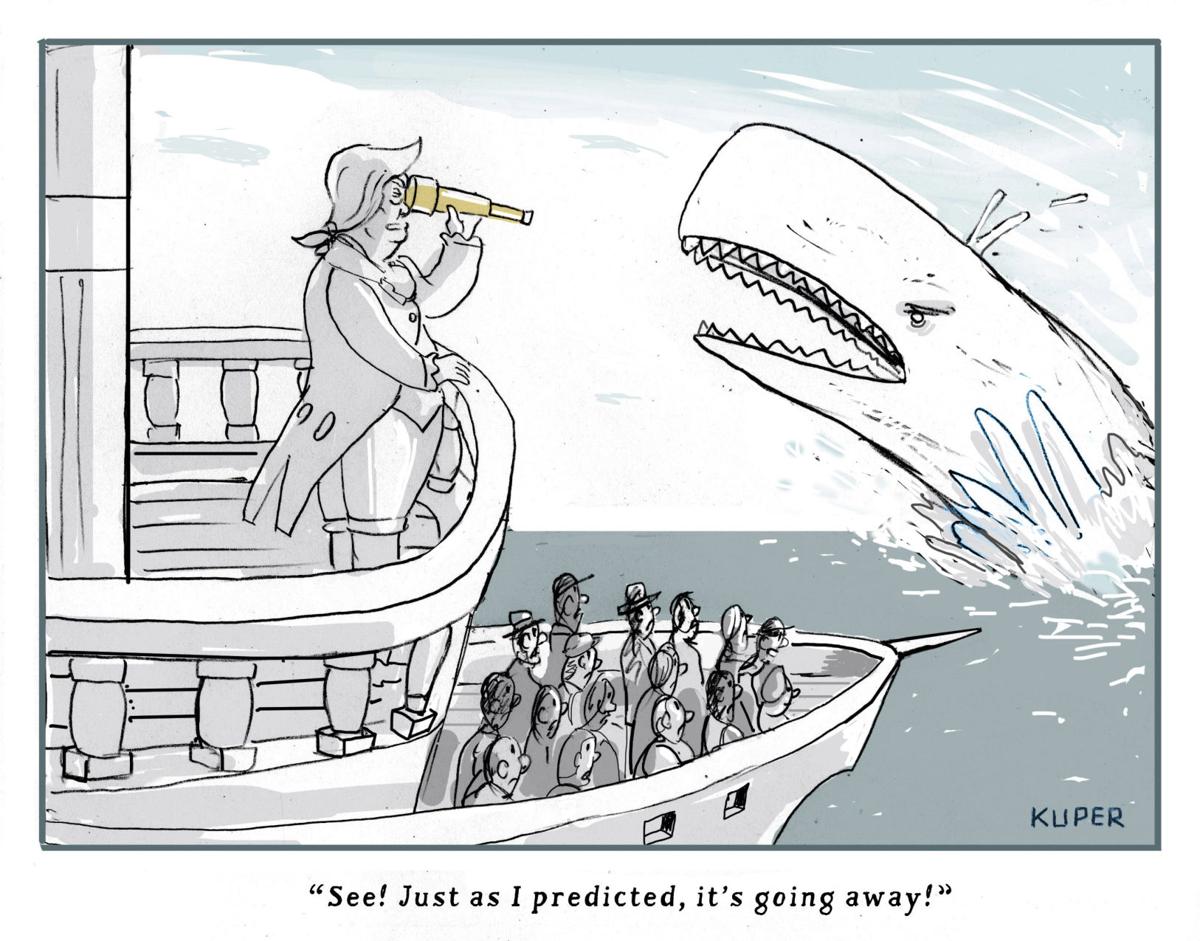
Cartoon – History Repeating Itself (Covid-19)

Editorial Cartoon: COVID-19 returns | Opinion | dailyastorian.com

Cartoon – Coronavirus Death Toll

Coronavirus cartoons: Trump's ratings jump amid big job losses

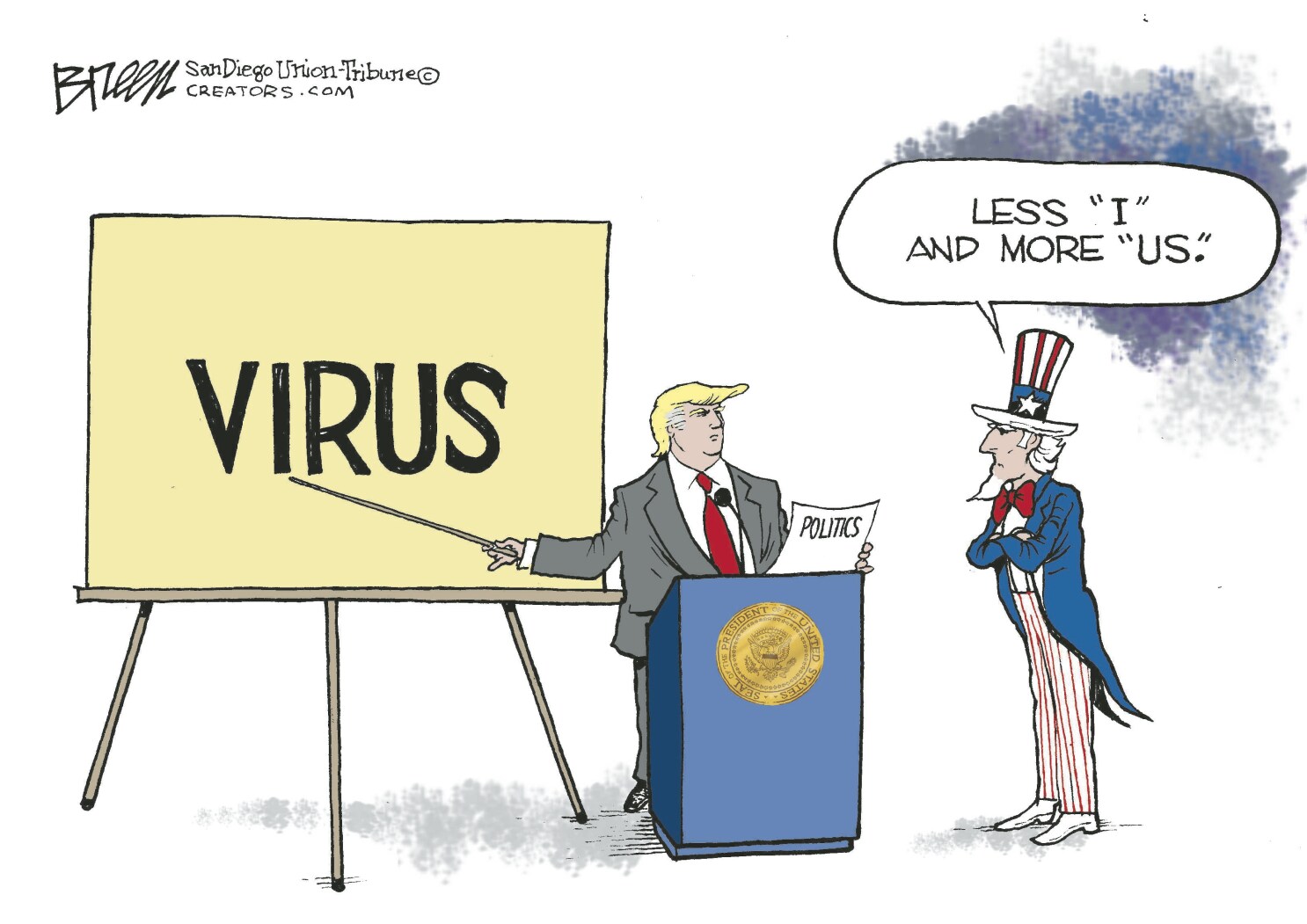
Cartoon – Less “I” and more “US.”

Trump's coronavirus press conference less than inspiring - The San Diego  Union-Tribune

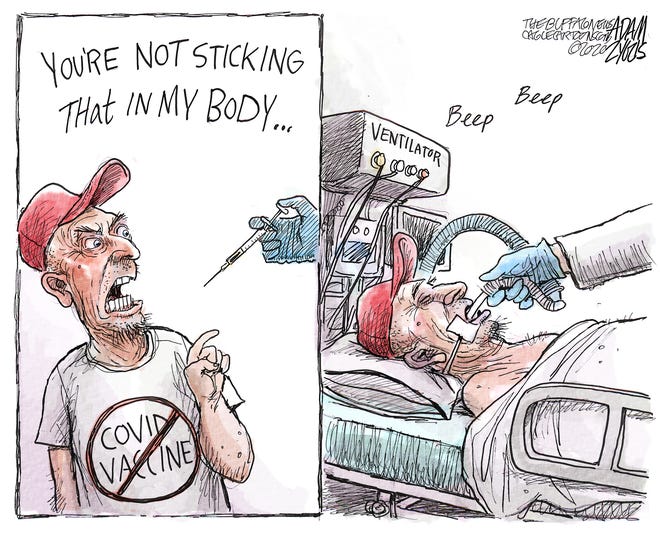
Cartoon – Sign of the Times on Covid Vaccine Hesitancy

Editorial cartoon: COVID-19 vaccines

Early evidence on disparities in vaccine acceptance

https://mailchi.mp/128c649c0cb4/the-weekly-gist-january-22-2021?e=d1e747d2d8

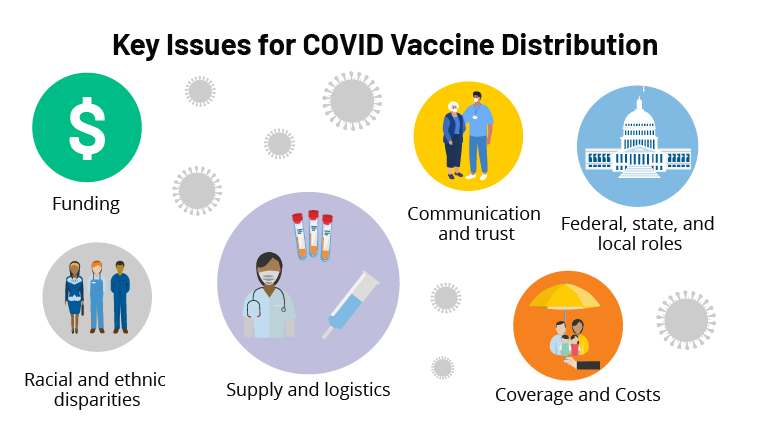
Distributing a COVID-19 Vaccine Across the U.S. – A Look at Key Issues –  Issue Brief – 9563 | KFF

Although only 17 states are currently reporting data on the racial and ethnic breakdown of vaccine recipients, the early data indicate that there are significant disparities in who is getting vaccinated, with the share of Black and Latino people among vaccinees lower than their share of the total population in those states.

Alarmingly, in our recent conversations with health system executives, those same disparities seem to be present among healthcare workers employed by hospitals and health systems. Anecdotally, across a half-dozen health systems we’ve spoken with in the past week, most report that they’ve had about 70 percent of their workers agree to get the first dose of the COVID-19 vaccine.

However, that number looks significantly different when broken down by race and ethnicity: on average, the uptake rate among White, Asian, and Pacific Islander workers has been closer to 90-95 percent, while among Black and Latino workers, it’s been closer to 30-40 percent. Bear in mind these are employees of health systems—in many cases they’re frontline caregivers—and given their work environments you might expect them to be less hesitant to get the vaccine.

That 30-40 percent uptake rate is very worrisome, in two ways: caregivers outside of hospital settings, especially home care and nursing home workers, likely include a larger number of workers hesitant to get vaccinated. And in the general population, among whom health literacy is presumably much lower than among healthcare workers, it’s precisely those populations who are at highest risk of COVID infection, hospitalization, and death. (A further complication: health systems made it easy for their employees to get the shot. With vaccines for the general population still scarce, at-risk populations will inevitably have the most difficult time getting signed up, even if they want the vaccine.)

If health systems are the canary in the coal mine for vaccine hesitancy rateswe’re in for a tough challenge in getting the most vulnerable populations vaccinated in the months to come.