The Fundamental Problem at the Heart of American Health Insurance

Administrative waste, denials, and deadly incentives — the U.S. model shows what happens when profit rules.

The United States is the only country where a health insurance executive has been gunned down in the street. But that’s not the only thing that’s unique about American health insurance.

Almost all of our peer countries – advanced, free-market democracies — have health insurance companies. In some cases (Germany, Switzerland, Japan), private health insurance is the chief way to pay for medical care. In others (such as Great Britain), private insurance works as a supplement to government-run health care systems. But there’s a fundamental difference between health insurance elsewhere and the U.S. system. 

In all the other advanced democracies, basic health insurance is not for profit; the insurers are essentially charities. They exist not to pay large sums to executives and investors, but rather to keep the population healthy by assuring that everyone can get medical care when it’s needed. 

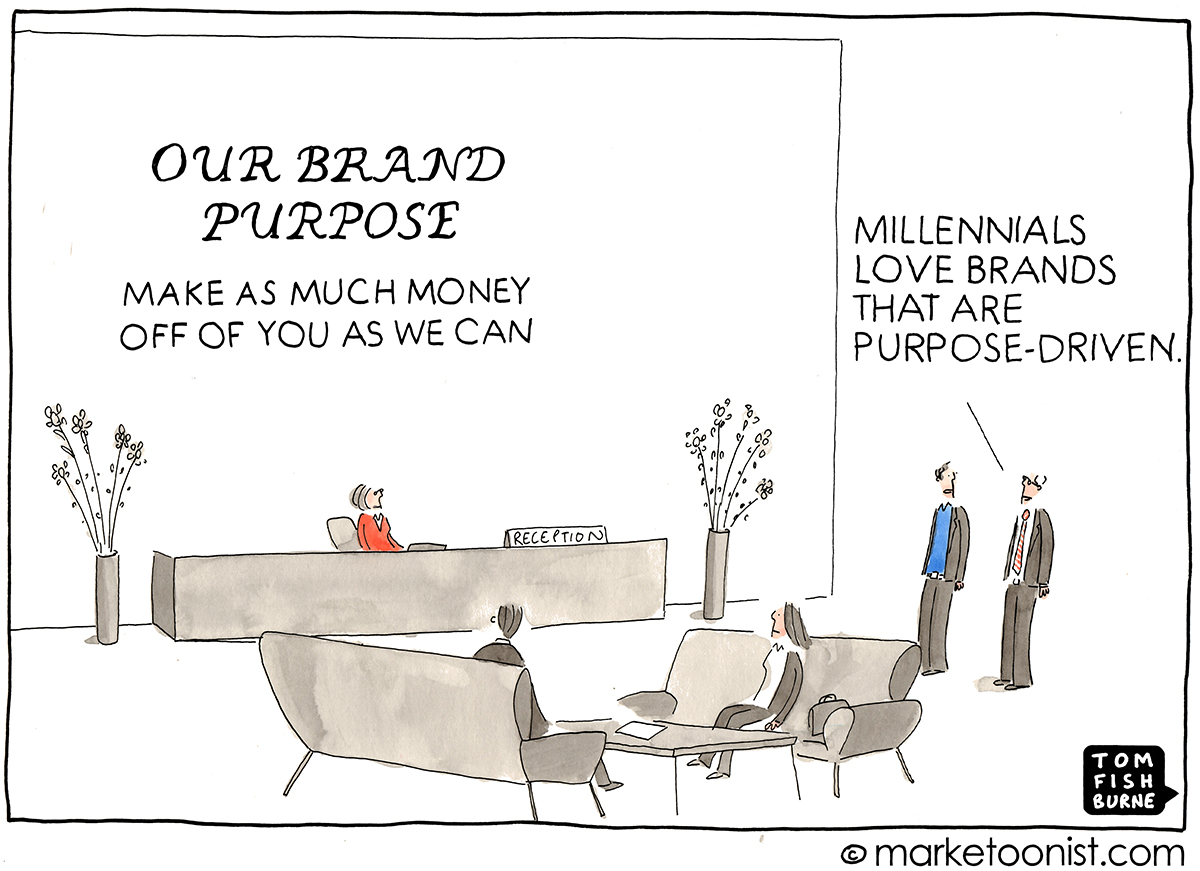
America’s health insurance giants are profit-making businesses. Indeed, in the insurers’ quarterly earnings reports to investors, the standard industry term for any sums spent paying people’s medical bills is “medical loss.” They view paying your doctor bill as a loss that subtracts from the dividends they owe their stockholders. 

When I studied health care systems around the world, I asked economists and doctors and health ministers why they want health insurance to be a nonprofit endeavor. Everyone gave essentially the same answer:

There’s a fundamental contradiction between insuring a nation’s health and making a profit on health insurance.

Health insurance exists to help people get the preventive care and treatment they need by paying their medical bills. But the way to make a profit on health insurance is to avoid paying medical bills. Accordingly, the U.S. insurance giants have devised ingenious methods for evading payment — schemes like high deductibles, narrow networks of approved doctors, limited lists of permitted drugs, and pre-authorization requirements, so that the insurance adjuster, not your doctor, determines what treatment you get. 

Other countries don’t allow those gimmicks. In America, the patient pays twice — first the insurance premium, and then the bill that the insurer declines to pay. That’s why Americans hate health insurance companies — as reflected in the tasteless barrage of angry social media commentary aimed at the victim, not the perpetrator, of the sidewalk shooting in 2024  of UnitedHealthcare’s CEO Brian Thompson in New York City. 

Another unique aspect of U.S.-style health insurance is the huge amount of money our big insurers waste on administrative costs. Any insurance plan has administrative expenses; you’ve got to collect the premiums, review the patients’ claims, and get the payments out to doctors and hospitals.

In other countries, the administrative costs are limited to about 5% of premium income; that is, insurers use 95% of all the money they take in to pay medical bills. But the U.S. insurance giants routinely report administrative costs in the range of 15% to 20%.

When the first drafts of the Affordable Care Act (“Obamacare”) were floated on Capitol Hill in 2009, the statutory language called for limiting insurers’ admin costs to 12% of premium income. Then the insurance lobby went to work. The final text of that law allows them to spend up to 20% of their income on salaries, marketing, dividends, and other stuff that doesn’t pay anybody’s hospital bill. 

There is one American insurance system, however, that is as thrifty as foreign health insurance plans. Medicare, the federal government’s insurance program for seniors and the disabled, reports administrative costs in the range of 3% — about one-fifth as much as the big private insurers fritter away. And Medicare’s administrators — federal bureaucrats — are paid less than a tenth as much as the executives running the far less efficient private insurance firms. 

Americans generally believe that the profit-driven private sector is more efficient and innovative than government. In many cases, that’s true. I wouldn’t want some government agency designing my cell phone or my hiking boots.

But when it comes to health insurance, all the evidence shows that nonprofit and government-run plans provide better coverage at lower cost than the private plans from America’s health insurance giants.

If we were to make basic health insurance a nonprofit endeavor, as it is everywhere else, or put everybody on a public plan like Medicare, the U.S. would save billions and improve our access to life-saving care. Then Americans might stop celebrating on social media when an insurance executive is killed. 

As a Nightmare Brews on Wall Street for CVS, Executives Scramble to Quell Investors

wrote Monday about how the additional Medicare claims CVS/Aetna paid during the first three months of this year prompted a massive selloff of the company’s shares, sending the stock price to a 15-year low.

During CVS’s May 1 call with investors, CEO Karen Lynch and CFO Thomas Cowhey assured them the company had already begun taking action to avoid paying more for care in the future than Wall Street found acceptable.

Among the solutions they mentioned: 

Ratcheting up the process called prior authorization that results in delays and denials of coverage requests from physicians and hospitals; kicking doctors and hospitals out of its provider networks; hiking premiums; slashing benefits; and abandoning neighborhoods where the company can’t make as much money as investors demand.

On Tuesday at the Bank of America Securities Healthcare Conference, Cowhey doubled down on that commitment to shareholders and provided a little more color about what those actions would look like and how many human beings would be affected. As Modern Healthcare reported:

Headed into next year, Aetna may adjust benefits, tighten its prior authorization policies, reassess its provider networks and exit markets, CVS Chief Financial Officer Tom Cowhey told investors. It will also reevaluate vision, dental, flexible spending cards, fitness and transportation benefits, he said. Aetna is also working with its employer Medicare Advantage customers on how to appropriately price their business, he said. 

Could we lose up to 10% of our existing Medicare members next year? That’s entirely possible, and that’s OK because we need to get this business back on track,” Cowhey said.

Insurers use the word “members” to refer to people enrolled in their health plans. You can apply for “membership” and pay your dues (premiums), but insurers ultimately decide whether you can stay in their clubs. If they think you’re making too many trips to the club’s buffet or selecting the most expensive items, your membership can–and will–be revoked.

That mention of “employer Medicare Advantage customers” stood out to me and should be of concern to people like New York Mayor Eric Adams, who was sold on the promise that the city could save millions by forcing municipal retirees out of traditional Medicare and into an Aetna Medicare Advantage plan. A significant percentage of Aetna’s Medicare Advantage “membership” includes people who retired from employers that cut a deal with Aetna and other insurers to provide retirees with access to care. Despite ongoing protests from thousands of city retirees, Adams has pressed ahead with the forced migration of retirees to Aetna’s club. He and the city’s taxpayers will find out soon that Aetna will insist on renegotiating the deal.

Back to that 10%. Aetna now has about 4.2 million Medicare Advantage “members,” but it has decided that around 420,000 of those human beings must be cut loose. Keep in mind that those humans are not among the most Internet-savvy and knowledgeable of the bewildering world of health insurance. Many of them have physical and mental impairments. They will be cast to the other wolves in the Medicare Advantage business.

Welcome to a world in which Wall Street increasingly calls the shots and decides which health insurance clubs you can apply to and whether those clubs will allow you to get the tests, treatments and medications you need to see another sunrise.

As Modern Healthcare noted, Aetna is not alone in tightening the screws on its Medicare Advantage members and setting many of them adrift. Humana, which has also greatly disappointed Wall Street because of higher-than-expected health care “utilization,” told investors it would be taking the same actions as Aetna.

But Aetna in particular has a history of ruthlessly cutting ties with humans who become a drain on profits. As I wrote in Deadly Spin in 2010:

Aetna was so aggressive in getting rid of accounts it no longer wanted after a string of acquisitions in the 1990s that it shed 8 million (yes, 8 million) enrollees over the course of a few years. The Wall Street Journal reported in 2004 that Aetna had spent more than $20 million to install new technology that enabled it “to identify and dump unprofitable corporate accounts.” Aetna’s investors rewarded the company by running up the stock price. 

I added this later in the book:

One of my responsibilities at Cigna was to handle the communication of financial updates to the media, so I knew just how important it was for insurers not to disappoint investors with a rising MLR [medical loss ratio, the ratio of paid claims to revenues]. Even very profitable insurers can see sharp declines in their stock prices after admitting that they had failed to trim medical expenses as much as investors expected. Aetna’s stock price once fell more than 20% in a single day after executives disclosed that the company had spent slightly more on medical claims during the most recent quarter than in a previous period. The “sell alarm” was sounded when the company’s first quarter MLR increased to 79.4% from 77.9% the previous year.

I could always tell how busy my day was going to be when Cigna announced earnings by looking at the MLR numbers. If shareholders were disappointed, the stock price would almost certainly drop, and my phone would ring constantly with financial reporters wanting to know what went wrong.

May 1 was a deja-vu-all-over-again day for Aetna. You can be certain the company’s flacks had a terrible day–but not as terrible as the day coming soon for Aetna’s members when they try to use their membership cards.

Speaking of Lynch, one of the people commenting on the piece I wrote Monday suggested I might have been a bit too tough on Lynch, who I know and liked as a human being when we both worked at Cigna. The commenter wrote that:

After finishing Karen S. Lynch’s book, “Taking Up Space,” I came to the conclusion that she indeed has a very strong conscience and sense of responsibility, not totally to shareholders, but more importantly to the insured people under Aetna and the customers of CVS.”

I don’t doubt Karen Lynch is a good person, and I know she is someone whose rise to become arguably the business world’s most powerful woman was anything but easy, as the magazine for alumni of Boston College, her alma mater, noted in a profile of her last year. Quoting from a speech she delivered to CVS employees a few years earlier, Daniel McGinn wrote

Lynch began with a story to illustrate why she was so passionate about health care. She described how she’d grown up on Cape Cod as the third of four children. Her parents’ relationship broke up when she was very young and her father disappeared, leaving her mom, Irene, a nurse who struggled with depression, as a single parent. In 1975, when Lynch was 12, Irene took her own life, leaving the four children effectively orphaned. 

During her speech, several thousand employees listened in stunned silence as Lynch explained how her mom’s life might have turned out differently if she’d had access to better medical treatment, or if there’d been less stigma and shame about getting help for depression. She then talked about how an insurance company like Aetna could play a role in reducing that stigma, increasing access to care, and helping people live with mental illness. 

I’m sure when she goes home at night these days, Lynch worries about what will happen to those 420,000 other humans who will soon be scrambling to get the care they need or to find another club that will take them. Their lives most definitely will turn out differently to appease the rich people who control her and the rest of us.

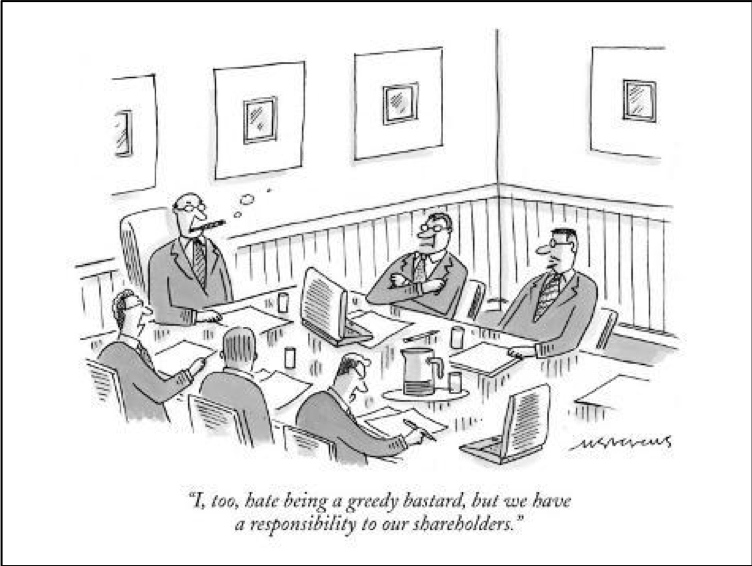
But she is stuck in a job whose real bosses–investors and Wall Street financial analysts–care far more about the MLR, earnings per share and profit margins than the fate of human beings less fortunate than they are.

Investor sues UHS execs, alleging ‘unfair’ stock gains amid pandemic

The US should tax excessive CEO compensation

A Universal Health Services investor is suing several executives of the King of Prussia, Pa.-based system, alleging they unjustly enriched themselves through stock options amid the pandemic, according to Law360

The lawsuit, filed in the Delaware Chancery Court and made public July 9, accuses UHS executives and directors of taking advantage of a pandemic-related temporary hit in the company’s stock price and argues taking the stock options was “grossly unfair to the company and its stockholders.”

“The controllers and other company insiders took advantage of the temporary drop in the company’s stock price to grant and receive options to buy the company’s stock at rock bottom prices, thereby showering themselves in excessive compensation,” the lawsuit claims.

In particular, the lawsuit claims that in just 12 days after the stock options were granted, defendants made over $30 million in gains. 

Several top execs were named as defendants, including Alan Miller, UHS founder and chair and Marc Miller, CEO and president of UHS. Three other UHS execs were named, as well as Warren Nimetz, an administrative partner of law firm Norton Rose Fulbright’s New York office.

“UHS’s directors and officers deny any liability associated with the company’s routine and publicly disclosed options grant in March 2020,” attorney Matthew Madden of Robbins Russell Englert Orseck & Untereiner, representing UHS, its executives and Mr. Nimetz, told Law360. “The options grant was in line with the company’s compensation practices in prior years and took place at a board meeting scheduled months in advance.”

Mr. Madden added that UHS’ executives and officials “acted properly” and that the plaintiff’s claims are “baseless.” 

“UHS is proud of its service to patients, and stewardship of investor capital, during these unprecedented times in the healthcare industry,” Mr. Madden told Law360.

The lawsuit was filed by Robin Knight. 

Study: Higher Death Rates and Taxpayer Costs at Nursing Homes Owned by Private Equity

About 1 in 10 nursing homes in California and nationwide are owned by private equity (PE) investors, and new research suggests that death rates for residents of those facilities are substantially higher than at institutions with different forms of ownership.

Essential Coverage

Researchers from New York University, the University of Chicago, and the University of Pennsylvania found that the combination of subsidies from Medicare and Medicaid alongside incentives for PE owners to increase the value of their investments “could lead high-powered for-profit incentives to be misaligned with the social goal of affordable, quality care [PDF].” The researchers — Atul Gupta, Constantine Yannelis, Sabrina Howell, and Abhinav Gupta — reported that nursing homes owned by private equity entities were associated with a 10% increase in the short-term death rate of Medicare patients over a 12-year period. That means more than 20,000 people likely died prematurely in homes run by PE companies, according to their study, which was published in February by the National Bureau of Economic Research (NBER).

In addition to the higher short-term death rates, these homes were found to have sharper declines in measures of patient well-being, including lower mobility, increased pain intensity, and increased likelihood of taking antipsychotic medications, which the study said are discouraged in the elderly because the drugs increase mortality in this age group. Meanwhile, the study found that taxpayer spending per patient episode was 11% higher in PE-owned nursing homes.

Double-Checked, Triple-Checked, Quadruple-Checked

The researchers were stunned by the data. “You don’t expect to find these types of mortality effects. And so, you know, we double-checked it, triple-checked it, quadruple-checked it,” Atul Gupta, a coauthor of the NBER study, told NPR reporter Gabrielle Emanuel.

There’s nothing new about for-profit nursing homes, but private equity firms are a unique subset that in recent years has made significant investments in the industry, Dylan Scott reported in Vox. PE firms typically buy companies in pursuit of higher profits for shareholders than could be obtained by investing in the shares of publicly traded stocks. They then sell their investments at a profit, often within seven years of purchase. They often take on debt to buy a company and then put that debt on the newly acquired company’s balance sheet.

They also have purchased a mix of large chains and independent facilities — “making it easier to isolate the specific effect of private equity acquisitions, rather than just a profit motive, on patient welfare.” About 11% of for-profit nursing homes are owned by PE, according to David Grabowski, professor of health care policy at Harvard Medical School. The NBER study covered 1,674 nursing homes acquired in 128 unique transactions.

While the owners of many nursing homes may not be planning to sell them, they also have strong incentives to keep costs low, which may not be good for patients. A study funded by CHCF, for instance, found that “early in the pandemic, for-profit nursing homes had COVID-19 case rates five to six times higher than those of nonprofit and government-run nursing homes. This was true of both independent nursing homes and those that are part of a corporate chain.”

Nationallyabout 70% of nursing homes are operated by for-profit corporations, 24% of nursing homes are nonprofit, and 7% are government-owned. Corporate chains own 58%. In California, 84% of nursing homes are for-profit, 12% are nonprofit, and 3% are government-owned, according to the CHCF report.

Growing PE Investment in Health Care

Given the dramatic increase in PE ownership of nursing facilities coming out of the COVID-19 pandemic, the higher death rates are troubling. The year-over-year growth between 2019 and 2020 is especially striking. Before the pandemic, 2019 saw 33 private equity acquisitions of nursing homes valued at just over $483 million. In 2020, there were 43 deals valued at more than $1.5 billion, according to Bloomberg Law reporter Tony Pugh.

And PE interest in health care is not restricted to nursing homes, explained Gretchen Morgenson and Emmanuelle Saliba at NBC News. “Private equity’s purchases have included rural hospitals, physicians’ practices, nursing homes and hospice centers, air ambulance companies and health care billing management and debt collection systems.” Overall, PE investments in health care have increased more than 1,900% over the past two decades. In 2000, PE invested less than $5 billion. By 2017, investment had jumped to $100 billion.

Industry advocates argue that the investments are in nursing homes that would fail without an influx of PE capital. The American Investment Council said private equity firms invest in “nursing homes to help rescue, build, or grow businesses, often providing much-needed capital to strengthen struggling companies and employ Americans,” according to Bloomberg Law.

The Debate Over Staffing

A bare-bones nursing staff is implicated in poorer quality at PE-owned nursing homes, both before and during the COVID-19 pandemic. Staff is generally the greatest expense in nursing homes and a key place to save money. “Labor is the main cost of any health care facility — accounting for nearly half of its operating costs — so cutting it to a minimum is the fastest profit-making measure owners can take, along with paying lower salaries,” journalist Annalisa Merelli explained in Quartz.

Staffing shrinks by 1.4% after a PE purchase, the NBER study found.

The federal government does not set specific patient-to-nurse ratios. California and other states have set minimum standards, but they are generally “well below the levels recommended by researchers and experts to consistently meet the needs of each resident,” according to the journal Policy, Politics, & Nursing Practice.

According to nursing assistant Adelina Ramos, “understaffing was so significant [during the pandemic] that she and her colleagues . . . often had to choose which dying or severely ill patient to attend first, leaving the others alone.”

Ramos worked at the for-profit Genesis Healthcare, the nation’s largest chain of nursing homes, which accepted $180 million in state and federal funds during the COVID-19 crisis but remained severely understaffed. She testified before the US Senate Finance Committee in March as a part of a week long look into how the pandemic affected nursing homes.Before the pandemic, we had this problem,” she said of staffing shortages. “And with the pandemic, it made things worse.”

$12.46 an Hour

In addition, low pay at nursing homes compounds staffing shortages by leading to extremely high rates of turnover. Ramos and her colleagues were paid as little as $12.46 an hour.

“The average nursing home in the US has their entire nursing home staff change over the course of the calendar year. This is a horrible way to provide good, quality nursing home care,” Grabowski told NPR, speaking of his March 2021 study in Health Affairs.

Loss of front-line staff leads to reductions in therapies for healthier patients, which leads to higher death rates, according to the NBER study. The effect of these cuts is that front-line nurses spend fewer hours per day providing basic services to patients. “Those services, such as bed turning or infection prevention, aren’t medically intensive, but they can be critical to health outcomes,” wrote Scott at Vox.

Healthier patients tend to suffer the most from this lack of basic nursing. “Sicker patients have more regimented treatment that will be adhered to no matter who owns the facility,” the researchers said, “whereas healthier people may be more susceptible to the changes made under private equity ownership.”

Growing Interest on Capitol Hill

In addition to the Senate Finance Committee hearings, the House Ways and Means Committee held a hearing at the end of last month about the excess deaths in nursing homes owned by PE. “Private equity’s business model involves buying companies, saddling them with mountains of debt, and then squeezing them like oranges for every dollar,” said Representative Bill Pascrell (D-New Jersey), who chairs the House Ways and Means Committee’s oversight subcommittee.

The office of Senator Elizabeth Warren (D-Massachusetts) will investigate the effects of nursing-home ownership on residents, she announced on March 17.

The hope is that the pandemic’s effect on older people will bring more attention to the issues that lead to substandard nursing home care. “Much more is needed to protect nursing home residents,” Denise Bottcher, the state director of AARP’s Louisiana office, told the Senate panel. “The consequence of not acting is that someone’s mother or father dies.”

Risking lives in pursuit of profits

https://mailchi.mp/05e4ff455445/the-weekly-gist-february-26-2021?e=d1e747d2d8

Benefit of Private Equity in Healthcare? Lessons from Nursing Homes

Finding a good long-term care facility for a loved one has always been a difficult process. A new National Bureau of Economic Research working paper suggests that families should also be paying attention to who owns the facility, finding a significant increase in mortality in nursing homes owned by private equity investors.

Examining Medicare data from over 18,000 nursing homes, 1,674 of which were owned by private equity (PE) firms, researchers found that PE ownership increased Medicare patient mortality by 10 percent—translating to a possible 20,150 additional lives lost. PE-owned facilities were also 11 percent more expensive.

Counterintuitively, lower-acuity patients had the greatest increase in mortality. Researchers found staffing decreased by 1.4 percent in PE-owned facilities, suggesting that shorter-staffed facilities may be forced to shift attention to sicker patients, leading to greater adverse effects on patients requiring less care.

Antipsychotic use, which carries a higher risk in the elderly, was also a whopping 50 percent higher.

Nursing homes are low-margin businesses, with profits of just 1-2 percent per year—and PE ownership did not improve financial performance.

Researchers found private equity profited from three strategies: “monitoring fees” paid to services also owned by the PE firm, lease payments after real estate sales, and tax benefits from increased interest payments, concluding that PE is shifting operating costs away from patient care in order to increase return on investment. Private equity investment in care delivery assets has skyrocketed over the past decade.

This study draws the most direct correlation between PE investment and an adverse impact on patient outcomes that we’ve seen so far, highlighting the need for increased regulatory scrutiny to ensure that patient safety isn’t sacrificed for investor returns.

‘Shkreli Awards’ Shame Healthcare Profiteers

Lown Institute berates greedy pricing, ethical lapses, wallet biopsies, and avoidable shortages.

Greedy corporations, uncaring hospitals, individual miscreants, and a task force led by Jared Kushner were dinged Tuesday in the Lown Institute‘s annual Shkreli awards, a list of the top 10 worst offenders for 2020.

Named after Martin Shkreli, the entrepreneur who unapologetically raised the price of an anti-parasitic drug by a factor of 56 in 2015 (now serving a federal prison term for unrelated crimes), the list of shame calls out what Vikas Saini, the institute’s CEO, called “pandemic profiteers.” (Lown bills itself as “a nonpartisan think tank advocating bold ideas for a just and caring system for health.”)

Topping the list was the federal government itself and Jared Kushner, President’s Trump’s son-in-law, who led a personal protective equipment (PPE) procurement task force. The effort, called Project Airbridge, was to “airlift PPE from overseas and bring it to the U.S. quickly,” which it did.

“But rather than distribute the PPE to the states, FEMA gave these supplies to six private medical supply companies to sell to the highest bidder, creating a bidding war among the states,” Saini said. Though these supplies were supposed to go to designated pandemic hotspots, “no officials from the 10 hardest hit counties” said they received PPE from Project Airbridge. In fact, federal agencies outbid states or seized supplies that states had purchased, “making it much harder and more expensive” for states to get supplies, he said.

Number two on the institute’s list: vaccine maker Moderna, which received nearly $1 billion in federal funds to develop its mRNA COVID-19 preventive. It set a price of between $32 and $37 per dose, more than the U.S. agreed to pay for other COVID vaccines. “Although the U.S. has placed an order for $1.5 billion worth of doses at a discount, a price of $15 per dose, given the upfront investment by the U.S. government, we are essentially paying for the vaccine twice,” said Lown Institute Senior Vice President Shannon Brownlee.

Webcast panelist Don Berwick, MD, former acting administrator for the Centers for Medicare & Medicaid Services, noted that a lot of work went into producing the vaccine at an impressive pace, “and if there’s not an immune breakout, we’re going to be very grateful that this happened.” But, he added, “I mean, how much money is enough? Maybe there needs to be some real sense of discipline and public spirit here that goes way beyond what any of these companies are doing.”

In third place: four California hospital systems that refused to take COVID-19 patients or delayed transfers from hospitals that were out of beds. Wall Street Journal investigation found that these refusals or delays were based on the patients’ ability to pay; many were on Medicaid or were uninsured.

“In the midst of such a pandemic, to continue that sort of behavior is mind boggling,” said Saini. “This is more than the proverbial wallet biopsy.”

The remaining seven offenders:

4. Poor nursing homes decisions, especially one by Soldiers’ Home for Veterans in western Massachusetts, that worsened an already terrible situation. At Soldiers’ Home, management decided to combine the COVID-19 unit with a dementia unit because they were low on staff, said Brownlee. That allowed the virus to spread rapidly, killing 76 residents and staff as of November. Roughly one-third of all COVID-19 deaths in the U.S. have been in long-term care facilities.

5. Pharmaceutical giants AstraZeneca, GlaxoSmithKline, Pfizer, and Johnson & Johnson, which refused to share intellectual property on COVID-19, instead deciding to “compete for their profits instead,” Saini said. The envisioned technology access pool would have made participants’ discoveries openly available “to more easily develop and distribute coronavirus treatments, vaccines, and diagnostics.”

Saini added that he was was most struck by such an attitude of “historical blindness or tone deafness” at a time when the pandemic is roiling every single country.

Berwick asked rhetorically, “What would it be like if we were a world in which a company like Pfizer or Moderna, or the next company that develops a really great breakthrough, says on behalf of the well-being of the human race, we will make this intellectual property available to anyone who wants it?”

6. Elizabeth Nabel, MD, CEO of Brigham and Women’s Hospital in Boston, because she defended high drug prices as a necessity for innovation in an op-ed, without disclosing that she sat on Moderna’s board. In that capacity, she received $487,500 in stock options and other payments in 2019. The value of those options quadrupled on the news of Moderna’s successful vaccine. She sold $8.5 million worth of stock last year, after its value nearly quadrupled. She resigned from Moderna’s board in July and, it was announced Tuesday, is leaving her CEO position to join a biotech company founded by her husband.

7. Hospitals that punished clinicians for “scaring the public,” suspending or firing them, because they “insisted on wearing N95 masks and other protective equipment in the hospital,” said Saini. Hospitals also fired or threatened to fire clinicians for speaking out on COVID-19 safety issues, such as the lack of PPE and long test turnaround times.

Webcast panelist Mona Hanna-Attisha, MD, the Flint, Michigan, pediatrician who exposed the city’s water contamination, said that healthcare workers “have really been abandoned in this administration” and that the federal Occupational Safety and Health Administration “has pretty much fallen asleep at the wheel.” She added that workers in many industries such as meatpacking and poultry processing “have suffered tremendously from not having the protections or regulations in place to protect [them].”

8. Connecticut internist Steven Murphy, MD, who ran COVID-19 testing sites for several towns, but conducted allegedly unnecessary add-ons such as screening for 20 other respiratory pathogens. He also charged insurers $480 to provide results over the phone, leading to total bills of up to $2,000 per person.

“As far as I know, having an MD is not a license to steal, and this guy seemed to think that it was,” said Brownlee.

9. Those “pandemic profiteers” who hawked fake and potentially harmful COVID-19 cures. Among them: televangelist Jim Bakker sold “Silver Solution,” containing colloidal silver, and the “MyPillow Guy,” Mike Lindell, for his boostering for oleandrin.

Colloidal silver has no known health benefits and can cause seizures and organ damage. Oleandrin is a biological extract from the oleander plant and known for its toxicity and ingesting it can be deadly,” said Saini.

Others named by the Lown Institute include Jennings Ryan Staley, MD — now under indictment — who ran the “Skinny Beach Med Spa” in San Diego which sold so-called COVID treatment packs containing hydroxychloroquine, antibiotics, Xanax, and Viagra, all for $4,000.

Berwick commented that such schemes indicate a crisis of confidence in science, adding that without facts and science to guide care, “patients get hurt, costs rise without any benefit, and confusion reigns, and COVID has made that worse right now.”

Brownlee mentioned the “huge play” that hydroxychloroquine received and the FDA’s recent record as examples of why confidence in science has eroded.

10. Two private equity-owned companies that provide physician staffing for hospitalsTeam Health and Envision, that cut doctors’ pay during the first COVID-19 wave while simultaneously spending millions on political ads to protect surprise billing practices. And the same companies also received millions in COVID relief funds under the CARES Act.

Berwick said surprise billing by itself should receive a deputy Shkreli award, “as out-of-pocket costs to patients have risen dramatically and even worse during the COVID pandemic… and Congress has failed to act. It’s time to fix this one.”

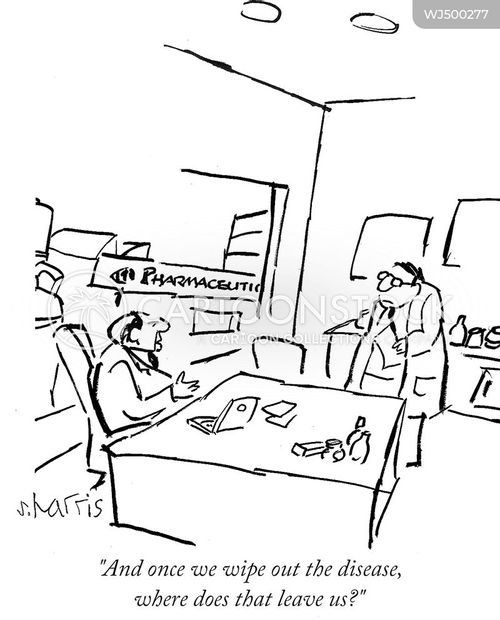
Cartoon – Big Pharma’s Dilemma

Chemist Cartoons and Comics - funny pictures from Cartoon Collections