Just 3 states meet these basic criteria to reopen and stay safe

https://www.vox.com/2020/5/28/21270515/coronavirus-covid-reopen-economy-social-distancing-states-map-data

Coronavirus: Just 3 states meet basic criteria to reopen and stay ...

Most states still need to reduce coronavirus cases and build up their testing capacity.

All 50 states are moving to reopen their economies, at least partially, after shutting down businesses and gatherings in response to the coronavirus pandemic.

But a Vox analysis suggests that most states haven’t made the preparations needed to contain future waves of the pandemic — putting themselves at risk for a rise in Covid-19 cases and deaths should they continue to reopen.

Experts told me states need three things to be ready to reopen. State leaders, from the governor to the legislature to health departments, need to ensure the SARS-CoV-2 virus is no longer spreading unabated. They need the testing capacity to track and isolate the sick and their contacts. And they need the hospital capacity to handle a potential surge in Covid-19 cases.

More specifically, states should meet at least five basic criteria. They should see a two-week drop in coronavirus cases, indicating that the virus is actually abating. They should have fewer than four daily new cases per 100,000 people per day — to show that cases aren’t just dropping, but also below dangerous levels. They need at least 150 new tests per 100,000 people per day, letting them quickly track and contain outbreaks. They need an overall positive rate for tests below 5 percent — another critical indicator for testing capacity. And states should have more than 40 percent of their ICU beds free to actually treat an influx of people stricken with Covid-19 should it be necessary.

These metrics line up with experts’ recommendations, as well as the various policy plans put out by both independent groups and government officials to deal with the coronavirus.

Meeting these metrics doesn’t mean that a state is ready to reopen its economy — a process that describes a wide range of local and state actions. And failing them doesn’t mean a state is in immediate danger of a coronavirus outbreak if it starts to reopen; with Covid-19, there’s always an element of luck and other factors.

But with these metrics, states can gauge if they have repressed the coronavirus while building the capacity to contain future outbreaks should they come. In other words, the benchmarks show how ready states are for the next phase of the fight.

So far, most states are not there. As of May 27, just three states — Alaska, Kentucky, and New York — met four or five of the goals, which demonstrates strong progress. Thirty states hit two or three of the benchmarks. The other 17, along with Washington, DC, achieved zero or one.

A map showing the vast majority of states don’t meet criteria to reopen and stay safe from Covid-19.

Even the states that have made the most progress aren’t necessarily ready to safely reopen. There’s a big difference between Alaska — which has not suffered from a high number of coronavirus cases — and New York, and no expert would say that all of New York is ready to get back to normal.

Nor do the metrics cover everything that states should do before they can reopen. They don’t show, for example, if states have the capacity to do contact tracing, in which people who came into contact with someone who’s sick with Covid-19 are tracked down by “disease detectives” and quarantined. Contact tracing is key to containing an epidemic, but states don’t track how many contact tracers they’ve hired in a standardized, readily available way.

They also don’t have ready data for health care workers’ access to personal protective equipment, such as masks and gloves — a critical measure of the health care system’s readiness that is difficult to track.

But the map gives an idea of how much progress states have made toward containing the coronavirus and keeping it contained.

States will have to follow these kinds of metrics as they reopen. If the numbers — especially coronavirus cases — go in the wrong direction again, experts said governments should be ready to bring back restrictions. If states move too quickly to reopen or respond too slowly to a turn for the worse, they could see a renewed surge in Covid-19 cases.

“Planning for reclosing is part of planning for reopening,” Mark McClellan, a health policy expert at Duke, told me. “There will be outbreaks, and there will be needs for pauses and going back — hopefully not too much if we do this carefully.”

So this will be a work in progress, at least until we get a Covid-19 vaccine or the pandemic otherwise ends, whether by natural or human means. But the metrics can at least help give states an idea of how far along they are in finally starting to open back up.

Goal 1: A sustained two-week drop in coronavirus cases

A map showing most places haven’t seen a sustained decrease in coronavirus cases over two weeks.

What’s the goal? A 10 percent drop in daily new coronavirus cases compared to two weeks ago and a 5 percent drop in cases compared to one week ago, based on data from the New York Times.

Which states meet the goal? Colorado, Connecticut, Delaware, Hawaii, Indiana, Kansas, Kentucky, Massachusetts, Michigan, Missouri, Nebraska, New Jersey, New York, Oregon, Pennsylvania, Rhode Island, and Texas — 17 states in all. Washington, DC, did as well.

Why is this important? Guidance from the White House and several independent groups emphasize that states need to see coronavirus cases drop consistently over two weeks before they can say they’re ready to begin reopening. After all, nothing shows you’re out of an outbreak like a sustained reduction in infections.

“The first and foremost [metric] is you want to have a continued decrease in cases,” Saskia Popescu, an infectious disease epidemiologist, told me. “It’s a huge piece.”

A simple reduction in cases compared to two weeks prior isn’t enough; it has to be a significant drop, and it has to be sustained over the two weeks. So for Vox’s map, states need at least a 10 percent drop in daily new cases compared to two weeks prior and at least a 5 percent drop compared to one week prior.

Reported cases can be a reflection of testing capacity: More testing will pick up more cases, and less testing will pick up fewer. So it’s important that the decrease occur while testing is either growing or already sufficient. And since states have recently boosted their testing abilities, increases in Covid-19 cases can also reflect improvements in testing.

Even after meeting this benchmark, continued caution is warranted. If a state meets the goal of a reduction in cases compared to one and two weeks ago but cases seemed to go up in recent days, then perhaps it’s not time to reopen just yet. “You have to use common sense,” Cyrus Shahpar, a director at the public health policy group Resolve to Save Lives, told me.

For states with small outbreaks, this goal is infeasible. Montana has seen around one to two new Covid-19 cases a day for several weeks. Getting that down to zero would be nice, but the current level of daily new cases isn’t a big threat to the whole state. That’s one reason Vox’s map lets states meet four or five of the five goals — in case they miss one goal that doesn’t make sense for them but hit others.

Still, the two-week reduction in cases is the most cited by experts and proposals to ease social distancing.

Goal 2: A low number of daily new Covid-19 cases

A map showing most states still have too many coronavirus cases.

What’s the goal? Fewer than four daily new coronavirus cases per 100,000 people per day, based on data from the New York Times and Census Bureau.

Which states meet the goal? Alaska, Florida, Hawaii, Idaho, Kentucky, Maine, Michigan, Missouri, Montana, Oklahoma, Oregon, South Carolina, Texas, Vermont, Washington, West Virginia, and Wyoming — 17 states.

Why is this important? One of the best ways to know you’re getting away from a disease outbreak is to no longer see a high number of daily new infections. While there’s no universally accepted number, experts said that four daily new coronavirus cases per 100,000 people is a decent ceiling.

“If I go from one to two to three [coronavirus cases a day], it’s different than going from 1,000 to 2,000 to 3,000, even though the percent difference is the same,” Shahpar said. “That’s why you have to take into account the overall level, too.”

This number can balance out the shortcomings in other metrics on this list. For example, New York — which has suffered the worst coronavirus outbreak in the country — has seen its reported daily new coronavirus cases drop for weeks, meeting the goal of a sustained drop in cases. But since that’s coming down from a huge high, even a month of sustained decreases may not be enough. New York has to make sure it falls below a threshold of new cases, too.

At the same time, if your state is now below four daily new cases per 100,000 but it’s seen a recent uptick in cases, that’s a reason for caution. New York, after all, saw just a handful of confirmed coronavirus cases before an exponential explosion of the disease took the state to thousands of new cases a day.

But if your state is below the threshold, it’s in a pretty solid place relative to most other states.

Goal 3: High coronavirus testing capacity

A map showing most states still don’t have enough coronavirus testing capacity.

What’s the goal? At least 150 tests per 100,000 people per day, based on data from the Covid Tracking Project and Census Bureau.

Which states meet the goal? Alaska, Connecticut, Delaware, Georgia, Illinois, Louisiana, Nevada, New Jersey, New Mexico, New York, North Dakota, and Rhode Island — for a total of 12 states.

Why is this important? Since the beginning of the coronavirus pandemic, experts have argued that the US needs the capacity for about 500,000 Covid-19 tests a day. Controlling for population, that adds up to about 150 new tests per 100,000 people per day.

Testing is crucial to getting the coronavirus outbreak under control. When paired with contact tracing, testing lets officials track the scale of the outbreak, isolate the sick, quarantine those the sick came into contact with, and deploy community-wide efforts as necessary. Testing and tracing are how other countries, like South Korea and Germany, have managed to control their outbreaks and started to reopen their economies.

The idea, experts said, is to have enough surveillance to detect embers before they turn into full wildfires.

“States should be shoring up their testing capacity not just for what it looks like right now while everyone’s in their homes, but as people start to move more,” Jen Kates, the director of global health and HIV policy at the Kaiser Family Foundation, told me. “As people start doing more movement, you’ll have to test more, because people are going to come into contact with each other more.”

The 500,000-a-day goal is the minimum. Some experts have recommended as many as millions of tests nationwide each day. But 500,000 is the most often-cited goal, and it’s, at the very least, a good start.

This goal is supposed to be for diagnostic tests, not antibody tests. Diagnostic tests gauge whether a person has the virus in their system and is, therefore, sick right at the moment of the test. Antibody tests check if someone ever developed antibodies to the virus to see if they had ever been sick in the past. Since diagnostic tests give a more recent gauge of the level of infection, they’re seen as much more reliable for evaluating the current state of the Covid-19 outbreak in a state.

But some states have included antibody tests in their overall counts. Experts said states shouldn’t do this. But since the data they report and the Covid Tracking Project collects is the best testing data we have, it’s hard to tease out how much antibody tests are skewing the total.

In particular, Georgia’s data suggested it met the goal of 150 daily tests per 100,000 people, but the state only started separating antibody tests from its total after the data was collected. Without the antibody tests, Georgia very likely wouldn’t meet the goal.

Some states’ numbers, like Missouri’s, also may appear significantly worse than they should due to recent efforts to decouple diagnostic testing data from antibody testing data, which can temporarily warp the overall test count.

“The virus isn’t going to care whether they were manipulating the numbers or not in order to look more favorable; it’s going to continue to spread,” Crystal Watson, a senior scholar at the Johns Hopkins Center for Health Security, told me. “It’s better to really understand what’s going on and report that accurately.”

For states honestly reporting these numbers, though, they’re a critical measure of their ability to detect, control, and contain coronavirus outbreaks.

Goal 4: A low test-positive rate

A map showing most states have positive rates that are too high.

What’s the goal? Below 5 percent of coronavirus tests coming back positive over the past week, based on data from the Covid Tracking Project.

Which states meet the goal? Alaska, California, Florida, Georgia, Hawaii, Kentucky, Louisiana, Maine, Michigan, Montana, Nevada, New Hampshire, New Mexico, New York, North Dakota, Oklahoma, Oregon, South Carolina, Tennessee, Vermont, Washington, West Virginia, and Wyoming — for a total of 23 states.

Why is this important? The positive or positivity rate, which tracks how many tests come back positive for Covid-19, is another way to measure testing capacity.

Generally, a higher positive rate suggests there’s not enough testing happening. An area with adequate testing should be testing lots and lots of people, many of whom don’t have the disease or don’t show severe symptoms. The positive testing rate in South Korea, for example, is below 2 percent. High positive rates indicate only people with obvious symptoms are getting tested, so there’s not quite enough testing to match the scope of an outbreak.

Previously, the World Health Organization (WHO) recommended a maximum positive rate of 10 percent. But the WHO more recently recommended 5 percent, which is in line with the rate for countries that have better managed to better control their outbreaks, like Germany, New Zealand, and South Korea. “Even lower is better,” Shahpar said.

The positive rate data is subject to the same limitations as the overall testing data from the Covid Tracking Project. So if a state includes antibody tests in its test count, it could skew the positive rate to look better than it is. States only risk hurting themselves if they do this.

Goal 5: Availability of ICU beds

A map showing most states’ hospitals aren’t overwhelmed by coronavirus cases.

What’s the goal? Below 60 percent occupancy of ICU beds in hospitals, based on data from the Centers for Disease Control and Prevention.

Which states meet the goal? Alaska, Arizona, Arkansas, California, Connecticut, Delaware, Idaho, Illinois, Indiana, Iowa, Kansas, Kentucky, Minnesota, Missouri, Montana, New Hampshire, New Jersey, New Mexico, New York, North Dakota, Ohio, Oklahoma, Pennsylvania, South Dakota, Utah, Vermont, Virginia, Washington, Wisconsin, and Wyoming — for a total of 30 states.

Why is this important? If a pandemic hits, the health care system needs to be ready to treat the most severe cases and potentially save lives. That’s the key goal of “flattening the curve” and “raising the line,” in which social distancing helps reduce the spread of the disease so the health care system can maintain and grow its capacity to treat an influx of Covid-19 patients.

“There’s this idea that in six weeks we can open more things,” Amesh Adalja, a senior scholar at the Johns Hopkins Center for Health Security, told me. “But the virus is still there. It’s all about making sure that the case count isn’t too immense for our hospital system to deal with.”

The aim is to avoid the nightmare scenario that Italy went through when it had more Covid-19 cases than its health care system could handle, leading to hospitals turning away even dangerously ill patients.

To gauge this, experts recommended looking at ICU capacity, with states aiming to have less than 60 percent occupancy in their ICUs.

A big limitation in the metric: It’s based on data collected by the Centers for Disease Control and Prevention of only some hospitals in each state. So it might not be fully representative of hospital capacity throughout an entire state. But it’s the best current data available, and it suggests that the majority of states meet that standard.

That’s extremely good news. It shows that America really has flattened the curve, at least for now. But it’s done that so far through extreme social distancing. If the next step is to keep the curve flattened while easing restrictions, that will require meeting the other metrics on this list.

Hitting the benchmarks is the beginning, not the end

Vox’s map is just one way of tracking success against the coronavirus. Other groups have come up with their own measures, including Covid Act NowCovid Exit Strategy, and Test and Trace. Vox’s model uses more up-to-date data than some of these other examples, while focusing not just on the state of the pandemic but states’ readiness to contain Covid-19 outbreaks in the future.

Very few states hit all the marks recommended by experts. But even those that do shouldn’t consider the pandemic over. They should continue to improve — for example, getting the positive rate below even 1 percent, as in New Zealand — and look at even more granular metrics, such as at the city or county level.

Meeting the benchmarks, however, indicates a state is better equipped to contain future coronavirus outbreaks as it eases previous restrictions.

Experts emphasized that states have to keep hitting all these goals week after week and day after day — Covid-19 cases must remain low, testing ability needs to stay high, and hospital capacity should be good enough for an influx of patients — until the pandemic is truly over, whether thanks to a vaccine or other means. Otherwise, a future wave of coronavirus cases, as seen in past pandemics, could kill many more people.

“You need to have all the metrics met,” Popescu said. “This needs to be a very incremental, slow process to ensure success.”

And if the numbers do start trending in the wrong direction, states should be ready to shut down at least some parts of the economy again. Maybe not as much as before, as we learn which places are truly at risk of increasing spread. But experts caution that future shutdowns will likely be necessary to some extent.

“I do worry we’re going to see surges of cases and hot spots,” Watson said. “We do need to keep pushing on building those capacities. … Otherwise, we’re just rolling the dice on the spread of the virus. It’s better if we have more control of the spread.”

That’s another reason these metrics, along with broader coronavirus surveillance, are so important: They not only help show how far along states are in dealing with their current Covid-19 outbreaks, but will help track progress to stop and prevent future crises as well.



All 50 states have partially reopened; U.S. death toll surpasses 90,000

https://www.washingtonpost.com/nation/2020/05/20/coronavirus-update-us/?utm_campaign=wp_post_most&utm_medium=email&utm_source=newsletter&wpisrc=nl_most

NC coronavirus update May 18: Wake County leaders meet to discuss ...

Ready or not, the United States is reopening. All 50 states have started easing coronavirus-related restrictions — even though many of them do not meet federal benchmarks — leading public health experts to warn that a new surge of infections could be imminent.

As the U.S. death toll surpassed 90,000, White House officials continued to defend the push to reopen and optimistically predicted a swift economic recovery. As part of the focus on states’ efforts to revive their economies, Vice President Pence on Wednesday traveled to Florida while Trump was set to host the governors of Arkansas and Kansas at the White House.

Here are some significant developments:

  • Trump ramped up his rhetoric against China, claiming on Twitter that the nation’s “incompetence” was responsible for “this mass Worldwide killing!” Secretary of State Mike Pompeo also denounced China as a “brutal authoritarian regime” and described its relationship with the director of the World Health Organization as “troubling.”
  • A worker at a mink farm in the Netherlands may have contracted the novel coronavirus from an animal there, the country’s agricultural minister said. If confirmed, this is would be first recorded incident of animal-to-human transmission. 
  • A church in Houston and another in Georgia are closing for a second time after faith leaders and congregants tested positive for the virus shortly after the two churches reopened.
  • The president drew criticism for saying Tuesday it’s “a badge of honor” that America leads the world with more than 1.5 million confirmed cases of the novel coronavirus because “it means our testing is much better.” The United States has more than 30 percent of the world’s known coronavirus infections but accounts for less than 5 percent of the global population.
  • The Centers for Disease Control and Prevention laid out a detailed, delayed road map for reopening schools, child-care facilities, restaurants and mass transit, weeks after governors began opening states on their own terms.
  • The president privately expressed opposition to extending unemployment benefits for workers affected by the pandemic.


Doctors keep discovering new ways the coronavirus attacks the body

https://www.washingtonpost.com/health/2020/05/10/coronavirus-attacks-body-symptoms/?arc404=true&utm_campaign=29774&utm_medium=email&utm_source=

Coronavirus Causes Damage to Organs Other Than the Lungs, Doctors ...

Damage to the kidneys, heart, brain — even ‘covid toes’ — prompts reassessment of the disease and how to treat it

Deborah Coughlin was neither short of breath nor coughing. In those first days after she became infected by the novel coronavirus, her fever never spiked above 100 degrees. It was vomiting and diarrhea that brought her to a Hartford, Conn., emergency room on May 1.

“You would have thought it was a stomach virus,” said her daughter, Catherina Coleman. “She was talking and walking and completely coherent.”

But even as Coughlin, 67, chatted with her daughters on her cellphone, the oxygen level in her blood dropped so low that most patients would be near death. She is on a ventilator and in critical condition at St. Francis Hospital, one more patient with a strange constellation of symptoms that physicians are racing to recognize, explain and treat.

“At the beginning, we didn’t know what we were dealing with,” said Valentin Fuster, physician-in-chief at Mount Sinai Hospital in New York City, the epicenter of the U.S. outbreak. “We were seeing patients dying in front of us. It was all of a sudden, you’re in a different ballgame, and you don’t know why.”

Today, there is widespread recognition the novel coronavirus is far more unpredictable than a simple respiratory virus. Often it attacks the lungs, but it can also strike anywhere from the brain to the toes. Many doctors are focused on treating the inflammatory reactions it triggers and its capacity to cause blood clots, even as they struggle to help patients breathe.

Learning about a new disease on the fly, with more than 78,000 U.S. deaths attributed to the pandemic, they have little solid research to guide them. The World Health Organization’s database already lists more than 14,600 papers on covid-19. Even the world’s premier public health agencies, including the Centers for Disease Control and Prevention, have constantly altered their advice to keep pace with new developments.

“We don’t know why there are so many disease presentations,” said Angela Rasmussen, a virologist at the Center for Infection and Immunity at Columbia University’s Mailman School of Public Health. “Bottom line, this is just so new that there’s a lot we don’t know.”

More than four months of clinical experience across Asia, Europe and North America has shown the pathogen does much more than invade the lungs. “No one was expecting a disease that would not fit the pattern of pneumonia and respiratory illness,” said David Reich, a cardiac anesthesiologist and president of Mount Sinai Hospital in New York City.

It attacks the heart, weakening its muscles and disrupting its critical rhythm. It savages kidneys so badly some hospitals have run short of dialysis equipment. It crawls along the nervous system, destroying taste and smell and occasionally reaching the brain. It creates blood clots that can kill with sudden efficiency and inflames blood vessels throughout the body.

It can begin with a few symptoms or none at all, then days later, squeeze the air out of the lungs without warning. It picks on the elderlypeople weakened by previous disease, and, disproportionately, the obese. It harms men more than women, but there are also signs it complicates pregnancies.


States build contact tracing armies to crush coronavirus

States build contact tracing armies to crush coronavirus

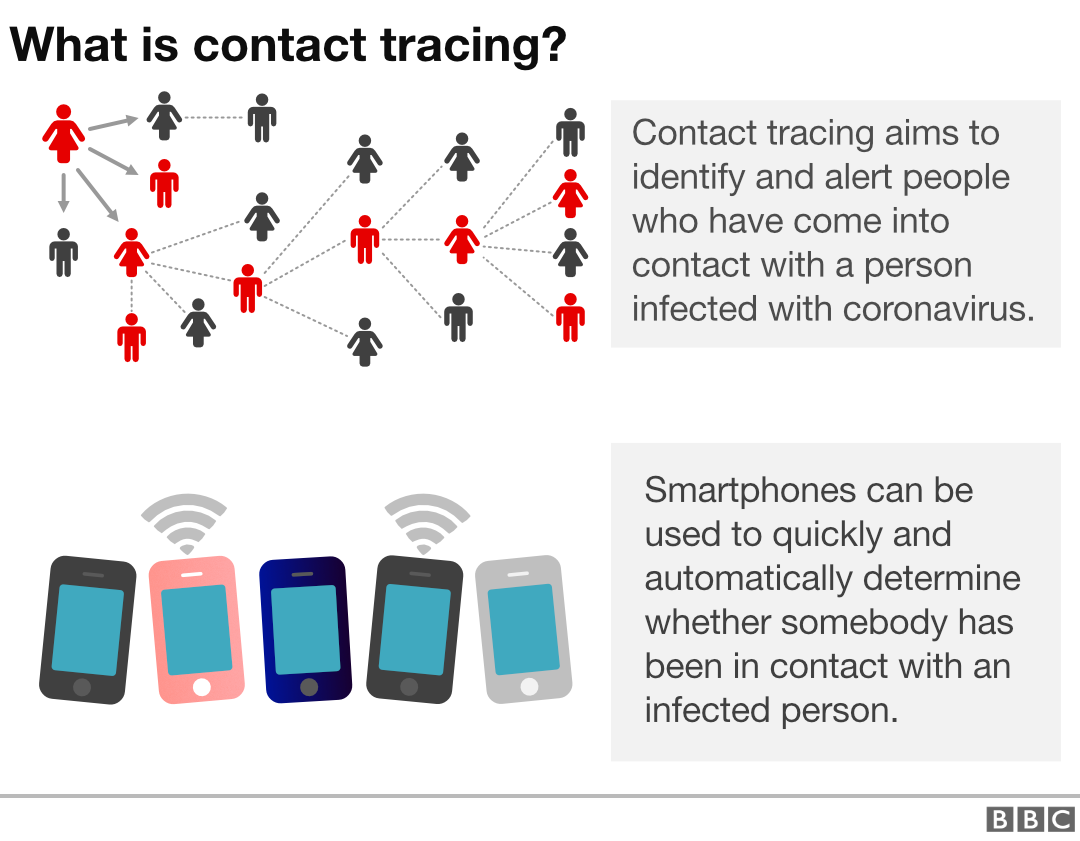
Coronavirus: Why are there doubts over contact-tracing apps? - BBC ...

State governments are building armies of contact tracers in a new phase of the battle against the coronavirus pandemic, returning to a fundamental practice in public health that can at once wrestle the virus under control and put hundreds of thousands of newly jobless people back to work.

California is already conducting contact tracing in 22 counties, and it eventually plans to field a force of 10,000 state employees, who will be given basic training by University of California health experts.

Massachusetts and Ohio have partnered with Partners in Health, a global health nonprofit originally established to support programs in Haiti, to field teams of contact tracers. Maryland will partner with the University of Chicago and NORC, formerly the National Opinion Research Center, to quadruple its contact tracing capacity.

Washington, West Virginia, Iowa, North Dakota and Rhode Island are using their National Guards to trace contacts of those who have been infected with the coronavirus. In Kansas, 400 people have volunteered to trace contacts; in Utah, 1,200 state employees have raised their hands.

Contact tracing is a pillar of basic public health, a critical element in battling infectious disease around the globe. The goal is to identify those who have been infected with a virus and those with whom the infected person has come into contact. 

If those contacts then come down with the virus, they can be quickly isolated so they do not spread it further. They can also be treated, making it less likely they develop the most severe symptoms.

The practice works even in areas where health systems are thin at best and nonexistent at worst.

Tracking down those who had the Ebola virus in Guinea, Liberia and Sierra Leone, three of the poorest nations on Earth, was critical to ending the world’s largest outbreak of the deadly hemorrhagic fever in 2015. World Health Organization trackers and health officials in Congo have tracked as many as 25,000 people at a time during an Ebola outbreak that is still simmering in an eastern province, even as they face the threat of what is an almost active war zone.

“Our ability to suppress transmission relates to our ability to detect the virus,” Maria Van Kerkhove, the American who leads the World Health Organization’s technical team studying the coronavirus, told reporters last week.

The focus on contact tracing comes as public health experts warn that the coronavirus will not end as a threat to humankind until so many people have become infected that the virus has nowhere else to turn — a terrifying prospect that conjures images of overwhelmed health systems and death on a mass scale — or until scientists develop and distribute an effective vaccine to billions of people across the globe.

There are more than 100 vaccines in some stage of testing, though determining their effectiveness is still months away, and production at a mass scale is months beyond that. Anthony Fauci, director of the National Institute of Allergy and Infectious Diseases and the country’s most well-known infectious disease expert, has estimated that a vaccine could be as close as 18 months away, though he has acknowledged that would blow the old record for speedy development out of the water.

“We have to fundamentally do everything possible to get a safe and effective vaccine as quickly as possible. At the same time, we have to assume that it’s not around the corner,” said Tom Frieden, former director of the Centers for Disease Control and Prevention who now runs Resolve to Save Lives, a global health nonprofit.

In the meantime, the federal government has largely left it up to the states to build their contact tracing capacity. 

Sen. Elizabeth Warren (D-Mass.) and Rep. Andy Levin (D-Mich.) have proposed adding a massive nationwide federal contact tracing program to the next round of coronavirus-related relief funding. In a nod to the New Deal-style scale such a program would require, they call the program the Coronavirus Containment Corps.

“Establishing a nationwide contact tracing program is the only way we can truly know the progress we’ve made in containing the virus, and how far we have left to go before we can transition back to normal life,” Levin said in a statement.

But contact tracing can work only if the number of new cases the United States confirms every day begins to bend down to a manageable number. The number of cases confirmed in the United States has grown by at least 25,000 on all but two of the first eight days of May.

And tracing will become an effective tool only when those who are conducting the tracing have the ability to test people broadly and to get the results of those tests back quickly. The Food and Drug Administration said Friday it had approved both the first diagnostic test that could be conducted using home-collected saliva samples and the first antigen test, a type of test that delivers results much faster than others on the market.

The lack of available tests at the earliest stages of the coronavirus outbreak has hidden the true extent of the virus’s spread around the United States. While some countries have the capacity to test huge percentages of their population on a given day, the United States is still testing only about 250,000 people per day, a level far short of the capacity necessary to conduct widespread contact tracing.

“Right from the start there has been a tremendous undercounting of cases, and that had to do with our now infamous slow testing rollout,” said Paul Sax, clinical director of the division of infectious diseases at Brigham and Women’s Hospital in Boston. 

President Trump has touted the raw number of tests performed — he rightly claims that the United States conducts more tests on a given day than any other country. But on a per capita basis, the United States is testing fewer of its residents than countries such as the United Kingdom, Italy and Estonia.

Until that changes, public health experts worry the United States will be stuck at a dangerous plateau.

“We’re doing deeply inadequate testing and functionally no tracing,” said Jeremy Konyndyk, a former head of the Office of Foreign Disaster Assistance at the U.S. Agency for International Development and now a senior fellow at the Center for Global Development. “We’re not going to half-ass our way out of a pandemic, and that’s where we are, and that’s why we’re stuck.”


1.4 million healthcare jobs lost in April

https://www.beckershospitalreview.com/workforce/1-4-million-healthcare-jobs-lost-in-april.html?utm_medium=email

1.4 million health-care workers lost their jobs due to the ...

Healthcare lost 1.4 million jobs in April amid the COVID-19 pandemic, primarily in ambulatory healthcare services, according to the latest jobs report from the U.S. Bureau of Labor Statistics.

The April count compares to 43,000 healthcare jobs lost in March.

Within ambulatory healthcare services, April job losses included offices of dentists (503,300), offices of physicians (243,300), and offices of other healthcare practitioners (205,100).

Hospitals lost 134,900 jobs last month, compared to the 200 positions they added to the U.S. economy in March.

The April jobs report marks the second consecutive month that healthcare employment did not grow. In the 12 months prior to March — the month the World Health Organization declared the COVID-19 spread a pandemic — industry employment had grown by 374,000, according to the bureau.

Bloomberg reported the number of healthcare workers has doubled to 16 million in the last three decades, and until March, the industry has lost jobs in only four months during that period.

Overall, the U.S. lost 20.5 million jobs in April, and the unemployment rate reached 14.7 percent, the highest since the Great Depression, according to the bureau.

The unemployment rate does not reflect Americans still working who have had their hours or pay reduced, The New York Times noted.


The world came together for a virtual vaccine summit. The U.S. was conspicuously absent.

https://www.washingtonpost.com/world/europe/the-world-comes-together-for-a-virtual-vaccine-summit-the-us-is-conspicuously-absent/2020/05/04/ac5b6754-8a5c-11ea-80df-d24b35a568ae_story.html?mkt_tok=eyJpIjoiTkdRelpUWXlNV1k0TW1WaSIsInQiOiJXSHJqUW1UV042bmt0Q1A5TUhJQ2dZOWFucFNYbmxtdTRsZUV2c0ltYzJmZkl5aU43NGJqbDdCZnB4Y0sxK0hJaXRzWjZmajAxN3V5aGZCbGQrS1wvcm1id2dVaGRZdld1TFpXMEt0VUkrMWtrMGJ6cko3VW5jVUZwZlpKR1d0eHEifQ%3D%3D

The world comes together for a virtual vaccine summit. The U.S. is ...

World leaders came together in a virtual summit Monday to pledge billions of dollars to quickly develop vaccines and drugs to fight the coronavirus.

Missing from the roster was the Trump administration, which declined to participate but highlighted from Washington what one official called its “whole-of-America” efforts in the United States and its generosity to global health efforts.

The online conference, led by European Commission President Ursula von der Leyen and a half-dozen countries, was set to raise $8.2 billion from governments, philanthropies and the private sector to fund research and mass-produce drugs, vaccines and testing kits to combat the virus, which has killed more than 250,000 people worldwide.

With the money came soaring rhetoric about international solidarity and a good bit of boasting about each country’s efforts and achievements, live and prerecorded, by Germany’s Angela Merkel, France’s Emmanuel Macron, Britain’s Boris Johnson, Japan’s Shinzo Abe — alongside Israel’s Benjamin Netanyahu and Turkey’s Recep Tayyip Erdogan.

“The more we pull together and share our expertise, the faster our scientists will succeed,” said Johnson, who was so stricken by the virus that he thought he might never leave the intensive care unit alive last month. “The race to discover the vaccine to defeat this virus is not a competition between countries but the most urgent shared endeavor of our lifetimes.”

A senior Trump administration official said Monday the United States “welcomes” the efforts of the conference participants. He did not explain why the United States did not join them.

“Many of the organizations and programs this pledging conference seeks to support already receive very significant funding and support from the U.S. government and private sector,” said the official, who spoke on the condition of anonymity under White House rules for briefing reporters.

Public health officials and researchers expressed surprise.

“It’s the first time that I can think of where you have had a major international pledging conference for a global crisis of this kind of importance, and the U.S. is just absent,” said Jeremy Konyndyk, who worked on the Ebola response in the Obama administration.

Given that no one knows which vaccines will succeed, he said, it’s crucial to back multiple efforts working in parallel.

“Against that kind of uncertainty we should be trying to position ourselves to be supporting — and potentially benefiting from — all of them,” said Konyndyk, a senior policy fellow at the Center for Global Development. “And instead we seem to be just focused on trying to win the race, in the hopes we happen to get one of the successful ones.”

Conference participants expressed a need for unity.

“We can’t just have the wealthiest countries have a vaccine and not share it with the world,” Canadian Prime Minister Justin Trudeau said.

“Let us in the international community unite to overcome this crisis,” Abe said.

Russia and India also did not participate. Chinese premier Li Keqiang was replaced at the last minute by Zhang Ming, Beijing’s ambassador to the European Union.

The U.S. official said the United States “is the single largest health and humanitarian donor in world. And the American people have continued that legacy of generosity in the global fight against covid-19.”

“And we would welcome additional high-quality, transparent contributions from others,” he said.

Asked three more times to explain why the United States did not attend, the official said he already had given an answer.

The U.S. government has provided $775 million in emergency health, humanitarian, economic and development aid for governments, international organizations and charities fighting the pandemic. The official said the United States is in the process of giving about twice that amount in additional funding.

There was one major American player at the virtual summit: the Bill and Melinda Gates Foundation, which promised to spend $125 million in the fight.

“This virus doesn’t care what nationality you are,” Melinda Gates told the gathering. As long as the virus is somewhere, she said, it’s everywhere.

Scientists are working around-the-clock to find a cure or treatment for the coronavirus. The World Health Organization says eight vaccines have entered human trials and another 94 are in development.

But finding an effective vaccine is only part of the challenge. When it’s discovered, infectious disease experts are predicting a scramble for limited doses, because there won’t be enough to vaccinate everyone on Day One. And deploying it could be difficult, particularly in countries that lack robust medical infrastructure.

Those that have begun human trials include a research project at Oxford University in England, which hopes to have its vaccine ready in the fall. The university started human trials on April 23. “In normal times,” British Health Secretary Matt Hancock said, “reaching this stage would take years.”

Other scientists are sprinting to create antiviral drugs or repurposing existing drugs such as remdesivir, which U.S. infectious diseases chief Anthony S. Fauci said he expected would be the new “standard of care.”

Other approaches now in trial include treatments such as convalescent plasma, which involves taking blood plasma from people who have recovered from covid-19 to patients who are fighting the virus, in the hope that the antibody-rich fluid will give the infected a helping hand.

Conference participants expressed hope that by working together, the world will find solutions more quickly — and they can then be dispersed to all countries, not only the wealthy, or those that developed vaccines first.

Many of the leaders stressed their support for the WHO. President Trump announced last month he was cutting off U.S. funding for the WHO because he said it had sided too closely with China, where the coronavirus arose. Trump says Chinese leaders underplayed the threat and hid crucial facts.

Public health analysts have shared some of those criticisms but have also criticized Trump for cutting off funding.

Peter Jay Hotez, dean of the National School of Tropical Medicine at Baylor College of Medicine, said the United States has always been the primary funder of new products for global health. The country invested $1.8 billion in neglected diseases in 2018, according to Policy Cures Research, more than two-thirds of the worldwide total.

Hotez said the United States shoulders the burden of investing in global health technologies, while countries such as China do not step up.

“More than one mechanism for supporting global health technologies — that may not be such as a bad thing,” he said. “If it was all under one umbrella, you risk that some strong-willed opinions would carry the day and you might not fund the best technology.”

Hotez is working on a coronavirus vaccine that uses an existing, low-cost technology, previously used for the hepatitis B vaccine, precisely because he is worried about equitable distribution of the vaccine.

“I’m not very confident that some of the cutting-edge technologies going into clinical trials, which have never led to a licensed vaccine before, are going to filter down to low- and middle-income countries anytime soon,” Hotez said. “I’m really worried.”


“Immunity passports” in the context of COVID-19

https://www.who.int/news-room/commentaries/detail/immunity-passports-in-the-context-of-covid-19

Charu Kaushic (@CKaushic) | Twitter

Scientific Brief

WHO has published guidance on adjusting public health and social measures for the next phase of the COVID-19 response.1 Some governments have suggested that the detection of antibodies to the SARS-CoV-2, the virus that causes COVID-19, could serve as the basis for an “immunity passport” or “risk-free certificate” that would enable individuals to travel or to return to work assuming that they are protected against re-infection. There is currently no evidence that people who have recovered from COVID-19 and have antibodies are protected from a second infection.


The measurement of antibodies specific to COVID-19

The development of immunity to a pathogen through natural infection is a multi-step process that typically takes place over 1-2 weeks. The body responds to a viral infection immediately with a non-specific innate response in which macrophages, neutrophils, and dendritic cells slow the progress of virus and may even prevent it from causing symptoms. This non-specific response is followed by an adaptive response where the body makes antibodies that specifically bind to the virus. These antibodies are proteins called immunoglobulins. The body also makes T-cells that recognize and eliminate other cells infected with the virus. This is called cellular immunity. This combined adaptive response may clear the virus from the body, and if the response is strong enough, may prevent progression to severe illness or re-infection by the same virus. This process is often measured by the presence of antibodies in blood.

WHO continues to review the evidence on antibody responses to SARS-CoV-2 infection.2-17 Most of these studies show that people who have recovered from infection have antibodies to the virus. However, some of these people have very low levels of neutralizing antibodies in their blood,4 suggesting that cellular immunity may also be critical for recovery. As of 24 April 2020, no study has evaluated whether the presence of antibodies to SARS-CoV-2 confers immunity to subsequent infection by this virus in humans.

Laboratory tests that detect antibodies to SARS-CoV-2 in people, including rapid immunodiagnostic tests, need further validation to determine their accuracy and reliability. Inaccurate immunodiagnostic tests may falsely categorize people in two ways. The first is that they may falsely label people who have been infected as negative, and the second is that people who have not been infected are falsely labelled as positive. Both errors have serious consequences and will affect control efforts. These tests also need to accurately distinguish between past infections from SARS-CoV-2 and those caused by the known set of six human coronaviruses. Four of these viruses cause the common cold and circulate widely. The remaining two are the viruses that cause Middle East Respiratory Syndrome and Severe Acute Respiratory Syndrome. People infected by any one of these viruses may produce antibodies that cross-react with antibodies produced in response to infection with SARS-CoV-2.

Many countries are now testing for SARS-CoV-2 antibodies at the population level or in specific groups, such as health workers, close contacts of known cases, or within households.21 WHO supports these studies, as they are critical for understanding the extent of – and risk factors associated with – infection.  These studies will provide data on the percentage of people with detectable COVID-19 antibodies, but most are not designed to determine whether those people are immune to secondary infections.


Other considerations

At this point in the pandemic, there is not enough evidence about the effectiveness of antibody-mediated immunity to guarantee the accuracy of an “immunity passport” or “risk-free certificate.” People who assume that they are immune to a second infection because they have received a positive test result may ignore public health advice. The use of such certificates may therefore increase the risks of continued transmission. As new evidence becomes available, WHO will update this scientific brief.


Blaming China Is a Dangerous Distraction

https://www.project-syndicate.org/commentary/trump-blaming-china-dangerous-distraction-by-jim-o-neill-2020-04?utm_source=Project+Syndicate+Newsletter&utm_campaign=5b31132e51-sunday_newsletter_19_04_2020&utm_medium=email&utm_term=0_73bad5b7d8-5b31132e51-105592221&mc_cid=5b31132e51&mc_eid=5f214075f8

Blaming China is a dangerous distraction - myRepublica - The New ...

Nobody denies that Chinese officials’ initial effort to cover up the coronavirus outbreak in Wuhan at the turn of the year was an appallingly misguided decision. But anyone who is still focusing on China’s failings instead of working toward a solution is essentially making the same mistake.

LONDON – As the COVID-19 crisis roars on, so have debates about China’s role in it. Based on what is known, it is clear that some Chinese officials made a major error in late December and early January, when they tried to prevent disclosures of the coronavirus outbreak in Wuhan, even silencing health-care workers who tried to sound the alarm. China’s leaders will have to live with these mistakes, even if they succeed in resolving the crisis and adopting adequate measures to prevent a future outbreak.

What is less clear is why other countries think it is in their interest to keep referring to China’s initial errors, rather than working toward solutions. For many governments, naming and shaming China appears to be a ploy to divert attention from their own lack of preparedness. Equally concerning is the growing criticism of the World Health Organization, not least by US President Donald Trump, who has attacked the organization for supposedly failing to hold the Chinese government to account. At a time when the top global priority should be to organize a comprehensive coordinated response to the dual health and economic crises unleashed by the coronavirus, this blame game is not just unhelpful but dangerous.

Globally and at the country level, we desperately need to do everything possible to accelerate the development of a safe and effective vaccine, while in the meantime stepping up collective efforts to deploy the diagnostic and therapeutic tools necessary to keep the health crisis under control. Given that there is no other global health organization with the capacity to confront the pandemic, the WHO will remain at the center of the response, whether certain political leaders like it or not.

Having dealt with the WHO to a modest degree during my time as chairman of the UK’s independent Review on Antimicrobial Resistance (AMR), I can say that it is similar to most large, bureaucratic international organizations. Like the International Monetary Fund, the World Bank, and the United Nations, it is not especially dynamic or inclined to think outside the box. But rather than sniping at these organizations from the sidelines, we should be working to improve them. In the current crisis, we should be doing everything we can to help both the WHO and the IMF to play an effective, leading role in the global response.

As I have  before, the IMF should expand the scope of its annual Article IV assessments to include national public-health systems, given that these are critical determinants in a country’s ability to prevent or at least manage a crisis like the one we are now experiencing. I have even raised this idea with IMF officials themselves, only to be told that such reporting falls outside their remit because they lack the relevant expertise.

That answer was not good enough then, and it definitely isn’t good enough now. If the IMF lacks the expertise to assess public-health systems, it should acquire it. As the COVID-19 crisis makes abundantly clear, there is no useful distinction to be made between health and finance. The two policy domains are deeply interconnected, and should be treated as such.

In thinking about an international response to today’s health and economic emergency, the obvious analogy is to the 2008 global financial crisis. Everyone knows that crisis started with an unsustainable US housing bubble, which had been fed by foreign savings, owing to the lack of domestic savings in the United States. When the bubble finally burst, many other countries sustained more harm than the US did, just as the COVID-19 pandemic has hit some countries much harder than it hit China.

And yet, not many countries around the world sought to single out the US for presiding over a massively destructive housing bubble, even though the scars from that previous crisis are still visible. On the contrary, many welcomed the US economy’s return to sustained growth in recent years, because a strong US economy benefits the rest of the world.2

So, rather than applying a double standard and fixating on China’s undoubtedly large errors, we would do better to consider what China can teach us. Specifically, we should be focused on better understanding the technologies and diagnostic techniques that China used to keep its (apparent) death toll so low compared to other countries, and to restart parts of its economy within weeks of the height of the outbreak.

And, for our own sakes, we also should be considering what policies China could adopt to put itself back on a path toward 6% annual growth, because the Chinese economy inevitably will play a significant role in the global recovery. If China’s post-pandemic growth model makes good on its leaders’ efforts in recent years to boost  and imports from the rest of the world, we will all be better off.


Coronavirus tracked: the latest figures as the pandemic spreads

https://www.ft.com/coronavirus-latest


A graphic with no description

The human cost of the coronavirus outbreak has continued to mount, with more than 2.2m cases confirmed globally and more than 141,900 people known to have died from the disease.  The World Health Organization has declared the outbreak a pandemic and it has spread to more than 190 countries around the world.  This page provides an up-to-date visual narrative of the spread of Covid-19 so please check back regularly because we will be refreshing it with new graphics and features as the story evolves.

A graphic with no description

Focus of Covid-19 deaths has switched from Asia to Europe — and now the US. Streamgraph and stacked column charts, showing regional daily deaths of patients diagnosed with coronavirus

A graphic with no description


W.H.O., Now Trump’s Scapegoat, Warned About Coronavirus Early and Often

W.H.O. Warned Trump About Coronavirus Early and Often - The New ...

The World Health Organization, always cautious, acted more forcefully and faster than many national governments. But President Trump has decided to cut off U.S. funding to the organization.

On Jan. 22, two days after Chinese officials first publicized the serious threat posed by the new virus ravaging the city of Wuhan, the chief of the World Health Organization held the first of what would be months of almost daily media briefings, sounding the alarm, telling the world to take the outbreak seriously.

But with its officials divided, the W.H.O., still seeing no evidence of sustained spread of the virus outside of China, declined the next day to declare a global public health emergency. A week later, the organization reversed course and made the declaration.

Those early days of the epidemic illustrated the strengths and weaknesses of the W.H.O., an arm of the United Nations that is now under fire by President Trump, who on Tuesday ordered a cutoff of American funding to the organization.

With limited, constantly shifting information to go on, the W.H.O. showed an early, consistent determination to treat the new contagion like the threat it would become, and to persuade others to do the same. At the same time, the organization repeatedly praised China, acting and speaking with a political caution born of being an arm of the United Nations, with few resources of its own, unable to do its work without international cooperation.

Mr. Trump, deflecting criticism that his own handling of the crisis left the United States unprepared, accused the W.H.O. of mismanaging it, called the organization “very China-centric” and said it had “pushed China’s misinformation.”

But a close look at the record shows that the W.H.O. acted with greater foresight and speed than many national governments, and more than it had shown in previous epidemics. And while it made mistakes, there is little evidence that the W.H.O. is responsible for the disasters that have unfolded in Europe and then the United States.

The W.H.O. needs the support of its international members to accomplish anything — it has no authority over any territory, it cannot go anywhere uninvited, and it relies on member countries for its funding. All it can offer is expertise and coordination — and even most of that is borrowed from charities and member nations.

The W.H.O. has drawn criticism as being too close to Beijing — a charge that grew louder as the agency repeatedly praised China for cooperation and transparency that others said were lacking. China’s harsh approach to containing the virus drew some early criticism from human rights activists, but it proved effective and has since been adopted by many other countries.

A crucial turning point in the pandemic came on Jan. 20, after China’s central government sent the country’s most famous epidemiologist, Zhong Nanshan, to Wuhan to investigate the new coronavirus racing through that city of 11 million people. Dr. Zhong delivered a startling message on national television: Local officials had covered up the seriousness of the outbreak, the contagion spread quickly between people, doctors were dying and everyone should avoid the city.

Dr. Zhong, an eccentric 83-year-old who led the fight against the SARS outbreak of 2002 and 2003, was one of few people in China with enough standing to effectively call Wuhan’s mayor, Zhou Xianwang, a rising official in the Communist Party, a liar.

Mr. Zhou, eager to see no disruption in his plans for a local party congress from Jan. 11 to 17 and a potluck dinner for 40,000 families on Jan. 18, appears to have had his police and local health officials close the seafood market, threaten doctors and assure the public that there was little or no transmission.

Less than three days after Dr. Zhong’s warning was broadcast, China locked down the city, preventing anyone from entering or leaving and imposing strict rules on movement within it — conditions it would later extend far behind Wuhan, encompassing tens of millions of people.

The national government reacted in force, punishing local officials, declaring that anyone who hid the epidemic would be “forever nailed to history’s pillar of shame,” and deploying tens of thousands of soldiers, medical workers and contact tracers.

It was the day of the lockdown that the W.H.O. at first declined to declare a global emergency, its officials split and expressing concern about identifying a particular country as a threat, and about the impact of such a declaration on people in China. Such caution is a standard — if often frustrating — fact of life for United Nations agencies, which operate by consensus and have usually avoided even a hint of criticizing nations directly.

Despite Dr. Zhong’s warning about human-to-human transmission, Tedros Adhanom Ghebreyesus, the W.H.O.’s director-general, said there was not yet any evidence of sustained transmission outside China.

“That doesn’t mean it won’t happen,” Dr. Tedros said.

“Make no mistake,” he added. “This is an emergency in China, but it has not yet become a global health emergency. It may yet become one.”

The W.H.O. was still trying to persuade China to allow a team of its experts to visit and investigate, which did not occur until more than three weeks later. And the threat to the rest of the world on Jan. 23 was not yet clear — only about 800 cases and 25 deaths had been reported, with only a handful of infections and no deaths reported outside China.

“In retrospect, we all wonder if something else could have been done to prevent the spread we saw internationally early on, and if W.H.O. could have been more aggressive sooner as an impartial judge of the China effort,” said Dr. Peter Rabinowitz, co-director of the MetaCenter for Pandemic Preparedness and Global Health Security at the University of Washington.

Amir Attaran, a public health and law professor at the University of Ottawa, said, “Clearly a decision was taken by Dr. Tedros and the organization to bite their tongues, and to coax China out of its shell, which was partially successful.”

“That in no way supports Trump’s accusation,” he added. “The president is scapegoating, dishonestly.”

Indeed, significant shortcomings in the administration’s response arose from a failure to follow W.H.O. advice.

The Centers for Disease Control and Prevention bungled the rollout of diagnostic tests in the United States, even as the W.H.O. was urging every nation to implement widespread testing. And the White House was slow to endorse stay-home restrictions and other forms of social distancing, even after the W.H.O. advised these measures were working in China.

It is impossible to know whether the nations of the world would have acted sooner if the W.H.O. had called the epidemic a global emergency, a declaration with great public relations weight, a week earlier than it did.

But day after day, Dr. Tedros, in his rambling style, was delivering less formal warnings, telling countries to contain the virus while it was still possible, to do testing and contact tracing, and isolate those who might be infected. “We have a window of opportunity to stop this virus,” he often said, “but that window is rapidly closing.”

In fact, the organization had already taken steps to address the coronavirus, even before Dr. Zhong’s awful revelation, drawing attention to the mysterious outbreak.

On Jan. 12, Chinese scientists published the genome of the virus, and the W.H.O. asked a team in Berlin to use that information to develop a diagnostic test. Just four days later, they produced a test and the W.H.O. posted online a blueprint that any laboratory around the world could use to duplicate it.

On Jan. 21, China shared materials for its test with the W.H.O., providing another template for others to use.

Some countries and research institutions followed the German blueprint, while others, like the C.D.C., insisted on producing their own tests. But a flaw in the initial C.D.C. test, and the agency’s slowness in approving testing by labs other than its own, contributed to weeks of delay in widespread testing in the United States.

In late January, Mr. Trump praised China’s efforts. Now, officials in his administration accuse China of concealing the extent of the epidemic, even after the crackdown on Wuhan, and the W.H.O. of being complicit in the deception. They say that lulled the West into taking the virus less seriously than it should have.

Larry Gostin, director of the W.H.O.’s Center on Global Health Law, said the organization relied too heavily on the initial assertions out of Wuhan that there was little or no human transmission of the virus.

“The charitable way to look at this is that W.H.O. simply had no means to verify what was happening on the ground,” he said. “The less charitable way to view it is that the W.H.O. didn’t do enough to independently verify what China was saying, and took China at face value.”

The W.H.O. was initially wary of China’s internal travel restrictions, but endorsed the strategy after it showed signs of working.

“Right now, the strategic and tactical approach in China is the correct one,” Dr. Michael Ryan, the W.H.O.’s chief of emergency response, said on Feb. 18. “You can argue whether these measures are excessive or restrictive on people, but there is an awful lot at stake here in terms of public health — not only the public health of China but of all people in the world.”

A W.H.O. team — including two Americans, from the C.D.C. and the National Institutes of Health — did visit China in mid-February for more than a week, and its leaders said they were given wide latitude to travel, visit facilities and talk with people.

Whether or not China’s central government intentionally misstated the scale of the crisis, incomplete reporting has been seen in every other hard-hit country. France, Italy and Britain have all acknowledged seriously undercounting cases and deaths among people who were never hospitalized, particularly people in nursing and retirement homes.

New York City this week reported 3,700 deaths it had not previously counted, in people who were never tested. The United States generally leaves it to local coroners whether to test bodies for the virus, and many lack the capacity to do so.

In the early going, China was operating in a fog, unsure of what it was dealing with, while its resources in and around Wuhan were overwhelmed. People died or recovered at home without ever being treated or tested. Official figures excluded, then included, then excluded again people who had symptoms but had never been tested.

On Jan. 31 — a day after the W.H.O.’s emergency declaration — President Trump moved to restrict travel from China, and he has since boasted that he took action before other heads of state, which was crucial in protecting the United States. In fact, airlines had already canceled the great majority of flights from China, and other countries cut off travel from China at around the same time Mr. Trump did.

The first known case in the United States was confirmed on Jan. 20, after a man who was infected but not yet sick traveled five days earlier from Wuhan to the Seattle area, where the first serious American outbreak would occur.

The W.H.O. said repeatedly that it did not endorse international travel bans, which it said are ineffectual and can do serious economic harm, but it did not specifically criticize the United States, China or other countries that took that step.

Experts say it was China’s internal travel restrictions, more severe than those in the West, that had the greatest effect, delaying the epidemic’s spread by weeks and allowing China’s government to get ahead of the outbreak.

The W.H.O. later conceded that China had done the right thing. Brutal as they were, China’s tactics apparently worked. Some cities were allowed to reopen in March, and Wuhan did on April 8.

The Trump administration has not been alone in criticizing the W.H.O. Some public health experts and officials of other countries, including Japan’s finance minister, have also said the organization was too deferential to China.

The W.H.O. has altered some of its guidance over time — a predictable complication in dealing with a new pathogen, but one that has spurred criticism. But at times, the agency also gave what appeared to be conflicting messages, leading to confusion.

In late February, before the situation in Italy had turned from worrisome to catastrophic, Prime Minister Giuseppe Conte and other government officials, citing W.H.O. recommendations, said the regional governments of Lombardy and Veneto were doing excessive testing.

“We have more people infected because we made more swabs,” Mr. Conte said.

In fact, the W.H.O. had not said to limit testing, though it had said some testing was a higher priority. It was — and still is — calling for more testing in the context of tracing and checking people who had been in contact with infected patients, but few Western countries have done extensive contact tracing.

But the organization took pains not to criticize individual countries — including those that did insufficient testing.

On March 16, Dr. Tedros wrote on Twitter, “We have a simple message for all countries: test, test, test.” Three days later, a W.H.O. spokeswoman said that there was “no ‘one size fits all’ with testing,” and that “each country should consider its strategy based on the evolution of the outbreak.”

The organization was criticized for not initially calling the contagion a pandemic, meaning an epidemic spanning the globe. The term has no official significance within the W.H.O., and officials insisted that using it would not change anything, but Dr. Tedros began to do so on March 11, explaining that he made the change to draw attention because too many countries were not taking the group’s warnings seriously enough.