Andrew Carnegie on Leadership


https://finance.yahoo.com/news/jobless-claims-coronavirus-unemployment-week-ended-september-5-2020-165121299.html?.tsrc=fin-notif
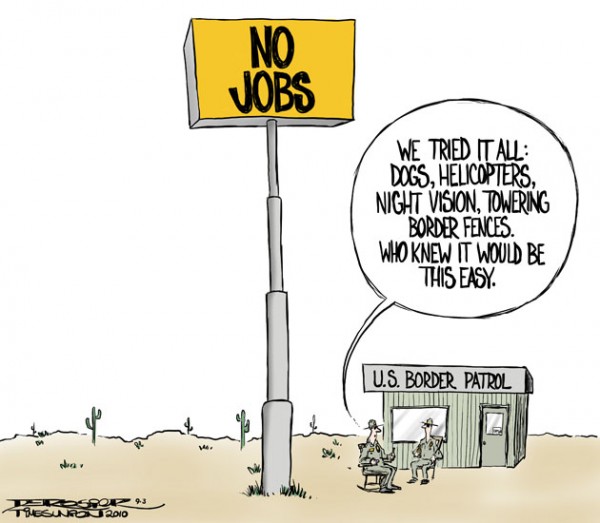
Another 884,000 Americans filed for first-time unemployment insurance benefits last week, matching the previous week’s level.
The U.S. Department of Labor (DOL) released its weekly jobless claims report at 8:30 a.m. ET Thursday. Here were the main metrics from the report, compared to consensus estimates compiled by Bloomberg:
Last week’s new jobless claims were upwardly revised slightly to 884,000, from the 881,000 previously reported. This marked the first time since March that jobless claims came in below 1 million for back-to-back weeks, as claims remained stubbornly elevated but off their peak from the worst point of the pandemic.
The past couple weeks of jobless claims appeared to improve considerably from the more than 1 million new weekly claims reported in mid-August. However, this was due to a technical change in the way the Labor Department made its seasonal adjustments, which applied for the first time to claims counted during the week ended August 28. Previous weeks’ claims were not revised to reflect the new counting method.
The change was made to account for the fact that the pandemic generated a far greater level of new claims per week than would typically occur over the course of a year, throwing off the Labor Department’s usual system of making adjustments for seasonal hiring trends.
Most economists agreed that the new methodology would produce a more accurate dataset on jobless claims during the pandemic period. It also produced a lower reported number of seasonally adjusted jobless claims than would have been generated under the previous method. Under the old method of seasonally adjusting claims, new jobless claims for the week ended August 29 would have risen to 1.02 million, according to an analysis by Ian Shepherdson, chief economist for Pantheon Macroeconomics.
“Interpreting the seasonally adjusted figures is complicated by a recent change in methodology, but in both an SA [seasonally adjusted] sense and an NSA [non-seasonally adjusted] sense, it looks like the trends for both initial and continuing claims filings have flattened out lately after a period with more notable declines,” JPMorgan economist Daniel Silver said in a note Thursday. “This flattening out has been evident in the initial claims data for a few months and in the continuing claims data for a few weeks and it is broadly consistent with the idea that the labor market recovery has lost momentum lately.”
Unadjusted claims have shown a clearer picture of the stalling recovery in the labor market. Last week, unadjusted new weekly jobless claims totaled 857,148, for an increase of 20,140 over the prior week. This was the fourth straight week of increases in unadjusted new claims.
Other economic indicators offered a more upbeat picture of the U.S. labor market. The Labor Department’s monthly jobs report released last Friday showed the U.S. economy added a greater-than-expected 1.371 million payrolls in August, and that the unemployment rate dipped more than anticipated to 8.4%. Wednesday morning, the JOLTS jobs report showed employers had more than 6.6 million job openings in July, topping expectations by over 600,000.


The hold on human testing of the vaccine candidate being developed by the pharmaceutical company AstraZeneca and the University of Oxford was confirmed by the company in a statement Tuesday evening, calling it a “routine action.”
“The announcement yesterday about the AstraZeneca vaccine is a concrete example of how even a single case of an unexpected illness is sufficient to require a clinical hold for the trial in multiple counties,” said Francis Collins, director of the National Institutes of Health, at a Senate hearing.
The announcement comes as scientists and a growing numbers of Americans express concern about the politicization of the vaccine approval process during a presidential election campaign. President Trump has made approval of a coronavirus vaccine a cornerstone of his campaign and repeatedly said it could be greenlighted before the Nov. 3 election.
But Collins and other scientists pointed to AstraZeneca’s decision as evidence that scientists, rather than politicians, are running the process. The experts said that it was hard to estimate how long the investigation would take, but that the pause was a good sign and not unexpected in trials of this size and scale, where many thousands of people are closely followed.
Collins testified that while minimal information is available about the adverse event, he has heard it described as transverse myelitis, rare inflammation of the spinal cord that has been associated with vaccinations, but has also been documented in a few cases of covid-19 and can occur in immune system disorders such as multiple sclerosis.
A study in the journal Lupus reported that between 1970 and 2009, there were 37 cases of transverse myelitis associated with various vaccines.
“The event is being investigated by an independent committee, and it is too early to conclude the specific diagnosis,” said AstraZeneca spokesman Brendan McEvoy.
Serious adverse events are closely monitored in clinical trials to determine whether they are likely to be linked to the drug or vaccine being administered. In trials with many thousands of people, sicknesses are likely to occur, and they may have no connection to the drug or vaccine being tested.
Collins also said he was not worried that the delay or even possible elimination of the AstraZeneca vaccine candidate would limit the eventual availability of vaccines to Americans.
“The reason we’re investing not in one, but in six different vaccines is because of the expectation that they won’t all work,” he told members of the Senate Health, Education, Labor and Pensions Committee.
“To have a clinical hold as has been placed on AstraZeneca as of yesterday because of a single serious adverse effect is not at all unprecedented,” Collins said.
He said that if after a thorough investigation, the adverse reaction is traced back to the vaccine candidate, then all the doses of that vaccine being manufactured would be thrown away. The United States has committed up to $1.2 billion to AstraZeneca to support development of the vaccine and to purchase 300 million doses.
A hold on a trial is not common, but is also not cause for alarm — it is a sign the system in place to protect participants is working, said Susan Ellenberg, a biostatistician at the University of Pennsylvania who has served on the independent data safety monitoring boards that investigate such incidents.
“The process is when something unusual develops, they might want to put a hold on things — and given the incredible attention that’s being given to these vaccines, and the recognition of how fast we’re trying to go, I think people are bending over backwards to show safety is really the top priority,” Ellenberg said.
This is the second pause for the trial. An information sheet for study participants from July noted that the trial had been put on hold after a participant developed neurological symptoms, but those were determined to be caused by an “unrelated neurological illness.”
“I think the company is being prudent to stop and look and to determine whether this severe adverse event, whatever it is, was a coincidence that followed vaccination, or was caused by the vaccine,” said Paul Offit, director of the Vaccine Education Center at Children’s Hospital of Philadelphia. “The vaccine is designed to prevent covid-19, not everything else” that adults might develop.
The pause came a day after the leaders of nine drug companies signed a highly unusual pledge that they would be guided by science and prioritize safety in their effort to develop a coronavirus vaccine, amid worries that political pressure could lead to an unsafe or ineffective vaccine to be used in millions of healthy people.
“This temporary pause is living proof that we follow those principles while a single event at one of our trial sites is assessed by a committee of independent experts,” Pascal Soriot, the AstraZeneca chief executive, said in a statement. “We will be guided by this committee as to when the trials could restart, so that we can continue our work at the earliest opportunity to provide this vaccine broadly, equitably and at no profit during this pandemic.”
“Even if it turns out this is causally related to the vaccine, that doesn’t automatically mean this is something you might not carry on,” said Naor Bar-Zeev, deputy director of the International Vaccine Access Center at Johns Hopkins Bloomberg School of Public Health. “The benefit versus risk needs to be evaluated with the likelihood of each of these things and is clearly context dependent. If there was no covid in the world, you’d not want to take a vaccine.”
But Collins underscored at the hearing that the safety review and pause was just another reason that the United States was spreading its bets so widely, investing in six different vaccines. The United Kingdom has also made purchasing agreements for six vaccines in the final stages of human testing.
At a news conference at 10 Downing Street on Wednesday, United Kingdom chief scientific adviser Patrick Vallance said it was not unusual for a large Phase 3 trial test of effectiveness and safety of vaccines to be paused.
This is precisely why a Phase 3 trial is undertaken, he said.
“A pause is obviously not good,” Vallance said. “But it is sensible to look closely to see what is going on.”