Tentative steps toward recovering from a deadly pandemic

https://mailchi.mp/0d4b1a52108c/the-weekly-gist-april-24-2020?e=d1e747d2d8

Baby Steps – Selah Someonetotalkto's Blog

The death toll from the novel coronavirus continued to mount this week, with more than 50,000 deaths reported in the US, and over 900,000 confirmed cases nationwide. Globally, the disease has infected more than 2.7M people and killed nearly 200,000. On Tuesday, public health officials in California announced that two people who died in Santa Clara County in early February were victims of COVID-19, making them the earliest known fatalities in the US, and altering experts’ understanding of how long the disease has been spreading in the country. New modeling from researchers at Northeastern University this week suggested that the virus may have been spreading widely in several cities by early February, but went undetected because of restrictions on testing.

National attention has remained focused on the subject of testing, as states and localities scramble to secure enough testing supplies and equipment to allow them to understand community spread and identify new cases. President Trump signed an emergency $484B relief bill on Friday that will provide $25B to ramp up testing, give additional aid to businesses forced to shutter, and send hospitals $75B in additional emergency funding.

The new money for hospitals is in addition to $100B already approved by Congress for a “provider relief fund” as part of the CARES Act. Having already distributed $30B of the initial grant money to hospitals, the Department of Health and Human Services (HHS) was expected to pay out an additional $20B today, this time according to a formula based on the net patient revenue of each hospital, rather than the earlier approach based on Medicare billings. The shift is expected to address concerns among children’s hospitals, safety-net providers, and others who were disadvantaged by the Medicare-based approach. It is unclear how the newly approved $75B of additional funding will be allocated.

Meanwhile, states began to plan for the reopening of their economies, with most governors taking a measured approach in coordination with neighboring states. A handful of states moved to loosen stay-at-home restrictions in advance of meeting the Trump administration’s “gating” criteria, including Florida, which reopened some beaches for recreational use, Oklahoma, and Georgia, which controversially allowed gyms, bowling alleys, hair and nail salons, and tattoo parlors to reopen on Friday.

Many states began to put in place plans to restart elective surgeries, which had been curtailed by a patchwork of differing state and local directives. The Centers for Medicare and Medicaid Services (CMS) released guidelines this week to help local officials decide when and how to restart surgeries. Whether for healthcare services or other types of economic activity, states will (and should) be guided by the ability to conduct widespread testing, robust contact tracing, and isolation of those infected with the virus. Ensuring that ability will likely make the next phase of the pandemic a protracted and frustrating “dance” of fits and starts, likely to last into the summer months and beyond.


Young and middle-aged people, barely sick with covid-19, are dying from strokes

https://www.washingtonpost.com/health/2020/04/24/strokes-coronavirus-young-patients/?fbclid=IwAR0yPJ-Baf7Rk780ldh07roTJepyT6EVN0A2b9mh9JdmEgc4mAcy1eDVBxA&utm_campaign=wp_main&utm_medium=social&utm_source=facebook

Young people with coronavirus are dying from strokes - The ...

Doctors sound alarm about patients in their 30s and 40s left debilitated or dead. Some didn’t even know they were infected.

Thomas Oxley wasn’t even on call the day he received the page to come to Mount Sinai Beth Israel Hospital in Manhattan. There weren’t enough doctors to treat all the emergency stroke patients, and he was needed in the operating room.

The patient’s chart appeared unremarkable at first glance. He took no medications and had no history of chronic conditions. He had been feeling fine, hanging out at home during the lockdown like the rest of the country, when suddenly, he had trouble talking and moving the right side of his body. Imaging showed a large blockage on the left side of his head.

Oxley gasped when he got to the patient’s age and covid-19 status: 44, positive.

The man was among several recent stroke patients in their 30s to 40s who were all infected with the coronavirus. The median age for that type of severe stroke is 74.

As Oxley, an interventional neurologist, began the procedure to remove the clot, he observed something he had never seen before. On the monitors, the brain typically shows up as a tangle of black squiggles — “like a can of spaghetti,” he said — that provide a map of blood vessels. A clot shows up as a blank spot. As he used a needlelike device to pull out the clot, he saw new clots forming in real-time around it.

“This is crazy,” he remembers telling his boss.

Stroke surge

Reports of strokes in the young and middle-aged — not just at Mount Sinai, but also in many other hospitals in communities hit hard by the novel coronavirus — are the latest twist in our evolving understanding of its connected disease, covid-19. Even as the virus has infected nearly 2.8 million people worldwide and killed about 195,000 as of Friday, its biological mechanisms continue to elude top scientific minds. Once thought to be a pathogen that primarily attacks the lungs, it has turned out to be a much more formidable foe — impacting nearly every major organ system in the body.

Until recently, there was little hard data on strokes and covid-19.

There was one report out of Wuhan, China, that showed that some hospitalized patients had experienced strokes, with many being seriously ill and elderly. But the linkage was considered more of “a clinical hunch by a lot of really smart people,” said Sherry H-Y Chou, a University of Pittsburgh Medical Center neurologist and critical care doctor.

Now for the first time, three large U.S. medical centers are preparing to publish data on the stroke phenomenon. The numbers are small, only a few dozen per location, but they provide new insights into what the virus does to our bodies.

A stroke, which is a sudden interruption the blood supply, is a complex problem with numerous causes and presentations. It can be caused by heart problems, clogged arteries due to cholesterol, even substance abuse. Mini-strokes often don’t cause permanent damage and can resolve on their own within 24 hours. But bigger ones can be catastrophic.

The analyses suggest coronavirus patients are mostly experiencing the deadliest type of stroke. Known as large vessel occlusions, or LVOs, they can obliterate large parts of the brain responsible for movement, speech and decision-making in one blow because they are in the main blood-supplying arteries.

Many researchers suspect strokes in covid-19 patients may be a direct consequence of blood problems that are producing clots all over some people’s bodies.

Clots that form on vessel walls fly upward. One that started in the calves might migrate to the lungs, causing a blockage called a pulmonary embolism that arrests breathing — a known cause of death in covid-19 patients. Clots in or near the heart might lead to a heart attack, another common cause of death. Anything above that would probably go to the brain, leading to a stroke.

Robert Stevens, a critical care doctor at Johns Hopkins Hospital in Baltimore, called strokes “one of the most dramatic manifestations” of the blood-clotting issues. “We’ve also taken care of patients in their 30s with stroke and covid, and this was extremely surprising,” he said.

Many doctors expressed worry that as the New York City Fire Department was picking up four times as many people who died at home as normal during the peak of infection that some of the dead had suffered sudden strokes. The truth may never be known because few autopsies were conducted.

Chou said one question is whether the clotting is because of a direct attack on the blood vessels, or a “a friendly-fire problem” caused by the patient’s immune response.

“In your body’s attempt to fight off the virus, does the immune response end up hurting your brain?” she asked. Chou is hoping to answer such questions through a review of strokes and other neurological complications in thousands of covid-19 patients treated at 68 medical centers in 17 countries.

Thomas Jefferson University Hospitals, which operates 14 medical centers in Philadelphia, and NYU Langone Health in New York City, found that 12 of their patients treated for large blood blockages in their brains during a three-week period had the virus. Forty percent were under 50, and they had few or no risk factors. Their paper is under review by a medical journal, said Pascal Jabbour, a neurosurgeon at Thomas Jefferson.

Jabbour and his co-author Eytan Raz, an assistant professor of neuroradiology at NYU Langone, said that strokes in covid-19 patients challenge conventional thinking. “We are used to thinking of 60 as a young patient when it comes to large vessel occlusions,” Raz said of the deadliest strokes. “We have never seen so many in their 50s, 40s and late 30s.”

Raz wondered whether they are seeing more young patients because they are more resistant than the elderly to the respiratory distress caused by covid-19: “So they survive the lung side, and in time develop other issues.”

Jabbour said many cases he has treated have unusual characteristics. Brain clots usually appear in the arteries, which carry blood away from the heart. But in covid-19 patients, he is also seeing them in the veins, which carry blood in the opposite direction and are trickier to treat. Some patients are also developing more than one large clot in their heads, which is highly unusual.

“We’ll be treating a blood vessel and it will go fine, but then the patient will have a major stroke” because of a clot in another part of the brain, he said.

The 33-year-old

At Mount Sinai, the largest medical system in New York City, physician-researcher J Mocco said the number of patients coming in with large blood blockages in their brains doubled during the three weeks of the covid-19 surge to more than 32, even as the number of other emergencies fell. More than half of were covid-19 positive.

It isn’t just the number of patients that was unusual. The first wave of the pandemic has hit the elderly and those with heart disease, diabetes, obesity or other preexisting conditions disproportionately. The covid-19 patients treated for stroke at Mount Sinai were younger and mostly without risk factors.

On average, the covid-19 stroke patients were 15 years younger than stroke patients without the virus.

“These are people among the least likely statistically to have a stroke,” Mocco said.

Mocco, who has spent his career studying strokes and how to treat them, said he was “completely shocked” by the analysis. He noted the link between covid-19 and stroke “is one of the clearest and most profound correlations I’ve come across.”

“This is much too powerful of a signal to be chance or happenstance,” he said.

In a letter to be published in the New England Journal of Medicine next week, the Mount Sinai team details five case studies of young patients who had strokes at home from March 23 to April 7. They make for difficult reading: The victims’ ages are 33, 37, 39, 44 and 49, and they were all home when they began to experience sudden symptoms, including slurred speech, confusion, drooping on one side of the face and a dead feeling in one arm.

One died, two are still hospitalized, one was released to rehabilitation, and one was released home to the care of his brother. Only one of the five, a 33-year-old woman, is able to speak.

Oxley, the interventional neurologist, said one striking aspect of the cases is how long many waited before seeking emergency care.

The 33-year-old woman was previously healthy but had a cough and headache for about a week. Over the course of 28 hours, she noticed her speech was slurred and that she was going numb and weak on her left side but, the researchers wrote, “delayed seeking emergency care due to fear of the covid-19 outbreak.”

It turned out she was already infected.

By the time she arrived at the hospital, a CT scan showed she had two clots in her brain and patchy “ground glass” in her lungs — the opacity in CT scans that is a hallmark of covid-19 infection. She was given two different types of therapy to try to break up the clots and by Day 10, she was well enough to be discharged.

Oxley said the most important thing for people to understand is that large strokes are very treatable. Doctors are often able to reopen blocked blood vessels through techniques such as pulling out clots or inserting stents. But it has to be done quickly, ideally within six hours, but no longer than 24 hours: “The message we are trying to get out is if you have symptoms of stroke, you need to call the ambulance urgently. ”

As for the 44-year-old man Oxley was treating, doctors were able to remove the large clot that day in late March, but the patient is still struggling. As of this week, a little over a month after he arrived in the emergency room, he is still hospitalized.


Cartoon – At last a Sport We can Watch

KAL's cartoon | The world this week | The Economist

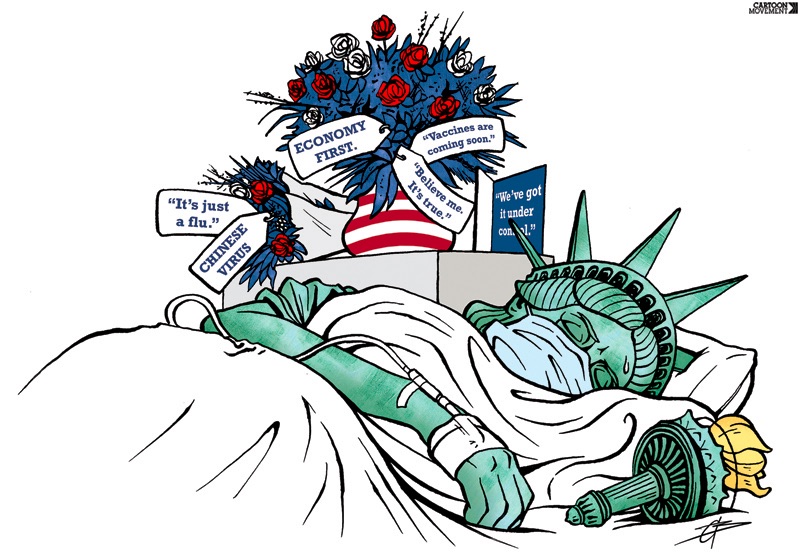
Cartoon – State of the Union

iroon.com: Cartoons


Cartoon – Coronavirus Prevention Today

College Signals Concern over Coronavirus Outbreak Cooks Adresses ...

Medicare trustees again sound alarm about looming depletion of hospital fund

https://www.fiercehealthcare.com/payer/medicare-trustees-again-sound-alarm-about-looming-depletion-hospital-fund?mkt_tok=eyJpIjoiTW1Gak1tTm1NMkZtTkdKaSIsInQiOiJGTGdcL1g2RWlXK2JRSmJQY29nZDZ6ZWszRlVxSnpHaEFwT1RaWkpITVRmTCtDeGpTeUVWWk9PYlZGdlZETFFBaVA1N2xRaXVLV2lpK0h1RVBrWk84dWw3RCtEUzZ5eXpSSkJlMHNYYzlURGYwcXZSY3BJYW9aYmsxRTJXUHpMbFAifQ%3D%3D&mrkid=959610

CMS Solicits Advice on New Medicare Payment Rules

The Medicare board of trustees held steady with its prediction on when the program’s hospital fund will run dry: 2026. 

In an annual report (PDF) released Wednesday, the trustees said hospital expenditures exceeded income by $5.8 billion last year. They expect similar trends to continue until the fund runs out in six years. The 2026 estimate has remained the same over the past several years of reports.

Medicare’s Hospital Insurance Trust Fund has missed the trustees’ tests of short-term financial adequacy every year since 2003, according to the report. It also marks the third year in a row that the trustees have issued a funding warning for the program. 

Total Medicare spending in 2019 was $796 billion, according to the report.

The trustees did say that despite the looming depletion of the fund, Congress has never allowed the hospital fund to fully run out. And the sooner policymakers act, the more time they have to roll out an extensive plan, the trustees said.

“The financial projections in this report indicate a need for substantial changes to address Medicare’s financial challenges,” the trustees said. “The sooner solutions are enacted, the more flexible and gradual they can be.”

“The early introduction of reforms increases the time available for affected individuals and organizations—including health care providers, beneficiaries, and taxpayers—to adjust their expectations and behavior,” they said.

While the fund backing Part A remains a risk, the funds for prescription drug coverage in Parts B and D are set to be stable for the foreseeable future, according to the report.  

That’s because these segments of the program are designed differently from the hospital benefit. Income and premium revenue reset annually, which allows the program to build a reserve for Part B contingencies and cover expected costs. 

The trustees also projected that Part B premiums will be about $153 in 2021. Premiums will be finalized in the fall.

The trustees caution, however, that the constant evolution in medicine makes it hard for long-term projections to be reliable. They also note that none of the projections account for any impacts related to the COVID-19 pandemic. 

“Projections of Medicare costs are highly uncertain, especially when looking out more than several decades,” the trustees said. “No one knows whether future developments will, on balance, increase or decrease costs.” 


70% Of Americans Want Officials To Prioritize Public Health Over Restarting Economy

https://www.forbes.com/sites/arielshapiro/2020/04/23/70-of-americans-want-officials-to-prioritize-public-health-over-restarting-economy-trump-kemp/?utm_source=newsletter&utm_medium=email&utm_campaign=news&utm_campaign=news&cdlcid=#74a9d5ce68d3

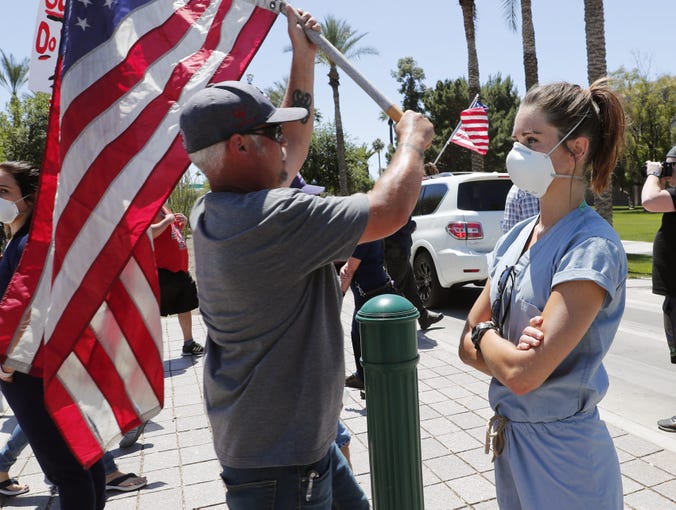
The ICU nurse who stood masked and silent at the rally to open Arizona

A wide majority of Americans are not ready to resume public life, according to a poll released Thursday by CBS News and YouGov, as governors in Georgia, Tennessee and South Carolina plan to allow stay-at-home orders to expire next week.

KEY FACTS

Only 30% of people surveyed said the government’s priority should be restarting the economy; 70% said the focus should be on slowing the virus through social distancing measures.

The polling shows a partisan divide—while 91% of Democrats and 69% of Independents favor focusing on public health, 52% of Republicans say the economy should take precedence.

29% of those polled said they would feel comfortable eating at a restaurant; Georgia Governor Brian Kemp will allow certain businesses, including restaurants, to open on April 27, 2020.

A minority of respondents said they would be comfortable going to work right now (44%) and even fewer said they would attend a large entertainment or sports event (13%), but the social isolation is taking its toll—54% said they would be willing to visit their friends.

KEY BACKGROUND

Protests against stay-at-home orders have cropped up around the country in states like California and Michigan, initially with President Donald Trump’s support. Although the movement is vocal, its support is limited. Less than a quarter of the poll’s respondents said they support the protests, and only 7% think that Trump should encourage them. The president is starting to change his tune, criticizing Georgia Governor Kemp’s plan to reopen businesses at the White House briefing on Wednesday.

WHAT TO WATCH FOR

Florida Governor Ron DeSantis said he is coordinating with neighboring governors on how to proceed, but has not yet announced whether he will extend the state’s stay-at-home order or let it expire. Florida has had more than 28,000 cases of COVID-19, more than any other southern state. A Quinnipiac poll released Wednesday shows that Florida residents’ opinions on reopening the economy reflect those of the country: Only 22% said that the state should loosen social distancing rules at the end of the month. As a first step, DeSantis allowed localities to reopen their beaches last week, and some, notably those in Jacksonville, were crowded.


Governor Cuomo, Bloomberg Announce Unprecedented New York COVID-19 Coronavirus Contact Tracing Program

https://www.forbes.com/sites/brucelee/2020/04/23/governor-cuomo-bloomberg-announce-unprecedented-new-york-covid-19-coronavirus-contact-tracing-program/?utm_source=newsletter&utm_medium=email&utm_campaign=career&cid=5d2c97df953109375e4d8b68#129e09243cd1

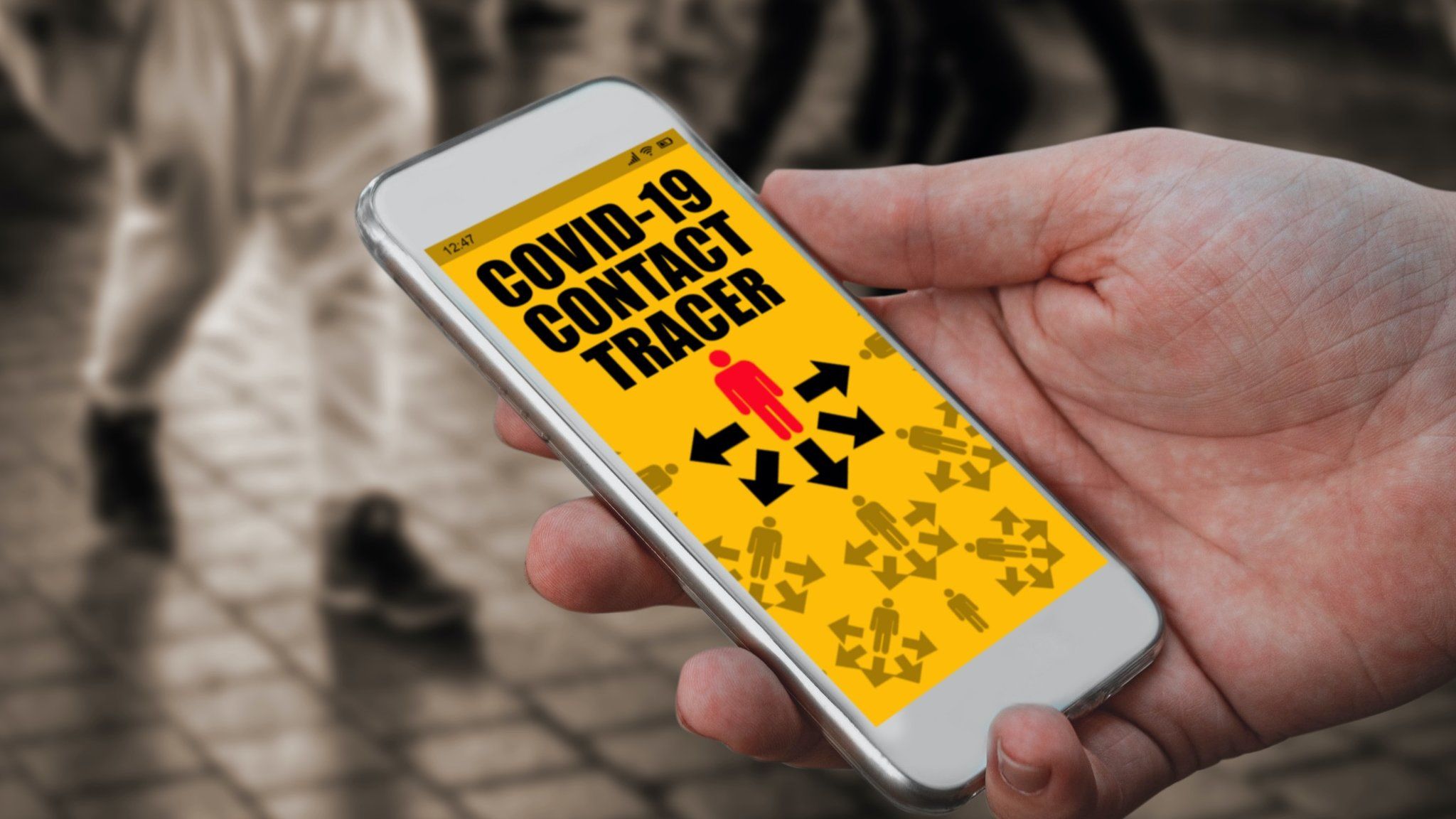
Coronavirus: Why are there doubts over contact-tracing apps? - BBC ...

New York is not going to let the COVID-19 coronavirus spread without a trace. Make that multiple traces. In fact, make that many, many, many traces.

New York State Governor Andrew Cuomo and former New York City Mayor Mike Bloomberg announced the launch of a massive contact tracing program in an effort to better contain the severe acute respiratory syndrome coronavirus 2 (SARS-CoV-2). How massive? How about larger-than-any-contact-tracing-effort-that’s-been-attempted-before-in-the-U.S. massive?

It is a sign of the times that Cuomo had to include a slide that said: “But we can’t be stupid.” After all, there are other people out there pushing to re-open businesses without at the same time providing a specific plan on how exactly to stop the virus when social distancing measures are relaxed.

Bloomberg Philanthropies, which was founded by Bloomberg, will contribute $10.5 million as well as technical support and assistance to the program. The Johns Hopkins Bloomberg School of Public Health will develop an online training program and certification process for those doing the contact tracing. Vital Strategies, via its Resolve to Save Lives initiative, will advise and assist the New York State Health Department staff in developing protocols and processes to help the whole contact tracing process.

Speaking of vital strategies, “test-trace-isolate” is quite a vital strategy to try to contain the COVID-19 coronavirus so that social distancing measures can be relaxed and things can re-open, at least to some degree. Contact tracing is the “trace” part of that strategy. I’ve described previously for Forbes how to do contact tracing. When you’ve identified a person (an index case) infected with the SARS-Cov2 via testing, contact tracing is determining and locating every person that index case may have had contact with that was close enough to transmit the virus. This way you can isolate or quarantine all of those contacts as quickly as possible so that they can’t spread the virus any further. Essentially testing, tracing, and isolating or quarantining aims to contain the virus, to box it in, to give it no people to spread to, to surround it by nothing but toilet paper, fluffy pillows, Netflix videos, and whatever else people have in their houses and apartments.

Without a vaccine or specific treatment versus the SARS-Cov2, the virus could have spread much more widely without social distancing measures in place, because supplements, gargling salt water, Medieval chants or whatever bogus prevention measures have been offered weren’t going to stop the virus. Premature re-opening could send all of those efforts down the metaphorical toilet bowl. “While we start our work to re-open our economy we must ensure we are doing it in a way that does no harm and does not undo all of the work and sacrifice it has taken to get here,” said Cuomo in statement. “One of the most critical pieces of getting to a new normal is to ramp up testing, but states have a second big task – to put together an army of people to trace each person who tested positive, find out who they contacted and then isolate those people.”

Think about it. If you re-open places and relax social distancing measures, it could take only a small number of people spreading the virus to then cause another surge in COVID-19 cases. Therefore, a good contact tracing program needs to be in place to catch potentially infectious people quickly. Implementing large scale and coordinated contact tracing programs has been one way that Germany, Singapore and South Korea have been able to better control the COVID-19 coronavirus and its impact than the U.S. and U.K. have.

“We’re all eager to begin loosening restrictions on our daily lives and our economy,” said Bloomberg in a statement. “But in order to do that as safely as possible, we first have to put in place systems to identify people who may have been exposed to the virus and support them as they isolate.”

Putting appropriate systems in place before making a decision? Hear that sound? It’s the sound of science walking back into the ongoing “re-open America” conversation and saying, “what the heck have you been doing to the house while I’ve been away.” Deciding to re-open anything without first putting proper systems in place to monitor and contain the virus would be like going to a dinner party when you aren’t wearing any clothes. It would leave you quite exposed and basically put your butt on the line.

Although the program is launching immediately, it will take some time to recruit and train hundreds or perhaps thousands of tracers. Potential recruits will come from a variety of places such as the State Department of Health, various state agencies, the State University of New York (SUNY), and the City University of New York (CUNY). Henning indicated that the timeline for getting things in place will be in the order of “a number of weeks.”

This program will coordinate with contact tracing efforts in New Jersey and Connecticut. After all, this virus doesn’t respect borders or need an E-ZPass to spread to neighboring states. As Henning noted, “New York state has already been talking extensively with New Jersey and other states.”

If you live outside this tri-state area, try to pay attention to what’s going on here. After all, contact tracing will have to occur in other parts of the country as well. Otherwise, the virus can keep circulating in different parts of the country, which means that it could at any time readily spread to the rest of the U.S. After all, the virus is like a very bad house guest. It doesn’t respect boundaries. And it is unlikely to just disappear without a trace.


Murky data fragments about a coronavirus drug

https://www.axios.com/newsletters/axios-vitals-d53939d5-90fb-4aef-a87d-30cf2b0ceebf.html?utm_source=newsletter&utm_medium=email&utm_campaign=newsletter_axiosvitals&stream=top

Fact Check: Politicians on both sides make misleading claims about ...

Depending on the study, remdesivir is either a clinical failure or a godsend for treating the novel coronavirus, Axios’ Bob Herman reports.

The big picture: The grim reality of the coronavirus pandemic has the world itching to know which experimental treatments actually work, but we’re not necessarily getting any smarter from these incremental drips of incomplete information.

Driving the news: Remdesivir — an antiviral drug that some experts have seen as a promising coronavirus treatment — “was not associated with clinical or virological benefits” for coronavirus patients, according to a summary of a clinical trial in China, viewed by STAT and the Financial Times.

Between the lines: The truth is we still don’t really know how effective the drug is in fighting this virus.

  • The Chinese trial has a randomized control group, so it is by far the most reliable study. However, the trial has not gone through peer review, and Gilead said the results were “inconclusive” because the trial had to be terminated early.

The bottom line: Science is slow for a reason, and the deluge of poorly designed trials and early drafts of studies is sowing confusion instead of creating clarity.

What’s next: A more rigorous report from Gilead’s Chinese trial is expected at the end of this month, and data from other trials is expected in late May.