Two candidates remain: Mr. Medicare for All and Mr. Public Option

https://mailchi.mp/9e118141a707/the-weekly-gist-march-6-2020?e=d1e747d2d8

Image result for Medicare for All and Public Option

The past week in Presidential politics has been momentous—but not clarifying—for determining both the eventual Democratic nominee and the healthcare platform of the party. Between the first ballots cast in South Carolina and the last votes counted in California, the field of viable candidates for the nomination has been winnowed to two: Vermont Sen. Bernie Sanders and former Vice President Joe Biden. The coming weeks will feature a knock-down, drag-out fight for delegates in the run-up to what is likely to be a contested convention in Milwaukee in mid-July, pitting Biden’s “establishment” wing of the party against Sanders’ “progressive” wing.

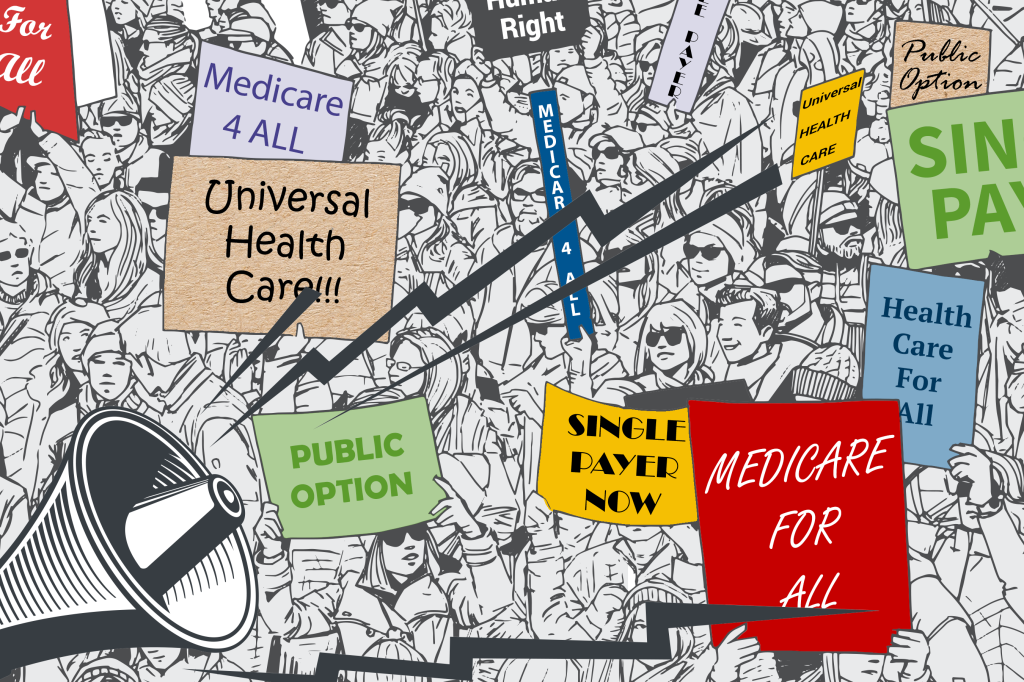
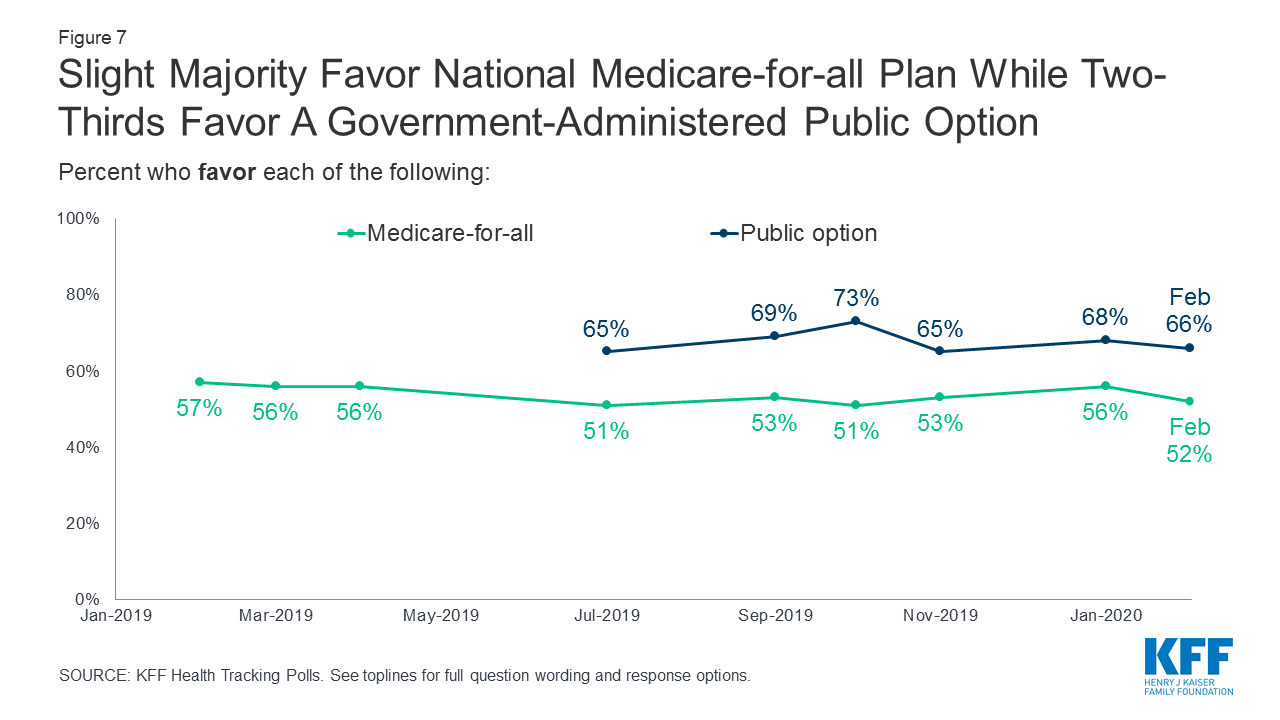
On the healthcare front, that means a continued debate between defenders of the Affordable Care Act (ACA), who want to extend coverage, as Biden does, using a government-run “public option” plan, and supporters of single-payer, “Medicare for All” (M4A) coverage, which Sanders advocates. That’s the same argument Democrats have been having since the campaign started, and while healthcare remains the top issue of concern for primary voters, polls indicate that both plans are popular with the electorate.

We continue to believe that the public option plan is a far more likely outcome than M4A, but only if the Democrats win control of the Senate—a prospect which appears more possible given billionaire Mike Bloomberg’s post-Super Tuesday endorsement of Biden, and plans to devote his substantial campaign resources to support Democratic candidates across the ballot. Some of that money will surely be spent in Montana, where Gov. Steve Bullock is poised to announce plans to run against incumbent Sen. Steve Daines (R-MT), in a critical race that could be the most expensive Senate contest in history.

And for an indication of how the politics of a public option would play out, look no further than Colorado, where the Democratic legislature moved forward with its version of the plan this week, over the objections of the hospital and insurance lobbies.

Finally, looming over the general election campaign will be the pivotal Texas vs. California case, which the Supreme Court agreed to take up in this fall’s term. That case will ensure that healthcare will remain the centerpiece of American political debates regardless of who leads the Democratic ticket. Buckle up.


Settling in for a long fight against coronavirus

https://mailchi.mp/9e118141a707/the-weekly-gist-march-6-2020?e=d1e747d2d8

Image result for Settling in for a long fight against coronavirus

As of Friday, the number of confirmed cases of the novel coronavirus, or COVID-19, has surpassed 100,000 worldwide, with over 3,400 deaths. In the US, there have been 250 confirmed cases and 14 deaths reported so far—although the actual number of cases is certainly many times higher, with testing yet to be widely available and many patients exhibiting only mild to moderate symptoms.

Vice President Mike Pence, who was put in charge of federal response efforts last week, conceded Thursday that the country does not yet have enough coronavirus tests to meet demand, and the administration will not meet its goal of having 1M tests ready by the end of the week; perhaps the $8B emergency funding package approved by Congress will help expedite efforts.

Public worry and concern among officials hit new levels, with the Director-General of the World Health Organization warning that time to contain the virus may be running out, and expressing concern that countries may not be acting fast enough. New levels of containment effort have begun to take shape. Schools shut down in areas of the country most affected by the virus, including Seattle and some New York City suburbs. All told, the New York Times reports that 300M students are out of school around the world. Companies began to cancel conferences and other large gatherings—next week’s Health Information and Management Systems Society (HIMSS) conference was called off despite a planned appearance by President Trump, given rising cancellations and vendor exits.

Hospitals around the nation have rallied to prepare for a growing wave of patients that has yet to hit. Experts expressed concerns about whether hospitals have enough open capacity, but even more critical will be gaps in the supply of staff and equipment—especially the ICU beds and ventilators necessary for critically ill patients, and the nurses and respiratory therapists needed to care for them.

The vast majority of hospitals report having a coronavirus action plan in place; however, a recent survey of nurses suggests that critical information may not be making its way to frontline clinicians. Only 44 percent of nurses reported that their organization gave them information on how to identify patients with the virus, and just 29 percent said there is a plan in place to isolate potentially infected patients.

Worries about patient financial exposure to the costs of diagnosis and treatment intensified, with fears that individuals could be held accountable for the cost of government-mandated isolation. Most patients with high-deductible plans saw their deductibles “reset” at the beginning of the year, raising concerns that individuals might refrain from seeking treatment.

The heightened worry is palpable as we connect with hospital and physician leaders around the country, and we are deeply grateful for their around-the-clock efforts, and the willingness of doctors, nurses and other caregivers to put their own safety at risk to provide the best possible care to patients under increasingly difficult circumstances.


14 health systems with strong finances

https://www.beckershospitalreview.com/finance/14-health-systems-with-strong-finances-03032020.html?utm_medium=email

Here are 14 health systems with strong operational metrics and solid financial positions, according to reports from Fitch Ratings, Moody’s Investors Service and S&P Global Ratings.

Note: This is not an exhaustive list. Health system names were compiled from credit rating reports and are listed in alphabetical order.

1. Roanoke, Va.-based Carilion Clinic has an “Aa3” rating and stable outlook with Moody’s and an “AA-” rating and stable outlook with S&P. The health system has a leading market position, strong operating cash flow and healthy debt metrics, according to Moody’s.

2. Wilmington, Del.-based ChristianaCare has an “AA+” rating and stable outlook with S&P, and an “Aa2” rating and stable outlook with Moody’s. The health system has excellent cash flow and a light debt burden, according to S&P. The credit rating agency expects ChristianaCare’s operational performance to remain near recent levels over the next two years, as the health system capitalizes on its cost containment initiatives and strong business position.

3. Santa Barbara, Calif.-based Cottage Health has an “AA-” rating and stable outlook with Fitch. The health system has a leading market position and strong profitability and cash flow, according to Fitch. Going forward, the rating agency expects Cottage Health to see moderate revenue growth.

4. Honolulu-based Hawaii Pacific Health has an “AA-” rating and stable outlook with Fitch. The health system has a solid market position and healthy operating profitability, according to Fitch. The credit rating agency expects the health system to sustain continued capital and strategic investments without the need for incremental debt in the foreseeable future.

5. Baltimore-based Johns Hopkins Health System has an “Aa2” rating and stable outlook with Moody’s. The six-hospital system has a national and international brand that supports resilient clinical demand, according to Moody’s. The rating agency expects the health system to continue to see benefits from its strong regional market position.

6. Philadelphia-based Main Line Health has an “Aa3” rating and stable outlook with Moody’s and an “AA” rating and stable outlook with S&P. The health system, which operates four acute care hospitals and a rehabilitation hospital, is a leading provider in the Philadelphia suburbs, according to Moody’s. The credit rating agency expects the health system to maintain recently improved cash flow margins, which are driven by better patient volume trends.

7. Dallas-based Methodist Health System has an “Aa3” rating and stable outlook with Moody’s. The health system has healthy balance sheet measures and operating performance as well as favorable leverage metrics, according to Moody’s. The credit rating agency expects Methodist Health System’s expense control initiatives and revenue growth opportunities to continue to drive sustainable operating performance.

8. Evanston, Ill.-based NorthShore University HealthSystem has an “AA-” rating and stable outlook with S&P and an “Aa3” rating and stable outlook with Moody’s. The health system has a strong balance sheet, good market presence and a management team that continues to execute its strategic plan, according to S&P. The rating agency expects NorthShore to maintain strong balance sheet metrics and low leverage.

9. Columbus-based OhioHealth has an “AA+” rating and stable outlook with Fitch. The 12-hospital system has a leading market position and solid liquidity, profitability and leverage metrics, according to Fitch.

10. Fort Wayne, Ind.-based Parkview Health System has an “AA-” rating and stable outlook with S&P. The nine-hospital system has stable operating performance and an excellent liquidity profile, according to S&P.

11. Chicago-based Rush University System for Health has an “AA-” rating and stable outlook with Fitch. The health system has a broad reach for high-acuity services as a leading academic medical center and its operating risk profile is strong, according to Fitch. The credit rating agency expects Rush to maintain strong capital-related ratios over the next five years.

12. Norfolk, Va.-based Sentara Healthcare has an “Aa2” rating and stable outlook with Moody’s. The health system has a leading market position in its core service area, strong patient demand, and solid margins, according to Moody’s. The credit rating agency expects Sentara’s liquidity and debt metrics to remain at recent levels.

13. Livonia, Mich.-based Trinity Health has an “AA-” rating and stable outlook with Fitch and S&P. The health system has a significant market presence in several states and a strong financial profile, according to Fitch. The credit rating agency expects the health system’s operating margins to continue to improve.

14. Madison, Wis.-based UW Health has an “Aa3” rating and stable outlook with Moody’s. UW Health has healthy margins from a large and growing clinical footprint, according to Moody’s. The rating agency expects UW Health’s margins to remain strong.


Why State Efforts to Mandate Coronavirus Testing Will Fall Short

Why State Efforts to Mandate Coronavirus Testing Will Fall Short

Image result for ERISA

To cope with incipient coronavirus outbreaks, Washington and New York have announced emergency directives requiring insurers to cover COVID-19 testing without cost-sharing. The states recognize that high deductibles and other out-of-pocket payments discourage people from getting tested, which in turn threatens public health.

Both states have acted pursuant to laws governing the regulation of insurance. In Washington, for example, the state insurance commissioner is empowered to issue orders addressing “medical coverage to ensure access to care” when the governor declares an emergency. Similarly, New York’s Superintendent of Financial Services says that it will issue an “emergency regulation” to require insurers to cover testing without cost-sharing (though the precise authority to issue that regulation is a little vague).

But the directives are more limited in scope than they appear, and will provide no help at all to the approximately 100 million people nationwide who receive coverage through self-insured employers. As with so many problems that arise in health law, the reason is the Employee Retirement Income Security Act of 1974 (ERISA).

When Congress adopted ERISA, it wasn’t thinking very hard about health insurance. It was thinking about pension plans, which many employers had chronically underfunded, leaving retired employees high and dry. So Congress adopted ERISA to offer some basic protections for employees. In exchange, Congress preempted any state laws that “relate to” employee benefit plans.

Congress carved out an exception to ERISA’s broad preemptive scope for laws regulating insurance. That’s a domain that’s traditionally been left to the states. Washington and New York can thus tell private insurers—including those that offer employer-sponsored coverage—to abide by their emergency rules.

But lots of firms don’t actually buy insurance for their employees. Instead, larger firms usually “self-insure,” meaning that they pay for their employees’ health expenses themselves. (Odds are that, if you’re employed, you work at a self-insured firm—61% of people with employer-sponsored coverage do.) And ERISA clarifies that employers, when they self-insure, aren’t to be treated as insurers.

The upshot of this convoluted scheme is that the states can’t regulate self-funded employer plans. They’re regulated, instead, by the U.S. Department of Labor under ERISA. But because Congress didn’t think of ERISA as a regulation of health insurance, it didn’t authorize the kind of emergency health regulations that Washington and New York are now drawing on.

That’s one reason the federal government has looked so feckless when it’s tried to say that it will guarantee access to testing. Vice President Pence, for example, said yesterday that testing is an “‘essential health benefit,’ which means the test will be covered by health insurance plans, Medicare and Medicaid.”

But the EHB rules don’t apply at all to large employers or to Medicare. Even if they did, insurers can (and do!) impose cost-sharing for EHBs, and could do so for a COVID-19 test. It’s a completely meaningless statement.

Nor can the federal government slide coronavirus testing into the part of the Affordable Care Act that requires coverage without cost-sharing for high-quality preventive services designated by the U.S. Preventive Services Task Force. Not only is that task force ill-equipped to move quickly, but the ACA says that its recommendations can only take effect after a “minimum interval” that “shall not be less than 1 year.” That’s much too late.

Unless I’m missing something, the federal government simply does not have the legal power to require employers to cover coronavirus testing without cost-sharing. The Association of Health Insurance Plans has said that its members may voluntarily waive cost-sharing, but they may not, and in any event AHIP doesn’t represent employers, who get to make the final call on what they do and don’t cover.

Congress will have to act—and it should act immediately to assure swift, reliable, and no-cost access to testing services. The broader lesson, though, is that Congress’s blunderbuss approach to preemption under ERISA has led to a situation in which neither the states nor the federal government is equipped to regulate the coverage practices of large, self-insured employers. That gap in legal authority could have pernicious consequences in the coming months.


Ever-Rising Health Costs Worsen California’s Coronavirus Threat

Ever-Rising Health Costs Worsen California’s Coronavirus Threat

Image result for Ever-Rising Health Costs Worsen California’s Coronavirus Threat

As California and the nation prepare for the spread of the new coronavirus disease known as COVID-19, it is important to be reminded of another significant threat to the health of our people: the high costs of health care.

It is striking that one of the first steps policymakers must consider in the wake of an outbreak is waiving consumer cost sharing such as copays and co-insurance for coronavirus testing and treatment. Why? We’ve known for decades that the use of patient cost sharing is a blunt instrument that leads people to skimp on necessary services. In an era when the average deductible facing a working family in California now exceeds $2,700, it’s not hard to imagine how many people missed detection and treatment opportunities because they could not afford to pay for them.

The discussion around COVID-19 cost sharing is a reminder that coronavirus testing and treatment is not the only thing Californians forgo because of cost. The latest CHCF health policy poll found that in the last year, more than half of California families delayed or skipped care due to cost, including avoiding recommended medical tests or treatments, cutting medication doses in half, or postponing physical or mental health care. These practices are spreading, and they are making us sicker. Forty-three percent of those who postponed care said it made their conditions worse.

A close look at the survey data (PDF) shows that many Californians experience these problems, regardless of their health insurance status, income, or residence in high- or low-cost regions. And worries over health care costs are even more widely shared. More than two-thirds of state residents are worried about medical bills and out-of-pocket costs, including almost 60% of those with employer-sponsored insurance. These concerns reflect two unfortunate realities: We are all vulnerable to disease, and no one is immune from ruinous medical bills because of it.

A key reason for the growth in cost-related problems and worries for California families is the rise in underlying expenses within our health care system. Economists point to several factors that drive systemwide expenses, including new medical technologies and Californians’ health status. But none of these factors explains away the overall rise and dramatic variation in prices for the same procedures in different parts of the state, even after controlling for the complexity of the procedure and underlying costs like physician wages.

CHCF surveys of employer-sponsored insurance over the last decade show how much of this rise is being shifted to working California families in the form of higher insurance premiums and deductibles. The chart below shows the cumulative increase of inflation and wages along with premiums and deductibles for the average California family covered by a preferred provider organization (PPO) in a workplace health plan. While wage growth has barely kept pace with inflation, family premiums increased at more than twice that rate. It is especially striking that deductibles increased almost four times as much as wages.

California will not be an affordable place to live and raise a family unless it confronts the problem of unjustified, underlying health care costs. Expanding health insurance coverage, increasing subsidies, and limiting out-of-pocket expenses solve immediate problems, but sustained progress demands that we reduce systemwide expenditures for services that are not making Californians any healthier. Evidence suggests the opportunity for savings is significant.

In his state budget (PDF) released in January, California Governor Gavin Newsom proposed establishing an Office of Health Care Affordability to address underlying health care cost trends and to develop strategies and cost targets for different sectors of the health care industry. Other states have established offices or cost commissions of this type. A recent CHCF publication examined how four states have structured and empowered their commissions to successfully do this work.

As we confront the public health threat of COVID-19, we must remember that widespread cost-related access problems and worries already afflict most families in the state. In ways that few people anticipated before this year, this cost issue isn’t just a problem for strapped families — it’s a threat to the well-being of every last one of us.