The world of private equity — 15 key observations

https://www.beckershospitalreview.com/hospital-transactions-and-valuation/the-world-of-private-equity-15-key-observations.html?origin=CFOE&utm_source=CFOE&utm_medium=email

Image result for the world of private equity

Private equity funds have significantly grown in number, size and significance in the last 20 years.

Recent high-profile acquisitions include a stake in the Manchester City soccer team and the purchase by Ithaca Holdings, backed by private equity firms, of Taylor Swift’s recording catalog. Along with private equity’s growth, it has also become an area of political focus, sure to be a talking point during the next presidential election. Following are 15 key observations on the current state of private equity.


1. Private equity raises money from investors and invests that capital in different types of companies. The most common investment is a leveraged buyout, whereby a fund buys a majority stake in a company, attempts to improve it, and then sell the company for a profit. Private equity funds also invest in distressed assets, real estate, other funds and venture capital. Private equity funds raised approximately $700 billion in 2018. This broadly goes into several different categories. This amount raised is slightly less than in 2017.


2. Private equity as an asset class has matured greatly. Increasingly, to have broad equity exposure, investors must also have exposure to private companies. Along with diversification, private equity has historically (but see points below) offered the potential for returns that beat the public markets. Private equity investment continues to increase, with investments in around 8,000 + private companies. By contrast, the US public markets are shrinking. According to the New York Times, in the mid-1990s, there were more than 8,000 publicly traded companies, and by 2016, there were only 3,627.


3. As private equity funds have grown to be a larger part of the equity market, their returns have regressed closer and closer to the public markets. The largest funds are closer in returns to the public markets. According to a recent Wall Street Journal report, private-equity funds of $10 billion or more posted 14.4 percent five-year annualized returns net of fees as of the end of September 2018, barely edging past the 14.1 percent return for the S&P 500. See “Wall Street Journal “Private Equity Funds are Raising Bigger and Bigger Funds. They Don’t Often Deliver.”


4. Private equity have generally outperformed the public markets during periods of volatility. In 2018, where there was political and economic uncertainty, the average private equity fund appreciated 8.2 percent while public market indexes had double-digit declines. See, “10 Predictions for Private Equity for 2019” by Antoine Drean. However, the statistic may be misleading as private equity can choose not to exit investments in more challenging markets. Also, there is a large variety of returns in different private equity funds.


5. The spread of returns from high returns to very low returns among private equity funds is very large. See McKinsey “Return Dispersion is much Greater in Private Equity than in Public Markets.” This means it’s become increasingly difficult to find the right private equity fund to invest with. It also means that successful funds can outperform the median by a significant degree. However, it is hard to consistently be a successful fund.


6. The 5 biggest private equity funds are largely considered to be the following – The Carlye Group, Kohlberg Kravis Roberts (KKR), The Blackstone Group, Apollo Global Management and TPG. Each has more than $100 billion in assets under management. The CEO, Chairman and Co-Founder of the Blackstone Group recent authored “What it Takes– Lessons in the Pursuit of Excellence”. This book provides a good primer on private equity.


7. Private equity mega funds, those funds with $5 billion or more in pooled capital, take up a larger and larger part of the investment area. 19 mega funds were raised in 2018. These 19 funds reflected 20 percent of all private equity fundraising. See McKinsey and Co “Private Markets Come of Age.” The 2019 Preqin Global Private Equity and Venture Capital Report discusses the growing concentration of capital amongst a relatively small number of funds. It reported at the end of 2018, that 62 percent of the total capital raised was committed to the 50 largest funds.


8. According to Pitchbook, private equity fundraising in the US hit an all-time high in 2019. Pitchbook reports that as of the beginning of November 2019, US buyout funds raised north of $246 billion. According to a Fitch Ratings report, Private equity is sitting with approximately $2.1 trillion globally to invest. See “Private equity fundraising in the US hits all-time high” by Eliza Haverstock. This amount of “dry powder” is at an all-time high. See “This is the Biggest Year Ever for Private Equity Funding. Where are the Deals?” Dallas Business Journal.

9. Investors, economists and politicians are signaling the likelihood of a recession in the near future. With a huge amount of money to deploy, funds are developing strategies to deal with an economic downturn. This may mean less new deals and a focus on margins of existing investments.


10. Private debt funds have grown greatly and raised more than $100 billion a year for the last 4 years. According to Preqin, there are now 417 private debt funds in the market. The market for investing in private debt funds seems to be slowing some in 2019 with less on track to be raised than the last four years. See, e.g., Institutional Investor, “Investors are backing off from private debt”. Here, the article headlines that investors are backing off from the once booming asset class. Oct 10, 2019. The largest private debt funds are often closely connected to the largest private equity funds. These include GSO Capital Partners which is related to Blackstone, KKR, Ares Management, OakTree Capital Management and Goldman Sachs via its Goldman Sachs Merchant Banking Division. Pitchbook reports the following firms as leading the private debt market: Antares Management, Ares, Barings, TwinBrook Capital Partners, The Carlye Group, Midcap Financial, NXT Capital, BMO Financial Group, Madison Capital Funding, and Citizens Bank. See also Bloomberg, December 18, 2019, “Apollo and Blackstone are Stealing Wall Street’s Loans Business.” The movement to these behemoth funds also having large direct debt financing funds will have a big impact on the business of other traditional lenders and financing sources.


11. According to SPG Global, multiples for PE funded deals are averaging close to 11.5 times EBITDA. They attribute this to the sinking cost of debt, a mountain of private equity dry powder, and larger equity investments. The leverage on deals is overall close to 5.5 times EBIDTA. The multiples differ dramatically based on the size of the deal, the growth trajectory of the company, the assessment of risk of the company, and several other factors.


12. As private equity funds grow larger and have more capital to deploy, there are less club deals. According to McKinsey, “in 2007, 27 percent of megadeals included more than one large global GP. By 2018, that number was 4 percent. Club deals were associated with several notable investment catastrophes and largescale bankruptcies.” However, co-investments, where investors invest alongside a private equity fund, often without paying some of the usual fees, are continuing to increase. These deals are becoming increasingly competitive and provide an opportunity to reduce the exposure of investing in a single company.


13. Increasingly the largest private equity funds have grown their own operations teams and have more operating partners and executives than they used to. For example, Blackstone is reported to have more than 2,400 employees. Carlye has close to 1,600 employees. KKR has 1,300 employees. Funds are also investing in analytics and other technology to manage the fund and platform companies.


14. Funds are diversifying their fundraising and investment strategies in interesting ways. On the investment side, some of the largest funds are starting to raise funds from retail investors. On the investment side, there are now funds like Dyal Capital which has raised $9 billion to invest in other private equity funds.


15. The total volume of dollars going into private equity related deals is growing. However, the total number of deals transacted has been fairly flat the last few years. The average dollar volume per deal is increasing. According to Bain, the number of individual transactions in 2018 decreased by 13 percent, to 2,936 worldwide — but total buyout value jumped 10 percent to $582 billion (including add-on deals). See Bain, Global Private Equity Report 2019. A related trend is private equity funds selling their stakes in companies to other private equity funds in secondary transactions. This is different from years past where the normal exit was to a strategic buyer or to the public markets – this secondary market is anticipated to continue to grow. Increasingly the volume of deals done is driven by add on or bolt on transactions added to platforms.


Sutter Health to pay $575M to settle antitrust case

https://www.beckershospitalreview.com/legal-regulatory-issues/sutter-health-to-pay-575m-to-settle-antitrust-case.html?origin=CFOE&utm_source=CFOE&utm_medium=email

Image result for Sutter Health to pay $575M to settle antitrust case

Sutter Health, a 24-hospital system based in Sacramento, Calif., has agreed to pay $575 million to settle an antitrust case brought by employers and California Attorney General Xavier Becerra.

The settlement resolves allegations that Sutter Health violated California’s antitrust laws by using its market power to overcharge patients and employer-funded health plans. The class members alleged Sutter Health’s inflated prices led to $756 million in overcharges, according to Bloomberg Law.

Under the terms of the settlement, Sutter will pay $575 million to employers, unions and others covered under the class action. The health system will also be required to make several other changes, including limiting what it charges patients for out-of-network services, halting measurers that deny patients access to lower-cost health plans, and improving access to pricing, quality and cost information, according to a Dec. 20 release from Mr. Becerra.

To ensure Sutter is complying with the terms of the settlement, the health system will be required to cooperate with a court-approved compliance monitor for at least 10 years.

Mr. Becerra said the settlement, which he called “a game changer for restoring competition,” is a warning to other organizations.

“This first-in-the-nation comprehensive settlement should send a clear message to the markets: if you’re looking to consolidate for any reason other than efficiency that delivers better quality for a lower price, think again. The California Department of Justice is prepared to protect consumers and competition, especially when it comes to healthcare,” he said.

A Sutter spokesperson told The New York Times that the settlement did not acknowledge wrongdoing. “We were able to resolve this matter in a way that enables Sutter Health to maintain our integrated network and ability to provide patients with access to affordable, high-quality care,” said Flo Di Benedetto, Sutter’s senior vice president and general counsel, in a statement to The Times.

The settlement must be approved by the court. A hearing on the settlement is scheduled for Feb. 25, 2020.


Trading high deductibles for narrow networks

https://mailchi.mp/f3434dd2ba5d/the-weekly-gist-december-20-2019?e=d1e747d2d8

Related image

For many employers, narrowing provider networks has been a bridge too far, despite unrelenting healthcare cost growth.

A recent Los Angeles Times profile of a Boston union that was able not only to lower costs but also nearly eliminate employee cost-sharing may make doubters reconsider. Unite Here Local 26, which represents 9,000 hotel workers and their families, implemented a narrow network health plan in 2013, when two-thirds of its members agreed to forego care at certain marquee academic hospitals, which charged two to three times more than others in the Boston area.

Today the union actually pays less in medical costs per member than it did six years ago, and premiums are ten percent lower than the national average, despite Boston being one of the highest-cost healthcare markets in the country. Employees pay no deductibles, and generic medications cost them only $1. Savings have translated into raises for many employees, with some low-income workers seeing a pay jump of up to 39 percent across six years.

As we’ve discussed in the past, employers are reaching a limit on how high they can push deductibles, especially in a tight labor market. Some are beginning to experiment with various network options that lower health care costs—but many have been reticent to change benefit design in any way that could be perceived as narrowing choice.

Local 26’s experience shows that well-designed narrow networks, implemented with employee education and buy-in, can provide cost relief for both businesses and individuals that can be sustained over time.


In a Boston acute care matchup, home beats the hospital

https://mailchi.mp/f3434dd2ba5d/the-weekly-gist-december-20-2019?e=d1e747d2d8

Related image

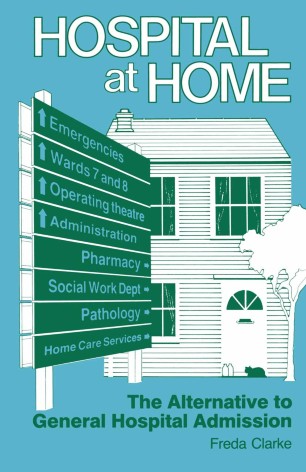
Despite all of the recent hype, the idea of “hospital-at-home” is hardly a new concept. The first randomized, controlled study on the topic, published over 20 years ago, showed that the model was safe, finding that patients with five common conditions who would normally have been admitted to the hospital experienced similar outcomes when treated at home.

This week a new randomized, controlled trial from researchers at Boston-based Brigham and Women’s showed that hospital-at-home had better clinical outcomes and was a whopping 38 percent cheaper than equivalent management in an acute care hospital. Yes, the study was small (91 patients) and probably had some selection bias (just 37 percent of eligible patients chose home care).

Drilling into the data, length of stay for home-based patients was a little longer, but at-home patients received dramatically fewer lab tests, imaging studies and specialist consults—raising the question of whether all those daily chest x-rays, CBCs and curbside consults in traditional hospitals really provide value.

And 30-day readmissions and ED visit rates for home-based patients were less than half of the control group. Selection for clinical appropriateness and family support is critical, but experts estimate that up to a third of medical admissions could be managed in the home setting.

As growing evidence shows hospital-at-home to be safe, effective and lower cost, the lack of a reimbursement model to support investments in home-based acute care is now the greatest obstacle to widespread adoption.


Get ready for the “Yolds”

https://mailchi.mp/f3434dd2ba5d/the-weekly-gist-december-20-2019?e=d1e747d2d8

Image result for Yolds

In a recent discussion on consumer strategy, a health system executive relayed a surprising data point: the system’s most “digitally activated” market was a local retirement community. The residents of this over-55, master-planned community, designed for active seniors, had the system’s highest rates of patient portal activation and online appointment scheduling.

Growth of this cohort of “young old” consumers (YOLDS) —over 65 but still active—will explode as the peak of the Baby Boom joins their ranks. And with a median wealth of $210,000, they’ll have tremendous spending power, so much so that the Economist recently dubbed the next ten years “The Decade of the Yold”. Many “Yolds” will keep working well into their 70s, and those that do will experience slower rates of health and cognitive decline.

For health systems, the next few years are critical for deepening relationships as the Yolds transition into Medicare. What do they want today? Technology-enabled care, and access and communication that works right out of the box, as they have little patience for troubleshooting buggy software. Customized, high-touch services, like they’ve come to expect from everything they consume.

And a focus on helping them maintain their active, productive lifestyle for as long as possible. But they’re not brand switchers: once they join a Medicare Advantage plan, there’s a 90 percent chance they’ll stay. Building loyalty with the Yolds can be the found


A look at what lies under the (high) deductible

https://mailchi.mp/f3434dd2ba5d/the-weekly-gist-december-20-2019?e=d1e747d2d8


With the continued growth in high deductible health plans (HDHPs) in both employer- and exchange-based insurance markets, a larger number of services are falling “under the deductible”, leaving patients responsible for the full cost of care. 

The graphic above illustrates the national cost ranges of ten common outpatient services, based on data from a publicly-available commercial claims database. It’s not just minor services like lab tests or diagnostic imaging that are falling under the deductible—many consumers are now paying full freight for a growing list of outpatient procedures like cataract or carpal tunnel surgery, or even knee arthroscopy.

Shopping can pay off: for any service, the highest-priced provider can be over three times the lowest-priced, translating into thousands of dollars of savings for patients with high-deductible plans.

Outpatient services now account for over half the revenue of many health systems. As deductibles climb, more and more of the (profitable) health system services are becoming “shoppable” for consumers—creating an imperative for systems to both lower costs and pursue rational pricing as scrutiny becomes more intense.


Christmas comes early for healthcare industry groups

https://mailchi.mp/f3434dd2ba5d/the-weekly-gist-december-20-2019?e=d1e747d2d8

Image result for Christmas comes early for healthcare industry groups

Today, President Trump is set to sign into law a $1.4T spending agreement that keeps the Federal government open and avoids a year-end budget showdown with Congress. The agreement is comprised of two separate spending packages, with a total of 12 budget bills, and includes good news for almost every segment of the healthcare industry.

It repeals the long-debated “Cadillac Tax” on high-cost health plans, which was a key funding mechanism for the ACA and was intended to force employers to encourage their employees to use healthcare services more frugally.

It also repeals the “device tax” on medical device manufacturers, and the separate fee on health insurers, both also part of the ACA.

In sum, those three repeals will reduce tax revenue by about $375B over the next decade and will remove a substantial portion of funding originally earmarked to sustain the 2010 health law.

Meanwhile, notably absent from the budget deal are measures to address surprise billing, which have proven difficult to finalize despite broad bipartisan support, and steps to reduce the cost of prescription drugs, a key legislative priority on both sides of the aisle.

Thanks to intense lobbying by various industry interest groups, and the toxic political environment in Washington, the year is drawing to an end with virtually no progress to show on either front.

As a result, despite a year’s worth of heated rhetoric about the high cost of care, the burden of health spending on individuals, and the need to rein in runaway health spending, 2019 is ending with almost every industry interest—pharmaceutical companies, device manufacturers, insurers, physician groups, and hospitals—largely avoiding accountability in the form of federal legislation. As we head into an election year, we’ll likely have to wait until after next November to see real progress on any of these issues. Merry Christmas.