


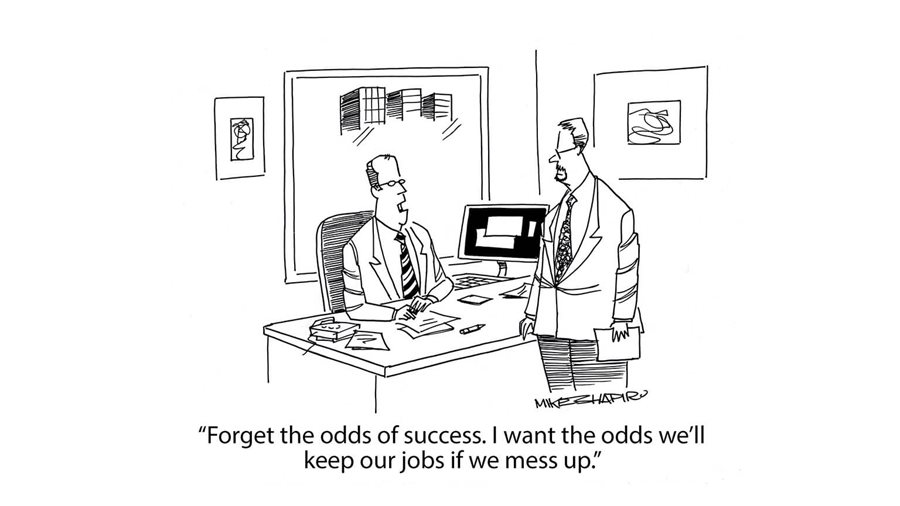
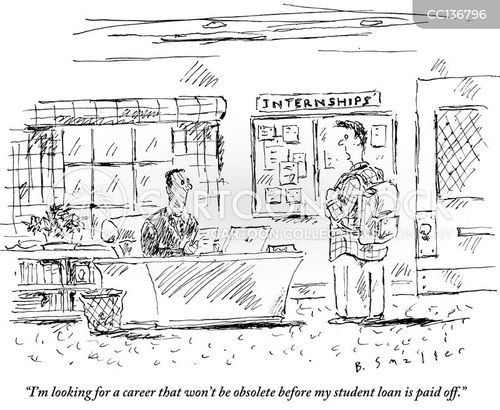
Cartoon – Importance of Taking Responsibility

The change is another sign for providers that their financial situation is on a rather swift recovery from the upheaval caused by the pandemic. Although some facilities, especially those that are smaller and in rural areas, are certainly still struggling, that was the case before COVID-19 as well.
Most nonprofit health systems reported first-quarter results that showed improved volumes and investment returns. Some are still sporting more than a year’s worth of cash on hand.
Many of them took advantage of federal coronavirus relief funds, most of which can now be used more flexibly. A few, like Kaiser Permanente, did fine without the aid and ended up returning it.
The S&P analysts warned, however, that potential COVID-19 outbreaks this fall would be a setback. That remains a concern with some parts of the country lagging in vaccination rates and the increasing prevalence of more contagious COVID-19 variants.
Other risks include the end of enhanced federal reimbursement and the return of the Medicare sequester cuts when the public health emergency ends, which is expected to be after the end of this year.
But the analysts said agile management teams should be able to combat these challenges.
“[T]o the extent that the pandemic has enabled faster decision making and allowed management teams to pivot and identify new opportunities for expense base restructuring and revenue enhancement, we believe these risks are manageable within our view of the stable sector view,” according to the report.
Many U.S. hospitals are turning to layoffs to cut costs as they recover from the financial hit of the COVID-19 pandemic.
Here are seven hospitals or health systems that recently announced layoffs or job cuts:
1. Mishawaka, Ind.-based Franciscan Health will lay off 83 employees of its 100-year-old hospital in Hammond, Ind., according to a notice filed with the state. The layoff notice comes as the health system works to shrink the 226-bed Franciscan Health Hammond Hospital to an eight-bed acute care facility with an emergency department and primary care practice. The layoffs are slated to begin Aug. 21 and will be permanent, the health system said.
2. HealthAlliance of the Hudson Valley, a three-hospital system in the Westchester Medical Center Health Network, laid off an undisclosed number of workers June 14. Westchester Medical Center Health Network in Valhalla, N.Y., said it laid off HealthAlliance hospital employees in Kingston, N.Y., to eliminate redundancies as it begins to consolidate inpatient services to one location.
3. As part of a financial restructuring plan, Sacramento, Calif.-based Sutter Health will issue another round of layoffs this year. The health system said in early June it plans to lay off 400 employees. These newly announced layoffs are in addition to 277 information technology jobs that were cut April 2. Sutter said most of the new layoffs affect employees in administrative positions in benefits, human resources, data services and accounting. The layoff notice said many of these employees were working remotely or in the field.
4. A little over a month after filing a notice to complete about 651 layoffs this year, Ascension Technologies, the IT subsidiary of St. Louis-based Ascension, eliminated 92 remote IT jobs in Indiana, according to a June 3 report. Most of the laid-off employees are based in Indianapolis and Evansville, Ind., the Indiana Department of Workforce Development said June 2
5. Lawrence (Mass.) General Hospital plans to lay off 56 employees and is warning of more cuts unless it receives government aid quickly, according to a May 25 report. The layoffs will affect employees working in administration and patient care. The layoffs affect about 2.5 percent of the 186-bed hospital’s workforce. Lawrence General attributed the layoffs to the COVID-19 pandemic weakening its financial profile.
6. Boca Raton, Fla.-based Cancer Treatment Centers of America closed its hospital in Tulsa, Okla. About 400 employees will be affected by the closure. The hospital saw its last patient on May 27.
7. Boca Raton, Fla.-based Cancer Treatment Centers of America is selling its hospital in Philadelphia and will lay off the facility’s 365 employees, according to a closure notice filed with the state. The cancer care network said it anticipates the layoffs in Philadelphia will begin after May 30.

http://www.reason.com/2021/06/22/

An argument for humility in the face of pandemic forecasting unknown unknowns.
“Are we battling an unprecedented pandemic or panicking at a computer generated mirage?” I asked at the beginning of the COVID-19 pandemic on March 18, 2020. Back then the Imperial College London epidemiological model’s baseline scenario projected that with no changes in individual behaviors and no public health interventions, more than 80 percent of Americans would eventually be infected with novel coronavirus and about 2.2 million would die of the disease. This implies that 0.8 percent of those infected would die of the disease. This is about 8-times worse than the mortality rate from seasonal flu outbreaks.
Spooked by these dire projections, President Donald Trump issued on March 16 his Coronavirus Guidelines for America that urged Americans to “listen to and follow the directions of STATE AND LOCAL AUTHORITIES.” Among other things, Trump’s guidelines pressed people to “work or engage in schooling FROM HOME whenever possible” and “AVOID SOCIAL GATHERINGS in groups of more than 10 people.” The guidelines exhorted Americans to “AVOID DISCRETIONARY TRAVEL, shopping trips and social visits,” and that “in states with evidence of community transmission, bars, restaurants, food courts, gyms, and other indoor and outdoor venues where people congregate should be closed.”
Let’s take a moment to recognize just how blindly through the early stages of the pandemic we—definitely including our public health officials—were all flying at the time. The guidelines advised people to frequently wash their hands, disinfect surfaces, and avoid touching their faces. Basically, these were the sort of precautions typically recommended for influenza outbreaks. On July 9, 2020, an open letter from 239 researchers begged the World Health Organization and other public health authorities to recognize that COVID-19 was chiefly spread by airborne transmission rather than via droplets deposited on surfaces. The U.S. Centers for Disease Control and Prevention (CDC) didn’t update its guidance on COVID-19 airborne transmission until May 2021. And it turns out that touching surfaces is not a major mode of transmission for COVID-19.
The president’s guidelines also advised, “IF YOU FEEL SICK, stay home. Do not go to work.” This sensible advice, however, missed the fact that a huge proportion of COVID-19 viral transmission occurred from people without symptoms. That is, people who feel fine can still be infected and, unsuspectingly, pass along their virus to others. For example, one January 2021 study estimated that “59% of all transmission came from asymptomatic transmission, comprising 35% from presymptomatic individuals and 24% from individuals who never develop symptoms.”
The Imperial College London’s alarming projections did not go uncontested. A group of researchers led by Stanford University medical professor Jay Bhattacharya believed that COVID-19 infections were much more widespread than the reported cases indicated. If the Imperial College London’s hypothesis were true, Bhattacharya and his fellow researchers argued, that would mean that the mortality rate and projected deaths from the coronavirus would be much lower, making the pandemic much less menacing.
The researchers’ strategy was to blood test people in Santa Clara and Los Angeles Counties in California to see how many had already developed antibodies in response to coronavirus infections. Using those data, they then extrapolated what proportion of county residents had already been exposed to and recovered from the virus.
Bhattacharya and his colleagues preliminarily estimated that between 48,000 and 81,000 people had already been infected in Santa Clara County by early April, which would mean that COVID-19 infections were “50-85-fold more than the number of confirmed cases.” Based on these data the researchers calculated that toward the end of April “a hundred deaths out of 48,000-81,000 infections corresponds to an infection fatality rate of 0.12-0.2%.” As I optimistically reported at the time, that would imply that COVID-19’s lethality was not much different than for seasonal influenza.
Bhattacharya and his colleagues conducted a similar antibody survey in Los Angeles County. That study similarly asserted that COVID-19 infections were much more widespread than reported cases. The study estimated 2.8 to 5.6 percent of the residents of Los Angeles County had been infected by early April. That translates to approximately 221,000 to 442,000 adults in the county who have had the infection. “That estimate is 28 to 55 times higher than the 7,994 confirmed cases of COVID-19 reported to the county by the time of the study in early April,” noted the accompanying press release. “The number of COVID-related deaths in the county has now surpassed 600.” These estimates would imply a relatively low infection fatality rate of between 0.14 and 0.27 percent.
Unfortunately, from the vantage of 14 months, those hopeful results have not been borne out. Santa Clara County public health officials report that there have been 119,712 diagnosed cases of COVID-19 so far. If infections were really being underreported by 50-fold, that would suggest that roughly 6 million Santa Clara residents would by now have been infected by the coronavirus. The population of the county is just under 2 million. Alternatively, extrapolating a 50-fold undercount would imply that when 40,000 diagnosed cases were reported on July 11, 2020, all 2 million people living in Santa Clara County had been infected by that date.
Los Angeles County reports 1,247,742 diagnosed COVID-19 cases cumulatively. Again, if infections were really being underreported 28-fold, that would imply that roughly 35 million Angelenos out of a population of just over 10 million would have been infected with the virus by now. Again turning the 28-fold estimate on its head, that would imply that all 10 million Angelenos would have been infected when 360,000 cases had been diagnosed on November 21, 2020.
COVID-19 cases are, of course, being undercounted. Data scientist Youyang Gu has been consistently more accurate than many of the other researchers parsing COVID-19 pandemic trends. Gu estimates that over the course of the pandemic, U.S. COVID-19 infections have roughly been 4-fold greater than diagnosed cases. Applying that factor to the number of reported COVID-19 cases would yield an estimate of 480,000 and 5,000,000 total infections in Santa Clara and Los Angeles respectively. If those are ballpark accurate, that would mean that the COVID-19 infection fatality rate in Santa Clara is 0.46 percent and is 0.49 percent in Los Angeles. Again, applying a 4-fold multiplier to take account of undercounted infections, those are both just about where the U.S. infection fatality rate of 0.45 percent is now.
The upshot is that, so far, we have ended up about half-way between the best case and worst case scenarios sketched out at the beginning of the pandemic.

 HENRY KOTULA