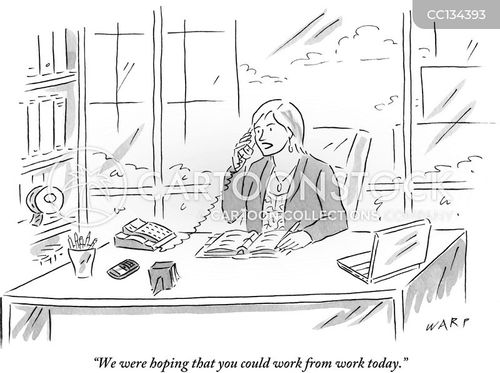
Cartoon – Sign of the Times (Health Coverage)

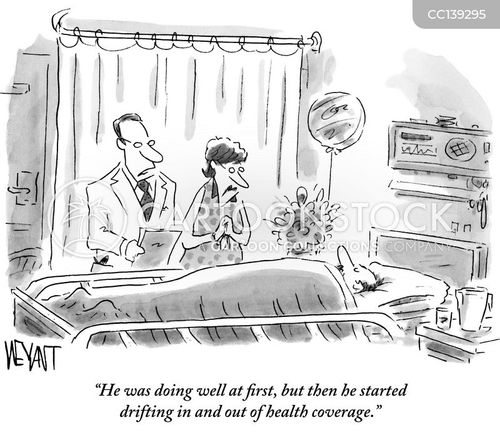
https://mailchi.mp/66ebbc365116/the-weekly-gist-june-11-2021?e=d1e747d2d8

Facing intense criticism from hospital executives and emergency physicians, the nation’s largest health insurer, UnitedHealthcare (UHC), delayed the implementation of a controversial policy aimed at reducing what it considers to be unnecessary use of emergency services by its enrollees.
The policy, which would have gone into effect next month, would have denied payment for visits to hospital emergency departments for reasons deemed to be “non-emergent” after retrospective review. Similar to a policy implemented by insurer Anthem several years ago, which led to litigation and Congressional scrutiny, the UHC measure would have exposed patients to potentially large financial obligations if they “incorrectly” visited a hospital ED.
Critics pointed to longstanding statutory protections intended to shield patients from this kind of financial gatekeeping: the so-called “prudent layperson standard” came into effect in the 1980s following the rise of managed care, and requires insurance companies to provide coverage for emergency services based on symptoms, not final diagnosis. UHC now says it will hold off on implementing the change until after the COVID-19 national health emergency has ended, and will use the time to educate consumers and providers about the policy.
Like many critics, we’re gobsmacked by the poor timing of United’s policy change—emergency visits are still down more than 20 percent from pre-pandemic levels, and concerns still abound that consumers are foregoing care for potentially life-threatening conditions because they’re worried about coronavirus exposure. Perhaps UHC is trying to “lock in” reduced ED utilization for the post-pandemic era, or perhaps they never intended to enforce the policy, hoping that the mere threat of financial liability might discourage consumers from visiting hospital emergency rooms.
While we share the view that consumers need better education about how and when to seek care, combined with more robust options for appropriate care, this kind of draconian policy on the part of UnitedHealthcare just underscores why many simply don’t trust profit-driven insurance companies to safeguard their health.
https://mailchi.mp/66ebbc365116/the-weekly-gist-june-11-2021?e=d1e747d2d8

A physician leader asked recently whether we saw many health system executive teams work remotely throughout the pandemic. At her system, nearly every non-clinical leader worked mostly from home. “It seemed like two of our executives spent most of last year at their vacation homes,” she shared. “I know that we were being socially distant, but when our CEO held a virtual town hall from his beach house, it felt really tone deaf to our doctors and nurses.” In our experience, we saw most leaders spending many days in the office, even if some meetings were on Zoom. One
CEO mentioned he felt compelled to come to his office, even if it meant working alone: “If the people working on the front lines came in, I felt I needed to come in. And in the rare case someone needed to connect in person, they knew I was there.” There is power in just being visible to caregivers.
One recently retired CEO shared that he knew colleagues who rarely stepped into a hospital during the pandemic, missing a critical leadership opportunity. “No one expects the CEO to be hanging out in the COVID unit,” he shared.
“But being in our facilities, not just in the office, to hear directly from frontline workers and express gratitude, was so important—and caregivers remember that.” Now fully vaccinated, most health system leadership teams are back in the office. To remain competitive, health systems will likely need to create models that allow some non-clinical associates to work virtually—which will require evolution of cultures long centered around in-person collaboration.
https://mailchi.mp/66ebbc365116/the-weekly-gist-june-11-2021?e=d1e747d2d8

A number of the regional health systems we work with have either launched or are planning to launch their own Medicare Advantage (MA) plans. The good news is the breathless enthusiasm among hospitals for getting into the insurance business that followed the advent of risk-based contracting has been tempered in recent years.
Early strategies, circa 2012-15, involved health systems rushing into the commercial group and individual markets, only to run up against fierce competition from incumbent Blues plans, and an employer sales channel characterized by complicated relationships with insurance brokers.
Slowly, a lightbulb has gone off among system strategists that MA is where the focus should be, given demographic and enrollment trends, and the fact that MA plans can be profitable with a smaller number of lives than commercial plans. It’s also a space that rewards investments in care management, as MA enrollees tend to be “sticky”, remaining with one plan for several years, which gives population health interventions a chance to reap benefits.
But as systems “skate to where the puck is going” with Medicare risk, they’re confronting a new challenge: slow growth. Selling a Medicare insurance plan is a “kitchen-table sale”, involving individual consumer purchase decisions, rather than a “wholesale sale” to a group market purchaser. That means that consumer marketing matters more—and the large national carriers are able to deploy huge advertising budgets to drive seniors toward their offerings.
Regional systems are often outmatched in this battle for MA lives, and we’re beginning to hear real frustration with the slow pace of growth among provider systems that have invested here. Patience will pay off, but so will scale, most likely—the bigger the system, the bigger the investment in marketing can be. (Although even large, national health systems are still dwarfed by the likes of UnitedHealthcare, CVS Health, and Humana.)
Look for the pursuit of MA lives to further accelerate the trend toward consolidation among regional health systems.
https://mailchi.mp/66ebbc365116/the-weekly-gist-june-11-2021?e=d1e747d2d8

Judging from the level of deal activity across healthcare in the first quarter of this year, post-pandemic euphoria is truly taking hold. After a substantial, COVID-related dip across most of last year, healthcare M&A began to accelerate in the fourth quarter of 2020, and hit a new high in the first quarter of 2021—up 19 percent. While all sectors saw an uptick in deal flow, the level of activity was particularly high among physician groups, as well as in the behavioral health and “e-health” spaces.
Although hospital deal activity waned somewhat in the first quarter, the average value of deals increased: the average seller size by revenue was $676M, around 70 percent above historical year-end averages. This reflects a shift from bolt-on acquisitions by health systems looking to add isolated assets, to larger health systems seeking to combine their portfolios. Private equity continues to fuel a large portion of deal activity, especially in the behavioral health and physician group space, contributing to an 87 percent surge in the physician sector.
We’d expect this flurry of M&A activity to persist—especially among physician groups and hospitals—as organizations seek financial security after a turbulent year, and as larger players look to scale their market presence and diversify revenue streams.
https://www.yahoo.com/news/federal-judge-sides-houston-hospitals-020713664.html
In the first federal ruling on vaccine mandates, a Houston judge Saturday dismissed a lawsuit by hospital employees who declined the COVID-19 shot – a decision that could have a ripple effect across the nation.
The case involved Houston Methodist, which was the first hospital system in the country to require that all its employees get vaccinated. U.S. District Judge Lynn N. Hughes said federal law does not prevent employers from issuing that mandate.
After months of warnings, Houston Methodist had put more than 170 of its 26,000 employees on unpaid suspension Monday. They were told they would be fired it they weren’t vaccinated by June 21.
The hospital already had made it clear it means what it says: It fired the director of corporate risk – Bob Nevens – and another manager in April when they did not meet the earlier deadline for bosses.
In recent weeks, a few other major hospitals have followed Houston Methodist’s lead, including the University of Pennsylvania, University of Louisville, New York Presbyterian and several major hospitals in the Washington, D.C. area.
Houston Methodist’s CEO Marc Boom predicts more hospitals soon will join the effort. Many hospitals and employers were waiting for legal clarification before acting.
“We can now put this behind us and continue our focus on unparalleled safety, quality, service and innovation,” Boom said after the ruling. “Our employees and physicians made their decisions for our patients, who are always at the center of everything we do.”
The lawsuit was filed by 117 workers led by Jennifer Bridges, a nurse at Houston Methodist’s Baytown hospital who declined the vaccine because she considers it experimental and dangerous. The judge disagreed, writing: “This claim is false, and it is also irrelevant.”
Learning of the dismissal from USA TODAY, Bridges vowed not to give up. She has initiated a change.org petition that as of Saturday had drawn more than 9,000 signatures and a GoFundMe to pay for the lawsuit that has raised $130,000.
“This doesn’t surprise me,” she said. “Methodist is a very large company and they are pretty well protected in a lot of areas. We knew this was going to be a huge fight and we are prepared to fight it.”
The lawsuit claimed that federal law prohibits employees from being required to get vaccinated without full U.S. Food and Drug Administration approval of the vaccines. Currently, the FDA has authorized the Moderna, Pfizer and Johnson & Johnson vaccines under a special provision for emergencies.
The judge dismissed this argument as well, saying that law does not apply to private employers. He also dismissed an argument that anyone who gets the vaccine is effectively a human subject in an experimental trial.
“The hospital’s employees are not participants in a human trial,” he wrote. “They are licensed doctors, nurses, medical technician, and staff members. The hospital has not applied to test the COVID-19 vaccines on its employees.”
The lawsuit originally was filed in Texas state court but was moved to federal court at Houston Methodist’s request. The federal judge ruled Saturday that Texas state law only protects workers from being fired if they are forced to commit a crime.