

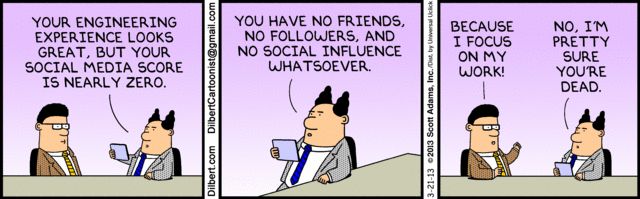
Cartoon – Because I Focus on My Work
https://www.vox.com/2020/7/14/21324201/covid-19-long-term-effects-symptoms-treatment
/cdn.vox-cdn.com/uploads/chorus_image/image/67056715/GettyImages_1224443008.0.jpg)
People with long-term Covid-19 complications are meanwhile struggling to get care.
In late March, when Covid-19 was first surging, Jake Suett, a doctor of anesthesiology and intensive care medicine with the National Health Service in Norfolk, England, had seen plenty of patients with the disease — and intubated a few of them.
Then one day, he started to feel unwell, tired, with a sore throat. He pushed through it, continuing to work for five days until he developed a dry cough and fever. “Eventually, I got to the point where I was gasping for air literally doing nothing, lying on my bed.”
At the hospital, his chest X-rays and oxygen levels were normal — except he was gasping for air. After he was sent home, he continued to experience trouble breathing and developed severe cardiac-type chest pain.
Because of a shortage of Covid-19 tests, Suett wasn’t immediately tested; when he was able to get a test, 24 days after he got sick, it came back negative. PCR tests, which are most commonly used, can only detect acute infections, and because of testing shortages, not everyone has been able to get a test when they need one.
It’s now been 14 weeks since Suett’s presumed infection and he still has symptoms, including trouble concentrating, known as brain fog. (One recent study in Spain found that a majority of 841 hospitalized Covid-19 patients had neurological symptoms, including headaches and seizures.) “I don’t know what my future holds anymore,” Suett says.
Some doctors have dismissed some of his ongoing symptoms. One doctor suggested his intense breathing difficulties might be related to anxiety. “I found that really surprising,” Suett says. “As a doctor, I wanted to tell people, ‘Maybe we’re missing something here.’” He’s concerned not just for himself, but that many Covid-19 survivors with long-term symptoms aren’t being acknowledged or treated.
Suett says that even if the proportion of people who don’t eventually fully recover is small, there’s still a significant population who will need long-term care — and they’re having trouble getting it. “It’s a huge, unreported problem, and it’s crazy no one is shouting this from rooftops.”
In the US, a number of specialized centers are popping up at hospitals to help treat — and study — ongoing Covid-19 symptoms. The most successful draw on existing post-ICU protocols and a wide range of experts, from pulmonologists to psychiatrists. Yet even as care improves, patients are also running into familiar challenges in finding treatment: accessing and being able to pay for it.
Scientists are still learning about the many ways the virus that causes Covid-19 impacts the body — both during initial infection and as symptoms persist.
One of the researchers studying them is Michael Peluso, a clinical fellow in infectious diseases at the University of California San Francisco, who is currently enrolling Covid-19 patients in San Francisco in a two-year study to study the disease’s long-term effects. The goal is to better understand what symptoms people are developing, how long they last, and eventually, the mechanisms that cause them. This could help scientists answer questions like how antibodies and immune cells called T-cells respond to the virus, and how different individuals might have different immune responses, leading to longer or shorter recovery times.
At the beginning of the Covid-19 pandemic, “the assumption was that people would get better, and then it was over,” Peluso says. “But we know from lots of other viral infections that there is almost always a subset of people who experience longer-term consequences.” He explains these can be due to damage to the body during the initial illness, the result of lingering viral infection, or because of complex immunological responses that occur after the initial disease.
“People sick enough to be hospitalized are likely to experience prolonged recovery, but with Covid-19, we’re seeing tremendous variability,” he says. It’s not necessarily just the sickest patients who experience long-term symptoms, but often people who weren’t even initially hospitalized.
That’s why long-term studies of large numbers of Covid-19 patients are so important, Peluso says. Once researchers can find what might be causing long-term symptoms, they can start targeting treatments to help people feel better. “I hope that a few months from now, we’ll have a sense if there is a biological target for managing some of these long-term symptoms.”
Lekshmi Santhosh, a physician lead and founder of the new post-Covid OPTIMAL Clinic at UCSF, says many of her patients are reporting the same kinds of problems. “The majority of patients have either persistent shortness of breath and/or fatigue for weeks to months,” she says.
Additionally, Timothy Henrich, a virologist and viral immunologist at UCSF who is also a principal investigator in the study, says that getting better at managing the initial illness may also help. “More effective acute treatments may also help reduce severity and duration of post-infectious symptoms.”
In the meantime, doctors can already help patients by treating some of their lingering symptoms. But the first step, Peluso explains, is not dismissing them. “It is important that patients know — and that doctors send the message — that they can help manage these symptoms, even if they are incompletely understood,” he says. “It sounds like many people may not be being told that.”
Even though we have a lot to learn about the specific damage Covid-19 can cause, doctors already know quite a bit about recovery from other viruses: namely, how complex and challenging a task long-term recovery from any serious infection can be for many patients.
Generally, it’s common for patients who have been hospitalized, intubated, or ventilated — as is common with severe Covid-19 — to have a long recovery. Being bed-bound can cause muscle weakness, known as deconditioning, which can result in prolonged shortness of breath. After a severe illness, many people also experience anxiety, depression, and PTSD.
A stay in the ICU not uncommonly leads to delirium, a serious mental disorder sometimes resulting in confused thinking, hallucinations, and reduced awareness of surroundings. But Covid-19 has created a “delirium factory,” says Santhosh at UCSF. This is because the illness has meant long hospital stays, interactions only with staff in full PPE, and the absence of family or other visitors.
Theodore Iwashyna, an ICU physician-scientist at the University of Michigan and VA Ann Arbor, is involved with the CAIRO Network, a group of 40 post-intensive care clinics on four continents. In general, after patients are discharged from ICUs, he says, “about half of people have some substantial new disability, and half will never get back to work. Maybe a third of people will have some degree of cognitive impairment. And a third have emotional problems.” And it’s common for them to have difficulty getting care for their ongoing symptoms after being discharged.
In working with Covid-19 patients, says Santhosh, she tells patients, “We believe you … and we are going to work on the mind and body together.”
Yet it’s currently impossible to predict who will have long-lasting symptoms from Covid-19. “People who are older and frailer with more comorbidities are more likely to have longer physical recovery. However, I’ve seen a lot of young people be really, really sick,” Santhosh says. “They will have a long tail of recovery too.”
At the new OPTIMAL Clinic at UCSF, doctors are seeing patients who were hospitalized for Covid-19 at the UCSF health system, as well as taking referrals of other patients with persistent pulmonary symptoms. For ongoing cough and chest tightness, the clinic is providing inhalers, as well as pulmonary rehabilitation, including gradual aerobic exercise with oxygen monitoring. They’re also connecting patients with mental health resources.
“Normalizing those symptoms, as well as plugging people into mental health care, is really critical,” says Santhosh, who is also the physician lead and founder of the clinic. “I want people to know this is real. It’s not ‘in their heads.’”
Neeta Thakur, a pulmonary specialist at Zuckerberg San Francisco General Hospital and Trauma Center who has been providing care for Covid-19 patients in the ICU, just opened a similar outpatient clinic for post-Covid care. Thakur has also arranged a multidisciplinary approach, including occupational and physical therapy, as well as expedited referrals to neurology colleagues for rehabilitation for the muscles and nerves that can often be compressed when patients are prone for long periods in the ICU. But she’s most concerned by the cognitive impairments she’s seeing, especially as she’s dealing with a lot of younger patients.
These California centers join new post-Covid-19 clinics in major cities across the country, including Mount Sinai in New York and National Jewish Health Hospital in Denver. As more and more hospitals begin to focus on post-Covid care, Iwashyna suggests patients try to seek treatment where they were hospitalized, if possible, because of the difficulty in transferring sufficient medical records.
Santosh recommends that patients with persistent symptoms call their closest hospital, or nearest academic medical center’s pulmonary division, and ask if they can participate in any clinical trials. Many of the new clinics are enrolling patients in studies to try to better understand the long-term consequences of the disease. Fortunately, treatment associated with research is often free, and sometimes also offers financial incentives to participants.
But otherwise, one of the biggest challenges in post-Covid-19 treatment is — like so much of American health care — being able to pay for it.
Outside of clinical trials, cost can be a barrier to treatment. It can be tricky to get insurance to cover long-term care, Iwashyna notes. After being discharged from an ICU, he says, “Recovery depends on [patients’] social support, and how broke they are afterward.” Many struggle to cover the costs of treatment. “Our patient population is all underinsured,” says Thakur, noting that her hospital works with patients to try to help cover costs.
Lasting health impacts can also affect a person’s ability to go back to work. In Iwashyna’s experience, many patients quickly run through their guaranteed 12 weeks of leave under the Family Medical and Leave Act, which isn’t required to be paid. Eve Leckie, a 39-year-old ICU nurse in New Hampshire, came down with Covid-19 on March 15. Since then, Leckie has experienced symptom relapses and still can’t even get a drink of water without help.
“I’m typing this to you from my bed, because I’m too short of breath today to get out,” they say. “This could disable me for the rest of my life, and I have no idea how much that would cost, or at what point I will lose my insurance, since it’s dependent on my employment, and I’m incapable of working.” Leckie was the sole wage earner for their five children, and was facing eviction when their partner “essentially rescued us,” allowing them to move in.
These long-term burdens are not being felt equally. At Thakur’s hospital in San Francisco, “The population [admitted] here is younger and Latinx, a disparity which reflects who gets exposed,” she says. She worries that during the pandemic, “social and structural determinants of health will just widen disparities across the board.” People of color have been disproportionately affected by the virus, in part because they are less likely to be able to work from home.
Black people are also more likely to be hospitalized if they get Covid-19, both because of higher rates of preexisting conditions — which are the result of structural inequality — and because of lack of access to health care.
“If you are more likely to be exposed because of your job, and likely to seek care later because of fear of cost, or needing to work, you’re more likely to have severe disease,” Thakur says. “As a result, you’re more likely to have long-term consequences. Depending on what that looks like, your ability to work and economic opportunities will be hindered. It’s a very striking example of how social determinants of health can really impact someone over their lifetime.”
If policies don’t support people with persistent symptoms in getting the care they need, ongoing Covid-19 challenges will deepen what’s already a clear crisis of inequality.
Iwashyna explains that a lot of extended treatment for Covid-19 patients is “going to be about interactions with health care systems that are not well-designed. The correctable problems often involve helping people navigate a horribly fragmented health care system.
“We can fix that, but we’re not going to fix that tomorrow. These patients need help now.”
The U.S. is way behind on coronavirus contact tracing. Here’s how we can catch up.
Get this: Vietnam, a country of 97 million people, has reported zero deaths from only 372 cases of coronavirus.
Theories abound about how they pulled it off. But public health experts chalk it up to swift action by the Vietnamese government, including contact tracing, mass testing, lockdowns, and compulsory wearing of masks.
Here, masks have become a political landmine. And despite President Trump claiming, “We have the greatest testing program anywhere in the world,” some states with surging infections have testing shortages—like Arizona.
But what about contact tracing, the process of calling potentially exposed people and persuading them to quarantine?
“I don’t think we’re doing very well,” said Dr. Anthony Fauci, director of the National Institute of Allergy and Infectious Diseases, when asked in June about contact tracing nationwide. Most states haven’t even made public how fast or well they’re implementing the process, if at all.
Florida, the nation’s current No. 1 hotspot for the virus, is often failing to trace positive cases. This, despite the state spending over $27 million on a contract with Maximus, a company notorious for underbidding, understaffing, and performing poorly on government services contracts in multiple states.
Yet, there are bright spots elsewhere. California allocated 5 percent of staff across 90 state government departments to contact trace. North Carolina’s Wake County trained 110 librarians. In Massachusetts, counties have used state pandemic funds to hire more nurses.
There are three reasons why state and local governments should reassign public employees or hire new staff outright as the country—finally—ramps up contact tracing.
One, outsourcing what should be a public job to for-profit companies like Maximus reduces transparency, limits democratic decision-making, lowers service quality, and increases inequality, all while rarely saving public dollars. Public control is particularly important when it comes to contact tracing, which involves personal health data.
Two, this is a chance to begin to reverse decades of cuts to public health budgets, which have made the worst public health crisis in a century even worse. Almost a quarter of the local public health workforce has been let go since 2008. Federal spending on nondefense discretionary programs like public health is now at a historic low.
The Trump administration, as expected, is headed in the wrong direction. On Tuesday, it stripped the Centers for Disease Control and Prevention (CDC) of control over coronavirus data. State and local governments must do all they can to right the ship.
And three, contact tracing is an opportunity to chip away at systemic racism. Since World War II, public sector employment has helped equalize American society by offering workers of color stable, well-paid employment. The median wage earned by Black employees is significantly higher in the public sector than in private industries.
Privatizing public work like contact tracing contributes to racial and gender income disparities. Workers at federal call centers operated by Maximus, for example, are predominately women and people of color paid poverty wages as low as $10.80 an hour with unaffordable health care.
If #BlackLivesMatter—as many governors and mayors across the country have proclaimed in recent weeks—then contact tracing should be treated as what it is: a public good.
To catch up to other countries like Vietnam, the U.S. needs to get contact tracing right—and that means doing it with public workers.

A newly revised University of Washington model projects the U.S. death toll from COVID-19 will climb to just above 224,000 by Nov. 1, up 16,000 from a prior forecast, due to rising infections and hospitalizations in many states.
But the latest forecast from the university’s Institute for Health Metrics and Evaluation (IHME), released late on Tuesday, also predicts the death toll could be reduced by 40,000 if nearly all Americans wore masks in public.
“Use of masks is up, but not as high as it should be. If 95% of Americans wore masks each time they left their homes, infection rates would drop, hospitalizations would drop, and forecast deaths would drop,” the IHME said in a statement.
The IHME’s new forecast came after Alabama, Florida and North Carolina on Tuesday reported record daily increases in deaths from COVID-19, marking grim new milestones of a second wave of infections surging across much of the U.S.
The new IHME forecast – 224,089 U.S. lives lost by Nov. 1 – was revised upward from the 208,254 deaths projected on July 7.
At least 136,052 Americans have died from COVID-19, the illness caused by the novel coronavirus, while reported U.S. infections have surpassed 3.4 million, according to a tally by Reuters.
The IHME’s projections have been cited in the past by the White House and are watched closely by public health officials.

The debate over whether and how much to re-open schools in the fall has put teachers in the precarious position of choosing between their own safety and the pressures from some parents and local officials.
Why it matters: Teachers are the core of K-12 education. The people we depend on to educate our society’s children may end up bearing the brunt of both the risk and the workload.
What’s happening: With coronavirus cases spiking in many parts of the U.S., districts are weighing the feasibility of keeping classes all virtual, as Los Angeles and San Diego are doing, or conducting a rotation of in-person and remote lessons.
While all back-to-school options have pros and cons, there are specific worries for teachers.
1. Exposure: Despite a child’s overall low health risk if they contract COVID-19, scientists still do not conclusively know if schools could become hotspots for more vulnerable populations.
“We as teachers prepare for active shooters, tornadoes, fires and I’m fully prepared to take a bullet or shield a child from falling debris during a tornado. But if I somehow get it and I’m asymptomatic and I get a student sick and something happens to them or one of their family members, that’s a guilt I would carry with me forever.”
— Michelle Albright, a second grade teacher from northwest Indiana
2. Difficulty of a hybrid approach: Many school districts like New York City are opting to split school between in-person and online to minimize exposure. That’s an effective but more burdensome approach for teachers, top teachers union chief Randi Weingarten told Axios’ Dan Primack Monday.
3. Child care availability: Teachers with children of their own are concerned about how to care for them when they are teaching.
4. Concerns of other school staff: Bus drivers, custodians, classroom aides, administrative staff, cafeteria workers, school nurses and substitute teachers may come in contact with more children throughout the day because they are less likely than teachers to be confined to a single classroom.
What to watch: School districts ought to be finding other roles for teachers who are not comfortable returning to the classroom, such as reassigning them to virtual-only roles or providing one-on-one online tutoring sessions with students, said John Bailey, visiting fellow at the American Enterprise Institute and former domestic policy adviser during the George W. Bush administration.
The bottom line: Due to the unprecedented nature of this pandemic, teachers are worried about the uncertainties and, in some cases, lack of clear planning should conditions worsen. That may drive some to quit teaching altogether.
https://www.cnn.com/2020/07/16/economy/unemployment-benefits-coronavirus/index.html

It’s still not easy to remain employed in the US, nearly four months after the coronavirus pandemic began upending the economy.




 HENRY KOTULA