Make (surgery) hay while the sun is shining

https://mailchi.mp/aa7806a422dd/the-weekly-gist-may-8-2020?e=d1e747d2d8

Growth Mindset & Feedback Cats: Make hay while the sun shines.

As we talk this week with leaders of health systems that have restarted non-emergent surgeries, they report that volume has been slower to return than anticipated. A typical data point: a Midwestern system opened up half of its outpatient surgery capacity two weeks ago, but by the end of this week saw just 15 percent of that capacity being utilized.

Most surgeons are ready to operate, but patients are still reticent to come into a healthcare setting. Many providers are facing more sobering forecasts and expecting that volume may not return to pre-COVID levels until 2021. They’re also anticipating challenges in filling the summer surgery schedule. Patients expecting to have procedures in June or July should be seeing their doctor now, and undergoing screening exams and other diagnostic testing—the months-long surgery “pipeline” has almost evaporated.

And looming over everything are worries about a COVID-19 resurgence forcing another shutdown. Taken together, the outlook seems grim, but one chief strategy officer told us it’s motivation to act quickly: “We have to do as much as we can, as fast as we can, until we can’t.” With a future resurgence and shutdown likely, hospitals and doctors must quickly recruit patients and make them feel comfortable, while finding ways to expedite diagnostics and testing amid operational challenges. And they must deliver as much care as they can while it’s safe to do so. That’s critical for providers’ finances, but even more important for the thousands of patients facing delayed diagnoses, postponed treatments, and prolonged pain as the pandemic continues.


Most consumers nervous about returning to care settings

https://mailchi.mp/aa7806a422dd/the-weekly-gist-may-8-2020?e=d1e747d2d8

As non-essential businesses begin to reopen, there’s no guarantee that merely opening the doors will make customers return. A recent Morning Consult poll provides an assessment of the impact of COVID-19 on consumer confidence: fewer than one in five US adults are currently comfortable doing (formerly) everyday activities like eating at a restaurant or going to a shopping mall.

The graphic below provides similar data for healthcare. Consumers’ willingness to visit healthcare providers in person for non-COVID care is only slightly better, at 21 percent. Which providers might see patients return most quickly?

Consumers say they are about twice as likely to visit their primary care doctor’s office than other healthcare facilities, including hospitals, specialists, and walk-in clinics. And when it comes to scheduling a routine in-office visit, nearly half say they will wait two to six months, with almost one in ten not comfortable going to a doctor’s office in person for a year or more.

Healthcare facilities face an uphill battle in bringing back patients—many of whom have ongoing chronic diseases that necessitate care now. Reaching patients through telemedicine and providing concrete messages about how they can safely see their doctor will be critical to staving off a tide of disease exacerbations that will mount as fear delays much-needed care.


Reopening with a wary eye on troubling virus trends

https://mailchi.mp/aa7806a422dd/the-weekly-gist-may-8-2020?e=d1e747d2d8

Apex man diaries 13-day struggle with cough, fever, wait for ...

With most states either reopening or planning to reopen shortly, the coronavirus showed few signs of loosening its grip on the US this week. Daily death totals continued to hover near 2,000, with more than 77,000 Americans having succumbed to COVID-19—a statistic that almost surely undercounts the true toll of the virus. While the situation continues to improve in “hot-spot” areas hit early like New York City and Detroit, the number of newly confirmed cases is still rising in other parts of the country, including in many of the states that have already begun to reopen.

In testimony before the House appropriations subcommittee on Wednesday, a senior infectious disease researcher from the Johns Hopkins Center for Health Security said that no state now reopening meets recommended benchmarks for declining cases, sufficient testing and contact tracing, and adequate protective equipment for healthcare workers.

The White House sent mixed signals this week in response to states’ efforts to reopen ahead of the gating criteria it set in its Opening Up America Again plan, delaying the release of detailed CDC guidelines designed help businesses returning to work, denying the validity of leaked internal projections showing the likelihood of increasing infections and deaths, and oscillating between sidelining, and then refocusing, its coronavirus task force.

However, there was some good news this week in the battle with coronavirus. There are now 108 candidate vaccines under investigation, with a handful in clinical trials. One, a messenger RNA-based vaccine developed by drug company Moderna, was approved by Food and Drug Administration (FDA) to enter Phase 2 trials on Thursday. Coronavirus testing, critical to the country’s ability to reopen safely, continued to ramp up as well, and the closely-watched “positivity rate” (an indicator of how widespread testing is—lower is better) fell nationwide.

After last week’s FDA emergency use authorization for Gilead Sciences’ promising antiviral drug remdesivir, the company began ramping up production, although frustration mounted after only about two dozen hospitals were chosen by the government to receive scarce existing supplies. Meanwhile, the federal government began to share data on which providers have received bailout money from CARES Act funding—relief sorely needed given the massive economic hit caused by the shutdown.

With the release of April unemployment numbers on Friday—showing a staggering 14.7 percent unemployment rate—the disastrous impact of the virus on the healthcare industry became more apparent. The sector lost 1.4M jobs last month, mostly on the ambulatory side. With each passing week, it becomes clearer that the recovery from the coronavirus’ assault on America will be lengthy, uneven, and difficult.


See Which States Are Reopening and Which Are Still Shut Down

See Which States Are Reopening and Which Are Still Shut Down - The ...

In Georgia, barbers are giving haircuts armed with face masks and latex gloves. In Texas, movie theaters are filling with customers, who crunch on popcorn several seats away from the nearest stranger. People are sweating at gyms again in Tennessee.

America’s reopening has begun in force, just weeks after the coronavirus put most of the country on lockdown.

More than half the states have started to reopen their economies in some meaningful way or have plans to do so soon, raising concerns among public health experts about a possible surge in new infections and deaths. Many states that are reopening failed to meet criteria recommended by the Trump administration before loosening restrictions on businesses and social activities.

The New York Times is tracking when orders to stay at home are lifted in each state, as well as when broad reopenings are allowed in public spaces, such as restaurants, retail stores, salons, gyms and houses of worship. In some cases, stay-at-home orders are lifting separately from restrictions on businesses. This page will be updated regularly.

Businesses are almost universally reopening under restrictions, such as allowing fewer customers, requiring workers and customers to wear masks, and enforcing social distancing. Even as governors lift orders, stricter local orders may remain in place by city or county.


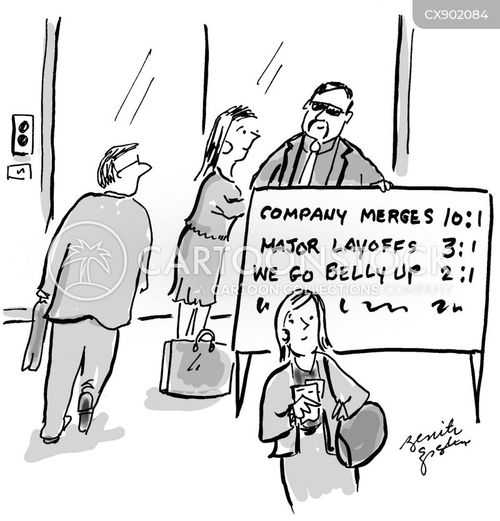
Cartoon – What are the Odds?

Layoffs Cartoons and Comics - funny pictures from CartoonStock