

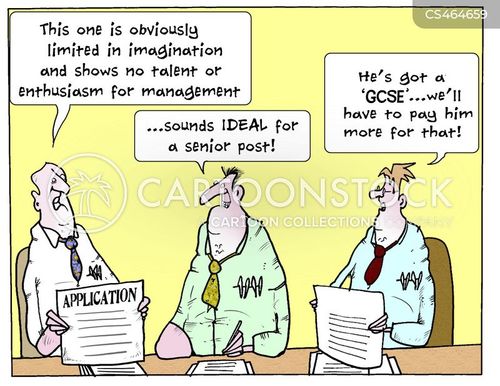
Cartoon – Sounds Ideal for a Senior Post

https://www.healthcaredive.com/trendline/labor/28/#story-4

Healthcare employment is growing at a record pace, but wages remain stagnant, which some experts say likely results in part from the trend of consolidating health systems.
The latest Bureau of Labor Statistics numbers show the industry gained 49,000 jobs in March and 398,000 over the past 12 months. Analysts at Jefferies say the month-to-month growth is the second largest increase on record for the sector. Healthcare job growth has surpassed non-healthcare job growth and nudging the share of total jobs to an all time high, according to consulting firm Altarum.
Hospital employment grew by 14,000 jobs in March, adding up to a total of 120,000 for the combined first quarter of 2019. BLS tallied ambulatory jobs at 27,000 and home health and skilled nursing jobs at 9,000.
At the same time, real average weekly earnings for production and non-supervisory employees across sectors grew 0.1% over the month according to BLS. That growth in earnings is due to an increase in average weekly hours.
For nurses and pharmacists working in hospitals in heavily concentrated markets, annual wage growth has been lagging behind national rates by as much as 1.7 times. That’s according to researchers Elana Prager and Matt Schmitt, of Kellogg and UCLA, respectively, whose working paper compares wage growth rates in markets where mergers have occurred.
The paper drew the ire of the American Hospital Association.
“Among the many serious concerns about the study are its lack of rigor in the definitions and assumptions it used, and absence of data on total compensation and the recognition of other obvious factors that could affect wage growth,” an AHA spokesperson said in a statement criticizing media coverage of the research.
Academics researching the impacts of consolidation have asked the Federal Trade Commission to look at the impact horizontal mergers have on labor and consumers before they become difficult to challenge. FTC green-lit hundreds of horizontal hospital mergers over the past decade, maxing out at 115 in 2017, according to the National Institute for Health Care Management. In 2009, there were 50 such deals.
A Penn Law paper on mergers and labor markets published last year found employer consolidation has had a direct impact on wages and productivity in concentrated labor markets in the past. Wages, the authors write, tend to dilute when competition is scarce and labor concentration is “very high, as high or higher overall than product market concentration.”
Jason Plagman, a healthcare analyst at Jefferies, agreed, telling Healthcare Dive it becomes an “oligopsony situation where there are only a handful of buyers of a product” — in this case, labor — “you tend to see [employers] exert more control.”
As AHA noted, hospital and health systems tend to offer non-wage benefits, “such as employer-sponsored insurance, time off and education benefits” rather than increase wages. That’s an important caveat, said Dennis Shea, a health policy professor at Penn State.
The debate comes as nurses unions have been pushing hard for additional staff and higher wages for hospital workers in consolidated states like California, New York, Massachusetts and Pennsylvania. Hospital consolidation has raised prices as much as 20% to 40% when they occur in the same market, according to National Institute for Health Care Management, with some prices reaching as much as 55%.
Unions argue hospitals can afford to pay extra to hire more nurses. Jefferies analyst Plagman said it’s not that easy. About 50% of hospital revenue goes to salary, wages and benefits, he said, and half of that chunk of revenue goes to nurses. “If they give a 3% raise to all nurses, that’s a big impact on their overall expense line,” Plagman said.
The lack of competition bars labor from seeking work elsewhere. A nurse in a concentrated labor market can’t quit their job to work for the hospital down the street, because it’s probably owned by the same health system, Shea said.
Shea and Plagman agreed that movement of labor away from concentrated markets is one way to break the wage slump. But lack of mobility was one of the consequences of concentration found in a National Bureau of Economic Research published in February 2018. The paper suggests a negative relationship between consolidated markets and wages that becomes more pronounced with higher levels of concentration and only increases over time.
Pay raises have historically been pushed by labor unions, and though some hospitals have already raised wages, few have been inclined to raise staffing levels as well.
“Strikes are picking up,” Shea said. “That’s always an indicator that wage and salary growth will pick up a little bit.”
While labor disruption has been on the rise over the past year, Plagman said he expects employment and wage growth to continue at the current pace. At some point, he said the market will have to resolve itself.
“What we’re seeing is hospitals and healthcare providers are hiring, but they’ve been very disciplined over the past few years giving raises to nurses and therapists,” Plagman said.
In testimony to the FTC in October, economist Alan Kreuger alleged employers in concentrated markets “collude to hold wages to a fixed, below-market rate,” even when the economy is booming. Union membership has plummeted 25% since 1980, and without a counterweight to balance the power of a monopsony, he argued, employers are free to set wages at will — even if they lag behind inflation rates.
Pressures to contain costs and move from volume to value is forcing health system executives to be extra delicate with their labor expenses. When nurses strike, hospitals have temps at the ready. That’s a boon for staffing agencies like AMN Healthcare Services and Cross Country Healthcare.
Cost control in healthcare is a bit like “pushing on a balloon,” Shea said.
Slow growth or declines in one sector means business is booming for another. In this case, ambulatory added 27,000 jobs month-to-month in March, up from 22,000 in February, and Jefferies analysts are looking favorably at temporary staffing agencies.
While “all indicators” say healthcare wages should be pushed up, Shea said, he wouldn’t be surprised if the growth rate continued to limp along for a little while longer.
https://www.healthcaredive.com/trendline/labor/28/#story-1

Hospitals are often the biggest employers in many towns and medium-sized cities, but their job creation has been uneven at best in recent months. According to an analyst note from Jefferies, employment by hospitals dropped by 2,000 on a seasonally adjusted basis, although that grew to a net 1,000 new jobs on an unadjusted basis.
By comparison, hospitals added a seasonally adjusted 9,000 new jobs in June, 25,000 on an unadjusted basis. However, much of that boost was created by the minting of new residents who just graduated from medical schools.
Hospital employment is still growing at a 1.8% annual clip (compared to 1.4% as of July 2018), although that’s down from the 2.1% rate reported in April.
“Overall, healthcare employment growth continues to demonstrate strong momentum, but hospital jobs growth appears to be moderating,” the analysts said. Inpatient providers account for more than 5.2 million jobs nationwide.
However, Jefferies’ analysts believe that healthcare will continue to be a big job engine for the foreseeable future.
“We believe the supply of clinical labor continues to struggle to keep pace with solid demand growth, resulting in tight clinician labor markets and strong demand for healthcare temp staffing services,” they said.
Although healthcare job growth has been extremely robust, wages have been stagnant in recent years, a phenomenon attributed in part to continued consolidation among industry players.
The ambulatory care segment has been growing rapidly in recent years. Its addition of 29,000 new jobs was up from 17,000 in June, and significantly outpaced the year-to-date average monthly growth of 22,000.
Home healthcare services added 11,000 new jobs last month alone — the highest rate since 2017. The segment’s annual growth rate is currently 5.3%, up from 3.2% in July 2018.
The nursing home segment added another 1,000 jobs.
https://www.healthcaredive.com/news/insurers-to-deliver-whopping-13b-in-aca-consumer-rebates/562689/

The Affordable Care Act sets limits on insurer profits, and in an effort to protect consumers, the law requires plans spend a majority of premium dollars on actual care, or claims for their patients.
Each year, if insurers do not meet that threshold, also known as the medical loss ratio, they issue rebates to customers. The rebates in 2019 take into account performance for the trailing three years.
“Insurers in 2018 were highly profitable and arguably overpriced, which is why rebates are so large despite being averaged across less favorable years (2016 and 2017),” KFF said.
Insurers in the individual market are fueling this whopping rebate return, according to KFF.
Even though exchange insurers struggled in 2016, previous data show that profit margins spiked in the first quarter of 2018. Many attribute the spike to insurers drastically raising premiums amid the uncertainty around policy plans from the Trump administration. Experts have said insurers raised prices and overcorrected in preparing for the potentially turbulent year.
Lingering overhead at the time was the threat of ACA repeal and the loss of cost sharing subsidy payments.
St. Louis-based Centene is expected to dish out the most in rebates, totaling nearly $217 million, followed by Virginia-based Optima Health, owned by Sentara Healthcare, which is set to return nearly $99 million.


Drug companies facing more than 2,000 lawsuits over their alleged roles in the opioid epidemic demanded Saturday that the federal judge overseeing the case step aside, questioning his impartiality because he has consistently urged both sides to settle the case.
The request comes after a series of rulings against the companies by U.S. District Judge Dan Aaron Polster in the landmark trial slated to begin Oct. 21.
“Defendants do not bring this motion lightly,” the lawyers wrote in a filing Saturday morning on behalf of some of the nation’s biggest drug distributors and retailers but no drug manufacturers. “Taken as a whole and viewed objectively, the record clearly demonstrates that recusal is necessary.”
The lawyers contended Polster has overstepped his authority and created the appearance of bias. They cited his statements since the beginning of the case encouraging settlement so that money for badly needed drug treatment and other services could go quickly to communities hard hit by the opioid epidemic.
With just two counties “seeking $8 billion in cash for so-called ‘abatement,’ the Court has determined that it, not a jury, has the discretion to decide how much money defendants may pay to government agencies for medical treatment and other addiction-related services and initiatives,” the drug companies wrote.
Polster could not be reached for comment. A telephone call to his assistant Saturday went unanswered.
Lawyers for the more than 2,000 cities, towns, counties and tribal communities suing the drug industry called the attempt to remove Polster a desperate move. The lead plaintiffs’ lawyers said in a statement they “remain confident the judiciary will swiftly respond to yet another attempt by the opioid defendants to delay the trial.”
The plaintiffs have demanded the drug companies, including manufacturers, distributors and retailers, pay billions of dollars for the damage they allegedly caused. Since 1999, more than 200,000 people have died of overdoses of prescription narcotics, and another 200,000 have died from overdoses of heroin and illegal fentanyl, according to government data.
Two Ohio counties, Cuyahoga and Summit, are scheduled to begin trial next month as test cases to determine how other plaintiffs and defendants may fare before a jury.
As of now, they would face off against drug distributors McKesson Corp., Cardinal Health, AmerisourceBergen and Henry Schein; manufacturers Johnson & Johnson and Teva Pharmaceuticals; and retail drugstore chain Walgreens.
Two law professors called the defendants’ motion unusual and saw little chance it would succeed.
The law that authorizes large, consolidated cases like this one — known as “multidistrict litigation” — explicitly recognizes that judges would use the opportunity to encourage settlements, said Carl Tobias, a professor at Richmond University School of Law.
“Judges overseeing MDLs are supposed to encourage settlement and most MDLs end with settlements” for the majority of plaintiffs, Tobias wrote in an email.
Alexandra Lahav, a professor at the University of Connecticut School of Law, agreed.
“It is a highly unusual motion and not one that I think can win,” she wrote in an email. “I am not sure what the strategy is behind bringing it, and filing on Saturday, other than public relations.”
She added, however, “I don’t think there is anything wrong with filing a non-frivolous motion to bring attention to an issue and start a conversation. Given the courts’ historic emphasis on settlement, I just don’t see how that conversation goes anywhere.”
This past week, Purdue Pharma, the company most widely blamed for its role in the crisis, announced a tentative settlement with all the municipalities and about half the state attorneys general who have separately sued members of the drug industry in state courts. If finalized, that agreement would remove Purdue from the first trial.
Ohio Attorney General Dave Yost (R), whose state backs the Purdue settlement, also has asked to halt the trial, saying the municipalities should allow states to take the lead in the litigation.
In the lead-up to the trial, Polster denied a series of motions filed by the companies seeking to throw out, or limit, the case against them. Those included a defense motion to dismiss arguments that the drug companies conspired with each other to protect their companies from enforcement actions by the Drug Enforcement Administration.
Polster also rejected a motion to dismiss the plaintiffs’ legal theory that the companies created a “public nuisance” by inundating communities across the nation with enormous amounts of pain pills. And he denied a defense motion to dismiss a strategy to pursue the case under the Racketeer Influenced and Corrupt Organizations Act, originally created to prosecute the Mafia.
This past week, Polster agreed to an unusual plan that would include 30,000 jurisdictions across the United States in any settlement, if they agreed to it. It is aimed at preventing more lawsuits and ensuring that communities everywhere get some money from any settlement.
In their motion, the drug distributors and retail chains said the crucial test is whether a reasonable person would conclude that Polster appeared biased against the defendants.
They cited Polster’s statements inside and outside court “evidencing a personal objective to do something meaningful to abate the opioid crisis, with the funding to be provided through defendants’ settlements,” as well as “numerous improper comments to the media and in public forums about the litigation.”
And they noted Polster’s “apparent prejudgment of the merits and outcome of the litigation and singular focus on, and substantial involvement in, settlement discussions.”
They also protested his decision to limit defendants to 12.5 hours apiece to present their cases during the upcoming trial.
Last month, an appellate court admonished some of the defendants for a legal attack on Polster over an unrelated question. The panel of appellate judges said their claim that Polster’s “assurances are not entitled to our respect because [he] has been deceptive or duplicitous … is a very serious allegation and we find no merit to it.”


Roughly 27.5 million people, or 8.5% of the U.S. population, had no health insurance at some point in 2018, according to new figures from the Census Bureau.
Why it matters: Last year’s uninsured rate increased from 7.9% in 2017 — the first time the uninsured rate has gone up since the Affordable Care Act has been in effect.

Fighting fraud “is not a top priority” for major insurers, ProPublica reports, because they can just pass along the cost of wasteful spending to enrollees and employers.
Why it matters: Experts say fraud likely accounts for 10% of U.S. health costs. However, “private health insurers, who preside over some $1.2 trillion in spending each year, exhibit a puzzling lack of ambition when it comes to bringing fraudsters to justice,” ProPublica’s Marshall Allen writes.

More than half of all issue advertising this year has been on health care, and that spending will only increase as the 2020 campaign gets closer.
Between the lines: Most of the top health care spenders are focused on issues like surprise medical bills and drug prices — many of which would cut into the health care industry’s profits.
 HENRY KOTULA