


Merry Christmas

If you are a hospital executive—and if you are reading this, you probably are—then you have no shortage of worries. The worry list is long:
And the list could go on and on.
But maybe the biggest concern is one that is not on many worry lists: the remarkable development of artificial intelligence (AI) and how AI is relentlessly pushing into business practice generally and into healthcare more specifically.
While the long-term worry is how your hospital will carefully and properly adopt AI inside the business and clinical parts of your organization, the more immediate and short-term worry is whether you, as an executive, understand AI in a way that you can be ultimately useful to your organization.
Full disclosure: I can’t help here much. For me, AI is a pretty big black box. But when I confront this kind of business problem I start reading and learning. One of the most useful AI articles I have come across is “The Optimists: The Full Story of Microsoft’s Relationship with OpenAI,” which was published in the December 11, 2023, issue of The New Yorker magazine. The article was written by Charles Duhigg, a former winner of the Pulitzer Prize.
I am hoping that for your own professional development you will read the Duhigg article, but just in case, here are the highlights:
Duhigg reports that Microsoft previously acquired a company called GitHub. GitHub is “a website where users shared code and collaborated on software.” Microsoft operates GitHub as an independent division. GitHub has been a very big success and is used by software engineers and, in a short period of time, has grown to over 100 million users.
OpenAI created an artificial intelligence tool that autocompletes software code. Despite reservations at Microsoft, GitHub President Nat Friedman decided to release the GitHub Copilot autocomplete tool. The result has been $100 million in revenue to GitHub in less than a year.
At the end of the article, Duhigg notes that these early AI business applications are both “impressive and banal.” Banal because they don’t yet live up to the sci-fi predictions for AI and its long-term impact on society.
Honestly, I don’t see it that way. This OpenAI/Microsoft collaboration is only scratching the surface and its potential uses are already endless, waiting to be invented by 100s of millions of users all over the world, including in healthcare. From my seat, the sky is the limit here. Almost anything seems possible.
I hope this summary of Mr. Duhigg’s exceptional article proves useful and advances your awareness of AI’s aggressive and rapid move into day-to-day business—here, through many of the Microsoft productivity programs that every one of us uses every day. In any case, I recommend that you read Duhigg’s entire article. It is most certainly worth your time.

Three Philadelphia-based hospitals are reportedly up for sale, according to an email notice from Los Angeles-based investment bank Xnergy, The Philadelphia Inquirer reported Dec. 19.
The names of three hospitals are not confirmed. And the notice, which was obtained by the publication, did not name an owner of the hospitals. However, it did describe the hospitals’ owner as one that has acute care facilities with an average of 136 beds.
Three Philadelphia-area hospitals fit the bed parameters in the notice: Bristol-based Lower Bucks Hospital, Philadelphia-based Roxborough Memorial Hospital, and Norristown-based Suburban Community Hospital. All three are owned by Ontario, Calif.-based Prime Healthcare Services, The Philadelphia Inquirer reported.
Roxborough and Lower Bucks were acquired by Prime in 2012, with Suburban acquired by Prime’s nonprofit affiliate Prime Healthcare Foundation in 2016. The hospitals have also seen significant annual operating loss over the last five years with a 43% combined inpatient volume drop, from 3,795 discharges in 2018 to 2,250 discharges in 2022, the publication shared.
Members of the Pennsylvania Association of Staff Nurses & Allied Professionals at both Suburban and Lower Bucks are also set to launch five-day strikes Dec. 22 due to ongoing labor contract negotiations for things like increased wages and important benefits, a union spokesperson told Becker’s.
“Prime Healthcare’s mission is to always do what’s best for our communities and patients, however, we do not comment on strategic merger and acquisition initiatives,” Elizabeth Nikels, vice president of communications and public relations for Prime Healthcare, said in an email response to Becker’s regarding the sale.

Private equity firms have drawn significant policy interest and scrutiny amid recent reports of surprise billing, rising out-of-pocket costs for patients and increased healthcare spending in the U.S., according to Health Affairs.
The Private Equity Stakeholder Project has found at least 386 hospitals in the U.S. that are owned by private equity firms.
Six things to know:
1. The 386 private equity–owned hospitals represent 9% of all private hospitals and 30% of all proprietary for-profit hospitals.
2. Thirty-four percent of private equity-owned hospitals serve rural populations.
3. Texas is the state with the most private equity-owned hospitals (85).
4. While New Mexico has fewer private equity-owned hospitals (17), it has the highest proportion of private equity-backed hospitals compared to all private non-government hospitals at 43%.
5. More than 24% of private equity-owned facilities are psychiatric hospitals.
6. A few private equity firms dominate the list, according to the Private Equity Stakeholder Project:
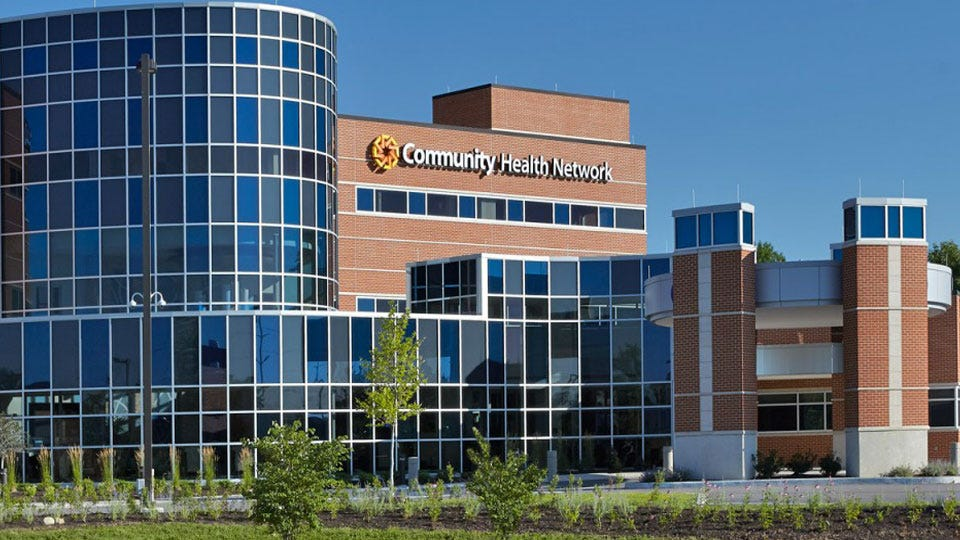
Indianapolis-based Community Health Network has agreed to a $345 million settlement to resolve allegations that, dating back to 2008, it violated the False Claims Act and Stark law.
The settlement, announced Dec. 19, stems from a whistleblower complaint filed in 2014 by the nonprofit health system’s former CFO and COO under the qui tam provisions of the False Claims Act.
The United States filed suit against CHN in 2020, alleging that the system violated the False Claims Act by knowingly submitting claims to Medicare for services that were referred in violation of the Stark law, which requires that the compensation of employed physicians be fair market value and cannot account for the volume of referrals.
The U.S. complaint alleged that, starting in 2008, CHN’s senior management engaged in a scheme to recruit physicians for employment with outsized pay in an effort to secure profitable referrals. The salaries offered to cardiologists, cardiothoracic surgeons, vascular surgeons, neurosurgeons and breast surgeons for CHN employment were sometimes up to double what physicians earned in private practices, the complaint alleged.
The government alleged that CHN provided false compensation information to a valuation firm, ignored the consultants’ warnings about legal risks of overcompensation and awarded bonuses to physicians based on their referrals to providers within the CHN network.
CHN said the $345 million settlement will be paid from its reserves, which reported operating revenue of $3.1 billion in 2022. The nonprofit system has more than 200 sites of care and affiliates throughout Central Indiana, including 10 hospitals.
“This is completely unrelated to the quality and appropriateness of the care Community provided to patients,” CHN Spokesperson Kris Kirschner said in a statement shared with Becker’s. “This settlement, like those involving other health systems and hospitals, relates to the complex, highly regulated area of physician compensation. Community has consistently prioritized the highest regulatory and ethical standards in all our business processes.”
The system said it “has always sought to compensate employed physicians based on evolving industry best practices with the advice of independent third parties” and “has always sought to provide complete and accurate information to our third-party consultants.”
“When doctors refer patients for CT scans, mammograms or any other medical service, those patients should know the doctor is putting their medical interests first and not their profit margins,” Zachary Myers, U.S. attorney for the Southern District of Indiana, said in the Justice Department news release.
“Community Health Network overpaid its doctors. It also paid doctors bonuses based on the amount of extra money the hospital was able to bill Medicare through doctor referrals,” Mr. Myers said. “Such compensation arrangements erode patient trust and incentivize unnecessary medical services that waste taxpayer dollars.”
Under the settlement, CHN will enter into a five-year corporate integrity agreement with HHS in addition to its $345 million payment to the U.S.

Pennsylvania health systems Jefferson and Lehigh Valley Health Network have signed a non-binding letter of intent to combine.
Philadelphia-based Jefferson and Allentown, Pa.-based LVHN announced the letter Dec. 19 in a news release, with expectations to close the transaction in 2024. Combined, Jefferson and LVHN would form a system with 30 hospitals, more than 700 sites of care and more than 62,000 employees.
Jefferson CEO Joseph Cacchione, MD, will serve as CEO of the expanded system — dubbed for now as Jefferson Enterprise — and LVHN President and CEO Brian Nester, DO, will serve as its executive vice president and COO. Dr. Nester will also serve as president of the legacy LVHN, reporting directly to Dr. Cacchione. An integrated board of trustees and leadership team will be made up of members from both systems, specifics of which are expected in the definitive agreement.
“The healthcare landscape and our communities’ needs are changing; it is critical leading systems evolve and make investments in the future of care and wellness — growing and protecting access to enhanced, affordable, high-quality and innovative care, particularly for historically underserved patients,” Dr. Cacchione said in the release.
The merger is another development out of Jefferson, which has seen a year of change. Dr. Cacchione assumed the CEO post in September 2022, and the system has since welcomed a new president, CFO, and dean of its medical school and physicians group. Earlier this year, Jefferson rolled out a reorganization plan to operate as three divisions instead of five, which involved layoffs affecting executives and a later workforce reduction of about 400 positions.
Cost-cutting has been in effect at LVHN, too. The 13-hospital system, which includes nearly 3,000 physicians and advanced practice clinicians, eliminated approximately 240 positions as part of restructuring this fall.
“In Jefferson, we have found an ideal partner that shares our culture and commitment to excellence in clinical care and a learning environment, and that has done a fabulous job in establishing a highly successful health plan with a sharp focus on the well-being of Medicaid and Medicare beneficiaries,” Dr. Nester said. “The expertise derived from these operations is becoming a crucial competency for health systems to deliver on their mission, and Jefferson Health Plans will help drive improvements in health outcomes, especially in vulnerable populations. We are also very excited about the opportunity to expand academic and talent development programs that will further bolster our provider pipeline and enhance our ability to attract and retain top talent to the benefit of the communities we both serve.”



 HENRY KOTULA