


Cartoon – The New Trend in Bankruptcies


Envision Healthcare, a Nashville, Tenn.-based physician staffing company owned by private equity firm KKR, is struggling to manage its $7 billion debt load and recently hired lawyers and an investment bank to advise on its restructuring options, sources told Bloomberg.
The company is looking at restructuring options, including a potential Chapter 11 bankruptcy filing, as it faces financial pressure from the COVID-19 pandemic, according to Bloomberg. Envision has seen a significant decline in patient volume across its practices and specialties during the pandemic.
No decision has been made on a course of action for Envision, and the company is still seeking to ease its debt burden by swapping $1.2 billion of unsecured notes for a new term loan. Creditors have until the end of the month to decide whether to participate in the deal.
The company is exploring its restructuring options after taking several steps to improve its financial position, including holding back pay for physicians, reducing salaries of senior leadership and furloughing nonclinical staff. The company said clinical pay will be reduced in services with low patient volumes, and performance-based bonuses and clinician profit-sharing will be delayed until the fall. Additionally, Envision temporarily suspended retirement contributions, merit increases and promotions for all employees.
About a week after Envision implemented many of the changes, U.S. Sen. Elizabeth Warren of Massachusetts and U.S. Rep. Katie Porter of California sent a letter to Envision and other healthcare staffing companies backed by private equity regarding pay and benefits.
The letter, which Ms. Porter posted on Twitter, said Envision is cutting its physicians’ pay and benefits, “all while our doctors face new financial strains of their own” amid the COVID-19 pandemic.
In response, Envision cited challenges healthcare organizations are facing.
“The nation’s healthcare system has experienced a drastic drop in patient volume since the beginning of the COVID-19 crisis,” wrote Envision, which has more than 40,000 team members, 27,000 of whom are physicians and clinicians. “Even as COVID-19 fills emergency departments in hot spots around the country, Envision’s overall emergency volume is actually down 45 percent.”
Hospital and physician groups are trying to secure funds from the Coronavirus Aid, Relief and Economic Security Act and get additional aid. Though the private equity industry is lobbying Washington to gain access to the funds, it remains unclear whether private equity-backed companies like Envision will receive the emergency government funds.

Six transactions involving hospitals and health systems announced, finalized or advanced in the last month:
1. Bankrupt Verity Health to sell 384-bed hospital to Prime Healthcare Services
Bankrupt Verity Health System will sell its 384-bed hospital in Lynnwood, Calif., to for-profit hospital operator Prime Healthcare Services.
2. Kootenai Health acquires 2 hospitals from Essentia Health
Coeur d’Alene, Idaho-based Kootenai Health has acquired two hospitals from Duluth, Minn.-based Essentia Health.
3. West Virginia hospital on brink of closure secures buyer
A bankruptcy court has approved a $3.7 million bid for Williamson (W.Va.) Hospital. The new owner, Williamson Health & Wellness Center, will take over the facility on April 30.
4. Christus Health finalizes acquisition of AdventHealth’s 170-bed hospital
Christus Health has finalized its acquisition of Central Texas Medical Center, a 170-bed facility in San Marcos.
5. CarePoint Health reaches deal to sell New Jersey hospital
After months of uncertainty about a potential sale, Jersey City, N.J.-based CarePoint Health has agreed to sell one of its hospitals to Bayonne, N.J.-based BMC Hospital.
6. Penn Highlands Healthcare to absorb Pennsylvania hospital
Tyrone (Pa) Hospital plans to integrate with DuBois, Pa.-based Penn Highlands Healthcare, the two organizations announced March 18.
https://www.healthcaredive.com/news/quorum-10k-delay-bankruptcy-warning/575491/

COVID-19 has upended hospitals’ typical operations, prompting many to halt lucrative elective surgeries and cancel doctors visits to preserve staff and resources. Some worry those patients and revenue may never come back as unemployment claims go up and people lose their employer-sponsored health coverage.
Tennessee-based Quorum Health, which operates 24 hospitals in 14 states, may have already been more ill-positioned financially than other systems for such a pandemic.
Quorum missed Wall Street earnings expectations in its most recent financials for the third quarter of 2019, posting a net loss of almost $76 million and a revenue decline almost 9% year over year. The company now said it’s delaying its 10K report with its most recent financials due to restructuring talks, but has 15 days to do so.
The for-profit chain went public in May 2016 with 38 hospitals – 14 of which have since shuttered. In 2017 private equity firm KKR took a 5.6% stake in the system for $11.3 million.
Beyond being Quorum’s largest debt-holder today, KKR also owns about 9% of its public shares. In December, the firm offered to buy Quorum out and take the hospital chain private at $1 a share.
While negotiating with debt holders and weighing its options, Quorum intends to maintain all operations at its hospitals without any interruption in service, CEO Robert Fish said in a statement.
“Our facilities play a critically important role in their communities and the fight against COVID-19,” Fish said. “We are intensely focused on ensuring our employees have the resources they need to provide quality care to the patients and communities they serve, now and well into the future.”

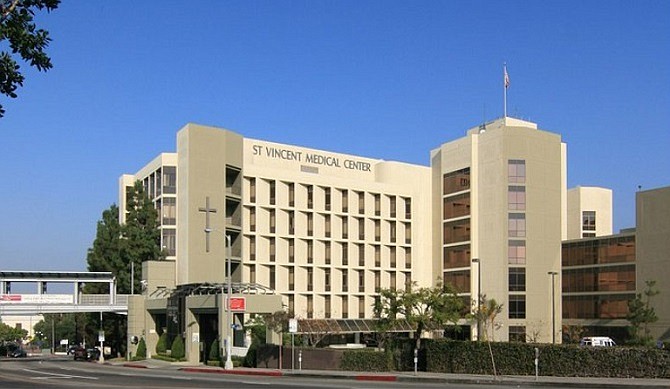
El Segundo, Calif.-based Verity Health has agreed to sell two California hospitals to AHMC Healthcare and is seeking an expedited review of the transaction, according to Bloomberg Law.
Verity, which entered Chapter 11 bankruptcy in 2018, filed a motion with the bankruptcy court March 29, seeking approval for the sale. Under the proposed transaction, Verity would sell Seton Medical Center in Daly City, Calif., and Seton Coastside in Moss Beach, Calif., to AHMC for $40 million. The agreement also includes a commitment by AHMC to continue to support the state’s efforts to address the COVID-19 pandemic.
The proposed deal comes after California Gov. Gavin Newson announced March 21 that the state will use $30 million in emergency funding to lease Seton Medical Center and St. Vincent Medical Center in Los Angeles, which Verity closed in January. The state is leasing the hospitals for three months to expand capacity for COVID-19 patients.

Congress is about to provide $100 billion for hospitals and other health care providers to cope with the fallout from the coronavirus, but small hospitals have no idea how to access those funds — and many need the money immediately, Axios’ Bob Herman reports.
What they’re saying: “A lot of rural hospitals out there need a cash infusion today,” Alan Morgan, CEO of the National Rural Health Association, told Axios. “How is it going to happen? What is the process? There are way more questions than answers.”
Details: The stimulus bill says “the Secretary of Health and Human Services shall, on a rolling basis, review applications and make payments” to hospitals and other providers, out of a $100 billion fund.
Between the lines: Many hospitals are part of large, profitable systems that benefit from their area’s demographics. The coronavirus will cause them financial distress, but they are not in danger of going under.
The bottom line: Bob asked Morgan how this process was supposed to work. “I don’t know,” he said, “and we are greatly concerned.”

The San Mateo County (Calif.) Board of Supervisors voted March 10 to allocate $5 million annually over the next four years to keep Seton Medical Center in Daly City, Calif., open, according to Bay City News.
The county supervisors voted 4-1 to give $20 million in funding to the company that buys the hospital from El Segundo, Calif.-based Verity Health. The funding package will come with conditions, including that the purchaser must keep the hospital open and fully functional.
Verity entered Chapter 11 bankruptcy in August 2018. In January, the health system closed St. Vincent Medical Center, a 366-bed hospital in Los Angeles, after a deal to sell four of its hospitals fell through. The system had been planning to close Seton Medical Center as soon as this week, according to the report.
There are currently two companies bidding to purchase the hospital in Daly City and Seton Coastside in Moss Beach, Calif. The funding will help ensure Seton Medical Center, which sees roughly 27,000 patients per year, keeps its doors open.

Bankruptcy judge approves sale of Hahnemann residency slots
This week a Federal judge ruled that the owner of Hahnemann University Hospital could move forward with the sale of the system’s more than 550 residency slots as part of a plan to pay off creditors. The training slots will be sold to a consortium of health systems led by Thomas Jefferson University Hospitals for $55M. Hahnemann had previously agreed to sell the positions to Reading, PA-based Tower Health before they were outbid by the Jefferson consortium, who will keep the majority of the positions—and new physician labor—in the Philadelphia area.
The judge noted the difficulty of the decision, saying it was the kind of case that would “cause a judge to lie awake at night”. The ruling is huge win for debtors, and a blow to the Federal government, which strongly opposed the sale and has seven days to appeal.
Should it stand, the case could set the precedent that residents and the positions they hold are an asset that can be negotiated for and sold. Interns and residents provide low-cost labor that is essential for 24/7 coverage in many large hospitals, and the complex system of allocating and funding of residency training slots is a funds transfer from the Federal government to health systems.
Allowing hospitals to sell those slots to the highest bidder could undermine the stability of urban hospitals, particularly those who are investor-owned, as owners look to maximize short-term profits.

 HENRY KOTULA