As both vaccinations and acquired immunity spread, life will likely settle into a new normal that will resemble pre-COVID-19 days— with some major twists.
The big picture: While hospitalizations and deaths are tamped down, the novel coronavirus should recede as a mortal threat to the world. But a lingering pool of unvaccinated people — and the virus’ own ability to mutate — will ensure SARS-CoV-2 keeps circulating at some level, meaning some precautions will be kept in place for years.
Driving the news: On Tuesday, Johnson & Johnson CEO Alex Gorsky told CNBC that people might well need a new coronavirus vaccine annually in the years ahead, much as they do now for the flu.
Gorsky’s comments were one of the clearest signals that even as the number of vaccinated people rises, the mutability of SARS-CoV-2 means the virus will almost certainly be with us in some form for years to come.
Be smart: That sounds like bad news — and indeed, it’s much less ideal than a world in which vaccination or infection conferred close to lifelong immunity and SARS-CoV-2 could be definitively conquered like smallpox.
With more contagious variants spreading rapidly, “the next 12 weeks are likely to be the darkest days of the pandemic,” says Michael Osterholm, the director of the University of Minnesota’s Center for Infectious Disease Research and Policy.
But the apparent effectiveness of the vaccines in preventing hospitalizations and death from COVID-19 — even in the face of new variants — points the way toward a milder future for the pandemic, albeit one that may be experienced very differently around the world.
Details:From studying what happened after new viruses emerged in the past, scientists predict SARS-CoV-2 will eventually become endemic, most likely in a seasonal pattern similar to the kind of coronaviruses that cause the common cold.
That’s nothing to sneeze at — literally, it will make us sneeze — but as immunity levels accumulate throughout the population, our experience of the virus will attenuate, and we’ll be highly unlikely to experience the severe death tolls and overloaded hospitals that marked much of the past year.
Yes, but: The existence of a stubborn pool of Americans who say they won’t get vaccinated — as well as the fact that it may take far longer for children, whom the vaccines have yet to be tested on, to get coverage — will give the virus longer legs than it would otherwise have.
“This will be with us forever,” says Osterholm. “That’s not even a debate at this point.”
What’s next: This means we can expect the K-shaped recovery that has marked the pandemic to continue, says Ben Pring, who leads Cognizant’s Center for the Future of Work.
With the virus likely to remain a threat, even if a diminished one, “those who are more stuck in the analog world are really going to continue to struggle,” he says.
Health security will also become a more ingrained part of daily life and work, which means temperature checks, masks, frequent COVID-19 testing and even vaccine passports for travel are here to stay.
The catch:That’s not all bad — the measures put in place to slow COVID-19 have stomped the flu and other seasonal respiratory viruses, and if we can hold onto some of those benefits in the future, we can save tens of thousands of lives and billions of dollars.
If the inequalities seen in the early phase of the vaccine rollout persist, COVID-19 could become a disease of the poor and disadvantaged, argues Mark Sendak, the co-founder and scientific adviser for Greenlight Ready, a COVID-19 resilience system that grew out of Duke Health.
Sendak points to the example of HIV, a disease that is entirely controllable with drugs but continues to exert a disproportionate toll on Black Americans, who take pre-exposure prophylactic medicine at much lower rates.
“If we go back to ‘normal,’ then we have failed.”
— Mark Sendak
What to watch:Whether the vaccine rollout can be adapted to reach hard to find and hard to persuade populations.
The Biden administration announced yesterday that it will start delivering vaccines directly to community health centers next week in an effort to promote more equity in the vaccine distribution process.
As the administration rolls out new COVID-19 plans, it needs to “invest in the community health care personnel” who can ensure that no one is left behind, says Sendak.
The bottom line:While SARS-CoV-2 has proven it can adapt to a changing environment, so can we. But we have to do so in a way that is fairer than our experience of the pandemic has been so far.
Doctors and scientists have been relieved that the dreaded “twindemic”—the usual winter spike of seasonal influenza superimposed on the COVID pandemic—did not materialize.
In fact, flu cases are at one of the lowest levels ever recorded, with just 155 flu-related hospitalizations this season (compared to over 490K in 2019). A new piece in the Atlantic looks at the long-term ramifications of a year without the flu.
Public health measures like masking and handwashing have surely lowered flu transmission, but scientists remain uncertain why flu cases have flatlined as COVID-19, which spreads via the same mechanisms, surged.
Children are a much greater vector for influenza, and reduced mingling in schools and childcare likely slowed spread. Perhaps the shutdown in travel slowed the viruses’ ability to hop a ride from continent to continent, and the cancellation of gatherings further dampened transmission.
Nor are scientists sure what to expect next year. Optimists hope that record-low levels of flu could take a strain out of circulation. But others warn that flu could return with a vengeance, as the virus continues to mutate while population immunity declines.
Researchers developing next year’s vaccines, meanwhile, face a lack of data on what strains and mutations to target—although many hope the mRNA technologies that proved effective for COVID will enable more agile flu vaccine development in the future.
Regardless, renewed vigilance in flu prevention and vaccination next fall will be essential, as a COVID-fatigued population will be inclined to breathe a sigh of relief as the current pandemic comes under control.
The national COVID indicators all continued to move in the right direction this week, with new cases down 16 percent, hospitalizations down 26 percent, and deaths (while still alarmingly high at more than 3,000 per day) down 6 percent from the week prior.
More good news: both nationally and globally, the number of people vaccinated against COVID now exceeds the total number of people infected with the virus, at least according to official statistics—the actual number of coronavirus infections is likely several times higher.
On the vaccine front, Johnson & Johnson filed with the Food and Drug Administration (FDA) for an Emergency Use Authorization for its single-dose COVID vaccine, which could become the third vaccine approved for use in the US following government review later this month. The J&J vaccine is reportedly 85 percent effective at preventing severe COVID disease, although it is less effective at preventing infection than the Pfizer and Moderna shots.
Elsewhere, TheLancet reported interim Phase III results for Russia’s Sputnik V vaccine trials, showing it to be 91 percent effective at preventing infection, and a new study found the Oxford-AstraZeneca vaccine to be 75 percent effective against the more-contagious UK virus variant.
Amid the positive vaccine news, the Biden administration moved to accelerate the vaccination campaign, invoking the Defense Production Act to boost production and initiating shipments directly to retail pharmacies. With the House and Senate starting the budget reconciliation process that could eventually lead to as much as $1.9T in stimulus funding, including billions more for vaccines and testing, it feels as though the tide may be finally turning in the battle against coronavirus.
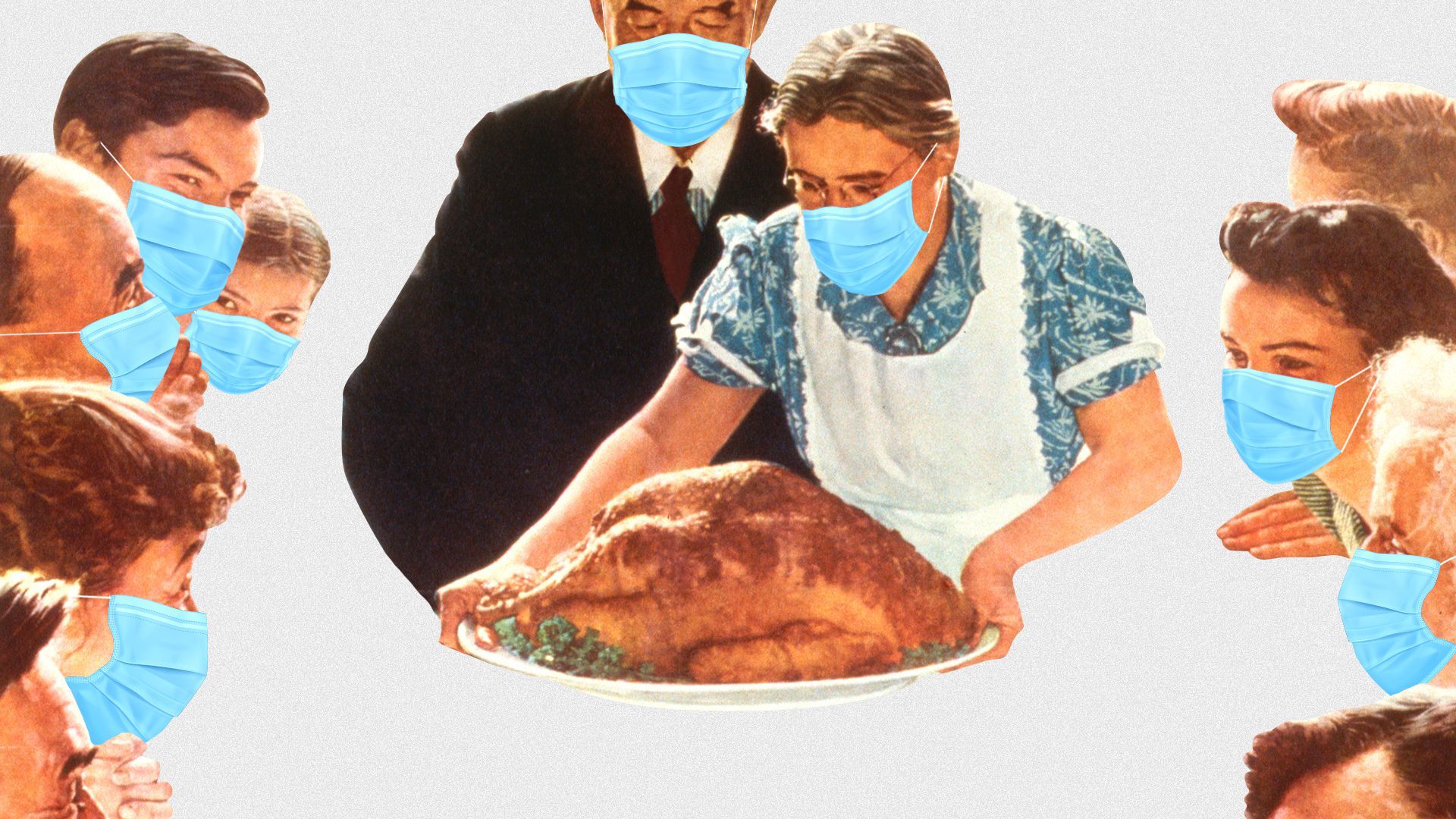
While the key indicators are still worrisome—we’re only back to Thanksgiving-week levels of new cases—and emerging variants are cause for concern, it’s worth celebrating a week that brought more good news than bad.
Best to follow Dr. Fauci’s advice for this Super Bowl weekend, however: “Just lay low and cool it.”
I had been staring her in the eyes, as she had ordered, but when a doctor on my other side began jabbing me with a needle, I started to turn my head. “Don’t look at it,” the first doctor said. I obeyed.
This was in early August in New Orleans, where I had signed up to be a participant in the clinical trial for the Pfizer-BioNTech COVID-19 vaccine. It was a blind study, which meant I was not supposed to know whether I had gotten the placebo or the real vaccine. I asked the doctor if I would really been able to tell by looking at the syringe. “Probably not,” she answered, “but we want to be careful. This is very important to get right.”
I became a vaccine guinea pig because, in addition to wanting to be useful, I had a deep interest in the wondrous new roles now being played by RNA, the genetic material that is at the heart of new types of vaccines, cancer treatments and gene-editing tools. I was writing a book on the Berkeley biochemist Jennifer Doudna. She was a pioneer in determining the structure of RNA, which helped her and her doctoral adviser figure out how it could be the origin of all life on this planet. Then she and a colleague invented an RNA-guided gene-editing tool, which won them the 2020 Nobel Prize in Chemistry.
The tool is based on a system that bacteria use to fight viruses. Bacteria develop clustered repeated sequences in their DNA, known as CRISPRs, that can remember dangerous viruses and then deploy RNA-guided scissors to destroy them. In other words, it’s an immune system that can adapt itself to fight each new wave of viruses—just what we humans need. Now, with the recently approved Pfizer-BioNTech vaccine and a similar one from Moderna being slowly rolled out across the U.S. and Europe, RNA has been deployed to make a whole new type of vaccine that will, when it reaches enough people, change the course of the pandemic.
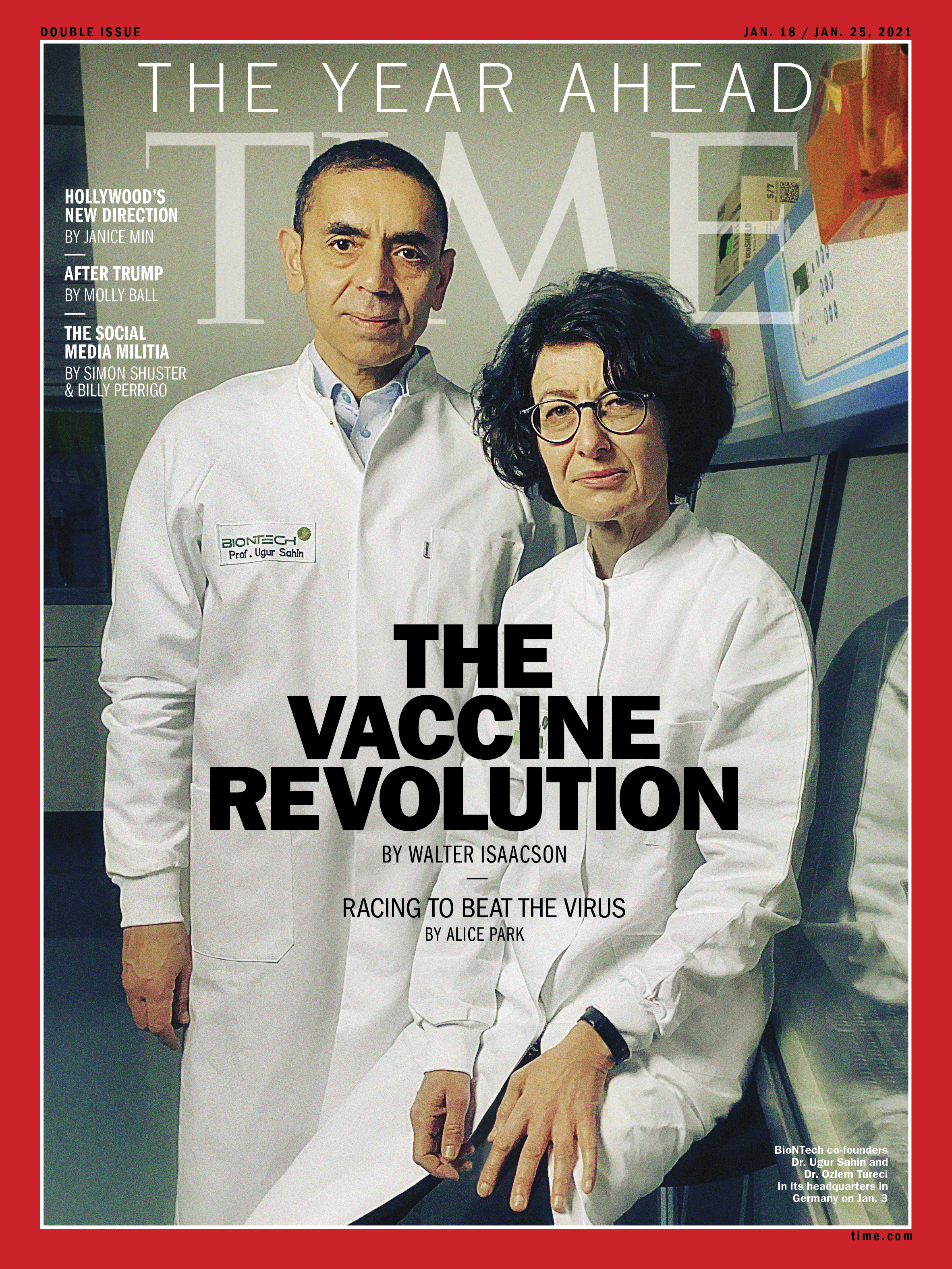
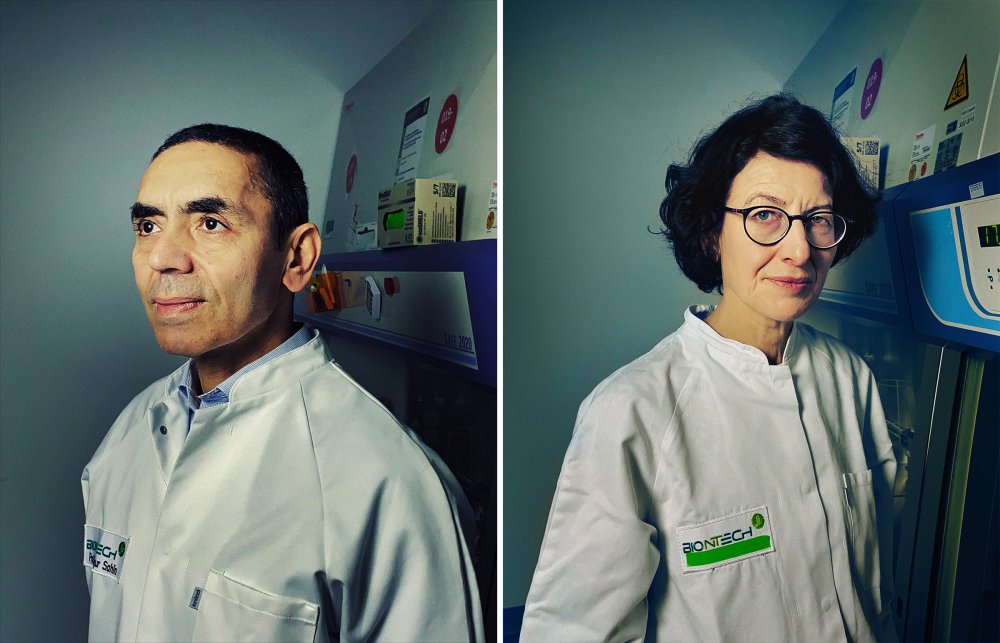
Drs. Ugur Sahin and Ozlem Tureci, Co-founders, BioNTech. In January 2020, before many in the Western world were paying attention to a new virus spreading in China, Dr. Ugur Sahin was convinced it would spur a pandemic. Sahin, who in 2008 co-founded the German biotech company BioNTech with his wife Dr. Ozlem Tureci, went to work on a vaccine and by March called his contact at Pfizer, a much larger pharmaceutical company with which BioNTech had previously worked on an influenza vaccine using mRNA. Less than a year later, the Pfizer-BioNTech COVID-19 vaccine became the first ever mRNA vaccine available for widespread use. Even so, Sahin, BioNTech’s CEO, and Tureci, its chief medical officer, maintain that BioNTech is not an mRNA company but rather an immunotherapy company. Much of the couple’s work—both at BioNTech and at their previous venture, Ganymed—has focused on treating cancer. But it is mRNA, and the COVID-19 vaccine made possible by the technology, that has pushed the famously hardworking couple into the limelight—and helped them become one of the richest pairs in Germany, though they reportedly still bicycle to work and live in a modest apartment near their office.
Up until last year, vaccines had not changed very much, at least in concept, for more than two centuries. Most have been modeled on the discovery made in 1796 by the English doctor Edward Jenner, who noticed that many milkmaids were immune to smallpox. They had all been infected by a form of pox that afflicts cows but is relatively harmless to humans, and Jenner surmised that the cowpox had given them immunity to smallpox. So he took some pus from a cowpox blister, rubbed it into scratches he made in the arm of his gardener’s 8-year-old son and then (this was in the days before bioethics panels) exposed the kid to smallpox. He didn’t become ill.
Before then, inoculations were done by giving patients a small dose of the actual smallpox virus, hoping that they would get a mild case and then be immune. Jenner’s great advance was to use a related but relatively harmless virus. Ever since, vaccinations have been based on the idea of exposing a patient to a safe facsimile of a dangerous virus or other germ. This is intended to kick the person’s adaptive immune system into gear. When it works, the body produces antibodies that will, sometimes for many years, fend off any infection if the real germ attacks.
One approach is to inject a safely weakened version of the virus. These can be good teachers, because they look very much like the real thing. The body responds by making antibodies for fighting them, and the immunity can last a lifetime. Albert Sabin used this approach for the oral polio vaccine in the 1950s, and that’s the way we now fend off measles, mumps, rubella and chicken pox.
At the same time Sabin was trying to develop a vaccine based on a weakened polio virus, Jonas Salk succeeded with a safer approach: using a killed or inactivated virus. This type of vaccine can still teach a person’s immune system how to fight off the live virus but is less likely to cause serious side effects. Two Chinese companies, Sinopharm and Sinovac, have used this approach to develop vaccines for COVID-19 that are now in limited use in China, the UAE and Indonesia.
Another traditional approach is to inject a subunit of the virus, such as one of the proteins that are on the virus’s coat. The immune system will then remember these, allowing the body to mount a quick and robust response when it encounters the actual virus. The vaccine against the hepatitis B virus, for example, works this way. Using only a fragment of the virus means that they are safer to inject into a patient and easier to produce, but they are often not as good at producing long-term immunity. The Maryland-based biotech Novavax is in late-stage clinical trials for a COVID-19 vaccine using this approach, and it is the basis for one of the two vaccines already being rolled out in Russia.
The plague year of 2020 will be remembered as the time when these traditional vaccines were supplanted by something fundamentally new:genetic vaccines, which deliver a gene or piece of genetic code into human cells. The genetic instructions then cause the cells to produce, on their own, safe components of the target virus in order to stimulate the patient’s immune system.
For SARS-CoV-2—the virus that causes COVID-19—the target component is its spike protein, which studs the outer envelope of the virus and enables it to infiltrate human cells. One method for doing this is by inserting the desired gene, using a technique known as recombinant DNA, into a harmless virus that can deliver the gene into human cells. To make a COVID vaccine, a gene that contains instructions for building part of a coronavirus spike protein is edited into the DNA of a weakened virus like an adenovirus, which can cause the common cold. The idea is that the re-engineered adenovirus will worm its way into human cells, where the new gene will cause the cells to make lots of these spike proteins. As a result, the person’s immune system will be primed to respond rapidly if the real coronavirus strikes.
This approach led to one of the earliest COVID vaccine candidates, developed at the aptly named Jenner Institute of the University of Oxford. Scientists there engineered the spike-protein gene into an adenovirus that causes the common cold in chimpanzees, but is relatively harmless in humans.
The lead researcher at Oxford is Sarah Gilbert. She worked on developing a vaccine for Middle East respiratory syndrome (MERS) using the same chimp adenovirus. That epidemic waned before her vaccine could be deployed, but it gave her a head start when COVID-19 struck. She already knew that the chimp adenovirus had successfully delivered into humans the gene for the spike protein of MERS. As soon as the Chinese published the genetic sequence of the new coronavirus in January 2020, she began engineering its spike-protein gene into the chimp virus, waking each day at 4 a.m.
Her 21-year-old triplets, all of whom were studying biochemistry, volunteered to be early testers, getting the vaccine and seeing if they developed the desired antibodies. (They did.) Trials in monkeys conducted at a Montana primate center in March also produced promising results.
Bill Gates, whose foundation provided much of the funding, pushed Oxford to team up with a major company that could test, manufacture and distribute the vaccine. So Oxford forged a partnership with AstraZeneca, the British-Swedish pharmaceutical company. Unfortunately, the clinical trials turned out to be sloppy, with the wrong doses given to some participants, which led to delays. Britain authorized it for emergency use at the end of December, and the U.S. is likely to do so in the next two months.
Johnson & Johnson is testing a similar vaccine that uses a human adenovirus, rather than a chimpanzee one, as the delivery mechanism to carry a gene that codes for making part of the spike protein. It’s a method that has shown promise in the past, but it could have the disadvantage that humans who have already been exposed to that adenovirus may have some immunity to it. Results from its clinical trial are expected later this month.
In addition, two other vaccines based on genetically engineered adenoviruses are now in limited distribution: one made by CanSino Biologics and being used on the military in China and another named Sputnik V from the Russian ministry of health.
There is another way to get genetic material into a human cell and cause it to produce the components of a dangerous virus, such as the spike proteins, that can stimulate the immune system. Instead of engineering the gene for the component into an adenovirus, you can simply inject the genetic code for the component into humans as DNA or RNA.
Let’s start with DNA vaccines. Researchers at Inovio Pharmaceuticals and a handful of other companies in 2020 created a little circle of DNA that coded for parts of the coronavirus spike protein. The idea was that if it could get inside the nucleus of a cell, the DNA could very efficiently churn out instructions for the production of the spike-protein parts, which serve to train the immune system to react to the real thing.
The big challenge facing a DNA vaccine is delivery.How can you get the little ring of DNA not only into a human cell but into the nucleus of the cell? Injecting a lot of the DNA vaccine into a patient’s arm will cause some of the DNA to get into cells, but it’s not very efficient.
Some of the developers of DNA vaccines, including Inovio, tried to facilitate the delivery into human cells through a method called electroporation, which delivers electrical shock pulses to the patient at the site of the injection. That opens pores in the cell membranes and allows the DNA to get in. The electric pulse guns have lots of tiny needles and are unnerving to behold. It’s not hard to see why this technique is unpopular, especially with those on the receiving end. So far, no easy and reliable delivery mechanism has been developed for getting DNA vaccines into the nucleus of human cells.
That leads us to the molecule that has proven victorious in the COVID vaccine race and deserves the title of TIME magazine’s Molecule of the Year: RNA. Its sibling DNA is more famous. But like many famous siblings, DNA doesn’t do much work. It mainly stays bunkered down in the nucleus of our cells, protecting the information it encodes. RNA, on the other hand, actually goes out and gets things done. The genes encoded by our DNA are transcribed into snippets of RNA that venture out from the nucleus of our cells into the protein-manufacturing region. There, this messenger RNA (mRNA) oversees the assembly of the specified protein. In other words, instead of just sitting at home curating information, it makes real products.
Scientists including Sydney Brenner at Cambridge and James Watson at Harvard first identified and isolated mRNA molecules in 1961. But it was hard to harness them to do our bidding, because the body’s immune system often destroyed the mRNA that researchers engineered and attempted to introduce into the body. Then in 2005, a pair of researchers at the University of Pennsylvania, Katalin Kariko and Drew Weissman, showed how to tweak a synthetic mRNA molecule so it could get into human cells without being attacked by the body’s immune system.
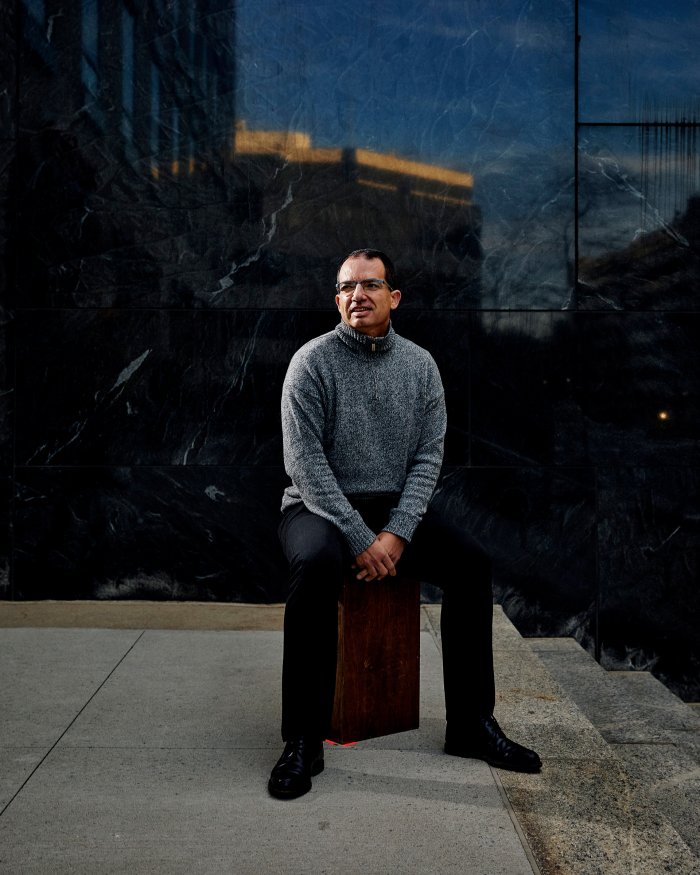
Stéphane Bancel, CEO, Moderna. Moderna’s COVID-19 vaccine was first tested in humans less than three months after news of the novel virus broke. But that lightning-fast development process belies the years of work that got Moderna to where it is today. The startup was founded in 2010 with the belief that mRNA technology, then still fairly new, could help treat any number of ailments. CEO Stéphane Bancel, pictured above, joined a year later. Moderna wasn’t originally focused on vaccines, but over time, its scientists began working toward vaccines against several infectious diseases as well as some forms of cancer. That experience came in handy when the COVID-19 pandemic arrived, leaving the world clamoring for a vaccine that could fight the deadly virus—and fast. Bancel’s company took the challenge in stride, using its mRNA platform to develop a vaccine around 95% effective at protecting against COVID-19 disease in less than a year.
When the COVID-19 pandemic hit a year ago, two innovative young pharmaceutical companies decided to try to harness this role played by messenger RNA: the German company BioNTech, which formed a partnership with the U.S. company Pfizer; and Moderna, based in Cambridge, Mass. Their mission was to engineer messenger RNA carrying the code letters to make part of the coronavirus spike protein—a string that begins CCUCGGCGGGCA … —and to deploy it in human cells.
BioNTech was founded in 2008 by the husband-and-wife team of Ugur Sahin and Ozlem Tureci, who met when they were training to be doctors in Germany in the early 1990s. Both were from Turkish immigrant families, and they shared a passion for medical research, so much so that they spent part of their wedding day working in the lab. They founded BioNTech with the goal of creating therapies that stimulate the immune system to fight cancerous cells. It also soon became a leader in devising medicines that use mRNA in vaccines against viruses.
In January 2020, Sahin read an article in the medical journal Lancet about a new coronavirus in China. After discussing it with his wife over breakfast, he sent an email to the other members of the BioNTech board saying that it was wrong to believe that this virus would come and go as easily as MERS and SARS. “This time it is different,” he told them.
BioNTech launched a crash project to devise a vaccine based on RNA sequences, which Sahin was able to write within days, that would cause human cells to make versions of the coronavirus’s spike protein. Once it looked promising, Sahin called Kathrin Jansen, the head of vaccine research and development at Pfizer. The two companies had been working together since 2018 to develop flu vaccines using mRNA technology, and he asked her whether Pfizer would want to enter a similar partnership for a COVID vaccine. “I was just about to call you and propose the same thing,” Jansen replied. The deal was signed in March.
By then, a similar mRNA vaccine was being developed by Moderna, a much smaller company with only 800 employees. Its chair and co-founder, Noubar Afeyan, a Beirut-born Armenian who immigrated to the U.S., had become fascinated by mRNA in 2010, when he heard a pitch from a group of Harvard and MIT researchers. Together they formed Moderna, which initially focused on using mRNA to try to develop personalized cancer treatments, but soon began experimenting with using the technique to make vaccines against viruses.
In January 2020, Afeyan took one of his daughters to a restaurant near his office in Cambridge to celebrate her birthday. In the middle of the meal, he got an urgent text message from the CEO of his company, Stéphane Bancel, in Switzerland. So he rushed outside in the freezing temperature, forgetting to grab his coat, to call him back.
Bancel said that he wanted to launch a project to use mRNA to attempt a vaccine against the new coronavirus. At that point, Moderna had more than 20 drugs in development but none had even reached the final stage of clinical trials. Nevertheless, Afeyan instantly authorized him to start work. “Don’t worry about the board,” he said. “Just get moving.” Lacking Pfizer’s resources, Moderna had to depend on funding from the U.S. government. Anthony Fauci, head of the National Institute of Allergy and Infectious Diseases, was supportive. “Go for it,” he declared. “Whatever it costs, don’t worry about it.”
It took Bancel and his Moderna team only two days to create the RNA sequences that would produce the spike protein, and 41 days later, it shipped the first box of vials to the National Institutes of Health to begin early trials. Afeyan keeps a picture of that box on his cell phone.
An mRNA vaccine has certain advantages over a DNA vaccine, which has to use a re-engineered virus or other delivery mechanism to make it through the membrane that protects the nucleus of a cell. The RNA does not need to get into the nucleus. It simply needs to be delivered into the more-accessible outer region of cells, the cytoplasm, which is where proteins are constructed.
The Pfizer-BioNTech and Moderna vaccines do so by encapsulating the mRNA in tiny oily capsules, known as lipid nanoparticles.Moderna had been working for 10 years to improve its nanoparticles.This gave it one advantage over Pfizer-BioNTech: its particles were more stable and did not have to be stored at extremely low temperatures.
Katalin Kariko, Senior vice president, BioNTech. In 1995, after years of struggle, Hungarian-born Katalin Kariko was pushed off the path to full professorship at the University of Pennsylvania. Her work on mRNA, molecules she believed could fundamentally change the way humans treat disease, had stalled. Then, in 1997, she met and began working with immunologist Drew Weissman. In 2005, they published a study describing a modified form of artificial mRNA—a discovery, they argued, that opened the door to mRNA’s use in vaccines and other therapies. Eventually, Kariko and Weissman licensed their technology to the German company BioNTech, where Kariko, shown here in a portrait shot by a photographer working remotely, is now a senior vice president. Her patience paid off this year. The mRNA-based Pfizer-BioNTech coronavirus vaccine, which Kariko helped develop, has been shown to be 95% effective at preventing COVID-19.
By November, the results of the Pfizer-BioNTech and Moderna late-stage trials came back with resounding findings: both vaccines were more than 90% effective. A few weeks later, with COVID-19 once again surging throughout much of the world, they received emergency authorization from the U.S. Food and Drug Administration and became the vanguard of the biotech effort to beat back the pandemic.
The ability to code messenger RNA to do our bidding will transform medicine. As with the COVID vaccines, we can instruct mRNA to cause our cells to make antigens—molecules that stimulate our immune system—that could protect us against many viruses, bacteria, or other pathogens that cause infectious disease. In addition, mRNA could in the future be used, as BioNTech and Moderna are pioneering, to fight cancer. Harnessing a process called immunotherapy, the mRNA can be coded to produce molecules that will cause the body’s immune system to identify and kill cancer cells.
RNA can also be engineered, as Jennifer Doudna and others discovered, to target genes for editing. Using the CRISPR system adapted from bacteria, RNA can guide scissors-like enzymes to specific sequences of DNA in order to eliminate or edit a gene. This technique has already been used in trials to cure sickle cell anemia. Now it is also being used in the war against COVID. Doudna and others have created RNA-guided enzymes that can directly detect SARS-CoV-2 and eventually could be used to destroy it.
More controversially, CRISPR could be used to create “designer babies” with inheritable genetic changes. In 2018, a young Chinese doctor used CRISPR to engineer twin girls so they did not have the receptor for the virus that causes AIDS. There was an immediate outburst of awe and then shock. The doctor was denounced, and there were calls for an international moratorium on inheritable gene edits. But in the wake of the pandemic, RNA-guided genetic editing to make our species less receptive to viruses may someday begin to seem more acceptable.
Throughout human history, we have been subjected to wave after wave of viral and bacterial plagues. One of the earliest known was the Babylon flu epidemic around 1200 B.C. The plague of Athens in 429 B.C. killed close to 100,000 people, the Antonine plague in the 2nd century killed 5 million, the plague of Justinian in the 6th century killed 50 million, and the Black Death of the 14th century took almost 200 million lives, close to half of Europe’s population.
The COVID-19 pandemic that killed more than 1.8 million people in 2020 will not be the final plague. However, thanks to the new RNA technology, our defenses against most future plagues are likely to be immensely faster and more effective. As new viruses come along, or as the current coronavirus mutates, researchers can quickly recode a vaccine’s mRNA to target the new threats. “It was a bad day for viruses,” Moderna’s chair Afeyan says about the Sunday when he got the first word of his company’s clinical trial results. “There was a sudden shift in the evolutionary balance between what human technology can do and what viruses can do. We may never have a pandemic again.”
The invention of easily reprogrammable RNA vaccines was a lightning-fast triumph of human ingenuity, but it was based on decades of curiosity-driven research into one of the most fundamental aspects of life on planet earth: how genes are transcribed into RNA that tell cells what proteins to assemble. Likewise, CRISPR gene-editing technology came from understanding the way that bacteria use snippets of RNA to guide enzymes to destroy viruses. Great inventions come from understanding basic science. Nature is beautiful that way.
Most people who have recovered from Covid-19 have similar levels of immunity against future infection to those who received a coronavirus vaccine, a study by Public Health England found, offering early hope against fears of a short-lived immunity spurred on by reports of people catching the virus twice, though the researchers warn that those with immunity may still be able to carry and transmit the virus to others.
KEY FACTS
Naturally acquired immunity from a previous Covid-19 infection provides 83% protection against reinfection when compared with people who have not had the disease before, government researchers found in a study of more than 20,000 healthcare workers.
The study, which has not yet been peer reviewed for rigor by other scientists, shows that this protection lasts for at least five months and is at a level just below that offered by vaccines from Pfizer-BioNTech (95%) and Moderna (94%) and significantly above that of the vaccine developed by the University of Oxford and AstraZeneca (62%), though manufacturers don’t know for how long this immunity lasts.
The figures suggest reinfection is relatively rare — occurring in fewer than 1% of the the 6,614 people who had already tested positive for the disease — though the scientists warned that while “those with antibodies have some protection from becoming ill with Covid-19 themselves,” early evidence suggests that they can carry and transmit the virus to others.
“It is therefore crucial that everyone continues to follow the rules and stays at home, even if they have previously had Covid-19, to prevent spreading the virus to others,” Public Health England wrote.
The study will continue to follow participants for another 12 months to determine “how long any immunity may last, the effectiveness of vaccines and to what extent people with immunity are able to carry and transmit the virus,” as well as investigate the highly-contagious new variant of coronavirus spreading across the U.K..
CRUCIAL QUOTE
Professor Lawrence Young, a virologist and Professor of Molecular Oncology at Warwick Medical School in England, said an important takeaway from the study is that we don’t yet know how long antibody protection will last outside of the five month window. He said it is “possible that many people who were infected during the first wave of the pandemic may now be susceptible to re-infection.” Young said it will be interesting to see whether people previously infected with Covid-19 and are subsequently vaccinated have “an even longer-lived protective immune response” and whether or not these findings hold true for the new virus variant currently spreading in the U.K..
WHAT TO WATCH FOR
The information gathered from reinfection cases could prove important as the pandemic progresses, especially when it comes to designing and implementing an effective vaccination program and deciding whether to ease lockdown measures. Whether or not those who are immune to serious illness are capable of transmitting the infection to others will be a crucial deciding factor.
WHAT WE DON’T KNOW
It’s not yet clear for how long the protection provided by vaccines last. This will have to be studied over time, as with this case of natural immunity, and is something manufacturers are already doing. Moderna believes their vaccine offers at least a year’s protection against disease. Whether or not this protection prevents individuals from infecting others will also need to be figured out.
BIG NUMBER
384,784. That’s how many people have died from Covid-19 in the U.S. since the pandemic began, according to Johns Hopkins university. According to CDC projections, this figure is set to grow 25% in the next three weeks. At the moment, more than 23 million people have contracted the disease in the U.S..
Sitting in the dark before 6 am in my Los Angeles house with my face lit up by yet another Zoom screen, wearing a stylish combination of sweatpants, dress shirt and last year’s JPM conference badge dangling around my neck for old times’ sake, I wonder at the fact that it’s J.P. Morgan Annual Healthcare Conference week again and we are where we are. Quite a year for all of us – the pandemic, the healthcare system’s response to the public health emergency, the ongoing fight for racial justice, the elections, the storming of the Capital – and the subject of healthcare winds its way through all of it – public health, our healthcare system’s stability, strengths and weaknesses, the highly noticeable healthcare inequities, the Affordable Care Act, Medicaid and vaccines, healthcare politics and what the new administration will bring as healthcare initiatives.
I will miss seeing you all in person this year at the J.P. Morgan Annual Healthcare Conference and our annual Sheppard Mullin reception – previously referred to as “standing room only” events and now as “possible superspreader events.” What a difference a year makes. I admit that I will miss the feeling of excitement in the rooms and hallways of the Westin St. Francis and all of the many hotel lobbies and meeting rooms surrounding it. Somehow the virtual conference this year lacks that je ne sais quoi of being stampeded by rushing New York-style street traffic while in an antiquated San Francisco hotel hallway and watching the words spoken on stage transform immediately into sharp stock price increases and drops. There also is the excitement of sitting in the room listening to paradigm shifting ideas (teaser – read the last paragraph of this post for something truly fascinating). Perhaps next year, depending on the vaccine…
So, let’s start there. Today was vaccine day at the JPM Conference, with BioNTech, Moderna, Novovax and Johnson & Johnson all presenting. Lots of progress reported by all of the companies working on vaccines, but the best news of the day was the comment from BioNTech that the UK and South Africa coronavirus variants likely are still covered by the BioNTech/Pfizer vaccine. BioNTech’s CEO, Prof. Uğur Şahin, M.D., promised more data and analysis to be published shortly on that.
We also saw continued excitement for mRNA vaccines, not only for COVID-19 but also for other diseases. There is a growing focus (following COVID-19 of course) on vaccines for cancer through use of neoantigen targets, and for a long list of infectious disease targets.For cancer, though, there continues to be a growing debate over whether the best focus is on “personalized” vaccines or “off the shelf” vaccines – personalized vaccines can take longer to make and have much, much higher costs and infrastructure requirements. We expect, however, to see very exciting news on the use of mRNA and other novel technologies in the next year or two that, when approved and put into commercialization, could radically change the game, not only as to mortality, but also by eliminating or significantly reducing the cost of care with chronic conditions (which some cancers have become, thanks to technological advancement). We are fortunate to be in that gap now between “care” and “cure,” where we have been able with modern medical advances to convert many more disease states into manageable chronic care conditions. Together with today’s longer lifespans, that, however, carries a much higher price tag for our healthcare system. Now, with some of these recent announcements, we look forward to moving from “care” to “cure” and substantially dropping the cost of care to our healthcare system.
Continuing consolidation also was a steady drumbeat underlying the multiple presentations today on the healthcare services side of the conference – health plans, health systems, physician organizations, home health. The drive to scale continues, as we have seen from the accelerated pace of mergers and acquisitions in the second half of 2020, which continues unabated in January 2021. There was today’s announcement of the acquisition by Amerisource Bergen of Walgreens Boots Alliance’s Alliance Healthcare wholesale business (making Walgreens Boots Alliance the largest single shareholder of Amerisource Bergen at nearly 30% ownership), following the announcement last week of Centene’s acquisition of Magellan Health (coming fast on the heels of Molina Healthcare’s purchase of Magellan’s Complete Care line of business).
On the mental health side – a core focus area for Magellan Health – Centene’s Chief Executive Officer, Michael Neidorff, expressed the common theme that we have been seeing in the past year that mental health care should be integrated and coordinated with primary and specialty care. He also saw value in Magellan’s strong provider network, as access to mental health providers can be a challenge in some markets and populations. The behavioral/mental health sector likely will see increased attention and consolidation in the coming year, especially given its critical role during the COVID-19 crisis and also with the growing Medicaid and Medicare populations.There are not a lot of large assets left independent in the mental health sector (aside from inpatient providers, autism/developmental disorder treatment programs, and substance abuse residential and outpatient centers), so we may see more roll-up focus (such as we have seen recently with the autism/ABA therapy sector) and technology-focused solutions (text-based or virtual therapy).
There was strong agreement among the presenting health plans and capitated providers (Humana, Centene, Oak Street and multiple health systems) today that we will continue to see movement toward value-based care (VBC) and risk-based reimbursement systems, such as Medicare Advantage, Medicare direct contracting and other CMS Innovation Center (CMMI) programs and managed Medicaid. Humana’s Chief Executive Officer, Bruce Broussard, said that the size of the MA program has grown so much since 2010 that it now represents an important voting bloc and one of the few ways in which the federal government currently is addressing healthcare inequities – e.g., through Over-the-Counter (OTC) pharmacy benefits, benefits focused on social determinants of health (SDOH), and healthcare quality improvements driven by the STARS rating program. Broussard also didn’t think Medicare Advantage would be a negative target for the Biden administration and expected more foreseeable and ordinary-course regulatory adjustments, rather than wholesale legislative change for Medicare Advantage.
There also was agreement on the exciting possibility of direct contracting for Medicare lives at risk under the CMMI direct contracting initiative. Humana expressed possible interest in both this year’s DCE program models and in the GEO regional risk-based Medicare program model that will be rolling out in the next year. Humana sees this as both a learning experience and as a way to apply their chronic care management skills and proprietary groups and systems to a broader range of applicable populations and markets. There is, however, a need for greater clarity and transparency from CMMI on program details which can substantially affect success and profitability of these initiatives.
Humana, Centene and Oak Street all sang the praises of capitated medical groups for Medicare Advantage and, per Michael Neidorff, the possibility of utilizing traditional capitated provider models for Medicaid membership as well. The problem, as noted by the speakers, is that there is a scarcity of independent capitated medical groups and a lack of physician familiarity and training. We may see a more committed effort by health plans to move their network provider groups more effectively into VBC and risk, much like we have seen Optum do with their acquired fee for service groups. Privia Health also presented today and noted that, while the market focus and high valuations today are accorded to Medicare lives, attention needs to be paid to the “age in” pipeline, as commercial patients who enroll in original Medicare and Medicare Advantage still would like to keep their doctors who saw them under commercial insurance. Privia’s thesis in part is to align with patients early on and retain them and their physicians, so as to create a “farm system” for accelerated Medicare population growth. Privia’s Chief Executive Officer, Shawn Morris, also touted Privia’s rapid growth, in part attributable to partnering with health systems.
As written in our notes from prior JPM healthcare conferences, health systems are continuing to look outside to third parties to gain knowledge base, infrastructure and management skills for physician VBC and risk arrangements. Privia cited their recent opening of their Central Florida market in partnership with Health First and rapid growth in providers by more than 25% in their first year of operations.
That being said, the real market sizzle remains with Medicare Advantage and capitation, percent of premium arrangements and global risk. The problem for many buyers, though, is that there are very few assets of size in this line of business. The HealthCare Partners/DaVita Medical Group acquisition by Optum removed that from the market, creating a high level of strategic and private equity demand and a low level of supply for physician organizations with that expertise. That created a focus on groups growing rapidly in this risk paradigm and afforded them strong valuation, like with Oak Street Health this past year as it completed its August 2020 initial public offering. Oak Street takes on both professional and institutional (hospital) risk and receives a percent of premium from its contracting health plans. As Oak Street’s CEO Mike Pykosz noted, only about 3% of Medicare dollars are spent on primary care, while approximately two-thirds are spent on hospital services. If more intensive management occurs at the primary care level and, as a result, hospitalizations can be prevented or reduced, that’s an easy win that’s good for the patient and the entire healthcare system (other than a fee for service based hospital).Pykosz touted his model of building out new centers from scratch as allowing greater conformity, control and efficacy than buying existing groups and trying to conform them both physically and through practice approaches to the Oak Street model. He doesn’t rule out some acquisitions, but he noted as an example that Oak Street was able to swiftly role out COVID-19 protocols rapidly and effectively throughout his centers because they all have the same physical configuration, the same staffing ratio and the same staffing profiles. Think of it as a “franchise” model where each Subway store, for example, will have generally the same look, feel, size and staffing. He also noted that while telehealth was very helpful during the COVID-19 crisis in 2020 and will continue as long as the doctors and patients wish, Oak Street believes that an in-person care management model is much more effective and telehealth is better for quick follow-ups or when in-person visits can’t occur.
Oak Street also spoke to the topic of Medicare Advantage member acquisition, which has been one of the more difficult areas to master for many health plans and groups, resulting in many cases with mergers and acquisitions becoming a favored growth vehicle due to the difficulties of organic membership growth. Interestingly, both Oak Street and Humana reported improvements in membership acquisition during the COVID-19 crisis. Oak Street credited digital marketing and direct response television, among other factors. Humana found that online direct-to-consumer brokers became an effective pathway during the COVID-19 crisis and focused its energy on enhancing those relationships and improving hand-offs during the membership enrollment process. Humana also noted the importance of brand in Medicare Advantage membership marketing.
Staying with Medicare Advantage, there is an expectation of a decrease in Medicare risk adjustment revenue in 2021, in large part due to the lower healthcare utilization during the COVID crisis and the lesser number of in-person visits during which HCC-RAF Medicare risk adjustment coding typically occurs. That revenue drop however likely will not significantly decrease Medicare Advantage profitability though, given the concomitant drop in healthcare expenses due to lower utilization, and per conference reports, is supposed to return to normal trend in 2022 (unless we see utilization numbers fall back below 90% again). Other interesting economic notes from several presentations, when taken together, suggest that while many health systems have lost out on elective surgery revenue in 2020, their case mix index (CMI) in many cases has been much higher due to the COVID patient cases. We also saw a number of health systems with much lower cash days on hand numbers than other larger health systems (both in gross and after adjusting for federal one-time stimulus cash payments), as a direct result of COVID. This supports the thesis we are hearing that, with the second wave of COVID being higher than expected, in the absence of further federal government financial support to hospitals, we likely will see an acceleration of partnering and acquisition transactions in the hospital sector.
Zoetis, one of the largest animal health companies, gave an interesting presentation today on its products and service lines. In addition to some exciting developments re: monoclonal antibody treatments coming on line for dogs with pain from arthritis, Zoetis also discussed its growing laboratory and diagnostics line of business. The animal health market, sometime overshadowed by the human healthcare market, is seeing some interesting developments as new revenue opportunities and chronic care management paradigms (such as for renal care) are shifting in the animal health sector. This is definitely a sector worth watching.
We also saw continuing interest, even in the face of Congressional focus this past year, on growing pharmacy benefit management (PBM) companies, which are designed to help manage the pharmacy spend. Humana listed growth of its PBM and specialty pharmacy lines of business as a focus for 2021, along with at-home care. In its presentation today, SSM Health, a health system in Wisconsin, Oklahoma, Illinois, and Missouri, spotlighted Navitus, its PBM, which services 7 million covered lives in 50 states.
One of the most different, interesting and unexpected presentations of the day came from Paul Markovich, Chief Executive Officer of Blue Shield of California. He put forth the thesis that we need to address the flat or negative productivity in healthcare today in order to both reduce total cost of care, improve outcomes and to help physicians, as well as to rescue the United States from the overbearing economic burden of the current healthcare spending. Likening the transformation in healthcare to that which occurred in the last two decades with financial services (remember before ATMs and banking apps, there were banker’s hours and travelers cheques – remember those?), he described exciting pilot projects that reimagine healthcare today. One project is a real-time claims adjudication and payment program that uses smart watches to record physician/patient interactions, natural language processing (NLP) to populate the electronic medical record, transform the information concurrently into a claim, adjudicate it and authorize payment. That would massively speed up cash flow to physician practices, reduce paperwork and many hours of physician EMR and billing time and reduce the billing and collection overhead and burden. It also could substantially reduce healthcare fraud.
Paul Markovich also spoke to the need for real-time quality information that can result in real-time feedback and incentivization to physicians and other providers, rather than the costly and slow HEDIS pursuits we see today. One health plan noted that it spends about $500 million a year going into physician offices looking at medical records for HEDIS pursuits, but the information is totally “in the rearview mirror” as it is too old when finally received and digested to allow for real-time treatment changes, improvement or planning. Markovich suggested four initiatives (including the above, pay for value and shared decision making through better, more open data access) that he thought could save $100 billion per year for the country.Markovich stressed that all of these four initiatives required a digital ecosystem and asked for help and partnership in creating one. He also noted that the State of California is close to creating a digital mandate and statewide health information exchange that could be the launching point for this exciting vision of data sharing and a digital ecosystem where the electronic health record is the beginning, but not the end of the healthcare data journey.
We know that the vaccines now available across the world will protect their recipients from getting sick with Covid-19. But while each vaccine authorized for public use can prevent well over 50% of cases (in Pfizer-BioNTech and Moderna‘s case, more than 90%), what we don’t know is whether they’ll also curb transmission of the SARS-CoV-2 virus.
That question is answerable, though—and understanding vaccines’ effect on transmission will help determine when things can go back to whatever our new normal looks like.
The reason we don’t know if the vaccine can prevent transmission is twofold. One reason is practical. The first order of business for vaccines is preventing exposed individuals from getting sick, so that’s what the clinical trials for Covid-19 shots were designed to determine. We simply don’t have public health data to answer the question of transmission yet.
The second reason is immunological. From a scientific perspective, there are a lot of complex questions about how the vaccine generates antibodies in the body that haven’t yet been studied. Scientists are still eager to explore these immunological rabbit holes, but it could take years to reach the bottom of them.
Acting the part
Vaccines work by tricking the immune system into making antibodies before an infection comes along. Antibodies can then attack the actual virus when it enters our systems before they have a chance to replicate enough to launch a full-blown infection. But while vaccines could win an Oscar for their infectious acting job, they can’t get the body to produce antibodies exactly the same way as the real deal.
From what we know so far, Covid-19 vaccines cause the body to produce a class of antibodies called immunoglobulin G, or IgG antibodies, explains Matthew Woodruff, an immunologist at Emory University. IgG antibodies are thugs: They react swiftly to all kinds of foreign entities. They make up the majority of our antibodies, and are confined to the parts of our body that don’t have contact with the outside world, like our muscles and blood.
But to prevent Covid-19 transmission, another type of antibodies could be the more important player. The immune system that patrols your outward-facing mucosal surfaces—spaces like the nose, the throat, the lungs, and digestive tract—relies on immunoglobulin A, or IgA antibodies. And we don’t yet know how well existing vaccines incite IgA antibodies.
“Mucosal immunology is ridiculously complicated,” says Woodruff. “Rather than thinking of immune system as a way to fight off bad actors, it’s really a way for your internal environment to maintain some sort of homeostatic existence with a really dynamic outside world,” as you breathe, eat, drink, and touch your face.
People who get sick and recover from Covid-19 produce a ton of these more-specialized IgA antibodies. Because IgA antibodies occupy the same respiratory tract surfaces involved in transmitting SARS-CoV-2, we could reasonably expect that people who recover from Covid-19 aren’t spreading the virus any more. (Granted, this may also depend on how much of the virus that person was exposed to.)
But we don’t know if people who have IgG antibodies from the vaccine are stopping the virus in our respiratory tracts in the same way. And even if we did, scientists still don’t know how much of the SARS-CoV-2 virus it takes to cause a new infection. So even if we understood how well a vaccine worked to prevent a virus from replicating along the upper respiratory tract, it’d be extremely difficult to tell if that would mean a person couldn’t transmit the disease.
Making it real
Because of all that complication, it’s unlikely that immunological research alone will reveal how well vaccines can prevent Covid-19 transmission—at least, not for years. But there’s another way to tell if a vaccine can stop a person from transmitting a virus to others: community spread.
As more and more people get both doses of a Covid-19 vaccine (and wait a full two weeks after their second dose for maximum immunity to kick in), public health officials can see how fast case counts fall. It may not be a perfect indicator of whether we’re stopping the virus in its tracks—there are many other variables that can slow transmission, including lockdown measures—but for practical purposes, it’ll be good enough to help make public health decisions.
Plus, even though the data we have from clinical trials isn’t perfect, it’s a pretty good indicator that the vaccine at least stops some viral replication. “I can’t imagine how the vaccine would prevent symptomatic infection at the efficacies that [companies] reported and have no impact on transmission,” Woodruff says.
Each of the vaccines granted emergency use in western countries—Moderna, Pfizer-BioNTech, and AstraZeneca—have all shown high efficacy in phase 3 clinical trials. (The Sinopharm and Sinovac vaccines from China and the Bharat Biotech vaccine in India have also been shown to be effective at preventing Covid-19, but aren’t widely approved for use yet.)
Frustratingly, it’s just going to take more time to see if people who got the vaccine are involved in future transmission events. That’s why it’s vital that even after receiving both doses of the Covid-19 vaccine, all individuals wear masks, practice physical distancing, and wash their hands when around those who haven’t been vaccinated—just in case.
It’s cheaper, easier to distribute, and relies on very different tech than its competitors.
AstraZeneca’s COVID-19 vaccine has been approved for emergency use in the United Kingdom, India, and Mexico.
Unlike its competitors, AstraZeneca’s vaccine is a modified version of a common cold virus that spreads among chimpanzees.
This is the first vaccine of its kind to be approved for human use, but other companies are developing similar tech to fight COVID-19.
The United Kingdom became the first country to approve AstraZeneca’s COVID-19 vaccine for emergency use on Dec. 30, just weeks after Pfizer’s and Moderna’s vaccine candidates received a green light from the Food and Drug Administration in the United States. The approval is another promising sign in the global immunization rollout—especially because this option, developed by Oxford University and biopharmaceutical company AstraZeneca, could be key to reaching people in rural and underfunded areas.
Unlike its competitors, the AstraZeneca COVID-19 vaccine can be stored at higher temperatures, costs less per dose, and uses different technology to immunize people. Although the vaccine hasn’t been approved for use in the U.S. yet, it could reach arms stateside in February at the earliest, The New York Times reports. Here’s what we know about the vaccine so far, and how it stacks up against Pfizer’s and Moderna’s.
How does the AstraZeneca COVID-19 vaccine work?
AstraZeneca’s vaccine uses adenovirus-vectored technology. Translation: It’s a harmless, modified version of a common cold virus that usually only spreads among chimpanzees. This altered virus can’t make you sick, but it carries a gene from the novel coronavirus’ spike protein, the portion of the virus that triggers an immune response. This allows the immune system to manufacture antibodies that work against COVID-19, teaching your body how to respond should you become infected.
In other words, AstraZeneca’s vaccine mimics a COVID-19 infection without its life-threatening side effects, per a release from the company. The reason researchers chose a chimpanzee adenovirus is simple: The modified virus needs to be new to the people being vaccinated—otherwise, the body won’t create those all-important antibodies. Anyone could already have antibodies for a cold spread among humans, but far fewer people have been exposed to a cold spread among chimps.
The Pfizer-BioNTech and Moderna vaccines, meanwhile, rely on mRNA technology, which essentially introduces a piece of genetic code that tricks the body into producing COVID-19 antibodies, no virus required. All three vaccines require two shots spaced about a month apart. Although no adenovirus-vectored vaccine has been approved for human use before, companies like Johnson & Johnson, CanSino, and NantKwest are all working on their own versions.
How does the AstraZeneca vaccine compare to the Moderna and Pfizer vaccines?
Storage and distribution
AstraZeneca’s vaccine is the easiest to transport so far—it can be stored for up to six months between 36 and 46°F, normal refrigerator temperatures. The Moderna and Pfizer options, meanwhile, must be stored at subzero temperatures until they’re ready to be used, at -4°F and -94°F, respectively. (mRNA technology is relatively fragile compared to adenovirus-vectored tech, meaning it must be kept at much lower temperatures to remain effective and stable.)
AstraZeneca’s higher storage temperature could make distribution much easier. “A clinic, a nursing home, or even [regional] health departments may not have freezers that can hold things at -94°F,” says Kawsar Talaat, M.D., an infectious disease doctor, vaccine researcher, and assistant professor in the department of International Health at Johns Hopkins University. Being able to use a typical fridge “allows time for distribution, allows the vaccine time to get to more rural areas, [and allows vaccines] to be kept at a clinic for a longer period of time.”
Cost
The new vaccine also beats its competitors on price: AstraZeneca’s vaccine costs providers about $4 per dose, while Pfizer’s costs $20 and Moderna’s costs $33,Al Jazeera reports. These prices will most likely fluctuate as time goes on and the vaccines evolve.
Efficacy
The two mRNA vaccines have a slight edge in efficacy; both Pfizer and Moderna report being about 95% effective against COVID-19 after the second shot in clinical trials, while AstraZeneca has reported an average efficacy of 70%, and up to 90% if the dosing is adjusted. (For comparison, the annual flu shot is usually between 40 and 60% effective, per the CDC.)
Side effects
All three vaccines’ side effects are similar, including potential injection site pain and flu-like symptoms, including fever, fatigue, headaches, and muscle pain, which are to be expected as your immune system is primed.
Which COVID-19 vaccine is the best?
There’s no “best” vaccine option, as there’s not enough research to confirm that yet. Vaccines aren’t a silver bullet, especially as the pandemic rages on: They must be combined with masks, hand-washing, and social distancing to work as effectively as possible, per the CDC. No matter which COVID-19 vaccine becomes available to you first, you can feel confident in its ability to protect you, as long as you continue being cautious until positive cases, hospitalizations, and deaths are significantly reduced nationwide.
In the meantime, it’s likely “that all the manufacturers are working on making their vaccines more stable at easier-to-manage temperatures,” Dr. Talaat explains. As their formulations change, their pros and cons will, too.
For now, we can be thankful that AstraZeneca’s vaccine is nearing worldwide clearance. “The next generation of vaccines, like AstraZeneca’s, which is kept at refrigerator temperatures, is a major advancement,” Dr. Talaat says. “When you’re talking about distribution to the entire world, it’s much easier to do because we already keep vaccines cold. It’s a lot harder to keep things frozen.”
People with COVID-19 who don’t exhibit symptoms may transmit 59 percent of all virus cases, according to a model developed by CDC researchers and published Jan. 7 in JAMA Network Open.
Since many factors influence COVID-19 spread, researchers developed a mathematical approach to assess several scenarios, varying the infectious period and proportion of transmission for those who never display symptoms according to published best estimates.
In the baseline model, 59 percent of all transmission came from asymptomatic transmission. That includes 35 percent of new cases from people who infect others before they show symptoms and 24 percent from people who never develop symptoms at all. Under a broad range of values for each of these assumptions, at least 50 percent of new COVID-19 infections were estimated to have originated from exposure to asymptomatic individuals.
The more contagious variant first identified in the U.K. and since found in six states underscores the importance of the model findings, said Jay Butler, MD, CDC deputy director for infectious diseases and a co-author of the study.
“Controlling the COVID-19 pandemic really is going to require controlling the silent pandemic of transmission from persons without symptoms,” Dr. Butler told The Washington Post. “The community mitigation tools that we have need to be utilized broadly to be able to slow the spread of SARS-CoV-2 from all infected persons, at least until we have those vaccines widely available.”
Whether vaccines stop transmission is still uncertain and was not a scenario addressed in the model.








 HENRY KOTULA