Atul Gawande on Coronavirus Vaccines and Prospects for Ending the Pandemic

https://www.newyorker.com/news/the-new-yorker-interview/atul-gawande-on-coronavirus-vaccines-and-prospects-for-ending-the-pandemic

Atul Gawande on Coronavirus Vaccines and Prospects for Ending the Pandemic  | The New Yorker

Atul Gawande is outlandishly accomplished. The son of Indian immigrants, he grew up in Athens, Ohio, and was educated at Athens High School, Stanford, Oxford, and Harvard, where he studied issues of public health. Before working as a surgeon at Brigham and Women’s Hospital, in Boston, he advised such politicians as Jim Cooper and Bill Clinton. He teaches at Harvard and is the chairman of Ariadne Labs, which works on innovation in health-care delivery and solutions, and he recently spent two years as the C.E.O. of a health-care venture called Haven, which is co-owned by Amazon, JPMorgan Chase, and Berkshire Hathaway.

Gawande is also a writer, and he has been publishing in The New Yorker for more than two decades. In 2009, heading into the debate over the Affordable Care Act, President Obama told colleagues that he had been deeply affected by Gawande’s article in the magazine called “The Cost Conundrum,” a study conducted in McAllen, Texas. Obama made the piece required reading for his staff. Gawande’s most recent book, a Times No. 1 best-seller, is “Being Mortal: Medicine and What Matters in the End.”

Since the beginning of the coronavirus pandemic, Gawande has been sharp in his criticism of the Trump Administration and, like Anthony Fauci and other prominent figures in public health, insistent on clear, basic measures to reduce levels of disease. After the election in November, President-elect Biden formed a covid-19 advisory board and included Gawande among its members. Earlier this week, I spoke with Gawande for The New Yorker Radio Hour. In the interview, which has been edited for length and clarity, Gawande says that President Trump’s relative silence on the issue after the election might be a blessing (considering the alternative). He suggests that the development of vaccines promises great things down the line, a return to relative normalcy some months from now. But, before that happens, he says, we may not only see terrible rates of illness and death—we will also experience an almost inevitably contentious rollout of the vaccine. Questions of who gets the vaccine and when will test a deeply divided society. As Gawande put it, “The bus drivers never came before the bankers before.”

We currently have one of the highest death and transmission rates of covid-19 in the world. What went wrong?

There’s so many things that went wrong, but you can boil it down to the difficulty of pulling together. One of the most critical things you have in the toolbox in public health is communications. It’s your ability to have clear priorities and communication about those priorities to your own public and to all of the players who get stuff done. We didn’t get testing started early. We weren’t calling the laboratories together to get testing built and created right from the get-go. And then fast-forward to where we are today. We still are in a world where we have not had clear communications from the top of the government around whether we should be wearing masks and having an actual national strategy to fight the virus. I would boil down what went wrong to not committing to communicating clearly and with one voice about the seriousness of what we’re up against and what the measures are to solve it.

When this began, I read “The Great Influenza,” John M. Barry’s book about 1918 and the horrendous flu that killed millions worldwide, and many hundreds of thousands in the United States. I thought to myself, Well, it’s not possible that we would repeat these mistakes, because, after all, we learn from history, even if the President of the United States does not. How is it possible that we made these same mistakes on such a mass scale? Do you lay it all at the feet of the President?

There’s a big part of this that I lay at the feet of the President. Imagine Pearl Harbor happened, and then we spent seven or eight months deciding whether or not we were going to fight back. And then, seven or eight months into it, a new President is going to come in who says, O.K., we are going to fight now. But you now have substantial parts of the country already arrayed against the idea that fighting it is worthwhile. In the meantime, some states have fought the attack and other states have not, and they’ve had to compete with each other for supplies. That’s the mess we have.

In May, I got to write about this in The New Yorker: the hospitals learned how to bring people to work and have them succeed. It was a formula that included masks, included some basic hygiene, some basic distancing, and testing. That’s been the formula, and is the formula still, for making it possible for people to resume a normal life. But we did not have a commitment from the very top to make this happen on a national basis. And we are continuing to litigate that issue to this very day.

You are now on President-elect Biden’s advisory board on covid-19, and I wonder what kind of coöperation you’re getting from the Trump Administration’s own advisory board.

Well, remember: up until just a few days ago, there was no contact allowed at all between any Administration officials and the Biden-Harris transition team. So only in the last few days have there started to be the contacts that would allow for basic information to be passed. I think it’s too early to say how well those channels of communication are turning out.

I’m sorry to interrupt, Atul, but, just to be clear here: we’re in a public-health emergency. Are you saying that the President’s theories, ill-founded and fantastical theories about the election, held up any communication whatsoever between President Trump’s advisory board and President-elect Biden’s board?

Absolutely. And I want to put a pin in what that means, in concrete fact. Here, we had a vaccine trial that came out three weeks ago showing a successful, effective vaccine, followed, just a few days later, by another vaccine trial. We did not have access to the information they were getting about the status of those trials. We did not have access to information about supplies. So, at the beginning of the year, with Operation Warp Speed, the target was three hundred million vaccines produced by the end of the year. Instead, what we’re seeing is reportedly thirty million or so by the end of [December]. We’re seeing in the press some backtracking from that as well. What were the bottlenecks that meant that this couldn’t be done? Is it a shortage of raw ingredients? Are they having stockpile problems? Is it a problem with the actual production processes?

Here’s another one when I’m talking to colleagues around the country who are going to be involved in distributing the vaccine: We hear about everything from shortages of gloves, uncertainty about supplies of needles and syringes for three hundred and thirty million people to get two rounds of doses. There’s no information yet on how many vaccines will be allocated to a given state or a given big pharmacy company like CVS or Walgreens—places that are an important part of the distribution chain. So there’s a lot of basic information that hasn’t been known. That discovery process is just starting.

The Biden Administration-to-be’s covid-19 task force has got a seven-point plan to stop the pandemic. What are the crucial elements of that plan?

It’s the same story that we’ve known since April: It’s mandating masks—that’s one of the most important tools we have for driving transmission down. It’s testing and being able to make sure that there’s widespread availability of testing. It’s supplies for the places that are going to need proper gloves, masks, et cetera. It’s continuing, based on the level of spread in a given community, to tune how much capacity restriction you have on indoor environments, whether it’s bars and restaurants or weddings or other gatherings that are seen to be currently driving transmission. Those are all critical elements. I’m firmly in agreement with where the President-elect is going on heeding the advice from public-health people that schools can be opened. But, in order for kids to be back in schools, especially elementary and middle schools, there’s still a lot of work to do to insure they have the supplies that they need to maintain distancing, to have the right ventilation.

Thanksgiving was a week ago. Anthony Fauci says that what he fears is a spike on top of a spike, a leap on top of a leap. Do you share that fear?

I do. A lot of people heeded the C.D.C. advice to not travel during Thanksgiving and to limit the size of family get-togethers. And I think that will help a great deal. But clearly large numbers of people did not heed that advice. And that’s the reason for the fear of the spike on top of a spike. We saw that, during the Thanksgiving weekend, we had the highest level of hospitalizations at any time in this pandemic, including the darkest days of spring. That’s going to have consequences in the days to come. I’m concerned that we’ll go into the Christmas holiday week with even higher spikes that will make that holiday all that much more challenging. Spike upon spike upon spike is the fear in this six-week-long period.

One of the signal disasters, as you said earlier, in the Trump Administration was communications, both what the President said about the pandemic and how he said it, the language he couched it in and the attitude he took toward it. Since the election, Trump doesn’t even talk about it on a daily basis.

No, he’s, he’s been awol. He had said in his statements: You know, it’s covidcovidcovid; all they want to talk about is covid. But watch, he said, the news will go away the day after the election. Instead, he’s the one who went away the day after the election. He has hardly spoken on what we’re up against, how bad things are, and what is going to be required. It’s interesting, however. In some ways, that is preferable to his coming in and constantly undermining the public-health messaging. So you have seen the C.D.C. and F.D.A. be able to step up. I can only surmise that what he’s clearly been focussed on is figuring out how to hold on to power. The irony is it’s left the field clear.

President-elect Biden is saying very clearly that this should be thought of as a war. We have to be on a war footing and understand how grave this is. Now you’re getting a unified message that’s coming across, and it’s coming from the President-elect on down and from the career scientists. In the face of the rising levels of disease in the country, you now have some Republican governors who had [opposed] a mask mandate now implementing the mask mandate. And they’re not getting contradicted by the President in that process. So, ironically, look, if I have to have President Trump on the airwaves contradicting everybody, or being awol, I’d rather have him be awol.

Thankfully, we can look forward to a vaccine, but that presents enormous logistical challenges. What are the challenges, and how do you view that rolling out?

Well, this is an undertaking on another scale from anything we’ve been doing in the last year. We have deployed north of a hundred and twenty million coronavirus tests in the course of eight months. This is going to be three hundred and thirty million vaccinations, done twice, and hoping to accomplish it in the course of six months or less. This is with vaccines that are new and that haven’t been produced at this volume before. Their clinical data is just undergoing review for approval by the F.D.A. The task is muddied by the fact that we don’t have a clear understanding of what the supply situation is that we have inherited from the Trump Administration. We also don’t know even what the prioritization is.

I’m concerned that what will happen when the new Administration starts is that they will inherit a lot of public confusion, because each state is now coming to its own conclusion about how they’re going to prioritize things. There’s going to be such demand. People are going to clamor for this vaccine. And, if they think that the system is rigged, we will have even more trouble.

After health-care workers and nursing homes, who gets the vaccine next? It’s almost like some terrible philosophical, moral, ethical conundrum that philosophers are faced with all the time. What are your discussions like when it comes to those next levels?

There are eighty-seven million essential workers who are at heightened risk of exposure. They are, say, meatpackers who are exposed to co-workers, or grocery-store workers or bus drivers who are exposed. You’ll be able to go to your local pharmacy and get a vaccine, but what they need to know is, how do they identify who’s the bus driver and who’s not?

Will the government be able to guarantee us that wealthy people, connected people, won’t be able to jump the line?

I think this is one of the critical tests—and an opportunity. The chance to prove that the system is not rigged should not be underestimated. It’s hard. Think about it. The bus drivers never came before the bankers before. You’re going to have Zoom workers who want to go back to normal, and I cannot blame the number of people who will say, You know, thank God I can finally not be in fear. Let me get the vaccine. What do you mean, I have to wait five months? I can imagine a million ways [of jumping the line], people paying someone twenty-five hundred bucks to get your work I.D. tag. This is all about rallying people together. It can’t just be about the rules. It has to be about how we all understand this and work together to say, These are the folks most at risk. They make our subways work. They make our buses work. They get our food supply to us. They make it possible for me to go grocery shopping, and I’ll just have to wait three or four months for my turn.

What you’re talking about is community and common interest and fairness. Many people are very good about that on the level of rhetoric, but, when it comes to their health and their children’s health or their parents’ health, that’s where rubber meets the road.

The mass debate and antagonism we’ve had over the last few months is nothing compared to the splits we will see over “I want my family to be vaccinated.” You know, one person in the family might get vaccinated. Another person might not because they have an illness profile or they have a job that fits in that way. You’ll have children who some families will want to have vaccinated and others will not want to have vaccinated. Pediatric clinical trials have only just gotten under way, and we won’t see those results for a while.

I have a child with severe autism, and so I pay very close attention to the anti-vaxxer movement. And the statistics, the numbers of people who say they will not be vaccinated, is enormous. Doesn’t that have serious implications not only for them but for our over-all effort?

It does. It seems, if we can get around seventy per cent or so of people vaccinated, that would stop the transmission just through vaccination alone. Now if, once people start getting vaccinated, they start throwing their masks away and you can’t get them to do anything else like distancing, then you’re really relying on vaccination as the sole prong of the strategy come three, four months from now. I think there are lots of things that are pushing in the direction of keeping the numbers of people who resist vaccination smaller than those surveys indicate.

What are the numbers?

The numbers suggest that it’s up to as much as forty per cent, even up to fifty per cent, who have said that they are not ready to take the vaccine [even] if the F.D.A. approves it. Part of the reason it’s good that health-care workers would go first is just demonstrating that we ourselves are willing to get vaccinated. Health-care workers are everywhere, which means we’re all going to know people who got vaccinated, and we’re going to see that they did all right.

The reality is that there are memes around anti-vaccination, like: the vaccine will change your D.N.A., or people are injecting a location transmitter into you, a conspiracy to be tagging everybody in the country. We’ll have to be able to combat crazy conspiracy theories. I’ll just summarize by saying this will be contentious, but I’m quite hopeful that we will get to large enough levels of vaccination so that we will be able to get this under control and return to a significant degree of normalcy.

Has there ever been any kind of distribution effort like this in American history?

I draw on things like the polio campaigns, which, you know, took polio from being an annual summer pandemic, in the early fifties, that left kids paralyzed, to essentially being gone a few years after the vaccines came out. Then you had H1N1, where we were in position to vaccinate seventy-million-plus people. So I think there is some precedent. We have not tried to say, Let’s eradicate this disease in one year. Smallpox took a couple of decades. I think we can get [the coronavirus] under control without necessarily eradicating it.

What would it take to eradicate it—or are we never going to eradicate it?

You don’t have to vaccinate every single human being in order to eradicate it. You need to get enough people vaccinated so that the disease stops spreading and dies out. I’m hopeful that we can get it under control here, but, to get eradication, to go back to global travel like before, you would have to get the whole world vaccinated. And that will take years. If we are well vaccinated here, we will feel comfortable over time lifting our restrictions on travel in the United States. And we will become freer to travel to many places around the world. And we will begin to realize what a lot of public-health people like me have been saying, which is that this can’t just be about distribution of vaccine in the United States. This is also going to need to be about enabling global vaccination.

At what point do you think you will be comfortable eating in crowded restaurants, flying on planes, living the life that you lived a year ago?

I think it will be after I get vaccinated [and we have enough data to know the vaccines are stopping transmission]. I’m actually a trial participant. One of the things that’s running through my brain is when I’m going to feel comfortable—when I find out whether I got a placebo or I got the vaccine.

What trial are you in?

I’m in the Moderna trial. After the booster shot, I got a fever, and I had the whole reaction that you would have expected. So I’m going to guess that I got the vaccine. But I won’t feel comfortable that I got it until I actually get that confirmation. But this isn’t about me. I want to see the evidence that the vaccine is lasting. What is the story three months from now? Are the antibodies showing indications that it lasts? I suspect that we’ll really feel comfortable, that we’re able to largely return to normal, maybe in about six months’ time. But, you know, we’re going to go through this gray-zone period where a lot of people have been vaccinated, and I will feel among them. I’m so desperate to go to a concert! Live music is the thing I’ve missed the absolute most.

Dr. Fauci has been a paragon. At the same time, he said, it could be a year and a half for a vaccine to be deployable. Why was the timeline so much faster in the end?

It was insane, some of the timelines that the scientists hit. For example, from the moment that the genome for the virus got sequenced to the moment when the N.I.H.-Moderna team actually was producing the vaccine, it was days. I think it was like a week or something like that. That’s just beyond belief.

What was the science, the discoveries, that made that possible?

Well, it was years of work to build the platform that could deliver the genetic information. Those first few days of success were built on years of work that folks like Dr. Fauci get credit for, because he’s been contributing to the creation of that kind of platform for some years now, as have many biotech companies and many university labs and the government.

Atul, we’re sitting here and watching the year 2020 end—and not a moment too soon. What do you expect will be our situation in December, 2021?

Well, for one thing, I think we’ll be having normal holiday experiences. We’ll be able to get together with our families and spend time. It’s harder for me to predict from my vantage point with as much confidence, but I think that if that’s happening, we will be on better economic terms as well. Right now, airlines, hotels, and any face-to-face service industry—bars, restaurants, child care, health care—I think all of those things are coming back.
Millions of Americans Are Calling In Sick, Stunting the Recovery

https://www.bloomberg.com/news/articles/2020-12-31/covid-keeps-millions-from-work-just-as-u-s-economy-loses-steam

Covid Keeps Millions From Work Just as U.S. Economy Loses Steam

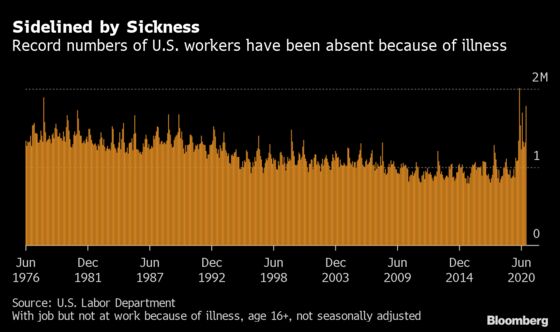
Amid the surge in the ranks of the unemployed during the pandemic, another crucial problem in the labor market has gone mostly overlooked: Workers are calling out sick in record numbers this year.

Whether it’s because they have Covid-19 themselves, are worried about getting it or are taking care of someone who already has it, the number of workers who’ve missed days on the job has doubled in the pandemic.

What’s more, unlike the jobless rate, which has steadily declined from its April peak, the rate of abseenteism — as it is called by economists — has remained stubbornly high. Almost 1.8 million workers were absent in November because of illness, nearly matching the record 2 million set back in April, according to Labor Department data.

These lost days of work are sapping an economic recovery that’s been progressing in fits and starts for much of the past several months. While some indicators have improved markedly, others such as retail sales and consumer spending and incomes have weakened as the pandemic rages on and local governments impose fresh restrictions on businesses and travel.

Michael Gapen, chief U.S. economist at Barclays Plc, said that the vaccine could start driving down absenteeism by the second quarter. Until then, he said, the missed work is leading to supply chain disruptions.

Absenteeism “could lead to shortages, it could lead to higher prices and more restrained output,” Gapen said.

With about 1.5 million new cases per week and deaths at a record pace, employee absenteeism may remain elevated for some time, especially in early 2021 before vaccines are widely distributed and with the rollout in the U.S. moving slower than government officials expected.

Factory Workers

While the Labor Department data tracks people currently in the labor force who are out sick, a separate survey by the Census Bureau captures an even wider view of the challenge. Its latest Household Pulse Survey — based on responses in late November and early December — estimates that more than 11 million people weren’t working because of the virus. The figures also include those who refrained from working because they were worried about getting or spreading the virus, and those caring for someone with symptoms.

The effects of missing workers are especially concentrated in manufacturing. Absenteeism, combined with short-term shutdowns to sanitize facilities and difficulties in returning and hiring workers, limit the sector’s growth potential, according to Timothy Fiore, chair of the Institute for Supply Management’s Manufacturing Business Survey Committee.

The group’s gauge of factory activity grew at a slower pace in November, with the employment component falling back to a level that indicates contraction.

“It’s not a lack of work,” Fiore said on a recent call with reporters, noting absenteeism especially for low- to medium-skill roles. “It’s a lack of people.”

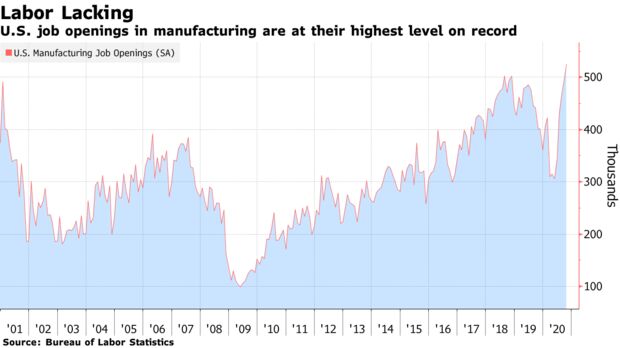
In addition to temporarily absent workers, the manufacturing sector has 525,000 job openings, the most in Labor records back to 2000.

U.S. job openings in manufacturing are at their highest level on record

Auto plants are feeling the effects. General Motors Co. put white-collar employees on the production floor in August to cope with high absenteeism amid strong demand. Volkswagen AG Chief Financial Officer Frank Witter has said high levels of missing staff left the automaker “at times struggling to get all the cars built for customer orders.”

U.S. businesses have reported that surging cases precipitated plant closings and infection fears, adding to labor challenges including absenteeism and attrition, according to the Federal Reserve’s latest Beige Book summary of economic conditions. Manufacturers in the Chicago region have used overtime to make up for staff shortages, the Dec. 2 report said.

Sick Leave

For office workers, 90% of professionals said before the pandemic they’d sometimes go to work sick, according to a 2019 study by staffing firm Accountemps. Covid changed the conversation, and more employees are staying home to protect themselves and others.

The Families First Coronavirus Response Act earlier this year made the decision to stay home easier for some Americans by allowing two weeks of paid sick leave for certain employees. The law also allows leave for those unable to work because they must care for a child.

The latest stimulus bill, signed by President Donald Trump on Dec. 27, includes an extension of the act through March 31, but makes paid leave voluntary for employers rather than mandatory as it was in the first iteration. That may continue the trend of workers staying home depending on how many employers choose to grant the leave.

The act, however, excludes essential workers, which means those employed at facilities such as meatpacking plants can’t take advantage of the policy. That in turn can lead to workplace outbreaks and further disrupt production.

With fewer employees at work, slaughter rates at U.S. meat plants fell in the third quarter. Tyson Foods Inc. Chief Executive Officer Dean Banks said on a recent earnings call that absenteeism has “increased the cost and complexity of our operations” and that the company expects that to continue in 2021.

More Evidence Points to Role of Blood Type in COVID-19

Additional evidence continued to suggest blood type may not only play a role in COVID-19 susceptibility, but also severity of infection, according to two retrospective studies.

In Denmark, blood type O was associated with reduced risk of developing COVID-19 (RR 0.87, 95% CI 0.83-0.91), based on the proportion of those with type O blood who tested positive for SARS-CoV-2 compared with a reference population, reported Torben Barington, MD, of Odense University Hospital, and colleagues.

However, there was no increased risk for COVID-19 hospitalization or death associated with blood type, the authors wrote in Blood Advances.

Limitations to the data include that ABO blood group information was only available for 62% of individuals, and that the sex of the testing population was skewed, with women accounting for 71% who tested negative and 67% who tested positive.

They pointed to the recent research that blood type plays a role in infection, noting the lower than expected prevalence of blood group O individuals among COVID-19 patients. Researchers also observed how blood groups are “increasingly recognized to influence susceptibility to certain viruses,” among them SARS-CoV-1 and norovirus, adding that individuals with A, B, and AB blood types may be at “increased risk for thrombosis and cardiovascular diseases,” which are important comorbidities among patients hospitalized with COVID-19.

ABO and RhD blood group information was available for 473,654 individuals who were tested for SARS-CoV-2 from February 27 to July 30, as well as for 2,204,742 individuals not tested for SARS-CoV-2 as a reference.

Of the individuals tested, 7,422 tested positive for SARS-CoV-2. About a third of both those who tested positive and negative were men, and those with positive tests were slightly older (52 vs 50, respectively).

Among individuals testing positive for SARS-CoV-2, about 38% (95% CI 37.5-39.5%) belonged to blood group O versus about 42% of those in the reference population. There were significantly more group A and AB individuals in the positive testing group versus the reference population, though the difference was non-significant for group B. When group O individuals were removed, there was no difference between the remaining groups.

Blood Type Linked to COVID-19 Severity?

Meanwhile, a second, smaller study in Blood Advances did report a connection between blood type and COVID-19 severity.

Blood types A or AB in COVID-19 patients were associated with increased risk for mechanical ventilation, continuous renal replacement therapy, and prolonged ICU admission versus patients with blood type O or B, according to Mypinder Sekhon, MD, of the University of British Columbia in Vancouver, and colleagues. Inflammatory cytokines did not differ between groups, however.

These authors also cited research that found that blood groups were linked to virus susceptibility, but that the relationship between SARS-CoV-2 infection severity and blood groups remains “unresolved.” However, COVID-19 appears to be a multisystem disease with renal and hepatic manifestations.

“If ABO blood groups play a role in determining disease severity, these differences would be expected to manifest within multiple organ systems and hold relevance for multiple resource-intensive treatments, such as mechanical ventilation and continuous renal replacement therapy,” Sekhon and colleagues wrote.

They collected data from six metropolitan Vancouver hospitals from Feb. 21 to April 28, identifying 95 COVID-19 patients admitted to an ICU with known ABO blood type.

Among these patients, 57 were group O or B, while 38 were group A or AB. A significantly higher proportion of A/AB patients required mechanical ventilation versus O/B patients (84% vs 61%, respectively, P=0.02). Similar figures were seen for patients requiring continuous renal replacement therapy (32% vs 9%, P=0.04). Median ICU stay length was also longer for A or AB patients compared with O or B patients (13.5 days vs 9 days, P=0.03).

There was no difference in probability of ICU discharge, and eight patients died in the O/B group versus nine patients in the A/AB group. Not surprisingly, biomarkers of renal and hepatic dysfunction were higher in the A/AB group, as well.

“The unique part of our study is our focus on the severity effect of blood type on COVID-19. We observed this lung and kidney damage, and in future studies, we will want to tease out the effect of blood group and COVID-19 on other vital organs,” Sekhon said in a statement.

About 25% of patients were missing data on blood group, and the nature of the study makes it impossible to infer causality, the authors acknowledged. Ethnic ancestry and outcomes in patients with COVID-19 could be an unaddressed confounder. Additionally, anti-A antibody titers may affect COVID-19 severity, and these were not measured.

This terrible year taught me something about hope

The first month of the pandemic was also supposed to be the month I got pregnant, but my clinic closed and plans changed. Doctors and nurses needed personal protective equipment to tend to patients with covid-19, not women with recurrent miscarriages.

When the clinic reopened several months later, it turned out my husband and I had only been delaying yet another loss: In late August, he obeyed the medical center’s strict coronavirus protocols by waiting anxiously in the car while I trudged inside, masked and hand-sanitized, to receive a miscarriage diagnosis alone. I searched the ultrasound screen for the rhythmic beat of a heart, and then accepted that whatever had once been there was now gone.

But that was 2020 for you, consistent only in its utter crappiness. For every inspiring video of neighbors applauding a shift change at the hospital, another video of a bone-tired nurse begging viewers to believe covid was real, it wasn’t a hoax, wear a mask.

For every protest organized by activists who understood racism is also a long-term crisis, an appearance by the Proud Boys; for every GoFundMe successfully raising money for a beloved teacher’s hospital bills, a bitter acknowledgment that online panhandling is our country’s version of a safety net.

Millions of citizens stood in line for hours to vote for the next president and then endured weeks of legal petitions arguing that their votes should be negated. The basis for these legal actions were conspiracy theories too wild to be believed, except that millions of other citizens believed them.

And that was 2020 for you, too: accepting the increasingly obvious reality that the country was in peril, built on iffy foundations that now buckled under pressure. My loved ones who worked as waiters or bartenders or physical therapists were choosing between health and paychecks, and even from the lucky safety of my work-from-home job, each day began to feel like watching America itself arrive at a hospital in bad shape, praying that doctors or clergy could find something they were able to save.

Is there a heartbeat?

You want the answer to be yes, but even so, it was hard to imagine how we would come back from this.

What kind of delusional person would even try to get pregnant in this world? In my case it would never be a happy accident; it would always be a herculean effort. And so it seemed I should have some answers.

How do you explain to a future child: Sorry, we can’t fix climate change; we can’t even get people to agree that we should wear masks in grocery stores? How do you explain the frustration of seeing brokenness, and then the wearying choice of trying to fix it instead of abandoning it? How do you say, Love it anyway. You’re inheriting an absolute mess, but love it anyway?

I found myself asking a lot of things like this in 2020, but really they were all variations of the same question: What does it mean to have hope?

But in the middle of this, scientists worked quietly in labs all over the world. They applied the scientific method with extraordinary discipline and speed. A vaccine was developed. Tens of thousands of volunteers rolled up their sleeves and said, Try it out on me.

It was approved, and a nurse from Long Island was the first American televised receiving it. Her name was Sandra Lindsay, an immigrant from Jamaica who had come to the United States 30 years ago and who had spent the last year overseeing critical care teams in back-to-back shifts. She said she had agreed to go first to show communities of color, long abused, brushed-off or condescended to by the medical system, that the vaccine was safe.

Here was hope. And more than that, here was hope from a woman who had more reason than most to be embittered: an exhausted health-care worker who knew too well America’s hideous racial past and present, who nonetheless also knew there was only one way out of the tunnel. Here she was, rolling up her own sleeve, and there were the lines of hospital employees ready to go after her, and there were the truck drivers ferrying shipments of syringes.

I can’t have been the only person to watch the video of those early inoculations, feeling elated and tired, and to then burst into tears. I can’t have been the only person to realize that even as 2020 revealed brokenness, it also contained such astounding undercurrents of good.

The scientific method works whether you accept it or not. Doctors try to save you whether you respected public-health guidelines or not. Voter turnout was astronomical because individual citizens realized they were all, every one of them, necessary pieces in a puzzle, even if they couldn’t see what the final picture was supposed to look like.

The way to believe in America is to believe those things are passed down, too.

Sometime in October, a couple of months after my last miscarriage — when the country was riding up on eight months of lonely and stoic birthdays, graduations, deaths and weddings — I went into the bathroom and saw a faint second line on a First Response pregnancy test. It was far from my first rodeo, so I knew better than to get excited. I mentioned it to my husband with studied nonchalance, I told him that I’d test again in a few days but that we should assume the worst would happen.

Two weeks after that, I had a doctor’s appointment, and then another a week later, each time assuming the worst, but each time scheduling another appointment anyway, until eventually I was further along than I’d ever gotten before — by one day, then three days, then thirty.

I am not a superstitious person. I don’t believe that good things always come to those who deserve them. I believe that stories regularly have sad endings and that it’s often nobody’s fault when they do, and that we should tell more stories with sad endings so that people who experience them know that they’re not alone.

But 2020 has taught me that I am, for better or worse, someone who wants to hope for things. To believe in the people who developed vaccines. In the people who administered them. In Sandra Lindsay. In the people who delivered groceries, who sewed masks, who have long cursed America’s imperfect systems and long fought to change them, who still donate $10 to a sick teacher’s GoFundMe.

At my most recent appointment, the doctor’s office was backed up in a holiday logjam. I sat in the exam room for nearly three hours while my husband again waited anxiously in the car. I texted him sporadic updates and tried to put hope in a process that so far had not seemed to warrant my hope.

It all felt precarious. The current reality always feels precarious.

And yet there we all are together, searching for signs of life, hoping that whatever we emerge to can be better than what we had before, and that whatever we build will become our new legacy. The sonographer finally arrived and turned on the machine.

There was a heartbeat. There was a heartbeat.

The Times Square ball drop’s raucous past and lonely present

The annual New Year’s eve ball drop celebration in Times Square actually began with dynamite.

It was 1904. Adolph Ochs, the owner of the New York Times, had just finished construction of a towering new headquarters on 42nd Street.

Ochs was very proud of this new building. He even published a 48-page special supplement to celebrate a structure that, as the paper put it, “reaches higher toward the clouds than anything within twelve miles.”

To celebrate the new building and the calendar flipping to 1905, the paper invited New Yorkers to celebrate at the new tower with fireworks and a performance by Francesco Fanciulli’s band. Throngs have gathered in Times Square ever since, except for two years during World War II — and this year, because of the coronavirus pandemic.

“There are absolutely no spectators allowed in Times Square,” Police Chief Terence A. Monahan warned Wednesday at a news conference.

In 1904, massive crowds began to gather as the sun set, lured by the Times promise that “Bombs will burst 1,000 feet in the air, and not a feature of the exhibition will be hidden to Greater New York or the surrounding country.”

“Broadway seemed the thoroughfare to which all faces were turned,” the Times reported the next day. “And when the time approached when another year should be inscribed upon the century book the crush was so great that progress was well nigh impossible in any direction.”

It was very loud.

“Every known device for making noise was pressed into service,” the Times said. “There were horns of all shapes and sizes — horns which wailed with an almost human note and horns which carried an ear-shattering volume of sound. One of the favorite kinds of horns was fashioned in the semblance of a champagne bottle and gave forth a series of notes which sounded the scale from top to bottom.”

As the clock struck midnight, “another bomb and another” shot up from the tower.

“No more beautiful picture was ever limned in fire on the curtain of midnight,” the Times reported. “As the first bomb ascended in a graceful arc, and burst 1,000 feet in the air, the city knew that 1904 had passed, and from factory, locomotive, and steamship whistles welcomed its successor.”

The launching of dynamite from the Times Building to celebrate the New Year continued until 1907, when the city, perhaps concluding that firing explosives over thousands of people and scores of other rising skyscrapers was unsafe, refused to issue a permit.

In search of another way to celebrate, Ochs hired Artkraft Strauss, the preeminent Times Square signmaker, to build him a giant time ball — a precisely calibrated device invented in the early 19th century to tell time in city centers and on naval ships.

Ochs would use his time ball — “a 700-pound wood-and-iron ball, five feet in diameter and illuminated by 100 25-watt bulbs,” according to the Times — to countdown the final minute of the year. Over the year, the ball has changed, but the tradition has not.

“Today, the drop is initiated by a laser-cooled atomic clock in Colorado, the primary time standard for the United States,” according to the New Yorker. “It continues to be our most spectacular display of public time-keeping.”

But this year there will be no throngs of cold revelers in Times Square. There will be no noise, no ticker tape, no couples kissing to ring in the new year. But still, one year will pass into the next — 2020, to 2021.

And maybe next year things will be different.

Maybe Times Square will sound and feel and be alive again like it was that December evening in 1904, when, as the Times recorded, “the spirit of the occasion was one of good fellowship” and the sky “took on all colors of the rainbow.”

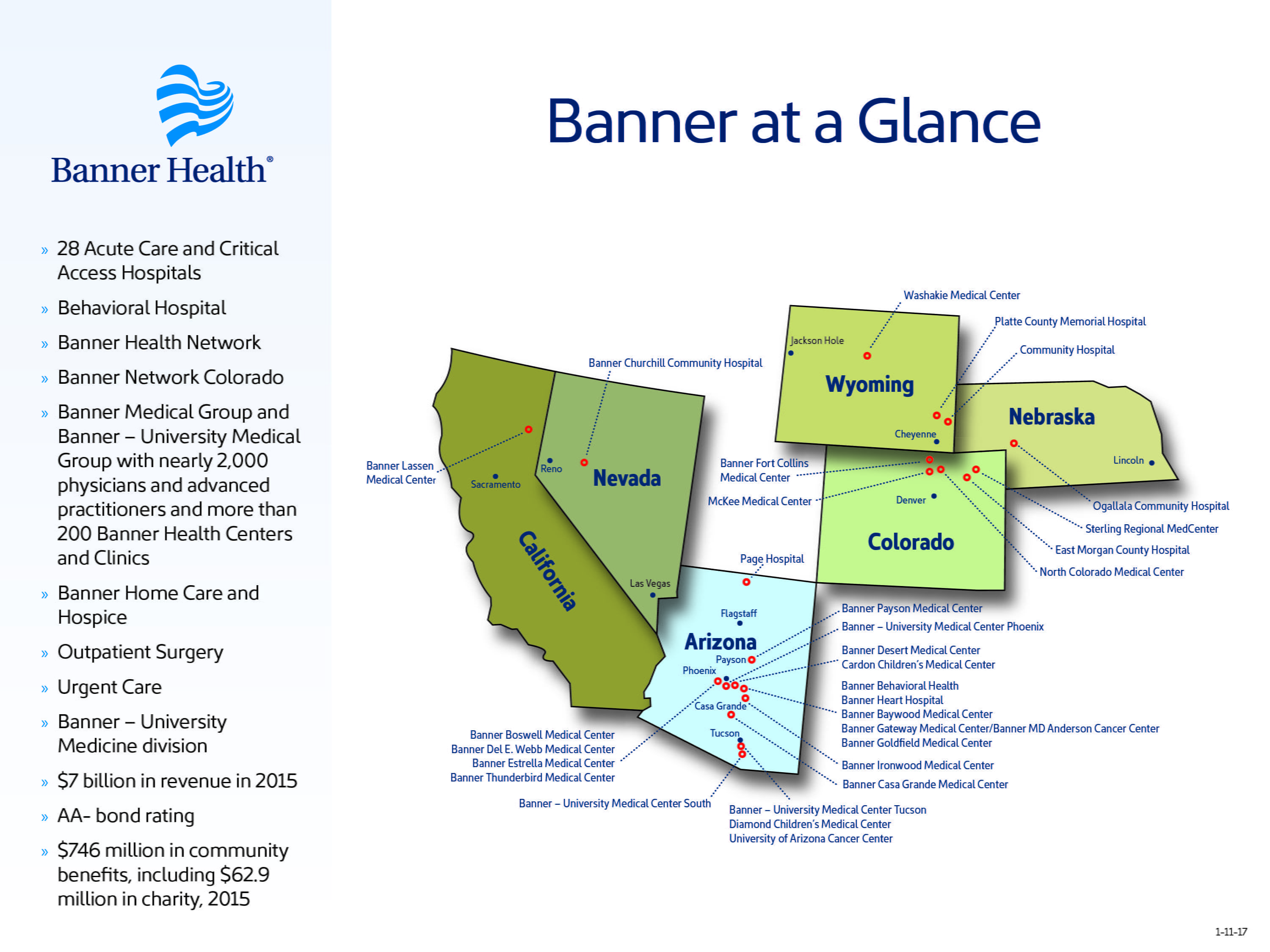
Banner Health halts elective surgeries

History

Banner Health will pause elective surgeries Jan. 1, the Phoenix-based system announced Dec. 30. 

The health system is suspending nonurgent elective surgeries that can reasonably be postponed for 30 to 60 days without a negative impact on the patient’s health, according to TV station CBS 5

Banner’s hospitals are facing a surge of COVID-19 patients. As of Dec. 29, the system was at 104 percent licensed bed capacity, Banner Chief Clinical Officer Marjorie Bessel, MD, said Dec. 30, according to TV station ABC 15. Some Banner hospitals have exceeded 120 percent licensed bed capacity.

Because of a backlog of patients, some Banner hospitals are diverting incoming ambulance transports. 

“This diversion activity is an early indication that triage may soon be necessary if volumes continue to increase like they did this past week,” Dr. Bessel said, according to CBS 5. “What triage would look like, would be that we might, if we got to that point, be unable to care for everybody.”

California reports first case of new coronavirus variant

https://www.axios.com/california-covid-coronavirus-variant-1081cbb4-5d2c-42f2-8785-b35e567296c9.html

California reported its first case of a new variant of the coronavirus that may be more transmissible, AP reports.

The big picture: California is the second state to document a confirmed case of the variant — which originated in the United Kingdom — after Colorado reported the first case in the United States on Tuesday.

  • California Gov. Gavin Newsom announced the infection during an online conversation with Anthony Fauci, head of the National Institute of Allergy and Infectious Diseases, according to AP.
  • The governor said the case was located in Southern California, but he did not provide any other details about the person who was infected.
  • “I don’t think Californians should think that this is odd. It’s to be expected,” Fauci said Wednesday, per AP.

Of note: There is thus far no evidence that the new variant is more deadly — only that it appears more transmissible. There is also no evidence that COVID-19 vaccines will be less effective against the new variant.

  • A non-peer reviewed study by the Centre for Mathematical Modelling of Infectious Diseases at the London School of Hygiene and Tropical Medicine found that the variant is 56% more transmissible than other strains.
  • The British government previously warned that a new variant could be up to 70% more transmissible.

Go deeper: What you need to know about the coronavirus mutation

Pfizer: “No data” to show single dose of vaccine offers protection after 21 days

https://www.axios.com/pfizer-single-dose-data-716702dd-324f-42b9-b88d-07df43ca198a.html

Pfizer said in a statement that there are “no data” to demonstrate that a single dose of its coronavirus vaccine will provide protection from infection after 21 days.

Why it matters: The U.K. announced on Wednesday that it would shift its vaccination strategy “to give as many people in at-risk groups their first dose, rather than providing the required two doses in as short a time as possible.” Some provinces in Canada are doing the same.

  • Pfizer confirmed in response that although some protection appears to begin as early as 12 days after the first dose, two doses of the vaccine — separated by three weeks — is the only regimen that proved to be 95% effective in Phase 3 trials.
  • “Everyone will still receive their second dose and this will be within 12 weeks of their first,” the U.K. government added in a statement. “The second dose completes the course and is important for longer term protection.”

The big picture: Pfizer’s warning comes as many countries, including the U.S., debate how to rapidly deploy the vaccines in the most effective way possible. The U.S. is on pace to fall far below its target of vaccinating 20 million people by the end of 2020, with only 3 million single-doses administered as of Wednesday night.

Flying with covid-19 isn’t just reckless — it’s potentially deadly, doctors say

Covid-19 deaths on flights likely due to low cabin pressure, doctors say -  The Washington Post

Travelers boarding a flight during the pandemic might consider it unlikely that anyone sick with the coronavirus would make it onboard. But the reality is that travelers are boarding planes with covid-19, putting their fellow passengers at risk of contracting the illness.

Beyond the danger those infected passengers are creating to the people around them, they also pose a sizable risk to themselves when they board their planes. Doctors say that flying is a high-risk activity for coronavirus-positive individuals because of low air pressure in the cabin and that multiple passengers have now died because of it.

When a man infected with the coronavirus died of acute respiratory failure on a United Airlines flight from Orlando to Los Angeles on Dec. 14, he was not the first individual to die of covid-19 on a plane. In July, a Texas woman died of the disease on a Spirit Airlines flight that was diverted when she was found to be unresponsive and not breathing. In both cases, the passengers were given CPR on the plane but could not be revived.

The likely medical problem in both these instances, doctors say, is that low air pressure — which is standard in plane cabins — creates dangerously low blood-oxygen levels in people with respiratory conditions. Covid-19, the illness caused by the coronavirus, is a respiratory disease that often attacks the lungs and heart.

Nicholas Hill, pulmonary chief at Tufts Medical Center in Boston, says there is “no question” that the air condition in plane cabins poses a risk to passengers with covid-19 and that flying was probably factor in the deaths of the passengers infected with the virus.

“If you get on a plane with covid, or anything else respiratory-related, you are going to be at a considerably higher risk when you go to altitude,” Hill says. “This is not something unique to covid; it’s true of anybody that’s got an acute or respiratory condition. This change in oxygen from sea level can provoke crises in the air.”

Plane cabins are pressurized so passengers are able to breathe at altitudes over 30,000 feet, but the air pressure is still about 25 percent lower in a plane cabin than it is at sea level. Flying has long given respiratory-troubled patients medical crises in the air. Covid-19 is no different. Flying with it can impact blood oxygen levels to a degree that requires immediate medical attention.

David Freedman, an epidemiologist at the University of Alabama at Birmingham, says covid-infected patients are at the same risk as people with non-coronavirus lung and heart conditions that impact their breathing. Airlines are prepared for those kinds of respiratory emergencies with supplemental oxygen onboard.

“The oxygen concentration [on planes] is much lower than on the ground, and all patients with severe lung or heart disease know this and know that they will need supplemental oxygen on board even if they don’t require it normally,” Freedman says. “All planes do carry an oxygen tank on board for emergencies like this.”

Delta Air Lines says that respiratory emergencies make up about 10 percent of in-flight medical events and that all aircraft are equipped with supplemental oxygen.

All airline flight attendants receive annual training in CPR, Taylor Garland, a spokesperson for the Association of Flight Attendants labor union, told The Washington Post in an email. Flight crew are also in close contact with medical services on the ground that can meet the aircraft in the event of an emergency landing.

But those efforts all fell short in the July and December deaths. Hill says passengers do not necessarily need to be experiencing shortness of breath before takeoff to become breathing-impaired in-flight. Blood oxygen levels can be low in covid-19 patients who are not experiencing trouble breathing, making getting on a plane with the virus — even if you’re pre-symptomatic or asymptomatic — a high-risk endeavor.

“Early on in the pandemic there were descriptions of ‘happy hypoxia’ patients, covid patients who come in with pretty low oxygen levels but wouldn’t be short of breath,” Hill says. “Most people who have low oxygen levels are also complaining of shortness of breath, but it is possible initially to not have those symptoms.”

On the July Spirit Airlines flight, a crew member who administered CPR to the unresponsive woman passed out from exhaustion, according to reporting by The Post. Contact tracers reportedly never notified passengers on the plane of the positive coronavirus case onboard.

Tony Aldapa, an off-duty medical worker on the Dec. 14 United flight who gave chest compressions to the unresponsive man, said last week that he was experiencing coronavirus symptoms after helping the flight crew with CPR. He was not notified about his exposure to the virus by contact tracers until 10 days after the flight.

“I knew we were pretty far from where we needed to land at, and CPR is exhausting with one person or two people. Even with three or four people, it’s not an easy thing to do,” Aldapa, 31, told the Los Angeles Times of the incident. “Regardless of COVID … he needed CPR to save his life.”

Scripps CEO: Care rationing near if Californians ignore COVID-19 mitigation efforts

Prepare for Health Emergencies Like War Says CEO - Scripps Health

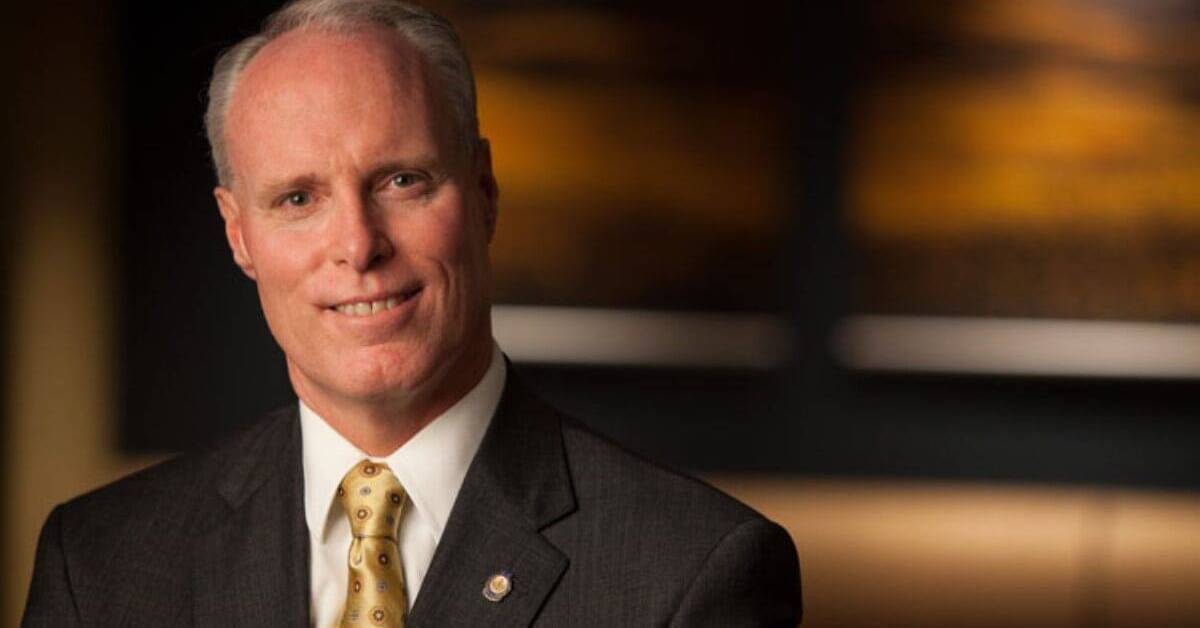
Hospitals in Southern California will need to start rationing care if more action isn’t taken by the community to mitigate the spread of COVID-19, Chris Van Gorder, president and CEO of Scripps Health, wrote in a Dec. 28 op-ed for The San Diego Union-Tribune

As of Dec. 29, 20,642 California residents were hospitalized with COVID-19. The state’s hospital bed capacity is 72,511. In San Diego County, where Scripps is headquartered, 18 intensive care unit beds were available as of Dec. 28, “not even enough to handle a single mass casualty incident,” Mr. Van Gorder wrote. Out of Scripps’ 173 ICU beds, seven staffed beds were available as of Dec. 28.

“This past weekend, one of our community hospitals ran out of room in their morgue. We are nearing the point where we have to make the decision of who gets care and who does not,” Mr. Van Gorder wrote.

He pleaded with the San Diego and California community to adhere to mask-wearing and social distancing guidelines, especially as the New Year’s Day holiday approaches. He called on residents to stay home for New Year’s, wear a mask, wash their hands, and not eat or drink with people who aren’t in their immediate family household.

Mr. Van Gorder’s commentary comes as Kaiser Permanente hospitals in Northern California are suspending elective, non-urgent procedures through Jan. 4 as they continue to face a surge in COVID-19 hospitalizations. The Oakland, Calif.-based system announced the suspension Dec. 26, days after Chair and CEO Greg Adams said during a news conference, “We simply will not be able to keep up if the COVID surge continues to increase. We’re at or near capacity everywhere.”