The pandemic broke America

https://www.axios.com/coronavirus-america-broken-2baa69e4-60e6-49a5-932a-5d118441ae20.html

The coronavirus pandemic broke America - Axios

Eight weeks into this nation’s greatest crisis since World War II, we seem no closer to a national strategy to reopen the nation, rebuild the economy and defeat the coronavirus.

Why it matters: America’s ongoing cultural wars over everything have weakened our ability to respond to this pandemic. We may be our worst enemy.

  • The response is being hobbled by the same trends that have impacted so much of our lives: growing income inequality, the rise of misinformation, lack of trust in institutions, the rural/urban divide and hyper-partisanship.
  • We’re not even seeing the same threat from the virus. Democrats are far more likely than Republicans to be worried about getting seriously ill, while Republicans — including the president — are more likely to think the death counts are too high.

Without even a basic agreement on the danger of the pandemic and its toll, here’s how we see the national response unfold:

  • The Centers for Disease Control and Prevention, the crown jewel of the globe’s public health infrastructure, has been sidelined, its recommendations dismissed by the White House.
  • President Trump declares the U.S. has “prevailed on testing” at a time when health experts say we still need far more daily tests before the country can reopen safely.
  • Distribution of the promising coronavirus drug remdesivir was initially botched because of miscommunication between government agencies.
  • More than two thirds of Americans say it’s unlikely they would use a cell phone-based contact tracing program established by the federal government, a key component of a testing regime to control the virus.
  • The second phase of a program to aid small businesses isn’t fully allocated because firms are either concerned about its changing rules, confused about how to access it, or find the structure won’t help them stay in business.
  • With the unemployment rate at a post-Depression record last month, and expected to go higher, there is no meaningful discussion between the parties in Congress on aid to the out-of-work.
  • States and local governments are facing billions in losses without a strategy for assistance.
  • The virus is literally inside the White House. Aides have tested positive for coronavirus, leading to quarantines for some of the nation’s top public health officials and a new daily testing regime for White House staff and reporters who enter the West Wing.
  • The No. 1 book on Amazon for a time was a book by an anti-vaxxer whose conspiracy-minded video about the pandemic spread widely across social media, leading to takedowns by platforms like YouTube and Facebook.

The other side: There’s better news at the state level. “Governors collectively have been winning widespread praise from the public for their handling of the coronavirus outbreak,” the Washington Post reports.

Between the lines: Nationwide, 71% of Americans approve of the job their governor is doing, according to the Post. For Trump, the figure is 43%.

  • And former presidents we often expect to help rally the nation in trying times are scarce.
  • George W. Bush released a video, in which his face barely appeared, calling for unity in the fight against the virus. Barack Obama was recorded in leaked remarks to former staffers calling Trump’s coronavirus response “an absolute chaotic disaster.” Trump attacked both of them on Twitter.

The bottom line: An existential threat — like war or natural disaster — usually brings people together to set a course of action in response. Somehow, we’ve let this one drive us apart.



Another 3 million Americans filed for unemployment last week

https://www.axios.com/jobless-claims-coronavirus-3-million-460364c8-be73-437c-b99c-fa7d75aad87e.html?stream=top&utm_source=alert&utm_medium=email&utm_campaign=alerts_all

Data: U.S. Employment and Training Administration via FRED; Chart: Andrew Witherspoon/Axios

Data: U.S. Employment and Training Administration via FRED; Chart: Andrew Witherspoon/Axios

Another 2.98 million Americans filed for unemployment last week, the Labor Department said on Thursday.

Why it matters: The coronavirus is still forcing a historically high number of Americans out of work. In two months alone, more than 36 million people have filed jobless claims.

Between the lines: The pace of new applications has slowed from its peak in March, but the weekly numbers are still way higher than before businesses shuttered to contain the outbreak.

  • There are more jobless workers that haven’t been able to get their application through. State unemployment offices are racing to get through an avalanche of unemployment filings — with states like New York processing more claims in the past few months than they have in years.
  • Measuring the backlog is “like trying to measure the ocean, it’s constantly moving,” New York Labor Department commissioner Roberta Reardon said in a press call yesterday.
  • While more Americans than ever before are eligible for unemployment, including gig workers, some states are just beginning to scale up to accept those applications.

By the numbers: The total number of people continuing to receive unemployment benefits — after initially applying — rose, bringing the total to a record 22.8 million.

  • A decrease in this figure would be an indication that Americans are returning back to work.

The bottom line: Goldman Sachs estimates the unemployment rate will hit 25%, matching the peak level of joblessness during the Great Depression.


Fed chair Powell warns of “lasting” economic damage without more stimulus

https://www.axios.com/fed-jerome-powell-coronavirus-spending-e71d88c5-09ec-4410-b08f-3d4ad6304db0.html

Fed chair Powell warns of "lasting" economic damage without more ...

Federal Reserve Chairman Jerome Powell said Congress may need to do more to prevent a worse economic downturn triggered by the coronavirus pandemic, in an interview with the Peterson Institute’s Adam Posen on Wednesday.

Why it matters: Powell warned of dire economic consequences without additional stimulus. While the Fed has responded to the pandemic with the most aggressive policy actions in the central bank’s history, it doesn’t have the power to get money directly in the hands of Americans and businesses in the form of grants like Congress does.

The backdrop: The coronavirus has pushed the economy into a downturn not seen since the Great Depression, with a record number of Americans out of work.

  • Congress and the Fed have unleashed trillions of dollars in coronavirus aid to support the economy.
  • House Democrats proposed another $3 trillion in stimulus this week, but more spending is facing resistance from Republican members of Congress.

What they’re saying: “Additional fiscal support could be costly, but worth it if it helps avoid long-term economic damage and leaves us with a stronger recovery,” Powell said.

  • “It’s not the time to prioritize” concerns about fiscal spending, Powell said.

Powell warned about the long-lasting damage a steep, prolonged downturn could have on the economy, including permanent scarring to the most vulnerable workers in the labor force.

  • In a Fed survey set to be released tomorrow, Powell said 40% of people making less than $40,000/year who were employed in February, lost their job in March.


White House adviser says unemployment may climb to 20 percent

https://thehill.com/homenews/administration/497003-white-house-advisor-says-unemployment-may-climb-to-20-percent?rnd=1589120557

White House economic adviser expects unemployment rate to climb ...

White House adviser Kevin Hassett said Sunday the U.S. unemployment rate could reach 20 percent in May. 

“I think just looking at the flow of initial claims, it looks like we’re probably going to get close to 20 percent in the next report,” Hassett said on CNN’s “State of the Union.”

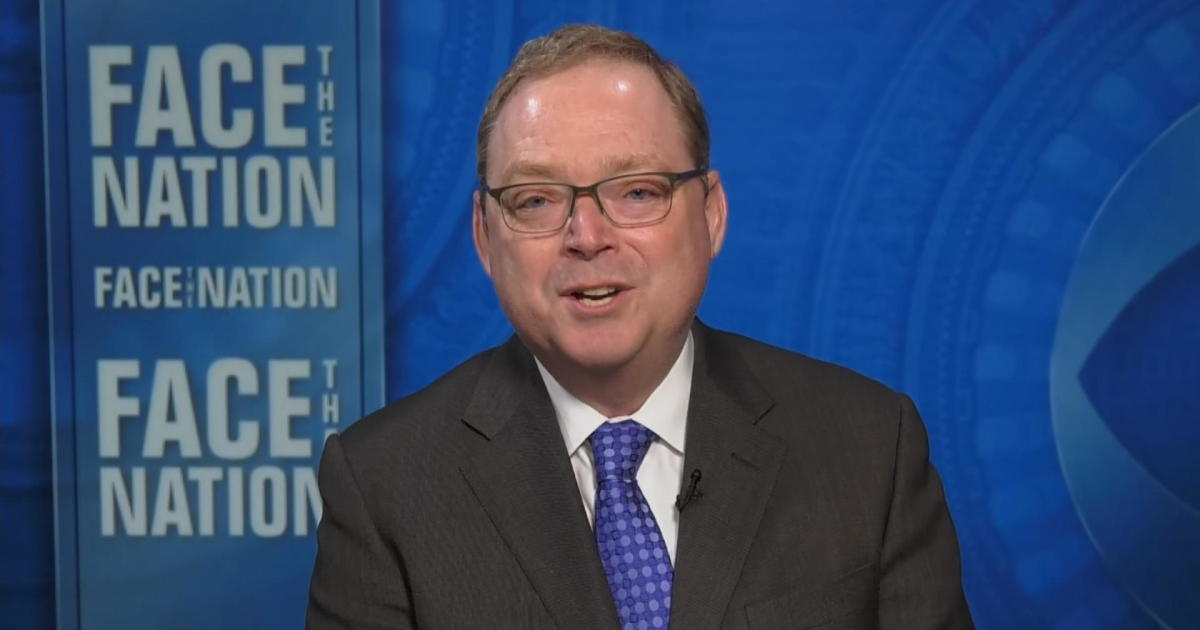
He made similar comments on CBS’s “Face the Nation,” saying the low point could reach 20 percent around May or June.

Hassett said on CNN the unemployment rates depend on whether the virus “has really abated” and if economies are “really going again.” 

“I would guess middle of summer is when we’re going to start to go into the transition phase,” he said, adding that he hopes there will be “very strong” growth in the third and fourth quarters.

The unemployment in April rate rose to 14.7 percent from 4.4 percent in March, according to the latest jobs report released by the Bureau of Labor Statistics on Friday. 

The U.S. lost 20.5 million jobs in April amid the coronavirus pandemic, breaking the record for the largest one-month increase in the unemployment rate.


States face economic death spiral from Coronavirus

https://www.axios.com/coronavirus-states-economy-295ac091-9dc2-4852-be67-d070ec268d8c.html

YEAR-OVER-YEAR CHANGE IN STATE TAX REVENUES

April 2020 vs. April 2019, select states

States face economic death spiral from coronavirus - Business Insider


Early numbers show how significantly the coronavirus is devastating states’ revenue streams — and could force choices between raising taxes or gutting services and laying off public employees.

Why it matters: Even as some states move toward reopening, the economic ramifications of having shut down will haunt them far into the future.

  • When states can reopen, and how quickly industries are able to bounce back, could either worsen or improve projections.

What to watch: Sens. Bob Menendez (D-N.J.) and Bill Cassidy (R-La.) plan to introduce bipartisan legislation as soon as next week that would create a $500 billion fund designed to help struggling state and municipality budgets in the wake of COVID-19.

  • “If there was another way to do this, I’d rather do it the other way,” Cassidy tells Axios. “But what I don’t want to happen is all this money spent for families and for employers to go to waste because cities cannot provide essential services.”
  • Menendez tells Axios: “This is the time to step up to the plate.”

By the numbers: The Urban Institute has been compiling lost revenue data as states make it publicly available. So far, there are figures for about one in four states that compare this April’s state income and sales tax revenue collections against those from April 2019.

  • The data shows collections dropping between 20% and more than 50%, depending on the state, senior researcher Lucy Dadayan tells Axios — and those figures could get worse as new data comes in.
  • South Dakota is an outlier in the states the Urban Institute has tracked so far, in that revenues actually appear up for April. That may be largely because it is one of very few states that did not issue a stay at home order. But experts expect to see revenue declines next month.
  • Although it has not yet released April sales tax numbers to enable a year-over-year comparison, California’s staggering tax revenue loss due to COVID-19 has led to an expected $54.3 billion budget shortfall through FY 2021 — including a $13.4 billion shortfall this fiscal year, the governor announced Thursday. That’s with a $21 billion surplus last year.
  • New York also has yet to release April tax revenue data, but its latest budget projection has the state short as much as $13.3 billion in FY 2021, according to Dadayan’s analysis of most recent state budget projections. Illinois is looking at a more than $4.6 billion shortfall for next fiscal year.
  • Arizona is projecting to be short more than half a billion dollars for this fiscal year.
  • The projected shortfalls for FY 2020, which ends at the end of June for most states, is arguably a bigger problem because there isn’t much time left to make changes, per Axios’ Dan Primack.

The big picture: Democratic-leaning cities have seen the highest case and death rates. But red and blue states alike are facing serious budget shortfalls.

  • That’s why some Republican senators are getting behind efforts to provide federal dollars to help states balance budgets.
  • Even after accounting for state emergency savings accounts — which in many states were at an all-time high — 33 states will likely need to fill budget gaps of 5% or more, according to a recent analysis by Moody’s Analytics.
  • 21 states would need to fill gaps of 10% or more.
  • “Anybody is going to be overwhelmed by this — even states who were well prepared,” Dan White, director of government consulting and fiscal policy research at Moody’s Analytics, tells Axios.

Between the lines: Much of the burden will likely be pushed on struggling local governments’ plates, White said.

  • Cities have also lost smaller revenue sources such as hotel occupancy fees, inspection fees and construction fees.
  • Some could be forced to lay off public workers needed to combat the virus and keep the public safe — such as firefighters, paramedics, public hospital workers.
  • It’s either that or raise taxes in the midst of high unemployment and financial insecurity. “That’s the death spiral,” said Menendez, who has been talking with mayors across his state.
  • New York City Mayor Bill de Blasio has already said he may have to start furloughing municipal employees if the city doesn’t receive federal funds to help fill budget gaps.

Some state and local governments will wait to make tough budget decisions in the hopes that they get needed funds from Congress, which is in heated negotiations around the fourth stimulus package.

Republican lawmakers have been hesitant to provide this much federal help to states, but they’ve been warming to the idea.

  • Menendez says he expects several Republican senators besides Cassidy to sign on to their proposal.


Reopening the U.S. Economy

https://www.goldmansachs.com/insights/pages/reopening-the-us-economy.html

Click to access report.pdf

Allison Nathan, senior strategist for Goldman Sachs Research, discusses her latest Top of Mind report where she speaks with leading experts across health and policy to understand how well-positioned the U.S. is to achieve a safe reopening of the economy and how quickly it would translate into economic recovery. 

With COVID-19 mitigation measures leading to an apparent leveling off of case
growth globally at the same time that the economic costs of such measures continue
to mount, several countries around the world have begun to plan for—or have
already started to implement—economic reopening. But absent herd immunity or
a vaccine for the virus, such reopenings increase the risk of disease resurgence.
With this in mind, what a safe reopening might look like, how well-positioned the
US is to achieve one and how quickly reopening would really translate into economic
recovery is Top of Mind. We consult three experts on these questions: University of
Pennsylvania’s Dr. Zeke Emanuel, Duke University’s Dr. Mark McClellan and Harvard
University’s Dr. Barry Bloom. And we share our own take on a potential US recovery path, informed by lessons from
China’s reopening experience so far. Finally, with more complete economic normalization only likely with an effective
testing regime, treatments, or a widely available vaccine for COVID-19-we discuss where we are on all of the above.