An estimated 803,000 people applied for unemployment aid for the first time last week, the Labor Department said Wednesday, showing the economy’s persistent weakness as new drama swirls over Washington’s response to the crisis. The figure was a slight decrease from the previous week but still much higher than normal.
The new Labor Department data show how weak the economy is, particularly the labor market. The surge in new coronavirus cases and deaths in the past few months has cooled the partial economic recovery from the summer.
Retail sales have weakened, and hiring has slowed markedly. The travel and tourism industries have not recovered much of the business lost since March, and thousands of companies — particularly restaurants and bars — have closed. U.S. household spending slipped in November, marking the first drop since April.
After months of stop-and-start negotiations, the bipartisan stimulus package finally offered some hope for households and businesses fighting to make it through the winter.
If Trump does not sign the bill, up to 14 million Americans would lose unemployment aid after Christmas. An eviction moratorium will expire at the end of the year, and $25 billion in emergency rental assistance will not get out the door. Billions of dollars for nutrition assistance, aid for small businesses, child care, transportation services and more will be in jeopardy, and the government will shut down on Dec. 29.
Trump did not play much of a role in the economic relief talks that resulted in Congress passing the $900 billion stimulus package. In the video Trump posted Tuesday night, his main complaint was that he wanted the $600 stimulus checks in the package to be increased to $2,000. This would add $370 billion to the measure.
Democrats quickly rallied around Trump’s demand, and House Speaker Nancy Pelosi (D-Calif.) plans to try to hold a vote on it as soon as Thursday. But it could be virtually impossible to pass such a measure through Congress with unanimous support, leaving the entire bill’s future uncertain.
The stimulus package would extend unemployment benefits of up to $300 per week, beginning as soon as Dec. 27 and run at least through mid-March. The measure also would extend Pandemic Unemployment Assistance — which targets part-time and gig workers who did not qualify for state unemployment insurance benefits — for 11 weeks.
Wednesday’s data showed nearly 400,000 new claims for the Pandemic Unemployment Assistance program.
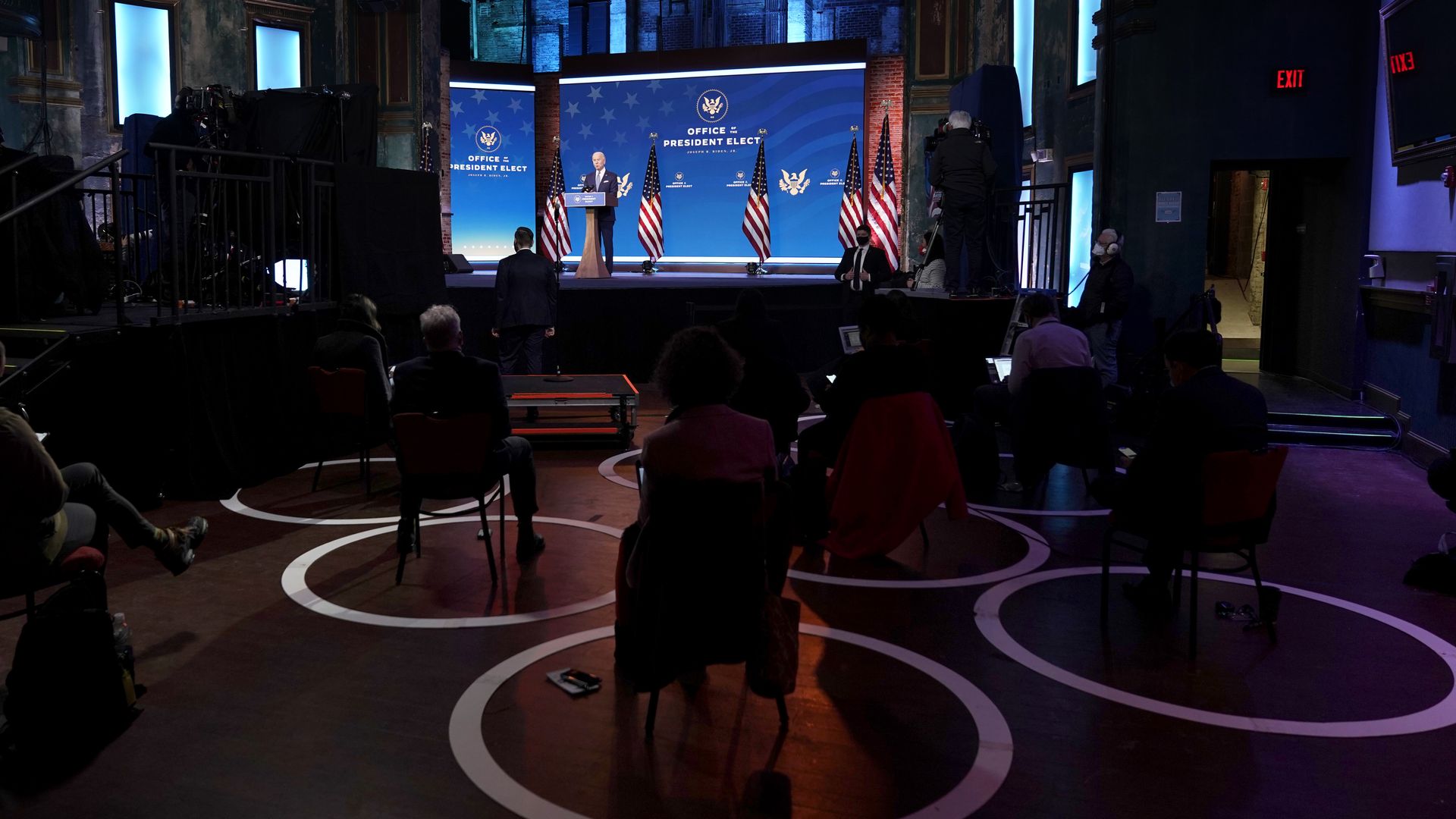
Rare words from an incoming president: “Our darkest days in the battle against COVID are ahead of us, not behind us,” President-elect Biden warned this afternoon during remarks in Wilmington.
Why it matters:Biden is promising to tell America the truth, which includes the reality of many more horrific months, no matter who is in charge.
If we’re lucky, vaccinations will provide enough herd immunity to allow some normality by this summer or fall.
Another blunt reality: Most of the benefits in the $900 billion coronavirus rescue package expire months before America has any hope of being back to normal.
The $300 boost for unemployment benefits expires in March.
The new $284 billion round of the Paycheck Protection Program (PPP) is meant to last 3 months.
There’s no new funding earmarked for state and local governments.
The other side:There’s funding for schools and childcare and mass transit and vaccination distribution, which helps bail out the above from those obligations.
The entertainment sector got $15 billion, helping out theaters and museums and live entertainment venues.
$600 checks will start showing up next week for individuals making under $75,000 (phases out for incomes above that), with an extra $600 per child.
The bottom line: Georgia’s Jan. 5 Senate runoffs could be the difference between a big stimulus under Biden, or more trouble for parts of the U.S. hospitality sector.
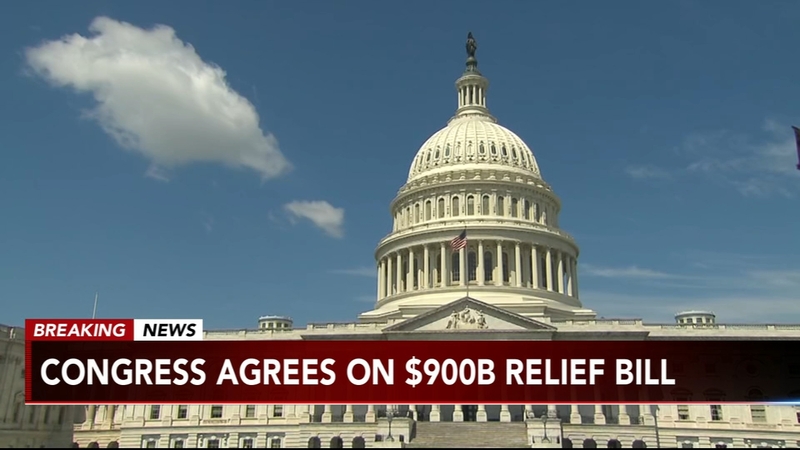
Congressional leaders have reached an agreement on a $900 billion COVID-19 relief package and $1.4 trillion government funding deal with several healthcare provisions, according to Senate Majority Leader Mitch McConnell, R-Ky., and Minority Leader Chuck Schumer, D-N.Y.
Here are seven things to know about the relief aid and funding deal:
1. Congressional leaders have yet to release text of the COVID-19 legislation, but have shared a few key details on the measure, according to CNBC.Becker’s breaks down the information that has been released thus far.
2. The COVID-19 package includes $20 billion for the purchase of vaccines, about $9 billion for vaccine distribution and about $22 billion to help states with testing, tracing and other COVID-19 mitigation programs, according to Politico.
3. Lawmakers are also expected to include a provision changing how providers can use their relief grants. In particular, the bill is expected to allow hospitals to calculate lost revenue by comparing budgeted revenue for 2020. Hospitals have said this tweak will allow them to keep more funding.
4. The agreement also allocates $284 billion for a new round of Paycheck Protection Program loans.
5. The COVID-19 relief bill also provides$600 stimulus checks to Americans earning up to $75,000 per year and $600 for their children, according to NBC. It also provides a supplemental $300 per week in unemployment benefits.
6. The year-end spending bill includes a measure to ban surprise billing. Under the measure, hospitals and physicians would be banned from charging patients out-of-network costs their insurers would not cover. Instead, patients would only be required to pay their in-network cost-sharing amount when they see an out-of-network provider, according to The Hill.The agreement gives insurers 30 days to negotiate a payment on the outstanding bill. After that period, they can enter into arbitration to gain higher reimbursement.
7. Lawmakers plan to pass the relief bill and federal spending bill Dec. 21.
Applications for jobless benefits resumed their upward march last week as the worsening pandemic continued to take a toll on the economy.
More than 947,000 workers filed new claims for state unemployment benefits last week, the Labor Department said Thursday. That was up nearly 229,000 from the week before, reversing a one-week dip that many economists attributed to the Thanksgiving holiday. Applications have now risen three times in the last four weeks, and are up nearly a quarter-million since the first week of November.
On a seasonally adjusted basis, the week’s figure was 853,000, an increase of 137,000.
Nearly 428,000 applied for Pandemic Unemployment Assistance, a federal program that covers freelancers, self-employed workers and others who don’t qualify for regular state benefits.
Unemployment filings have fallen greatly since last spring, when as many as six million people a week applied for state benefits. But progress had stalled even before the recent increases, and with Covid-19 cases soaring and states reimposing restrictions on consumers and businesses, economists fear that layoffs could surge again.
“It’s very clear the third wave of the pandemic is causing businesses to have to lay people off and consumers to cut back spending,” said Daniel Zhao, senior economist for the career site Glassdoor. “It seems like we’re in for a rough winter economically.”
Jobless claims rose in nearly every state last week. In California, where the state has imposed strict new limits on many businesses, applications jumped by 47,000, more than reversing the state’s Thanksgiving-week decline.
The monthly jobs report released on Friday showed that hiring slowed sharply in early November and that some of the sectors most exposed to the pandemic, like restaurants and retailers, cut jobs for the first time since the spring. More up-to-date data from private sources suggests that the slowdown has continued or deepened since the November survey was conducted.
“Every month, we’re just seeing the pace of the recovery get slower and slower,” said AnnElizabeth Konkel, an economist with the job site Indeed. Now, she said, the question is, “Are we actually going to see it slide backward?”
Many economists say the recovery will continue to slow if the government does not provide more aid to households and businesses. After months of gridlock in Washington, prospects for a new round of federal help have grown in recent days, with congressional leaders from both parties signaling their openness to a compromise and the White House proposing its own $916 billion spending plan on Tuesday. But the two sides remain far apart on key issues.
The stakes are particularly high for jobless workers depending on federal programs that have expanded and extended unemployment benefits during the pandemic. Those programs expire later this month, potentially leaving millions of families with no income during what epidemiologists warn could be some of the pandemic’s worst months.
Despite taking a huge volume hit in Q2, most hospitals have managed to maintain positive operating margins—largely thanks to a $100B cash infusion from the federal government via the Coronavirus Aid, Relief and Economic Security (CARES) Act.
According to Kaufman Hall’s most recent National Hospital Flash Report, based on data from over 900 hospitals of all sizes nationwide, hospitals would have been operating at a significant loss without federal aid. As the graphic above shows, the average hospital operating margin without CARES Act relief funds would have been negative eight percent in April—and would still be in the red as of October, despite much of the cancelled elective business returning across the summer and early fall.
However, with the aid, hospitals operating margins only turned negative in April and May. When compared to the same time period last year, year-to-date (YTD) gross revenue is down almost five percent, though net patient service revenue per discharge is up—the result of longer lengths of stay, the 20 percent Medicare reimbursement bump for COVID-19 patients, and suspension of the two percent sequestration adjustment on Medicare fee-for-service payments. Yet hospital expenses per discharge are also up 13.5 percent, dampening profitability.
Though the CARES Act has been a stopgap solution for the vast majority of hospitals, a handful, most notably HCA Healthcare, have proactively returned the money. While motivations for doing so are varied, we’ve been hearing that the ever-changing reporting and spending requirements associated with CARES Act funding have many hospital leaders concerned about possible future claw-backs.
With COVID-19 hospitalizations now reaching record-breaking highs, potentially forcing another round of shut-downs, and with little movement on another round of federal relief, hospitals may be on their own for the time being—and the greatest hit to health system finances may still be yet to come.
26 million now say they don’t have enough to eat, as the pandemic worsens and holidays near.
It was 5 a.m., not a hint of sun in the Houston sky, as Randy Young and his mom pulled into the line for a free Thanksgiving meal. They were three hours early. Hundreds of cars and trucks already idled in front of them outside NRG Stadium. This was where Young worked before the pandemic. He was a stadium cook. Now, after losing his job and struggling to get by, he and his 80-year-old mother hoped to get enough food for a holiday meal.
“It’s a lot of people out here,” said Young, 58. “I was just telling my mom, ‘You look at people pulling up in Mercedes and stuff, come on.’ If a person driving a Mercedes is in need of food, you know it’s bad.”
More Americans are going hungry now than at any point during the deadly coronavirus pandemic, according to a Post analysis of new federal data — a problem created by an economic downturn that has tightened its grip on millions of Americans and compounded by government relief programs that expired or will terminate at the end of the year. Experts say it is likely that there’s more hunger in the United States today than at any point since 1998, when the Census Bureau began collecting comparable data about households’ ability to get enough food.
One in 8 Americans reported they sometimes or often didn’t have enough food to eat in the past week, hitting nearly 26 million American adults, an increase several times greater than the most comparable pre-pandemic figure, according to Census Bureau survey data collected in late October and early November. That number climbed to more than 1 in 6 adults in households with children.
“It’s been driven by the virus and the unpredictable government response,” said Jeremy K. Everett, executive director of the Baylor Collaborative on Hunger and Poverty in Waco, Tex.
Nowhere has there been a hunger surge worse than in Houston, with a metro-area population of 7 million people.Houston was pulverized in summer when the coronavirus overwhelmed hospitals, and the local economy was been particularly hard hit by weak oil prices, making matters worse.
More than 1 in 5 adults in Houston reported going hungry recently, including 3 in 10 adults in households with children. The growth in hunger rates has hit Hispanic and Black households harder than White ones, a devastating consequence of a weak economy that has left so many people trying to secure food even during dangerous conditions.
On Saturday, these statistics manifested themselves in the thousands of cars waiting in multiple lines outside NRG Stadium. The people in these cars represented much of the country. Old. Young. Black. White. Asian. Hispanic. Families. Neighbors. People all alone.
Inside a maroon Hyundai Santa Fe was Neicie Chatman, 68, who had been waiting since 6:20 a.m., listening to recordings of a minister’s sermon piped into large earphones.
“I’ve been feeding my spirit,” she said.
Her hours at her job as an administrator have been unsteady since the pandemic began. Her sister was laid off. They both live with their mother, who has been sick for the past year. She planned to take the food home to feed her family and share with her older neighbors.
“It’s been hard to survive. Money is low. No jobs. Hard to find work.”
— Randy Young
“I lost my business and I lost my dream.”
— Adriana Contreras
Now, a new wave of coronavirus infections threatens more economic pain.
Yet the hunger crisis seems to have escaped widespread notice in a nation where millions of households have weathered the pandemic relatively untouched. The stock market fell sharply in March before roaring back and has recovered all of its losses. This gave the White House and some lawmakers optimism about the economy’s condition. Congress left for its Thanksgiving break without making any progress on a new pandemic aid deal even as food banks across the country report a crush of demand heading into the holidays.
“The hardship is incredibly widespread. Large parts of America are saying, ‘I couldn’t afford food for my family,’ ” said Stacy Dean, who focuses on food-assistance policy at the Center on Budget and Policy Priorities. “It’s disappointing this hasn’t broken through.”
No place has been spared.In one of the nation’s richest counties, not far from Trump National Golf Club in Virginia, Loudoun Hunger Relief provided food to a record 887 households in a single week recently. That’s three times the Leesburg, Va.-based group’s pre-pandemic normal.
“We are continuing to see people who have never used our services before,” said Jennifer Montgomery, the group’s executive director.
Hunger rates spiked nationwide after shutdowns in late March closed large chunks of the U.S. economy. The situation improved somewhat as businesses reopened and the benefits from a $2.2 trillion federal pandemic aid package flowed into people’s pockets, with beefed-up unemployment benefits, support for food programs and incentives for companies to keep workers on the payroll.
But those effects were short-lived. The bulk of the federal aid had faded by September. And more than 12 million workers stand to lose unemployment benefits before year’s end if Congress doesn’t extend key programs.
“Everything is a disaster,” said Northwestern University economist Diane Whitmore Schanzenbach, a leading expert on the economics of food insecurity. “I’m usually a pleasant person, but this is just crazy.”
Economic conditions are the main driver behind rising rates of hunger, but other factors play a role, Schanzenbach said. In the Great Recession that began in 2008, people received almost two years of unemployment aid — which helped reduce hunger rates. Some long-term unemployed workers qualified for even more help.
But the less-generous benefits from the pandemic unemployment assistance programs passed by Congress in March have already disappeared or soon will for millions of Americans.
Even programs that Congress agreed to extend have stumbled. A program giving families additional cash assistance to replace school meals missed by students learning at home was renewed for a year on Oct. 1. But the payments were delayed because many states still needed to get the U.S. Agriculture Department’s approval for their plans. The benefit works out to only about $6 per student for each missed school day. But experts say the program has been a lifeline for struggling families.
One program that has continued to provide expanded emergency benefits is the Supplemental Nutrition Assistance Program, or SNAP. The Agriculture Department issued an emergency order allowing states to provide more families the maximum benefit and to suspend the time limit on benefits for younger unemployed adults without children.
The sharpest rise in hunger was reported by groups who have long experienced the highest levels of it, particularly Black Americans. Twenty-two percent of Black U.S. households reported going hungry in the past week, nearly twice the rate faced by all American adults and more than two-and-a-half times the rate for White Americans.
The Houston area was posting some of its lowest hunger rates before the pandemic, thanks to a booming economy and a strong energy sector, Everett said. Then, the pandemic hit. Hunger surged, concentrated among the city’s sizable low-income population, in a state that still allows for the federally mandated minimum wage of $7.25 an hour. Houston’s hunger rates — like those nationwide — fell significantly after the $1,200 stimulus checks were mailed out in April and other pandemic aid plans took effect, Everett said.
But most of the effects of that aid are gone.
“Without sustained aid at the federal level, we’ll be hard pressed to keep up,” said Celia Call, chief executive of Feeding Texas, which advocates for 21 food banks in the state. “We’re just bracing for the worst.”
Schools are one of the most important sources of food for low-income families in Houston. The Houston Independent School District has 210,000 students — many of whom qualify for free or reduced-priced meals. But the pandemic closed schools in the spring. They reopened in the fall with less than half of the students choosing a hybrid model of in-school and at-home instruction. That has made feeding these children a difficult task.
“We’ve made an all-out effort to capture these kids and feed them,” said Betti Wiggins, the school district’s nutrition services officer.
The district provided curbside meal pickups outside schools. Anyone could come, not just schoolchildren. School staffers set up neighborhood distribution sites in the areas with the highest need. They started a program to serve meals to children living in apartment buildings. Sometimes the meal program required police escorts.
“I’m doing everything but serving in the gas station when they’re pumping the gas,” Wiggins said.
Wiggins said the normal school meals program she ran before the pandemic has been transformed into providing food for entire families far beyond a school’s walls. She has noticed unfamiliar faces in her meal lines. The “new poor,” she calls them, parents who might have worked in the airline or energy industries crushed by the pandemic.
“I’m seeing folks who don’t know how to handle the poverty thing,” she said, adding that it became her mission to make sure they had food.
The Houston Food Bank is the nation’s largest, serving 18 counties in Southeast Texas with help from 1,500 partner agencies. Last month, the food bank distributed 20.6 million pounds of food — down from the 27.8 million pounds handed out in May, but still 45 percent more than what it distributed in October 2019, with no end in sight.
The biggest worry for food banks right now is finding enough food, said Brian Greene, president of the Houston Food Bank. Food banks buy bulk food with donations. They take in donated food items, too. Food banks also benefited from an Agriculture Department program that purchased excess food from U.S. farmers hurt by the ongoing trade war with China, typically apples, milk and pork products. But funding for that program ended in September. Other federal pandemic programs are still buying hundreds of millions of dollars in food and donating it to food banks. But Greene said he worries about facing “a commodity cliff” even as demand grows.
Teresa Croft, who volunteers at a food distribution site at a church in the Houston suburb of Manvel, said the need is still overwhelming. She handles the paperwork for people visiting the food bank for the first time. They’re often embarrassed, she said. They never expected to be there. Sometimes, Croft tries to make them feel better by telling her own story — how she started at the food bank as a client, but got back on her feet financially more than a decade ago and is now a food bank volunteer.
“They feel so bad they’re having to ask for help. I tell them they shouldn’t feel bad. We’re all in this together,” Croft said. “If you need it, you need it.”
The pandemic changed how the Houston Food Bank runs. Everything is drive-through and walk-up. Items are preselected and bagged. The food bank has held several food distribution events in the parking lots outside NRG Stadium — a $325 million, retractable-roof temple to sports and home to the National Football League’s Houston Texans.
Last weekend, instead of holding the 71st annual Thanksgiving Day Parade in Houston, the city and H-E-B supermarkets decided to sponsor the food bank’s distribution event at NRG Stadium. The plan was to feed 5,000 families.
The first cars arrived at the stadium around 1 a.m. Saturday, long before the gates opened for the 8 a.m. event. By the time Young and his mother drove up, the line of vehicles stretched into the distance. Organizers opened the gates early. The cars and trucks began to slowly snake through the stadium’s parking lot toward a series of white tents, where the food was loaded into trunks by volunteers. The boxes contained enough food for multiple meals during the holiday week, with canned vegetables such as corn and sweet potatoes, a package of rolls, cranberry sauce and a box of masks. People picking up food were also given a bag of cereal and some resealable bags, a ham, a gallon of milk, and finally a turkey and pumpkin pie.
The food for 5,000 families ran out. The Houston Food Bank — knowing that would not be enough — was able to assemble more.
It provided food to 7,160 vehicles and 261 people who walked up to the event.
Troy Coakley, 56, came to the event looking for food to feed his family for the week. He still had his job breaking apart molds at a plant that makes parts for oil field and water companies. But his hours were cut when the economy took a hit in March. Coakley went from working overtime to three days a week.
He was struggling. Behind on rent. Unsure what was to come.
But for the moment, his trunk filled with food, he had one less thing to worry about.
“Other than [the pandemic], we were doing just fine,” Coakley said. “But now it’s getting worse and worse.”
A collection of provider and payer groups are imploring Congress to continue a moratorium on Medicare payment cuts instituted under the sequester.
The letter (PDF), sent Friday by more than 20 groups to congressional leaders, is concerned that the moratorium installed under the CARES Act expires on Jan. 1. The groups want the moratorium to extend through the COVID-19 public health emergency, which has been renewed by the federal government several times.
The groups said that the moratorium needs to be extended as healthcare facilities are under massive financial stress with new surges of COVID-19.
The surge has impacted the “financial health of medical professionals and facilities, including increased cost of labor to ensure adequate staffing, procurement of personal protective equipment, significant reductions in patient volume resulting from orders to cancel non-emergent procedures and the high cost of caring for COVID patients,” the letter said.
Some of the groups signing on to the letter include the American Medical Association, America’s Health Insurance Plans, Federation of American Hospitals and American College of Physicians.
The groups said that the moratorium on the sequester cuts installed as part of the CARES Act was an acknowledgment from Congress over the important role that Medicare reimbursement plays in “the financial well being of our healthcare system.”
The sequestration cut Medicare payments by 2% across the board to all Medicare providers back in 2013.
The letter comes as Congress is pondering another relief package for COVID-19 during the lame-duck period. Senate Majority Leader Mitch McConnell said after the presidential election that he was open to restarting talks on a new relief package and added that hospitals will need some additional relief.
But McConnell said earlier this week that the same issues that have held up a deal with House Speaker Nancy Pelosi are still there.
“I don’t think the current situation demands a multi-trillion dollar package,” McConnell told reporters. “I think it should be highly targeted.”
But Pelosi has endorsed a larger package. The House passed the HEROES Act, a $3 trillion relief bill, several months ago.
President-elect Joe Biden on Monday announced the members of his coronavirus task force, a group made up entirely of doctors and health experts,signaling his intent to seek a science-based approach to bring the raging pandemic under control.
Biden’s task force will have three co-chairs: Vivek H. Murthy, surgeon general during the Obama administration; David Kessler, Food and Drug Administration commissioner under Presidents George H.W. Bush and Bill Clinton; and Marcella Nunez-Smith, associate dean for health equity research at the Yale School of Medicine. Murthy and Kessler have briefed Biden for months on the pandemic.
Biden will inherit the worst crisis since the Great Depression, made more difficult by President Trump’s refusal to concede the election and commit to a peaceful transition of power. The Trump administration has not put forward national plans for testing, contact tracing and resolving shortages in personal protective equipment that hospitals and health-care facilities are experiencing again as the nation enters its third surge of the virus.
“Dealing with the coronavirus pandemic is one of the most important battles our administration will face, and I will be informed by science and by experts,” Biden said in a statement. “The advisory board will help shape my approach to managing the surge in reported infections; ensuring vaccines are safe, effective, and distributed efficiently, equitably, and free; and protecting at-risk populations.”
The United States is recording more than 100,000 new coronavirus cases a day and, on many days, more than 1,000 deaths, a toll expected to worsen during the crucial 10-week stretch of the transition. It remains unclear whether Trump or his top aides will oversee and lead a robust response to the pandemic during the transition, which could further exacerbate the crisis Biden and Vice President-elect Kamala D. Harris inherit.
The 13-member task force also includes former Trump administration officials, including Rick Bright, former head of the Biomedical Advanced Research and Development Authority, who, after being demoted, spoke out against the administration’s approach to the pandemic. Luciana Borio, director for medical and biodefense preparedness on Trump’s National Security Council until 2019, is also on the panel.
The group includes several other prominent doctors:
· Ezekiel Emanuel, chair of the Department of Medical Ethics and Health Policy at the University of Pennsylvania.
· Atul Gawande, a surgeon at Brigham and Women’s Hospital and a professor at Harvard Medical School who is a prolific author.
· Michael T. Osterholm, director of the Center for Infectious Disease Research and Policy at the University of Minnesota.
· Eric Goosby, global AIDS coordinator under President Barack Obama and professor of medicine at the University of California at San Francisco School of Medicine.
· Celine R. Gounder, clinical assistant professor of medicine and infectious diseases at New York University’s Grossman School of Medicine.
· Julie Morita, executive vice president of the Robert Wood Johnson Foundation, a philanthropy focused on health issues.
· Loyce Pace, president and executive director of the Global Health Council, a U.S.-based nonprofit organization dedicated to global health issues.
· Robert Rodriguez, professor of emergency medicine at the UCSF School of Medicine.
Rebecca Katz, director of the Center for Global Health Science and Security at Georgetown University Medical Center, and Beth Cameron, director for global health security and biodefense on the White House National Security Council during the Obama administration, are serving as advisers to the transition task force.
Task force members will work with state and local officials to craft public health and economic policies to address the virus and racial and ethnic disparities, while also working to reopen schools and businesses, the transition team said in a news release.
While the makeup of the task force garnered widespread praise, Peter Hotez, dean of the National School of Tropical Medicine at the Baylor College of Medicine, said the group needs more geographic diversity.
“They are all from the Acela corridor or the [San Francisco] Bay Area,” he said. “Who is going to be the field marshal or the supreme allied commander who goes into middle of the country and get this done? The coasts are doing okay but the red states are being hammered and the deaths are going to be extraordinary. There needs to be a frank reckoning between leaders of the two parties, to say we cannot let this happen.”
Public health experts said Biden should use the transition to provide leadership as the pandemic continues through a deadly stretch and begin communicating a strong national message.
“Clearly from the election outcomes, half the country doesn’t believe we’re in a crisis,” said Kavita Patel, a fellow at the Brookings Institution who worked on health policy in the Obama administration. Biden and Harris “have an incredible platform that can be used for communication. The country needs clear daily briefings that we thought we’d get from the White House coronavirus task force. They have an incredible platform, if not an official platform.”
Biden plans to call Republican and Democratic governors to ask for their help in developing a consistent message from federal and state leaders, according to three Biden advisers who spoke on the condition of anonymity because they were not authorized to speak publicly about these matters. He will urge governors to adopt statewide mask mandates and to provide clear public health guidance to their constituents, including about social distancing and limiting large gatherings.
The task force will have subgroups that focus on issues related to the response, including testing, vaccine distribution and personal protective equipment, according to two people familiar with the plans who spoke on the condition of anonymity to reveal plans that were not yet public.
In his victory speech Saturday, Biden addressed challenges in bringing the pandemic under control.
“We cannot repair the economy, restore our vitality or relish life’s most precious moments — hugging a grandchild, birthdays, weddings, graduations, all the moments that matter most to us — until we get this virus under control,” Biden said. “That plan will be built on a bedrock of science. It will be constructed out of compassion, empathy and concern. I will spare no effort — or commitment — to turn this pandemic around.”
Yet the plans Biden laid out on the campaign trail are set to collide with political realities. That includes a deeply divided nation in which more than 71 million people voted for Trump and the possibility of having to navigate a Republican-controlled Senate disinclined to support a greater federal role in testing and contact tracing, among other responsibilities now left mostly to the states.
Biden’s most ambitious plans will require significant congressional funding. Senate Majority Leader Mitch McConnell (R-Ky.) has said he would like to pass new coronavirus relief measures during Congress’s lame-duck session, and Congress faces a Dec. 11 government funding deadline. Biden and his team are poised to begin engaging with congressional Democrats on their priorities.
Biden’s plans include dramatically expanding testing and building a U.S. public health jobs corps to have 100,000 Americans conduct contact tracing. They also include ramping up production of personal protective equipment and implementing a vaccine distribution plan.
Murthy, who served as the 19th U.S. surgeon general, is a physician whose nomination was stalled in the Senate for more than a year because of his view that gun violence is a public health issue. Three months into the Trump administration, he was replaced as “the nation’s doctor” with more than two years left on his four-year term.
In 2016, he wrote a landmark report on drug and alcohol addiction, which put that condition alongside smoking, AIDS and other public health crises that previous surgeons general addressed. The report called the addiction epidemic “a moral test for America.” Murthy’s office sent millions of letters to doctors asking for their help to combat the opioid crisis.
The son of immigrants from India, he earned medical and MBA degrees at Yale before joining the faculty at Harvard Medical School, where his research focused on vaccine development and the participation of women and minorities in clinical trials.
After leaving his post as surgeon general, he wrote a book on loneliness and social isolation, including their implications for health, that grew out of his conversations with people in clinical practice and as surgeon general.
Several public health officials celebrated Nunez-Smith’s leadership role on the task force. Her research focuses on promoting health and health-care equity in marginalized populations, according to her Yale biography. She has also studied discrimination that patients endure in the health-care system — expertise that many said was welcome in an epidemic that is disproportionately affecting people of color.
Kessler was FDA commissioner from 1990 to 1997, during the George H.W Bush and Clinton administrations. He is well-known for his attempts to regulate cigarettes — an effort that resulted in a loss in the Supreme Court, which ruled that the agency did not have the authority. That prompted Congress to pass a law, enacted in 2009, that explicitly gave the agency that power.
Kessler, a pediatrician and lawyer, worked at the FDA to accelerate AIDS treatments and on food and nutrition issues. He oversaw the FDA’s development of standardized nutrition labels and notably ordered the seizure of orange juice labeled “fresh” because it was made from concentrate. He has written several books on diet, mental illness and other topics, and has served as dean of the medical schools at Yale and UCSF.
After an exhausting and contentious election campaign, and a vote count that was prolonged by enormous voter turnout and record-breaking use of early and mail-in voting, the major news networks have now made their calls. Joseph R. Biden, Jr. will be the 46th President of the United States, and Kamala D. Harris will be the first woman, and first person of color, to become Vice President. Securing an electoral victory by achieving razor-thin victories in a number of battleground states, President-elect Biden received the largest number of votes of any candidate in American history. Although the Trump campaign vowed to pursue legal challenges to the validity of the election, Biden’s win appeared to be secure.
The election results came in the midst of a dramatic acceleration of the coronavirus pandemic.Over the last week, the average number of new cases per day in the US surpassed 96,000, up 54 percent from just two weeks earlier. On Friday the nation recorded a pandemic-high 132,700 new cases, along with at least 1,220 COVID deaths. Hospitalizations were up in most states, hospital bed and workforce capacity are strained, and public health experts warned that the coming weeks and months will bring even worse news. Unsurprisingly, the pandemic was a top issue on the minds of voters. According to exit polls, however, the electorate was deeply divided on the issue: 82 percent of Biden voters cited the pandemic itself as one of the most important issues in determining their vote, with only 14 percent of Trump voters agreeing. Conversely, 82 percent of Trump voters said the economy was the most important issue on their minds, as opposed to Biden voters, only 17 percent of whom listed the economy as their top issue. Based on that data, it appears that at least one important split among the electorate was “lives” versus “livelihoods”—whether the pandemic response, or its impact on the economy, was of greatest concern.
In the coming weeks, attention is likely to turn in earnest to addressing both aspects of the issue during the lame duck period. Senate Majority Leader Mitch McConnell (R-KY) has signaled that he intends toresume negotiations on a stimulus package with Democrats in the House, whose majority was diminished in the election. At this writing, it appears likely that control of the Senate will come down to the results of two runoff elections in Georgia, and McConnell will undoubtedly want to make the case that Senate Republicans have taken decisive action to bolster the economic recovery. It’s also possible that, as part of the Trump administration’s Operation Warp Speed, a coronavirus vaccine will be granted approval by the end of the year. Health officials at both federal and state levels must continue to work closely together to tackle the complex logistics of distributing and administering the vaccine, and it will be critical for the incoming administration to seek ways to collaborate with the Trump team to ensure a smooth transition of this vital work.
The outcome of the Senate runoffs in Georgia will determine whether the Biden administration must work with divided Congress, or an evenly split Senate in which Vice President-elect Kamala Harris casts the deciding vote. In either case, given the political realities underscored by the electoral result, it’s very unlikely than any of the more sweeping proposals in the Biden campaign platform—lowering the eligibility age for Medicare, establishing a government-run “public option” insurance plan, extending premium subsidies to middle-income workers—will advance very far. Rather, as we’ve discussed before, we’d expect a Biden administration’s first actions to focus on an enhanced federal response to managing the pandemic, including issuing a national mask mandate, enhancing efforts to augment and coordinate personal protective equipment (PPE) supply, and rejoining the World Health Organization.
As we look to the next two years, most healthcare policy changes are likely to come in the form ofregulatory reform, such as reversing waivers for Medicaid programs to establish work requirements and withdrawing flexibility for short-term plans that fail to comply with the Affordable Care Act (ACA). Other Trump-era regulatory changes might continue. There’s broad bipartisan support for efforts to make value-based Medicare payment reforms more successful, to increase price transparency, and to address the issues of surprise billing and the cost of prescription drugs. But even in if Democrats beat the odds and win back control of the Senate, we believe the Biden administration will have other legislative priorities that will supersede any attempt to dramatically overhaul healthcare coverage—voting reforms, climate change legislation, immigration reform, and long-overdue infrastructure investments.
Unless, that is, the Supreme Court throws a spanner in the works by overturning the ACA. Should the Court rule that the individual mandate is not severable from the rest of the law, and that the entire ACA is unconstitutional, the new administration would be forced to take quick action to protect coverage and insurance protections for millions of Americans. In that event, healthcare would rocket to the top of the agenda. Either the Biden team would be forced to find a compromise solution that could pass a divided Congress, or (if Harris is the tie-breaking vote) find a way to use the budget reconciliation process to address coverage. That potential drama lies months in the future, as we won’t know the outcome of the case until next spring. We’ll monitor the oral arguments in the ACA case closely, and let you know what we hear, and what we think it means for the future of the case.
In the coming weeks, we’ll be watching for answers to some of the big healthcare questions that lie ahead: How will the Trump administration handle the worsening pandemic situation in the 75 days between now and Inauguration Day? Will any new stimulus package include additional economic relief for healthcare providers? When and how will a COVID vaccine become widely available? And perhaps most importantly, what toll will the “third wave” of the pandemic take on a nation already exhausted by a difficult year, and a bitter political fight? Surely one reason to be optimistic is that, having turned out to vote in the largest numbers in a century, Americans are more engaged than ever in finding a way forward amid the problems that confront us. Let’s hope our political leaders from across the ideological spectrum will rise to the occasion, and meet this difficult moment with positive, constructive solutions.





 HENRY KOTULA
