Pence Blocks Fauci, Birx from Appearing on CNN after Network Stops Airing Full White House Coronavirus Briefings

https://news.yahoo.com/pence-blocks-fauci-birx-appearing-163022678.html

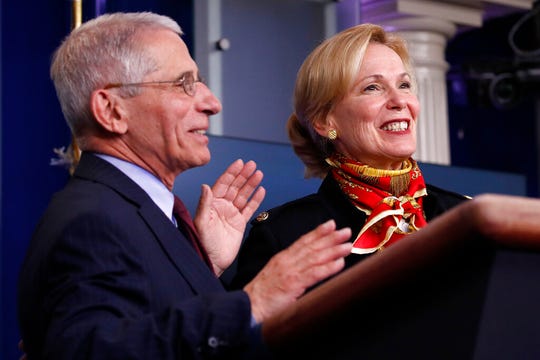
Anthony Fauci and Deborah Birx are diving into social media to ...

Vice President Mike Pence has blocked Drs. Anthony Fauci and Deborah Birx, as well as other top U.S. health officials, from appearing on CNN following the network’s decision to not air the White House coronavirus press briefings in full.

“When you guys cover the briefings with the health officials then you can expect them back on your air,” a spokesman for the vice president told CNN.

Trump and the White House Coronavirus Task Force, led by Pence, have been giving daily briefings to the press for several weeks after rising numbers of Americans have been infected. A CNN executive said that the network has sometimes cut away from the briefings after Trump speaks, and turns to a panel to fact-check the president. However, the network usually broadcasts only the president’s question-and-answer session.

Fauci and Birx regularly appear at the briefings to give updates on the status of the coronavirus epidemic within the U.S. Fauci has also appeared on CNN virtual townhalls on the coronavirus for the past five weeks, but will not be present this Thursday.

The New York Times, another outlet that has been a target of the Trump administration’s ire, stopped airing the briefings on its website entirely.

“We stopped doing that because they were like campaign rallies,” Elisabeth Bumiller, the paper’s Washington bureau chief, told the Washington Post. “The health experts often have interesting information, so we’re very interested in that, but the president himself often does not.”


Hydroxychloroquine for COVID-19 needs more data

https://globaldata.com/hydroxychloroquine-for-covid-19-needs-more-data/

Henry Ford Health begins enrollment in hydroxychloroquine study to ...

As COVID-19 spreads, the search for a treatment is ramping up. The antimalarial and immunosuppressant hydroxychloroquine has received some attention, including that of President Trump. There are currently around 60 planned or in-progress clinical trials to test its efficacy as a treatment for COVID-19. However, the results of recently completed clinical trials indicate there are not enough data to support hydroxychloroquine use for COVID-19 treatment at the level of expectations set by President Trump, says GlobalData, a leading data and analytics company.

Angad Lotay, MPharm, Infectious Diseases Analyst at GlobalData commented: “As the initial results for the hydroxychloroquine clinical trials do not provide sufficient data, larger and more robust randomized clinical trials are needed to inform clinical guidance on the use, dosing, or duration of hydroxychloroquine for prophylaxis or the treatment of SARS-CoV-2 infection.”

Hydroxychloroquine, which is sold by Concordia Pharmaceuticals under the brand name Plaquenil, and chloroquine are oral prescription drugs that have been used for many years to prevent and treat malaria and certain inflammatory conditions. Although these agents are well-established, they possess the potential to cause numerous side effects and should be used with caution in those who are diabetic, those with neurological disorders, and those with vision disorders. Recent data highlights how hydroxychloroquine retinopathy is more common than previously reported. Other side effects include cardiomyopathy and bone marrow suppression, but these are not commonly reported.

“Other studies have suggested that a combination of hydroxychloroquine with azithromycin may be beneficial to prevent severe respiratory tract disease in those diagnosed with COVID-19. However, further data is required, as these studies were small (n <36) and there is not enough evidence to convincingly implement guidance on this. Furthermore, azithromycin is associated with prolonged cardiac repolarization and QT interval, imparting a risk of developing cardiac arrhythmias. Therefore, extra caution is required when considering this combination.”


Some defiant U.S. churches plan Easter services, ignoring public health guidelines

https://www.reuters.com/article/us-health-coronavirus-easter-usa/some-defiant-u-s-churches-plan-easter-services-ignoring-public-health-guidelines-idUSKCN21S10Y

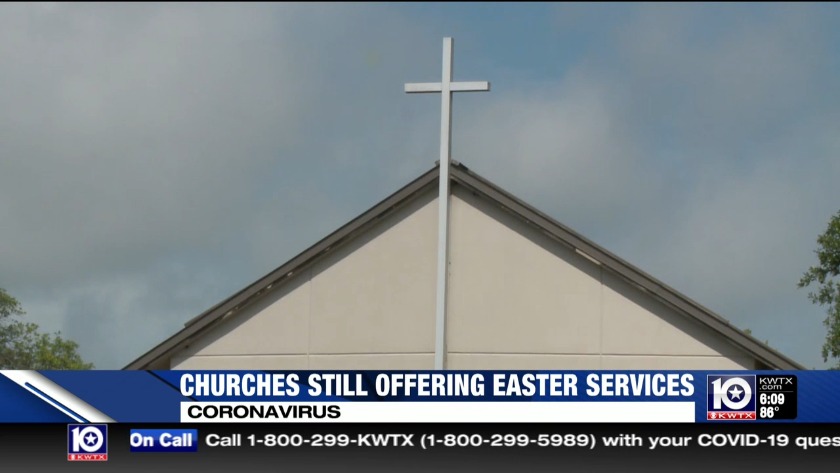
Churches still offering Easter services

A handful of holdout U.S. churches plan to hold in-person services on Easter Sunday, saying their right to worship in person outweighs public health officials’ warnings against holding large gatherings during the coronavirus outbreak.

Most U.S. churches are expected to be closed on Sunday, and a broad majority of observant Americans are expected to follow authorities’ recommendations to avoid crowds to limit the spread of the potentially lethal COVID-19 respiratory disease caused by the new coronavirus.

But not all of them.

“Satan and a virus will not stop us,” said the Reverend Tony Spell, 42, pastor of the evangelical Life Tabernacle Church near Baton Rouge, Louisiana. He expects a crowd of more than 2,000 to gather in worship at his megachurch on Sunday.

“God will shield us from all harm and sickness,” Spell said in an interview. “We are not afraid. We are called by God to stand against the Antichrist creeping into America’s borders. We will spread the Gospel.”

The COVID-19 pandemic has claimed more than 14,700 lives across the United States and infected more than 431,700 people, with officials predicting the worst is yet to come.

Major U.S. religious institutions, including Roman Catholic dioceses and major Protestant denominations, will hold religious services online as well as through local broadcast radio and television, with just a handful of ministers and priests preaching sermons and reading liturgies to rows of empty pews.

Indeed, some major religious-liberty legal advocacy groups, whose mission is to challenge restrictions on freedom of religion, have not raised objections to the closures, saying churches have been treated the same as other major institutions and that safety comes first.

In Idaho, Ammon Bundy, who has led multiple standoffs against authorities in acts of protest against the federal government, plans to gather hundreds of people for an Easter observance, in defiance of public health advice, according to multiple media reports.

Another holdout church, the evangelical Cross Culture Center in Lodi, California, about 70 miles (110 km) southwest of San Francisco, plans another service even after its members found their church doors locked against them last weekend.

Lay preacher Jon Duncan, 43, who has led the evangelical center for more than 10 years, said that under city orders, his landlord changed the locks and shut them out Sunday morning.

Lodi police officers was standing by the door, because they were defying both local and state “stay-at-home” orders and a court order from the San Joaquin County Public Health Services.

Instead, Duncan held brief curbside prayers with his congregants as they showed up for the 11 a.m. service.

“It is disappointing because we have a valid lease, but we won’t be stopped,” he said. “God commands us to meet and that’s what we’re going to do Easter.”

Duncan expects he and his flock of about 80 regular attendees will be locked out on Easter too, so he has picked an alternate site to meet. He and his attorney declined to disclose the new location to the public for fear of becoming a spectacle instead of a holy service.

The church’s attorney, Dean Broyles, has lodged a complaint against the city, and implored California’s governor in a letter to lift the ban on large church gatherings.

Duncan said he is steadfast in his decision.

“We don’t believe our rights are eroded by a virus,” he said. “We will stand together before God even against the gates of hell.”


Pandemic spurs court fights over mail-in voting

https://thehill.com/regulation/court-battles/492135-pandemic-spurs-court-fights-over-mail-in-voting?userid=12325

Pandemic spurs court fights over mail-in voting | TheHill

Election officials are scrambling ahead of the November vote to ramp up alternative methods like mail-in voting as the coronavirus pandemic raises concerns about the safety of in-person voting.

That dash to expand polling options could bring a new wave of court fights around the 2020 election, legal experts say. As states move to bolster balloting options — or face challenges to such plans — both sides in the debate are likely to take those decisions to court.

And when Election Day arrives, questions over the handling of mail-in ballots could lead to more court fights.

“We do not want the election resolved in the courts and so I hope it does not come to that,” said Richard Pildes, a law professor at New York University.

Legal experts say the nightmare scenario would be a situation resembling the Supreme Court’s decision on Bush v. Gore, which was seen as an ideological one that undermined both the legitimacy of the court and the 2000 presidential election results among critics of the decision.

“We know that the current partisan divide over the legitimacy of the U.S. Supreme Court can be timed to the release of the Bush v. Gore decision,” said Charles Stewart, a political science professor and election expert at MIT. “So, we have to be worried both about the legitimacy of the result and the legitimacy of the courts.”

States are hoping to avoid the situation Wisconsin faced this week where widespread in-person voting took place, despite last-minute efforts to avoid that outcome amid a virus that had infected some 2,500 and killed nearly 80 in the state by the Tuesday vote.

“There’s nonstop work being done by election officials to plan for November,” Stewart said.

The hope is that the pandemic will have abated enough to allow for in-person voting, which could be done more safely if early voting is expanded to reduce crowding on Voting Day. But given the fears over inciting a second wave of infections, that may not be advisable by the fall.

All states allow at least some mail-in balloting for select voters. While some states have relatively expansive mail voting systems, others have few provisions.

The fight over expanding voting options has already sparked legal battles. Texas is one of the states that has cases pending in court over efforts to expand mail-in balloting.

Under the current state election rules in Texas, only voters with a “qualifying reason” — advanced age, disability, incarceration or planned travel — can mail in ballots, despite public health guidance to avoid public gatherings. But a lawsuit filed by Texas Democrats ahead of the July primary runoff seeks to have that criteria expanded by including social distancing as a qualifying disability.

Progress toward developing a voting failsafe by November is likely to be uneven among the states given that not all are beginning from the same starting point, and because the push has increasingly become riven by partisan politics.

States that have a head start will be better off, though, experts said.

“States that already have a well-developed vote-by-mail program may well have the capacity to supersize it, and states that don’t may well have the capacity to provide some incremental vote-by-mail capacity,” said Justin Levitt, a professor at Loyola Law School.

“But it will be a herculean task for a state without much vote-by-mail capacity to get to almost everyone voting by mail by November. That takes expertise and systems, equipment and personnel, and the capacity to print a lot more ballots. And it is not easy to get any of those quickly.”

Lorraine Minnite, a political science professor at Rutgers University-Camden, put it even more starkly.

“A large-scale change in procedure hastily administered will likely not run smoothly even under the best of conditions,” she said.

Experts warn that expanded mail-in voting could lead to more voter errors and omissions, create more opportunities for fraud or coercion, and pose special challenges for those who move frequently or lack a permanent address. 

Edward Foley, a law professor at Ohio State University, said that if states are too slow to mail out ballots, litigation could arise from those issues.

“The most likely problem to trigger litigation would be if voters request absentee ballots on time, but election officials because they are overwhelmed with the high volume of absentee ballot requests fail to send the ballots to voters in time for voters to return them by the legally specified deadline,” Foley said.

“This, then, creates a problem of wrongful disenfranchisement of eligible voters, through no fault of the voters but because of the government’s own problems, and requires a court to come up with an appropriate remedy,” he added.

Rick Hasen, a professor of law and political science at the University of California Irvine, said that more courts may be drawn into a battle similar to the one playing out in Texas over whether voting by mail should require a valid excuse.

“There are a number of issues courts may address related to the vote by mail and the coronavirus,” he said. “Do states have to expand ballot deadlines to deal with a flood of absentee ballots? Do voters have a right to be told their absentee ballots have been rejected and given the opportunity to ‘cure’ a problem for rejecting a ballot like a purported signature mismatch?”

According to Levitt, one common thread among states is the urgent need for money to ramp up mail-in operations.

“The single most important piece is funding,” he said. “There are a lot of logistics between here and there, including space and machinery and people to process mail ballots, and that takes money.”  

The more than $2 trillion coronavirus stimulus package included $400 million for states to expand early voting, election by mail and for other election matters.

“The recent funding from Congress is an extremely welcome start, but only barely a start,” he added. “There needs to be much more, and quickly: it does little good to get more funding for this in October.”


Pence Blocks Fauci, Birx from Appearing on CNN after Network Stops Airing Full White House Coronavirus Briefings

https://news.yahoo.com/pence-blocks-fauci-birx-appearing-163022678.html

Anthony Fauci and Deborah Birx are diving into social media to ...

Vice President Mike Pence has blocked Drs. Anthony Fauci and Deborah Birx, as well as other top U.S. health officials, from appearing on CNN following the network’s decision to not air the White House coronavirus press briefings in full.

“When you guys cover the briefings with the health officials then you can expect them back on your air,” a spokesman for the vice president told CNN.

Trump and the White House Coronavirus Task Force, led by Pence, have been giving daily briefings to the press for several weeks after rising numbers of Americans have been infected. A CNN executive said that the network has sometimes cut away from the briefings after Trump speaks, and turns to a panel to fact-check the president. However, the network usually broadcasts only the president’s question-and-answer session.

Fauci and Birx regularly appear at the briefings to give updates on the status of the coronavirus epidemic within the U.S. Fauci has also appeared on CNN virtual townhalls on the coronavirus for the past five weeks, but will not be present this Thursday.

The New York Times, another outlet that has been a target of the Trump administration’s ire, stopped airing the briefings on its website entirely.

“We stopped doing that because they were like campaign rallies,” Elisabeth Bumiller, the paper’s Washington bureau chief, told the Washington Post. “The health experts often have interesting information, so we’re very interested in that, but the president himself often does not.”


State-by-state breakdown of 354 rural hospitals at high risk of closing

https://www.beckershospitalreview.com/finance/state-by-state-breakdown-of-354-rural-hospitals-at-high-risk-of-closing.html?utm_medium=email

What Rural Hospital Closures Mean for EMS Professionals

Twenty-five percent of the 1,430 rural hospitals in the U.S. are at high risk of closing unless their finances improve, according to an annual analysis from Guidehouse, a consulting firm. 

The 354 rural hospitals at high risk of closing are spread across 40 states and represent more than 222,000 annual discharges. According to the analysis, 287 of these hospitals — 81 percent — are considered highly essential to the health and economic wellbeing of their communities.

Several factors are putting rural hospitals at risk of closing, according to the analysis, which looked at operating margin, days cash on hand, debt-to-capitalization ratio, current ratio and inpatient census to determine the financial viability of rural hospitals. Declining inpatient volume, clinician shortages, payer mix degradation and revenue cycle management challenges are among the factors driving the rural hospital crisis.

The Guidehouse study analyzed the financial viability of rural hospitals prior to the COVID-19 pandemic, and the authors noted that the rural hospital crisis could significantly worsen due to the pandemic or any downturn in the economy. 

Here are the number and percentage of rural hospitals at high risk of closing in each state based on the analysis:

Tennessee
Rural hospitals at high risk of closing: 19 (68 percent)

Alabama
Rural hospitals at high risk of closing: 18 (60 percent)

Oklahoma
Rural hospitals at high risk of closing: 28 (60 percent)

Arkansas
Rural hospitals at high risk of closing: 18 (53 percent)

Mississippi
Rural hospitals at high risk of closing: 25 (50 percent)

West Virginia
Rural hospitals at high risk of closing: 9 (50 percent)

South Carolina
Rural hospitals at high risk of closing: 4 (44 percent)

Georgia
Rural hospitals at high risk of closing: 14 (41 percent)

Kentucky
Rural hospitals at high risk of closing: 18 (40 percent)

Louisiana
Rural hospitals at high risk of closing: 11 (37 percent)

Maine
Rural hospitals at high risk of closing: 7 (33 percent)

Indiana
Rural hospitals at high risk of closing: 8 (31 percent)

Kansas
Rural hospitals at high risk of closing: 26 (31 percent)

New Mexico
Rural hospitals at high risk of closing: 3 (30 percent)

Michigan
Rural hospitals at high risk of closing: 13 (29 percent)

Missouri
Rural hospitals at high risk of closing: 10 (26 percent)

Virginia
Rural hospitals at high risk of closing: 5 (25 percent)

Oregon
Rural hospitals at high risk of closing: 4 (24 percent)

California
Rural hospitals at high risk of closing: 6 (23 percent)

North Carolina
Rural hospitals at high risk of closing: 6 (23 percent)

Florida
Rural hospitals at high risk of closing: 2 (22 percent)

North Dakota
Rural hospitals at high risk of closing: 7 (21 percent)

Ohio
Rural hospitals at high risk of closing: 6 (20 percent)

Vermont
Rural hospitals at high risk of closing: 2 (20 percent)

Idaho
Rural hospitals at high risk of closing: 4 (19 percent)

Pennsylvania
Rural hospitals at high risk of closing: 4 (19 percent)

Washington
Rural hospitals at high risk of closing: 5 (18 percent)

Wyoming
Rural hospitals at high risk of closing: 3 (18 percent)

Texas
Rural hospitals at high risk of closing: 14 (16 percent)

Colorado
Rural hospitals at high risk of closing: 4 (14 percent)

Illinois
Rural hospitals at high risk of closing: 7 (14 percent)

Montana
Rural hospitals at high risk of closing: 7 (14 percent)

Nebraska
Rural hospitals at high risk of closing: 8 (13 percent)

New York
Rural hospitals at high risk of closing: 4 (13 percent)

Iowa
Rural hospitals at high risk of closing: 9 (12 percent)

Minnesota
Rural hospitals at high risk of closing: 8 (11 percent)

Alaska
Rural hospitals at high risk of closing: 1 (10 percent)

Arizona
Rural hospitals at high risk of closing: 1 (10 percent)

New Hampshire
Rural hospitals at high risk of closing: 1 (9 percent)

Wisconsin
Rural hospitals at high risk of closing: 5 (9 percent)


What Will U.S. Labor Protections Look Like After Coronavirus?

https://hbr.org/2020/04/what-will-u-s-labor-protections-look-like-after-coronavirus?utm_medium=social&utm_source=facebook&utm_campaign=hbr&fbclid=IwAR1fNFaJM-Tz1jCoBQ3bTVJG5zdbuqcExQOujKz87J34csjOhRLm8C2Dxjo

As I was writing the draft of this article, I was checking my symptoms and awaiting the results of a test I underwent for Covid-19. This virus has upended my life, as it has for every last one of us, no matter where we fall on the socio-economic scale.

But the consequences fall more heavily on those at the bottom end of the wage distribution. That includes those risking their health as they sell us groceries, check our vitals, and sanitize our hospitals. Easily lost amid the chaos, however, is how this crisis may be an opportunity to improve employee protections — and not temporarily but permanently.

During bull markets, employers and policymakers often paint the hardships befalling low-wage workers as stemming from those workers’ personal failures. But when markets crash, we learn how these workers’ troubles were indicative of persistent, system-wide weaknesses.

As Warren Buffett wrote of the insurance failures exposed by 1993’s Hurricane Andrew, “It’s only when the tide goes out that you learn who’s been swimming naked.” Pundits cite Buffet to refer to firms that appear healthy during bull markets, only to get eaten alive during downturns. This month, however, the markets exposed a new group of skinny dippers: a government and an economic system that fail workers, and employers who haven’t or can’t fill this gap in public policy.

In response to the novel coronavirus, the stock market has been mostly in a free fall since late February. The low-wage service sector is facing widespread layoffs. And the tumbling markets have uncovered other deep inequalities among workers, who fall into two groups: those with access to employment protections like affordable healthcare, remote work accommodations, paid time off, and job security — and those without.

This second group, which includes the working class, often lack healthcare or face high out-of-pocket expenses. There are nearly 24 million uninsured working-age adults in the United States. Those with only a high school diploma or who did not complete high school are the least likely to be insured. Moreover, racial and ethnic minority groups face significant barriers to “good jobs.” They form 60% of the uninsured population but only 40% of the total population.

A quarter of all U.S. workers have no access to paid sick leave. Work-from-home options are slim, but many can’t afford not to work. Among workers at the bottom 10th of the earnings distribution, only 31% have paid sick leave. For comparison, 94% of the top 10% of earners have paid sick leave.

While many professionals enjoy protections that can help them ride out the pandemic with their livelihoods and family’s health intact, workers in the low-wage service sector have few options or resources to stay home to care for themselves, let alone their loved ones. And that burden to provide care largely falls on women. The workers lacking healthcare and paid sick leave are also the most vulnerable to layoffs and lost hours. The fate of service workers in travel and food services indicate what’s to come. Similarly, gig economy workers, migrant laborers, and those in the informal economy are particularly vulnerable.

How did we get here? Since the late 1970s, executives have prioritized boosting dividends for shareholders over protecting their employees, whose work has been outsourced, digitized, and downsized. In our book, Divested: Inequality in the Age of Finance, Ken-Hou Lin and I show how this shift in corporate governance undermined workers’ bargaining power. Although insurance coverage increased from the Affordable Care Act, overall working conditions, protections, and pay have diminished.

A more robust safety net would help to mitigate the consequences for workers today as it shores up the economy against future downturns. For years, U.S. policymakers have considered universal healthcare impractical because of its large scope and high startup costs. But as new unemployment claims surge to historical levels and Americans face the medical precarity of a pandemic, this crisis has laid bare the underlying problem of linking healthcare to employment.

Sick leave and universal healthcare would ease the stressors workers face and ensure the sick have time to recover, making them more productive when they return to work. Without the costs of insuring workers, employers could pay more. An income boost would generate more spending and stimulate the economy.

Broader protections would also support the self-employed, contract workers, and prospective entrepreneurs. The United States has lower rates of self-employment (6.3%) than countries with universal healthcare (e.g., Spain has 16%), and a lower share of employment at small businesses than any OECD country except Russia. Reducing the reliance on big businesses would free workers to find jobs that better fit their skills, creating a more nimble and innovative economy.

The current moment provides an opportunity to make lasting changes to the status quo and improve conditions for all workers. As sociologists have theorized, crises and crashes expose cracks in the systems upholding inequality. And history provides a clue for how crises can provide opportunities to transform society in ways that reduce inequality. After the Great Crash of 1929, unemployment spiked, reaching 25% by 1933. In less than three years, Franklin D. Roosevelt’s New Deal reduced unemployment to 9%.The New Deal achieved this feat through a vast and broad range of public works and conservation projects.

The New Deal transformed American society — from erecting iconic buildings and statues, to saving the whooping crane, to developing the rural United States, to planting a billion trees. New Deal workers built and renovated 2,500 hospitals, 45,000 schools, and 700,000 miles of roads. The New Deal hired 60% of the unemployed, including 50,000 teachers and 3,000 writers and artists, such as Jackson Pollock and Willem de Kooning. The New Deal modernized, preserved, and employed the country, while reducing inequality between the haves and have-nots.

Facing a similar economic threat in the wake of the pandemic, we have a comparable once-in-a-century opportunity to make lasting changes that address the pressing problems of today, from inequality to climate change.

In today’s crisis, we could double down on the “trickle-down” approach of the 2008 financial crisis: stimulus to the banks, corporations, and their investors combined with tax cuts and temporary wage support as a short-term Band-Aid for immiserated workers. But Lin and I find that this approach left many workers flailing and worsened inequality, because the banks deposited, rather than invested, the stimulus funding and corporations borrowed the money to buy back their stocks, enriching top executives and shareholders.

Last week, the president signed into law a sweeping $2 trillion plan that combines money for states, loans for distressed businesses, and tax relief, paid leave, unemployment benefits, and cash for most citizens. But this plan only gives workers temporary benefits. Although the bill has stricter oversight and restricts buybacks, it is unlikely to reduce inequality unless it addresses the structural conditions making some workers more vulnerable.

While a New Deal approach may be infeasible amid a contagious virus, we can and should enact permanent policies protecting all workers. Sick leave and healthcare should be universal rights. We could adopt a “flexicurity” labor policy modeled on the Danish one. The Danes provide both flexibility for employers to hire and fire workers as needed and security for workers through generous benefits and retraining opportunities during unemployment.

Meanwhile, in my household, after 2.5 weeks of symptoms—from a dry cough to a tight chest to a low fever—my test results came back negative. Thanks to the healthcare and insurance provided by my employer, I will continue to do the work I care about.

While I am on the mend, the workers who sell our groceries, serve us food, clean our workplaces, and drive us to the doctor also need to take care. In this pandemic, they are risking their health and lives. And they deserve the same level of care as the people they serve: access to both preventative medicine and comprehensive treatment, and time to take a break, recover, and care for their loved ones. The coronavirus is our chance to extend these protections during times of crisis and far into the future.


Pay Cuts, Furloughs, Redeployment for Doctors and Hospital Staff

https://www.medpagetoday.com/infectiousdisease/covid19/85827?xid=nl_mpt_investigative2020-04-08&eun=g885344d0r&utm_source=Sailthru&utm_medium=email&utm_campaign=InvestigativeMD_040820&utm_term=NL_Gen_Int_InvestigateMD_Active

Pay Cuts, Furloughs, Redeployment for Doctors and Hospital Staff ...

— Health systems see massive disruption from COVID-19

In Michigan, Trinity Health is furloughing 2,500 of its 24,000 employees. In Florida, Sarasota Memorial Health Care is taking “immediate steps to reduce costs, including temporary furloughs and reduced hours” for workers.

In less than 1 month, COVID-19 has made swift, deep cuts in hospital billings. Despite high volumes in the first 2 weeks, March revenue plunged by $16 million at Sarasota Memorial. Surgery cases fell by more than 50%, and volumes dropped by 45% at two emergency care centers and by 66% at seven urgent care centers.

Squeezed by plummeting income and climbing COVID-19 expenses, hospitals and health systems are bracing themselves for system-wide disruption by announcing temporary layoffs, reassignments, and pay cuts.

Many changes, like Trinity’s furloughs in Michigan, affect mainly non-clinical workers. Some alter compensation or duties for doctors, nurses, and other healthcare providers.

“In all parts of the country, physicians are being asked to sign agreements or acknowledgments for pay cuts ranging from 20% to 75%, depending on what their specialty is, where they are, and what the institutions are doing,” said Scott Weavil, JD, a California lawyer who counsels physicians nationwide about employment contracts.

“Many of these providers are not on the front lines of COVID, but they are still working,” Weavil noted. “Babies are being born. People are having accidents and visiting emergency departments. Urgent surgeries are happening. Physicians are at work or on call and ready to help if needed. And in most of these environments, there are patients who have tested positive for COVID-19,” he told MedPage Today.

“Ob/gyns aren’t doing a lot of elective procedures like hysterectomies, but they are delivering babies for COVID-positive patients, wearing donated cloth masks that may or may not be effective,” Weavil added.

In some cases, doctors have been sidelined and face the prospect of dwindling income as patient volumes fall. “We have 2,600 physicians and advanced-practice providers,” said Mark Briesacher, MD, senior vice president and chief physician executive of Intermountain Healthcare in Salt Lake City. “About 800 of them are on a patient volume-related type of contract, similar to what you would have in private practice.”

Because non-urgent and elective procedures are being delayed, some of these clinicians now see 30% to 50% fewer patients and could face big income drops, Briesacher told MedPage Today. “But we’ve put a floor in place,” he said: these providers will receive their usual pay until May 30, then 85% of that amount until normal patient volumes resume.

Redeployment can help practitioners make up lost income, Briesacher added. “A general surgeon often has critical care training,” he noted. “When this increase in patient care needs due to COVID-19 does come to Utah, we can deploy that surgeon to work in our ICUs with a critical care doctor, and if they’re working fulltime, they’ll get paid the same as they were before.”

Reassignment does not stop with doctors at Intermountain: hospital nurses can be deployed to screening desks, drive-through testing sites, or telehealth centers and will keep their current rate of pay, spokesperson Daron Crowley said.

“I recently reviewed a COVID-19 compensation plan of a health system in Florida that would give physicians their base or draw, or a midpoint between their 2019 base and their 2019 overall compensation,” noted Weavil, the attorney. “That seemed pretty good, but it came at a cost: the physicians had to agree to practice outside of their normal setting, as long as they were credentialed for the work.”

“At first blush, the credentialing requirement sounded like a protection; if you are a psychiatrist, you’d think ‘they’re not going to send me to the ICU,’ and normally, that’s correct,” Weavil continued.

But hospitals are adopting emergency credentialing provisions during COVID-19 and “doctors can be forced to practice pretty far afield of their specialty,” he said. In some ways, the situation resembles residency, he pointed out: “You have an attending physician who knows what she’s doing directing fish-out-of-water physicians who have been conscripted into service beyond their specialties.”

The list of hospital systems announcing major changes — including pay cuts for hospital executives, as Trinity Health in Michigan has done — grows each day. Boston Medical Center Health System has furloughed 700 employees; Cincinnati-based Bon Secours Mercy Health has announced it will do the same. Kentucky’s Appalachian Regional Healthcare will furlough about 500 staff members. South Carolina’s Prisma Health will lay off an undisclosed number of clinical, corporate, and administrative workers. Tenet Healthcare in Dallas has furloughed 500 fulltime positions.

Furloughing staff “was an extremely difficult decision, and one that we did not make lightly,” Sarasota Memorial CEO David Verinder wrote in a letter to employees.

“Staff have gone above and beyond to care for our patients throughout this crisis, even as they have been anxious about the health and well-being of themselves and their families,” he continued. “But as the health care safety net for the region, we must do all we can to continue fulfilling that critical role in the weeks ahead and for the long-term.”


COVID-19 Update: The N̶e̶w̶s̶ Data is Mostly Good

COVID-19 Update: The N̶e̶w̶s̶ Data is Mostly Good

First off, it’s time to call a spade a spade. When the Trump administration publicly projected 100,000 to 240,000 deaths in the U.S. last week, we couldn’t come up with a model that aligned with these numbers. Either they are/were seeing something in the data that we are not, or…they were managing expectations. This is an election year, after all. Even in the daily briefings since that forecast, the number of new cases reported have generally been lower than feared.

According to our forecasts, which were based on Italy and other countries leading virus-progressions (which were intentionally overestimated when compared to the probable U.S. trajectory), the U.S. would likely never plateau at rates above 50,000 new cases a day. The U.S. has 5.5 times as many people than Italy. Even if we overestimated that Italy was a model for the U.S. (which, as we projected, peaked two weeks ago at less than 7,000 cases a day), it was hard to model the U.S. peaking at more than 50,000 cases a day and likely that number will be closer to 40,000 or less. Italy maintained 85% of peak for nearly three weeks before declining. If we ascribe that to 40,000 new cases a day, the U.S. will likely add less than 750,000 new cases before meaningful decent. We believe we are already into that peak phase (currently with 400,000 cases). By our models, the U.S. will reach a total of approximately 1.5 million cases (or less), using the Italian infection model. With an above average fatality rate of 5% (we expect it will be lower), you would anticipate less than 75,000 deaths in the U.S., with the bulk of those coming in the next 4 weeks.

Importantly, Italy has one of the oldest populations in the developed world with an average age over 7 years older than the U.S. at 45.5 and a meaningful population in the most susceptible zone of the virus (above 70). Societally, they also live multi-generationally, which increases cross spread within families. Italy also failed to take protective measures until there was a considerable outbreak. They continued to allow flights in from China, their key textile trade partner, for over a week longer than the U.S., despite cases coming into Northern Italy directly through China. Further, Italy’s hospitals in the north were overrun with cases, which is not anticipated in most of the U.S. (see state by state data here). As such, we expect and hope that our estimates for U.S. data for the virus will prove to be higher than reality when the virus is eventually suppressed…at least this go around.

popitaly

With expectations that Italy’s progression may represent the worst pattern to date, we again look to Italy (and its close neighbors) to see if our indicators have continued on their paths of peak, plateau, and eventual decline. So far, with each new data point, we continue to be encouraged – with one troublesome outlier. Italy continues to report fewer and fewer new cases, as do their immediate neighbors to the north, Austria and Switzerland. In fact, Austria and Switzerland are already seeing the number of active cases in their countries decline.

germanydailyspain

daily fran

Most of the other European countries we are following are exhibiting similar patterns, although earlier in their progression. The outlier is France. France has posted up some alarming and quite possibly anomalistic numbers in the last several days. North Pier will investigate this data in more detail in our full weekly update. We hope that this will prove to be atypical and that we will see the virus’s trajectory in France moderate soon.

The U.S. stock market seems to have turned its attention to this new phase of virus-related data. For the time being, the fear of the abyss seems to have abated. Ultimately, the real test will come when we finally turn our attention to the economy, and what the post-virus world will look like. However, those days are far off. There will likely be bouts of fear and euphoria between now and then. Along the way, we will do our best to keep you informed.


Fauci: ‘Looks like’ US deaths will be lower than original projection

Fauci: ‘Looks like’ US deaths will be lower than original projection

Fauci: 'Looks like' US deaths will be lower than original ...

Dr. Anthony Fauci said Wednesday morning that he thinks the number of U.S. deaths from coronavirus will end up being less than the original projection of 100,000 to 200,000. 

Fauci, the government’s top infectious disease expert, attributed the drop to the success of social distancing measures that have directed people to stay home and closed many businesses.

“Although one of the original models projected 100- to 200,000 deaths, as we’re getting more data and seeing the positive effect of mitigation, those numbers are going to be downgraded,” Fauci said on Fox News. “I don’t know exactly what the numbers are going to be, but right now it looks like it’s going to be less than the original projection.”

By the end of March, the White House was projecting 100,000 to 240,000 deaths as America’s best-case scenario for the pandemic.

Centers for Disease Control and Prevention Director Robert Redfield made similar comments on Tuesday, saying he expected the number of deaths to be “much lower” than what was predicted by the models.

A closely watched University of Washington model is now projecting about 60,000 deaths in the U.S. 

Despite some hopeful signs, Fauci emphasized that now is not the time to ease up on social distancing measures, the best way to keep improving the outlook. 

“We’re going to start to see the beginning of a turnaround, so we need to keep pushing on the mitigation strategies because there’s no doubt that that’s having a positive impact,” he said.

“Now’s not the time to pull back at all,” he added. “It’s a time to intensify.”

President Trump has been eager to reopen the economy, and Fauci said planning for that is underway at the White House, where late Tuesday night there was a meeting on the subject in the Roosevelt Room.

“If in fact we are successful it makes sense to at least plan what a reentry into normality would look like,” Fauci said. “That doesn’t mean we’re going to do it right now, but it means we need to be prepared to ease into that. And there’s a lot of activity going on.”