Ahead of a Supreme Court hearing in March to consider the legality of imposing work requirements as a condition of gaining Medicaid coverage, the Centers for Medicare and Medicaid Services (CMS) were expected to inform states on Friday of plans to rescind the controversial Trump administration policy.
Under the previous administration, ten states had applied for and were approved to use waiver authority to impose work requirements on Medicaid enrollees, and several other states were in the process of submitting applications. Critics (including us) have long held that such requirements, while nominally intended to introduce an element of “personal responsibility” to the safety-net coverage program for low-income Americans, actually serve to hinder access to care, and jeopardize the health status of already vulnerable populations; in addition, the added expense of program infrastructure often exceeds anticipated cost savings.
The policy was a favored project of former CMS administrator Seema Verma, who helped craft a similar program for the state of Indiana before joining the Trump administration. Among states granted waiver authority to impose work requirements, only Arkansas ever fully implemented the policy, before the legality of the waivers was challenged successfully in lower courts.
The Biden administration’s recision of work requirements is part of a broader reversal of Trump-era healthcare policies. This week the Justice Department notified the Supreme Court that it was switching sides in the closely watched case questioning the constitutionality of the Affordable Care Act (ACA), although the court has already heard the case and is expected to rule this spring. Starting Monday, the Biden team will also reopen the federal insurance marketplace for a special enrollment period, bolstering funding for outreach to ensure those eligible are aware of coverage options. And as part of its proposed COVID relief legislation, the administration plans toincrease subsidies to help individuals buy coverage on the exchanges, and to increase funding to support state Medicaid programs—policies that got a boost this week from a broad coalition of healthcare industry groups, including health plans, doctors, and hospitals.
As the administration rounds out its health policy team, we’d expect a continuedfocus on strengthening the core pillars of the ACA, along with a greater focus on ensuring health equity and addressing disparities. Meanwhile, two key positions remain unfilled: CMS administrator and commissioner of the Food and Drug Administration (FDA). These slots will likely remain open until the looming confirmation battle over Biden’s nominee for Secretary of Health and Human Services (HHS), California Attorney General Xavier Becerra, has been settled.
The groups said that Americans “deserve a stable healthcare market that provides access to high-quality care and affordable coverage for all.”
This week, a coalition of healthcare and employer groups called for achieving universal health coverage by expanding financial assistance to consumers, bolstering enrollment and outreach efforts, and taking additional steps to protect those who have lost or are at risk of losing employer-based coverage because of the economic downturn caused by the COVID-19 pandemic.
They have banded together to advocate for achieving universal coverage via expansion of the Affordable Care Act, which is supported by President Biden. Biden also intends to achieve universal coverage through a Medicare-like public option — a government-run health plan that would compete with private insurers.
WHAT’S THE IMPACT
Despite a lot of pre-election talk about universal healthcare coverage from elected officials and those vying for public office, achieving this has remained an elusive goal in the U.S. In a joint statement of principles, the groups said that Americans “deserve a stable healthcare market that provides access to high-quality care and affordable coverage for all.”
“Achieving universal coverage is particularly critical as we strive to contain the COVID-19 pandemic and work to address long-standing inequities in healthcare access and outcomes,” the groups wrote.
The organizations support a number of steps to make health coverage more accessible and affordable, including protecting Americans who have lost or are at risk of losing employer-provided health coverage from becoming uninsured.
They also want to make Affordable Care Act premium tax credits and cost-sharing reductions more generous, and expand eligibility for them, as well as establish an insurance affordability fund to support any unexpected high costs for caring for those with serious health conditions, or to otherwise lower premiums or cost-sharing for ACA marketplace enrollees.
Also on the group’s to-do list: Restoring federal funding for outreach and enrollment programs; automatically enrolling and renewing those eligible for Medicaid and premium-free ACA marketplace plans; and providing incentives for additional states to expand Medicaid in order to close the low-income coverage gap.
THE LARGER TREND
The concept of universal coverage is gaining traction among patients thanks in large part to the COVID-19 pandemic. In fact, A Morning Consult poll taken in the pandemic’s early days showed about 41% of Americans say they’re more likely to support universal healthcare proposals. Twenty-six percent of U.S. adults say they’re “much more likely” to support such policy initiatives, while 15% say they’re somewhat more likely.
As expected, Democrats were the most favorable to the idea, with 59% saying they were either much more likely or somewhat more likely to support a universal healthcare proposal. Just 21% of Republicans said the same. Independents were somewhere in the middle, with 34% warming up to the idea of blanket coverage.
More than 21% of Republicans said they were less likely to support universal care in the wake of the COVID-19 crisis. Seven percent of independents reported the same, while for Democrats the number was statistically insignificant.
During his campaign, President Joe Biden said he supported a public option for healthcare coverage. He also pledged to strengthen the Affordable Care Act. By executive order, Biden opened a new ACA enrollment period for those left uninsured. It begins February 15 and goes through May 15.
Under the Biden Administration, the DOJ says the ACA can stand even though there is no longer a tax penalty for not having health insurance.
The Department of Justice, under the Biden Administration, has told the Supreme Court that it has changed its stance on the Affordable Care Act.
The DOJ previously filed a brief contending that the ACA was unconstitutional because the individual mandate was inseverable from the rest of the law.
Following the change in Administration, the DOJ has reconsidered the government’s position and now takes the position that the ACA can stand, even though there is no longer a mandate for consumers to have health insurance or face a tax penalty, according to a February 10 filing.
WHY THIS MATTERS
Hospitals and health systems support the change in position.
“Without the ACA, millions of Americans will lose protections for pre-existing conditions and the health insurance coverage they have gained through the exchange marketplaces and Medicaid. We should be working to achieve universal coverage and preserve the progress we have made, not take coverage and consumer protections away,” said American Hospital Association CEO and president Rick Pollack.
The Supreme Court is expected to return a decision before the end of the term in June.
THE LARGER TREND
The Supreme Court heard oral arguments on November 10, 2020 regarding whether the elimination of the tax penalty made the remainder of the ACA invalid under the law.
The DOJ sided with the Trump Administration and Republican states that brought the legal challenge, while 20 Democratic attorneys general supported the ACA and asked the court for quick resolution.
The American Hospital Association, other trade groups and individual hospitals filed petitions Feb. 10 asking the U.S. Supreme Court to reverse appeals court decisions in two cases involving outpatient payment cuts to hospitals.
One lawsuit hospitals are asking the Supreme Court to hear challenges HHS’ payment reductions in 2019 for certain outpatient off-campus provider-based departments.
Under the 2019 Medicare Outpatient Prospective Payment System final rule, CMS made payments for clinic visits site-neutral by reducing the payment rate for evaluation and management services provided at off-campus provider-based departments by 60 percent.
In an attempt to overturn the rule, the AHA, the Association of American Medical Colleges and dozens of hospitals across the nation sued HHS. They argued CMS exceeded its authority when it finalized the payment cut in the OPPS rule. They further claimed the site-neutral payment policy violates the Medicare statute’s mandate of budget neutrality.
HHS argued that under the Bipartisan Budget Act of 2015 it has authority to develop a method for controlling unnecessary increases in outpatient department services. Since “method” is not defined in the statute, the government argued its approach satisfies generic definitions of the term. U.S. District Judge Rosemary M. Collyer rejected that argument and set aside the regulation implementing the rate reduction in September 2019.
HHS filed an appeal in the case, and the appellate court reversed the lower court’s decision July 17.
The second lawsuit hospitals are asking the Supreme Court to hear challenges HHS’ nearly 30 percent cut to 2018 and 2019 outpatient drug payments for certain hospitals participating in the 340B Drug Pricing Program.
A district court sided with hospitals and found the payment reductions were unlawful. Two members of a three-judge panel of the U.S. Court of Appeals overturned that ruling in July.
The hospitals argue in both petitions that the Supreme Court should review the cases because of the “excessive deference” the appeals court gave to HHS’ interpretation of the respective governing statutes.
Thursday was healthcare day at the Biden White House, the latest in a series of themed days during which the President has issued executive orders on topics ranging from COVID response to climate change to racial equity.
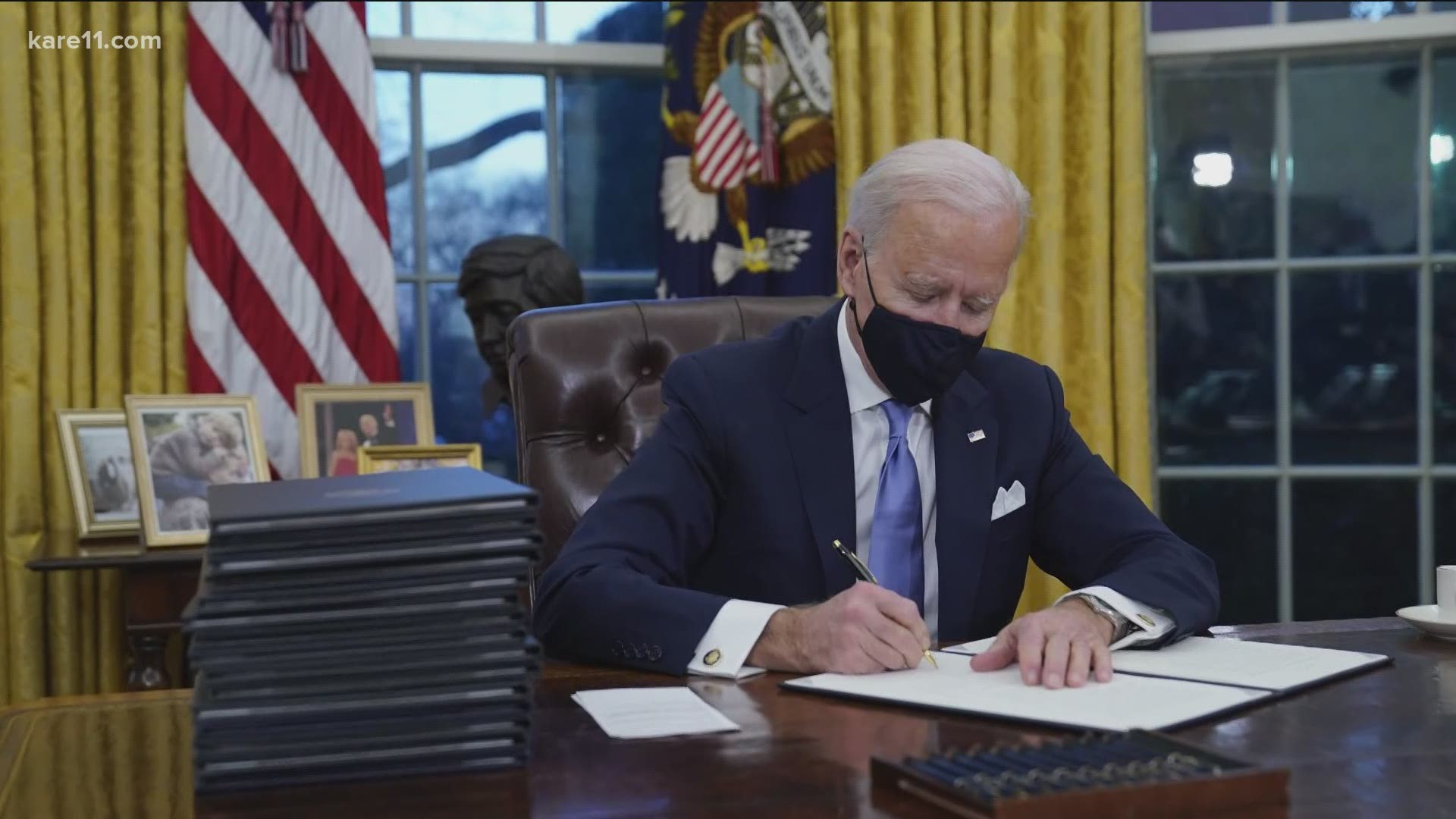
Facing a closely divided Congress, the new administration has focused so far on actions it can take unilaterally to advance its agenda, and as President Biden described it at a signing ceremony yesterday, his healthcare agenda is centered on “restoring the Affordable Care Act and restoring Medicaid to the way it was” prior to the Trump administration.
The new executive order reopens the HealthCare.gov insurance marketplace for a “special enrollment period”, lasting from mid-February to mid-May, allowing approximately 15M uninsured Americans in 36 states (including 3M who lost employer-based insurance due to COVID) to sign up for coverage, many subsidized by the federal government.
The order also instructs agencies to review many of the regulatory changes made by the Trump administration, including loosening restrictions on short-term insurance plans, and allowing states to use waivers to implement Medicaid work requirements. (Also included in Thursday’s action was a measure to immediately rescind the ban on taxpayer funding for abortion-related counseling by international nonprofits, the so-called “Mexico City rule”.)
Actually unwinding those Trump-era changes will take months (or possibly years) of regulatory work to accomplish, but Biden’s executive order puts that work in motion. Attention now turns to Congress, which the Biden team hopes will provide funding for increased subsidies for coverage on the Obamacare exchanges, along with allocating money for the administration’s aggressive COVID response plan.
Yesterday’s executive order is best understood as the starting gun for the lengthy legislative and regulatory process that lies ahead, as the Biden administration tries to bolster the 2010 health reform law, and stamp its mark on American healthcare.
As the oft-cited 10,000 Baby Boomers continue to age into Medicare each day, Medicare Advantage (MA) enrollment keeps accelerating. The graphic above highlights growth in the MA ranks across the last decade, showing that enrollment has more than doubled since 2010. By the end of this year, an estimated 42 percent of Medicare beneficiaries will get their benefits through a private health insurer.
While seniors like MA plans for the growing number of supplemental benefits they can offer—which now include adult day care services, home-based palliative care, and in-home support services—health insurers are gravitating to these plans due to their attractive economics.
Health insurers’ average gross margin per member, per month (PMPM) for MA plans is significantly higher than in individual or group market plans, a spread that increased in 2020 due to reduced utilization. PMPM margins for MA plans were up an average of 35 percent through September 2020 compared to 2019.
Payers have been blanketing the market with plan options in recent years;the number of MA plans offered has increased 49 percent since 2017, although the MA market is increasingly concentrated. In spite of numerous headlines about venture-backed startups like Oscar, Bright Health Plan, and Devoted Health posting double- or triple-digit growth numbers, the MA market is still dominated by UnitedHealthcare and Humana, which together account for 44 percent of all MA enrollees nationwide.
Members of an influential congressional advisory committee on Medicare are torn on how best to regulate telehealth after the COVID-19 public health emergency, hinting at the difficulty Washington faces as it looks to impose guardrails on virtual care without restricting its use after the pandemic ends.
During a Thursday virtual meeting, the Medicare Payment Advisory Commission expressed its support of telehealth broadly, but many members noted snowballing use of the new modality could create more fraud and abuse in the system down the line.
Key questions of how much Medicare reimburses for telehealth visits and what type of visits are paid for won’t be easily answered, MedPAC commissioners noted. “This is a really, really difficult nut to crack,” Michael Chernew, MedPAC chairman and a healthcare policy professor at Harvard Medical School, said.
Dive Insight:
Virtual care has kept much of the industry running during the coronavirus pandemic, allowing patients to receive needed care at home. Much of this was possible due to the declaration of a public health emergency early 2020, allowing Medicare to reimburse for a greater swath of telehealth services and nixing other restrictions on virtual care.
However, much of that freedom is only in place for the duration of the public health emergency, leaving regulators and legislators scrambling to figure which new flexibilities they should codify, and which perhaps are best left in the past along with COVID-19.
It’s a tricky debate as Washington looks to strike a balance between keeping access open and costs low.
In a Thursday meeting, MedPAC debated a handful of policy proposals to try and navigate this tightrope. Analysts floated ideas like making some expansions permanent for all fee-for-service clinicians; covering certain telehealth services for all beneficiaries that can be received in their homes; and covering telehealth services if they meet CMS’ criteria for an allowable service.
But many MedPAC members were wary of making any concrete near-term policy changes, suggesting instead the industry should be allowed to test drive new telehealth regulations after COVID-19 without baking them in permanently.
“I don’t think what we’ve done with the pandemic can be considered pilot testing. I think a lot of this is likely to go forward no matter what we do because the gate has been opened, and it’s going to be really hard to close it,” Marjorie Ginsburg, founder of the Center for Healthcare Decisions, said. But “I see this just exploding into more fraud and abuse than we can even begin imagining.”
Paul Ginsburg, health policy chair at the Brookings Institution, suggested a two-year pilot of any changes after the public health emergency ends.
However, it would be “regressive” to roll back all the gains virtual care has made over the past year, according to Jonathan Perlin, CMO of health system HCA.
“These technologies are such a part of the environment that at this point, I fear [it] would be anachronistic not to accept that reality,” Perlin said.
Among other questions, commissioners were split on how much Medicare should pay for telehealth after the pandemic ends.
That parity debate is perhaps the biggest question mark hanging over the future of the industry. Detractors argue virtual care services involve lower practice costs, as remote physicians not in an office don’t need to shell out for supplies and staff. Paying at parity could distort prices, and cause fee-for-service physicians to prioritize delivering telehealth services over in-person ones, some commissioners warned.
Other MedPAC members pointed out a lower payment rate could stifle technological innovation at a pivotal time for the healthcare industry.
MedPAC analysts suggested paying lower rates for virtual care services than in-person ones, and paying less for audio-only services than video.
Commissioners agreed audio-only services should be allowed, but that a lower rate was fair. Commissioner Dana Gelb Safran, SVP at Well Health, suggested CMS should consider outlining certain services where video must be used out of clinical necessity.
Previously, telehealth services needed a video component to be reimbursed. Proponents argue expanded access to audio-only services will improve care access, especially for low-income populations that might not have the broadband access or technology to facilitate a video visit.
Another major concern for commissioners is how permanently expanding telehealth access would affect direct-to-consumer telehealth giants like Teladoc and Amwell. If all telehealth services delivered at home are covered, that could allow the private companies to “really take over the industry,” Larry Casalino, health policy chief in the Weill Cornell Department of Healthcare Policy and Research, said.
Because of the lower back-end costs for virtual care than in-office services, paying vendors the same rate as in-office physicians could drive a lot of brick-and-mortar doctors out of business, commissioners warned.
The nearest-term 2021 actions will likely center on bolstering the ACA and Medicaid, after the Trump administration took aim at both.
Even with Democrats’ surprise flipping of the Senate, enacting big healthcare policies in Congress will be a heavy lift given the razor-thin margin in that body and division within the party on strategy.
A clearer path for incoming president Joe Biden is to focus on reversing policies enacted by President Donald Trump at the executive level.Trump’s tenure has been defined in large part by a chipping away at key tenets of the Affordable Care Act, curtailing the Medicaid program and sweeping deregulations critics allege harm consumer protections.
The nearest-term actions the incoming administration is likely to take will center on bolstering the landmark health law and Medicaid, both of which has drawn more bipartisan backing in recent years. Below are what the Biden health administration is likely to roll back quickly after inauguration Wednesday.
Boosting Affordable Care Act marketplace
One of Biden’s first moves may be to open a special enrollment period to sign up for coverage during COVID-19, combined with more outreach and enrollment assistance, Cynthia Cox, director of the ACA program at the Kaiser Family Foundation, said.
Beyond COVID-19, it’s likely the Biden administration will restore federal spending on navigation, marketing and outreach for exchange plans. For example, the Trump administration reduced the minimum number of navigator programs in each state using the federal marketplace to one. Biden could return it to two, and might also bring back the requirement that navigators have a physical presence in their service area.
Biden is also likely to unilaterally shore up standards for brokers, and take steps to bolster the exchange website healthcare.gov.
The Trump administration in December proposed a rule encouraging states to privatize their health insurance marketplaces instead of using healthcare.gov, which will make it more difficult for consumers to shop between plans and could divert people to subpar coverage, Tara Straw, senior policy analyst at the Center on Budget and Policy Priorities, wrote in a December blog post.
The rule doubles down on the administration’s approval of a Georgia waiver to privatize its marketplace in November, but would allow states to follow suit and rely entirely on third-party brokers without a waiver.
That rule is not yet final, so Biden’s HHS will likely remove it from the Federal Register to avoid fragmenting marketplace functions.
Biden could also beef up consumer protections and standards for web brokers, which also sell skimpy short-term health insurance and other non-ACA-compliant coverage.
Biden is also likely to re-expand the annual enrollment period. In 2017, the Trump administration shortened the annual enrollment period to 45 days. Biden’s HHS could use rulemaking to return that period to three full months.
The incoming administration could also reverse previous CMS guidance on Section 1332 waivers that let states subvert or sidestep ACA protections on coverage and cost. The Trump administration proposed a rule in November to codify the waiver standards in regulation but — despite a recent wave of proposed and final regulations as the Trump administration hustles to preserve its health agenda — the rule has not yet been finalized, so HHS could remove it from the Federal Register as well.
By nixing the rule, Biden could also help reverse Trump administration cuts from 2018 that slashed user fees on healthcare.gov plans. The November proposed rule would further decimate the fees, which finance a large swath of marketplace operating expenses, to 2.25% in 2022, versus 3% in 2021 and 3.5% last year.
One key tenet of Biden’s health agenda is to expand ACA subsidies to more low-income Americans, something he can’t do without Congress.However, Biden could use administrative processes to reverse a Trump-era method for indexing marketplace subsidies that kicked in for the 2020 plan year, which led to a small reduction in the financial aid.
Dialing back short-term and association health plans
Biden’s HHS could also roll back the controversial expansion of short-term health plans, bare-bones coverage that isn’t required to cover the 10 essential health benefits under the ACA.
Short-term plans were created as inexpensive stop-gap insurance that could last for up to three months, giving consumers peace of mind while they shopped more comprehensive coverage. However, in 2018, the Trump administration expanded the duration of the plans to 12 months, with a three-year renewal period, and also allowed all consumers — not just those who couldn’t afford other options — to purchase them.
HHS touted the expansion as giving consumers more options, while noting they weren’t meant for everyone. A yearlong investigation by House Democrats found the plans widely discriminate against women and people with pre-existing conditions, and had major coverage limitations leaving unwitting consumers susceptible to surprise medical bills.
The Biden administration could enact stricter limits against the sale of the plans. Through additional rulemaking, HHS could limit future enrollment or make it harder to renew short-term coverage, enact stronger consumer protections or beef up standards to limit their sale.
Though actions around limiting new people coming into the plans are likely, Biden may wait to see if Congress takes up the issue, experts say.
A growing number of Americans in the individual healthcare market have subscribed the inexpensive coverage amid skyrocketing medical costs. Roughly 3 million consumers bought the plans in 2019, a 27% growth from 2018, the investigation found. The explosive growth in use makes it a bit less likely Biden’s HHS would pursue immediate, unilateral movement in the space, for fear of kicking Americans off their coverage.
Biden could also reverse Trump’s regulatory changes that have been friendly to association health plans, which allow small businesses or groups to band together to offer coverage. Though the ACA enhanced oversight of the coverage, the Trump administration in June 2018 issued a rule exempting them from rules regulating individual and small-group employer coverage.
As a result, association health plans were allowed to exclude or charge more on the basis of gender, age or other factors.
A federal court invalidated the rule later that year, and some states took legislative or regulatory actions to discourage the use of association health plans. However, the plans —which cover an estimated 3 million Americans — are still not required to cover all essential health benefits, making them a likely target for the Biden administration.
“It is something that we’re going to see some action on pretty soon, but it’s challenging. You don’t want to take those plans away from people, especially during a pandemic,” Cox said.
Expanding Medicaid coverage, eligibility
The Trump administration has given red states new avenues to constrict their Medicaid programs, which provide safety-net health insurance to some 75 million Americans.
Biden will likely first revise state demonstration waiver policies to expand coverage. Among other measures, Biden could get rid of past CMS guidance allowing states to play with Medicaid eligibility through work requirements, controversial programs tying coverage eligibility to work or volunteering hours, and to cap program funding.
Tennessee this month became the first state to receive a federal green light to convert its Medicaid funding to a block grant, following controversial CMS guidance issued early last year. Republicans tout block grants as a way to lower costs, while Democrats oppose the models as capped funding could lead to restricted benefits down the line, especially during times of emergency like a pandemic or natural disaster.
It’s more difficult to roll back a waiver if it’s already been approved, but Biden could put restrictions on it or reverse the decision before it goes into effect, experts say, though Tennessee would have an opportunity to object.
There are also actions Biden could take to reinstate certain beneficiary protections, which would require regulatory changes, KFF researchers say. Those include revising or stopping pending proposals that would change how Medicaid eligibility is determined in a way that would probably result in previously eligible people losing coverage by enacting more documentation requirements; change the government’s methodology for recouping improper payments; and reduce enhanced federal funding for eligibility workers.
Biden’s administration could also tweak regulations that have already been finalized, including the final Medicaid managed care rule for 2020 that relaxed network adequacy, beneficiary protections and quality oversight.
“And we believe that we’ll soon be able to confirm the purchase of an additional 100 million doses for each of the two FDA-authorized vaccines: Pfizer and Moderna,” Biden said. “That’s 100 million more doses of Pfizer and 100 million more doses of Moderna — 200 million more doses than the federal government had previously secured. Not in hand yet, but ordered. We expect these additional 200 million doses to be delivered this summer.”
After review of the current vaccine supply from manufacturing plants, the federal government believes it can increase overall weekly vaccination distribution to states, tribes, and territories from 8.6 million doses to a minimum of 10 million doses, starting next week.
But the pandemic is expected to get worse before it gets better, Biden said, with experts predicting the death toll as likely to top 500,000 by the end of February.
“But the brutal truth is: It’s going to take months before we can get the majority of Americans vaccinated. Months. In the next few months, masks — not vaccines — are the best defense against COVID-19,” he said.
WHY THIS MATTERS
The increases in the total vaccine order in the United States from 400 million ordered to 600 million doses will be enough vaccine to fully vaccinate 300 Americans by the end of the summer or the beginning of fall, Biden said.
“It’ll be enough to fully vaccinate 300 [million] Americans to beat this pandemic — 300 million Americans,” he said. “And this is an aggregate plan that doesn’t leave anything on the table or anything to chance, as we’ve seen happen in the past year.”
Biden’s team said they found the vaccine program to be in worse shape than they thought it would be and that they were starting from scratch.
“But it’s also no secret that we have recently discovered, in the final days of the transition — and it wasn’t until the final days we got the kind of cooperation we needed — that once we arrived, the vaccine program is in worse shape than we anticipated or expected,” Biden said.
Governors have been guessing at what they’ll receive for vaccine shipments, the president said.
The federal government is working with the private industry to ramp up production of vaccine and protective equipment such as syringes, needles, gloves, swabs and masks. The team has already identified suppliers and is working with them to move the plan forward.
Also, the Federal Emergency Management Agency is being directed to to stand up the first federally-supported community vaccination centers and to make vaccines available to thousands of local pharmacies beginning in early February.
THE LARGER TREND
Last week, Biden signed a declaration to begin reimbursing states 100% for the use of their National Guard to help the COVID-19 relief effort, both in getting sites set up and in using some of their personnel to administer the vaccines.
Biden has also said he wants to expand testing, which will help reopen schools and businesses.
He has formalized the Health Equity Task Force to ensure that the most vulnerable populations have access to vaccines.
He is also pushing for a $1.9 trillion relief package.
President Joe Biden is expected to sign executive actions this week related to immigration, healthcare and climate, according to a memo obtained by The Hill.
The executive actions would follow 10 he signed Jan. 21 to combat COVID-19 spread.
Here are the three healthcare executive actions to expect Jan. 28, according to The Hill:
1. President Biden is set to rescind a policy banning foreign aid for abortion, known as the Mexico City policy. It prohibits the use of U.S. funds for foreign and national health organizations that perform or actively promote abortion, according to NBC News. The policy was announced by former President Ronald Reagan in 1984. According to The Hill, it has been rescinded by Democratic presidents and reinstated by Republican presidents, including former President Donald Trump, since then.
2. President Biden will also call for a review of the Title X family planning program, according to a memo obtained by The Hill. The federal program provides family planning and related preventive health services for low-income or uninsured people and others. In 2019, the Trump administration issued a final rule prohibiting providers that receive federal family planning money under the program from providing or promoting abortions. NBC News reported that the Biden administration is expected to back off this rule and “restore federal funding for Planned Parenthood,” which left the program in 2019.
3. President Biden plans to sign an executive action on Medicaid and initiate an open enrollment period under the ACA, according to a memo obtained by The Hill. The annual open enrollment period for 2021 closed in December. However, President Biden could initiate a special enrollment period.






 HENRY KOTULA