https://www.businessinsider.com/melinda-gates-coronavirus-interview-vaccine-timeline-2020-4?linkId=87026774

‘We will absolutely have more of these.’ The billionaire philanthropist predicts a timeline for going back to normal.
- Business Insider spoke with Melinda Gates about COVID-19, the prospect and timeline of making an effective vaccine, and how the world will be permanently changed by the coronavirus.
- Gates said it would likely take about 18 months for a vaccine to become widely available, and that it should first go to healthcare workers to help them keep others safe.
- She said this pandemic was not a once-in-a-century situation, like the Spanish flu. Because the world is now a global community, we’re likely to see other pandemics in our lifetimes, Gates said.
- Even after things get back to normal, “our psyches are going to permanently changed … I hope we change to realize that we’re a global community.”
Melinda Gates is the cochair of the Bill & Melinda Gates Foundation, which has donated more than $45 billion to tackle some of the world’s toughest problems, including vaccination research and combating pandemics, from coronavirus to Ebola.
Gates and her husband have long been concerned about a pandemic and have warned that we need to be more prepared at a global level.
In a wide-ranging interview with Gates on Thursday afternoon, she gave her thoughts on the coronavirus pandemic, the inequality of it all, and how the world can go back to semi-normal. The highlights:
- The world needs a vaccine delivered at mass scale to go back to “normal.” A realistic timeline is about 18 months, the same time it took to create an Ebola vaccine.
- It is possible we won’t be able to find an effective vaccine for coronavirus, although Gates thinks that is highly unlikely.
- The idea of herd immunity solving coronavirus is far-fetched. Gates said that would require more than half the population to get coronavirus (which isn’t anywhere close to happening) and a lot of death along the way.
- To effectively roll out a vaccine, Gates believes you need to first give it to health workers, then to high-risk groups, then distribute it equitably to different countries and communities. The vaccine also has to cost very little with a fund to cover it for everyone. What the US is doing right now, pitting states against each other for supplies and allowing wealthy individuals to access tests first, would be disastrous for a vaccine rollout.
- To prepare for the second wave of coronavirus this fall, or even a next pandemic, we need mass testing from the get-go, voluntary data sharing from people so that we can trace who has been tested and where they have been, and vaccine stockpiles so that you can distribute those as soon as you see signs of an outbreak.
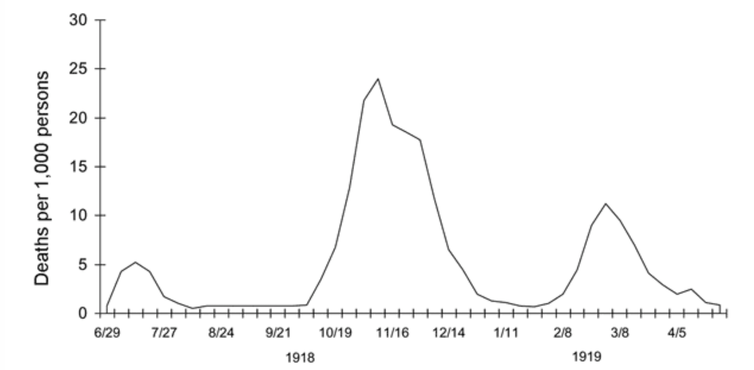
- Gates said there would “absolutely” be more pandemics in our lifetime. Coronavirus is not a once-in-a-century occurrence like the Spanish flu.
- If you want to help vulnerable, poor communities survive coronavirus, Gates recommends giving to the WHO COVID Solidarity Fund, United Way, or America’s Food Fund.
We need a vaccine to be widely distributed before the world will start to feel normal again. Gates says we won’t get that for at least 18 months.
Alyson Shontell: How is it going in the Gates household?
Melinda Gates: Like all other families, it’s been a complete change of life for all of us. But we are also incredibly privileged, and we know that, and our kids know that. But yes, life has changed drastically. The kids are studying online. Bill and I are doing all of our meetings via video teleconference. I’m a terrible cook, so I’m heating things up a lot more, and everybody’s trying to pitch in to do what needs to get done in terms of things around the house.
And the other thing I would just say is every night, we’ve had this tradition for a long time of saying grace before meals. And what that looks like is that we all go around and say something we’re thankful for. Pretty much every night what comes up from the kids and us is we’re thankful for our health and for the fact that we’re not going hungry and the fact that we can still do our work and the kids can still learn. It’s kind of amazing.
Shontell: We heard Dr. Fauci say earlier this week that things probably won’t return to normal until we have a vaccine. What do you think is a realistic timeline for a wide distribution of a vaccine? Is anything faster than 18 months really safe?
Gates: I think it’s likely 18 months. Just from everything we know from working with our partners for many, many years on vaccines, you have to test the compounds. Then, you have to go into preclinical trials, then full-scale trials. And even though I’m sure the FDA will fast-track some of these vaccine trials like they did with Ebola, still by the time you get it through the trials safety- and efficacy-wise, then you have to manufacture the vaccine and manufacture at scale. I think it really is 18 months.
The good news that I’m seeing on that front, though, is so many scientists are coming forward, and I’m seeing CEOs come forward and say, “I have this platform we can use.” Pharmaceutical companies are coming together already to say, “How do we build up the manufacturing capacity so it’s there when we get a vaccine and we can basically just run it through the manufacturing process?” I’m seeing lots of good things come forward, but it’s a process that needs to run its full course, because you don’t want to put something in someone’s body that is harmful.
Shontell: Right. It seems like, in addition to creating something we’ve never had before, you do really have to do these human tests in a way that’s safe so that you’re not creating a vaccine that maybe cures coronavirus but gives you something else.
Gates: I’d add also that we need to know who it’s safe to give the vaccine to and in what dosages. We know COVID-19 is affecting people who are particularly vulnerable health-wise if they have diabetes, or a heart condition, or they have asthma. You have to make sure that, safety-wise, you’re not giving somebody a vaccine that’s going to affect their heart. So yeah, there are lots of issues there that have to be tested.
It’s possible we won’t be able to create a coronavirus vaccine, although Gates thinks that’s highly unlikely. Also, herd immunity is not the solution.
Shontell: If at the end of this 18-month period, or however long it is, we do feel like we’ve got a vaccine, what do you think that vaccine will actually look like? Is it possible that we actually won’t be able to create a vaccine at all? Could that be one scenario?
Gates: Well, it’s possible. We have to look at how far science has come even in the last five years. And the number of compounds we have, there’s something like 14,000 compounds that we, with our partners alone, have. And there are many, many, many others testing compounds that we’re looking at to see, “Is this promising?” Could that one be promising? And we have high throughput screening now of compounds. I really think we’re going to find a vaccine.
We found a vaccine for Ebola, right? And we did that in about an 18-month time frame, and that was hard. When I see the scientific community all coming together the way they are around the globe and sharing data and sharing information, we’re going to get a vaccine.
Shontell: OK, so you’d say that it’s a high likelihood.
Gates: High likelihood.
Shontell: That’s very, very good to know.
Gates: The other thing to think about is, in the meantime, there’s another whole strand of work going on, which is the therapeutics accelerator. Through the accelerator, we’re trying to find medicines so that if you get COVID-19, hopefully we can boost your immune system or tamp down the effect of the disease on you. So again, hopefully, we’ll come up with some medicines that will also help so people don’t get as sick as they’re getting and landing in the ICU, which is what’s truly tragic.
Shontell: Is there anything to this idea of herd immunity? Could we be closer than we think on that, or is that far-fetched thinking?
Gates: That’s still very far-fetched today. You don’t get herd immunity until you have a huge percent of your population that has had the disease. We know that from all the diseases in the past that humans have had. So no, we’re still a long way from herd immunity. And you can’t count on that because a lot of people are going to die in the meantime if you let the experiment run and you just let the disease run its course in communities. Sure, we could get herd immunity and we will get so much death. That’s why it’s so important to remind people the only tools we have today are physical distancing, handwashing, and wearing masks in public. We have to go with what we know works.
How to distribute a coronavirus vaccine to the masses: 1. Make it cheap and buy it for everyone. 2. Give it to healthcare workers. 3. Give it to the highest-risk people. 4. Come up with an equitable way for everyone else to get it (the US is screwing that up right now).
Shontell: Once we have a vaccine, what do you think is the best way to distribute it to the masses? Who should get it first? How would we do it on such a big scale?
Gates: We have to make sure that the vaccine is very low priced and that there’s a fund for buying it for everyone, whether you’re in a low-, middle-, or a high-income country. And that’s doable. We’ve done that with the Vaccine Alliance that exists today. That’s been in existence since 1990, so we know how to do that piece.
But we also have to distribute very carefully. The very first people that need to get this vaccine are healthcare workers, because if you can keep them safe, they can help keep others safe. Then you need to distribute it to the people who are the very most vulnerable. That is, they have underlying health conditions, some of the ones that we’ve talked about before. And from there, you then make it distributed completely equitably across society.
And even the United States is going to have to really work at that. COVID-19 is exposing all the inequities we have in our healthcare system. And so we need to look at, OK, does Mississippi get this vaccine at the same time California gets it and New York gets it? We can’t do this game that we’re playing right now where you have 50 different states competing for resources for masks and PPE, that makes zero sense. You need a national strategy that will equitably distribute this vaccine and we first look at the vulnerable populations.
Shontell: To touch on that point, as you mentioned, there are so many inequalities coming to light with this pandemic, from who has been able to get initial testing on to how it’s affecting different genders in different ways, to more African Americans in the US dying of this than other races. When you think about it, social distancing, stocking up on food, and handwashing are all privileges that some of the poorest communities don’t have.
You’ve done a lot of work on equality efforts, and you’ve said it’s the best way to fix everything in society is to level the playing field. How do we start leveling the playing field so the next time it’s better for everybody? How do we help the people who are in the poorest, most vulnerable communities right now?
Gates: We have to start by remembering that COVID-19 anywhere is COVID-19 everywhere. And if we keep that front and center in our minds, then we will start to think really deeply about these most vulnerable populations.
The thing that keeps me up at night — because I’ve traveled to Africa so many times and been in so many townships and slums — is if you are a person living in those conditions, you can’t begin to handwashing or social distance. In those situations, we need to start with food. People need to be able to feed themselves. And then if they feel like they have COVID symptoms, then they don’t have to go out of the house looking for food.
When I think forward about how we would do this, right now, we have to focus on the pandemic today right in front of us. We have to take the tools we have and try and distribute them as equitably as we possibly can. That means a national response that is thought out and strategic. So you start there.
When you plan for the future, you start to plan it out the way we did for other diseases that came into the world. You would create a vaccine stockpile. We’ve actually been quite involved with that for cholera, which we don’t get much in the United States anymore, but you get in a lot of places in the developing world or in refugee camps. And when there’s a stockpile of vaccine, then when you see an outbreak or a vulnerable population get it, it’s already basically paid for and you ship the vaccines out.
We have to have not a national stockpile of vaccines but an international stockpile of vaccines for something like COVID. We can predict some of these types of disease outbreaks; we just haven’t been planning it. We plan for things like an earthquake or a fire. We need to plan for disease. We are a global community. People travel. We’ve just learned that New York mostly got infected from people coming back from Europe. We have to plan for these things as a global community in the future.
How to be ready for the 2nd wave to hit this fall: Are you ready to give up your personal data and get tracked?
Shontell: Clearly, we were caught flat-footed and unprepared here in the US especially. There’s talk of a second wave of coronavirus potentially hitting in the fall. What are the things we need to do to plan for it? What has to be done by the end of the summer to put us all in a much better shape for it? And then I’m curious what we need to have in place to prevent something like this moving forward, if that’s even possible.
Gates: In terms of what we need to do to prepare ourselves this fall, first of all, all the way through this, we need to listen to the medical experts and the science experts. They know what’s real. We need to do the disease modeling to see where the outbreaks are going. We need to plan resources appropriately and share them in the United States with all the states in an equitable way.
And then we need to do massive testing. We have to have testing at wide scale so that you can get a test and you can know if you’re positive. And if you’re positive, then you self-isolate. Unless you get further disease, you then get telemedicine. You figure out if you need to go to the health system. And you have different tiers of the health system, places people can go for oxygen versus people who go to the ICU.
We can do that, kind of. You can do that triage of people if you have a test. To be frank, we also need to be able to share all that testing data so that eventually the US would be a place like South Korea, where I can literally prove on my phone “I took a test this morning — I’m COVID-free” or “Guess what? I had COVID before and I tested for antibodies in my system. I can be out in society working maybe now.” You could literally have a code on your phone that says, “Tested this morning” or “See? I have a COVID antibody.”
And so we can start to see who can be in society versus who needs to self-isolate. But without testing and contact tracing and some way of being able to prove to one another we’re safe, you can’t plan for a full eventual reopening of society. We need to do get that up and running at scale at a national level.
Preparing for the next epidemic is a whole different conversation. You’d have tests available from the get-go. You would have fought through the civil-liberties issues of people sharing their health information willingly or not willingly. Am I willing to share my health data so that you know if I got it?
Early on, people with COVID had symptoms we didn’t know to track. If we had known that from the get-go because they were able to share their information into a national database voluntarily, we would have known to tell people, “Look for these symptoms. Self-isolate just in case you have it.” We have to be able to start thinking through those types of systems as a country so that we’re prepared for whatever comes next.
Whose job is it to solve a pandemic, the elite’s or the government’s?
Shontell: Yes to all of that. Edelman put out on their annual Trust Barometer in January. They found that trust in media is really low right now. Trust in the government is really low too. But trust in business leaders is the highest group, and people seem to put the most faith in business leaders to solve some of society’s biggest problems.
You and Bill have done a tremendous amount with the foundation. You’re seeing Mark Zuckerberg giving a ton of money toward this. Sheryl Sandberg is doing the same. Jack Dorsey just pledged a big chunk of net worth to help fight COVID. Lots of people are stepping up. Bezos as well.
Is it the responsibility of business leaders to do this versus the government? Is this something we should come to expect? How do you kind of view the responsibility of the people who are in positions of the most privilege as we tackle something as wide-scale is this?
Gates: What I’m seeing is people stepping up. I sometimes wish people could see the number of emails we’re receiving daily at the foundation, not just Bill and me, but our scientists and our head of global health. We’re seeing CEOs come forward. We’re seeing philanthropists come forward. We’re seeing people who have knowledge and data saying, “Should we look at this? What should we do?” I am seeing the best of humanity come out right now in some of these leaders who are stepping forward and doing the right thing.
“Is this the responsibility of business?” was your question. It’s the responsibility of all of us. Business won’t be able to solve this. There’s no way business or philanthropy can solve this alone. It takes the government. It’s government who puts out huge amounts of money into our healthcare system to take care of everybody, to take care of the most vulnerable. It’s philanthropy and business and nonprofits coming together with government to have a national response. That is the only way we’re going to be able to care for all Americans.
But what I see is amazing scientists like Dr. Fauci stepping up and giving all the right messages. Those are the people we should be listening to, and I am seeing so many people come together behind the scenes to try and do the right thing. While the vulnerable is what keeps me up at night, one of the things that keeps me encouraged when I wake up in the morning is seeing so many people doing the right thing.
This is not just a once-in-a-century pandemic. ‘We are absolutely going to have more of these.’
Shontell: Is this a once-in-a-century pandemic like the Spanish flu, or do we need to expect to face more pandemics like this moving forward?
Gates: This is not a once-in-a-century pandemic. We are absolutely going to have more of these. This thing is highly infectious, COVID-19. But it is not nearly as infectious as measles. And we dealt with measles in the world. We know how to deal with measles. We’re going to see more, so we need to plan for them. And we haven’t planned for them as a global community.
Shontell: Why do you think we’ll see more pandemics?
Gates: We’ll see more because of all kinds of reasons, but mainly because we’re a global community and we travel and we spread disease.
Alyson: To end on a positive note, we are going to get through this, right? It will be hard, but we will get through this. I’m curious from your estimation: What timeline are we looking at for life to feel normal again? Or are we in a new normal, and are there things that we should expect to be permanently changed?
No one really knows when things will feel normal again. But be prepared for some permanent changes, including to your psyche.
Gates: I definitely think there are going to be things that are permanently changed. Our psyches are going to be permanently changed. We are learning some things about how to do more meetings online. We’re learning how to take care of each other online. People are reaching out to the elderly in their homes and doing video calls and sending emails or dropping a meal off. What’s going to change is our psyche, and I hope we change to realize that we’re a global community.
To the question of when does society reopen in what we think of as our normal form, nobody really knows the answer to that. It really is when we get a vaccine at scale.
Will we get, over time, probably some partial reopenings of society where you can do certain smaller group things or be out walking with one friend or two friends? I think we will start to see some partial reopenings.
We have to follow the data, though, of how is that working in Wuhan right now? How did it work in South Korea? How does it work in Germany? The places that are kind of ahead of us on both their response and when they got the disease? And then, we’ll start to be able to see, OK, where can we open up pockets of society over time? For right now, we need to be physically distant from one another.
Shontell: If the average person wants to give to help a vulnerable person or community, what’s the best way to do that other than social distancing? Is there some cause to give to or something that’s most helpful?
Gates: Yes. You could go globally. You could go to the WHO COVID Solidarity Fund. Locally, you could go to United Way. America’s Food Fund is another place you can go. I would give also to local domestic-violence organizations. We see domestic violence on the rise for many, many people, particularly women. Any of those would be amazing places to go and to give, even if you only give $10 — $10 or $100, it all makes a difference.
Shontell: I’m leaving this conversation very hopeful. Thank you for all efforts you and Bill and the foundation are doing in helping fight this. You were early to realizing the problems of pandemics, and we are grateful that you’re on it.
Gates: Thanks, Alyson. Be safe. Be well.





 HENRY KOTULA