A growing number of health systems have begun to bill for certain electronic communications with patients via portals like MyChart. The systems instituting these practices, including Cleveland Clinic and Chicago-based Northwestern Medicine, have justified the billing based on the time demands placed on their providers to answer messages involving additional efforts, including extensive patient chart review. Northwestern shared that fewer than one percent of MyChart messages incurred fees, which are typically covered by insurance, and require patient consent before billing.
The Gist: In a time of significant margin pressure, we understand the instinct to seek additional revenue by collecting whatever reimbursement is available. However, in the ongoing transition to technology-enabled hybrid care, this practice has the potential to confuse, or even drive away, patients, who finally began to embrace virtual provider communication during the pandemic.
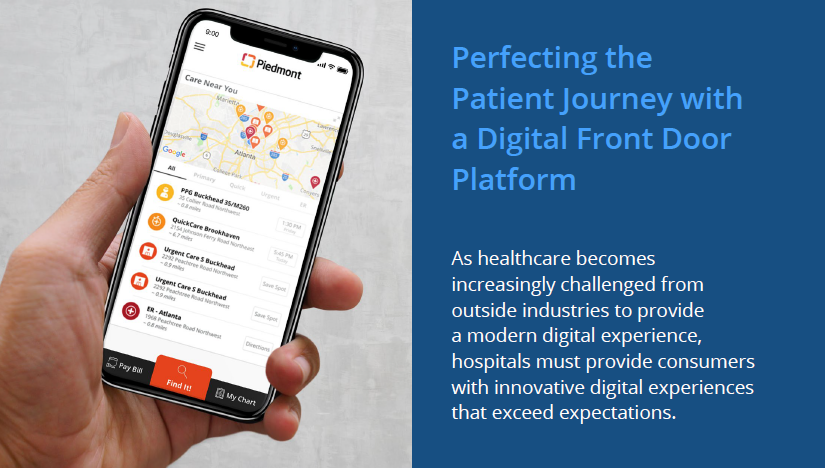
Viewing portal messaging as a “digital front door” for patients, rather than a revenue-generating service in and of itself, may prove more fruitful in the long run.
Hospitals are nearing the end of an exceptionally difficult year for finances with a slight downturn to their operating margins and smaller likelihood of ending the year in the black.
Kaufman Hall’s November “National Hospital Flash Report” — based on data from more than 900 hospitals — found hospitals’ median operating margin was -0.5 percent through October. Operating margins dropped 2 percent from September and 13 percent from October 2021.
High expenses continued to outpace revenues, particularly labor expenses. Total labor expenses are up 10 percent year to date and up 3 percent from September to October alone. Total non-labor expenses are up 5 percent year to date and held flat from September to October.
Hospitals saw a 3 percent boost in emergency department visits and 2 percent boost in operating room minutes in October, with a 2 percent increase in gross operating revenue from the month prior.
At the same time, hospitals struggled to discharge patients in October due to shortages of labor both internally and in post-acute settings, which resulted in a 3 percent increase in length of stay that did not translate to additional revenue.
Increased ED traffic could strain hospitals’ workers if staff shortages complicate or prevent patient admissions, leading to ED boarding. A dozen medical groups recently alerted President Joe Biden to ED boarding reaching a “crisis point” and becoming a public health emergency.
“Every aspect of patient care — from being admitted, to treatment, to discharge — is affected by the labor shortage and as we head into the virus season and potential new waves of COVID-19 the pressures on hospitals and their staff could mount,” Erik Swanson, senior vice president of data and analytics with Kaufman Hall, said.
In September, Kaufman Hall noted that expense pressures and volume and revenue declines could force hospitals to make “difficult decisions” about service reductions and cuts.
Daily COVID-19 cases in the U.S. are projected to jump 80% in the next 2 weeks, according to forecasts from the Mayo Clinic. (Becker’s Hospital Review)
Surgeons in Ukraine operated on a patient in the dark using only a flashlight after Russia unleashed a missile barrage on the nation’s power grid. (NBC News)
Pharma industry groups and CVS Health expressed skepticism over a plan proposed by the FDA that would allow certain generic drugs to pick up over-the-counter indications. (Endpoints News)
Marketing biosimilars with skinny labels — labels for biosimilars or generics that include a smaller set of indications than the brand-name drugs — saved Medicare $1.5 billion from 2015 to 2020, 5% of what it spent on five biologics during that period. (JAMA Internal Medicine)
Flu hospitalizations are up nearly 30% from last week, as scientists and public health experts express concern about the virus spreading during holiday gatherings. (CNBC)
As the CDC prepares to announce nearly $4 billion to improve public health infrastructure, most of which will be allocated to local health departments, community-based health groups say they’re being left out of funding. (CNN)
A doctor in the San Francisco area pleaded guilty to using misbranded products that she sold as genuine Botox and Juvederm, the Department of Justice announced.
Houston lifted the boil water notice it had issued after a power outage led water pressure levels to dip below safe levels. (Houston Chronicle)
Roche Pharmaceuticals has withdrawn the U.S. indication for atezolizumab (Tecentriq) to treat a form of bladder cancer, after a clinical trial failed and the drug could not move from accelerated to regular approval.
Consolidation continues across the healthcare industry with many hospitals and health systems looking to complete planned acquisitions or sales by the end of 2022 or early 2023.
Here are 15 planned hospital or health system sales that Becker’s Hospital Review has reported on in the last month:
1-2. El Segundo, Calif.-based Pipeline Health System, which filed for Chapter 11 bankruptcy in October, has agreed to sell two hospitals — Weiss Memorial Hospital in Chicago and West Suburban Medical Center in Oak Park, Ill. — to Princeton, N.J.-based Ramco Healthcare Holdings and Resilience Healthcare.
Pending approval of a motion submitted Nov. 22 to the U.S. Bankruptcy Court for the Southern District of Texas, Resilience is expected to assume operations of the two hospitals on Dec. 2.
Since acquiring ownership of the hospitals in 2019, Pipeline said it has invested $60 million to improve facilities, add technology and expand clinical programs. The hospitals employ a combined total of 1,700 employees.
3-4. The Centurion Foundation, an Atlanta-based nonprofit organization, has inked an asset purchase agreement to acquire the CharterCare Health Partners system from Los Angeles-based Prospect Medical Holdings.
Two hospitals are included in the transaction: Providence, R.I.-based Roger Williams Medical Center and Our Lady of Fatima Hospital. The change in control application process is expected to be submitted to the Rhode Island Department of Health and the state attorney general before the end of 2022.
5. West Reading, Pa.-based Tower Health plans to sell Chestnut Hill Hospital in Philadelphia to Temple University Health System for $28 million. The news comes less than a year after the health system closed two other hospitals: Brandywine Hospital in Coatesville, Pa., and Jennersville Hospital in West Grove, Pa.
Tower Health plans to rebuild around its flagship Reading Hospital and the two other hospitals it acquired for $423 million from Franklin, Tenn.-based Community Health Systems: Phoenixville Hospital and Pottstown Hospital. It also owns St. Christopher’s Hospital for Children in Philadelphia in a joint venture with Drexel University.
6. As of Nov. 14, potential buyers can submit offers for Singing River Health System, a three-hospital system with locations in Ocean Springs, Pascagoula and Gulfport, Miss.
Supervisors from Jackson County — which owns the health systems — gave the green light for proposals to sell Singing River Health System. Potential buyers have until March 10 to submit their bids.
7-9. New Orleans-based LCMC Health plans to acquire three Tulane University hospitals — New Orleans-based Tulane Medical Center; Covington, La.-based Lakeview Regional Medical Center; and Metairie, La.-based Tulane Lakeside Hospital — from Nashville, Tenn.-based HCA Healthcare.
LCMC Health will purchase the three hospitals for $150 million, expanding its portfolio to nine hospitals in the New Orleans area. The two parties hope to finalize the deal by the end of 2022 or early 2023.
10-12. Peoria, Ill.-based UnityPoint Health – Central Illinois and Des Moines, Iowa-based UnityPoint Health plans to spin off three Illinois hospitals to Urbana, Ill.-based Carle Health.
The transaction results in Carle Health taking over as the parent organization of UnityPoint Health – Central Illinois, which includes Peoria-based Methodist and Procter, and Pekin (Ill.) Hospitals and affiliated clinics, Peoria-based UnityPlace and Methodist College.
An April 1 closing date is anticipated, pending all regulatory approvals.
13. Hill Country Memorial Hospital in Fredericksburg, Texas, has entered into an agreement to become part of San Antionio-based Methodist Healthcare System.
Hill Country Memorial has 15 locations, including a hospital, an urgent care clinic, and primary and specialty care offices. Methodist Healthcare — a 50-50 co-ownership between HCA Healthcare and Methodist Healthcare Ministries of South Texas — has more than 30 facilities, including eight hospitals and nine freestanding emergency departments.
The transaction is expected to be completed in early 2023.
14. Orlando (Fla.) Health plans to acquire Sabanera Health Dorado, an acute care hospital in Puerto Rico.
The hospital will change its name to Doctors’ Center Hospital-Orlando Health Dorado, according to Orlando Health, which will team up with four additional hospitals operated by the Doctors’ Center Hospital team. The operation of all five hospitals will remain with the Doctors’ Center Hospital group.
15. Tacoma, Wash.-based MultiCare Health System and Yakima (Wash.) Valley Memorial reached an acquisition agreement, according to an Oct. 21 news release shared with Becker’s Hospital Review.
Terms of the agreement include Memorial becoming a wholly owned subsidiary of MultiCare, MultiCare investing in new programs, installing an integrated electronic health record, and providing a sustainable future for Yakima’s only hospital. The transaction is subject to routine regulatory approval and closing conditions.
Motley earnings numbers from more than a dozen major nonprofit health systems show third-quarter operating incomes landing on both sides of zero, though issues such as labor shortages, limited volume recovery and worsening payer mix look to be a constant across much of the sector.
Baylor Scott & White led the pack with a $257 million operating income for the period ended Sept. 30, 2022, though it was closely followed by Sutter Health’s $244 million.
Baylor is among the outlier systems whose financials have been holding strong through the last few years, and the quarter’s 7.7% operating margin represents a slight improvement over the 7.4% of its 2022 fiscal year (ended June 30). It attributed the quarter’s 5.6% year-over-year (YoY) increase in consolidated total operating revenue to a blend of premium revenue increases, higher surgical volumes and favorable service mix that “returned to and/or exceeded pre-COVID levels.”
Sutter’s operations have been back and forth this year with a $91 million Q1 gain and a $51 million Q2 loss before the most recent quarter’s $244 million. Though it’s still well behind its numbers from last year, the organization’s leadership highlighted the quarter’s relatively flat salaries and progress toward long-term financial resiliency.
“Significant challenges remain, including inflationary pressures, supply chain uncertainties, increased labor costs and staffing shortages, and rising drug prices,” a spokesperson said regarding the numbers. “Our priorities include preparing for seismic infrastructure updates, reinvesting in our communities and supporting our clinicians in service to our mission.”
Topping the other end of the spectrum was Bon Secours Mercy Health and Providence’s respective $141 million and $164 million operating losses—though the latter’s could be viewed as an improvement in light of the $934 million it was down during the prior two quarters.
Both of those systems highlighted a continuation of the inflationary and labor trends that had increased their expenses during the year’s earlier quarters.
Providence, for instance, noted an additional $526 million of agency and overtime expenses during the past nine months in comparison to 2021. Bon Secours Mercy said in its filing that the economic pressures offset improvements to patient volumes that had “approached historical pre-pandemic levels.”
Other operating results of note included: UPMC, whose health services division logged a $103 million operating loss but was buoyed by the integrated system’s insurance services division; Intermountain Healthcare, which is fresh off a merger that helped boost its revenue by 28% and its expenses by 35%; and Advocate Aurora Health, which inched closer to its own pending merger with a narrow 0.2% operating margin.
Regardless of how they stuck the landing, virtually every system reported feeling the continued impact of labor shortages. Banner Health was among that list, reporting a 7% Year after Year increase in year-to-date contract labor costs and noting that understaffing in certain locations negatively impacted capacity and patient volumes.
The reports also suggest some heterogeneity across the patient volume metrics of different markets as demand for non-COVID care continued to recover. Several systems noted their surgical or elective volumes have yet to return to pre-pandemic levels, and some highlighted worsened case mixes that limited year-over-year revenue growth.
Similar to earlier quarters, across-the-board non-operating losses weighed heavily on the organizations’ bottom lines. Nearly every system posted a nine-figure investment loss during the quarter, though a nearly $1.7 billion net investment loss at Kaiser Permanente easily took the cake.
The investment losses led to 11 of the 13 nonprofits to notch a negative net income during the three months ended Sept. 30. See below for a breakdown of the numbers (and note that for systems reporting year-to-date results, third quarter numbers represent the difference between nine-month and six-month totals).
Total Operating Revenues
Total Operating Expenses
Operating Income
Net Income
Kaiser Permanente
24,253
24,328
-75
-1,550
CommonSpirit Health
9,011
8,988
23
-397
Providence
6,866
7,031
-164
-612
UPMC
6,376
6,449
114
-260
Mayo Clinic
4,117
3,960
157
-312
Sutter Health
3,985
3,741
244
103
AdventHealth
3,971
3,910
60
-305
Intermountain Healthcare
3,685
3,685
0
-582
Advocate Aurora Health
3,657
3,649
8
-311
Baylor Scott & White
3,335
3,078
257
135
Banner Health
3,069
3,096
-26
-198
Bon Secours Mercy Health
2,768
2,909
-141
-328
SSM Health
2,330
2,403
-73
-93
Nonprofit Health Systems’ Q3 Earnings ($ millions)
Patients at North Carolina-based Atrium Health get what looks like an enticing pitch when they go to the nonprofit hospital system’s website: a payment plan from lender AccessOne. The plans offer “easy ways to make monthly payments” on medical bills, the website says. You don’t need good credit to get a loan. Everyone is approved. Nothing is reported to credit agencies.
In Minnesota, Allina Health encourages its patients to sign up for an account with MedCredit Financial Services to “consolidate your health expenses.” In Southern California, Chino Valley Medical Center, part of the Prime Healthcare chain, touts “promotional financing options with the CareCredit credit card to help you get the care you need, when you need it.”
As Americans are overwhelmed with medical bills, patient financing is now a multibillion-dollar business, with private equity and big banks lined up to cash in when patients and their families can’t pay for care. By one estimate from research firm IBISWorld, profit margins top 29% in the patient financing industry, seven times what is considered a solid hospital margin.
Hospitals and other providers, which historically put their patients in interest-free payment plans, have welcomed the financing, signing contracts with lenders and enrolling patients in financing plans with rosy promises about convenient bills and easy payments.
For patients, the payment plans often mean something more ominous: yet more debt.
Millions of people are paying interest on these plans, on top of what they owe for medical or dental care, an investigation by KHN and NPR shows. Even with lower rates than a traditional credit card, the interest can add hundreds, even thousands of dollars to medical bills and ratchet up financial strains when patients are most vulnerable.
Robin Milcowitz, a Florida woman who found herself enrolled in an AccessOne loan at a Tampa hospital in 2018 after having a hysterectomy for ovarian cancer, said she was appalled by the financing arrangements.
“Hospitals have found yet another way to monetize our illnesses and our need for medical help,” said Milcowitz, a graphic designer. She was charged 11.5% interest — almost three times what she paid for a separate bank loan. “It’s immoral,” she said.
MedCredit’s loans to Allina patients come with 8% interest. Patients enrolled in a CareCredit card from Synchrony, the nation’s leading medical lender, face a nearly 27% interest rate if they fail to pay off their loan during a zero-interest promotional period. The high rate hits about 1 in 5 borrowers, according to the company.
For many patients, financing arrangements can be confusing, resulting in missed payments or higher interest rates than they anticipated. The loans can also deepen inequalities. Lower-income patients without the means to make large monthly payments can face higher interest rates, while wealthier patients able to shoulder bigger monthly bills can secure lower rates.
More fundamentally, pushing people into loans that threaten their financial health runs against medical providers’ first obligation to not harm their patients, said patient advocate Mark Rukavina, program director at the nonprofit Community Catalyst.
“We’re dealing with sick people, scared people, vulnerable people,” Rukavina said. “Dangling a financial services product in front of them when they’re concerned about their care doesn’t seem appropriate.”
Debt upon debt for patients, as finance firms get a cut of payments
Nationwide, about 50 million people — or 1 in 5 adults — are on a financing plan to pay off a medical or dental bill, according to a KFF poll conducted for this project. About a quarter of those borrowers are paying interest, the poll found.
Increasingly, those interest payments are going to financing companies that promise hospitals they will collect more of their medical bills in exchange for a cut.
Hospital officials defend these arrangements, citing the need to offset the cost of offering financing options to patients. Alan Wolf, a spokesperson for the University of North Carolina’s hospital system, said that the system, which reported $5.8 billion in patient revenue last year, had a “responsibility to remain financially stable to assure we can provide care to all regardless of ability to pay.” UNC Health, as it is known, has contracted since 2019 with AccessOne, a private equity-backed company that finances loans for scores of hospital systems across the country.
This partnership has had a substantial impact on patient debt, according to a KHN analysis of billing and contracting records obtained through public records requests.
Most patients in 2019 were in no-interest payment plans
UNC Health, which as a public university system touts its commitment “to serve the people of North Carolina,” had long offered payment plans without interest. And when AccessOne took over the loans in September 2019, most patients were in no-interest plans.
That has steadily shifted as new patients enrolled in one of AccessOne’s plans, several of which have variable interest rates that now charge 13%.
In February 2020, records show, just 9% of UNC patients in an AccessOne plan were in a loan with the highest interest rate. Two years later, 46% were in such a plan. Overall, at any given time more than 100,000 UNC Health patients finance through AccessOne.
The interest can pile on debt. Someone with a $7,000 hospital bill, for example, who enrolls in a five-year financing plan at 13% interest will pay at least $2,500 more to settle that debt.
How a short-term solution ‘leads to longer-term problems’
Rukavina, the patient advocate, said adding this burden on patients makes little sense when medical debt is already creating so much hardship. “It may seem like a short-term solution, but it leads to longer-term problems,” he said. Health care debt has forced millions of Americans to cut back on food, give up their homes, and make other sacrifices, KHN found.
UNC Health disavowed responsibility for the additional debt, saying patients signed up for the higher-interest loans. “Any payment plans above zero-interest terms/conditions in place with AccessOne are in place at the request of the patient,” Wolf said in an email. UNC Health would only provide answers to written questions.
UNC Health’s patients aren’t the only ones getting routed into financing plans that require substantial interest payments.
At Atrium Health, a nonprofit system with roots as Charlotte’s public hospital that reported more than $7.5 billion in revenues last year, as many as half of patients enrolled in an AccessOne loan were in one of the company’s highest-interest plans, according to 2021 billing records analyzed by KHN.
At AU Health, Georgia’s main public university hospital system, billing records obtained by KHN show that two-thirds of patients on an AccessOne plan were paying the highest interest rate as of January.
A finance firm calls such loans ’empathetic patient financing’
AccessOne chief executive Mark Spinner, who in an interview called his firm a “compassionate, empathetic patient financing company,” said the range of interest rates gives patients and medical systems valuable options. “By offering AccessOne, you’re creating a much safer, more mission-aligned way for consumers to pay and help them stay out of medical debt,” he said. “It’s an alternative to lawsuits, legal action, and things like that.”
AccessOne, which doesn’t buy patient debt from hospitals, doesn’t run credit checks on patients to qualify them for loans. Nor will the company report patients who default to credit bureaus. The company also frequently markets the availability of zero-interest loans.
Some patients do qualify for no-interest plans, particularly if they have very low incomes. But the loans aren’t always as generous as company and hospital officials say.
AccessOne borrowers who miss payments can have their accounts returned to the hospital, which can sue them, report them to credit bureaus, or subject them to other collection actions. UNC Health refers unpaid bills to the state revenue department, which can garnish patients’ tax refunds. Atrium’s collections policy allows the hospital system to sue patients.
Because AccessOne borrowers can get low interest rates by making larger monthly payments, this financing system can also deepen inequalities. Someone who can pay $292 a month on a $7,000 hospital bill, for example, could qualify for a two-year, interest-free plan. But a patient who can pay only $159 a month would have to take a five-year plan with 13% interest, according to AccessOne.
“I see wealthier families benefiting,” said one former AccessOne employee, who asked not to be identified because she still works in the financing industry. “Lower-income families that have hardship are likely to end up with a higher overall balance due to the interest.”
Andy Talford, who oversees patient financial services at Moffitt Cancer Center in Tampa, said the hospital contracted with AccessOne to make it easier for patients to manage their medical bills. “Someone out there is helping them keep track of it,” he said.
But patients can get tripped up by the complexities of managing these plans, consumer advocates say. That’s what happened to Milcowitz, the graphic designer in Florida.
Milcowitz, 51, had set up a no-interest payment plan with Moffitt to pay off $3,000 she owed for her hysterectomy in 2017. When the medical center switched her account to AccessOne, however, she began receiving late notices, even as she kept making payments.
Only later did she figure out that AccessOne had set up two accounts, one for the cancer surgery and another for medical appointments. Her payments had been applied only to the surgery account, leaving the other past-due. She then got hit with higher interest rates. “It’s crazy,” she said.
Lenders see a growing business opportunity
While financing plans may mean more headaches and more debt for patients, they’re proving profitable for lenders.
That’s drawn the interest of private equity firms, which have bought several patient financing companies in recent years. Since 2017, AccessOne’s majority owner has been private equity investor Frontier Capital.
Synchrony, which historically marketed its CareCredit cards in patient waiting rooms, is now also inking deals with medical systems to enroll patients in loans when they go online to pay bills.
“They’re like pilot fish eating off the back of the shark,” said Jonathan Bush, a founder of Athenahealth, a health technology company that has developed electronic medical records and billing systems.
As patient bills skyrocket, hospitals face mounting pressure to collect more, which can make financing arrangements seem appealing, industry experts say. But as health systems go into business with lenders, many are reluctant to share details. Only a handful of hospitals contacted by KHN agreed to be interviewed about their contracts and what they mean for patients.
Several public systems, including Atrium and UNC Health, disclosed information only after KHN submitted public records requests. Even then, the two systems redacted key details, including how much they pay AccessOne.
AU Health, which did not redact its contract, pays AccessOne a 6% “servicing fee” on each patient loan the company administers. But like Atrium and UNC Health, AU Health refused to provide any on-the-record interviews.
Other hospital systems were even less transparent. Mercyhealth, a nonprofit with hospitals and clinics in Illinois and Wisconsin that routes its patients to CareCredit, would not discuss its lending practices. “We do not have anyone available for this,” spokesperson Therese Michels said. Allina Health and Prime Healthcare also wouldn’t talk about their patient financing deals.
Bush said there’s a reason so few hospitals want to discuss their financing deals: They’re embarrassed. “It’s like they quietly write someone’s name on a piece of paper and slide it across the table,” he said. “They don’t want to be a part of it because they have in their institutional memory that they are supposed to look after patients’ best interests.”
Some hospitals and banks still offer interest-free help
Not all hospitals expose their patients to extra costs to finance medical bills.
Lake Region Healthcare, a small nonprofit with hospitals and clinics in rural Minnesota that contracts with Missouri-based Commerce Bank, charges no interest or fees on payment plans. That’s a decision that spokesperson Katie Johnson said was made “for the benefit of our patients.”
Even some AccessOne clients such as the University of Kansas Health System shield patients from interest. But as providers look to boost their bottom lines, it’s unclear how long these protections will last. Colette Lasack, who oversees financing for the Kansas system, noted: “There’s a cost associated with that.”
Meanwhile, large national lenders such as Discover Financial Services are looking at the patient financing business.
“I’ve had to become more of a health care marketer,” said Matt Lattman, vice president for personal loans at Discover, which is pitching the loans to people with unexpected medical bills. “In a world where many people are ill prepared to cover their health care costs, the personal loan can provide an opportunity.”
Several hospitals and health systems are trimming their workforces or jobs due to financial and operational challenges.
Below are workforce reduction efforts or job eliminations that were announced within the past two months and/or take effect over the next month.
1. West Reading, Pa.-based Tower Health on Nov. 16 laid off 52 corporate employees as the health system shrinks from six hospitals to four. The layoffs, which are expected to save $15 million a year, account for 13 percent of Tower Health’s corporate management staff.
3. Fayetteville, N.C.-based Cape Fear Valley Health is eliminating 200 positions. The decision affects 42 employees in non-direct patient care positions. The other 158 positions were unfilled positions. Employees were informed of the changes Oct. 27.
4. Sioux Falls, S.D.-based Sanford Healthannounced layoffs affecting an undisclosed number of staff on Oct. 19, a decision its CEO said was made “to streamline leadership structure and simplify operations” in certain areas. The layoffs primarily affect nonclinical areas.
5. University Hospitals announced efforts to reduce system expenses by $100 million Oct. 12, including the elimination of 326 vacant jobs and layoffs affecting 117 administrative employees. None of the employees affected by job cuts or layoffs provide direct patient care. The workforce reduction comes as the 21-hospital system faces a net operating loss of $184.6 million from the first eight months of 2022.
6. Ascension is closing Ascension St. Vincent Dunn, a critical access hospital in Bedford, Ind., and nine medical practices in December, a move that will affect 133 employees. Affected employees who do not secure another position within the health system will be offered severance and outplacement services.
7. Quincy, Ill.-based Blessing Health Systemclosed its hospital in Keokuk, Iowa, Sept. 30. The closure affected 151 workers. The layoffs take effect Nov. 4. The employees will do on-site work or be placed on administrative leave until the layoff date, Blessing Health said.
8. St. Vincent Charity Medical Center in Cleveland will lay off 978 workers when it ends many services in November. The hospital, part of Sisters of Charity Health System, is ending inpatient care and most other services in November. After the transition, the facility will offer outpatient behavioral health, urgent care and primary care.
9. Commonwealth Health, part of Franklin, Tenn.-based Community Health Systems, will lay off 245 employees when it closes facilities at the end of October. The health system is closing First Hospital, a psychiatric hospital in Kingston, Pa., and its various outpatient centers on Oct. 30. Affected workers are encouraged to apply for open positions they’re qualified for at other Commonwealth Health facilities, a system spokesperson told Becker’s.
10. Yale New Haven (Conn.) Healtheliminated 155 management positions from its nearly 30,000-person workforce. The health system laid off 72 employees and eliminated 83 vacant positions, a spokesperson told Becker’s Hospital Review in September. The cuts were attributed to financial pressures.
11. Citing financial pressures, BHSH System — now named Corewell Health — cut about 400 positions from its 64,000-member workforce in September. The 22-hospital organization was formed by the February merger of Grand Rapids, Mich.-based Spectrum Health with Southfield, Mich.-based Beaumont Health.
12. Bakersfield (Calif.) Heart Hospital is laying off 114 employees. Affected employees were told in September that they no longer had to report to work, but they will continue to receive full pay and benefits through Nov. 5. The layoffs are an effort to optimize operations and to free up resources for patient care and specialized surgery, the hospital said.
47-hospital Sanford Health, based in Sioux Falls, SD, and 11-hospital Fairview Health Services, based in Minneapolis, MN, have signed a letter of intent to form a combined $14B health system that would retain Sanford’s name. Sanford has been seeking a health system partner for several years; most recently it was in talks with Intermountain Health, before they ended the process following a COVID-masking controversy with Sanford’s then-CEO. An announced merger with Iowa-based UnityPoint Health was also called off in 2019. Sanford had earlier attempted to combine with Fairview, in 2013, but abandoned plans after receiving pushback from Minnesota’s Attorney General, who was concerned that services could be cut, and that the system’s long-term partnership with University of Minnesota could be at risk.
The Gist: Perhaps Sanford has finally found its dance partner, one that gives it access to the booming Minneapolis metropolitan area, which the largely rural health system lacks. Like many recent mergers, the deal brings together two systems across non-overlapping markets, making it likely to pass antitrust scrutiny.
Fairview has posted losses for the last two consecutive years, making it an easier pickup for Sanford, which can now introduce its 220K member health plan to a new market. We expect more health system mergers like this in 2023, as margin pressures are motivating many to seek the promise of shelter in scale.
Philadelphia-based Thomas Jefferson University, including Jefferson Health, reported a multimillion-dollar loss in the third quarter ending Sept. 30.
Five things to know:
1. Thomas Jefferson University reported an $83.5 million loss for the quarter, down significantly from a $12.8 million gain in the same period last year.
2. Thomas Jefferson University reported $29.9 million in operating revenue. Clinical operations reported an $87.3 million loss from operations, and the insurance operations reported a $7.1 million gain for the quarter.
3. The organization reported a -3.7 percent operating margin, compared to 0.9 percent for the third quarter last year.
4. Hospital inpatient admissions grew 30.4 percent year over year to 39,463 cases for the quarter. Outpatient observations were also up 21.6 percent to 11,744 cases. Outpatient visits were up 36 percent year over year to 524,200 visits.
5. Days cash on hand for clinical operations dropped by nearly 11 days since the start of the fiscal year to 158.5 days due to nonoperating investment losses and repaying Medicare advance payments.
Cash reserves, an important indicator of financial stability, are dropping for hospitals and health systems across the U.S.
Both large and small health systems are affected by rising labor and supply costs while reimbursement remains low. St. Louis-based Ascension reported days cash on hand dropped from 336 at the end of the 2021 fiscal year to 259 as of June 30, 2022, the end of the fiscal year. The system also reported accounts receivable increased three days from 47.3 in 2021 to 50.3 in 2022 because commercial payers were slow, especially in large dollar claims.
Trinity Health, based in Livonia, Mich., also reported days cash on hand dropped to 211 in fiscal year 2022, ending June 30, compared to 254 days at the end of 2021. Trinity attributed the 43-day decrease in cash on hand to “investment losses and the recoupment of the majority of the Medicare cash advances.”
Chicago-based CommonSpirit Health reported days cash on hand decreased by 69 days in the last year. The 140-hospital health system reported 245 days cash on hand at the 2021 fiscal year’s end June 30, and 176 days for 2022.
Lehigh Valley Health Network in Allentown, Pa., said unfavorable trends in the capital market led to investment losses and a drop in days cash on hand from 216 to 150 days in the 2022 fiscal year ending June 30. The health system also had a scheduled repayment of $191.1 million in advance Medicare dollars as well as $25 million in deferred payroll tax payments.
Philadelphia-based Thomas Jefferson Universityreported cash on hand for clinical operations dropped by 10.9 days in just the last quarter due to nonoperating investment losses and repaying government advances, which equaled about five days cash on hand. The health system reported 158.5 days cash on hand as of Sept. 30.
While the large health systems’ days cash on hand are dropping, they still have deep reserves. Smaller hospitals and health systems are in a more dire situation. Doylestown (Pa.) Hospital reported as of Sept. 30 the system had 81 days cash on hand, and Moody’s downgraded the hospital in June after the days cash on hand dropped below 100.
Kaweah Health in Visalia, Calif., saw reserves plummet since the pandemic began from 130 to 84 days cash on hand. Gary Herbst, CEO of Kaweah Health, blamed lost elective procedures, high labor costs, inflation and more for the system’s financial issues.
“The COVID-19 pandemic, and its aftermath, have brought District hospitals to the brink of financial collapse,” Mr. Herbst wrote in an open letter to Gov. Gavin Newsom published in the Visalia Times Delta. He asked Mr. Newsom to provide additional funding for public district hospitals. “Without your help, it will soon be virtually impossible for Medi-Cal patients to receive anything but emergency medical care in the State of California.”










 HENRY KOTULA