6 hospitals hit with credit downgrades

Credit rating downgrades for several hospitals and health systems were tied to capital expenditures and cash flow issues in recent months.

The following six hospital and health system credit rating downgrades occurred since June: 

  • Boone Hospital Center (Columbia, Mo.) — lowered in August from “Ba1” to “Ba3” (Moody’s Investors Service) 
    “The downgrade to ‘Ba3’ reflects the continued and material deterioration of unrestricted cash, along with simultaneous operational challenges facing BHC,” Moody’s said. “Operating headwinds, along with recent turnover in senior management, will contribute to challenges in attaining performance improvements. These headwinds will include elevated labor and supply costs, partly raised by supply chain system implementation issues, and volume disruption, which has been exacerbated by the on-going pandemic, as well as the absence of state or federal funds in 2022.”
  • Jackson Hospital (Montgomery, Ala.) — lowered in August from “Baa3” to “Ba3” (Moody’s Investors Service) 
    “The downgrade to ‘Ba3’ reflects Jackson Hospital & Clinic’s material and recent deterioration of operating performance and unrestricted cash through June 2022,” Moody’s said. “As a result, headroom to both the debt service coverage and days cash on hand covenants has been materially reduced increasing the risk of a covenant violation, which could lead to immediate acceleration of debt, a governance consideration under our ESG framework.”
  • Memorial Health System (Marietta, Ohio) — lowered in July from “BB-” to “B+” (Fitch Ratings)
    “The downgrade of the IDR to ‘B+’ reflects MHS’s weak net leverage profile through Fitch’s forward-looking scenario analysis given stated growth and spending objectives,” Fitch said. “While operating performance has stabilized over the past three years … and reflects cost efficiency strategies and pandemic relief funding, improved cash flow funded higher levels of capital spending in fiscals 2020 and 2021.”
  • Doylestown (Pa.) Hospital — lowered in June from “Ba1” to “Ba3” (Moody’s Investors Service)
    “The downgrade to Ba3 reflects Doylestown Hospital’s … significant and recent decline in operating performance and unrestricted cash reserves through fiscal 2022, which have materially reduced headroom to the days cash on hand covenant (100 days) and increases the risk of an event of default and immediate acceleration as soon as June 30, 2022, a governance consideration under our ESG framework,” Moody’s said.
  • Jupiter (Fla.) Medical Center — lowered in June from “BBB+” to “BBB” (Fitch Ratings)
    “The ‘BBB’ rating reflects JMC’s increased leverage profile with the issuance of $150 million in additional debt to fund various campus expansion and improvement projects,” Fitch said. “While favorable population growth in the service area and demonstrated demand for services in an increasingly competitive market justify the overall strategic plan and project, the additional debt weakens JMC’s financial profile metrics and increases the overall risk profile.”
  • South Shore Hospital (South Weymouth, Mass.) — lowered in June from “BBB+” to “BBB” (Fitch Ratings)
    “The downgrade to ‘BBB’ reflects SSH’s track record of very weak operating performance over the last four fiscal years, exacerbated by staffing shortages and other pandemic-related challenges, which are stymying the system’s efforts towards an operational turnaround,” Fitch said.

Advocate Aurora Health is down $601M year to date as it gears up for Atrium Health megamerger

https://www.fiercehealthcare.com/providers/advocate-aurora-health-down-601m-year-date-it-gears-its-atrium-health-megamerger

While Advocate Aurora Health’s year-to-date operating income sits at $51.2 million, $666 million in investment declines weigh heavy on its bruised bottom line.

Following a tight first quarter, Advocate Aurora Health managed to grow its operating margin but still landed negative due to $400 million in investment losses during the quarter ended June 30, according to financial filings.

The 27-hospital nonprofit—which pending regulatory review slated to merge with Atrium Health in one of the year’s biggest hospital transactions—reported a $48.7 million operating income during its second fiscal quarter of 2022 (1.7% margin).

This is up from the $2.5 million (0.3% margin) it scraped out earlier this year but well below the $213.7 million (6.5% margin) of Q2 2021.

Revenues for the quarter increased 1.5% year over year to more than $3.5 billion. While patient service revenue and other revenue both grew by tens of millions, capitation revenue declined slightly due to a shift in overall membership mix and a 6.1% dip in capitated lives, the system wrote in its filing.

Discharge volumes fell 7.7% year over year during the most recent quarter, as did home care visits by 7.6%. The system saw increases compared to the previous year among its observation cases (11.6%), hospital outpatient visits (2.1%) and physician visits (7.1%).

Advocate Aurora’s expenses grew at a faster rate, at 6.7% year over year during the second quarter. The increase was led by a 10.2% jump in salaries, wages and benefits payouts, which the system said was fueled by a blend of higher nurse agency costs, higher merit and premium pay for clinical care and volume-driven demand for more full-time equivalent employees.

The nonprofit saw last year’s investment gains largely upended, recording a $400 million net loss during the quarter compared to the $571.6 million gain of the prior year’s equivalent quarter.

The shortfall dragged Advocate Aurora’s net income to a $347.6 million loss for the quarter. It had logged a $545.6 million gain the previous year.

Looking at six-month numbers, the health system reported $7.1 billion in total revenue and $7 billion in total expenses for an operating income of $51.2 million. Year-to-date investment losses landed at $666 million, bringing the organization to a $600.8 million net loss.

Advocate Aurora was formed in 2018 from the merger of nonprofits Advocate Health Care and Aurora Health Care. It treats 2.6 million unique patients, employs 75,000 people and logged just under $14.1 billion in total revenue across 2021 and a net income of more than $1.8 billion.

Should its merger plans go through, Advocate Aurora and Atrium Health would control 67 hospitals and $27 billion of combined revenues across six states. The deal is anticipated to close before the end of the year, according to the earnings filing.

The system’s latest numbers will come as no surprise in light of similar quarterly reports from Advocate Aurora’s nonprofit contemporaries.

Investment struggles and increased expenses were reported across the board, although not every major system was able to keep operations in the black. Mayo ClinicKaiser Permanente and UPMC were among those on the stronger side of the scale while Sutter HealthMass General Brigham and Providence each reported tens to hundreds of millions in operational losses.

Fitch Ratings warned last week that these sector-wide challenges are unlikely to vanish during the remainder of the year. As such, the agency has downgraded its outlook for the nonprofit hospital industry from “neutral” to “deteriorating.”

Biden Administration Releases Final Surprise Billing Rules

 The Biden Administration has released final surprise billing rules implementing the No Surprises Act, a federal law enacted in January 2021 that protects patients from out-of-network medical bills when they seek care at in-network facilities.

The new surprise billing rules detail the process for payers and providers to settle on payment for those out-of-network services. Previously, payers and providers would submit payment rates to an independent arbiter, selected by the government. The arbiter would choose the rate closest to the area’s median in-network payment for the services, otherwise known as the qualifying payment amount (QPA), while considering other factors, such as provider training and experience, the provider’s market share, and how difficult it was to provide the service, after the fact.

Provider groups have criticized the use of the QPA as the primary factor in an arbiter’s decision, arguing that the added weight to the QPA amount favors payers over providers.

Notably, the Texas Medical Association challenged the surprise billing arbitration process over the QPA issue and won. A district court vacated the requirement that arbiters select payment offers closest to the QPA unless the additional information warrants a closer review.

The American Hospital Association (AHA) and the American Medical Association (AMA) have also filed a lawsuit challenging the interim final rule implementing the dispute process, arguing that lawmakers did not intend for rules implementing the No Surprises Act to place that much emphasis on the QPA. The lawsuit is ongoing.

In light of the district court’s decision, the latest final surprise billing rules roll back the “rebuttable presumption” that favors the QPA. The rules state that arbiters are to consider the QPA “and then must consider all additional information submitted by a party to determine which offer best reflects the appropriate out-of-network rate.”

The final rules specify that arbiters “should select the offer that best represents the value of the item or service under dispute after considering the QPA and all permissible information submitted by the parties.”

The final rules also cover situations where payers have “downcoded” a claim. According to previous rulemaking, downcoding occurs when payers change service codes or change, add, or remove a modifier, which can lower the QPA for the service code or modifier billed by a provider.

The rules will create new requirements related to what information payers must share with providers when downcoding occurs. The information includes a statement that the service code or modifier was downcoded, an explanation of why the claim was downcoded, and the amount that would have been the QPA had the service code or modifier not been downcoded.

The Biden Administration—through the Departments of Labor, Health and Human Services, and Treasury, which officially released the final surprise billing rules—said that the rules “will help providers, facilities and air ambulance providers engage in more meaningful open negotiations with plans and issuers and will help inform the offers they submit to certified independent entities to resolve claim disputes.”

But whether the updated language is enough to tip the balance for providers remains to be seen. AHA said in a news release late last week that it is closely reviewing the final surprise billing rules.

Medicare and Private Insurance Health Care Prices Diverge Substantially in 2022

https://mailchi.mp/altarum/medicare-and-private-insurance-health-care-prices-diverge-substantially-in-2022?e=b4c24e7e20

From the spring of 2021 through June of this year, the U.S. has been in a period of high and rising economywide price inflation. Pressures such as labor scarcities, global energy interruptions, and supply chain disruptions have made everything from consumer goods to business services more expensive. Yet, in our ongoing series of Health Sector Economic Indicators (HSEI) briefs, we have been detailing data that find, quite surprisingly, overall inflation for the health care sector—as measured by the aggregate Health Care Price Index (HCPI)—has remained in a very tight and modest range, rarely exceeding three percent year-over-year growth or falling beneath two percent growth. In our monthly briefs, we have explored how factors such as the time it takes for new contracts and reimbursement rates to take effect and recent policy changes restraining public health care costs have kept overall health care inflation well below economywide rates. As these factors continue to play out, the recently-released July price data are revealing what may be a key inflection point in Medicare and private insurance prices for health care services. 

In July, the prices paid for many types of health care from these two major payer types diverged substantially. Medicare prices fell by nearly a full percentage point, putting overall Medicare services prices below the levels seen back in January 2021 (Exhibit 1). These declining Medicare prices are due to two major factors: very low or no increases in the statutory reimbursement rates for hospital care and physician services in the calendar year 2022 and the re-institution of the mandated sequestration cuts for Medicare provider payments in April and July of this year. These sequestration cuts, which had been postponed for many years since they were updated in 2011, are having a meaningful impact as seen in the chart below (click on link above). The impact of the two sequestration cuts can be seen clearly in the data, pulling down Medicare prices between March and April and then between June and July across all three major settings of care as first a 1% and then a 2% cut were put in place. Due to the fact that physician services received relatively smaller baseline increases in new Medicare rates for 2022, the sequestration cuts have pulled those price levels the lowest, down by 2.2% since January 2021. Medicare price changes for nursing homes care fall in between hospitals and physician services, down by 1.0% since January 2021.  

At the same time Medicare prices are falling, the prices for similar types of care paid by private insurance increased substantially in July, up a full percentage point from the previous month and 5.4% higher than the price levels in January 2021 (Exhibit 2). We believe many of these increases are occurring as new contracts or updated rates are slowly taking effect, and further expect there may be a noticeable discrete jump in private prices beginning in 2023, as recent comments from providers and insurers are stating 2023 negotiations are generally favoring providers. We can see in the data that it appears hospitals are experiencing much higher private price growth than other components (up 7.2% since January 2021) and faster recent growth, with price levels increasing by nearly a full percentage point in each of the past three months. Physician services are the next fastest growing component, while nursing home private prices have barely moved since the beginning of 2021. Faster increases in hospital prices may indicate stronger negotiating positions for those providers, particularly given ongoing consolidation in the industry over the past ten years.  

When looking at the HCPI in aggregate, these two diverging trends have been cancelling out, leading to overall moderate growth in health care prices. Yet, these detailed, by-payer data indicate that significant trends in health care prices are occurring underneath, with the long-expected increases in private prices beginning to follow overall economywide inflation trends. All else equal, these price increases in care paid by private insurance will further exacerbate an already wide gap between public and private prices. This is especially true for hospital care, where the disparity between Medicare and private prices diverged by a whopping 7.2 percentage points in the last eighteen months. The most important factors driving the trends going forward for private prices will be the extent to which overall economywide inflation slows and who has the balance of power in insurer/provider contract negotiations. For public prices, government policy decisions will continue to be most important influencer of their growth. We expect to follow all these factors and the overall impact of the diverging data on overall health sector inflation in our ongoing series of HSEI briefs through the rest of the year and into 2023.  

Merger with SCL Health spurs Intermountain to $2.7B in net income

Dive Brief:

  • Intermountain Healthcare reported net income of $2.7 billion in the first six months of the year, despite a heavy loss on investments and flagging operating income.
  • The 46% year-over-year jump in net income for the Utah-based nonprofit was spurred by more than $4 billion in contribution from its merger with SCL Health that closed in April, according to recent financial documents.
  • By comparison, Intermountain brought in annual net income of $1.2 billion in 2020, $1.1 billion in 2019 and $599 million in 2018.

Dive Insight:

Intermountain and SCL entered into a merger agreement to combine their health systems in December. The merger was completed in April, creating a $12 billion system and expanding Intermountain’s reach into Colorado.

In its first financial filing since the affiliation, 33-hospital Intermountain, which also manages hundreds of clinics across seven states, reported revenues of $6.5 billion in the first six months of 2022, up 25% year over year.

Expenses climbed 31% to $5.9 billion, driven primarily by growth in employee compensation and benefits and increasingly pricey supplies.

Net operating income was $285 billion, down 38% year over year.

Intermountain’s inpatient admissions and hospital outpatient visits ticked down 1% and 7% respectively, though its emergency rooms visits climbed 11%. Visits at the system’s non-hospital clinics were also up 11%.

Inpatient surgeries were down 2% while outpatient surgeries were up 4%, suggesting a broader shift away from care being delivered in the hospital setting.

Intermountain’s results mirror those of other large U.S. systems in 2022 so far, as major for-profit chains report lower operating income and admissions. Tight competition for labor amid ongoing workforce shortages has resulted in skyrocketing labor expenses while inflation and supply chain pressures has ratcheted up the cost of hospital supplies needed to provide patient care.

Some of the biggest nonprofits in the U.S. have reported net losses in the second quarter, including Kaiser Permanente and Sutter Health. Nonprofit giant Providence reported an operating loss of $934 million in the first half of 2022, citing cost and operational stressors. Providence plans to restructure and cut executive roles in a bid to become a nimbler organization.

On Tuesday, ratings agency Fitch said its outlook for nonprofit hospitals is “deteriorating” amid elevated expense pressures, along with investment losses.

On Friday, Intermountain named Lydia Jumonville as interim CEO after Marc Harrison announced plans to depart the Salt Lake City-based system for the venture capital firm General Catalyst. Intermountain’s board is conducting a national search for a permanent chief executive, which it hopes to complete by the fall.

Tenet, Steward feud after $1.1B deal

Tenet Healthcare and Steward Health Care System are battling in Delaware Chancery Court over whether Tenet can end information technology and data services to hospitals it sold to Steward last year, according to Law360

Tenet entered into an agreement to sell five Florida hospitals to Steward last June, and the $1.1 billion deal closed less than two months later. Since the transaction closed, Tenet and Steward have been involved in litigation, with both Dallas-based organizations arguing they’re owed money. 

Tenet claims Steward owes nearly $18.2 million and is insolvent, while Steward alleges Tenet owes more than $16.3 million and is obligated to continue providing the data and IT services to the hospitals now owned by Steward, according to Law360

Vice Chancellor Sam Glasscock III ruled Aug. 1 that Steward and the five Florida hospitals must pay Tenet $2.8 million a month pending a final ruling in the case. The amount is based on the judge’s assessment of the likelihood Tenet will prevail in the case, according to Law360

Mr. Glasscock wrote in his opinion that he finds it “readily conceivable” that Tenet will ultimately prevail on the issue of whether it has a right to terminate the services for nonpayment

The Florida hospitals included in the sale were Coral Gables Hospital, Florida Medical Center in Lauderdale Lakes, Hialeah Hospital, North Shore Medical Center in Miami and Palmetto General Hospital in Hialeah.

Workload expectations at core of nurses’ lawsuit against University of Michigan

Members of the Michigan Nurses Association are accusing the University of Michigan of unlawfully refusing to negotiate over nurses’ workloads in its bargaining with the University of Michigan Professional Nurse Council.

The union, an affiliate of National Nurses United and AFL-CIO, represents about 13,000 registered nurses and healthcare professionals in Michigan, including workers employed by the University of Michigan. The University of Michigan regents hold the contract with the University of Michigan Professional Nurse Council, the largest bargaining unit of the Michigan Nurses Association.

A total of 6,200 University of Michigan Health nurses have been working without a new contract since July 1, and they are working under the terms of the expired agreement, according to hospital and union statements. The University of Michigan Health, the clinical division of Ann Arbor-based Michigan Medicine, told Becker’s in a statement that during negotiations, it has offered a 21 percent base pay increase for nurses over the life of the contract, as well as a new salary step program for nurse practitioners and the safe elimination of mandatory overtime.

The union contends the University of Michigan has refused to bargain over safe workloads regarding the number of patients assigned per nurse, which it says is tied directly to nurses’ patient safety concerns. As a result, it filed a lawsuit Aug. 15 in the Michigan Court of Claims. 

“When nurses are forced to take care of too many people at once, patient care gets compromised and nurses are put in danger of injury or burnout, and that’s happening far too often at our hospital,” said Renee Curtis, RN, president of the University of Michigan Professional Nurse Council, said in a news release. 

“University of Michigan Health makes staffing determinations with patient safety at the forefront of its decisions, and this has produced outstanding safety results,” the health system said in its statement. “The health system continuously receives recognition as Michigan’s safest hospital with recent recognitions by top agencies.”

University of Michigan Health also said it “plans to vigorously defend itself” against the union lawsuit.

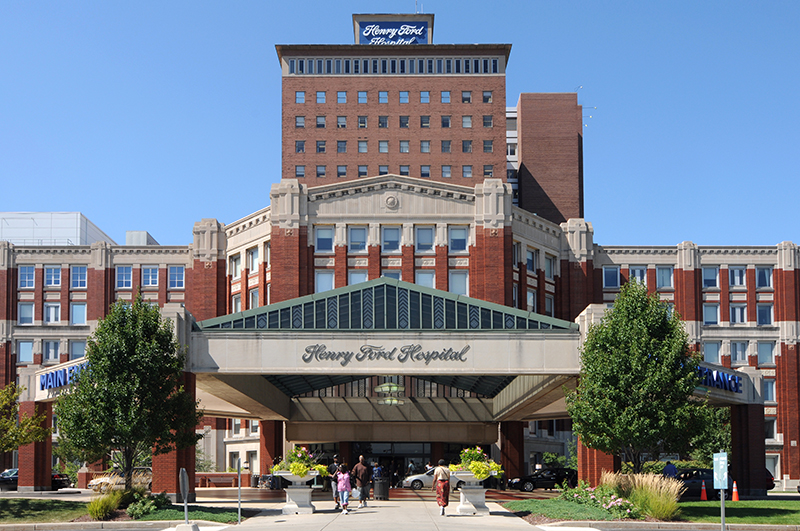
Henry Ford Health reports negative operating margin

Detroit-based Henry Ford Health ended the first half of this year with an operating loss, according to financial documents released Aug. 15. 

In the first two quarters of this year, Henry Ford Health reported revenue of $3.41 billion, up from $3.36 billion in the same period a year earlier. Net patient service revenue and healthcare premium revenue were up year over year. The health system attributed the increase in patient service revenue to higher pharmacy and outpatient volume. 

After factoring in expenses, which grew 4.4 percent year over year, the health system ended the first six months of this year with an operating loss of $74.77 million and an operating margin of -2.2 percent. Henry Ford Health reported operating income of $19.29 million in the first half of 2021. 

Henry Ford Health’s nonoperating loss totaled $272.53 million in the first six months of this year, which was primarily attributed to a significant loss on investments. In the first half of 2021, the health system reported nonoperating income of $134.65 million.

Henry Ford Health closed out the first half of this year with a net loss of $347.98 million, compared to a net income of $153.18 million in the same period of 2021.

Worsening $7 trillion retirement savings shortfall stirs second thoughts

U.S. market volatility erased $3.4 trillion from 401(k)s and IRAs in the first half of 2022, making for an anxious time for many workers trying to plan their retirements. 

The 2022 losses suggest the retirement savings shortfall among U.S. households is worsening from its $7.1 trillion valuation in 2019, an estimate that came out of Boston College. At that time, half of working families faced were at risk of not being able to maintain their standard of living once they retired. 

This proportion likely hasn’t changed much since, Alicia Munnell, director of Boston College’s Center for Retirement Research, told Bloomberg. The people who profited from gains to stock and housing prices over the past three years “were people who weren’t at risk in the first place,” she said.

“Living standards are going to decline for a large portion of the population who are in retirement — that’s the concern,” Richard Johnson, a retirement expert at the Urban Institute, told Bloomberg. “For people who are not in that age group, it’s still concerning because it could strain the social safety net.”

Boston College’s 2019 report on the national retirement risk index concluded that “the only way to make a dramatic dent in the retirement risk problem is to combine saving more with working two years longer.” 

The average age for retirement is the highest it has been for the past 30 years, sitting at 61. Nonretirees’ target retirement age has increased from 60 in 1995 to 66 today, meaning the average retirement age will increase even further in coming years if active workers retire when they plan to.

Mayo Clinic operating income slips 66% in Q2

Mayo Clinic’s revenue and expenses were higher in the second quarter of this year, according to financial documents released Aug. 18. 

Rochester, Minn.-based Mayo Clinic’s revenue totaled $4.03 billion in the second quarter of this year, up from $3.94 billion in the same period a year earlier. 

The nonprofit health system’s expenses climbed 11 percent year over year to $3.88 billion in the second quarter of 2022. Mayo Clinic saw expenses increase across all categories, including salaries and benefits. 

Mayo Clinic ended the second quarter of this year with operating income of $155 million, down 66 percent from $451 million in the same quarter of 2021. 

Mayo Clinic has major campuses in Rochester, Jacksonville, Fla., and Scottsdale and Phoenix, Ariz.