Steward moves to sell struggling Pennsylvania hospital

https://www.beckershospitalreview.com/hospital-transactions-and-valuation/steward-moves-to-sell-struggling-pennsylvania-hospital.html?utm_medium=email

Image result for easton hospital

Dallas-based Steward Health Care has signed a letter of intent to sell Easton (Pa.) Hospital to a local healthcare system, a source familiar with the agreement told The Morning Call.

The document reviewed by the publication suggest that St. Luke’s University Health Network is the likely buyer. Both Steward and St. Luke’s declined to comment.

Last month, Bethlehem, Pa.-based St. Luke’s University Health Network and Allentown, Pa.-based Lehigh Valley Health Network, submitted bids to buy Easton Hospital.

The takeover bids came after Steward said it would cut services to improve the system’s finances.

Easton Hospital has struggled to compete with both St. Luke’s and Lehigh Valley Health for the last five years, according to the report.

On Feb. 12, Steward sent a warning letter to the Lehigh Valley Health to stop recruiting physicians from Easton Hospital, saying they are contractually banned from working at a competing system. This suggests that St. Luke’s bid may have been approved over Lehigh Valley Health, according to the report. 

Read the full report here


The role of the modern Hospital & Health System CFO: 3 things to know

https://www.beckershospitalreview.com/finance/the-role-of-the-modern-cfo-3-things-to-know.html?utm_medium=email

Image result for evolution

The role of hospital and health system CFO has changed in recent years. CFOs are now change agents within their organizations and are deeply embedded in the day-to-day operations of the business.

Speaking on a panel called “The Evolving Role of the CFO” at the Becker’s Hospital Review 8th Annual CEO + CFO Roundtable in November, a panel of health system CFOs and finance leaders from across the country discussed how the finance chief role has changed and expanded.

The five panelists were:

  • Jeanette Wojtalewicz, senior vice president of Omaha, Neb.-based CHI Health
  • Nicholas Mendyka, vice president of system finance operations at Minneapolis-based Allina Health
  • Doug Welday, CFO of Evanston, Ill.-based NorthShore University HealthSystem
  • Kris Zimmer, CFO of St. Louis-based SSM Health
  • Mike Browning, CFO of Columbus-based OhioHealth

Here are three takeaways from the discussion:

1. CFOs are strategic leaders. The panelists noted that younger CFOs — those in their early 30s — come to the role with a fresh viewpoint. They are strategic and drive performance across the organization. Though CFOs who have been in the role for a decade or two may have a more traditional viewpoint, they’re adapting to the role of the modern CFO and embracing their more strategic position.

2. CFOs need different skills than in the past. The CFO role has expanded beyond traditional finance and accounting, and the skills CFOs need have changed too. When recruiting new members to their teams, the CFOs on the panel said they look for candidates with natural curiosity, data visualization skills and natural leadership abilities.

3. Clinician-finance partnerships are important. New payment models link quality of care to reimbursement, making it vital for CFOs and their teams to develop an understanding of the clinical side of the business. This has caused some health system CFOs to change their approach to training. The panelists said they try to help their teams develop an understanding of each department and learn how clinical and finance are connected.


Ochsner to pay tuition for future physicians, nurses who pledge to 5 years with system

https://www.beckershospitalreview.com/hospital-physician-relationships/ochsner-to-pay-tuition-for-future-physicians-nurses-who-pledge-to-5-years-with-system.html%20?utm_medium=email

Image result for Ochsner Health System

New Orleans-based Ochsner Health System created a $10 million tuition fund to grow its own workforce amid current labor market challenges, according to The Advocate, a Louisiana news outlet.

The system will begin by paying tuition for a cohort of 30 primary care physicians and psychiatrists. The physicians must commit to working in Louisiana with the health system for at least five years to receive the funding.

Ochsner has plans to offer similar scholarship opportunities for employees who want to become licensed practical nurses or registered nurses. It plans to ultimately cover tuition for about 1,000 employees, according to the report.

Read the full story here.


Trinity Health to end inpatient services at Philadelphia hospital

https://www.beckershospitalreview.com/patient-flow/trinity-health-to-end-inpatient-services-at-philadelphia-hospital.html?utm_medium=email

Image result for Trinity Health to end inpatient services at Philadelphia hospital

Livonia, Mich.-based Trinity Health is shutting down inpatient services at Mercy Philadelphia Hospital in Philadelphia.

“After careful consideration, we have come to the financial realization that our Mercy Philadelphia campus simply cannot continue operating in an acute-care capacity over the long term,” a spokesperson for Trinity Health Mid-Atlantic said Feb. 12, according to The Philadelphia Inquirer.

Officials did not provide a specific timeline for the closure.

“In the coming months, we will begin the slow, deliberate and informed process of transforming our campus away from an inpatient hospital, shifting toward a model that can better and more sustainably serve the West Philadelphia community in the future,” the spokesperson said, according to The Philadelphia Inquirer. “While we do not yet have all the answers, we promise to keep our patients, physicians and colleagues informed throughout every step of this process.”

Mercy Philadelphia Hospital is a 157-bed teaching hospital that was founded in 1918.


EHR giant Cerner loses major health system client AdventHealth to Epic

https://www.fiercehealthcare.com/tech/large-ehr-client-adventhealth-plans-to-replace-cerner-epic?mkt_tok=eyJpIjoiT1dWa1lqWTRZalUxTkRNNCIsInQiOiJvajlDUUZMVVFZK3pwcThnQnhrbVZJRkc5Vm4wT2doXC9hOG5zN25VcDl0Z2Y5eFYwcFpMRTg2eEZjU3NSMlQ0Q3Q0Wm9sVTNIdWlzRlU2dlVhMFFNV3JkYTh1VU5vUkRTNnBXXC9NaFIrbnQyc0J1ZTV2Z0IwTXhua2FXWGtnUVdlIn0%3D&mrkid=959610

Cerner's headquarters are in Kansas City, Missouri

Florida-based AdventHealth plans to replace its Cerner electronic health record (EHR) system with rival Epic’s.

One of the largest faith-based health systems in the country, AdventHealth operates 50 hospital campuses across a dozen states. The health system employs more than 80,000 people who serve more than 5 million patients annually and reports nearly $20 billion in annual revenue.

The health system first signed a deal with Cerner in 2002 when it was known as Adventist Health System.

AdventHealth will begin the transition in March and will eventually roll Epic’s EHR out to 1,200 care sites. The work is expected to be completed in about three years, the health system said.

In a press release issued Tuesday, AdventHealth said it plans to install a single, integrated Epic EHR and revenue cycle management system across all of its acute care, physician practice, ambulatory, urgent care, home health and hospice facilities.

Epic’s Community Connect program will also allow AdventHealth to extend its EHR system to affiliated providers as part of the integrated platform, according to AdventHealth.

“Our journey to become a consumer-focused clinical company requires a fully connected network throughout our entire enterprise,” Terry Shaw, president and CEO for AdventHealth, said in a statement. “Connecting our network with a robust, integrated health record platform will give our caregivers access to the clinical information they need at the point of care and ultimately advance our consumer promises through a more seamless experience for those we serve.”

In an emailed statement, Cerner confirmed the changeover. “AdventHealth has made the business decision to transition over the next few years management of its EHR and revenue cycle management system to another supplier. The shift is expected to take up to five years and Cerner is committed to working closely with AdventHealth to continue delivering superior health care technology solutions throughout the transition,” the company said.

Anonymous Reddit posters predicted the change months ago, saying that the health system was frustrated with integration issues with Cerner’s ambulatory solution and revenue cycle functionalities. HIStalk first reported the Reddit posts regarding Cerner and AdventHealth.

One Reddit user said AdventHealth staff felt the health system was on the “back burner” since Cerner signed massive projects with the departments of Defense and Veterans Affairs.

It’s unclear what the loss of a big EHR client will mean for health IT company Cerner’s annual revenue or earnings.

The company continues efforts to turn its financial picture around and improve its operating performance.

Almost a year ago, activist investor Starboard Value stepped in, and Cerner reached a settlement with the hedge fund to add new directors to its board and buy back more of its shares. Cerner also agreed to take steps to improve operations and committed to hitting certain operating targets.

The new agreement between Cerner and Starboard Value, which has a 1.2% stake in the company, was seen as welcome news by many financial analysts as a plan to increase the company’s profitability.

Cerner’s full-year 2019 bookings were down 11% compared to 2018 bookings, from $6.72 billion to $5.99 billion. Company executives said during their full-year and fourth-quarter earnings call that the decline in bookings was primarily driven by the company being more selective in the types of contracts it pursues, which led to fewer large, long-term outsourcing contracts.


President Trump’s budget cuts target Medicaid, Medicare

https://www.healthcarefinancenews.com/news/president-trumps-budget-cuts-target-medicaid-medicare?mkt_tok=eyJpIjoiWVRnM01UZzNaR0V6TTJFNSIsInQiOiJ6aXpsQnNCRjhHdCs4SnN0UytlZnJVUlZUeFdreEZyQ2V6RWE0YklvYmFMOGJnbWpXT3ZHeG0rOHMwNkJPcE9rMUlGb3NzVkpId3NrZHNkZmR2VlZISXZCVGgrbU94cFV3aVlNR1NYamlhazF1R1kzaXd3RXVISm9OSGJoYmVrVCJ9

Image result for medicaid cuts

Blueprint includes cuts for care in hospital outpatient departments, teaching hospitals and post-acute care providers, AHA says.

President Trump’s proposed $4.8 trillion budget slashes billions of dollars from Medicaid, food stamps and other safety net programs in an attempt to shrink the federal deficit.

Medicaid and the Affordable Care Act see about $1 trillion in cuts over the next decade, according to The Hill. The budget eliminates the enhanced federal match for Medicaid expansion enrollees. An additional $150 billion is expected to be shaved off of Medicaid from the implementation of work requirements, which is expected to result in people losing their healthcare coverage.

The “President’s health reform vision” to ax the Affordable Care Act takes $844 billion over 10 years from the ACA, the report said.

The decrease in federal spending on Medicare would total about $750 billion over 10 years, but that includes shifting two programs out of the budget. After accounting for those changes, the reduction is just over $500 billion, according to CNN. Much of that cut comes from reducing payments to providers.

The budget needs Congressional approval and is not expected to get past a Democratic-controlled House without changes.

House Speaker Nancy Pelosi tweeted: “The budget is a statement of values. Once again, the #TrumpBudget makes it painfully clear how little the President values the good health, financial security and well-being of America’s hard-working families.”

Ways and Means Committee Chairman Richard E. Neal, D-MA, said, “When I saw the President’s proposed budget today, I felt an immense sense of relief – relief that there is absolutely no chance of his ruthless cuts to critical programs ever becoming law. Slashing billions from Medicare and Medicaid will only make it harder for Americans to access the healthcare they need.

Cutting nutrition assistance and Social Security benefits for the disabled won’t enable people to get back on their feet financially.”

Senator Lamar Alexander, R-Tenn said, “Under the Constitution, it is Congress’ job to set spending priorities and pass appropriations bills, and as a member of the Senate Appropriations Committee, my priorities will continue to be making sure our national defense, national laboratories, the National Institutes of Health and national parks have the resources they need. I am encouraged to see the president is calling to end surprise medical billing.”

The budget adds money to the National Institutes of Health. The NIH will invest $50 million for new research on chronic diseases, using AI and related approaches, according to the White House briefing. It adds $7 billion over 10 years to fight opioid abuse and for mental health in the Medicaid program.

WHY THIS MATTERS

Cuts to Medicare and Medicaid mean uncompensated care to providers, or a reduction in the government payments.

The American Hospital Association said, “The budget request, which is not binding, proposes hundreds of billions of dollars in reductions to Medicare and Medicaid over 10 years.”

AHA President and CEO Rick Pollack said, “Every year, we adapt to a constantly changing environment, but every year, the Administration aims to gut our nation’s healthcare infrastructure. The proposals in this budget would result in hundreds of billions of dollars in cuts that sacrifice the health of seniors, the uninsured and low-income individuals. This includes the one in five Americans who depend on Medicaid, of which 43% of enrollees are children.

“In addition to the hundreds of billions in proposed reductions to Medicare, the blueprint includes cuts we strongly oppose for care in hospital outpatient departments, teaching hospitals and post-acute care providers. These cuts fail to recognize the crucial role hospitals serve for their communities, such as providing 24/7 emergency services. Post-acute cuts threaten care for patients with the most medically complex conditions.”


30 latest hospital credit rating downgrades

https://www.beckershospitalreview.com/finance/30-latest-hospital-credit-rating-downgrades.html

OR Efficiencies

The following 30 hospital and health system credit rating downgrades occurred in the past six months. They are listed below in alphabetical order.

1. Altru Health System (Grand Forks, N.D.) — from “A-” to “BBB” (Fitch Ratings); from “Baa1” to “Baa2” (Moody’s Investors Service)

2. Augusta (Ga.) University Health System — from “Baa1” to “Baa3” (Moody’s Investors Service); from “BBB” to “BBB-” (S&P Global Ratings)

3. Bibb County Medical Center (Centreville, Ala.) — from “BBB+” to “BB” (S&P Global Ratings)

4. Boone Hospital Center (Columbia, Mo.) — from “Baa2” to “Ba1” (Moody’s Investors Service); from “A-” to “BBB” (Fitch Ratings)

5. Covenant Health (Tewksbury, Mass.) — from “BBB+” to “BBB” (Fitch Ratings)

6. Delta (Colo.) County Memorial Hospital — from “BB+” to “BB” (S&P Global Ratings)

7. Erlanger Health System (Chattanooga, Tenn.) — from “Baa2” to “Baa3” (Moody’s Investors Service)

8. Excela Health (Greensburg, Pa.) — from “A3” to “Baa1” (Moody’s Investors Service)

9. Fairfield Medical Center (Lancaster, Ohio) — from “Baa3” to “Ba2” (Moody’s Investors Service)

10. Hospital Sisters Health System (Springfield, Ill.) — from “AA-” to “A+” (S&P Global Ratings)

11. Indiana (Pa.) Regional Medical Center — from “Ba1” to “Ba2” (Moody’s Investors Service)

12. Integris (Oklahoma City) — from “A1” to “A2” (Moody’s Investors Service)

13. Mercy Medical Center (Des Moines, Iowa) — from “A” to “A-” (S&P Global Ratings)

14. Methodist Hospitals (Gary, Ind.) — from “BBB” to “BBB-” (S&P Global Ratings)

15. Murray (Ky.) Calloway County Hospital — from “Baa3” to “Ba2” (Moody’s Investors Service)

16. Nicklaus Children’s Hospital (Miami) — from “A+” to “A” (S&P Global Ratings)

17. OSF HealthCare (Peoria, Ill.) — from “A2” to “A3” (Moody’s Investors Service)

18. Parmer County (Texas) Hospital District — from “Baa1” to “Baa2” (Moody’s Investors Service)

19. Princeton (W.Va.) Community Hospital — from “BBB+” to “BBB” (S&P Global Ratings)

20. ProMedica Health System (Toledo, Ohio) — from “Baa1” to “Baa3” (Moody’s Investors Service); from “BBB+” to “BBB” (Fitch Ratings)

21. Regional West Health Services (Scottsbluff, Neb.) — from “BBB” to “BB+” (Fitch Ratings)

22. Sanford Health (Sioux Fall, S.D.) — from “A1” to “A2” (Moody’s Investors Service)

23. South Nassau Communities Hospital (Oceanside, N.Y.) — from “Baa1” to “Baa2” (Moody’s Investors Service)

24. Southeastern Regional Medical Center (Lumberton, N.C.) — from “A-” to “BBB+” (Fitch Ratings)

25. Sparrow Health System (Lansing, Mich.) — from “A1” to “A2” (Moody’s Investors Service)

26. St. John’s Riverside Hospital (Yonkers, N.Y.) — from “B-” to “CCC+” (S&P Global Ratings)

27. St. Luke’s Hospital (Chesterfield, Mo.) — from “A+” to “A” (S&P Global Ratings)

28. Tower Health (West Reading, Pa.) — from “A” to “BBB” (Fitch Ratings); from “A3” to “Baa2” (Moody’s Investors Service)

29. University of Chicago Medical Center — from “A1” to “Aa3” (Moody’s Investors Service)

30. Winkler County Memorial Hospital (Kermit, Texas) — from “AA” to “BB+” (S&P Global Ratings)


Bipartisan Ways and Means leaders unveil measure to stop surprise medical bills

https://thehill.com/policy/healthcare/481985-bipartisan-ways-and-means-leaders-unveil-measure-to-stop-surprise-medical?utm_source=&utm_medium=email&utm_campaign=27536

Image result for surprise medical bills

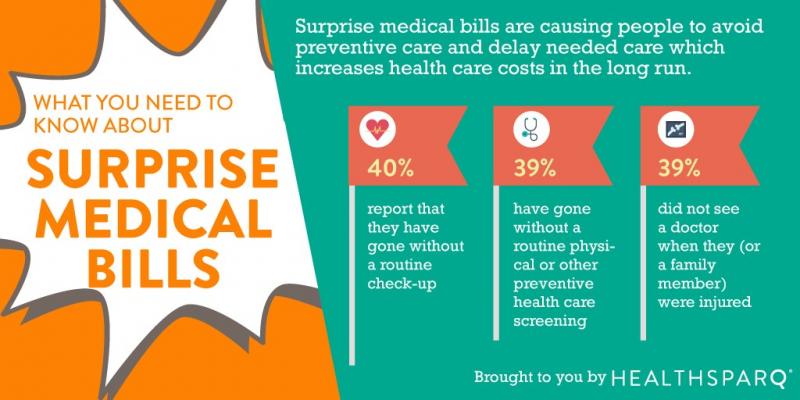
The bipartisan leaders of the House Ways and Means Committee on Friday released their legislation to protect patients from getting massive, surprise medical bills as congressional action on the subject intensifies.

The legislation is backed by the panel’s chairman, Rep. Richard Neal (D-Mass.), and its top Republican, Rep. Kevin Brady (Texas). It would protect patients from getting bills for thousands of dollars when they go to the emergency room and one of their doctors happens to be outside their insurance network.

Surprise billing is seen as a rare area of possible bipartisan action this year and has support from President Trump.

But the effort has been slowed by varying approaches and intense lobbying from doctor and hospital groups.

The Ways and Means bill is a rival approach to the bipartisan bill passed out of committee last year by the House Energy and Commerce Committee.

The divide between those two committees will have to be overcome for any bill to move forward.

Neal and Brady said in a statement Friday that their approach “differs” from others because “we create a more balanced negotiation process.”

“Our priority throughout the painstaking process of crafting our legislation has been to get the policy right for patients, and we firmly believe that we have done that,” Neal and Brady said. “We look forward to working with our Democratic and Republican colleagues in Congress, as well as the Administration, to advance this measure swiftly.”

The Ways and Means Committee is planning to vote on the legislation next week.

While all sides in the surprise billing fight agree the patient should be protected, the main dispute has been how much the insurer will pay the doctor once the patient is taken out of the middle. 

Doctors and hospitals have lobbied hard against the Energy and Commerce approach, which they fear would lead to damaging cuts to their payments. That approach sets the payment based on the median rate in that geographic area, with the option of going to arbitration for some high-cost bills.

The Ways and Means approach has generally been seen as more favorable to doctors and hospitals, but industry groups have not yet responded to the details on Friday morning.

The Ways and Means bill gives the decision on how much the insurer should pay the doctor to an outside arbiter, although that arbiter will have to consider the median rate usually paid for that service in making its decision.

The House Education and Labor Committee is also planning to vote on legislation next week, and released a bill on Friday that closely reflects the Energy and Commerce and Senate Health Committee legislation, isolating Ways and Means.

Shawn Gremminger, senior director of federal relations at the liberal health care advocacy group Families USA, said it is “disappointing” that Ways and Means is using an approach that will not lower health costs as much, but he said it is good the process is moving forward.

The Energy and Commerce leaders, along with leaders of the Senate Health Committee, who also back their bill, released a conciliatory statement on Friday about the Ways and Means bill.

“Protecting innocent patients has been our top goal throughout this effort, and we appreciate that the other two House committees share this priority,” said Reps. Frank Pallone Jr. (D-N.J.) and Greg Walden (R-Ore.) and Sens. Lamar Alexnader (R-Tenn.) and Patty Murray (D-Wash.). “We look forward to working together to deliver a bill to the president’s desk that protects patients and lowers health care costs for American consumers.”


Patients Caught In Crossfire Between Giant Hospital Chain, Large Insurer

Patients Caught In Crossfire Between Giant Hospital Chain, Large Insurer

After Zoe Friedland became pregnant with her first child, she was picky about choosing a doctor to guide her through delivery.

“With so many unpredictable things that can happen with a pregnancy, I wanted someone I could trust,” Friedland said. That person also had to be in the health insurance network of Cigna, the insurer that covers Friedland through her husband’s employer.

Friedland found an OB-GYN she liked, who told her that she delivered only at Sequoia Hospital in Redwood City, California, a part of San Francisco-based Dignity Health. Friedland and her husband, Bert Kaufman, live in Menlo Park, about 5 miles from the hospital, so that was not a problem for them — until Dec. 12.

That’s the day Friedland and Kaufman received a letter from Cigna informing them their care at Sequoia might not be covered after Jan. 1. The insurance company had not signed a contract for 2020 with the hospital operator, which meant Sequoia and many other Dignity medical facilities around the state would no longer be in Cigna’s network in the new year.

Suddenly, it looked as if having their first baby at Sequoia could cost Friedland and Kaufman tens of thousands of dollars.

“I was honestly shocked that this could even happen because it hadn’t entered my mind as a possibility,” Friedland said.

She and her husband are among an estimated 16,600 people caught in a financial dispute between two gigantic health care companies. Cigna is one of the largest health insurance companies in the nation, and Dignity Health has 31 hospitals in California, as well as seven in Arizona and three in Nevada. The contract fight affects Dignity’s California and Nevada hospitals, but not the ones in Arizona.

“The problem is price,” Cigna said in a statement just before the old contract expired on Dec. 31. “Dignity thinks that Cigna customers should pay substantially more than what is normal in the region, and we think that’s just wrong.”

Tammy Wilcox, a senior vice president at Dignity, said, “At a time when many nonprofit community hospitals are struggling, Cigna is making billions of dollars in profits each year. Yet Cigna is demanding that it pay local hospitals even less.”

In 2018, the most recent full year for which earnings data is available, Cigna generated operating income of $3.6 billion on revenue of approximately $48 billion. Dignity Health reported operating income of $529 million on revenue of $14.2 billion in its 2018 fiscal year.

It’s possible Cigna and Dignity can still reach an agreement. Both sides said they will keep trying, though no talks are scheduled.

Disagreements between insurers and health systems that leave patients stranded are a perennial problem in U.S. health care. Glenn Melnick, a professor of health economics at the University of Southern California, said such disputes, which are disruptive to consumers, are often settled.

Melnick believes Dignity is using an “all or nothing” strategy in contract negotiations, meaning either all its facilities are in the insurer’s network or none are.

“This allows them to increase their market power to get higher prices, which is not necessarily good for consumers,” Melnick said.

Dignity replied in an emailed statement: “We do not require payers to contract with all or none of Dignity Health’s providers. We do try to make sure patients have access to the full range of Dignity Health services and facilities in each of our communities.”

Dignity faces a number of legal and financial challenges while it works to implement a February 2019 merger with Englewood, Colorado-based Catholic Health Initiatives that created one of the nation’s largest Catholic hospital systems — known as CommonSpirit Health.

California Attorney General Xavier Becerra approved the deal with conditions, including that Dignity’s California hospitals spend $10 million in the first three years on services for people experiencing homelessness and offer free care to more low-income patients.

The requirement to treat more poor patients at no charge followed a period, from 2011 to 2016, in which Dignity’s charity care declined about 35% while its net income was $3.2 billion.

Last October, CommonSpirit announced an operating loss of $582 million on revenue of nearly $29 billion for the 2019 fiscal year, its first annual financial statement after the merger took effect. Much of the loss was due to merger-related costs and special charges.

The same month, Dignity completed a five-year “corporate integrity agreement” with the U.S. Office of the Inspector General following an investigation into how it billed the government for hospital inpatient stays. Dignity said it “fully complied” with the agreement.

Dignity is also defending itself in a class-action lawsuit alleging that it bills uninsured patients at grossly inflated rates even though it claims to provide “affordable” care at “the lowest possible cost.”

More recently, an appeals court judge ruled Dignity could not charge higher prices — often a lot higher than state-set rates — for treating enrollees of L.A. Care’s Medi-Cal health plan at its Northridge Hospital Medical Center.

Dignity disagreed with the court’s ruling in that case, saying that although the Northridge facility did not have a contract with L.A. Care, many of the health plan’s enrollees who initially sought emergency treatment there stayed in the hospital for additional care after they had been stabilized. The hospital “seeks appropriate reimbursement for providing this care,” Dignity said.

If Dignity does not reach an agreement with Cigna, its hospitals, outpatient surgery centers and medical groups in most of California will soon be out-of-network for many Cigna enrollees. In-network coverage for Open Access (OAP) and Preferred Provider (PPO) ended Feb. 1, and for HMO patients it is set to end April 1.

Peter Welch, president and general manager for Cigna in Northern California and the Pacific Northwest, said Cigna can provide “adequate access” to other hospitals and doctors.

Certain Cigna enrollees can apply to continue visiting Dignity facilities and doctors under California’s Continuity of Care law, enacted in 2014. Eligible enrollees include patients with chronic conditions, those already scheduled for pre-authorized services, people in need of emergency care and pregnant women in their third trimester.

Friedland and Kaufman applied, hoping she would be able to continue seeing her Dignity-affiliated OB-GYN at in-network rates.

On Jan. 22, less than a month from Friedland’s Feb. 15 due date, they received written confirmation that their request had been approved. They wouldn’t have to shop for a new doctor or face stiff medical bills after all.

Early Tuesday evening, Friedland gave birth to a baby girl, Eliza, who entered the world 11 days earlier than expected, weighing in at 7 pounds, 3 ounces.

“While the ordeal was stressful, and the communication fraught, we were happy to receive confirmation of continuity of care and that it ended in the best possible way — with the birth of our healthy baby daughter with the provider where we established care,” Kaufman said. “For the sake of those caught in the middle and now having to start relationships with new health care providers, we hope the two sides can come to an agreement.”


Payers, providers urge CMS to scrap rule targeting supplemental Medicaid payments

https://www.healthcaredive.com/news/payers-providers-urge-cms-to-scrap-rule-targeting-supplemental-medicaid-pa/571573/

Image result for supplemental Medicaid payments"

Dive Brief:

  • Payer and provider lobbying groups are urging CMS to pull back a proposed rule that aims to clamp down on supplemental Medicaid payments in order to contain spending growth.
  • The American Hospital Association wants CMS to withdraw the rule, warning it would “severely curtail the availability of health care services to millions of individuals,” according to comments it submitted in response to the proposal.
  • The insurance lobby wants CMS to start with a “more limited initial step” and focus on gathering data so it can “fully assess the current landscape of state Medicaid funding and payment mechanisms,” America’s Health Insurance Plans said in its comments. The Association for Community Affiliated Plans also asked the agency to withdraw the rule.

Dive Insight:

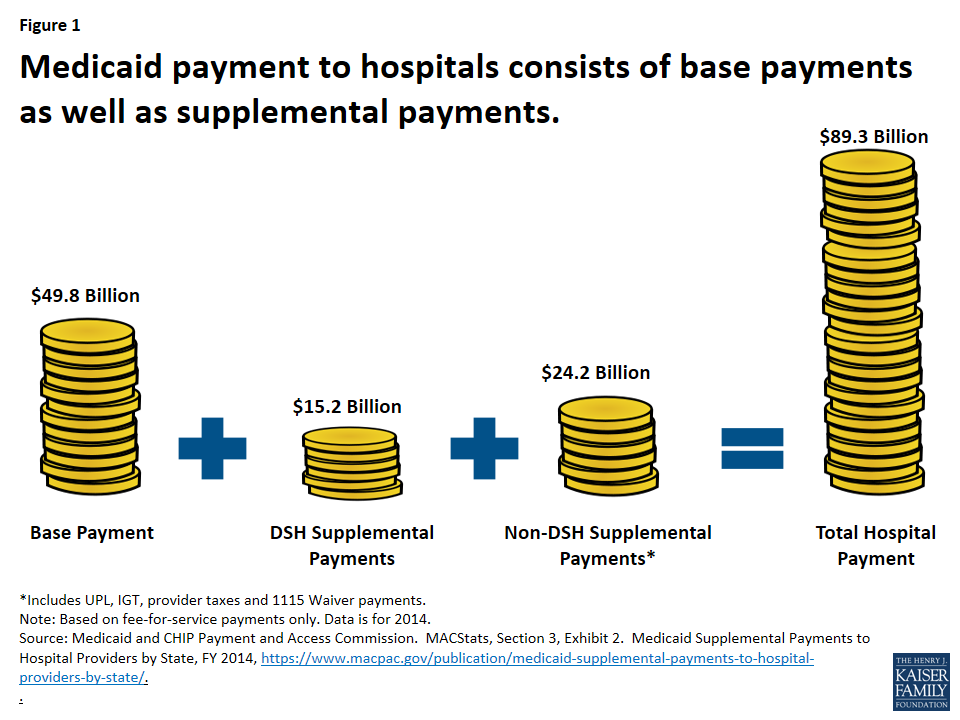
A sharp rise in these supplemental Medicaid payments caught the attention of CMS as spending has continued to increase and much of the growth has come from the federal share of the program, according to the agency.

These supplemental payments from the federal government to the states have risen from 9.4% of all other payments in fiscal year 2010 to 17.5% in 2017. This growth comes with “an urgent responsibility to ensure sound stewardship and oversight of the Medicaid program,” CMS said in November as it rolled out the proposed rule called Medicaid Fiscal Accountability Regulation.

A 2015 Government Accountability Office report found that states are increasingly relying on providers to help them finance the state’s portion of Medicaid funding. “A small number of providers supplied funds to the state for the nonfederal share, generally through intergovernmental fund transfers or provider taxes, and in turn received large supplemental payments, enabling states to obtain billions of dollars in additional federal matching funds,” according to the report.

CMS argues the proposed rule, which calls for states to provide more detailed information on these supplemental payments, including provider-specific payment data, would help beef up its oversight of the program.

AHA warned, however, the rule could cut Medicaid payments to hospitals by up to $31 billion annually, or nearly 17% of total hospital program payments. The group also argued the changes violate the Administrative Procedures Act and due process protections in the Constitution.

The Association of American Medical Colleges also opposed the rule, saying it would “limit the federal government’s congressionally mandated responsibility to the Medicaid program and could result in reductions in coverage, access, and quality care for the millions of vulnerable patients who rely on this critical program.”

CMS and the GAO report have noted a lack of data about these payments once they reach the states, making it hard to do any sort of analysis. In fact, GAO complained that the state of California did not have data on these payments for the agency to do an assessment.