7 health systems with strong finances

https://www.beckershospitalreview.com/finance/7-health-systems-with-strong-finances-090919.html?oly_enc_id=2893H2397267F7G

Here are seven health systems with strong operational metrics and solid financial positions, according to recent reports from Moody’s Investors Service, Fitch Ratings and S&P Global Ratings.

Note: This is not an exhaustive list. Hospital and health system names were compiled from recent credit rating reports and are listed in alphabetical order.

1. St. Louis-based BJC Health System has an “Aa2” rating and stable outlook with Moody’s. The health system has good margins and a favorable market position, according to Moody’s.

2. Hollywood, Fla.-based Memorial Healthcare System has an “Aa3” rating and stable outlook with Moody’s. The health system has a dominant market position in the southern portion of South Broward County and above average balance sheet liquidity, according to Moody’s.

3. Broomfield, Colo.-based SCL Health has an “Aa3” rating and stable outlook with Moody’s and an “AA-” rating and stable outlook with S&P. The health system has strong operating performance and solid balance sheet measures, according to Moody’s. The credit rating agency expects the health system’s cash flow to continue to grow.

4. Seattle Children’s Healthcare System has an “Aa2” rating and stable outlook with Moody’s. The health system has consistently strong operating performance, solid liquidity measures, and a favorable reputation within a broad service area, according to Moody’s.

5 Norfolk, Va.-based Sentara Healthcare has an “Aa2” rating and stable outlook with Moody’s. The health system has a leading market position in its service area, robust balance sheet metrics and solid margins, according to Moody’s.

6. St. Louis-based SSM Health has an “AA-” rating and stable outlook with Fitch. The health system has a strong financial profile and a growing health plan, according to Fitch. The credit rating agency expects SSM to continue to grow unrestricted liquidity and sustain improved operating performance.

7. Arlington-based Texas Health Resources has an “Aa2” rating and stable outlook with Moody’s. The health system has solid financial performance, a leading market position, good coverage of moderate debt levels, and a strong cash position, according to Moody’s.


A Wave of Layoffs Loom for Wall Street

https://www.crainsnewyork.com/markets/wave-layoffs-looms-wall-street?utm_source=breaking-news&utm_medium=email&utm_campaign=20190909&utm_content=hero-readmore


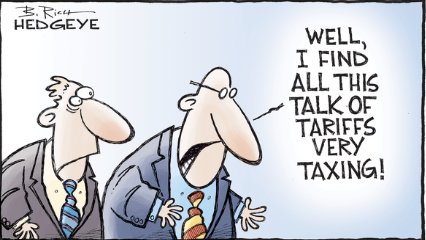
China trade war will hit hospitals in the wallet, medical supply company says

https://www.beckershospitalreview.com/supply-chain/china-trade-war-will-hit-hospitals-in-the-wallet-medical-supply-company-says.html?origin=cfoe&utm_source=cfoe

Image result for tariffs hitting wallets

The U.S. trade war with China threatens to hit hospitals and health systems as well as consumers in the form of higher prices and product shortages, the president of medical supply distributor DealMed told Yahoo Finance.

On Sept. 1, President Donald Trump imposed a 10 percent tariff on $300 billion in Chinese imports, tacking more medical supplies on the list. And the administration is threatening to hike the current 25 percent tariff on $250 billion in Chinese imports to a 30 percent tariff on Oct. 1.

The products affected by the tariffs are used daily in physician offices, hospitals, pharmacies and by consumers at home, according to DealMed President Michael Einhorn.

“Think of products like gauze that are in Band-Aids. Think of other products like medical gloves,” Mr. Einhorn told Yahoo Finance. “Those products will be somewhat affected, somewhere between 10 percent and 25 percent.

“When you throw tariffs into the mix, we’re talking about potential shortages, we’re talking about potential price increases — not only to hospitals and big healthcare systems, but also to the consumer at home,” Mr. Einhorn said.

Read the full report here


Hospital profitability up after significant declines in June, Kaufman Hall finds

https://www.beckershospitalreview.com/finance/hospital-profitability-up-after-significant-declines-in-june-kaufman-hall-finds.html

Hospitals recorded profit improvements in July after posting significant year-over-year decreases in June, according to a report from financial advisory firm Kaufman Hall.

The firm found hospitals’ EBITDA margin rose 77.5 basis points month over month. Hospitals also saw their operating margins climb 105 basis points. Both measures marked the sixth month of improved hospital profitability out of the past seven months.

“While these trends generally are good news for the industry, the improvements do not necessarily mean that hospitals are achieving sufficient margins,” according to Kaufman Hall. “Also, margins of individual hospitals do not necessarily reflect those of overall health systems.”

Kaufman Hall noted that hospitals did see their volumes increase in July compared to June, which saw declines in patient volumes.

Read the full report here


Comeback or blip? Nonprofit hospital margins show gains in 2018

https://www.healthcaredive.com/news/comeback-or-blip-nonprofit-hospital-margins-show-gains-in-2018/562131/

Dive Brief:

  • Nonprofit hospitals’ operating margins are improving after falling for the last two years, according to an annual report on hospital performance from Fitch Ratings.
  • Smaller hospitals are driving the turnaround and it’s a notable trend because they’re not able to command higher rates from payers like their peers the “must-have” hospitals, according to the report.
  • “The fact that [smaller hospitals] saw meaningful improvement is a good indicator that operational strength is returning to the sector, though the highs we saw in 2015 may be an unattainable highwater mark,” Kevin Holloran, senior director for Fitch, said in a statement.

Dive Insight:

The industry continues to experience pressures including slowing inpatient admissions and more patients covered by government-sponsored health insurance such as Medicare, which typically reimburses at a lower rate compared to commercial insurers.

Wages are also under pressure amid a tight labor market, and the need to shift to an environment that is increasingly reimbursing for quality — not quantity.

The question now is whether these recent gains are a “temporary blip” or a major shift, Fitch analysts noted.

“Not-for-profit hospitals are by no means out of the woods yet with sector pressures likely to continue, but there appears to be light at the end of the tunnel in terms of longer-term stability,” Holloran said.

Still, despite the margin improvement, Fitch maintains a negative outlook for the sector.

Even still, “the not-for-profit healthcare sector has shown considerable resiliency over the years, weathering events like the 2008/2009 great recession, sequestration cuts to governmental funding, and a shifting payor mix,” Fitch analysts said.

Fitch believes consolidation among providers will continue. Providers will focus on increasing their size and scale to maintain leverage over insurance companies and allow them to invest in population health.


Another round of debate over hospital consolidation

Image result for Another round of debate over hospital consolidation
 
Are hospital mergers a good thing or a bad thing?

Much of the answer to that question depends on what happens after the merger—does the combined organization provide better, more efficient care, or does it use its increased leverage to raise prices? Yet another round of back and forth on this issue took place this week, as the American Hospital Association (AHA) released the results of a study it commissioned from economic analysis firm Charles River Associates (CRA), while a group of academic antitrust specialists countered with their own briefing in response.

The AHA study, based on interviews with select health system leaders and econometric analysis by CRA, shows (surprise, surprise) that consolidation decreases hospital expenses by 2.3 percent, reduces mortality and readmissions, and reduces revenue per admission by 3.5 percent—indicating that the “savings” from consolidation are being passed along to purchasers. The economists, including Martin Gaynor at Carnegie Mellon, Zack Cooper at Yale, and Leemore Dafny at Harvard, countered in their briefing (surprise, surprise) that CRA’s research was biased in favor of hospitals, and cited numerous academic studies that indicate that hospital consolidation drives overall healthcare costs higher.

Beyond the predictable debate, our view is that consolidation can and should lead to better quality and lower prices—but that it largely hasn’t delivered on that promise. The prospect of “integrated care” that’s often touted by consolidation advocates hasn’t materialized in most places, both because hospital executives haven’t pushed hard enough on strategies to produce it, and because the market lacks sufficient incentives to encourage it.

Judge approves $55M sale of Hahnemann residency programs

https://www.beckershospitalreview.com/hospital-transactions-and-valuation/judge-approves-55m-sale-of-hahnemann-residency-programs.html

Image result for Judge approves $55M sale of Hahnemann residency programs

Bankruptcy judge approves sale of Hahnemann residency slots
 
This week a Federal judge ruled that the owner of Hahnemann University Hospital could move forward with the sale of the system’s more than 550 residency slots as part of a plan to pay off creditors. The training slots will be sold to a consortium of health systems led by Thomas Jefferson University Hospitals for $55M. Hahnemann had previously agreed to sell the positions to Reading, PA-based Tower Health before they were outbid by the Jefferson consortium, who will keep the majority of the positions—and new physician labor—in the Philadelphia area.

The judge noted the difficulty of the decision, saying it was the kind of case that would “cause a judge to lie awake at night”. The ruling is huge win for debtors, and a blow to the Federal government, which strongly opposed the sale and has seven days to appeal.

Should it stand, the case could set the precedent that residents and the positions they hold are an asset that can be negotiated for and sold. Interns and residents provide low-cost labor that is essential for 24/7 coverage in many large hospitals, and the complex system of allocating and funding of residency training slots is a funds transfer from the Federal government to health systems.

Allowing hospitals to sell those slots to the highest bidder could undermine the stability of urban hospitals, particularly those who are investor-owned, as owners look to maximize short-term profits.


‘We have not lost our way’: Kaiser CEO’s memo to staff after Labor Day protests

https://www.beckershospitalreview.com/hospital-management-administration/we-have-not-lost-our-way-kaiser-ceo-s-memo-to-staff-after-labor-day-protests.html

Image result for 'We have not lost our way'

Bernard J. Tyson, chairman and CEO of Oakland, Calif.-based Kaiser Permanente, sent a memo to his staff Sept. 3 to address Labor Day protests employees held in five cities amid threats of a potential nationwide strike.  

In the memo, obtained by Becker’s Hospital Review, Mr. Tyson claims leaders of the Service Employees International Union-United Healthcare Workers used the protests to “deliver a false narrative” and “misconstrue what is really happening with [contract] negotiations.”

SEIU-UHW is one of the 16 international unions representing Kaiser employees, and one of three unions that form the Coalition of Kaiser Permanente Unions. The coalition’s bargaining team and Kaiser have been negotiating a new contract for workers, as the current contract is set to expire this month. The coalition alleges Kaiser is using unfair labor practices and prioritizing profits over patients. Last month, union members voted to authorize a nationwide strike that would affect more than 80,000 Kaiser employees nationwide.

“Kaiser Permanente has put multiple options on the table for Coalition/SEIU-UHW leadership to consider, and we remain open to these options within the established parameters consistent with all our 60 unions,” Mr. Tyson wrote in the memo. The 16 international unions that represent Kaiser employees are divided into 60 local unions, each of which has its own contract.

Mr. Tyson said Kaiser has always been committed to working collaboratively and forging positive relationships with the unions representing its 165,000 employees.

“Going forward, we will respond more definitively to allegations against our organization’s stellar brand and reputation. We have not lost our way,” Mr. Tyson wrote. “We have an incredible workforce and will always treat them with dignity and respect, along with offering market competitive wages and benefits fit for the times.”


US health care: An industry too big to fail

https://theconversation.com/us-health-care-an-industry-too-big-to-fail-118895

Image result for US health care: An industry too big to fail

As I spoke recently with colleagues at a conference in Florence, Italy about health care innovation, a fundamental truth resurfaced in my mind: the U.S. health care industry is just that. An industry, an economic force, Big Business, first and foremost. It is a vehicle for returns on investment first and the success of our society second.

This is critical to consider as presidential candidates unveil their health care plans. The candidates and the electorate seem to forget that health care in our country is a huge business.

Health care accounts for almost 20% of GDP and is a, if not the, job engine for the U.S. economy. The sector added 2.8 million jobs between 2006 and 2016, higher than all other sectors, and the Bureau of Labor Statistics projects another 18% growth in health sector jobs between now and 2026. Big Business indeed.

This basic truth separates us from every other nation whose life expectancy, maternal and infant mortality or incidence of diabetes we’d like to replicate or, better still, outperform.

As politicians and the public they serve grapple with issues such as prescription drug prices, “surprise” medical bills and other health-related issues, I believe it critical that we better understand some of the less visible drivers of these costs so that any proposed solutions have a fighting chance to deflect the health cost curve downward.

As both associate chief medical officer for clinical integration and director of the center for health policy at the University of Virginia, I find that the tension between a profit-driven health care system and high costs occupies me every day.

The power of the market

Housing prices are market-driven. Car prices are market-driven. Food prices are market-driven.

And so are health care services. That includes physician fees, prescription drug prices and non-prescription drug prices. So is the case for hospital administrator salaries and medical devices.

All of these goods or services are profit-seeking, and all are motivated to maximize profits and minimize the cost of doing business. All must adhere to sound business principles, or they will fail. None of them disclose their cost drivers, or those things that increase prices. In other words, there are costs that are hidden to consumers that manifest in the final unit prices.

To my knowledge, no one has suggested that Rolls-Royce Motor Cars should price its cars similarly to Ford Motor Company. The invisible hand of “the market” tells Rolls Royce and Ford what their vehicles are worth.

Prescription drugs pricing has different rules

Ford can (they won’t) tell you precisely how much each vehicle costs to produce, including all the component parts that they acquire from other firms. But this is not true of prescription drugs. How much a novel therapeutic costs to develop and bring to market is a proverbial black box. Companies don’t share those numbers. Researchers at the Tufts Center for the Study of Drug Development have estimated the costs to be as high as US$2.87 billion, but that number has been hotly debated.

What we can reliably say is that it’s very expensive, and a drug company must produce new drugs to stay in business. The millions of research and development(R&D) dollars invested by Big Pharma has two aims. The first is to bring the “next big thing” to market. The second is to secure the almighty patent for it.

U.S. drug patents typically last 20 years, but according to the legal services website Upcounsel.com: “Due to the rigorous amount of testing that goes into a drug patent, many larger pharmaceutical companies file several patents on the same drug, aiming to extend the 20-year period and block generic competitors from producing the same drug.” As a result, drug firms have 30, 40-plus years to protect their investment from any competition and market forces to lower prices are not in play.

Here’s the hidden cost punchline: concurrently, several other drugs in their R&D pipelines fail along the way, resulting in significant product-specific losses . How is a poor firm to stay afloat? Simple, really. Build those costs and losses into the price of the successes. Next thing you know, insulin is nearly US$1,500 for a 20-milliliter vial, when that same vial 15 years ago was about $157.

It’s actually a bit more complicated than that, but my point is that business principles drive drug prices because drug companies are businesses. Societal welfare is not the underlying use. This is most true in the U.S., where the public doesn’t purchase most of the pharmaceuticals – private individuals do, albeit through a third party, an insurer. The group purchasing power of 300 million Americans becomes the commercial power of markets. Prices go up.

The cost of doing business, er, treating

I hope that most people would agree that physicians provide a societal good. Whether it’s in the setting of a trusted health confidant, or the doctor whose hands are surgically stopping the bleeding from your spleen after that jerk cut you off on the highway, we physicians pride ourselves on being there for our patients, no matter what, insured or not.

Allow me to state two fundamental facts that often seem to elude patient and policymaker alike. They are inextricably linked, foundational to our national dialogue on health care costs and oft-ignored: physicians are among the highest earners in America, and we make our money from patients. Not from investment portfolios, or patents. Patients.

Like Ford or pharmaceutical giant Eli Lilly, physician practices also need to achieve a profit margin to remain in business. Similarly, there are hidden-to-consumer costs as well; in this case, education and training. Medical school is the most expensive professional degree money can buy in the U.S. The American Association of Medical Colleges reports that median indebtedness for U.S. medical schools was $200,000.00 in 2018, for the 75% of us who financed our educations rather than paying cash.
Our “R&D” – that is, four years each of college and medical school, three to 11 years of post doctoral training costs – gets incorporated into our fees. They have to. Just like Ford Motors. Business 101: the cost of doing business must be factored into the price of the good or service.

For policymakers to meaningfully impact the rising costs of U.S. health care, from drugs to bills to and everything in between, they must decide if this is to remain an industry or truly become a social good. If we continue to treat and regulate health care as an industry, we should continue to expect surprise bills and expensive drugs.

It’s not personal, it’s just…business. The question before the U.S. is: business-as-usual, or shall we get busy charting a new way of achieving a healthy society? Personally and professionally, I prefer the latter.


U of Chicago nurses vote to authorize strike

https://www.beckershospitalreview.com/human-capital-and-risk/u-of-chicago-nurses-vote-to-authorize-strike.html

Image result for nurses strike university of chicago

University of Chicago Medicine nurses have voted to authorize their union to strike, according to The Chicago Tribune.

The vote, conducted Aug. 29, allows the National Nurses Organizing Committee/National Nurses United to call a strike at any time without further approval from nurses. They must give the hospital 10 days’ notice before calling a strike. If the strike goes forward, about 2,300 nurses will walk off the job and the hospital will hire agency nurses to temporarily replace them.

The contract between the hospital and the union expired in April. The union hopes the vote authorizing a strike will help them make progress on contract negotiations, said Talisa Hardin, RN, a nurse at the hospital and a chief nurse representative for the union.

The nurses are asking for lower nurse-to-patient ratios and more security officers, among other things. They picketed in July to call attention to these concerns and filed complaints with state and federal agencies in June. An investigation from the state health department found some deficiencies at the hospital but concluded it was still in compliance with Medicare standards.

“The University of Chicago Medical Center does not want a strike, and UCMC continues to focus on bargaining in good faith toward a contract,” the hospital said in an emailed statement to Becker’s. “We have a full strike plan in place to ensure our patient care will continue should the union call for a walkout in the future.”