How banks and hospitals are cashing in when patients can’t pay for health care

https://www.npr.org/sections/health-shots/2022/11/17/1136201685/medical-debt-high-interest-credit-cards-hospitals-profit

Patients at North Carolina-based Atrium Health get what looks like an enticing pitch when they go to the nonprofit hospital system’s website: a payment plan from lender AccessOne. The plans offer “easy ways to make monthly payments” on medical bills, the website says. You don’t need good credit to get a loan. Everyone is approved. Nothing is reported to credit agencies.

In Minnesota, Allina Health encourages its patients to sign up for an account with MedCredit Financial Services to “consolidate your health expenses.” In Southern California, Chino Valley Medical Center, part of the Prime Healthcare chain, touts “promotional financing options with the CareCredit credit card to help you get the care you need, when you need it.”

As Americans are overwhelmed with medical bills, patient financing is now a multibillion-dollar business, with private equity and big banks lined up to cash in when patients and their families can’t pay for care. By one estimate from research firm IBISWorld, profit margins top 29% in the patient financing industry, seven times what is considered a solid hospital margin.

Hospitals and other providers, which historically put their patients in interest-free payment plans, have welcomed the financing, signing contracts with lenders and enrolling patients in financing plans with rosy promises about convenient bills and easy payments.

For patients, the payment plans often mean something more ominous: yet more debt.

Millions of people are paying interest on these plans, on top of what they owe for medical or dental care, an investigation by KHN and NPR shows. Even with lower rates than a traditional credit card, the interest can add hundreds, even thousands of dollars to medical bills and ratchet up financial strains when patients are most vulnerable.

Robin Milcowitz, a Florida woman who found herself enrolled in an AccessOne loan at a Tampa hospital in 2018 after having a hysterectomy for ovarian cancer, said she was appalled by the financing arrangements.

“Hospitals have found yet another way to monetize our illnesses and our need for medical help,” said Milcowitz, a graphic designer. She was charged 11.5% interest — almost three times what she paid for a separate bank loan. “It’s immoral,” she said.

MedCredit’s loans to Allina patients come with 8% interest. Patients enrolled in a CareCredit card from Synchrony, the nation’s leading medical lender, face a nearly 27% interest rate if they fail to pay off their loan during a zero-interest promotional period. The high rate hits about 1 in 5 borrowers, according to the company.

For many patients, financing arrangements can be confusing, resulting in missed payments or higher interest rates than they anticipated. The loans can also deepen inequalities. Lower-income patients without the means to make large monthly payments can face higher interest rates, while wealthier patients able to shoulder bigger monthly bills can secure lower rates.

More fundamentally, pushing people into loans that threaten their financial health runs against medical providers’ first obligation to not harm their patients, said patient advocate Mark Rukavina, program director at the nonprofit Community Catalyst.

“We’re dealing with sick people, scared people, vulnerable people,” Rukavina said. “Dangling a financial services product in front of them when they’re concerned about their care doesn’t seem appropriate.”

Debt upon debt for patients, as finance firms get a cut of payments

Nationwide, about 50 million people — or 1 in 5 adults — are on a financing plan to pay off a medical or dental bill, according to a KFF poll conducted for this project. About a quarter of those borrowers are paying interest, the poll found.

Increasingly, those interest payments are going to financing companies that promise hospitals they will collect more of their medical bills in exchange for a cut.

Hospital officials defend these arrangements, citing the need to offset the cost of offering financing options to patients. Alan Wolf, a spokesperson for the University of North Carolina’s hospital system, said that the system, which reported $5.8 billion in patient revenue last year, had a “responsibility to remain financially stable to assure we can provide care to all regardless of ability to pay.” UNC Health, as it is known, has contracted since 2019 with AccessOne, a private equity-backed company that finances loans for scores of hospital systems across the country.

This partnership has had a substantial impact on patient debt, according to a KHN analysis of billing and contracting records obtained through public records requests.

Most patients in 2019 were in no-interest payment plans

UNC Health, which as a public university system touts its commitment “to serve the people of North Carolina,” had long offered payment plans without interest. And when AccessOne took over the loans in September 2019, most patients were in no-interest plans.

That has steadily shifted as new patients enrolled in one of AccessOne’s plans, several of which have variable interest rates that now charge 13%.

In February 2020, records show, just 9% of UNC patients in an AccessOne plan were in a loan with the highest interest rate. Two years later, 46% were in such a plan. Overall, at any given time more than 100,000 UNC Health patients finance through AccessOne.

The interest can pile on debt. Someone with a $7,000 hospital bill, for example, who enrolls in a five-year financing plan at 13% interest will pay at least $2,500 more to settle that debt.

How a short-term solution ‘leads to longer-term problems’

Rukavina, the patient advocate, said adding this burden on patients makes little sense when medical debt is already creating so much hardship. “It may seem like a short-term solution, but it leads to longer-term problems,” he said. Health care debt has forced millions of Americans to cut back on food, give up their homes, and make other sacrifices, KHN found.

UNC Health disavowed responsibility for the additional debt, saying patients signed up for the higher-interest loans. “Any payment plans above zero-interest terms/conditions in place with AccessOne are in place at the request of the patient,” Wolf said in an email. UNC Health would only provide answers to written questions.

UNC Health’s patients aren’t the only ones getting routed into financing plans that require substantial interest payments.

At Atrium Health, a nonprofit system with roots as Charlotte’s public hospital that reported more than $7.5 billion in revenues last year, as many as half of patients enrolled in an AccessOne loan were in one of the company’s highest-interest plans, according to 2021 billing records analyzed by KHN.

At AU Health, Georgia’s main public university hospital system, billing records obtained by KHN show that two-thirds of patients on an AccessOne plan were paying the highest interest rate as of January.

A finance firm calls such loans ’empathetic patient financing’

AccessOne chief executive Mark Spinner, who in an interview called his firm a “compassionate, empathetic patient financing company,” said the range of interest rates gives patients and medical systems valuable options. “By offering AccessOne, you’re creating a much safer, more mission-aligned way for consumers to pay and help them stay out of medical debt,” he said. “It’s an alternative to lawsuits, legal action, and things like that.”

AccessOne, which doesn’t buy patient debt from hospitals, doesn’t run credit checks on patients to qualify them for loans. Nor will the company report patients who default to credit bureaus. The company also frequently markets the availability of zero-interest loans.

Some patients do qualify for no-interest plans, particularly if they have very low incomes. But the loans aren’t always as generous as company and hospital officials say.

AccessOne borrowers who miss payments can have their accounts returned to the hospital, which can sue them, report them to credit bureaus, or subject them to other collection actions. UNC Health refers unpaid bills to the state revenue department, which can garnish patients’ tax refunds. Atrium’s collections policy allows the hospital system to sue patients.

Because AccessOne borrowers can get low interest rates by making larger monthly payments, this financing system can also deepen inequalities. Someone who can pay $292 a month on a $7,000 hospital bill, for example, could qualify for a two-year, interest-free plan. But a patient who can pay only $159 a month would have to take a five-year plan with 13% interest, according to AccessOne.

“I see wealthier families benefiting,” said one former AccessOne employee, who asked not to be identified because she still works in the financing industry. “Lower-income families that have hardship are likely to end up with a higher overall balance due to the interest.”

Andy Talford, who oversees patient financial services at Moffitt Cancer Center in Tampa, said the hospital contracted with AccessOne to make it easier for patients to manage their medical bills. “Someone out there is helping them keep track of it,” he said.

But patients can get tripped up by the complexities of managing these plans, consumer advocates say. That’s what happened to Milcowitz, the graphic designer in Florida.

Milcowitz, 51, had set up a no-interest payment plan with Moffitt to pay off $3,000 she owed for her hysterectomy in 2017. When the medical center switched her account to AccessOne, however, she began receiving late notices, even as she kept making payments.

Only later did she figure out that AccessOne had set up two accounts, one for the cancer surgery and another for medical appointments. Her payments had been applied only to the surgery account, leaving the other past-due. She then got hit with higher interest rates. “It’s crazy,” she said.

Lenders see a growing business opportunity

While financing plans may mean more headaches and more debt for patients, they’re proving profitable for lenders.

That’s drawn the interest of private equity firms, which have bought several patient financing companies in recent years. Since 2017, AccessOne’s majority owner has been private equity investor Frontier Capital.

Synchrony, which historically marketed its CareCredit cards in patient waiting rooms, is now also inking deals with medical systems to enroll patients in loans when they go online to pay bills.

“They’re like pilot fish eating off the back of the shark,” said Jonathan Bush, a founder of Athenahealth, a health technology company that has developed electronic medical records and billing systems.

As patient bills skyrocket, hospitals face mounting pressure to collect more, which can make financing arrangements seem appealing, industry experts say. But as health systems go into business with lenders, many are reluctant to share details. Only a handful of hospitals contacted by KHN agreed to be interviewed about their contracts and what they mean for patients.

Several public systems, including Atrium and UNC Health, disclosed information only after KHN submitted public records requests. Even then, the two systems redacted key details, including how much they pay AccessOne.

AU Health, which did not redact its contract, pays AccessOne a 6% “servicing fee” on each patient loan the company administers. But like Atrium and UNC Health, AU Health refused to provide any on-the-record interviews.

Other hospital systems were even less transparent. Mercyhealth, a nonprofit with hospitals and clinics in Illinois and Wisconsin that routes its patients to CareCredit, would not discuss its lending practices. “We do not have anyone available for this,” spokesperson Therese Michels said. Allina Health and Prime Healthcare also wouldn’t talk about their patient financing deals.

Bush said there’s a reason so few hospitals want to discuss their financing deals: They’re embarrassed. “It’s like they quietly write someone’s name on a piece of paper and slide it across the table,” he said. “They don’t want to be a part of it because they have in their institutional memory that they are supposed to look after patients’ best interests.”

Some hospitals and banks still offer interest-free help

Not all hospitals expose their patients to extra costs to finance medical bills.

Lake Region Healthcare, a small nonprofit with hospitals and clinics in rural Minnesota that contracts with Missouri-based Commerce Bank, charges no interest or fees on payment plans. That’s a decision that spokesperson Katie Johnson said was made “for the benefit of our patients.”

Even some AccessOne clients such as the University of Kansas Health System shield patients from interest. But as providers look to boost their bottom lines, it’s unclear how long these protections will last. Colette Lasack, who oversees financing for the Kansas system, noted: “There’s a cost associated with that.”

Meanwhile, large national lenders such as Discover Financial Services are looking at the patient financing business.

“I’ve had to become more of a health care marketer,” said Matt Lattman, vice president for personal loans at Discover, which is pitching the loans to people with unexpected medical bills. “In a world where many people are ill prepared to cover their health care costs, the personal loan can provide an opportunity.”

12 hospitals, health systems cutting jobs

Several hospitals and health systems are trimming their workforces or jobs due to financial and operational challenges. 

Below are workforce reduction efforts or job eliminations that were announced within the past two months and/or take effect over the next month. 

1. West Reading, Pa.-based Tower Health on Nov. 16 laid off 52 corporate employees as the health system shrinks from six hospitals to four. The layoffs, which are expected to save $15 million a year, account for 13 percent of Tower Health’s corporate management staff.

2. New York City-based Memorial Sloan Kettering Cancer Center will lay off 3 percent of its workforce by mid-January 2023. 

3. Fayetteville, N.C.-based Cape Fear Valley Health is eliminating 200 positions. The decision affects 42 employees in non-direct patient care positions. The other 158 positions were unfilled positions. Employees were informed of the changes Oct. 27. 

4. Sioux Falls, S.D.-based Sanford Health announced layoffs affecting an undisclosed number of staff on Oct. 19, a decision its CEO said was made “to streamline leadership structure and simplify operations” in certain areas. The layoffs primarily affect nonclinical areas.

5. University Hospitals announced efforts to reduce system expenses by $100 million Oct. 12, including the elimination of 326 vacant jobs and layoffs affecting 117 administrative employees. None of the employees affected by job cuts or layoffs provide direct patient care. The workforce reduction comes as the 21-hospital system faces a net operating loss of $184.6 million from the first eight months of 2022. 

6. Ascension is closing Ascension St. Vincent Dunn, a critical access hospital in Bedford, Ind., and nine medical practices in December, a move that will affect 133 employees. Affected employees who do not secure another position within the health system will be offered severance and outplacement services.

7. Quincy, Ill.-based Blessing Health System closed its hospital in Keokuk, Iowa, Sept. 30. The closure affected 151 workers. The layoffs take effect Nov. 4. The employees will do on-site work or be placed on administrative leave until the layoff date, Blessing Health said.

8. St. Vincent Charity Medical Center in Cleveland will lay off 978 workers when it ends many services in November. The hospital, part of Sisters of Charity Health System, is ending inpatient care and most other services in November. After the transition, the facility will offer outpatient behavioral health, urgent care and primary care.

9. Commonwealth Health, part of Franklin, Tenn.-based Community Health Systems, will lay off 245 employees when it closes facilities at the end of October. The health system is closing First Hospital, a psychiatric hospital in Kingston, Pa., and its various outpatient centers on Oct. 30. Affected workers are encouraged to apply for open positions they’re qualified for at other Commonwealth Health facilities, a system spokesperson told Becker’s.

10. Yale New Haven (Conn.) Health eliminated 155 management positions from its nearly 30,000-person workforce. The health system laid off 72 employees and eliminated 83 vacant positions, a spokesperson told Becker’s Hospital Review in September. The cuts were attributed to financial pressures.

11. Citing financial pressures, BHSH System — now named Corewell Health — cut about 400 positions from its 64,000-member workforce in September. The 22-hospital organization was formed by the February merger of Grand Rapids, Mich.-based Spectrum Health with Southfield, Mich.-based Beaumont Health.

12. Bakersfield (Calif.) Heart Hospital is laying off 114 employees. Affected employees were told in September that they no longer had to report to work, but they will continue to receive full pay and benefits through Nov. 5. The layoffs are an effort to optimize operations and to free up resources for patient care and specialized surgery, the hospital said. 

Sanford, Fairview health systems agree to merge

https://mailchi.mp/4b683d764cf3/the-weekly-gist-november-18-2022?e=d1e747d2d8

47-hospital Sanford Health, based in Sioux Falls, SD, and 11-hospital Fairview Health Services, based in Minneapolis, MN, have signed a letter of intent to form a combined $14B health system that would retain Sanford’s name. Sanford has been seeking a health system partner for several years; most recently it was in talks with Intermountain Health, before they ended the process following a COVID-masking controversy with Sanford’s then-CEO. An announced merger with Iowa-based UnityPoint Health was also called off in 2019. Sanford had earlier attempted to combine with Fairview, in 2013, but abandoned plans after receiving pushback from Minnesota’s Attorney General, who was concerned that services could be cut, and that the system’s long-term partnership with University of Minnesota could be at risk. 

The Gist: Perhaps Sanford has finally found its dance partner, one that gives it access to the booming Minneapolis metropolitan area, which the largely rural health system lacks. Like many recent mergers, the deal brings together two systems across non-overlapping markets, making it likely to pass antitrust scrutiny. 

Fairview has posted losses for the last two consecutive years, making it an easier pickup for Sanford, which can now introduce its 220K member health plan to a new market. We expect more health system mergers like this in 2023, as margin pressures are motivating many to seek the promise of shelter in scale. 

The flu continues to surge throughout the US.

Many different respiratory viruses are circulating throughout the United States, but the flu is responsible for a “significant proportion” of that circulation, according to CDC, all while many hospitals are dealing with surges of pediatric respiratory syncytial virus (RSV) patients.

Flu cases continue to surge

According to CDC, 15 states reported very high activity of influenza-like illnesses (ILI) for the week ending in Nov. 5, while eight states reported high activity and six states reported moderate activity.

In addition, for the week ending in Nov. 5, 6,465 lab-confirmed flu patients were hospitalized, according to CDC, and the current percentage of outpatient provider visits for an ILI was 5.5%, above the national baseline of 2.5%.

So far this season, CDC estimates there have been at least 2.8 million flu cases, 1.4 million flu medical visits, 23,000 flu hospitalizations, and 1,300 flu deaths.

Three pediatric flu deaths occurred during the week ending in Nov. 5, bringing the total number of pediatric flu deaths for the 2022-23 season up to five.

While flu cases may be surging early, Lynette Brammer, an epidemiologist who leads CDC’s domestic influenza surveillance team, said there’s no evidence yet that the flu virus circulating is causing more severe cases than normal.

“The picture is pretty consistent across our different pieces of surveillance. There’s nothing there that makes me think that this virus is really different and causing more severe disease than we see typically with flu,” she said. “Flu can cause severe outcomes, but it’s not out of proportion this year compared to previous years. It’s not like we’re seeing a lot of hospitalizations without a lot of illness.”

In addition, Samuel Scarpino, director of life sciences at the Institute for Experiential AI at Northeastern University, said this year’s flu vaccine, “is a good match, which isn’t the case every year.” So, if considering whether or when to get a flu shot, “Now is a great time to do that,” he added.

Hospitals deal with surges of RSV patients amid rising flu cases

As the flu surges nationwide, many pediatric hospitals are dealing with surges of RSV patients. According to federal data, more than 75% of pediatric hospital beds and pediatric ICU beds have been in use for the past few weeks, up from an average of roughly two-thirds full over the past two years.

Brian Cummings, medical director of the Department of Pediatrics at Mass General for Children, said they’ve seen around 2,000 RSV cases in October and more than 1,000 in the first week of November.

“It’s been escalating and been quite severe,” he said, adding that, as of Thursday, his hospital’s pediatric ICU is full and seven patients are waiting to be transferred in.

Most RSV infections have been treated in urgent care facilities and the ED and patients are sent home, Cummings said. “But even if just 10% of those need hospitalization, it creates a lot of stress on health care facilities, and so what we are seeing is we’ve had over 250 hospitalizations for RSV alone on top of the other circulating viruses.”

Many doctors’ offices have started asking parents to treat their sick children at home if they’re otherwise healthy.

“The things that would lead to us encouraging a family to come in would be the very young children, particularly under the age of 2, specifically under the age of 6 months with high fevers,” said Rhonda Patt, from Atrium Health. “If the child is lethargic, isn’t able to eat or drink very well, or if they see any signs the child is having a hard time breathing.”

Patt added that families should visit their doctor if a child gets better and then spikes with another fever or starts having other symptoms.

“With the flu, there’s a risk for secondary infection, meaning ear infections or pneumonia or things that would need antibiotics,” she said. 

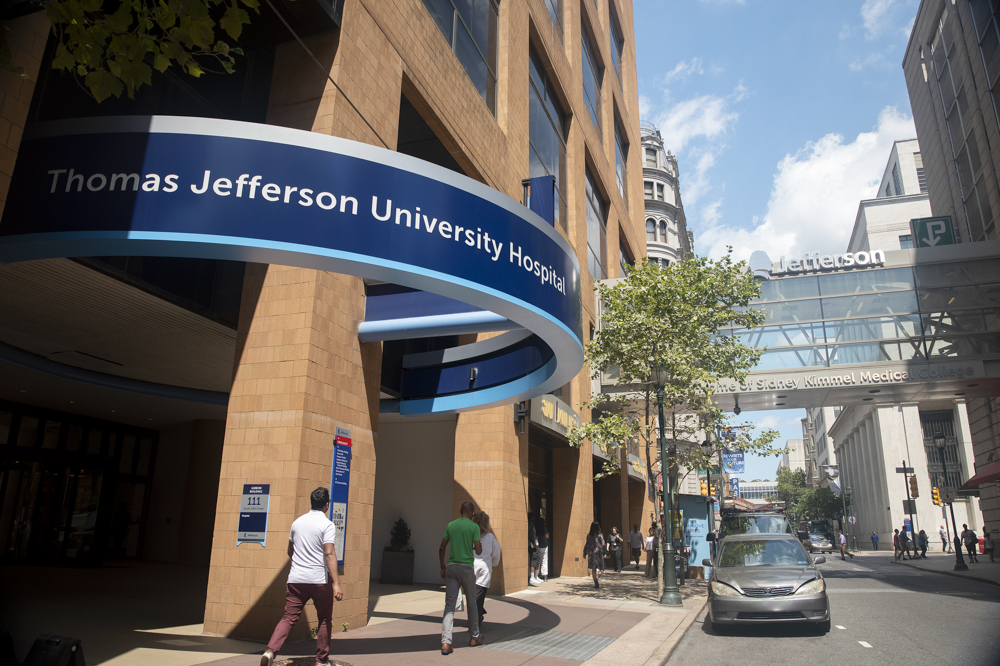
Thomas Jefferson University reports $83.5M Q3 loss, health system patient volumes up

Philadelphia-based Thomas Jefferson University, including Jefferson Health, reported a multimillion-dollar loss in the third quarter ending Sept. 30.

Five things to know:

1. Thomas Jefferson University reported an $83.5 million loss for the quarter, down significantly from a $12.8 million gain in the same period last year.

2. Thomas Jefferson University reported $29.9 million in operating revenue. Clinical operations reported an $87.3 million loss from operations, and the insurance operations reported a $7.1 million gain for the quarter.

3. The organization reported a -3.7 percent operating margin, compared to 0.9 percent for the third quarter last year.

4. Hospital inpatient admissions grew 30.4 percent year over year to 39,463 cases for the quarter. Outpatient observations were also up 21.6 percent to 11,744 cases. Outpatient visits were up 36 percent year over year to 524,200 visits.

5. Days cash on hand for clinical operations dropped by nearly 11 days since the start of the fiscal year to 158.5 days due to nonoperating investment losses and repaying Medicare advance payments.

Health system cash reserves plummet

Cash reserves, an important indicator of financial stability, are dropping for hospitals and health systems across the U.S.

Both large and small health systems are affected by rising labor and supply costs while reimbursement remains low. St. Louis-based Ascension reported days cash on hand dropped from 336 at the end of the 2021 fiscal year to 259 as of June 30, 2022, the end of the fiscal year. The system also reported accounts receivable increased three days from 47.3 in 2021 to 50.3 in 2022 because commercial payers were slow, especially in large dollar claims.

Trinity Health, based in Livonia, Mich., also reported days cash on hand dropped to 211 in fiscal year 2022, ending June 30, compared to 254 days at the end of 2021. Trinity attributed the 43-day decrease in cash on hand to “investment losses and the recoupment of the majority of the Medicare cash advances.”

Chicago-based CommonSpirit Health reported days cash on hand decreased by 69 days in the last year. The 140-hospital health system reported 245 days cash on hand at the 2021 fiscal year’s end June 30, and 176 days for 2022.

Lehigh Valley Health Network in Allentown, Pa., said unfavorable trends in the capital market led to investment losses and a drop in days cash on hand from 216 to 150 days in the 2022 fiscal year ending June 30. The health system also had a scheduled repayment of $191.1 million in advance Medicare dollars as well as $25 million in deferred payroll tax payments.

Philadelphia-based Thomas Jefferson University reported cash on hand for clinical operations dropped by 10.9 days in just the last quarter due to nonoperating investment losses and repaying government advances, which equaled about five days cash on hand. The health system reported 158.5 days cash on hand as of Sept. 30.

While the large health systems’ days cash on hand are dropping, they still have deep reserves. Smaller hospitals and health systems are in a more dire situation. Doylestown (Pa.) Hospital reported as of Sept. 30 the system had 81 days cash on hand, and Moody’s downgraded the hospital in June after the days cash on hand dropped below 100.

Kaweah Health in Visalia, Calif., saw reserves plummet since the pandemic began from 130 to 84 days cash on hand. Gary Herbst, CEO of Kaweah Health, blamed lost elective procedures, high labor costs, inflation and more for the system’s financial issues.

“The COVID-19 pandemic, and its aftermath, have brought District hospitals to the brink of financial collapse,” Mr. Herbst wrote in an open letter to Gov. Gavin Newsom published in the Visalia Times Delta. He asked Mr. Newsom to provide additional funding for public district hospitals. “Without your help, it will soon be virtually impossible for Medi-Cal patients to receive anything but emergency medical care in the State of California.”

Kaiser’s 22.5% raises avert nurse strike

Members of the California Nurses Association have reached a tentative agreement with Kaiser Permanente, averting a planned two-day strike by more than 21,000 registered nurses and nurse practitioners in Northern California.

Both sides announced the tentative agreement Nov. 17.

Union members at Kaiser Northern California facilities have been in negotiations since June, according to a CNA news release. Registered nurses and nurse practitioners in Northern California were set to strike Nov. 21 and Nov. 22.

The four-year tentative deal boosts wages for Northern California nurses by 22.5 percent over the life of the contract, according to a statement Oakland, Calif.-based Kaiser shared with Becker’s. Kaiser had previously proposed 21.25 percent in wage increases over four years.

“The tentative agreement is driven by the changing economy, including inflation, significant changes in the marketplace and our commitment to providing our employees with excellent pay and benefits to attract and retain the best nurses,” Kaiser’s statement says.

According to both sides, the tentative agreement also includes:       

  • An agreement to add more than 2,000 new registered nurse and nurse practitioner positions.   
  • Increased tuition reimbursement for nurses’ education.       
  • The creation of a new regional equity, diversity and inclusion committee.       
  • Language including agreement that healthcare is a human right.

We are very pleased with this new contract, which will help us recruit new nurses and retain experienced RNs and nurse practitioners,” CNA President Cathy Kennedy, RN, said in a news release. “We not only won the biggest annual raises in 20 years, but we have also added more than 2,000 positions across our Northern California facilities. This will ensure safe staffing and better patient care.”

Ms. Kennedy also praised Kaiser’s commitment “to a workplace that is free from racism and discrimination” and the health system’s agreement “that we must fight racial and ethnic disparities in healthcare outcomes.”

“The tentative agreement honors our Northern California nurses with a market-based economic package that accounts for inflation, accelerates our investments in staffing, and addresses workplace safety, diversity and equity, remote work, and other key matters in a way that is sustainable and benefits our members and patients as well,” Kaiser’s statement reads.

Union members in Northern California will vote on approving the new four-year contract over the next few weeks. Registered nurses at Kaiser Permanente Los Angeles Medical Center also reached a tentative agreement and will vote on the deal Nov. 22.

5 health systems hit with rating downgrades

A number of health systems experienced downgrades to their financial ratings in recent weeks amid ongoing operating losses and challenging work environments.

Here is a summary of recent ratings since Becker’s last roundup Sept. 21:

The following systems experienced downgrades:

Main Line Health (Radnor Township, Pa.) — downgraded debt rating from “AA” to “AA-” in November (Fitch Ratings)

The downgrade reflects “significant operating losses” in fiscal year 2022, ending June 30, and is in relation to $594 million of bonds the health system holds. While downgrading that specific rating, however, Fitch described the healthcare group’s outlook as stable and said that it will benefit from a good market position in a favorable service area with strong market share.

Fitch described “continued expense challenges” facing the hospital group over the next two years as part of its decision to downgrade the debt rating.

Hannibal (Mo.) Regional Healthcare System — lowered financial outlook in November from stable to negative amid uncertainty around the hospital group’s capital spending plans (Fitch Ratings)

“The Negative Outlook reflects uncertainty around capital spending and the potential issuance of new debt to address infrastructure issues at the system’s main campus and expand inpatient/outpatient capacity,” Fitch said. “A master facilities planning process has begun, but cost estimates and timing are not yet available and the board has not approved any potential projects.” 

Fitch also affirmed default ratings for HRHS at “A-.”

ChristianaCare (Newark, Del.) was issued a negative outlook in October (S&P Global Ratings)

Pressures from the pandemic and industry challenges have led to a “volatile operating performance” in the last three years, and ChristianaCare has a small revenue base compared to similarly rated health systems, S&P said,

“The negative outlook reflects [ChristianaCare’s] operating volatility and balance sheet deterioration that, while largely stemming from COVID-19 pandemic and industry pressures, are not characteristic of the ‘AA+’ rating level and could lead to a downgrade during the outlook period,” Chloe Pickett, an S&P credit analyst, said in the firm’s report.

The S&P also affirmed ChristianaCare’s “AA+” long-term rating based on the health system’s leading business position within its service area and healthy balance sheet, according to an Oct. 27 report.

MultiCare Health System (Tacoma, Wash.) had various debt obligations downgraded in October from”AA-” to “A+” (Fitch Ratings)

The downgrades included the healthcare system’s existing bond ratings and $430 million of fixed rate taxable notes as well as the group’s Issuer Default Rating.

“The downgrade of MultiCare’s IDR to ‘A+’ from ‘AA-‘ reflects the considerable operating stress the system is facing in the current fiscal year, in combination with balance sheet metrics that have moderated as a result of equity market volatility and a recent debt issuance,” Fitch said.

Wise Health System (Decatur, Texas) was downgraded to “BB+” from “BBB-” in regard to various debt obligations as it struggles with continued operating challenges (Fitch Ratings)

Wise Health System’s Issuer Default Rating and the ratings on series 2014A, 2021A, 2021B and 2021C hospital revenue bonds issued by Decatur Hospital Authority on behalf of Wise were all downgraded.

“The downgrade reflects the change in Fitch’s assessment of Wise’s operating risk and financial profiles to ‘bb’ from ‘bbb’ due to deterioration in the hospital’s operating performance through six-months (ended June 30) and the expectation of sizable operating and net losses in 2022,” Fitch said.

Illinois OKs Atrium, Advocate Aurora merger

The Illinois Health Facilities and Services Review Board unanimously approved a plan to change ownership for 10 Advocate Aurora facilities in the state covered by the system’s plan to merge with Charlotte, N.C.-based Atrium Health, the Chicago Tribune reported Nov. 14. 

Atrium and Advocate Aurora, dually headquartered in Milwaukee and Downers Grove, Ill., announced plans to merge into a 67-hospital system with upward of $27 billion in revenue in May. The merger would create one of the largest health systems in the country, with more than 1,000 sites of care across Illinois, Wisconsin, North Carolina, South Carolina, Georgia and Alabama, according to the report. 

The approval comes after the board voted in September to delay the approval. Board members’ concerns stemmed from the availability of information and their understanding about the deal. 

Since that meeting, Advocate Aurora has answered many of the board’s questions, such as the reasons for the combination and the proposed governance structure, according to the report. Some board members said they still wanted more information, but the board is required by law to approve certain types of applications as long as they are complete.

The board’s approval was needed for the merger because the affiliation is considered a change of 50 percent or more of the voting members of a nonprofit corporation’s board of directors that controls a healthcare facility’s operation, license, certification or physical plant and assets. The board of directors of Advocate Health — the combined system’s new name — will be made up of an equal number of members from Advocate Aurora and Atrium Health. 

Advocate Aurora shared the following statement with Becker’s on the board’s approval:

“Securing the Illinois Health Facilities and Services Review Board’s approval brings us one step closer to coming together with Atrium Health, which will allow us to improve the lives of our patients, the health of our communities and the opportunities for our team members. We look forward to closing, which we anticipate before the end of the year.”

Atrium shared the following statement with Becker’s:

“We are pleased to see that the process continues to move forward and remain optimistic our combination with Advocate Aurora Health will be finalized before the end of the year.”

$1B Hoag expansion will add 2 hospitals, up to 1,500 staff

Newport Beach, Calif.-based Hoag is spending $1 billion on a project that will add two specialty hospitals and expand its Sand Canyon Medical Center in Irvine, The Orange County Register reported Nov. 14.

Once completed, the project will have added between 1,000 to 1,500 employees, many of whom have specialized jobs and training, according to the report. 

The specialty hospitals — which will focus on women’s health, digestive illnesses and cancer — will have inpatient and outpatient facilities. Operating rooms will be housed in a new building, and pharmacy and labs in another. The project will feature six new buildings, including 155 inpatient beds, eight operating rooms and 120,000 square feet of outpatient facilities.

Construction is expected to be completed by 2025.

In 2025, the city is also expected to see the opening of UC Irvine’s $1.3 billion medical complex with a full-service hospital. Earlier this year, City of Hope opened an outpatient cancer center and is now building an adjacent cancer-focused hospital, which is also set to open in 2025.