


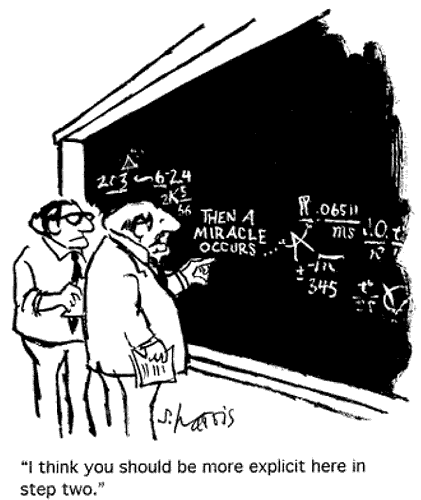
Cartoon – Coronavirus Planning
On Friday, the Bureau of Labor Statistics will release employment numbers for April that are expected to show a tragic and historic increase in unemployment. Consensus estimates anticipate more than 20 million jobs lost and an unemployment rate of 16 percent—a figure that may well be an underestimate given that millions of people may not be looking for jobs, effectively exiting the labor force and reducing the labor force participation rate. Moreover, state-level unemployment claims data show that this economic pain is being felt across the country, with sharp rises in joblessness in every state. And Thursday’s jobless claims release suggests that job losses have continued at high levels since the April unemployment survey was taken.
While the immediate cause of this spike in joblessness is, of course, the necessary stay-at-home orders and social distancing measures taken to respond to the crisis, the rise in unemployment—and how long it lasts—cannot be separated from choices made by the Trump administration. In understanding the state of the economy, as well as what comes next, the following three elements of this crisis must be understood:
There is an alternative path, however: Taking the necessary steps to address the public health crisis and ensure that people can go back to work safely and doing what is needed to address the immediate economic pain and avoid prolonged unemployment. As Congress and the administration consider an additional stimulus package, they should put in place necessary public health protections while providing robust aid to families, workers, and communities for as long as the crisis lasts. This will allow us to avoid double-digit unemployment from being a devastating reality for American families for the next year and a half or more.
The rise in unemployment over the past two months is a direct consequence of the public health crisis—one that could have taken a far less severe toll under an administration that had been better prepared for it and that had approached it more wisely. The Trump administration has failed to develop an evidence-based plan to end the coronavirus crisis. Instead, its mismanagement has resulted in widespread fear and uncertainty as to when it might be appropriate to reopen parts of the economy. President Trump did not take the pandemic seriously when cases first emerged in the United States; his administration failed to use the month of April—when the nation was largely shut down—to ramp up the testing, contact tracing, and other pieces necessary for the public health response. And now, Trump is pushing states to reopen too soon. Before people feel comfortable enough to once again venture out of their homes and reengage in work and other economic activities, we need to ensure the country has developed the necessary health infrastructure to allow us to gradually reopen our economy without sparking a second wave of infections.
The Trump administration and its allies are arguing that the way to solve the economic crisis is to open up the country, ending stay-at-home orders and engaging in aggressive efforts to force business to return to normal. But in the absence of public health measures that actually allow activity to return safely, the administration’s strategy appears to be one of “ignore and press on,” with potentially devastating results for workers and communities. This strategy includes:
These steps reflect an acceptance of elevated risks of transmission, and ultimately, death. And despite the president’s rhetoric, it will make it less likely that the economy can return faster.
First, it is clear that the public isn’t going to feel safe to return to normal economic activity absent additional public health measures. A recent Washington Post-University of Maryland poll found that “67 percent say they would be uncomfortable shopping at a retail clothing store, and 78 percent would be uncomfortable eating at a sit-down restaurant.” These results were similar both in states that had loosened restrictions and those that had not and is consistent with other data. As long as people are anxious that returning to normal activities could put them at risk of contracting the virus, the economy will be unable to recover.
Second, a strategy that fails to put in place the necessary protections against spreading the virus will increase transmission among the public, and especially workers, in ways that may force additional shutdowns and prolong the period of public health crisis. In sum, prolonged public health crisis equals a prolonged state of economic distress—extending the number of months with a job market like April’s. The best approach—an approach adopted by other countries who are faring better both with their health outcomes and their economic impacts—is a national plan to fight the virus that is based on testing, tracing, and isolation.
The CARES act provided large, necessary relief to most Americans, including assistance for workers, families, and small businesses. But this assistance will run out before the economic emergency is behind us, forcing the economy into unnecessarily prolonged hardship.
Indeed, the measures in the CARES Act both leave important gaps and will expire long before the economy is expected to return to normal. States and localities are facing extreme budget shortfalls. If action is not taken before state budget deadlines on July 1, states are likely to begin implementing layoffs of teachers and first responders and service cuts in the coming months that will cause additional job loss. Expanded unemployment insurance benefits expire at the end of July, removing an important lifeline for those out of work. While the direct payments in the CARES Act provided important assistance to families, the $1,200 per person payment will not be enough to sustain households through a prolonged crisis. The initial Paycheck Protection Program (PPP) support for small businesses has run out, and a second round of funding may soon run out too. And in important areas such as housing, food assistance, child care, and health coverage, among others, the CARES Act failed to do enough to address the hardship being felt today, let alone over a prolonged crisis—even as it provided generous aid to corporations.
As a result, under baseline projections—those that assume no further action on the part of the government—double-digit unemployment is expected to be a feature of the economy for at least the next year and a half. As noted above, the CBO estimates that the unemployment rate will remain near 10 percent at the end of 2021—many months after they predict that social distancing due to the pandemic itself ends.
Yet the Trump administration and congressional Republicans have indicated that they are prepared to accept this reality, or at best, offer solutions that do nothing to shift it. White House economic adviser Kevin Hassett said that another round of coronavirus relief legislation might not be necessary, and chief economic adviser Larry Kudlow said on Sunday that nothing has been decided yet and that “there’s kind of a pause period right now” and that “we will wait and see.” Senator McConnell has dismissed state and local aid as a “blue state bailout,” despite pain being felt in all states.
To the extent the administration or its allies have signaled a desire to act, they have focused on measures that would be woefully insufficient to address the economic challenges we face. Aside from the liability shield, Trump has signaled a push for poorly targeted corporate tax cuts or a payroll tax cut that would fail to benefit those who are out of work. An illustrative example of Trump’s approach is his call for removing limits on corporate deductions for meals and entertainment—effectively allowing companies to deduct expenses for sports tickets, golf trips, or visits to casinos—which would provide a benefit to corporations and their wealthiest executives but do little to help put money in the hands of those who need it.
As it considers another package to address this crisis, Congress has the opportunity to take a path that rejects double-digit unemployment as a lasting feature of this crisis. The approach Congress should take would allow economic activity to restart safely and ensure that, as the economy restarts, we are actually getting people back to work rather than accepting a recession that keeps millions unemployed.
First, that requires a sufficient public health response. The purpose of stay-at-home orders in the first place was to suppress transmission to low levels and buy time to put in place extensive testing and contact tracing programs, but we have yet to meet those goals. Nationally, we still need to increase our testing capacity and reach at least 500,000 tests a day; scale up contact tracing—both manually and by apps that meet privacy standards—in order to isolate people who test positive as well as their contacts; and have in place a far more robust disease surveillance system.
And second, it requires an economic response that offers relief that both addresses immediate pain that families, small businesses, and communities are facing and is sufficient to build back to a stronger economy.
In particular, the package must be:
The administration and its allies appear content to accept a prolonged period of public health and economic harm that is a result of the mismanagement of the COVID-19 crisis to date—essentially condemning the nation to a greater toll from the virus itself and a much longer period of economic distress. It must be clear that the harsh reality of the April jobs report—and the much broader pain that has been felt over recent weeks—was the result of both failed policy decisions and mismanagement. By the same token, we have the choice going forward as to whether we accept further pain or take steps that would both keep people healthy and get Americans back to work.

You’re either a liberal snowflake controlled by big government or a greedy conservative willing to sacrifice Grandma for the economy. It took less than two months for Americans to get here.
Wear a mask? You’re a liberal snowflake controlled by big government. Want to reopen restaurants? You’re a greedy conservative willing to sacrifice Grandma for the economy.
It took less than two months for the coronavirus pandemic to become just the latest battle in the culture wars.
With the country still in the firm grip of the coronavirus pandemic, conservatives are on social media and Fox News stoking protests that argue masks, stay-at-home orders and social distancing violate constitutional rights and are causing unacceptable harm to the economy.
Liberals, at the same time, say personal liberties must be sacrificed for public health, even as millions file for unemployment and more than a quarter of the work force is jobless in some states.
Take a look at what two governors — one from a reliably Republican state and another from a reliably Democratic state — said this week.
“We have a public health crisis in this country, there’s no doubt about it,” Gov. Tate Reeves of Mississippi said in an appearance on “Fox News Sunday.” “But we also have an economic crisis.”
“We have turned the corner and we are on the decline,” Gov. Andrew M. Cuomo said, citing an article showing that the death rate has fallen by half in New York City, in his daily briefing on Wednesday. “To me, that vindicates what we are doing here in New York, which says: Follow the science, follow the data, put the politics aside and the emotion aside. What we’re doing here shows results.”
The problem with all these politics? Epidemiology.
So far, the virus has hit Democratic states the hardest, with the most cases per capita in five deeply Democratic states — New York, New Jersey, Massachusetts, California and Illinois. Cities have borne the brunt of the caseload. And African-Americans and Latinos — a key part of the Democratic coalition — are getting sick and dying of the virus at higher rates.
But anyone who believes this virus is fading away — or somehow contained to urban areas — is engaging in some serious magical thinking.
At least 25,000 new coronavirus cases are identified almost daily, meaning that the total in the United States — which has the highest number of known cases in the world — is expanding daily by 2 to 4 percent.
A New York Times analysis found that 18 of the states that are reopening had an increase of daily average cases over the last two weeks. Fifteen of those states are led by Republican governors.
Three of the top five states where the virus is spreading the fastest — Texas, Georgia and Ohio — have Republican governors and Republican-controlled legislatures. All three have moved toward reopening.
In the Midwest and South, smaller towns and more rural areas have suddenly been hit hard as the virus tears through nursing homes, meatpacking plants and prisons.
The nation’s highest per capita infection rate can be found in Trousdale County, Tenn., a rural county where a prison has become a hot spot. Businesses in the county are reopening this week.
In the Trump era, rural counties like Trousdale have represented the backbone of the Republican base. In Trousdale, nearly 67 percent of the county supported President Trump in 2016. Over all, the average margin of victory in rural counties won by Republicans was nearly 47 percent in 2016.
Rural areas tend to be older and have a larger share of the population with pre-existing medical conditions, making them far more vulnerable to the worst health effects of the virus.
Republican governors and conservative activists may think the coronavirus is an urban problem. Or a density problem. Or, quite frankly, a Democratic problem.
They may soon find out that it’s not.

Several hours later, we got another example of the White House resisting what those health experts are advising.
The Associated Press reported around midnight that the White House had shelved planned guidelines from the Centers for Disease Control and Prevention. The document, which was due nearly a week ago, was aimed at providing local authorities with step-by-step guidance on how to reopen:
The 17-page report by a Centers for Disease Control and Prevention team, titled “Guidance for Implementing the Opening Up America Again Framework,” was researched and written to help faith leaders, business owners, educators and state and local officials as they begin to reopen.It was supposed to be published last Friday, but agency scientists were told the guidance “would never see the light of day,” according to a CDC official. The official was not authorized to talk to reporters and spoke to The Associated Press on the condition of anonymity.
A coronavirus task force official told The Washington Post that the document has not been completely shelved but was in the process of being revised because it was “overly specific.” The official also indicated that it was felt the document was too broad, as “guidance in rural Tennessee shouldn’t be the same guidance for urban New York City.”
The denial, though, reinforces that the White House is reluctant to submit to the CDC’s more detailed prescriptions for reopening the economy. And it’s difficult to divorce the delay in this document’s publication from Trump’s anxiety to reopen the economy — and the tension that has created with past guidelines.
The administration in mid-April issued phased advice on when areas should start to reopen places such as restaurants and other nonessential businesses. But many states have moved forward with certain elements of reopening without actually satisfying those guidelines. Most notably, they have begun to reopen without meeting the Phase One guideline that they should see a decrease in confirmed coronavirus cases over a 14-day period.
As The Post’s Philip Bump reported, some states that have pushed forward with reopening have also seen an increase in cases — which would prevent them from satisfying the requirement for moving into Phase Two. That requirement is that the decline should continue for another 14 days after Phase One begins.
Issuing a detailed document would seemingly complicate further reopenings, because it would again restrict what states and local authorities are supposed to do.
The Washington Post’s Lena H. Sun and Josh Dawsey previewed what the document was set to look like last week. And they also obtained a draft of the document. The new guidelines were to go beyond the initial ones in prescribing specific actions that could be taken in each phase of the reopening. Advocates for reopening have worried that strict guidance could make it difficult for businesses, churches, child-care centers and other facilities to actually function.
Trump, who has long signaled a desire to begin reopening that economy sooner rather than later, has doubled down on that rhetoric in recent days. Despite a steady national death rate that approached previous highs on Tuesday and Wednesday, and even though cases continue to increase outside the major U.S. hotbed of New York City, Trump on Tuesday signaled that we are entering the “next stage” of reopening the economy.
“Thanks to the profound commitment of our citizens, we’ve flattened the curve, and countless American lives have been saved,” Trump said. “Our country is now in the next stage of the battle: a very safe phased and gradual reopening. So, reopening of our country — who would have ever thought we were going to be saying that? A reopening. Reopening.”
Trump has been resistant to the advice of the health officials around him, from the early days of the outbreak when he continuously downplayed the severity of the situation. On several occasions, this tension has boiled over.
We’re also hearing from those officials less and less. The CDC long ago ceased holding briefings on the coronavirus outbreak, and the White House coronavirus task force briefings, which often featured health experts Anthony S. Fauci and Deborah Birx, have now been halted in favor of less-frequent and less-coronavirus-focused briefings from McEnany. Fauci has also been prevented from testifying to the Democratic-controlled House, although he is still slated to testify in the GOP-controlled Senate and has continued doing some interviews. The cumulative effect is that these health experts aren’t on the record as much as the effort to reopen the economy begins in earnest.
In the place of those public comments, the CDC guidelines were to provide firm and detailed advice from those officials for the new stage. But for reasons that seem pretty conspicuous, we still don’t have them.

Other countries — even some hit hard by the coronavirus — are beating back their outbreaks more successfully than the U.S., Axios’ Dave Lawler and I report.
Why it matters: The number of new cases every day is holding steady in the U.S., but it’s not going down — a key benchmark many other countries achieved before loosening their lockdowns and social distancing measures.
In some of Europe’s hardest-hit countries, case counts seemed to skyrocket uncontrollably even amid some of the world’s strictest lockdowns.
America’s daily rate climbed faster and higher (due in part to its larger population), but appears to have peaked at around 30,000 new cases per day in the first week of April.
Between the lines: The U.S. didn’t lock down as tightly as some of those countries, and made a host of mistakes early in the response.
The big picture: “It seems that this is a controllable pandemic without it having to run its natural course,” says Columbia University economist Jeffrey Sachs.

%2Farc-anglerfish-washpost-prod-washpost%2FEAJ46XUOLMI6VEZCUKPHL374SM.jpg&w=908)
Social distancing isn’t having the effects many had hoped for.
Despite encouraging signs on the nation’s East and West coasts, daily diagnosed cases of the novel coronavirus appear to still be on the rise in about 20 states. A number of rural counties have become unexpected hot spots in recent weeks, including in the Black Belt region of Mississippi and Alabama and in communities throughout Iowa and northern Texas around the Oklahoma panhandle. The country’s overall daily figures of diagnoses and deaths have plateaued, worrying health policymakers as many states move to reopen parts of their economy.
Hot spots are shifting geographically from New York City to areas around the country. For the past month, the figures have hovered around 30,000 diagnosed cases and around 2,000 deaths every day, former Food and Drug Administration commissioner Scott Gottlieb noted in a Wall Street Journal op-ed.
“Everyone thought we’d be in a better place after weeks of sheltering in place and bringing the economy to a near standstill,” he wrote. “Mitigation hasn’t failed; social distancing and other measures have slowed the spread. But the halt hasn’t brought the number of new cases and deaths down as much as expected or stopped the epidemic from expanding.”

President Trump, who last week suggested the novel coronavirus would disappear even without a vaccine, has now upgraded his prediction of fatalities to as many as 100,000 people. Nonetheless, he said in a New York Post interview yesterday that Americans are “starting to to feel good now. The country’s opening again. We saved millions of lives, I think.”
The report, which the Centers for Disease Control quickly disavowed as an unfinished projection, suggests new cases could surge to 200,000 per day and daily American deaths could number more than 3,000 by June 1. That’s far more than what other models predict, but the Johns Hopkins epidemiologist who prepared it told my colleagues William Wan, Lenny Bernstein, Laurie McGinley and Josh Dawsey that 100,000 new cases per day by the end of the month isn’t out of the realm of possibility.
Former FDA commissioner Scott Gottlieb:
University of Michigan professor Justin Wolfers:
That’s not the only model showing discouraging figures for the month of May. A model out of the University of Washington, relied upon heavily by the administration, yesterday upgraded its U.S. fatality predictions for the virus’s first wave from 72,433 deaths to 134,475 deaths by Aug. 4.
These aren’t the trends many policymakers had hoped to see, after most Americans spent seven weeks at home under an unprecedented lockdown that has torched the once-booming economy and thrust millions into economic uncertainty. Protests against extended lockdowns are starting to mount around the country, and many governors have assembled and even embarked upon gradual plans to reopen businesses, schools and other public areas.
Nonetheless, a new Washington Post-University of Maryland poll out this morning shows sizable majority of Americans oppose the reopening of restaurants, retail stores and businesses.
Executive producer of 7News WHDH in Boston:
Social distancing did accomplish some important objectives. It undoubtedly saved the health-care system from being crushed by an overwhelming caseload of sick patients all at once.
And the United States is still outranked by half a dozen European countries when it comes to deaths per capita. The U.S. death rate is about 206 deaths per million people. That figure is 538 in Spain, 372 in France, 481 in Italy, 432 in the United Kingdom and 207 in Switzerland, according to a tally by Mother Jones.

New cases and deaths across the whole U.S. are about where they were 20 days ago, my colleague Philip Bump reports. He created a graphic where you can view the three-day averages of cases, deaths and tests performed by state (check it out here).
“The back of the mountain doesn’t look the way the front did,” Philip writes. “We saw a steady, exponential rise in confirmed cases and deaths each day for several weeks. But particularly with daily case totals, the period after the peak nationally has looked more like a plateau than a downward slide.”
Daily cases appear to be rising significantly in Delaware, Illinois, Indiana, Minnesota and Virginia. They’re also trending upward in Arizona, Colorado, D.C., Iowa, Kansas, Maryland, Mississippi, Nebraska, New Hampshire, New Mexico, North Carolina, Tennessee, Texas, Utah and Wisconsin.
Andy Slavitt, former head of the Centers for Medicare and Medicaid Services:
“There are so many emerging areas still throughout the country that our group has been trying to wave our hands about,” Marynia Kolak, a health and spatial data science researcher at the University of Chicago, told me.
Kolak and her colleagues are tracking covid-19 cases and deaths at the county level. They’ve been increasingly spotting clusters of the disease in rural areas. Kaiser Family Foundation researchers have also found that rural areas are experiencing a faster growth in cases, even as their total numbers remain far below those seen in urban settings.
One example: Five counties in Minnesota with significant meat-processing plants. State officials said about a quarter of cases reported over the weekend came from those counties.
One is Nobles County, home to a JBS USA pork processing plant in Worthington, with a population of around 22,000. It is scheduled to partially reopen this week, under an order by Trump to keep meat plants open.
The outbreaks in counties with meat-processing plants “illustrates how powerfully situations can change at the community level,” said Jan Malcolm, commissioner of Minnesota’s Department of Health.
Malcolm stressed how hard it is to stem the spread of the virus in these types of facilities.
“These are particularly challenging investigations,” Malcolm said. “Many of the workers involved don’t have phones, don’t provide phone numbers, aren’t answering calls. It’s been a very labor-intensive, shoe-leather kind of an approach.”
/GettyImages-142622448-5895c40f5f9b5874eeee3c2b.jpg)
After demonstrators filled the streets near the several state capitols last month demanding that their political leaders reopen the states, Trump was asked his view on the protesters, many of whom were photographed carrying Make America Great Again signs. He appeared to embrace them: “They seem to be protesters that like me.”
“These are people expressing their views,” he also told reporters on April 17. “I see where they are, and I see the way they’re working. They seem to be very responsible people to me, but they’ve been treated a little bit rough.”
Shortly after, he took to Twitter and seemed to affirm their protests by calling for these states’ liberation.
Other Trump allies have compared protesters to civil rights activists protesting racism — despite some of them carrying Confederate flags and flags with swastikas.
Stephen Moore, a member of the White House council to reopen the country, praised those taking to the streets.
“I call these people the modern-day Rosa Parks — they are protesting against injustice and a loss of liberties,” he told The Washington Post earlier this month.
Trump was asked about Moore’s words the following day at a White House news briefing. “Yeah, I can see where he’s coming from. Strong statement. Strong statement,” Trump said.
And GOP-endorsed Houston City Council member Michael Kubosh invoked Parks as he violated a stay-at-home order this past weekend in a restaurant.
“Sometimes civil disobedience is required to move things forward, and so that’s why we remember Rosa Parks,” he told Houston’s NBC affiliate.
Conservative radio host Dennis Prager, who has questioned the constitutionality of the government advising Americans to stay at home, also invoked Parks while discussing his plans to rebut some recommendations from the Centers for Disease Control and Prevention to slow the spread of the coronavirus.
“Civil disobedience in the United States has a very, very, very noble history,” he said Thursday. “Rosa Parks wouldn’t sit in the back of the bus because the disgusting law of blacks had to sit in the back of the bus in some Southern cities in the United States. Should she have obeyed the law?”
Parks protested discrimination by refusing to give up her seat on a bus in Montgomery, Ala. Her defiant act is largely viewed as the beginning of the civil rights movement. But when it comes to modern-day protests about racial injustice, Trump and his allies often respond harshly.
After NFL players grabbed headlines for regularly taking a knee during the national anthem to protest racism and police brutality, Trump said they should be fired. At a September 2017 rally in Huntsville, Ala., the president said: “Wouldn’t you love to see one of these NFL owners, when someone disrespects our flag, to say: ‘Get that son of a bitch off the field right now. Out. He’s fired. He’s fired.’ ”
Moore, who served as an economic adviser to Trump, also criticized these athletes’ protests, calling them “shameful and unpatriotic antics.” And Prager called them “divisive.”
And when Black Lives Matter activists interrupted a Bernie Sanders rally in August 2015, Trump suggested that he might respond violently to protesters doing the same to him.
“That will never happen with me,” he told reporters. “I don’t know if I’ll do the fighting myself or if other people will, but that was a disgrace. I felt badly for him. But it showed that he’s weak.”
And multiple personalities on Fox News have praised the “open up” protesters, comparing them to disadvantaged groups around the world.
Yet the same network has regularly showed its most prominent voices criticizing Americans protesting historically marginalized groups.
In June 2018, Fox host Laura Ingraham said athletes critical of Trump and his attacks on athletes protesting racism were “bratty”:
It’s not about bowing down to the president. He doesn’t want you to disrespect the country, the flag, the anthem, which is what these bratty players are doing, using the excuse of Black Lives Matter or some other issue that they probably haven’t even read up on. They just repeat whatever Colin Kaepernick says on any given day. And they think they’re a member of a cool club by doing this. It’s ridiculous.
The inconsistency in approach to these protesters is sparking frustration with many black Americans, a demographic that overwhelmingly disapproves of Trump but that his campaign is hoping to make some gains with in 2020. To many black Americans, Parks is an icon whose act was a pivotal step in helping eradicate American laws that made treating black people as second-class citizens legal. Whatever issues Americans have with government leaders mandating that people stay home, it is quite a stretch to compare those orders to the state-sanctioned racism that Parks was combating.
 HENRY KOTULA