Amazon and several other major companies have made numerous attempts to “disrupt” health care over the years without much success. But new acquisitions in primary care, home health care, and more may allow them to more successfully expand into the industry, David Wainer writes for the Wall Street Journal.
Competition heats up in the health care industry
According to Wainer, the United States spends a greater proportion of its economy on medical services than any other developed nation, making health care “too big of an opportunity to ignore” for many companies, including those in technology, retail, and more.
For example, Amazon has launched several forays into health care in recent years, although not all of them have been successful. Some of these health care efforts include its now defunct partnership with Berkshire Hathaway and JPMorgan Chase, as well as Amazon Care, the company’s primary care service that will shut down at the end of the year.
Amazon has also acquired several smaller health care companies in an effort to expand its reach. In 2018, Amazon purchased PillPack for $1 billion as a way to expand its online pharmacy business. Similarly, Amazon in July reached an agreement to acquireOne Medical, a primary care company, for roughly $3.9 billion.
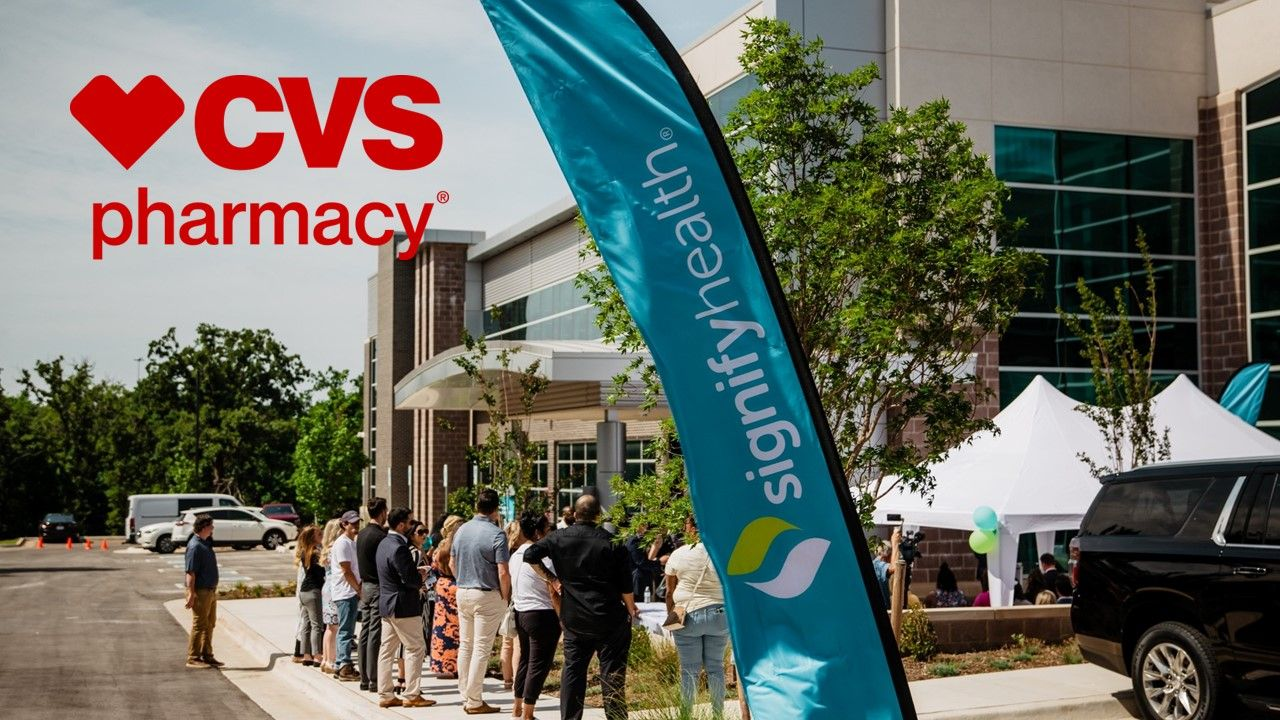
Several other companies, including retailers like Walmart and Walgreens and large insurers like UnitedHealth Group* (UHG) and CVS Health‘s Aetna, are also looking to expand their health care offerings. In fact, CVS announced last week that it had purchased home health care company Signify Health for roughly $8 billion—beating out several other competitors.
So far, “[s]hifting social attitudes and market conditions have helped fuel the wave” of health care acquisitions from major companies, Wainer writes, and more are likely to occur going forward.
What companies are targeting in health care
In contrast to the more traditional fee-for-service model, many health care startups are moving toward value-based care, which encourages providers to help prevent illnesses, rather than just treat them.
According to Wainer, UHG, which includes a pharmacy benefit manager, an insurance business, and 60,000 physicians, has made the most progress transitioning to value-based care so far. For example, many of the multi-specialty physician practices UHG has purchased through its medical provider arm Optum Care focus on proactively providing patients home, virtual, and on-site care to help them stay out of the hospital.
In addition, UHG and Walmart last week announced a partnership to provide services and “improve the patient experience” for certain Medicare Advantage enrollees. Through the partnership, UHG will use analytics to help Walmart clinics deliver value-based care to patients.
Aside from value-based care, many companies, including Amazon and CVS, are looking to expand their businesses into primary care. Currently, there is a nationwide shortage of primary care doctors, which has led to worse health outcomes for many Americans.
By providing primary care services directly to consumers, Amazon and other companies are hoping to use the relationship between patients and their providers to sell even more services, such as prescription drug deliveries and more.
Overall, “staying healthy probably will never be the sort of frictionless, one-click experience that Amazon pioneered,” Wainer writes, but the company’s current involvement in the health care industry “is a testament to the fact that there’s a lot of money to be made by fixing America’s broken system.” (Wainer, Wall Street Journal, 9/9)
*Advisory Board is a subsidiary of Optum, a division of UnitedHealth Group. All Advisory Board research, expert perspectives, and recommendations remain independent.
On Monday, a federal judge denied the Department of Justice (DOJ)’s attempt to block UHG’s $13B purchase of Change Healthcare, a technology firm specializing in claims processing and data analytics.
The DOJ sought to block the purchase on antitrust grounds, arguing that UHG would have access to technologies that its rivals use to compete, but the judge, writing in a sealed ruling, found the DOJ’s case inadequate. It is unclear at this point whether the DOJ will appeal.
Change will now join UHG’s OptumInsight division, though in response to anticompetitive concerns, the ruling ordered UHG to sell part of Change’s claims payment and editing business, as it had already planned to do.
The Gist: Antitrust regulators have had much greater success at challenging horizontal healthcare mergers but have struggled to find solid footing to fight vertical deals.
The UHG-Change case was closely watched in part because of the precedent it would have set in terms of holding “platform” aggregators in check. As UHG and other healthcare titans continue to acquire assets up and down the value chain (physician practices, ambulatory surgery centers, clinics, telehealth capabilities, risk products), it’s increasingly clear that the government will face an uphill climb to question the competitive effects of these vertical M&A activities.
A spokesperson for RWJBarnabas Health said the case is “yet another in a series of baseless complaints filed by … an organization whose leadership apparently prefers to assign blame to others rather than accept responsibility for the unsatisfactory results of their own poor business decisions and actions over the years.”
A lawsuit filed last week accuses RWJBarnabas Health of “a years-long systemic effort” to hamper competition and monopolize acute care hospital services in northern New Jersey.
The case brought by CarePoint Health to a U.S. District Court accuses the state’s largest integrated healthcare delivery system of “aiming to destroy the three hospitals operated by CarePoint as independent competitors” with the support of healthcare real estate investors and Horizon Blue Cross Blue Shield, the state’s largest health insurer.
CarePoint Health includes the 349-bed Christ Hospital, 224-bed Bayonne Medical and 348-bed Hoboken University Medical Center (HUMC).
The group said RWJBarnabas intended to force the first two hospitals to shut down but acquire the third due to its more profitable payer mix.
“RWJBarnabas Health’s] goal explicitly disregarded the needs of the poor, underinsured and charity care patients which CarePoint serves in its role as the safety net hospital system in Jersey City and surrounding areas,” CarePoint wrote in the lawsuit.
The slew of alleged tactics listed in the lawsuit largely surround RWJBarnabas Health’s “serial acquisitions” of hospitals, providers and real estate that “has gone unchecked by the state and [New Jersey Department of Health],” CarePoint wrote.
This included an alleged bad faith proposal to acquire Christ Hospital and HUMC, the true intent of which CarePoint said was to “gain market knowledge and gather competitive intelligence, and use this newly-acquired information to freeze programmatic growth and any significant hiring or construction at Christ Hospital.” The process had a negative impact on CarePoint’s employee retention and staffing, according to the suit.
The plaintiff also alleged that RWJBarnabas used its political connections to influence whether state departments granted CarePoint Certificates of Need for multiple revenue-generating projects as well as COVID-19 relief funding.
Further, CarePoint accused RWJBarnabas of strategically adjusting its service offerings in competitive markets to drive uninsured or underinsured patients to CarePoint facilities while using its relationships with Horizon and ambulance operators to drive emergency room traffic and well-insured patients, respectively, to competing locations.
These collective actions constitute violations of the Sherman Antitrust Act as well as the New Jersey Antitrust Act, CarePoint wrote.
“The idea that [RWJBarnabas Health] would use its influence to jeopardize the health of that community and the care providers of a competing hospital not only directly contradicts its own vision, but clearly demonstrates that [RWJBarnabas Health] is far more interested in anti-competitive and predatory business activities than serving the New Jersey community,” CarePoint wrote.
RWJBarnabas Health discounted the allegations in an email statement.
“This is yet another in a series of baseless complaints filed by CarePoint, an organization whose leadership apparently prefers to assign blame to others rather than accept responsibility for the unsatisfactory results of their own poor business decisions and actions over the years,” a spokesperson for the system told Fierce Healthcare. “RWJBarnabas Health has a longstanding commitment to serve the residents of Hudson County, and is proud of the significant investments we have made in technology, facilities and clinical teams as we advance our mission.”
RWJBarnabas Health treats over 3 million patients per year and employs 37,000 people. The academic healthcare system runs 12 acute care hospitals and four specialty hospitals alongside other locations and services. It disclosed more than $6.6 billion in total operating revenues across 2021.
The system’s merger and acquisition activity placed it in the federal spotlight this past year after the Federal Trade Commission moved to block its planned integration of New Brunswick-based Saint Peter’s Healthcare System. The deal was called off in June.
MercyOne Health System is now a full member of Livonia, Mich.-based Trinity Health.
Trinity Health completed its acquisition about five months after entering into an agreement with CommonSpirit Health to acquire all facilities and assets of Iowa-based MercyOne. MercyOne was founded in 1998 through a collaboration between Catholic Health Initiatives, now CommonSpirit, and Trinity Health.
“For close to 25 years, we have served Iowa communities. With MercyOne now fully part of Trinity Health, we are a stronger and more unified system that will strengthen MercyOne’s ability to serve our patients, colleagues, and communities,” said Mike Slubowski, president and CEO of Trinity Health, in a news release.
Intermountain Healthcare reported net income of $2.7 billion in the first six months of the year, despite a heavy loss on investments and flagging operating income.
The 46% year-over-year jump in net income for the Utah-based nonprofit was spurred by more than $4 billion in contribution from its merger with SCL Health that closed in April, according to recent financial documents.
Intermountain and SCL entered into a merger agreement to combine their health systems in December. The merger was completed in April, creating a $12 billion system and expanding Intermountain’s reach into Colorado.
In its first financial filing since the affiliation, 33-hospital Intermountain, which also manages hundreds of clinics across seven states, reported revenues of $6.5 billion in the first six months of 2022, up 25% year over year.
Expenses climbed 31% to $5.9 billion, driven primarily by growth in employee compensation and benefits and increasingly pricey supplies.
Net operating income was $285 billion, down 38% year over year.
Intermountain’s inpatient admissions and hospital outpatient visits ticked down 1% and 7% respectively, though its emergency rooms visits climbed 11%. Visits at the system’s non-hospital clinics were also up 11%.
Inpatient surgeries were down 2% while outpatient surgeries were up 4%, suggesting a broader shift away from care being delivered in the hospital setting.
Intermountain’s results mirror those of other large U.S. systems in 2022 so far, as major for-profit chains report lower operating income and admissions. Tight competition for labor amid ongoing workforce shortages has resulted in skyrocketing labor expenses while inflation and supply chain pressures has ratcheted up the cost of hospital supplies needed to provide patient care.
Some of the biggest nonprofits in the U.S. have reported net losses in the second quarter, including Kaiser Permanente and Sutter Health. Nonprofit giant Providence reported an operating loss of $934 million in the first half of 2022, citing cost and operational stressors. Providence plans to restructure and cut executive roles in a bid to become a nimbler organization.
On Tuesday, ratings agency Fitch said its outlook for nonprofit hospitals is “deteriorating” amid elevated expense pressures, along with investment losses.
On Friday, Intermountain named Lydia Jumonville as interim CEO after Marc Harrison announced plans to depart the Salt Lake City-based system for the venture capital firm General Catalyst. Intermountain’s board is conducting a national search for a permanent chief executive, which it hopes to complete by the fall.
ChristianaCare signed a letter of intent in February to acquire Crozer Health from Prospect Medical Holdings. The health systems announced Aug. 18 that the deal will not move forward.
Wilmington, Del.-based ChristianaCare and Los Angeles-based Prospect Medical Holdings said significant changes in the economic landscape since the letter of intent was signed in February impacted the ability of the deal to move forward.
“Both organizations worked very hard to reach a final agreement and have significant respect for each other, and remain committed to caring for the health of those in Delaware County,” ChristianaCare and Prospect Medical Holdings said in a joint news release.
Springfield, Pa.-based Crozer Health includes four hospitals and was acquired by Prospect Medical Holdings in 2016.
Rural communities with struggling hospitals often turn to outside investors willing to take over their health care centers. Some are willing to sell the hospitals for next to nothing to companies that promise to keep them running.
ERIN, Tenn. — Kyle Kopec gets a kick out of leading tours through the run-down hospitals his boss is buying, pointing out what he calls relics of poor management left by a revolving door of operators.
For instance, at a hospital in this town of 1,700 about a 90-minute drive northwest from Nashville, the X-ray machine is beyond repair.
“This system is so old, it’s been using a floppy disk,” said Kopec, 23, marveling at the bendy black square that hardly has enough memory to hold a single digital photo. “I’ve never actually seen a floppy disk in use. I’ve seen them in the Smithsonian.”
There’s a point to exposing these rural hospitals’ state of disrepair — the company Kopec works for, Braden Health, is buying buildings worth millions of dollars for next to nothing with a promise to keep running them as health centers serving their communities. Braden for its part, thinks it can run them more effectively than the previous owners and turn a profit.
The hospitals Braden Health is taking over sit in one of the worst spots in one of the worst states for rural hospital closures. Tennessee has experienced 16 closures since 2010 — second only to the far more populous state of Texas, which has had at least 21 closures.
The local governments that own these facilities are finding that remarkably few companies — with any level of experience — are interested in buying them. And those that are willing don’t want to pay much, if anything.
Braden Health’s Kyle Kopec holds up a sample of diagnostic images left behind at an abandoned hospital they’re taking over. They have to figure out what to do with old medical records stacked in boxes.
“When you’re on the ropes or even got your head under water, it’s really difficult to negotiate with any terms of strength,” said Michael Topchik, director of the Chartis Center for Rural Health, which tracks distressed rural hospitals closely. “And so you, oftentimes, are choosing whoever is willing to choose you.”
At this point, large health systems have already acquired or affiliated with the hospitals that have the fewest problems, Topchik said. The hospitals that are left are those that other potential buyers passed on. Turning a profit on a small rural hospital with mostly older or low-income patients can be challenging. Some operators who take over rural hospitals have gotten in trouble with insurers and even law enforcement for shady billing practices.
“You can make it profitable,” Topchik said. “But it takes an awful lot to get there.”
Dr. Beau Braden, who runs Braden Health, used his savings and some inherited wealth to get into the hospital-buying business in 2020. An emergency room doctor and addiction specialist, he previously tried to build a hospital in southwestern Florida, where he owns the large rural clinic in Ave Maria. After running into regulatory roadblocks, he saw more opportunity in reopening hospitals — which brought him to Tennessee.
“A lot of people aren’t willing to put in the time, effort, energy, and work for a small hospital with less than 25 beds. But it needs just as much time, energy, and effort as a hospital with 300 beds,” Braden said. “I just see there’s a huge need in rural hospitals and not a lot of people who can focus their time doing it.”
Braden Health’s corporate headquarters has 40 employees, according to Kopec, who is Braden’s second in command as the company’s chief compliance officer. He had limited work experience in hospitals before helping lead a hospital-buying spree at Braden Health.
Braden Health is a limited liability company and privately held, so it doesn’t have to publicly share much about its financial figures. But in filings for a certificate of need that outlines why a health care facility should be allowed to operate, Braden revealed $2 million in monthly revenue from the one hospital it ran in Lexington, Tennessee, and its balance sheet showed more than $7.5 million cash on hand.
Dr. Beau Braden (left) and Kyle Kopec talk to staffers gathered at the nurse’s station inside Houston County Community Hospital in Erin, Tennessee. Braden Health bought the facility for $20,000 ― a price that is mostly paying for the one piece of medical equipment deemed to have any value, a 2016 ambulance with 180,000 miles.
Since buying that Lexington hospital in 2020, Braden Health has signed deals for three other failing or failed hospitals and has looked at acquiring at least 10 others, mostly in Tennessee and North Carolina. Braden Health’s strategy is to build mini-networks to share staff and supplies.
At the hospital in Erin, much of the facility’s equipment is older than Kopec. And he said using outdated technology has caused Medicare to penalize the hospital with reduced payments.
The attic houses a ham radio system that seemingly never got much use, Kopec said on his way out to the roof. He wanted to show how the giant HVAC system can be controlled only from a rusty side panel accessible by a ladder. Down below, an emergency room has never been used. During a recent renovation that predated Braden Health’s ownership, its doors were built too narrow for a gurney, among other design flaws.
An old operating room is temporarily housing the ER while Braden Health starts work on new renovations. The Tennessee attorney general, who must approve any sale of a public hospital to private investors, signed off in July.
To prevent this hospital’s closure in 2013, Houston County bought it for $2.4 million and raised taxes locally to subsidize operations. “We had no business being in the hospital business,” Mayor James Bridges said. “The majority of county governments do not have the expertise and the education and knowledge that it takes to run health care facilities in 2022.”
Those with the most experience, like big corporate hospital chains based in Nashville, have been getting out of the small hospital business, too.
Communities have seen unqualified managers come and go. In Decatur County, where Braden Health is also taking over the local hospital, the previous CEO was indicted on theft charges that remain pending. And the Tennessee comptroller determined the hospital helped endanger the finances of the entire county.
“You’re looking to someone who supposedly knows what to do, who can supposedly solve the issue. And you trust them, then you’re disappointed,” said Lori Brasher, a member of Decatur County’s economic development board. “And not disappointed once, but disappointed multiple times.”
Brasher expressed much more confidence in Braden Health, which she said has concrete plans to reopen, though the timing has been delayed by an unresolved insurance claim from a burst water line that flooded a wing of the hospital.
Local residents still have trouble stomaching the sticker price: $100 for a property valued at $1.4 million by the local tax assessor. In addition to that low price, Braden Health won tax breaks for committing to invest $2 million into the building.
The Houston County hospital is valued at $4.1 million by the property assessor. But the final sale price was just $20,000 — and that wasn’t for the land or the building. Kopec said the amount was for a 2016 ambulance with 180,000 miles — deemed the only equipment with any remaining value.
An agreement with Braden Health to take over the shuttered hospital in Haywood County, Tennessee, valued at $4.6 million, was a similarly symbolic payment. All told, Braden Health is getting more than $10 million worth of real estate for less than the price of an appendectomy.
Kopec contends the value for each property is essentially negative given that the hospitals require so much investment to comply with health care standards and — according to the company’s purchase agreements — must be run as hospitals. If not, the hospitals revert to the counties.
Most of the funding for restoring these facilities comes directly from Braden, who thinks people overestimate the value of hospitals his company is taking over.
“If you look honestly at a lot of transactions that take place with rural hospitals and how many liabilities are tied up with them, there’s really not a lot of value there,” he said. Braden recently paid off a $2.3 million debt with Medicare for the Houston County hospital.
He said there’s no secret sauce, in his mind, except that small hospitals require just as much diligence as big medical centers — especially since their profit margins are so thin and patient volume so low. He wants to improve technology in ways that health plans reward hospitals, limit nurse staffing when business is slow, and watch medical supply inventories to cut waste.
It’s a tall order. Braden said he can understand any skepticism, even from the hospitals’ employees. They’ve heard turnaround promises before, and even they can be wary of the care they’d get at such run-down facilities.
Still, as Kopec bounced through the Erin hospital’s halls, he greeted nurses and clerical staff by name with a confidence that belies his age and experience. He tells anyone who will listen that rural hospitals require specialized knowledge.
“They’re not the most complicated things in the world,” Kopec said. “But if you don’t know exactly how to run them, you’re just going to run them straight into the ground.”
According to a Wall Street Journal report, CVS is expected to submit a bid to purchase Dallas-based Signify Health, which supports physicians, payers, and health systems with tools and technology to provide in-home care. Signify acquired accountable care organization manager Caravan Health earlier this year. Last week, the Journalreported that Signify, valued at more than $4B, was looking for buyers. While CVS is said to be interested, so are private equity firms and other managed care companies.
The Gist: CVS CEO Karen Lynch told investors during last week’s earnings call that the company plans to grow its primary care and home health offerings through mergers and acquisitions. The Signify bid, along with reports that CVS considered acquiring concierge primary care company One Medical, suggests that the retail pharmacy and insurance giant is charging ahead with its strategy of creating a vertically-integrated healthcare company.
As several newly public digital health and value-based care companies have seen share prices plummet and capital dry up in a cooling economy, they are becoming targets for large insurers and tech companies who have seen their own fortunes grow during the pandemic. Watch for more announcements from these “platform assemblers” in the months to come.
While Amazon has been amassing a range of healthcare assets in recent years, including an online pharmacy, virtual and in-home care capabilities, and even diagnostics, this marks the e-commerce giant’s first significant push into bricks-and-mortar healthcare delivery.
One Medical, which went public in 2020, operates 182 medical offices in 25 markets, and acquired Medicare-focused primary care provider Iora Health last year. It offers an access-forward, concierge-lite model to employer clients and individual consumers, and more recently has pursued a partnership strategy with anchor health systems in the markets where it operates.
The Gist:Amazon’s pricey purchase of One Medical, for which it will pay a 77 percent premium over market value, is sure to set the healthcare punditocracy afire—even more than its earlier, ill-fated arrangement with JPMorgan Chase and Berkshire Hathaway.
Clearly, Amazon is shifting from a build-and-tinker to a buy-and-scale approach to its Amazon Care business, which has been slow off the mark since the company first started selling its own employee clinic services to other employers. With One Medical, Amazon gets thousands more employer relationships, a much larger physical footprint, and a buzzy brand in primary care.
But the deal is less “disruptive” than it might first appear. There is still a missing piece—namely, a risk model that lets Amazon profit from managing patients in the primary care setting. One Medical’s model is expensive—it has yet to turn a profit—and despite the acquisition of Iora’s population health platform, it has doubled down on creating linkages with high-cost health systems rather than truly investing in care management.
Primary care on its own is not an attractive growth business, even in a hybrid virtual/in-person model, even at Amazon’s scale. To truly disrupt healthcare, Amazon will need to wade into the risk business, either by partnering with a health plan or creating its own risk arrangements with employer clients.
That’s going to be hard, for all the same reasons that Haven was hard—entrenched payer relationships, slow-moving benefits managers, and a murky and conflicted broker channel. We’d love to be proven wrong, but this deal feels less like true innovation and more like a frothy story for slide decks and conference panels.









 HENRY KOTULA