Temple will sell Fox Chase Cancer Center

https://www.beckershospitalreview.com/hospital-transactions-and-valuation/temple-will-sell-fox-chase-cancer-center.html?origin=CFOE&utm_source=CFOE&utm_medium=email

Image result for Temple will sell Fox Chase Cancer Center

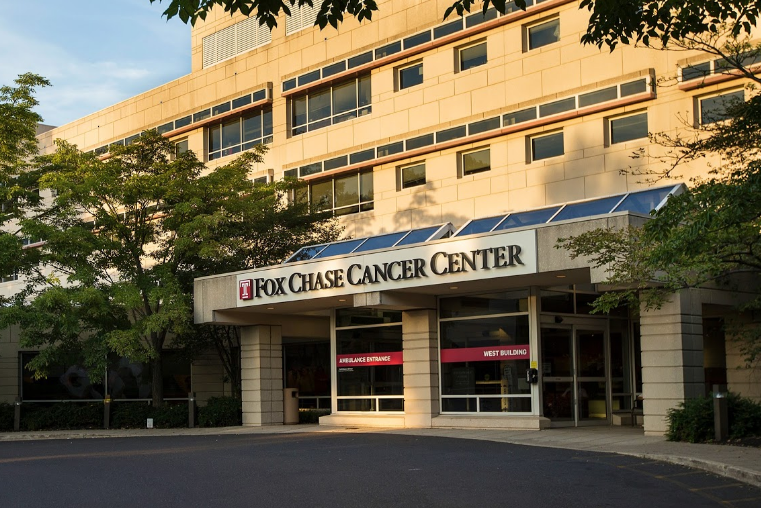
Philadelphia-based Temple University has signed a binding definitive agreement to sell the Fox Chase Cancer Center and its bone marrow transplant program to Thomas Jefferson University in Philadelphia.

The announcement comes after nearly a year of negotiations. Temple expects to complete the sale of the cancer center and bone marrow transplant program in the spring of 2020.

Temple also entered into an agreement to sell its membership interest in Health Partners Plan, a Philadelphia-based managed care program, to Jefferson. A closing date for the transaction has not yet been determined.

With the agreements in place, Temple and Jefferson are looking for other ways to collaborate. The two organizations are exploring a broad affiliation that would help them address social determinants of health, enhance education for students at both universities, collaborate on healthcare innovation, and implement a long-term oncology agreement that would expand access to resources for Temple residents, fellows and students.

“Healthcare is on the cusp of a revolution and it will require creative partnerships to have Philadelphia be a center of that transformation,” Stephen Klasko, MD, president of Thomas Jefferson University and CEO of Jefferson Health, said in a news release. “For Jefferson, our relationship with Temple will accelerate our mission of improving lives and reimagining health care and education to create unparalleled value.”


Philadelphia hospital sells for $50M

https://www.beckershospitalreview.com/hospital-transactions-and-valuation/philadelphia-hospital-sells-for-50m-121619.html?origin=CFOE&utm_source=CFOE&utm_medium=email

Image result for st christopher hospital philadelphia

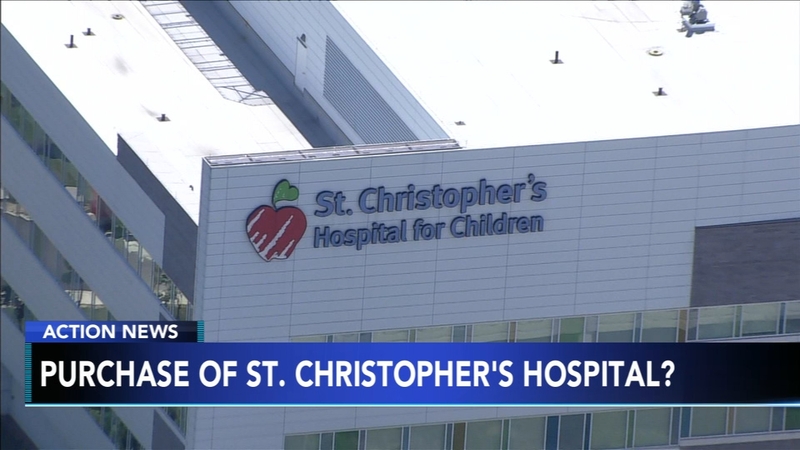
West Reading, Pa.-based Tower Health and Drexel University completed the $50 million acquisition of St. Christopher’s Hospital for Children in Philadelphia on Dec. 15.

St. Christopher’s was put up for sale after it and Philadelphia-based Hahnemann University Hospital filed for Chapter 11 bankruptcy at the end of June. Hahnemann closed in September, the same month Tower Health and Drexel University entered into a $50 million agreement to acquire St. Christopher’s.

With the sale complete, 188-bed St. Christopher’s will return to nonprofit status.

“We are grateful for the continuing dedication and hard work of the physicians and employees at St. Christopher’s,” Tower Health President and CEO Clint Matthews said in a press release. “We are excited about a bright future for St. Christopher’s as it continues to serve as a center for healthcare, medical education and research, and innovation.”


The consolidation of health insurance and drug benefits is back

https://www.axios.com/health-insurers-pharmacy-benefits-big-five-consolidation-03f39e42-3a9f-4bc6-beea-3b14f1187572.html

Image result for The consolidation of health insurance and drug benefits is back

Starting this spring, five corporate giants — Anthem, Cigna, CVS Health, Humana and UnitedHealth Group — will control health insurance and pharmacy benefits for more than 125 million Americans.

Why it matters: Most of this happened through rapid consolidation, and now the pressure is on these companies to prove they can better control both medical and drug spending with everything under the same roof.

Driving the news: Anthem has been working for over a year to create its own pharmacy benefit manager, called IngenioRx, so it could sever ties with Express Scripts.

  • Anthem’s new prescription drug negotiator is now ready to go live by March, 10 months ahead of schedule, the company said Wednesday.

This is the new landscape. These 5 companies will handle both drug and medical bills for millions of people across Medicare, Medicaid and employer-based insurance.

  • UnitedHealth Group is the largest entity combining health insurance and pharmacy benefits, with UnitedHealthcare and OptumRx (a PBM that got significantly bigger after it absorbed Catamaran in 2015).
  • CVS acquired Aetna to pair with its existing PBM, Caremark.
  • Cigna now owns Express Scripts.
  • Anthem will be moving millions of people onto IngenioRx this year.
  • Humana also has its own PBM, and it’s the fourth-largest by prescription volume.

It’s worth noting that several Blue Cross Blue Shield companies also own a PBM, Prime Therapeutics.

What they’re saying: PBMs “don’t need to be independent entities with their own profit margins … that adds costs,” former Aetna CEO Mark Bertolini said in 2017.

  • Some research says combining health care services and prescriptions under one benefit (not necessarily one common owner) could save money, if the insurer helps people manage their diseases.
  • But insurers and PBMs have lived under the same roof before, and these companies have been doing the same work while U.S. health care spending has continued to rise.

Reality check: These companies would not have pursued merging medical and drug plan offerings if they didn’t think there was a lot of money to retain.

  • Anthem’s ahead-of-schedule PBM raised the company’s projected 2019 adjusted earnings per share to $19 — significantly above every Wall Street estimate. Of the $4 billion in savings Anthem expects from the PBM, 20% will immediately be booked as profit.


Health insurance is as big as Big Tech

https://www.axios.com/health-insurers-pbms-revenue-big-tech-9bc7b8fd-5577-4ebe-a818-42f4f7fd2d36.html?utm_source=newsletter&utm_medium=email&utm_campaign=newsletter_axiosvitals&stream=top

Image result for Health insurance is as big as Big Tech

The 5 largest conglomerates combining health insurance and pharmacy benefits are on track this year to be bigger than the 5 preeminent tech companies.

The big picture: Anthem, Cigna, CVS Health, Humana and UnitedHealth Group cumulatively expect to collect almost $787 billion in 2019, compared with $783 billion of projected revenue for Facebook, Amazon, Apple, Netflix and Google.

Yes, but: The tech companies cumulatively were 5 times more profitable than the health care companies in 2018 and are projected to be 3.5 times more profitable this year.

  • There’s more money to be made selling smartphones and online ads than acting as a health care middleman.
  • Health insurers and pharmacy benefit managers pay out a vast majority of their revenues to hospitals, doctors and drug companies.
  • But insurers and PBMs are still turning large overall profits. And a delay in an Affordable Care Act tax is expected to create a big windfall for the insurance industry this year. Companies are working behind the scenes to get that tax delayed again for 2020 or permanently repealed.

It’s also worth remembering that health insurance giants today do a lot more than just pay out claims for medical care and prescriptions.

  • UnitedHealth owns surgery centers, doctors’ offices, consulting shops and data-analyzing services.
  • CVS, which just bought Aetna, brings in a lot of money through its retail pharmacies and in-store clinics.


4 Chicago hospitals in talks to combine

https://www.chicagobusiness.com/health-care/big-hospital-combo-works

South Shore Hospital

Crain’s has learned that at least four hospitals—Advocate Trinity Hospital, Mercy Hospital & Medical Center, South Shore Hospital and St. Bernard Hospital—are in talks with the state to create a single system.

Plans are afoot to consolidate financially struggling hospitals that serve Chicago’s poorest residents on the South Side.

Crain’s has learned that at least four hospitals—Advocate Trinity Hospital, Mercy Hospital & Medical Center, South Shore Hospital and St. Bernard Hospital—are in talks with the state to create a single system with one leadership team that includes some combination of inpatient, outpatient and emergency care, as well as skilled nursing. Separately, a private health care consultancy has agreed to buy recently shuttered MetroSouth Medical Center as the first step in a hoped-for combination with other so-called safety-net hospitals.

Both proposals aim to bolster the precarious finances of hospitals that treat large numbers of uninsured and low-income patients on Medicaid. Consolidation could enable the institutions to generate economies of scale, improve bargaining power with insurers, eliminate redundant expenses and cut back duplicative or underutilized capabilities. Bringing the hospitals together also could lead to the centralization of certain services, forcing some patients to seek care farther from home.

Talks are at an early stage and may not lead to a transaction. But all the hospitals are under pressure to transform as inpatient volumes fall and expenses rise. A combination could help the hospitals adapt. Some might become ambulatory centers, professional buildings or skilled nursing facilities. Services like orthopedics and obstetrics could be centralized at certain locations to improve care and save money on surgical equipment, space and staff. It’s unclear whether some facilities would close in the process.

“While we are always talking with our health care colleagues about how we can best work together to address challenges and meet the evolving needs of our patients and neighbors, we haven’t made any decisions,” a representative for Advocate Aurora Health said in an emailed statement. “Our commitment to caring for our communities and transforming health and wellness for our patients remains strong. Our decisions have always, and will always, be guided by what’s in the best interest of our patients and the communities we are so privileged to serve.”

“As a Catholic health ministry supporting the underserved in Chicago, Mercy Hospital & Medical Center is always working with community partners to find cost-effective ways to provide vital services to our patients, but we have nothing to announce at this time,” a hospital representative for Mercy—which is owned by Catholic giant Trinity Health—said in an emailed statement.

South Shore and St. Bernard did not respond to requests for comment.

All four hospitals are operating in the red, with 2018 net losses ranging from $1.3 million at South Shore to $68.3 million at Mercy, according to data compiled by Modern Healthcare Metrics. The hospitals treat a large number of patients on Medicaid, which pays less than Medicare and commercial insurance. Meanwhile, they’re getting less money from various federal and state programs intended to offset the cost of treating patients who can’t pay for care.

St. Bernard CEO Charles Holland Jr. told Crain’s in July that without additional government funding, “we’re going to have to make some difficult decisions. . . .We just cannot continue to go on the way we are.”

Joining forces would enable the hospitals to pool the money they get from various state and federal programs to fund costly transformative initiatives.

The state-led initiative is being driven by the Illinois Department of Healthcare & Family Services, which oversees Medicaid.

“HFS has been and is routinely approached by numerous providers with a variety of ideas seeking to transform to better meet the needs of their communities,” the department said in an emailed statement. “Our department is currently in talks with multiple groups and would provide guidance to any group of providers that came to us with ideas for health care transformation to meet the needs of the community. HFS will also be monitoring closely and engaging directly with community leaders and members to ensure any changes result in expanded care that meets the needs of the communities these hospitals serve.”

Driving a separate, private initiative is Third Horizon Strategies, which has agreed to buy MetroSouth in Blue Island from Brentwood, Tenn.-based Quorum Health for a dollar.

Third Horizon CEO David Smith said he filed articles of incorporation Monday to create an entity called South Side Health, funded by private investors, and—he hopes—government dollars intended for hospital transformation.

“As we build out South Side Health, if other hospitals are successful (in coming together), it will be important to integrate into one system,” Smith said. “At the end of the day, there needs to be one integrated system on the South Side that acts as a financially self-sustaining utility whose sole function is to improve the health that community.”


Health insurers stable, M&A seen diminishing in 2020: Fitch

https://www.healthcaredive.com/news/health-insurers-stable-ma-seen-diminishing-in-2020-fitch/568859/

Dive Brief:

  • The outlook for the health insurance sector remains stable heading into 2020, Fitch Ratings reports.
  • The ratings agency maintains a stable outlook on the “vast majority” of the companies it rates within the U.S. health insurance industry, which includes UnitedHealth Group and Aetna.
  • The insurance sector continues to benefit from “low unemployment, manageable medical cost trend and solid growth in government-funded business,” Brad Ellis, senior director for Fitch, said in the report.

Dive Insight:

Even anticipating an increase in the growth of U.S. health expenditures, Fitch expects insurers to deliver solid operating results, including improved medical loss ratios, for 2020.

There is even a chance for insurers to garner positive ratings outlooks as many look to continue to execute on merger integration and deleveraging, according to Fitch.

Thanks in part to the return of the health insurance fee, Fitch expects medical loss ratios to drop to 82.5% in 2020. A decrease from the expected 83.9% for the full year of 2019 for the nation’s eight largest publicly traded insurers, which cover about 165 million people, according to Fitch.

MLR is an important measure, showing the amount an insurer spends on medical claims as a percentage of premiums. Lower MLRs leave more room for covering administration costs and garnering profit.

Even an upcoming election year and a slate of Democratic presidential hopefuls touting support to expand Medicare, the agency does not expect seismic changes to the system.

“Healthcare will certainly continue to be one of the most prevalent discussion topics among candidates for the U.S. presidency in 2020, but Fitch does not anticipate significant change in the structure of the U.S. healthcare system over the next couple of years,” the report said.

The agency also said it expects major mergers to slow significantly in 2020. The insurance sector has experienced significant M&A activity over the last few years, including CVS Health’s buy of Aetna and Cigna’s acquisition of Express ScriptsCentene is near closing on its purchase of rival WellCare.

Fitch expects consolidation activity next year to focus more on “modest build-out of care delivery opportunities in various regions or care management and technology initiatives.”


Health care spending grows — again — in 2018

https://www.axios.com/newsletters/axios-vitals-7acf29e4-cb5c-437f-975e-7dd04f588cab.html?utm_source=newsletter&utm_medium=email&utm_campaign=newsletter_axiosvitals&stream=top

Image result for annual health care spending in us

Americans spent $3.65 trillion on health care in 2018 — 4.6% more than the year before. That growth also was higher than the 4.2% rate from 2017, according to revised figures from independent federal actuaries, Axios’ Bob Herman reports.

Between the lines: U.S. health care spending climbed again not because people went to the doctor or hospital more frequently, but because the industry charged higher prices. And private health insurers didn’t do a particularly good job negotiating lower rates.

The intrigue: The number of people with private health plans — which mostly consists of the coverage people get through their jobs — dipped in 2018, yet the amount spent per person soared 6.7%.

  • That is the highest per-enrollee spending growth rate among people with private health insurance since 2004, actuaries wrote.
  • Part of that increase was due to higher premiums that insurance companies passed on from the Affordable Care Act’s health insurance tax.
  • More importantly: Hospitals, doctors and drugmakers continued to wring out much higher rates from private insurers thanks to provider mergers and perverse negotiating incentives.

Medicare and Medicaid had much lower per-enrollee spending growth rates in 2018 than private insurance, but those figures were the highest they’ve been since 2015 — again due to higher costs for the private insurers that are increasingly running those government programs.


Prospect Medical Holdings can’t consider $50M acquisition offer

https://www.beckershospitalreview.com/hospital-transactions-and-valuation/prospect-medical-holdings-can-t-consider-50m-acquisition-offer.html

Image result for Prospect Medical Holdings

Los Angeles-based Prospect Medical Holdings says it cannot consider a $50 million acquisition offer from Ontario, Calif.-based Prime Healthcare Services because it has already entered into another deal, according to the Journal Inquirer.

Prospect Medical Holdings is owned by certain funds of private equity firm Leonard Green & Partners and members of the company’s management team. In October, Prospect said its shareholders reached an agreement to purchase Leonard Green & Partners’ outstanding shares of the company, according to the report.

Leonard Green & Partners is considering selling its majority stake in Prospect for roughly $12 million, and Prime said it would pay $50 million for the company, according to an offer letter from Prime President and CEO Prem Reddy, MD, obtained by the Journal Inquirer

In a Nov. 24 statement to the Journal Inquirer, Prospect said it cannot consider Prime’s offer or other proposals because it signed a “binding agreement” with Leonard Green & Partners “several months ago.” Prospect said it is required to close the transaction, which is expected to take three to six months to complete, according to the report.

Access the full Journal Inquirer article here.


1,250 healthcare deals have been announced, completed this year

https://www.beckershospitalreview.com/hospital-transactions-and-valuation/1-250-healthcare-deals-have-been-announced-completed-this-year.html?origin=cfoe&utm_source=cfoe

Related image

The healthcare industry saw 1,250 deals announced or completed through October of this year, according to Bloomberg Law. 

The healthcare deal volume in 2019 is significantly higher than the same period last year, which had 900 deals announced or closed.

Merger and acquisition activity for long-term care, physician services, health IT and pharmaceutical companies are on pace to exceed the deal volume hit in 2018.

Walgreens is one company that is driving deal activity in the healthcare sector. The retail pharmacy giant recently announced it would close 157 in-store healthcare clinics it operated by the end of the year.

TriHealth announced it would buy seven of the Walgreens clinics in the Cincinnati area, and the deal is likely to be replicated elsewhere, Gary Herschman, a member of law firm Epstein Becker Green, told Bloomberg Law. 

However, the hospital and health system sector will likely end 2019 with fewer deals than in 2018, according to the report.

There were only 12 transactions in the hospital and health system sector in October, according to Nicholas Davis, a senior analyst at healthcare consultancy ECG Management Partners.


Trinity Health sees net income plunge 60% as operating margin improves

https://www.beckershospitalreview.com/finance/trinity-health-sees-net-income-plunge-60-as-operating-margin-improves.html

Image result for trinity health headquarters

Trinity Health recorded higher revenue and operating income in the first quarter of fiscal year 2020 than in the same period a year earlier, but the Livonia, Mich.-based system ended the quarter with lower net income, according to unaudited financial documents.

During the first quarter of fiscal 2020, which ended Sept. 30, Trinity reported operating revenue of $4.8 billion, a 1.8 percent increase over the same period of the year prior. Operating expenses climbed 1.7 percent year over year to $4.7 billion.

Trinity ended the first quarter of fiscal 2020 with operating income of $94 million, up from $87 million in the first quarter of last year.

The system reported an operating margin of 2 percent in the first quarter of fiscal 2020, compared to an operating margin of 1.8 percent in the same period of the year prior. Margin growth was partially attributable to Trinity’s divestiture of Camden, N.J.-based Lourdes Health System in June. Growth in patient volumes and payment rates also supported margin growth.

After factoring in nonoperating items, including a decline in investment returns, Trinity reported net income of $166.4 million in the first quarter of fiscal 2020. That’s compared to the first quarter of fiscal 2019, when the system posted net income of $419.9 million.