U.S. with 1/3 of Confirmed Coronavirus Cases with Less Than 2% of Population Tested

https://coronavirus.jhu.edu/map.html

Coronavirus outbreak affecting some Durham high school students ...

By the numbers: The coronavirus has infected over 2.9 million people and killed over 200,000, Johns Hopkins data shows. More than 829,000 people have recovered from COVID-19. The U.S. has reported the most cases in the world (more than 940,000 from 5.1 million tests), followed by Spain (over 223,000).


‘Sadness’ and Disbelief From a World Missing American Leadership

Sadness' and Disbelief From a World Missing American Leadership ...

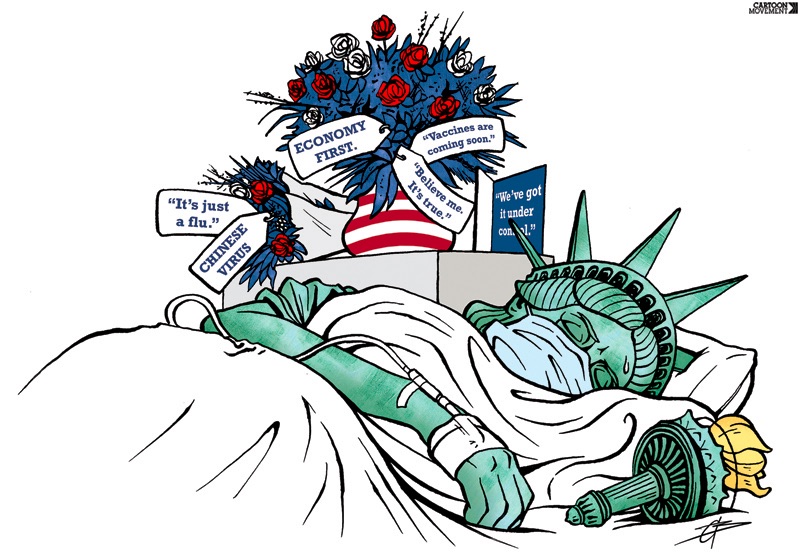
The coronavirus pandemic is shaking bedrock assumptions about U.S. exceptionalism. This is perhaps the first global crisis in more than a century where no one is even looking for Washington to lead.

As images of America’s overwhelmed hospital wards and snaking jobless lines have flickered across the world, people on the European side of the Atlantic are looking at the richest and most powerful nation in the world with disbelief.

“When people see these pictures of New York City they say, ‘How can this happen? How is this possible?’” said Henrik Enderlein, president of the Berlin-based Hertie School, a university focused on public policy. “We are all stunned. Look at the jobless lines. Twenty-two million,” he added.

“I feel a desperate sadness,” said Timothy Garton Ash, a professor of European history at Oxford University and a lifelong and ardent Atlanticist.

The pandemic sweeping the globe has done more than take lives and livelihoods from New Delhi to New York. It is shaking fundamental assumptions about American exceptionalism — the special role the United States played for decades after World War II as the reach of its values and power made it a global leader and example to the world.

Today it is leading in a different way: More than 840,000 Americans have been diagnosed with Covid-19 and at least 46,784 have died from it, more than anywhere else in the world.

As the calamity unfolds, President Trump and state governors are not only arguing over what to do, but also over who has the authority to do it. Mr. Trump has fomented protests against the safety measures urged by scientific advisers, misrepresented facts about the virus and the government response nearly daily, and this week used the virus to cut off the issuing of green cards to people seeking to emigrate to the United States.

“America has not done badly, it has done exceptionally badly,” said Dominique Moïsi, a political scientist and senior adviser at the Paris-based Institut Montaigne.

The pandemic has exposed the strengths and weaknesses of just about every society, Mr. Moïsi noted. It has demonstrated the strength of, and suppression of information by, an authoritarian Chinese state as it imposed a lockdown in the city of Wuhan. It has shown the value of Germany’s deep well of public trust and collective spirit, even as it has underscored the country’s reluctance to step up forcefully and lead Europe.

And in the United States, it has exposed two great weaknesses that, in the eyes of many Europeans, have compounded one another: the erratic leadership of Mr. Trump, who has devalued expertise and often refused to follow the advice of his scientific advisers, and the absence of a robust public health care system and social safety net.

“America prepared for the wrong kind of war,” Mr. Moïsi said. “It prepared for a new 9/11, but instead a virus came.”

“It raises the question: Has America become the wrong kind of power with the wrong kind of priorities?” he asked.

Ever since Mr. Trump moved into the White House and turned America First into his administration’s guiding mantra, Europeans have had to get used to the president’s casual willingness to risk decades-old alliances and rip up international agreements. Early on, he called NATO “obsolete” and withdrew U.S. support from the Paris climate agreement and the Iran nuclear deal.

But this is perhaps the first global crisis in more than a century where no one is even looking to the United States for leadership.

In Berlin, Germany’s foreign minister, Heiko Maas, has said as much.

China took “very authoritarian measures, while in the U.S., the virus was played down for a long time,” Mr. Maas recently told Der Spiegel magazine.

“These are two extremes, neither of which can be a model for Europe,” Mr. Maas said.

America once told a story of hope, and not just to Americans. West Germans like Mr. Maas, who grew up on the front line of the Cold War, knew that story by heart, and like many others in the world, believed it.

But nearly three decades later, America’s story is in trouble.

The country that helped defeat fascism in Europe 75 years ago next month, and defended democracy on the continent in the decades that followed, is doing a worse job of protecting its own citizens than many autocracies and democracies.

There is a special irony: Germany and South Korea, both products of enlightened postwar American leadership, have become potent examples of best practices in the coronavirus crisis.

But critics now see America failing not only to lead the world’s response, but letting down its own people as well.

“There is not only no global leadership, there is no national and no federal leadership in the United States,” said Ricardo Hausmann, director of the Growth Lab at Harvard’s Center for International Development. “In some sense this is the failure of leadership of the U.S. in the U.S.”

Of course, some countries in Europe have also been overwhelmed by the virus, with the number of dead from Covid-19 much higher as a percentage of the population in Italy, Spain and France than in the United States. But they were struck sooner and had less time to prepare and react.

The contrast between how the United States and Germany responded to the virus is particularly striking.

While Chancellor Angela Merkel has been criticized for not taking a forceful enough leadership role in Europe, Germany is being praised for a near-textbook response to the pandemic, at least by Western standards. That is thanks to a robust public health care system, but also a strategy of mass testing and trusted and effective political leadership.

Ms. Merkel has done what Mr. Trump has not. She has been clear and honest about the risks with voters and swift in her response. She has rallied all 16 state governors behind her. A trained physicist, she has followed scientific advice and learned from best practice elsewhere.

Not long ago, Ms. Merkel was considered a spent force, having announced that this would be her last term. Now her approval ratings are at 80 percent.

“She has the mind of a scientist and the heart of a pastor’s daughter,” Mr. Garton Ash said.

Mr. Trump, in a hurry to restart the economy in an election year, has appointed a panel of business executives to chart a course out of the lockdown.

Ms. Merkel, like everyone, would like to find a way out, too, but this week she warned Germans to remain cautious. She is listening to the advice of a multidisciplinary panel of 26 academics from Germany’s national academy of science. The panel includes not just medical experts and economists but also behavioral psychologists, education experts, sociologists, philosophers and constitutional experts.

“You need a holistic approach to this crisis,” said Gerald Haug, the academy’s president, who chairs the German panel. “Our politicians get that.”

A climatologist, Mr. Haug used to do research at Columbia University in New York.

The United States has some of the world’s best and brightest minds in science, he said. “The difference is, they’re not being listened to.”

“It’s a tragedy,” he added.

Some cautioned that the final history of how countries fare after the pandemic is still a long way from being written.

A pandemic is a very specific kind of stress test for political systems, said Mr. Garton Ash, the history professor. The military balance of power has not shifted at all. The United States remains the world’s largest economy. And it was entirely unclear what global region would be best equipped to kick-start growth after a deep recession.

“All of our economies are going to face a terrible test,” he said. “No one knows who will come out stronger at the end.”

Benjamin Haddad, a French researcher at the Atlantic Council, wrote that while the pandemic was testing U.S. leadership, it is “too soon to tell” if it would do long-term damage.

“It is possible that the United States will resort to unexpected resources, and at the same time find a form of national unity in its foreign policy regarding the strategic rivalry with China, which it has been lacking until now,” Mr. Haddad wrote.

There is another wild card in the short term, Mr. Moïsi pointed out. The United States has an election in November. That, and the aftermath of the deepest economic crisis since the 1930s, might also affect the course of history.

The Great Depression gave rise to America’s New Deal. Maybe the coronavirus will lead the United States to embrace a stronger public safety net and develop a national consensus for more accessible health care, Mr. Moïsi suggested.

“Europe’s social democratic systems are not only more human, they leave us better prepared and fit to deal with a crisis like this than the more brutal capitalistic system in the United States,” Mr. Moïsi said.

The current crisis, some fear, could act like an accelerator of history, speeding up a decline in influence of both the United States and Europe.

“Sometime in 2021 we come out of this crisis and we will be in 2030,” said Mr. Moïsi. “There will be more Asia in the world and less West.”

Mr. Garton Ash said that the United States should take an urgent warning from a long line of empires that rose and fell.

“To a historian it’s nothing new, that’s what happens,” said Mr. Garton Ash. “It’s a very familiar story in world history that after a certain amount of time a power declines.”

“You accumulate problems, and because you’re such a strong player, you can carry these dysfunctionalities for a long time,” he said. “Until something happens and you can’t anymore.”


Cartoon – At last a Sport We can Watch

KAL's cartoon | The world this week | The Economist

Cartoon – State of the Union

iroon.com: Cartoons


The High Stakes of Low Scientific Standards

https://www.axios.com/coronavirus-pandemic-science-problems-e6e619b8-c1a8-4e06-97d9-c328d4d0400e.html

The Lucky Seven States Already Pursuing Gambling Legislation In 2018

In the midst of this pandemic, science is suffering from low standards for some research, a new study argues.

The big picture: Science — which is slow, methodical and redundant — isn’t necessarily made for the immediacy and acute public interest brought on by a health crisis.

  • Scientists rely on peer review and back and forth exchange that leads to a more polished final study. But a health crisis like the current pandemic, or the Ebola outbreak, creates a sense of urgency that can be antithetical to the scientific process.

What’s happening: A new study out today in the journal Science warns many of the clinical trials and studies first published about treatments and other issues involving the current pandemic were designed poorly or had other issues that affected their outcomes.

  • Studies that have yet to go through peer-review — like a recent, flawed study of the use of hydroxychloroquine to treat coronavirus — have found their way into news stories thanks to pre-print services, leading to problematic reporting and real-time peer review through Twitter.
  • More than 18 clinical trials testing hydroxychloroquine to treat the novel coronavirus have enrolled more than 75,000 patients in North America.
  • “This massive commitment concentrates resources on nearly identical clinical hypotheses, creates competition for recruitment, and neglects opportunities to test other clinical hypotheses,” the study says.
  • Early, flawed work has potentially increased the risk that later results may have gotten false positives and more media attention than they deserved, the new study says.

Yes, but: While the pandemic is exacerbating these problems with misinformation and lax research standards, it isn’t the cause of them.

  • “Some of the problems that we’re seeing right now are actually not that exceptional compared to the problems that we have under normal conditions as well, just that maybe they’re a little bit more amplified and have a little more visibility,” Jonathan Kimmelman, director of the Biomedical Ethics Unit at McGill University and one of the authors of the new paper, told Axios.
  • These kinds of issues cropped up during previous health crises, and while the authors of the new study argue that some of those problems around information sharing and standards of research have improved, there’s still a long way to go.

What’s next: Many of these issues around varying standards of research and communication could be remedied through better communication among researchers and the agencies funding their work.

  • Instead of having a number of fragmented studies competing for resources and looking for effective treatments, the researchers say it would make more sense to bring them under one umbrella, allowing them to coordinate.
  • “You could reduce variation, and you might get answers more quickly,” Alex John London, the director of the Center for Ethics and Policy at Carnegie Mellon and one of the authors of the new study, told Axios.
  • The authors are also calling on clinicians to resist performing their own small studies, instead opting to join up with larger trials.
  • They also say agencies need to help build those larger studies and avoid making statements to the public about unvalidated treatments that may or may not work, instead opting to elevate larger studies in their various stages to the public.


Governors Reject Pence’s Claim on Virus Testing

Coronavirus and Reopening: Governors Say They Lack Tests as Trump ...

Democratic and Republican governors bristled at claims from the Trump administration that the supply of tests was adequate to move firmly toward reopening the country.

Governors facing growing pressure to revive economies decimated by the coronavirus said on Sunday that a shortage of tests was among the most significant hurdles in the way of lifting restrictions in their states.

“We are fighting a biological war,” Gov. Ralph Northam of Virginia said on “State of the Union” on CNN. “We have been asked as governors to fight that war without the supplies we need.”

In interviews on Sunday morning talk shows, Mr. Northam was among the governors who said they needed the swabs and reagents required for the test, and urged federal officials to help them get those supplies.

The governors bristled at claims from the Trump administration that the supply of tests was adequate. On NBC’s “Meet the Press,” Vice President Mike Pence said “there is a sufficient capacity of testing across the country today for any state in America” to go to the first of three phases that the administration says are needed for the country to emerge from the coronavirus shutdown.

Mr. Northam, a Democrat, called Mr. Pence’s claim “delusional.” In Michigan, Gov. Gretchen ​Whitmer, also a Democrat, said the state could perform “double or triple” the number of tests it is doing now “if we had the swabs or reagents.” ​Gov. Larry Hogan​ of Maryland, a Republican, said that it was “absolutely false” to claim that governors were not acting aggressively enough to pursue as much testing as possible.

“It’s not accurate to say there’s plenty of testing out there, and the governors should just get it done,” Mr. Hogan ​said​ on “State of the Union​.​”​ “That’s just not being straightforward.”

The conflicting messages come as the debate over how and when to reopen the economy has intensified. President Trump on Saturday expressed his confidence in the nation’s testing capability and said some governors have “gotten carried away,” while state officials said they feared moving too early could cause the virus to flare again.

“As tough as this moment is,” Ms. Whitmer said in an interview with CNN, “it would be devastating to have a second wave.”

In a news conference on Sunday evening, Mr. Trump expressed his confidence in the federal response, including his administration’s relationship with governors and the capacity for testing.

Mr. Trump said the administration was preparing to use the Defense Production Act to compel one U.S. facility to increase production of test swabs by over 20 million per month. The announcement came after he defended his response to the accusations that there was an insufficient amount of testing to justify reopening the economy any time soon.

“You’ll have so many swabs you won’t know what to do with them,” Mr. Trump said.

Officials at every level have faced increasingly competing pressures, balancing maintaining stay-at-home orders against the exasperation and economic toll they are producing. On Saturday and Sunday, modest protests took place in several cities across the country, where demonstrators flouted social distancing rules as they demanded that restrictions be relaxed.

Yet there was also a widespread sense that much of the public understood the governors’ concerns and shared them. Nearly 60 percent of American voters said they were worried that measures would be relaxed too soon, causing deaths to rise, according to a new poll from NBC News and The Wall Street Journal.

Officials in various states said they had started staging plans for reopening their economies and were working in concert with neighboring states in determining when to lift restrictions.

In South Carolina, Gov. Henry McMaster said that he had spoken with the governors of other southeastern states, including Florida and Tennessee. “Told them South Carolina was ready,” Mr. McMaster, a Republican, said on Twitter on Saturday.

On Sunday, governors from across the Northeast, including New York, New Jersey, Connecticut and Pennsylvania, said they were creating a regional council focused on restoring the economy and addressing unemployment.

Still, many governors, including Andrew M. Cuomo of New York and Philip D. Murphy of New Jersey, said that testing still needed to be ramped up considerably before moving forward, and that they needed federal help to do so.

There are currently about 150,000 diagnostic tests conducted each day, according to the Covid Tracking Project. Researchers at Harvard estimated last week that in order to ease restrictions, the nation needed to at least triple that pace of testing.

Dr. Deborah Birx, the coronavirus response coordinator for the White House, also pushed back against criticism that not enough people were being tested, saying that not every community required high levels of testing and that tens of thousands of test results were probably not being reported.

“We need to predict community by community the testing that is needed,” Dr. Birx said Sunday on CBS’s “Face the Nation​.” “Each will have a different testing need, and that’s what we’re calculating now.”

On the ABC program “This Week,” Dr. Birx said she thought statistics on testing were incomplete: “When you look at the number of cases that have been diagnosed, you realize that there’s probably 30,000 to 50,000 additional tests being done that aren’t being reported right now.”

Shortages of supplies have restricted the pace of testing, according to commercial laboratories. Dr. Birx said that a team at Walter Reed National Military Medical Center was calling hundreds of labs around the country to determine exactly what supplies they need “to turn on full capacity, which we believe will double the number of tests that are available for Americans.”

In the news conference on Saturday, Mr. Trump said the criticism of the administration was driven by Democrats. “Unfortunately, some partisan voices are trying to politicize the issue of testing,” he said.

Yet, Gov. Jay Inslee of Washington noted that governors from both parties had been among those voicing frustration over a lack of federal support with testing. He also criticized what he saw as a discordant message from Mr. Trump, which, he argued, undermined governors’ stay-at-home orders and inspired “people to ignore things that actually can save their lives.”

“These orders actually are the law of these states,” Mr. Inslee, a Democrat, said in an interview with “This Week.” He added: “And, again, these are not just Democrats. These are Republican-led states as well. To have an American president to encourage people to violate the law, I can’t remember any time during my time in America where we have seen such a thing.”

Now, with states transitioning away from addressing the peak of the pandemic, governors stand to face a difficult landscape to navigate.

Governors across the political spectrum have stepped into the spotlight during the coronavirus crisis, holding daily news briefings and going back and forth with the president. But if they drew praise for taking quick action to protect public health, taking responsibility for when and how to reopen could prove far more politically perilous, said Ray Scheppach, a public policy professor at the University of Virginia and a former longtime executive director of the National Governors Association.

“That is one of the reasons you’re seeing groups of governors and states get together,” he said, noting the alliances made by clusters of governors around the country.

“Doing something with the surrounding states does give you a certain amount of political cover,” both with constituents and the White House, Professor Scheppach said. “They don’t want to get pushed around by this president and they are stronger in a group.”

Having claimed responsibility for reopening the country, governors are now offering hesitant timelines. Offering no date for reopening may leave people feeling despondent at a time when “people need more certainty as opposed to less,” Professor Scheppach said. But being too firm comes with the risk of having to push out deadlines and test the public’s patience.

“You can do it once,” he said, as Mr. Cuomo and others have done. “But you begin to lose if you do that two or three times.”

Governors said they had become acutely aware of the dilemmas they face.

In his appearance on CNN, Mr. Hogan was shown footage of a long line winding around a supermarket in a Maryland suburb of Washington where free food was being handed out. The video was an unsettling avatar of the economic damage wrought by the virus. He said he shared in the frustration over the economy, but he also noted that his state had not yet reached its peak in cases.

“My goal is to try to get us open as quickly as we possibly can,” he said, “but in a safe way.”


Pro-gun activists using Facebook groups to push anti-quarantine protests

https://www.washingtonpost.com/technology/2020/04/19/pro-gun-activists-using-facebook-groups-push-anti-quarantine-protests/?fbclid=IwAR3FTssf8nkcPHuqyVFyxpT17Zd3PwRnL6xSxL-Njeou_AQ4osiGmUK5FyI&utm_campaign=wp_main&utm_medium=social&utm_source=facebook

Pro-gun activists using Facebook groups to push anti-quarantine ...

A trio of far-right, pro-gun provocateurs is behind some of the largest Facebook groups calling for anti-quarantine protests around the country, offering the latest illustration that some seemingly organic demonstrations are being engineered by a network of conservative activists.

The Facebook groups target Wisconsin, Ohio, Pennsylvania and New York, and they appear to be the work of Ben Dorr, the political director of a group called “Minnesota Gun Rights,” and his siblings, Christopher and Aaron. By Sunday, the groups had roughly 200,000 members combined, and they continued to expand quickly, days after President Trump endorsed such protests by suggesting citizens should “liberate” their states.

The online activity helps cement the impression that opposition to the restrictions is more widespread than polling suggests. Nearly 70 percent of Republicans said they supported a national stay-at-home order, according to a recent Quinnipiac poll. Ninety-five percent of Democrats backed such a measure in the survey.

Still, the Facebook groups have become digital hubs for the same sort of misinformation spouted in recent days at state capitol buildings — from comparing the virus to the flu to questioning the intentions of scientists working on a vaccine.

Public-health experts say stay-at-home orders are necessary to slow the spread of the new coronavirus, which has already killed more than 40,000 in the United States. The Trump administration last week outlined three phases for states to reopen safely — guidelines contradicted by the president when he urged citizens to rise up against the rules that heed the recommendations of his own public-health advisers.

“If people feel that way, you’re allowed to protest,” Trump said Sunday. “Some governors have gone too far, some of the things that happened are maybe not so appropriate.”

Facebook said Sunday it did not plan to take action to remove the groups or events, partly because states have not outlawed them. Organizers also have called for “drive-in” protests, in keeping with recommendations that people keep a short distance between each other. In other cases, involving protests planned for states like New Jersey and California, the company has removed that content, Facebook said.

“Unless government prohibits the event during this time, we allow it to be organized on Facebook. For this same reason, events that defy government’s guidance on social distancing aren’t allowed on Facebook,” said Andy Stone, a spokesman for the company.

None of the Dorr brothers responded to calls and emails on Sunday.

“Wisconsinites Against Excessive Quarantine” was created on Wednesday by Ben Dorr. His brother Christopher is the creator of “Pennsylvanians Against Excessive Quarantine,” as well as “Ohioans Against Excessive Quarantine.” A third brother, Aaron, is the creator of “New Yorkers Against Excessive Quarantine.”

The online coordination offered additional clues about how the protest activity is spreading nationwide, capturing the imagination of the president and of Fox News even though it represents the views of a small minority of Americans. Trump himself tied the protests to gun rights — a primary cause for the Dorr brothers — in telling Virginians that the Second Amendment was “under siege” as he urged them to liberate the state.

On the ground, pro-Trump figures — including some who act as surrogates for his campaign — as well as groups affiliated with prominent conservative donors have helped organize and promote the demonstrations.

Some of the most vehement protest activity, in Michigan, has been organized by the Michigan Conservative Coalition. Its founders are a Republican state lawmaker and his wife, Meshawn Maddock, who sits on the Trump campaign’s advisory board and is a prominent figure in the “Women for Trump” coalition. Jeanine Pirro, a Fox News host and avid Trump supporter, interviewed Maddock on her show Saturday, telling her, “Keep going. Thank you.”

Also promoting the demonstrations — including spending several hundred dollars to advertise the event on Facebook — was the Michigan Freedom Fund, which is headed by Greg McNeilly, a longtime adviser to the DeVos family. He served as campaign manager for Dick DeVos, the husband of Education Secretary Betsy DeVos, when he ran unsuccessfully for governor of Michigan in 2006.

The state’s Democratic governor, Gretchen Whitmer, who has become a target for Trump and his conservative allies, last week criticized the nonprofit, noting that it was “funded in large part by the DeVos family,” and saying it was “really inappropriate for a sitting member of the United States president’s cabinet to be waging political attacks on any governor, but obviously, on me here at home.”

McNeilly said the funds used to promote the event were “not dedicated program funds” but instead came from “our grassroots fundraising efforts,” and so had “nothing to do with any DeVos work.”

The Dorr brothers manage a slew of pro-gun groups across a wide range of states, from Iowa to Minnesota to New York, and seek primarily to discredit organizations like the National Rifle Association as being too compromising on gun safety. Minnesota Gun Rights, for which Ben Dorr serves as political director, describes itself as the state’s “no-compromise gun rights organization.”

In numerous states, they have bypassed rules requiring them to register as lobbyists by arguing that they are instead involved in “pro-gun grassroots mobilization,” as “Ohio Gun Owners,” whose board Chris Dorr directs, describes its work.

A now-retired state legislator in Iowa, who in 2017 sought to close a loophole allowing the brothers to skirt lobbying rules, said he was not surprised the Dorr brothers were involved in fomenting resistance to the public-health precautions.

“The brothers will do anything to fan the flames of a controversial issue, and maybe make a quick nickel,” said the former state legislator, Republican Clel Baudler.

Nearly 97,000 people had joined “Wisconsinites Against Excessive Quarantine” by Sunday afternoon, a Facebook group whose posts are visible only to members that asserted Gov. Tony Evers has been on a “power trip, controlling our lives, destroying our businesses” and “forcing us to hand over our freedoms and our livelihood!” In the group, some members speculated that Evers closed most state businesses and shuttered schools to appease pharmaceutical giants — not because of data showing the novel coronavirus is highly contagious and deadly, infecting more than 4,300 in the state and killing 220.

The group, along with Ben Dorr, created an event on Facebook for a “drive-in rally” at the capital next Friday that has attracted hundreds of pledged participants. They also seek to steer visitors to a website for the “Wisconsin Firearms Coalition,” where people can enter their names, email addresses and other contact information and share their views with the state’s governor. In doing so, they encourage visitors who are not “already a member of the Wisconsin Firearms Coalition” to “join us.” A page asking users to join the Minnesota group offered several rates for membership, from $35 to $1,000.

Another private Facebook group focused on Pennsylvania, gaining more than 63,000 members by Sunday. Many questioned the wisdom of wearing masks publicly, contrary to recommendations by state and federal officials, and linked to a similar website catering to Pennsylvania gun owners. Still another targeting New York had become a forum for roughly 23,000 members to question whether the coronavirus is really that bad — despite the fact New York City has become the epicenter of the U.S. outbreak.

“While seizing power at a breathtaking pace,” the group’s description began, “Andrew Cuomo is sending NY’s economy into a death spiral!”


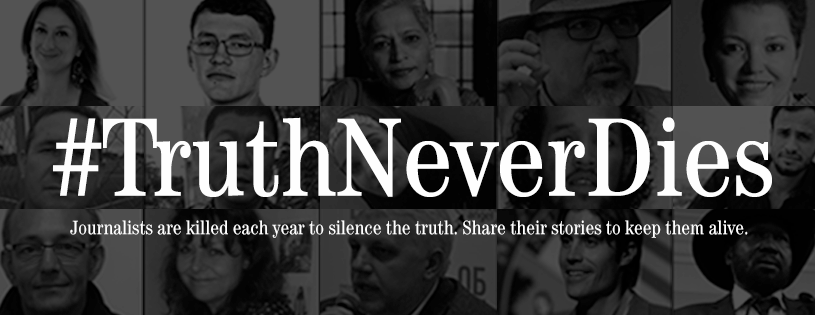
Truth dies in silence. Sadly, so do people.

https://www.kevinmd.com/blog/2020/04/truth-dies-in-silence-sadly-so-do-people.html

UNESCO launches “Truth Never Dies” campaign to tackle crimes ...

I have been writing columns for physicians for twenty years.  And year after year, I have had physicians say this: “I’m glad you said what you did. If I said it, I’d be fired.” There are variations on the theme, but they’re much the same.  Twenty years, and far more than 20 years, during which the alleged health care leaders in America have been routinely muzzled because they aren’t supposed to speak the truth.  Open discussions shut down because they might embarrass someone or upset an administrator. Because it might, heaven forbid, shine a light on a genuine problem.

Some years ago, as the mental health crisis was gathering steam across the emergency departments of the land, I was contacted by a news show in France.  The producers wanted to come to South Carolina and follow me on some shifts in my ED. They wanted to see how mental health was working out here. “We have socialized care, but mental health is also a huge problem in our country,” the producer said.

I dutifully, and appropriately, went to administration. “No, we can’t do that,” I was informed. I was given this explanation when everyone knew the mental health system was at the breaking point: “What if they uncover a problem?” Here was a chance for publicity, for potential grant money or to demonstrate that a political solution was in order.  How dare we let in fresh air? How dare we suggest that things were not perfect?

The same thing is happening in the midst of the pandemic.  Physicians, nurses, and other assorted health care professionals are being threatened for wearing masks.  Administrators say, “They make the patients nervous.” Also likely, administrators have realized they don’t have adequate equipment.  Facilities and systems with enormous budgets caught unprepared in a pandemic.

I see the stories of these professionals as I follow online forums.  Physicians, nurses, and others, threatened with firing because they dared to speak out on the issue of PPE (personal protective equipment).

Like police officers without ballistic vests, these physicians don’t want to go into the rooms of COVID-19 patients without the masks and respirators, gloves, gowns, and face shields that will keep them safe. The equipment that will allow them to return home to their loved ones and prevent them from infecting their families.  This isn’t a good look.  A hospital that refuses to acknowledge the concerns and safety of its professionals is a hospital that ultimately doesn’t deserve them.

The same veil of silence pervades dialogue on the treatment of coronavirus.  When I follow discussions, I see a lot of shaming. “There just isn’t enough evidence to try hydroxychloroquine, Zithromax, convalescent plasma, an untried vaccine, HIV drugs, etc.” Those who suggest we might try are considered reckless or ignorant.  As the battle rages and lives are lost, innovation and risk are viewed with disdain.  And our medical establishment is locked into the paradigm of double-blinded, placebo-controlled studies involving tens of thousands of people and lasting years. Here’s a view of the same from the U.K. Unfortunately, to suggest that we may need to react faster is only met with ridicule, and often tied to political views instead of expediency. Worse,  it ignores the deep, fundamental need to offer hope, any hope, to hundreds of millions of professionals and citizens who are living in fear.

There is a tragic irony here; a painful coincidence.  Physicians silenced. Let’s see.  Where did we see that sort of thing resulting in a worldwide pandemic?  Does China come to mind? The Chinese Communist Party threatened (and who knows what else) physicians who dared to speak out about coronavirus, even when they knew its danger.  Even when they knew how easily and widely it spread.

They continued to soft-peddle numbers about total cases and case fatality.  The party continued to allow travel to and from China long after the problem was known. They even suggested that Italians have a “hug a Chinese person” campaign to combat alleged racism; a charge delightfully accepted and repeated by gullible Western journalists in pursuit of a narrative.

Truth dies in silence.  Sadly, so do people.  And certainly when we tell dedicated health care professionals to keep their mouths shut when they have identified problems, offered solutions and simply asked for help.  Whether it’s a private business, a totalitarian government, or anything in between, we should insist that the truth be spoken; freely and without fear of punishment.

Because, for the foreseeable future, lives will depend on it.


Fauci at center of conservative storm

Fauci at center of conservative storm

Health Official condemns Senator Ron Johnson's false equivalency ...

Criticism of Anthony Fauci from the right has picked up in recent days, with some conservatives calling for Trump to dump the infectious disease expert after he made comments about how imposing social distancing rules earlier could have slowed the spread of the novel coronavirus in the United States.

Fauci has become a national name with his regular presence at the daily coronavirus task force briefings and in other media appearances, and poll numbers show he’s trusted by a majority of Americans. It would set off a political storm if Trump were to sideline him in the middle of a pandemic.

Yet the criticism of Fauci by two conservative lawmakers in a Saturday op-ed and Trump’s own retweet of a conservative’s call to “#FireFauci” were unmistakable signs that the public health official is coming under pressure from some on the right to be loyal to the president. 

Tensions between Fauci and Trump have been evident at times in recent weeks. The doctor put his head in his hand at one March briefing where the president quipped about the “Deep State Department,” and Trump stepped in at a briefing this month before Fauci could give his opinion on hydroxychloroquine.

The president had publicly praised Fauci as “extraordinary” and dismissed speculation about a rift between the two, joking on Friday that Fauci is so popular he could run against Rep. Alexandria Ocasio-Cortez (D-N.Y.) and “win easily.” For the most part Fauci has seemed to successfully walk the line between contradicting Trump without outright criticizing him. 

But Trump’s tweet on Sunday marked a shift and coincided with a fresh groundswell of conservative push-back toward the doctor as Trump comes under intense criticism for his slow response to the virus.

Some of the more pointed criticism of Fauci came after he said on CNN Sunday that more lives could have been saved if stay-at-home measures were implemented earlier than mid-March.

The comments irked Trump allies who viewed them as revisionist history given how Fauci’s own public statements evolved throughout January and February as scientists learned more about the virus and it spread through the U.S.

Jason Miller, a former Trump adviser who now hosts a radio show focused on the pandemic, said Fauci must be careful with how he talks about the crisis, but also described “finger pointing” as media chatter seeking to pull the administration apart.

“This talk of potential removal from the team is unnecessary media chatter trying to draw a divide where one doesn’t exist,” Miller said.

“I think what this is about is about the accuracy with which Dr. Fauci is communicating with both the president and the American people,” he added. “It’s critical as the lead scientist and health expert advising the president on the coronavirus pandemic that he be spot on with his details. I think the recent finger pointing and revisionist history whether intentional or accidental doesn’t help anybody.”

One source close to the administration said, while some inside would like to see Fauci gone, most recognize there is more value to keeping him on.

“I don’t sense there’s a monolithic view,” the person said. “There are some who dislike him and want him out of the [administration] but I think most recognize it’s better for him to be in the tent than outside of it.” 

Fauci’s CNN remarks followed a New York Times article detailing how Trump ignored early warnings about the virus and initially resisted recommendations to implement social distancing recommendations, reporting that Trump has dismissed as “fake.”

One of Trump’s many tweets Sunday night defending his response quoted a former GOP congressional candidate who said it was “time to #FireFauci,” citing his Feb. 29 comments that there was not yet a need for Americans to alter their day-to-day lives.

Fauci has been clear that his realm of expertise is public health, and he has suggested at times that social distancing guidelines will be needed for weeks or months to limit the spread of the virus.

Others inside and outside the administration are advocating that it take steps to open up the economy soon, and emphasizing that health experts can’t be the only voices involved in the decision.

“Anthony Fauci should be deferring to the President when answering questions about timing of economic reopening,” Fox News host Laura Ingraham tweeted on Sunday.

Reps. Andy Biggs (R-Ariz.) and Ken Buck (R-Colo.) penned an op-ed in the Washington Examiner over the weekend arguing that Fauci should not be a primary voice speaking on the coronavirus outbreak after the public health official late last month described social distancing as an “inconvenient” from societal and economic standpoint.

The criticism of Fauci comes amid a concerted effort among Trump and his supporters to shift blame away from the White House for its handling of the coronavirus, which has infected more than 557,000 people in the U.S. and killed more than 22,000 in the country. The president has at various points blamed governors for failing to prepare for the pandemic, deflected criticism toward the World Health Organization (WHO) and accused Democrats of using impeachment as a distraction.

Fauci, director of the National Institute of Allergy and Infectious Diseases since 1984, has been a ubiquitous presence during the coronavirus outbreak, appearing on political talk shows, sports podcasts and Instagram live chats.

He has emerged as something of a beacon for liberals in particular for his willingness to gently correct Trump on matters like a timetable for a vaccine and the efficacy of hydroxychloroquine, an anti-malaria drug the president has touted as a potential treatment for the coronavirus.

But his prominence has made him a target of criticism, so much so that he was given added security at the end of March.

One feature of Trump’s presidency has been his distrust of long-time government officials, particularly those who have served in previous administrations. Another has been Trump’s tendency to tire of aides and advisers who garner more of a spotlight than he does, putting Fauci in a precarious position even at a time when his expertise is most relevant.

Trump would have difficulty firing Fauci, who is not a political appointee, without cause. Attempting to do so would cause a firestorm among even some Republicans who have urged the president to listen to his health experts.

But one former administration official suggested Fauci could see his influence reduced. The official likened it to the way Health and Human Services (HHS) Secretary Alex Azar has been diminished after he warned Trump in January and February about the threat of a pandemic but was dismissed as too alarmist.

“What happens when somebody repeatedly tells the president something he doesn’t want to hear?” said the former administration official, who requested anonymity to speak candidly. “He won’t fire [Fauci], but he’ll just sideline him.”

But doing so could risk damaging public confidence in the administration’s response to the virus. 

Monmouth University poll released last week found that 35 percent of Americans named Fauci when asked who they trust the most among public officials who discuss the outbreak on television, whereas 20 percent named Trump. 

“Regardless of the issue, [Trump is] not always his most disciplined messenger,” said GOP strategist Doug Heye. “The more that he’s able to rely on the expertise of scientists, the more credibility that it gives him in this entire process.”