The state of the global race for a coronavirus vaccine

https://www.axios.com/race-for-coronavirus-vaccine-us-china-oxford-eace8d13-59b6-404f-9dd9-569d00e01f58.html

The state of the global race for a coronavirus vaccine - Axios

Vaccines from the U.K., U.S. and China are sprinting ahead in a global race that involves at least 197 vaccine candidates and is producing geopolitical clashes even as it promises a possible pandemic escape route.

Driving the news: The first two candidates to reach phase three trials — one from the University of Oxford and AstraZeneca, the other from China — both appear safe and produce immune responses, according to preliminary results published today in The Lancet.

  • A vaccine from Moderna, the U.S. biotech firm, is heading into phase three trials after similarly encouraging initial results.
  • There are at least 16 other vaccines currently in clinical trials in Australia, France, Germany, India, Russia, South Korea, the U.K., the U.S. and China, which is experimenting with a variety of vaccine types and has five candidates already in trials.

What they’re saying: Experts are increasingly confident that it’s no longer a question of if but when vaccines will be available.

  • “Absolutely, for sure, we will get more than one vaccine,” Barry Bloom, a professor of public health at Harvard, told reporters today.
  • He cautioned that it’s not yet clear which vaccines will win the race and that we won’t know how effective they are in protecting against COVID-19 — and for how long — until after phase three trials.

Pressed on when a vaccine could be approved, Bloom said that while it seemed “utterly crazy seven months ago,” January was looking increasingly realistic.

  • Richard Horton, The Lancet‘s editor-in-chief, is more cautious: “If we have a vaccine by the end of 2021, we will have done incredibly well.”
  • Zeke Emanuel, chair of the Department of Medical Ethics and Health Policy at the University of Pennsylvania, splits the difference: “Seven months after we got the genome, to have three vaccines in phase three is literally unprecedented. If in six to eight months we get a license, that will be, again, totally unprecedented in world history.”

But, but, but: “Getting something approved doesn’t protect you from COVID,” Emanuel warns.

  • The challenges of producing, distributing and delivering a vaccine (particularly in two doses, as the Oxford vaccine requires) around the entire world are hard to even fathom.
  • Even distributing a vaccine in one country will require an unprecedented buildup of facilities, materials (like glass vials), personnel and protocols, assuming enough people are even willing to take it.
Illustration of syringe in the earth

The global picture is even murkier. Several countries and pharmaceutical companies have committed to “fair and equitable” distribution.

  • In principle, that would suggest a vulnerable front-line worker in Uganda, say, should get the vaccine before a young, healthy person in the United States.
  • In practice, well … no one really knows.

The bottom line: “It’s very fragmented, and in some ways that’s understandable,” Horton says. “But the danger of that is that many countries will lose out and only the strongest country, the country with the most money, will win.”

  • If countries hoard supplies rather than prioritizing at-risk people elsewhere, Bloom says, “that should be a cause not just of global concern but of global shame.”

For now, governments are prioritizing their own populations.

  • The Trump administration is pouring at least $3.5 billion into the development and manufacture of three leading vaccine candidates, with the promise of hundreds of millions of doses should they prove safe and effective.
  • Even as the homegrown Oxford vaccine takes a global lead, the U.K. is hedging its bets by purchasing 90 million doses being developed by German and French companies.
  • The U.K. and U.S. have both also put in large pre-orders of the Oxford vaccine, though AstraZeneca says 1 billion doses will also be manufactured in India and distributed mainly to other low- and middle-income countries.
  • The WHO and EU are attempting to create a framework for distributing the vaccine globally, though the U.S. has declined to take part.
Illustration of syringes forming a health plus/cross

What to watch: Managing the largest vaccination project in history will clearly require global collaboration — but it’s also becoming a competition between rival powers.

  • Six months from now, we will be in a situation where a few countries will have vaccines, and we believe those countries will be the UK, Russia, China and the US,” Kirill Dmitriev, the head of Russia’s sovereign wealth fund, told the FT.

Between the lines: Others are less certain Russia will be in that group, though Dmitriev says a vaccine bankrolled by his fund and developed by the state-run Gamaleya Institute will move into phase three trials next month.

“Basically other countries will decide, you know, which vaccine to buy … and who do you trust?”

— Kirill Dmitriev

State of play: There’s a clear lack of trust among the competitors.

  • According to the U.S, U.K. and Canada, hackers linked to Russian military intelligence have attempted to steal vaccine research in order to aid their own efforts.
  • The U.S. has also accused China of pilfering American research.
  • House Republican leader Kevin McCarthy will introduce a bill on Tuesday that would sanction foreign hackers attempting to steal U.S. vaccine research, according to a copy of the bill obtained by Axios’ Alayna Treene.

Zoom out: It will be a victory for humanity when the first coronavirus vaccines are approved. But the competition to obtain one early goes beyond national pride.

  • Vaccines will save countless lives, drive economic recoveries, and could provide rare opportunities to generate goodwill and influence abroad.
  • “There’s a huge soft power advantage to the U.S. ensuring that other countries can get the vaccine and protect themselves,” Emanuel says. The same would, of course, be true for China.

The bottom line: The race is on, but it won’t end when the first vaccine is approved.


Op-Ed: We Still Don’t Know the Risk Posed by COVID-19

https://www.medpagetoday.com/infectiousdisease/covid19/87629?xid=fb_o&trw=no&fbclid=IwAR2V6CbOCIXDf2K9sJCcRb0PhbqM4inXixe_poOFYudOcoUFZCmU2JzyrDg

Op-Ed: We Still Don't Know the Risk Posed by COVID-19 | MedPage Today

The need for a coordinated national research strategy

Confused about the risks of dying from the coronavirus or of catching it from someone who seems healthy? We all are, and the dizzying differences in scientific opinion are now linked to political perspectives. Progressives cite evidence that loosening restrictions would cost lives and offer little benefit to the economy, while conservatives embrace evidence that the risks are low. We offer a guide to help navigate the tangle of numbers and suggest a way forward.

Google and many others display the number of cases and deaths (3.6 million and 138,840, respectively, by July 17). This invites a simple calculation for understanding the risk: divide the number who have died by the number who have been diagnosed. So, the chance of dying if infected is about 3.9%. Right? Well, not so fast. Six months into the pandemic, neither the number of deaths nor the number of people infected is known.

Some argue that deaths have been overemphasized since people who die of COVID are mostly older and sicker. Others suggest deaths have been overcounted since if a patient tests positive for COVID-19, it will likely be listed as the cause of death even if the person succumbs to another illness or, in some jurisdictions, dies due to an accident or suicide. Others argue that deaths have been undercounted.

Missing from the tally on any given day are those who died before testing was available, those who died shortly before or after but whose death has not yet been reported, or who died as an indirect result of the epidemic such as failing to seek medical care for fear of going to the hospital.

One carefully designed recent analysis compared deaths this year to the number of people who die during a “normal” year. The analysis concluded that through May, almost 100,000 people died from COVID-19 in addition to 30,000 who died from other causes related to the pandemic.

In short, uncertainty remains about the number of deaths due to COVID-19, which is supposed to be the easy part.

Estimating the number of people who have been infected is harder still. Most infected people are never formally diagnosed and never become one of the “cases” in the news. The limitations of the tests and the difficulty of attracting a representative population to be tested make it hard to estimate the true number of infections. The preferred test (reverse transcription polymerase chain reaction-based tests) uses RNA technology to see if the virus is present in nasal or oral swabs. It is a good test, but still may miss infections in up to 30% of cases.

A second type of test uses blood samples to look for an antibody called immunoglobulin (Ig)G that implies the person was previously infected. Based on IgG test results, the CDC assumes that 5% to 8% of the population has been infected. That would mean 24 million Americans have already had COVID-19 or a very similar illness. That is more than 10 times the number of confirmed cases.

The number is consequential: a higher infection rate for the same number of deaths implies that the virus is less deadly.review by a prominent epidemiologist considered 23 population studies with sample sizes of at least 500 people and found the percentage who have positive antibodies ranged from 0.1% to 48% — a 480-fold difference. Although the study was robustly criticized and at odds with highly citedpeer-reviewed research, it has appeared in over 30 news outlets, and the range of estimates allows people to pick a number that justifies their political position.

Contributing to this uncertainty is the FDA decision to, in a hurry to catch up for lost time, temporarily relax its standards for approving tests. Among over 300 antibody tests currently on the market, data on only a handful are publicly available, and some are being recalled.

The other number we need to know is how many people are spreading the infection without knowing it. Estimates are all over the place. Some major employers, including Stanford Healthcare, have systematically tested all of their employees and found very few infected people who do not have symptoms. In contrast, a CDC study of young, healthy adults working on an aircraft carrier found that 20% of those infected reported no symptoms.

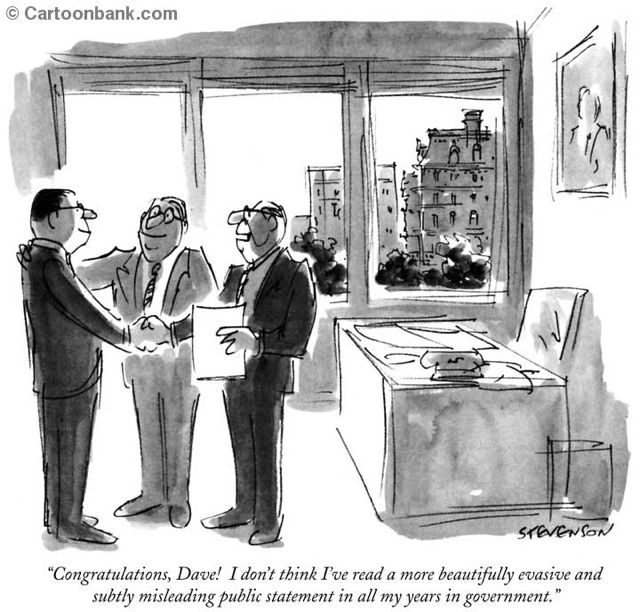
So here we are, months into the epidemic without consensus on the basic information about how many people are infected, the risk of death for those infected, or the risk of asymptomatic transmission. In contrast to official agencies that use transparent methods to report the weather or the unemployment rate, trust in our official health statistics agencies has broken down as reports continue to emerge form myriad sources with conflicting methodologies and motivations.

The time has come to activate impartial groups, like the National Academy of Medicine, to build consensus on how to monitor the epidemic. We know the risks are serious. As cases have started to rise, whether or not the number of U.S. deaths is higher or lower than 130,000, the risk of inaction is too high.

We are staying near home, wearing masks, and treating COVID-19 as a serious threat to public health.


Mask resistance during a pandemic isn’t new – in 1918 many Americans were ‘slackers

https://theconversation.com/mask-resistance-during-a-pandemic-isnt-new-in-1918-many-americans-were-slackers-141687?utm_medium=email&utm_campaign=The%20Weekend%20Conversation%20-%201680716207&utm_content=The%20Weekend%20Conversation%20-%201680716207+Version+A+CID_c211e1b0b6c4b69b3a29a9d1624a2ab6&utm_source=campaign_monitor_us&utm_term=Mask%20resistance%20during%20a%20pandemic%20isnt%20new%20%20in%201918%20many%20Americans%20were%20slackers

Mask resistance during a pandemic isn't new – in 1918 many ...

We have all seen the alarming headlines: Coronavirus cases are surging in 40 states, with new cases and hospitalization rates climbing at an alarming rate. Health officials have warned that the U.S. must act quickly to halt the spread – or we risk losing control over the pandemic.

There’s a clear consensus that Americans should wear masks in public and continue to practice proper social distancing. While a majority of Americans support wearing masks, widespread and consistent compliance has proven difficult to maintain in communities across the country. Demonstrators gathered outside city halls in Scottsdale, ArizonaAustin, Texas; and other cities to protest local mask mandates. Several Washington state and North Carolina sheriffs have announced they will not enforce their state’s mask order.

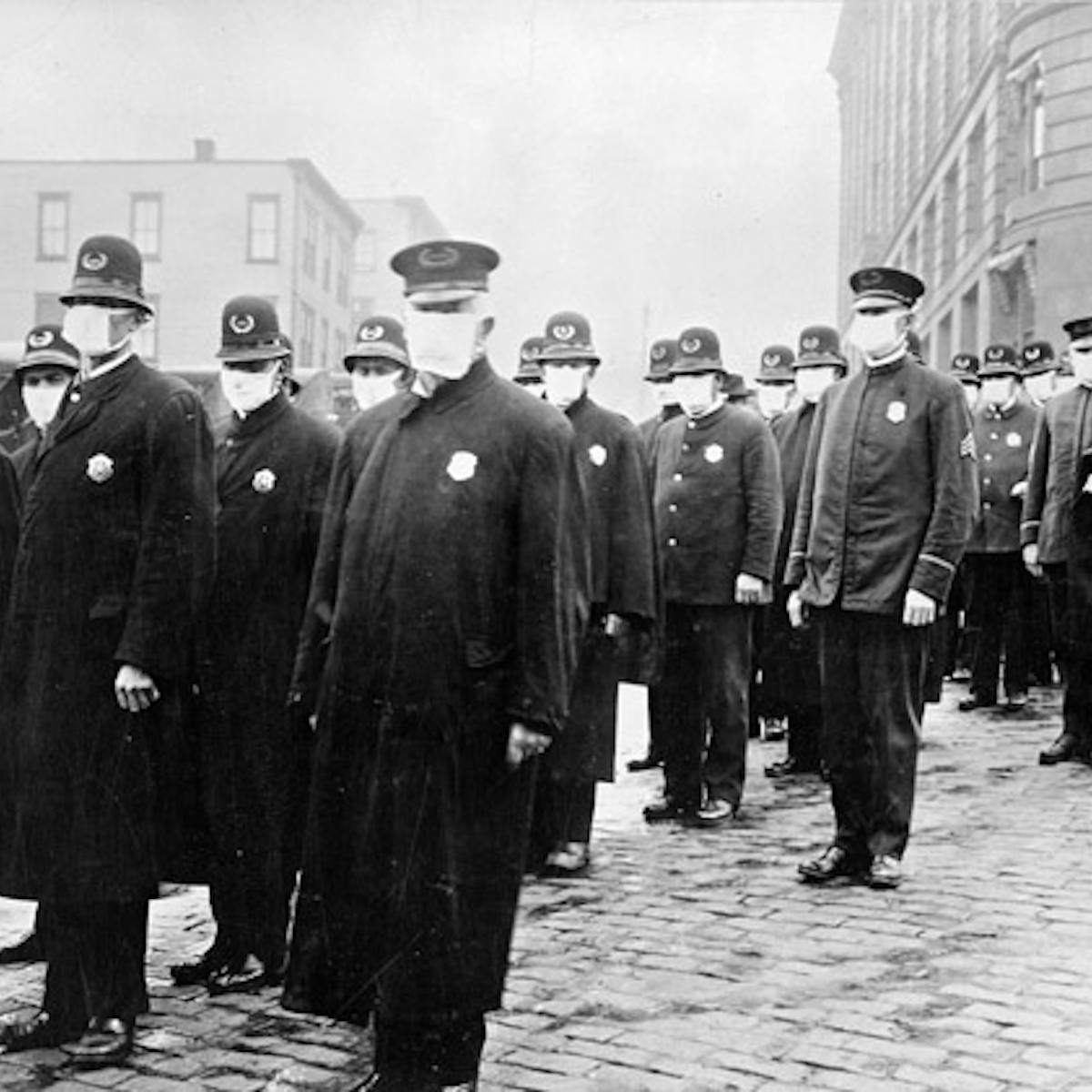
I’ve researched the history of the 1918 pandemic extensively. At that time, with no effective vaccine or drug therapies, communities across the country instituted a host of public health measures to slow the spread of a deadly influenza epidemic: They closed schools and businesses, banned public gatherings and isolated and quarantined those who were infected. Many communities recommended or required that citizens wear face masks in public – and this, not the onerous lockdowns, drew the most ire.

Mask resistance during a pandemic isn't new – in 1918 many ...

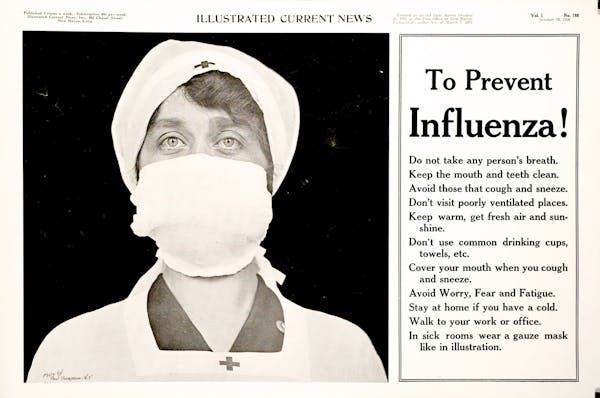
In mid-October of 1918, amidst a raging epidemic in the Northeast and rapidly growing outbreaks nationwide, the United States Public Health Service circulated leaflets recommending that all citizens wear a mask. The Red Cross took out newspaper ads encouraging their use and offered instructions on how to construct masks at home using gauze and cotton string. Some state health departments launched their own initiatives, most notably California, Utah and Washington.

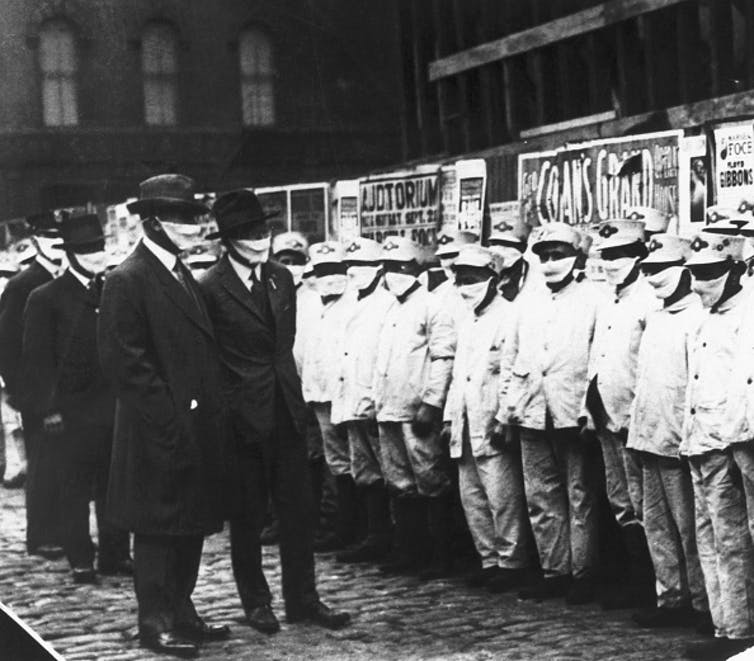
Nationwide, posters presented mask-wearing as a civic duty – social responsibility had been embedded into the social fabric by a massive wartime federal propaganda campaign launched in early 1917 when the U.S. entered the Great War. San Francisco Mayor James Rolph announced that “conscience, patriotism and self-protection demand immediate and rigid compliance” with mask wearing. In nearby Oakland, Mayor John Davie stated that “it is sensible and patriotic, no matter what our personal beliefs may be, to safeguard our fellow citizens by joining in this practice” of wearing a mask.

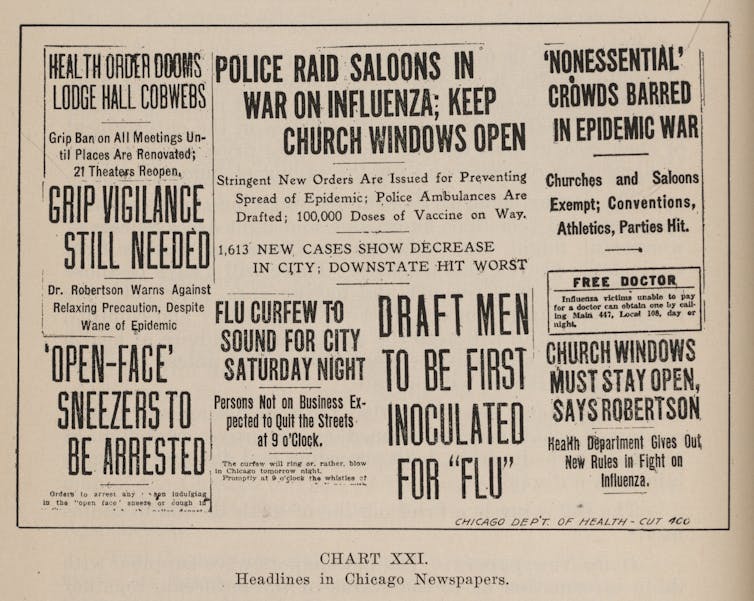
Health officials understood that radically changing public behavior was a difficult undertaking, especially since many found masks uncomfortable to wear. Appeals to patriotism could go only so far. As one Sacramento official noted, people “must be forced to do the things that are for their best interests.” The Red Cross bluntly stated that “the man or woman or child who will not wear a mask now is a dangerous slacker.” Numerous communities, particularly across the West, imposed mandatory ordinances. Some sentenced scofflaws to short jail terms, and fines ranged from US$5 to $200.

Mask resistance during a pandemic isn't new – in 1918 many ...

Passing these ordinances was frequently a contentious affair. For example, it took several attempts for Sacramento’s health officer to convince city officials to enact the order. In Los Angeles, it was scuttled. A draft resolution in Portland, Oregon led to heated city council debate, with one official declaring the measure “autocratic and unconstitutional,” adding that “under no circumstances will I be muzzled like a hydrophobic dog.” It was voted down.

Utah’s board of health considered issuing a mandatory statewide mask order but decided against it, arguing that citizens would take false security in the effectiveness of masks and relax their vigilance. As the epidemic resurged, Oakland tabled its debate over a second mask order after the mayor angrily recounted his arrest in Sacramento for not wearing a mask.prominent physician in attendance commented that “if a cave man should appear…he would think the masked citizens all lunatics.”

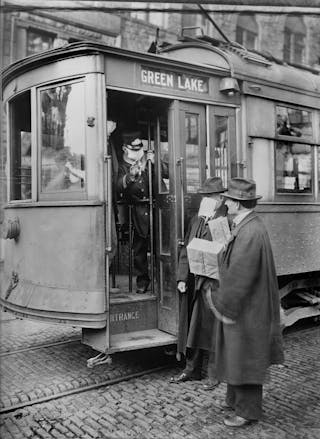
In places where mask orders were successfully implemented, noncompliance and outright defiance quickly became a problem. Many businesses, unwilling to turn away shoppers, wouldn’t bar unmasked customers from their stores. Workers complained that masks were too uncomfortable to wear all day. One Denver salesperson refused because she said her “nose went to sleep” every time she put one on. Another said she believed that “an authority higher than the Denver Department of Health was looking after her well-being.” As one local newspaper put it, the order to wear masks “was almost totally ignored by the people; in fact, the order was cause of mirth.” The rule was amended to apply only to streetcar conductors – who then threatened to strike. A walkout was averted when the city watered down the order yet again. Denver endured the remainder of the epidemic without any measures protecting public health.

Mask resistance during a pandemic isn't new – in 1918 many ...

In Seattle, streetcar conductors refused to turn away unmasked passengers. Noncompliance was so widespread in Oakland that officials deputized 300 War Service civilian volunteers to secure the names and addresses of violators so they could be charged. When a mask order went into effect in Sacramento, the police chief instructed officers to “Go out on the streets, and whenever you see a man without a mask, bring him in or send for the wagon.” Within 20 minutes, police stations were flooded with offenders. In San Francisco, there were so many arrests that the police chief warned city officials he was running out of jail cells. Judges and officers were forced to work late nights and weekends to clear the backlog of cases.

Many who were caught without masks thought they might get away with running an errand or commuting to work without being nabbed. In San Francisco, however, initial noncompliance turned to large-scale defiance when the city enacted a second mask ordinance in January 1919 as the epidemic spiked anew.

Many decried what they viewed as an unconstitutional infringement of their civil liberties. On January 25, 1919, approximately 2,000 members of the “Anti-Mask League” packed the city’s old Dreamland Rink for a rally denouncing the mask ordinance and proposing ways to defeat it. Attendees included several prominent physicians and a member of the San Francisco Board of Supervisors.

It is difficult to ascertain the effectiveness of the masks used in 1918. Today, we have a growing body of evidence that well-constructed cloth face coverings are an effective tool in slowing the spread of COVID-19. It remains to be seen, however, whether Americans will maintain the widespread use of face masks as our current pandemic continues to unfold.

Deeply entrenched ideals of individual freedom, the lack of cohesive messaging and leadership on mask wearing, and pervasive misinformation have proven to be major hindrances thus far, precisely when the crisis demands consensus and widespread compliance.

This was certainly the case in many communities during the fall of 1918. That pandemic ultimately killed about 675,000 people in the U.S. Hopefully, history is not in the process of repeating itself today.


How the coronavirus pandemic became Florida’s perfect storm

https://theconversation.com/how-the-coronavirus-pandemic-became-floridas-perfect-storm-142333

How the coronavirus pandemic became Florida's perfect storm

If there’s one state in the U.S. where you don’t want a pandemic, it’s Florida. Florida is an international crossroads, a magnet for tourists and retirees, and its population is older, sicker and more likely to be exposed to COVID-19 on the job than the country as a whole.

When the coronavirus struck, the conditions there made it a perfect storm.

Florida set a single-day record for new COVID-19 cases in early July, passing 15,000 and rivaling New York’s worst day at the height of the pandemic there. The state has become an epicenter for the spread, with over 300,000 confirmed cases. Its hospital capacity is under stress, and the death toll has been rising.

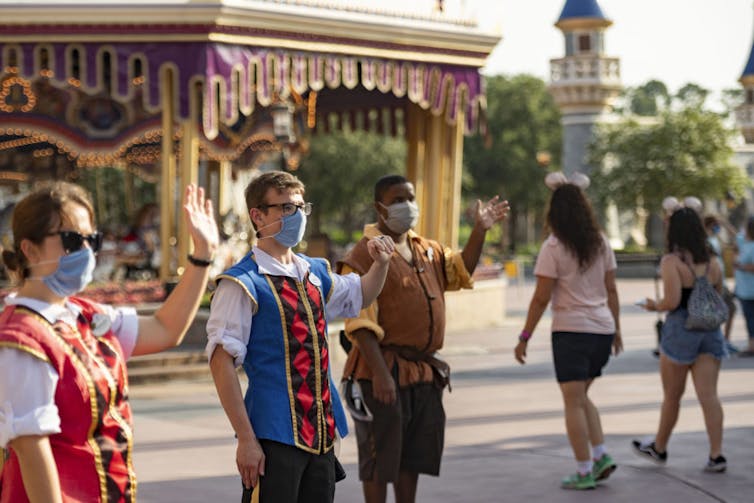
Despite these strains, Disney World reopened two theme parks on July 11, and Florida Gov. Ron DeSantis announced schools would reopen in August. The governor had shut down alcohol sales in bars in late June as case numbers skyrocketed, but he hasn’t made face masks mandatory or moved to shut down other businesses where the virus can easily spread.

As public health researchers, we have been studying how states respond to the pandemic. Florida stands out, both for its absence of statewide policies that could have stemmed the spread of COVID-19 and for some unique challenges that make those policies both more necessary and more difficult to implement than in many other states.

The challenges of economic pressures

Florida is one of nine states with no income tax on wages, so its tax base relies heavily on tourism and property in its high-density coastal areas. That puts more pressure on the government to keep businesses and social venues open longer and reopen them faster after shutdowns.

If you look closely at Florida’s economy, its vulnerabilities to the pandemic become evident.

The state depends on international trade, tourism and agriculture – sectors that rely heavily on lower-wage, often seasonal, workers. These workers can’t do their jobs from home, and they face financial barriers to getting tested, unless it’s provided through their employer or government testing sites. They also struggle with health care – Florida has a higher-than-average rate of people without health insurance, and it chose not to expand Medicaid.

In the tourism industry, even young, healthy employees typically at lower risk from COVID-19 can unknowingly spread the virus to visitors or vice versa. The tourism industry also encourages crowded bar and club scenes, where the governor has blamed young people for spreading the coronavirus.

The past few weeks have been emblematic of the economic battles facing a state that depends on tourism for both jobs and state revenues.

Even as the public health risks were quickly rising, businesses continued to open their doors. Major cruise lines planned to resume their itineraries in the fall. A note on the Universal Studios website read: “Exposure to COVID-19 is an inherent risk in any public location where people are present; we cannot guarantee you will not be exposed during your visit.”

Disney World reopened on July 11 with face mask requirements. Matt Stroshane via Disney

Reopening guidance has been largely ignored

The Governor’s Re-open Florida Taskforce issued guidelines in late April meant to lower the state’s coronavirus risk, but those guidelines have been largely ignored in practice.

No county in Florida has reduced cases or maintained the health care resources recommended by the task force. The data needed to fully assess progress are also questionable, given a recent scandal regarding the state data’s accuracy, availability and transparency.

Still, the coronavirus’s rapid surge in Florida is evident in the state-reported casesTesting lines are long, and almost 1 in 5 tests have been positive for COVID-19, suggesting the prevalence of infections is still increasing.

Florida’s patchwork of local rules also makes it hard to contain the virus’s spread.

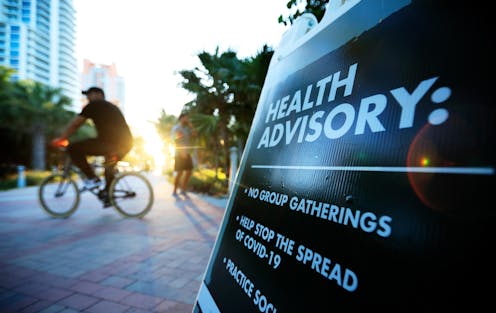
With no statewide mask rules or plans to reverse reopeningother than for bars, communities and businesses have taken their own actions to implement public health precautions. The result is varying mask ordinances and restrictions on large gatherings in some cities but not those surrounding them. Though the Florida Department of Health has issued an advisory recommending face coverings, some local areas have voted down mask mandates.

More warning signs ahead

Late summer and fall will bring new challenges for Florida in terms of the virus’s spread and the state’s response to it.

That’s when Florida’s risk of hurricanes grows, and while Floridians are well-versed in hurricane preparedness, storm shelters aren’t designed for social distancing and will need careful plans for protecting nursing home residents. Storm cleanup could mean lots of people working in close proximity while protective gear is in short supply.

If Florida’s schools reopen fully, the risk of the virus rapidly spreading to teachers, parents and children who are more vulnerable is a real concern being weighed against the costs of keeping schools closed.

Colleges that reopen to classes and sporting events also raise the risk of spreading the virus in Florida communities. And the possible return of retirees who spend their winters in Florida would increase the high-risk population by late fall. One in five Florida residents is over age 65, giving the state one of the nation’s oldest populations – a risk factor, along with chronic illnesses, for severe symptoms with COVID-19.

Florida is also a battleground state for the upcoming presidential election, and that’s likely to mean campaign rallies and more close contact. The Republican National Convention was moved to Jacksonville after President Donald Trump complained that North Carolina might not let the GOP fill a Charlotte arena to capacity due to coronavirus restrictions. Florida organizers recently said they were considering holding parts of the convention outdoors.

The high number of cases being reported in Florida will lead to even more hospitalizations and fatalities in coming weeks and months. Without clear public health messages and precautions implemented and enforced across the state, the coronavirus forecast for the Sunshine State will remain stormy.


Modeling the ominous impact of testing delays

https://mailchi.mp/da2dd0911f99/the-weekly-gist-july-17-2020?e=d1e747d2d8

Sponsors Delay Trials and Shift Toward Using Remote Procedures ...

With delays in getting test results growing in many areas of the country, a new analysis in the Lancet shows just how destructive increased turnaround times for COVID tests can be.

Researchers modeled the impact of the timeliness and completeness of contact tracing, finding that minimizing testing delay—shortening the time between symptom onset and a positive test result—had the greatest impact on reducing future spread of the disease.

Digging into the details, if infected individuals who develop symptoms are isolated within one day of symptom onset, the R0 (“R-naught”) can be reduced to 1—each existing infection seeds one new case—stabilizing the level of infection in a population. With contact tracing, the R0 can be reduced to 0.8, meaning the disease will decline.

And researchers found with a testing delay of three days or more, even the most efficient isolation and contact tracing is essentially futile, powerless to bend the curve of transmission rates.

Ominous findings for many states, where average test turnaround times are again approaching one week, showing just how far we are from being able to implement the basic public health strategy of “test, trace and isolate”, which has proven effective for so many countries around the world.


U.S. Coronavirus Response: We blew it

https://www.axios.com/coronavirus-america-blew-it-b3d84ea3-78b3-4fe0-8dce-1c4ed0ec0a4c.html

We blew it: Why America still hasn't gotten the coronavirus under ...

America spent the spring building a bridge to August, spending trillions and shutting down major parts of society. The expanse was to be a bent coronavirus curve, and the other side some semblance of normal, where kids would go to school and their parents to work.

The bottom line: We blew it, building a pier instead.

There will be books written about America’s lost five months of 2020, but here’s what we know:

We blew testing. President Trump regularly brags and complains about the number of COVID-19 tests conducted in the U.S., but America hasn’t built the infrastructure necessary to process and trace the results.

  • Quest Diagnostics says its average turnaround time for a COVID-19 test has lengthened to “seven or more days” — thus decreasing the chance that asymptomatic or mildly symptomatic carriers will self-quarantine.
  • The testing delays also make it harder for public health officials to understand current conditions, let alone implement effective contact tracing.
  • Speaking of contact tracing, it remains a haphazard and uncoordinated process in many parts of the country.

We blew schools. Congress allocated $150 billion for state and local governments as part of the CARES Act, but that was aimed at maintaining status quo services in the face of plummeting tax revenue.

There was no money earmarked for schools to buy new safety equipment, nor to hire additional teachers who might be needed to staff smaller class sizes and hybrid learning days.

  • U.S. Education Secretary Betsy DeVos was not among the 27 officials included in the White House Coronavirus Task Force.
  • The administration insists that schools should reopen this fall because kids are less likely to get very sick from the virus, but it has not yet offered detailed plans to protect older teachers, at-risk family members, or students with pre-existing respiratory or immune conditions.
  • Silicon Valley provided some free services to schools, but there was no coordinated effort to create a streamlined virtual learning platform. There also continue to be millions of schoolkids without access to broadband and/or Internet-connected devices.

We blew economics. The CARES Act was bold and bipartisan, a massive stimulus to meet the moment.

  • It’s running out, without an extension plan not yet in place.
  • Expanded unemployment benefits expire in days. Many small businesses have already exhausted their Paycheck Protection Program loans, including some that reopened but have been forced to close again.
  • There has been no national effort to pause residential or commercial evictions, nor to give landlords breathing room on their mortgage payments.

We blew public health. There’s obviously a lot here, but just stick with face masks. Had we all been directed to wear them in March — and done so, even makeshift ones while manufacturing ramped up — you might not be reading this post.

We blew goodwill. Millions of Americans sheltered in place, pausing their social lives for the common good.

  • But many millions of other Americans didn’t. Some were essential workers. Some were deemed essential workers but really weren’t. Some just didn’t care, or didn’t believe the threat. Some ultimately decided that protesting centuries of racial injustice was a worthy trade-off.
  • All of this was complicated by mixed messages from federal and state leaders. Top of that list was President Trump, who claimed to adopt a wartime footing without clearly asking Americans to make sacrifices necessary to defeat the enemy.
  • Five months later, many of those who followed the “rules” are furious at what they perceive to be the selfishness of others.

The bottom line: America has gotten many things right since March, including the development of more effective hospital treatments for COVID-19 patients.

  • But we’re hitting daily infection records, daily deaths hover around 900, and many ICUs reports more patients than beds. It didn’t have to be this way.


Covid-19 data is a public good. The US government must start treating it like one.

https://www.technologyreview.com/2020/07/17/1005391/covid-coronavirus-hospitalizations-data-access-cdc/

Data for the public good - O'Reilly Radar

The US has failed to prioritize a highly effective and economical intervention—providing quick and easy access to coronavirus data.

Earlier this week as a pandemic raged across the United States, residents were cut off from the only publicly available source of aggregated data on the nation’s intensive care and hospital bed capacity. When the Trump administration stripped the Centers for Disease Control and Prevention (CDC) of control over coronavirus data, it also took that information away from the public.


I run a nonpartisan project called covidexitstrategy.org, which tracks how well states are fighting this virus. Our team is made up of public health and crisis experts with previous experience in the Trump and Obama administrations. We grade states on such critical measures as disease spread, hospital load, and the robustness of their testing. 


Why does this work matter? In a crisis, data informs good decision-making. Along with businesses, federal, state, and local public health officials and other agencies rely on us to help them decide which interventions to deploy and when workplaces and public spaces can safely reopen. Almost a million people have used our dashboards, with thousands coming back more than 200 times each.

To create our dashboards, we rely on multiple sources. One is the National Healthcare Safety Network (NHSN), run by the CDC. Prior to July 14, hospitals reported the utilization and availability of intensive care and inpatient beds to the NHSN. This information, updated three times a week, was the only publicly available source of aggregated state-level hospital capacity data in the US.

With 31 states currently reporting increases in the number of hospitalized covid-19 patients, these utilization rates show how well their health systems will handle the surge of cases.


Having this information in real time is essential; the administration said the CDC’s system was insufficiently responsive and data collection needed to be streamlined. The US Department of Health and Human Services (HHS) directed hospitals (pdf) to report their data to a new system called HHS Protect.

Unfortunately, by redirecting hospitals to a new system, it left everyone else in the dark. On July 14, the CDC removed the most recent data from its website. As we made our nightly update, we found it was missing. After significant public pressure, the existing maps and data are back—but the agency has added a disclaimer that the data will not be updated going forward.


This is unacceptable. This critical indicator was being shared multiple times a week, and now updates have been halted. US residents need a federal commitment that this data will continue to be refreshed and shared.

The public is being told that a lot of effort is going into the new system. An HHS spokesman told CNBC that the new database will deliver “more powerful insights” on the coronavirus. But the switch has rightly been criticized because this new data source is not yet available to the public. Our concerns are amplified by the fact that responsibility for the data has shifted from a known entity in the CDC to a new, as-yet-unnamed team within HHS.

I was part of the team that helped fix Healthcare.gov after the failed launch in 2013. One thing I learned was that the people who make their careers in the federal government—and especially those working at the center of a crisis—are almost universally well intentioned. They seek to do the right thing for the public they serve.


In the same spirit, and to build trust with the American people, this is an opportunity for HHS to make the same data it’s sharing with federal and state agencies available to the public. The system that HHS is using helps inform the vital work of the White House Coronavirus Task Force. From leaked documents, we know that reports for the task force are painstakingly detailed. They include county-level maps, indicators on testing robustness, and specific recommendations. All of this information belongs in the public domain.

This is also an opportunity for HHS to make this data machine readable and thereby more accessible to data scientists and data journalists. The Open Government Data Act, signed into law by President Trump, treats data as a strategic asset and makes it open by default. This act builds upon the Open Data Executive Order, which recognized that the data sets collected by the government are paid for by taxpayers and must be made available to them. 

As a country, the United States has lagged behind in so many dimensions of response to this crisis, from the availability of PPE to testing to statewide mask orders. Its treatment of data has lagged as well. On March 7, as this crisis was unfolding, there was no national testing data. Alexis Madrigal, Jeff Hammerbacher, and a group of volunteers started the COVID Tracking Project to aggregate coronavirus information from all 50 state websites into a single Google spreadsheet. For two months, until the CDC began to share data through its own dashboard, this volunteer project was the sole national public source of information on cases and testing.

With more than 150 volunteers contributing to the effort, the COVID Tracking Project sets the bar for how to treat data as an asset. I serve on the advisory board and am awed by what this group has accomplished. With daily updates, an API, and multiple download formats, they’ve made their data extraordinarily useful. Where the CDC’s data is cited 30 times in Google Scholar and approximately 10,000 times in Google search results, the COVID Tracking Project data is cited 299 times in Google Scholar and roughly 2 million times in Google search results.


Sharing reliable data is one of the most economical and effective interventions the United States has to confront this pandemic. With the Coronavirus Task Force daily briefings a thing of the past, it’s more necessary than ever for all covid-related data to be shared with the public. The effort required to defeat the pandemic is not just a federal response. It is a federal, state, local, and community response. Everyone needs to work from the same trusted source of facts about the situation on the ground.

Data is not a partisan affair or a bureaucratic preserve. It is a public trust—and a public resource.


Administration’s war on the public health experts

https://www.axios.com/trump-public-health-experts-cdc-fauci-e1509d14-0cf1-4b1c-b107-7753bf95395d.html

Trump's war on the public health experts - Axios

A pandemic would normally be a time when public health expertise and data are in urgent demand — yet President Trump and his administration have been going all out to undermine them.

Why it matters: There’s a new example almost every day of this administration trying to marginalize the experts and data that most administrations lean on and defer to in the middle of a global crisis.

Here’s how it has been happening just in the past few weeks:

  • The administration has repeatedly undermined the Centers for Disease Control and Prevention. Most recently, Trump has criticized the CDC’s school reopening guidelines, Education Secretary Betsy DeVos declared that “kids need to be in school,” and the administration has reportedly ordered hospitals to bypass the CDC in reporting coronavirus patient information.
  • It has repeatedly undermined Anthony Fauci. Trump distanced himself on Wednesday from an op-ed attack by White House trade adviser Peter Navarro, but longtime Trump aide Dan Scavino also called the infectious diseases specialist “Dr. Faucet” in a Facebook post accusing him of leaking his disagreements. And the White House gave a opposition research-style list of the times Fauci “has been wrong” to the Washington Post and other media outlets.
  • Trump himself undermined public health experts generally with his retweet of former game show host Chuck Woolery’s “everyone is lying” tweet — which blamed “The CDC, Media, Democrats, our Doctors, not all but most, that we are told to trust.”
  • Trump has made numerous statements suggesting, over and over again, that we wouldn’t have as many COVID cases if we just tested less. (From his Tuesday press conference at the White House: “If we did half the testing we would have half the cases.”)

The impact: The result is that the CDC — which is supposed to be the go-to agency in a public health crisis — is distracted by constant public critiques from the highest levels. And Fauci, “America’s Doctor,” is the subject of yet another round of stories about whether Trump is freezing him out.

  • “The way to make Americans safer is to build on, not bypass, our public health system,” Tom Frieden, a former CDC director under Barack Obama, said in a statement to Axios about the efforts to sideline the agency.
  • “Unfortunately, as with mask-up recommendations and schools reopening guidance, the administration has chosen to sideline and undermine our nation’s premier disease fighting agency in the middle of the worst pandemic in 100 years,” Frieden said.
  • And Fauci, in an interview with The Atlantic, said of the efforts to discredit him: “Ultimately, it hurts the president to do that … It doesn’t do anything but reflect poorly on them.”

The other side: The White House insists there’s no problem. “President Trump has always acted on the science and valued the input of public health experts throughout this crisis,” said White House deputy press secretary Sarah Matthews.

  • Trump campaign communications director Tim Murtaugh closed ranks with the experts as well. “President Trump has said repeatedly that he has a strong relationship with Dr. Fauci, and Dr. Fauci has always said that the President listens to his advice,” he said.
  • And Department of Health and Human Services spokesman Michael Caputo declared that “the scientists and doctors speak openly, they are listened to closely, and their advice and counsel helps guide the response.”
  • “Frankly, when it comes to this tempest in a teapot over Dr. Fauci, I blame the media and their unending search for a ‘Resistance’ hero, for turning half a century of a brilliant scientist’s hard work into a clickbait headline that helps reporters undermine the president’s coronavirus response,” Caputo said.

Between the lines: Murtaugh deflected several times when asked whether there was a deliberate strategy to marginalize the CDC and the experts: “The President and the White House have consistently advised Americans to follow CDC guidelines. The President also believes we can open schools safely on time and that we must do so.”

  • However, one administration official said there were parts of the CDC school reopening guidelines that were impractical, and noted that kids can also suffer long-term harm by staying out of school too long.

Our thought bubble, by Axios White House reporter Alayna Treene: The responses make it clear that the White House and the Trump campaign don’t want to advance the narrative that they’re deliberately battling with America’s health experts, or that there’s any kind of strategy behind it.

The bottom line: When the history of this pandemic is written, it will show that the public health experts who were trying to fight it also had to deal with political fights that made their jobs harder.