
Healthcare added 34K jobs in March as temp nursing demand wanes

Dive Brief:

  • Healthcare job growth continued to climb in March with the industry adding 34,000 jobs last month, according to a report released from the Bureau of Labor Statistics on April 7. 
  • The job growth is lower than the six-month average monthly job gain of 54,000 in healthcare. Home health services and hospitals recorded the most gains, adding 15,000 and 11,000 jobs, respectively. 
  • The BLS report comes as demand for temporary nurses declines with median rates of temp staff billing down, according to a report out last week from Jefferies.

Dive Insight:

Labor shortages have been a continuing obstacle for hospitals and health systems, after the coronavirus pandemic spurred industry job reductions and clinicians left the field due to burnout. Temporary nurse staffing agencies swooped in to ease labor shortages, with hospital systems paying higher rates to temp agencies to staff their floors. 

Hospitals ended last year with negative margins, driven by labor expenses that rose as much as 36% compared with pre-pandemic levels. The average weekly rate for travel nurses reached $3,900 in January 2022, according to staffing platform Vivian Health, prompting lawmakers and industry groups to ask the White House to investigate nurse staffing agencies.

But hospitals may be catching a break from labor and temporary staffing pressures. Data from private healthcare staffers, including Aya Healthcare and Fastaff, show that demand for temporary nurses declined by 2.2%, with median bill rates dropping 2.9% week over week, according to the Jefferies report.

The accelerated decline in demand and bill rates could be a sign of labor woes easing, especially for nurse-dependent hospital operators like HCA Healthcare, according to the report.

“As we see order and bill rate data for temp nurses decline, we are gaining optimism that nurse-dependent healthcare providers such as hospitals [HCA Healthcare, Community Health Systems, Tenent Healthcare] and post-acute players [Amedisys, Encompass Health, Enhabit] will begin to see labor headwinds ease, which should help these companies achieve or exceed earnings goals this year,” the report said.

While labor shortages have battered HCA Healthcare and CHS, both operators suggested in recent earnings reports that labor pains could be easing. HCA reported in January that it was decreasing its nursing turnover and CHS reported in October that it had made progress in reducing its contract labor expenses.

Hospitals continue gaining jobs

Reports have showed that labor shortages appear to be easing this year, with a December report from Fitch Ratings noting that staffing shortages at nonprofit hospitals appeared to be incrementally waning.
Value-based Care

Context: 

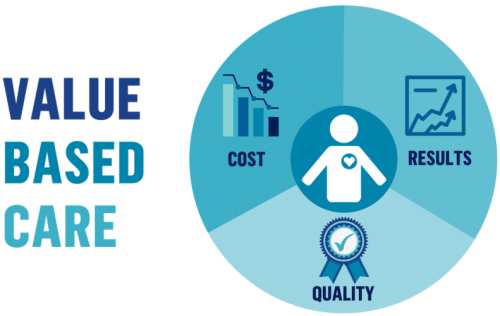
Value-based care is widely accepted as key to the health system’s transformation. Changing provider incentives from volume to value and engaging provider organizations in risk-sharing models with payers (including Medicare) are means to that end. But implementation vis a vis value-based models has produced mixed results thus far and current financial pressures facing providers (esp. hospitals) have stymied momentum in pursuit of value in healthcare. Last week, CMS indicated it intends to continue its value-based insurance design (VBID) model which targets insurers, and last month announced continued commitment to its bundled payment and ACO models. But they’re considered ‘works in process’ that, to date, have attracted early adopters with mixed results.

Questions:

What’s ahead for the value agenda in healthcare? Is it here to stay or will something replace it? How is your organization adapting?

Key takeaways from Discussion:

  • ‘Not-for-profit hospitals and health systems are fighting to survive: near-term investments in value-based models are unlikely unless they’re associated with meaningful near-term savings that hospitals and physicians realize. Unlike investor-owned systems and private-equity backed providers, NFP systems face unique regulatory constraints, increasingly limited access to capital hostile treatment in media coverage and heavy-handed treatment by health insurers.’
  • Demonstrating value in healthcare remains its most important issue but implementing policies that advance a system-wide definition of value and business models that create a fair return on investment for risk-taking organizations are lacking. The value agenda must be adopted by commercial payers, employers and Medicaid and not limited to/driven by Medicare-alone.’
  • The ACO REACH model is promising but hospitals are hesitant to invest in its implementation unless compelled by direct competitive threats and/or market share leakage. It involves a high level of financial risk and relationship stress with physicians if not implemented effectively.’
  • ‘Health insurers are advantaged over provider organizations in implementing value-strategies: they have data, control of provider networks and premium dollars.’
  • ‘Any and all value models must directly benefit physicians: burnout and frustration are palpable, and concern about income erosion is widespread.’
  • ‘Value in healthcare is a long-term aspirational goal: getting there will be tough.’

My take:

Hospitals, health systems, medical groups and other traditional providers are limited in their abilities to respond to opportunities in AI and value-based models by near-term operating margin pressures and uncertainty about their finances longer-term. Risk avoidance is reality in most settings, so investments in AI-solutions and value-based models must produce near-term ROI: that’s reality. Outsiders that operate in less-regulated environments with unlimited access to capital are advantaged in accessing and deploying AI and value-based model pursuits. Thus, partnerships with these may be necessary for most traditional providers.

AI is tricky for providers:

Integration of AI capabilities in hospitals and medical practices will produce added regulator and media scrutiny about data security and added concern for operational transparency. It will also prompt added tension in the workforce as new operational protocols are implemented and budgets adapted.  And cooperation with EHR platforms—EPIC, Meditech, Cerner et al—will be essential to implementation. But many think that unlikely without ‘forced’ compliance.

Value-based models:

Participation in value-based models is a strategic imperative: in the near term, it adds competencies necessary to network design and performance monitoring, care coordination, risk and data management. Longer-term, it enables contracting directly with commercial payers and employers—Medicare alone will not drive the value-imperative in US healthcare successfully. Self-insured employers, private health insurers, and consumers will intensify pressure on providers for appropriate utilization, lower costs, transparent pricing, guaranteed outcome and satisfying user experiences. They’ll force consumerism and value into the system and reward those that respond effectively.

The immediate implications for all traditional provider organizations, especially not-for-profit health systems like the 11 who participated in Chicago last week, are 4:

  • Education: Boards, managers and affiliated clinicians need ongoing insight about generative AI and value-based models as they gain traction in the industry.
  • Strategy Development: Strategic planning models must assess the impacts of AI and value-based models in future-state scenario plans.
  • Capital: Whether through strategic partnerships with solution providers or capital reserves, investing in both of these is necessary in the near-term. A wait-and-see strategy is a recipe for long-term irrelevance.
  • Stakeholder Communication: Community leaders, regulators, trading partners, health system employees and media will require better messaging that’s supported by verifiable facts (data). Playing victim is not a sustainable communications strategy.

Generative AI and value-based models are the two most compelling changes in U.S. healthcare’s future. They’re not a matter of IF, but how and how soon.

UnitedHealth Group hits a milestone in vertical integration

https://mailchi.mp/c9e26ad7702a/the-weekly-gist-april-7-2023?e=d1e747d2d8

Constrained by the Affordable Care Act’s medical loss ratio (MLR) requirement that health insurers must spend 80-85 percent of their revenue on medical services, payers have been pivoting to providing care, managing pharmacy benefits, and supporting other healthcare services, in order to fuel earnings growth. The graphic above shows why UnitedHealth Group (UHG) is seen as the health insurance industry’s most noteworthy model of this vertical integration strategy, thanks to its flourishing Optum division. 

Optum is now as big a profit driver for UHG as its UnitedHealthcare insurance arm, with each bringing in $14B of net earnings in 2022. 

Optum’s 7.7 percent operating margin is almost two points higher than UnitedHealthcare’s, which owes much of its revenue and earnings growth to its expanding Medicare Advantage (MA) business. As both sides of UHG’s business have grown, so too have intercompany eliminations, which have increased by over 80 percent in five years, reaching $108 billion in 2022These payments from one division of UHG to another—mostly from the insurance business to the provider arm—allow the company to shift profit-capped insurance revenues into other divisions, driving increased profitability for the overall enterprise. 

It will be worth watching the trend in intercompany eliminations at other vertically integrated insurance companies, with an eye for whether integration truly results in lower cost of care for patients or just higher margins for the insurers.

Providence endures another credit downgrade

Renton, Wash.-based Providence suffered its third credit downgrade in less than three weeks when Moody’s revised a rating on bonds the 51-hospital system holds to “A2” from “A1.”

Such a rating reflects an expectation margins will remain weak in 2023. The outlook is negative.

The move follows similar actions by Fitch Ratings March 17 and S&P Global March 21 amid an anticipated multiyear process of financial recovery.

Capital expenditure for Providence is expected to be restricted after the completion of a couple of major projects this year to effect “margin recovery,” Moody’s said.

Providence reported a $1.7 billion operating loss in 2022.

Razor-thin hospital margins become the new normal

Hospital finances are starting to stabilize as razor-thin margins become the new normal, according to Kaufman Hall’s latest “National Flash Hospital Report,” which is based on data from more than 900 hospitals.

External economic factors including labor shortages, higher material expenses and patients increasingly seeking care outside of inpatient settings are affecting hospital finances, with the high level of fluctuation that margins experienced since 2020 beginning to subside.

Hospitals’ median year-to-date operating margin was -1.1 percent in February, down from -0.8 percent in January, according to the report. Despite the slight dip, February marked the eight month in which the variation in month-to-month margins decreased relative to the last three years. 

“After years of erratic fluctuations, over the last several months we are beginning to see trends emerge in the factors that affect hospital finances like labor costs, goods and services expenses and patient care preferences,” Erik Swanson, senior vice president of data and analytics with Kaufman Hall, said. “In this new normal of razor thin margins, hospitals now have more reliable information to help make the necessary strategic decisions to chart a path toward financial security.”

High expenses continued to eat into hospitals’ bottom lines, with February signaling a shift from labor to goods and services as the main cost driver behind hospital expenses. Inflationary pressures increased non-labor expenses by 6 percent year over year, but labor expenses appear to be holding steady, suggesting less dependence on contract labor, according to Kaufman Hall. 

“Hospital leaders face an existential crisis as the new reality of financial performance begins to set in,” Mr. Swanson said. “2023 may turn out to be the year hospitals redefine their goals, mission, and idea of success in response to expense and revenue challenges that appear to be here for the long haul.”

AHA: MedPAC’s 2024 Medicare payment recommendation is ‘out of touch with reality’

MedPAC’s recommendation that acute care hospitals don’t need a significant increase in 2024 Medicare rates is “totally insufficient and out of touch with reality,” according to the American Hospital Association.

“This view is one-sided, inaccurate and misleading,” Ashley Thompson, AHA’s senior vice president of public policy analysis and development, wrote in a March 23 blog post. “After years of once-in-a-lifetime events in the form of a global pandemic and record inflation, hospitals across the country are struggling to continue to fulfill their mission to care for their patients and communities.”

In its annual March report to Congress, MedPAC recommended an update to hospital payment rates of “current law plus 1 percent,” which the AHA says is not enough for many hospitals to keep their doors open. 

The commission found that most indicators of sufficient Medicare rates for providers were positive or improved in 2021, though it acknowledged that hospitals saw more volatile cost increases in 2022 compared to years prior. Hospital margins were also lower last year than in 2021, according to preliminary data, driven in part by providers facing higher than expected costs and capacity and staffing challenges.

The report also said that its 2024 payment recommendations “may not be sufficient” to sustain some safety-net hospitals with a low number of commercially insured patients, and proposed $2 billion in add-on payments.

Across the U.S., a total of 631 rural hospitals — or about 30 percent of all rural hospitals — are at risk of closing in the immediate or near future.

MedPAC’s recommendations for 2024 differ from how some health economists have recently described hospitals’ finances. In January, hospitals had a median operating margin of -1 percent according to Kaufman Hall, a finding that arrived on the heels of 2022 being named the worst financial year for hospitals since the start of the COVID-19 pandemic.

“It is also important to realize that MedPAC’s report and data has limitations,” Ms. Thompson wrote, referring to a misalignment in the calendar year MedPAC chose to analyze and how hospitals can differ in how they report their individual financial earnings.

MedPAC said its report reflects 2021 data, preliminary data from 2022, and projections for 2023, along with recent inflation rates.

“…cost reports are filed for hospitals’ own specific fiscal years, and because surges, relief payments, and eventual expense increases happened at different times for different hospitals, these calculated margins don’t necessarily provide a fully accurate picture of the financial reality in 2021,” Ms. Thompson wrote.

The AHA stressed that hospitals’ finances in 2023 face much different challenges compared to 2021, when the industry was more supported by strong investment returns and federal pandemic relief. 

“The fact that massive numbers of hospitals are not currently closing due to financial pressures should be seen as positive for patients and communities,” Ms. Thompson said. “Instead, some observers seem to be disappointed that more hospitals are not failing financially.”

A detailed response from the AHA to the MedPAC report is available here.

Sutter Health ends 2022 with $249M loss, but draws solace from $278M operating income

https://www.fiercehealthcare.com/providers/sutter-health-ends-2022-249m-loss-draws-solace-278m-operating-income

Sacramento, California-based Sutter Health crossed the finish line strong but ultimately wrapped up 2022 with a $249 million net loss, a substantial decline from the $1.1 billion profit of 2021.

A $628 million dip in investment income, a $578 million decrease in net unrealized gains and losses on investments and the $208 million disaffiliation of Samuel Merritt University all contributed to the nonprofit’s year-over-year decline.

Still, the tally is a $289 million improvement over the $538 million net loss the system had reported at the year’s nine-month mark.

The loss was also blunted by a 12-month operating income of $278 million—a bump over the $199 million operating income of 2021 and a feather in Sutter’s cap at a time when several other major nonprofit systems are reporting hundreds of millions in operating losses.

“Our operating financial performance has put Sutter in a position to reinvest more within the system, which can help support even higher quality, equitable healthcare for patients throughout California,” CEO and President Warner Thomas said in a press release.

Sutter’s total operating revenues rose 3.9% year over year to $14.8 billion in 2022. This was just ahead of the 3.3% increase to $14.5 billion in total operating expenses. The system wrote in a release that “like other healthcare organizations around the country,” it was not immune from inflationary pressures on expenses like wages and benefits or supplies.

However, the strong results of its 2021 financial recovery initiative and patient volumes “returning to near-2019 levels by year’s end” give Sutter “a stable base to invest in the future,” the system said.

Providence suffers 2nd downgrade in a few days

Renton, Wash.-based Providence had its second downgrade in less than a week amid higher expenses that helped lead to steeper-than-expected losses and an expectation of a multiyear recovery.

The rating downgrade from “A+” to “A” applies to the system’s long-term rating as well as to various bonds it holds, S&P Global said March 21. The outlook is negative.

The negative outlook reflects our view of the steep operating losses that management must address over the next year to put the organization on a path to better cash flow and break-even margins,” S&P said.

The rating downgrade follows a similar move by Fitch March 17.

Positive fundamentals such as its diversified services and robust strategic plan, as well as its leading market positions in all seven of its regionally centered markets, stands Providence in good stead, S&P added.

Providence, a 51-hospital system, recently reported a fiscal 2022 operating loss of $1.7 billion.

14 health systems with strong finances

Here are 14 health systems with strong operational metrics and solid financial positions, according to reports from credit rating agencies Fitch Ratings, Moody’s Investors Service and S&P Global.

1. Ascension has an “AA+” rating and stable outlook with Fitch. The St. Louis-based system’s rating is driven by multiple factors, including a strong financial profile assessment, national size and scale with a significant market presence in several key markets, which produce unique credit features not typically seen in the sector, Fitch said. 

2. Berkshire Health has an “AA-” rating and stable outlook with Fitch. The Pittsfield, Mass.-based system has a strong financial profile, solid liquidity and modest leverage, according to Fitch. 

3. ChristianaCare has an “Aa2” rating and stable outlook with Moody’s. The Newark, Del.-based system has a unique position with the state’s largest teaching hospital and extensive clinical depth that affords strong regional and statewide market capture, and it is expected to return to near pre-pandemic level margins over the medium term, Moody’s said.

4. Cone Health has an “AA” rating and stable outlook with Fitch. The rating reflects the expectation that the Greensboro, N.C.-based system will gradually return to stronger results in the medium term, the rating agency said. 

5. Harris Health System has an “AA” rating and stable outlook with Fitch. The Houston-based system has a “very strong” revenue defensibility, primarily based on the district’s significant taxing margin that provides support for operations and debt service, Fitch said. 

6. Johns Hopkins Medicine has an “AA-” rating and stable outlook with Fitch. The Baltimore-based system has a strong financial role as a major provider in the Central Maryland and Washington, D.C., market, supported by its excellent clinical reputation with a regional, national and international reach, Fitch said. 

7. Orlando (Fla.) Health has an “AA-” and stable outlook with Fitch. The system’s upgrade from “A+” reflects the continued strength of the health system’s operating performance, growth in unrestricted liquidity and excellent market position in a demographically favorable market, Fitch said.  

8. Rady Children’s Hospital has an “AA” rating and stable outlook with Fitch. The San Diego-based hospital has a very strong balance sheet position and operating performance and is also a leading provider of pediatric services in the growing city and tri-county service area, Fitch said. 

9. Rush System for Health has an “AA-” and stable outlook with Fitch. The Chicago-based system has a strong financial profile despite ongoing labor issues and inflationary pressures, Fitch said. 

10. Salem (Ore.) Health has an “AA-” rating and stable outlook with Fitch. The system has a “very strong” financial profile and a leading market share position, Fitch said. 

11. TriHealth has an “AA-” rating and stable outlook with Fitch. The rating reflects the Cincinnati-based system’s strong financial and operating profiles, as well as its broad reach, high-acuity services and stable market position in a highly fragmented and competitive market, Fitch said. 

12. UCHealth has an “AA” rating and stable outlook with Fitch. The Aurora, Colo.-based system’s margins are expected to remain robust, and the operating risk assessment remains strong, Fitch said.   

13. University of Kansas Health System has an “AA-” rating and stable outlook with S&P Global. The Kansas City-based system has a solid market presence, good financial profile and solid management team, though some balance sheet figures remain relatively weak to peers, the rating agency said. 

14. Willis-Knighton Health System has an “AA-” rating and stable outlook with Fitch. The Shreveport, La.-based system has a “dominant inpatient market position” and is well positioned to manage operating pressures, Fitch said. 

4 health systems hit with rating downgrades

Here is a summary of recent credit rating downgrades, going back to the last Becker’s roundup on Jan. 17.

Operating concerns and a bleak financial outlook for some resulted in the following changes:

Geisinger Health System (Danville, Pa.): Moody’s Investors Service downgraded Geisinger Health System’s outstanding bonds from “A1” to “A2” Feb. 13 amid expectations of continued cash flow weakness. 

The outlook for the system, which has about $1.3 billion in debt, is stable. 

Marshfield (Wis.) Clinic Health System:  The system suffered a credit downgrade because of recent operating losses and amid expectations of no immediate financial improvement.

The S&P Global move Feb. 7 to downgrade the system to “BBB+” from “A-” follows a similar move from Fitch Jan. 18.

Marshfield signed a memorandum of understanding with Duluth, Minn.-based Essentia Health to discuss a potential merger Oct. 12 that would include 25 hospitals.

Tower Health (West Reading, Pa.): Troubled Tower Health, which is currently undergoing a strategic review and selling off several assets, suffered a rating downgrade on its bonds, S&P Global reported Feb. 6, adding that the outlook is negative.

“The downgrade reflects Tower Health’s significant ongoing operating losses that are expected to continue in fiscal 2023, and a steep decline in unrestricted reserves to a level that we view as highly vulnerable,” said S&P Global Ratings credit analyst Anne Cosgrove.

Fairview Health (Minneapolis): Moody’s Investors Service downgraded the revenue bond ratings of Fairview Health from “A3” to “Baa1.” 

The downgrade reflects Moody’s projection that weak operating performance will be challenging to overcome due to increased labor costs and lower inpatient volume. Inflation and annual transfers to the University of Minnesota in Minneapolis will also hamper margins, Moody’s said.