COVID-19’s summer surge shows no signs of slowing down

A surge in COVID-19 infections has swept the country this summer, upending travel plans and bringing fevers, coughs and general malaise. It shows no immediate sign of slowing. 

While most of the country and the federal government has put the pandemic in the rearview mirror, the virus is mutating and new variants emerging.   

Even though the Centers for Disease Control and Prevention (CDC) no longer tracks individual infection numbers, experts think it could be the biggest summer wave yet.  

So far, the variants haven’t been proven to cause a more serious illness, and vaccines remain effective, but there’s no certainty about how the virus may yet change and what happens next.

The highest viral activity right now is in the West, according to wastewater data from the CDC, but a “high” or “very high” level of COVID-19 virus is being detected in wastewater in almost every state. And viral levels are much higher nationwide than they were this time last year and started increasing earlier in the summer.

Wastewater data is the most reliable method of tracking levels of viral activity because so few people test, but it can’t identify specific case numbers.

Part of the testing decline can be attributed to pandemic fatigue, but experts said it’s also an issue of access. Free at-home tests are increasingly hard to find. The government isn’t distributing them, and private insurance plans have not been required to cover them since the public health emergency ended in 2023.   

COVID has spiked every summer since the start of the pandemic.  Experts have said the surge is being driven by predictable trends like increased travel and extreme hot weather driving more people indoors, as well as by a trio of variants that account for nearly 70 percent of all infections. 

Vaccines and antivirals can blunt the worst of the virus, and hospital are no longer being overwhelmed like in the earliest days of the pandemic. 

But there remains a sizeable number of people who are not up-to-date on vaccinations. There are concerns that diminished testing and low vaccination rates could make it easier for more dangerous variants to take hold.  

“One of the things that’s distinctive about this summer is that the variants out there are extraordinarily contagious, so they’re spreading very, very widely, and lots of people are getting mild infections, many more than know it, because testing is way down,” said William Schaffner, a professor of preventive medicine and infectious diseases at Vanderbilt University. 

That contagiousness means the virus is more likely to find the people most vulnerable — people over 65, people with certain preexisting conditions, or those who are immunocompromised. 

In a July interview with the editor-in-chief of MedPage Today, the country’s former top infectious diseases doctor, Anthony Fauci, said people in high-risk categories need to take the virus seriously, even if the rest of the public does not. 

“You don’t have to immobilize what you do and just cut yourself off from society,” Fauci said. “But regardless of what the current recommendations are, when you are in a crowded, closed space and you are an 85-year-old person with chronic lung disease or a 55-year-old person who’s morbidly obese with diabetes and hypertension, then you should be wearing a mask when you’re in closed indoor spaces.” 

Schaffner said hospitalizations have been increasing in his region for at least the past five weeks, which surprised him. 

“I thought probably they had peaked last week. Wrong. They went up again this week. So at least locally, we haven’t seen the peak yet. I would have expected this summer increase … to have plateaued and perhaps start to ease down. But we haven’t seen that yet,” he said.  

Still, much of the country has moved on from the pandemic and is reacting to the surge with a collective shrug. COVID-19 is being treated like any other respiratory virus, including by the White House.  

President Biden was infected in July. After isolating at home for several days and taking a course of the antiviral Paxlovid, he returned to campaign trial.  

Biden is 81, meaning he’s considered high risk for severe infection. He received an updated coronavirus vaccine in September, but it’s not clear if he got a second one, which the CDC recommends for older Americans. 

Updated vaccines that target the current variants are expected to be rolled out later this fall, and the CDC recommends everyone ages 6 months and older should receive one. 

As of May, only 22.5 percent of adults in the United States reported having received the updated 2023-2024 vaccine that was released last fall and tailored to the XBB variant dominant at that time. 

The immunity from older vaccines wanes over time, and while it doesn’t mean people are totally unprotected, Schaffner said, the most vulnerable should be cautious. Many people being infected now have significantly reduced immunity to the current mutated virus, but reduced immunity is better than no immunity.  

People with healthy immune systems and who have previously been vaccinated or infected are still less likely to experience the more severe infections that result in hospitalization or death. 

Almost “none of us are naive to COVID, but the people where the protection wanes the most are the most frail, the immunodeficient, the people with chronic underlying illnesses,” Schaffner said. 

How America’s massive COVID death toll came to feel “normal”

https://mailchi.mp/f6328d2acfe2/the-weekly-gist-the-grizzly-bear-conflict-manager-edition?e=d1e747d2d8

As the US approaches the grim statistic of one million deaths from COVID, journalist Ed Yong’s latest piece in The Atlantic takes a sobering look at how numb we’ve become to that astronomically high toll. In the early days of the pandemic, predictions of a few hundred thousand American deaths seemed shocking, but recent milestones of 800K and 900K lives lost have ticked by with little public attention.

Yong blames the invisibility of the virus: its worst impacts have been disproportionately concentrated among the disadvantaged—making it possible for COVID to more easily “disappear” from the lives of the healthy and economically advantaged. Case in point: while three percent of Americans have lost a close family member to COVID-19, the virus has taken a much larger toll on people of color, the elderly, and those with underlying health conditions.

The Gist: The pandemic has rendered us numb to the ongoing tragic loss of life, leading us to accept over 1,500 COVID deaths each day as “normal”.

As Yong points out, it’s hard to imagine we could turn a blind eye to this number of Americans perishing every day, compared to the number who perish from hurricanes or other weather disasters, for example. While permanent memorials are built for soldiers and victims of terror attacks, they are rarely erected for victims or medical heroes of pandemics, despite the far greater death toll. 

While the pandemic is still far from over, we must ensure the difficult lessons learned are not forgotten by future generations—as has been the case with previous pandemics.   

US hospitals seeing different kind of COVID surge this time

https://apnews.com/article/coronavirus-pandemic-business-health-pandemics-49810a71d2ca21c4b56adb1d1092b6dd?fbclid=IwAR1KvwTCWhAHZwDlmzgzMiNL5xhBfOySbZwgzXs3IAXtWlHai_VRfni5eaQ

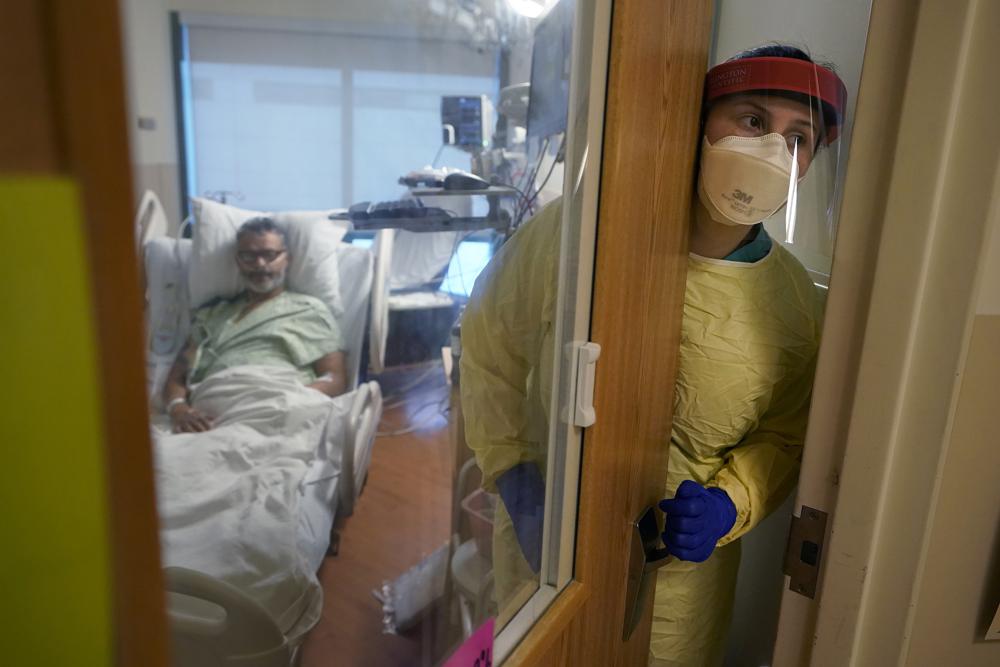
Registered nurse Rachel Chamberlin, of Cornish, N.H., right, steps out of an isolation room where where Fred Rutherford, of Claremont, N.H., left, recovers from COVID-19 at Dartmouth-Hitchcock Medical Center, in Lebanon, N.H., Monday, Jan. 3, 2022. Hospitals like this medical center, the largest in New Hampshire, are overflowing with severely ill, unvaccinated COVID-19 patients from northern New England. If he returns home, Rutherford said, he promises to get vaccinated and tell others to do so, too. (AP Photo/Steven Senne)

Hospitals across the U.S. are feeling the wrath of the omicron variant and getting thrown into disarray that is different from earlier COVID-19 surges.

This time, they are dealing with serious staff shortages because so many health care workers are getting sick with the fast-spreading variant. People are showing up at emergency rooms in large numbers in hopes of getting tested for COVID-19, putting more strain on the system. And a surprising share of patients — two-thirds in some places — are testing positive while in the hospital for other reasons.

At the same time, hospitals say the patients aren’t as sick as those who came in during the last surge. Intensive care units aren’t as full, and ventilators aren’t needed as much as they were before.

The pressures are nevertheless prompting hospitals to scale back non-emergency surgeries and close wards, while National Guard troops have been sent in in several states to help at medical centers and testing sites.

Nearly two years into the pandemic, frustration and exhaustion are running high among health care workers.

“This is getting very tiring, and I’m being very polite in saying that,” said Dr. Robert Glasgow of University of Utah Health, which has hundreds of workers out sick or in isolation.

About 85,000 Americans are in the hospital with COVID-19, just short of the delta-surge peak of about 94,000 in early September, according to the Centers for Disease Control and Prevention. The all-time high during the pandemic was about 125,000 in January of last year.

But the hospitalization numbers do not tell the whole story. Some cases in the official count involve COVID-19 infections that weren’t what put the patients in the hospital in the first place.

Dr. Fritz François, chief of hospital operations at NYU Langone Health in New York City, said about 65% of patients admitted to that system with COVID-19 recently were primarily hospitalized for something else and were incidentally found to have the virus.

At two large Seattle hospitals over the past two weeks, three-quarters of the 64 patients testing positive for the coronavirus were admitted with a primary diagnosis other than COVID-19.

Joanne Spetz, associate director of research at the Healthforce Center at the University of California, San Francisco, said the rising number of cases like that is both good and bad.

The lack of symptoms shows vaccines, boosters and natural immunity from prior infections are working, she said. The bad news is that the numbers mean the coronavirus is spreading rapidly, and some percentage of those people will wind up needing hospitalization.

This week, 36% of California hospitals reported critical staffing shortages. And 40% are expecting such shortages.

Some hospitals are reporting as much as one quarter of their staff out for virus-related reasons, said Kiyomi Burchill, the California Hospital Association’s vice president for policy and leader on pandemic matters.

In response, hospitals are turning to temporary staffing agencies or transferring patients out.

University of Utah Health plans to keep more than 50 beds open because it doesn’t have enough nurses. It is also rescheduling surgeries that aren’t urgent. In Florida, a hospital temporarily closed its maternity ward because of staff shortages.

In Alabama, where most of the population is unvaccinated, UAB Health in Birmingham put out an urgent request for people to go elsewhere for COVID-19 tests or minor symptoms and stay home for all but true emergencies. Treatment rooms were so crowded that some patients had to be evaluated in hallways and closets.

As of Monday, New York state had just over 10,000 people in the hospital with COVID-19, including 5,500 in New York City. That’s the most in either the city or state since the disastrous spring of 2020.

New York City hospital officials, though, reported that things haven’t become dire. Generally, the patients aren’t as sick as they were back then. Of the patients hospitalized in New York City, around 600 were in ICU beds.

“We’re not even halfway to what we were in April 2020,” said Dr. David Battinelli, the physician-in-chief for Northwell Health, New York state’s largest hospital system.

Similarly, in Washington state, the number of COVID-19-infected people on ventilators increased over the past two weeks, but the share of patients needing such equipment dropped.

In South Carolina, which is seeing unprecedented numbers of new cases and a sharp rise in hospitalizations, Gov. Henry McMaster took note of the seemingly less-serious variant and said: “There’s no need to panic. Be calm. Be happy.”

Amid the omicron-triggered surge in demand for COVID-19 testing across the U.S., New York City’s Fire Department is asking people not to call for ambulance just because they are having trouble finding a test.

In Ohio, Gov. Mike DeWine announced new or expanded testing sites in nine cities to steer test-seekers away from ERs. About 300 National Guard members are being sent to help out at those centers.

In Connecticut, many ER patients are in beds in hallways, and nurses are often working double shifts because of staffing shortages, said Sherri Dayton, a nurse at the Backus Plainfield Emergency Care Center. Many emergency rooms have hours-long waiting times, she said.

“We are drowning. We are exhausted,” Dayton said.

Doctors and nurses are complaining about burnout and a sense their neighbors are no longer treating the pandemic as a crisis, despite day after day of record COVID-19 cases.

“In the past, we didn’t have the vaccine, so it was us all hands together, all the support. But that support has kind of dwindled from the community, and people seem to be moving on without us,” said Rachel Chamberlin, a nurse at New Hampshire’s Dartmouth-Hitchcock Medical Center.

Edward Merrens, chief clinical officer at Dartmouth-Hitchcock Health, said more than 85% of the hospitalized COVID-19 patients were unvaccinated.

Several patients in the hospital’s COVID-19 ICU unit were on ventilators, a breathing tube down their throats. In one room, staff members made preparations for what they feared would be the final family visit for a dying patient.

One of the unvaccinated was Fred Rutherford, a 55-year-old from Claremont, New Hampshire. His son carried him out of the house when he became sick and took him to the hospital, where he needed a breathing tube for a while and feared he might die.

If he returns home, he said, he promises to get vaccinated and tell others to do so too.

“I probably thought I was immortal, that I was tough,” Rutherford said, speaking from his hospital bed behind a window, his voice weak and shaky.

But he added: “I will do anything I can to be the voice of people that don’t understand you’ve got to get vaccinated. You’ve got to get it done to protect each other.”

The 1918 flu is even more relevant in 2022 thanks to omicron

Over the past two years, historians and analysts have compared the coronavirus to the 1918 flu pandemic. Many of the mitigation practices used to combat the spread of the coronavirus, especially before the development of the vaccines, have been the same as those used in 1918 and 1919 — masks and hygiene, social distancing, ventilation, limits on gatherings (particularly indoors), quarantines, mandates, closure policies and more.

Yet, it may be that only now, in the winter of 2022, when Americans are exhausted with these mitigation methods, that a comparison to the 1918 pandemic is most apt.

The highly contagious omicron variant has rendered vaccines much less effective at preventing infections, thus producing skyrocketing caseloads. And that creates a direct parallel with the fall of 1918, which provides lessons for making January as painless as possible.

In February and March 1918, an infectious flu emerged. It spread from Kansas, through World War I troop and material transports, filling military post hospitals and traveling across the Atlantic and around the world within six months. Cramped quarters and wartime transport and industry generated optimal conditions for the flu to spread, and so, too, did the worldwide nature of commerce and connection. But there was a silver lining: Mortality rates were very low.

In part because of press censorship of anything that might undermine the war effort, many dismissed the flu as a “three-day fever,” perhaps merely a heavy cold, or simply another case of the grippe (an old-fashioned word for the flu).

Downplaying the flu led to high infection rates, which increased the odds of mutations. And in the summer of 1918, a more infectious variant emerged. In August and September, U.S. and British intelligence officers observed outbreaks in Switzerland and northern Europe, writing home with warnings that went largely unheeded.

Unsurprisingly then, this seemingly more infectious, much more deadly variant of H1N1 traveled west across the Atlantic, producing the worst period of the pandemic in October 1918. Nearly 200,000 Americans died that month. After a superspreading Liberty Loan parade at the end of September, Philadelphia became an epicenter of the outbreak. At its peak, nearly 700 Philadelphians died per day.

Once spread had begun, mitigation methods such as closures, distancing, mask-wearing and isolating those infected couldn’t stop it, but they did save many lives and limited suffering by slowing infections and spread. The places that fared best implemented proactive restrictions early; they kept them in place until infections and hospitalizations were way down, then opened up gradually, with preparations to reimpose measures if spread returned or rates elevated, often ignoring the pleas of special interests lobbying hard for a complete reopening.

In places in the United States where officials gave in to public fatigue and lobbying to remove mitigation methods, winter surges struck. Although down from October’s highs, these surges were still usually far worse than those in the cities and regions that held steady.

In Denver, in late November 1918, an “amusement” lobby — businesses and leaders invested in keeping theaters, movie houses, pool halls and other public venues open — successfully pressured the mayor and public health officials to rescind and then revise a closure order. This, in turn, generated what the Rocky Mountain News called “almost indescribable confusion,” followed by widespread public defiance of mask and other public health prescriptions.

In San Francisco, where resistance was generally less successful than in Denver, there was significant buy-in for a second round of masking and public health mandates in early 1919 during a new surge. But opposition created an issue. An Anti-Mask League formed, and public defiance became more pronounced. Eventually anti-maskers and an improving epidemic situation combined to end the “masked” city’s second round of mask and public health mandates.

The takeaway: Fatigue and removing mitigation methods made things worse. Public officials needed to safeguard the public good, even if that meant unpopular moves.

The flu burned through vulnerable populations, but by late winter and early spring 1919, deaths and infections dropped rapidly, shifting toward an endemic moment — the flu would remain present, but less deadly and dangerous.

Overall, nearly 675,000 Americans died during the 1918-19 flu pandemic, the majority during the second wave in the autumn of 1918. That was 1 in roughly 152 Americans (with a case fatality rate of about 2.5 percent). Worldwide estimates differ, but on the order of 50 million probably died in the flu pandemic.

In 2022, we have far greater biomedical and technological capacity enabling us to sequence mutations, understand the physics of aerosolization and develop vaccines at a rapid pace. We also have a far greater public health infrastructure than existed in 1918 and 1919. Even so, it remains incredibly hard to stop infectious diseases, particularly those transmitted by air. This is complicated further because many of those infected with the coronavirus are asymptomatic. And our world is even more interconnected than in 1918.

That is why, given the contagiousness of omicron, the lessons of the past are even more important today than they were a year ago. The new surge threatens to overwhelm our public health infrastructure, which is struggling after almost two years of fighting the pandemic. Hospitals are experiencing staff shortages (like in fall 1918). Testing remains problematic.

And ominously, as in the fall of 1918, Americans fatigued by restrictions and a seemingly endless pandemic are increasingly balking at following the guidance of public health professionals or questioning why their edicts have changed from earlier in the pandemic. They are taking actions that, at the very least, put more vulnerable people and the system as a whole at risk — often egged on by politicians and media figures downplaying the severity of the moment.

Public health officials also may be repeating the mistakes of the past. Conjuring echoes of Denver in late 1918, under pressure to prioritize keeping society open rather than focusing on limiting spread, the Centers for Disease Control and Prevention changed its isolation recommendations in late December. The new guidelines halved isolation time and do not require a negative test to reenter work or social gatherings.

Thankfully, we have an enormous advantage over 1918 that offers hope. Whereas efforts to develop a flu vaccine a century ago failed, the coronavirus vaccines developed in 2020 largely prevent severe illness or death from omicron, and the companies and researchers that produced them expect a booster shot tailored to omicron sometime in the winter or spring. So, too, we have antivirals and new treatments that are just becoming available, though in insufficient quantities for now.

Those lifesaving advantages, however, can only help as much as Americans embrace them. Only by getting vaccinated, including with booster shots, can Americans prevent the health-care system from being overwhelmed. But the vaccination rate in the country remains a relatively paltry 62 percent, and only a scant 1 in 5 have received a booster shot. And as in 1918, some of the choice rests with public officials. Though restrictions may not be popular, officials can reimpose them — offering public support where necessary to those for whom compliance would create hardship — and incentivize and mandate vaccines, taking advantage of our greater medical technology.

As the flu waned in 1919, one Portland, Ore., health official reflected that “the biggest thing we have had to fight in the influenza epidemic has been apathy, or perhaps the careless selfishness of the public.”

The same remains true today.

Vaccines, new treatments and century-old mitigation strategies such as masks, distancing and limits on gatherings give us a pathway to prevent the first six weeks of 2022 from being like the fall of 1918. And encouraging news about the severity of omicron provides real optimism that an endemic future — in which the coronavirus remains but poses far less of a threat — is near. The question is whether we get there with a maximum of pain or a minimum. The choice is ours.

Americans Are Already Over Omicron

https://view.newsletters.time.com/?qs=5b1b0210a9c0c6052e991fca0f304c50728dc4fa7e9bd80a730492ab7976421ba3ed7c38d7503d4b37e904c3ff5e8bfe48500d64b3838149189f24c10f3605bc9f361596380fa0c3fa7c7f3217d03d57

Most Americans have heard of the Omicron variant, few are very familiar |  Ipsos

Americans seem to be greeting the Omicron variant with a collective “eh,” according to new polling data from Axios/Ipsos.

Compared to other COVID-19 strains, Omicron seems to be extra transmissible and possibly more likely to cause breakthrough infections, at least based on preliminary data. As of Dec. 8, 22 U.S. states had reported at least one case related to the variant. But despite the early panic about the variant, most people surveyed by Axios/Ipsos in early December said they weren’t going to make big changes to their behavior. Specifically, the poll found that just:

  • 33% of surveyed U.S. adults are likely to stop dining inside restaurants
  • 28% are likely to stop gathering with people outside their households
  • 23% are likely to cancel holiday travel plans
  • 13% are likely to stop going to work in person

It’s hard to blame people. At this point in the pandemic, it’s safe to say everyone is tired and ready to be done with COVID-19. Plus, 60% of the U.S. population is now fully vaccinated, and thus, based on what we’ve seen so far, largely protected from the worst the virus can do. People who have received a booster dose are in an even better position, given early reports that boosters hold up well against Omicron.

Americans are also, to some degree, doing what public figures told them to do. President Joe Biden called Omicron “a cause for concern—but not a cause for panic.” And many health officials have jumped to assure the public that we are not going back to square one, thanks to the protection offered by vaccines.

The caveat, however, is that we’re still learning about Omicron. Early indications suggest the variant does not cause more severe disease than other variants, but it’s too soon to say that definitively. If it does turn out to be highly contagious, good at outsmarting vaccines and capable of causing serious disease, we may have to return to some precautions, for the sake of individuals and our overburdened health care system. The variant is already taking root in Europe, which may be a harbinger of what’s to come here.

The good news? The Axios/Ipsos poll did find that most Americans are still willing to step up and take protective measures when necessary. More than 60% said they were likely to go back to (or continue) always masking in public, and almost 70% said they’d support businesses requiring customers to wear masks.

A tale of two New Yorks: COVID-19 hospitalization rate surging upstate

https://www.yahoo.com/gma/tale-two-yorks-covid-19-100301204.html

COVID-19-related hospitalizations have been on an upward trend in New York state since last month, but there appears to be a drastic divide between the Big Apple and some of the state’s more rural areas, health data shows.

In New York City, the seven-day average of new COVID-19 hospitalizations per 100,000 people rose from 0.5 on Nov. 10 to 1.1 on Dec. 7, the New York State Department of Health said.

The story is different in several counties hundreds of miles north, where new COVID-19 hospitalizations are rising at a higher rate. In the Finger Lakes region, officials in several counties declared a state of emergency after the seven-day average of new COVID-19 hospitalizations per 100,000 people went from 2.9 on Nov. 10 to 4.9 on Dec. 7.

David Larsen, an associate professor of public health at Syracuse University, told ABC News that there are several factors behind this divide, but the most important one is the lower vaccination rates in certain counties upstate.

“At the end of the day, you’re more likely to get severe COVID-19 symptoms and go to the hospital if you’re not vaccinated,” Larsen said.

Health experts and state officials predict the situation upstate is only going to get worse during the holidays and colder months, but the tide can be turned if more people get their shots and heed health warnings.

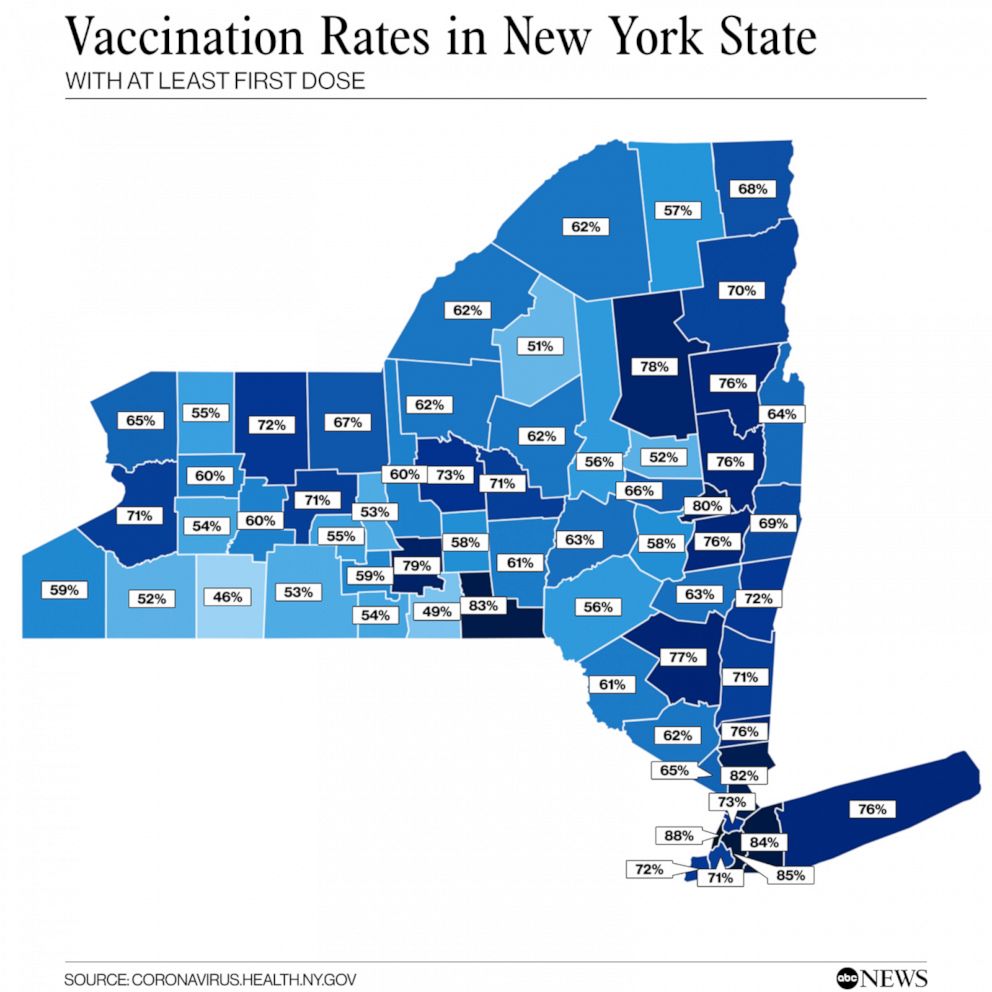
As of Dec. 8, 74.9% of all New York state residents have at least one COVID-19 vaccine dose, but those numbers vary by region, according to state health data.

New York City and Long Island had over 78% of their populations with at least one shot, the state data showed. Further north, the rates for at least one dose in the Mohawk Valley, the Finger Lakes and North Country sections were 60.6%, 68.5%, and 63% respectively.

There is even more division within the regions when it comes to vaccination, the data shows; for example, counties that are along the Interstate 87 corridor, such as Hamilton, Schenectady and Saratoga, all have rate of at least one dose above 75% of their populations.

Counties directly west of those locations, Schoharie, Fulton and Montgomery, have one-dose vaccination rates under 65%, the state data showed.

New York Gov. Kathy Hochul has repeatedly highlighted that the unvaccinated are the ones suffering and being hospitalized.

“It is a conscious decision not to be vaccinated. And the direct result is a higher rate of individuals in those regions upstate as well as it has a direct correlation to the number of hospitalizations,” she said during a Dec. 2 news conference.

Dr. Isaac Weisfuse, an adjunct professor of public health at Cornell University, told ABC News that there are fewer options for upstate residents to turn to for medical help and fewer hospitals in the area are handling patients from more locations.

Weisfuse, a former deputy health commissioner for New York City’s Health Department, noted that New York City residents have much closer access to amenities like free testing sites and medical clinics than their upstate counterparts.

“If you live in a rural county in New York state and it takes a while to get to a doctor, you may put it off. So when you do eventually go get care, you may be sicker versus someone who lives closer and gets a quicker diagnosis,” he said.

Larsen added that there has been pandemic fatigue across the country, and many Americans have scaled back on mitigation measures, especially mask-wearing indoors.

While New York City requires proof of vaccination for indoor activities, such as movie theaters and restaurants, there are no such rules in many upstate counties. As a result, some upstate residents have less of an incentive to get their shots, and are less cautious in indoor group settings, according to Larsen.

PHOTO: A sign asks for proof of COVID-19 vaccination in Manhattan at the entrance to a museum on Nov. 29, 2021, in New York City. (Spencer Platt/Getty Images)

“We’re doing less mask wearing. What that does is it increases transmission, which is fine for the vaccinated people but it does go to the unvaccinated people and they are higher risk,” he said.

Weisfuse said the hospitalizations are likely to grow upstate and have ripple effects for those regions. The governor has ordered elective surgeries to be postponed at 32 hospitals upstate that have seen their available beds decrease.

PHOTO: Tse Cowan, 8, winces as he is administered the Pfizer COVID-19 vaccine at a pop-up vaccine site at P.S. 19 on Nov. 08, 2021 in the Lower East Side of New York City. (Michael M. Santiago/Getty Images)

State officials said they are beefing up their marketing efforts to encourage eligible New Yorkers to get their shots.

Weisfuse said this outreach needs to be done meticulously if upstate officials want to avoid more overcrowded emergency rooms this winter.

“The state needs to take a good look at the pockets of non-vaccination,” he said. “They need to make some targeted intervention in those neighborhoods.”

Anyone who needs help scheduling a free vaccine appointment can log onto vaccines.gov.

The Great Resignation has burdened those left behind 

Forbes India - Jobs: What Is Fuelling The Great Resignation In America?

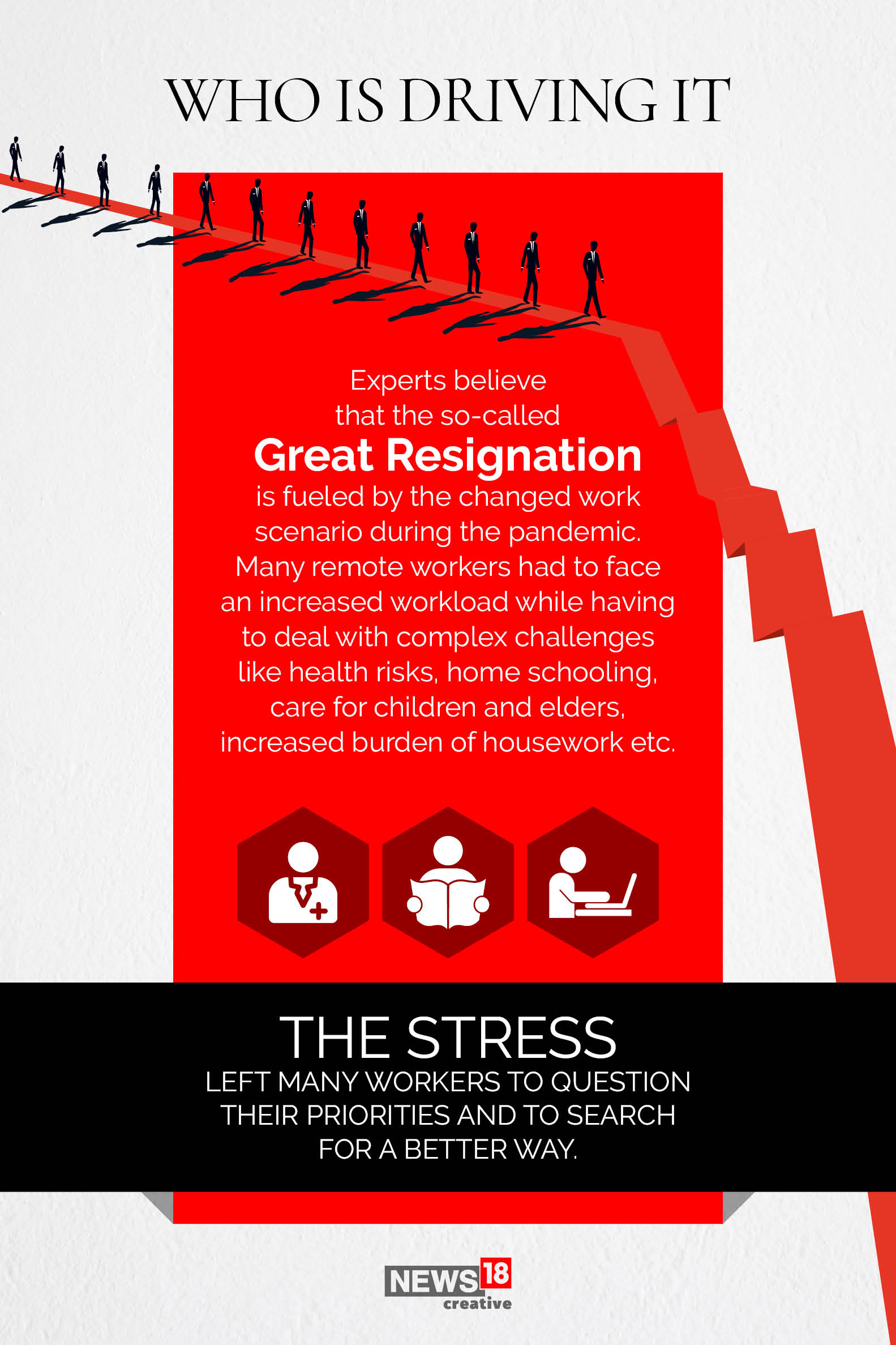
The workers who have stayed on at their jobs amid the Great Resignation are struggling to fill the gaps left by former colleagues, CNBC reported Nov. 2. 

The effects of the Great Resignation continue to be felt by companies after a record high of 4.3 million workers quit their jobs in August alone. The workers who remained in their roles, though, are struggling with their new increased workload.

A report by the Society for Human Resource Management that surveyed 1,150 employed Americans in July as well as 220 executives illuminated some of the challenges of the workers who stayed. 

It found that 52 percent of workers who stayed with their companies have taken on more responsibilities, with 30 percent of remaining employees stating they struggle to complete necessary tasks. A majority of workers are questioning whether their pay is high enough, and 27 percent feel less loyalty to their company. 

This worker dissatisfaction opens up a vicious cycle, Johnny Taylor Jr., president and CEO of the Society for Human Resource Management, told CNBC.

“The employees who remain now say, ‘I’m working too hard, I don’t have balance in my life, etc.’ And so then they want to leave and thus a vicious cycle continues” Mr. Taylor told CNBC

Thus, it’s more important now than ever for employers to exercise empathy and listen to what their employees are experiencing in the wake of workplace shifts. 

“Invest in them today,” Alex Durand, a career transition and leadership coach, told CNBC. “Show them you care before they tell you they are leaving.”

CDC director walks tightrope on pandemic messaging

CDC director walks tightrope on pandemic messaging

Images: Tightrope walk across the Grand Canyon

Centers for Disease Control and Prevention (CDC) Director Rochelle Walensky finds herself in a delicate position as she seeks to balance the optimism of increasing vaccinations with the reality that the U.S. is still very much in the grip of a deadly pandemic.

Walensky started the CDC job with a reputation as a savvy communicator, tasked with salvaging the reputation of an agency that took a beating under the Trump administration.

“When I first started at CDC about two months ago, I made a promise to you: I would tell you the truth, even if it was not the news we wanted to hear,” Walensky told reporters recently.

Walensky’s expertise is in HIV research, like her predecessor Robert Redfield, and before being appointed to lead the CDC, she was head of infectious diseases at Massachusetts General Hospital.

While former colleagues say Walensky is the perfect fit for the CDC post, her skills are now being put to the test as she faces criticism for being both too negative and too hopeful.

“She is quite a compelling and clear communicator, but it’s a challenging set of messages to try and get out there,” said Chris Beyrer, a professor of epidemiology at Johns Hopkins Bloomberg School of Public Health.

Public health messaging during a global pandemic is complicated enough, but experts say this particular moment is especially difficult.

After weeks of decline and then stagnation, the rate of coronavirus infections has once again started to climb across much of the country. Cases are up about 12 percent nationally compared with the previous week, averaging around 62,000 cases per day, according to the CDC.

At the same time, nearly 100 million Americans have received at least one dose of a coronavirus vaccine. Many states are expanding vaccine eligibility, in some instances to all adults, and federal health officials say there will be enough supply for everyone to be vaccinated by the end of May.

Walensky tried to emphasize both aspects this week when she issued an emotional appeal to the public.

“We have so much to look forward to, so much promise and potential of where we are, and so much reason for hope. But right now I’m scared,” Walensky said, adding that she had a “sense of impending doom” if people continued to ignore public health precautions.

Yet almost in the next breath, she talked about a “tremendously encouraging” new study showing that vaccinated people were 90 percent protected from infection, meaning they pose an extremely low risk of spreading the virus.

While that may come across as mixed messaging, experts say it accurately reflects not only where things stand right now but also how the country has been reacting to the virus for the past year.

“Whiplash is a true reflection of how we’re all experiencing the epidemic and the response to it. So I’d rather she be honest about that and others be honest about that than give people something that they want … to make them feel better,” said Judith Auerbach, a professor in the University of California San Francisco School of Medicine.

Auerbach, who previously worked with Walensky on HIV research, praised the director’s openness, which she said had been missing from agency leadership during the Trump administration.

“She’s being really honest about her own emotions. That’s hard for a fed to do and get away with,” Auerbach said. “The science that says we all still need to be, in fact, quite scared because we’re in this race between the vaccines … versus the emergence of these variants, and she felt it at a visceral level, and she conveyed that in a way that I thought was quite telling.”

Glen Nowak, director of the Center for Health and Risk Communication at the University of Georgia and a former CDC media relations director, said Walensky’s candor helps establish credibility.

“She has embraced the fact that credibility comes from being transparent and honest and genuine about your fears and your concerns,” Nowak said.

The CDC declined to make Walensky available for an interview, but in a statement to The Hill, an agency spokesman said every communication reflects the latest science and epidemiology.

“At times, moments must balance hope that we will move out of the pandemic with the reality that we are not out of it yet,” the spokesman said.

“We acknowledge the challenge of conveying such hope and promise that vaccines offer with the reality that cases and deaths are rising. While we are sending the critical message that people cannot and should not let up on their prevention measures, we do remain very optimistic about what the future of a fully vaccinated public will offer,” the spokesman added.

On Friday, Walensky again came under criticism for her messaging. In updated guidance, the CDC said it is safe for people who have been fully vaccinated to travel.

But Walensky struck a cautionary tone by saying the CDC still recommends anyone, vaccinated or not, avoid nonessential travel because infection numbers are so high.

“We know that right now we have a surging number of cases,” Walensky said during a White House briefing. “I would advocate against general travel overall. Our guidance is silent on recommending or not recommending fully vaccinated people travel. Our guidance speaks to the safety of doing so.”

Nowak said part of what makes public health messaging so difficult is the fact that science doesn’t always deal in absolutes and that the public overall doesn’t do well with nuance.

“Often people don’t want to listen to the nuance; they want advice and guidance to be stable. They get frustrated with the changes or when it seems to be contradictory. They also get frustrated if it doesn’t match their everyday living experiences,” Nowak said.

With the travel guidance, Walensky attempted to spell out the balance she was trying to strike and asked the public for patience and understanding.

“I want to acknowledge today that providing guidance in the midst of a changing pandemic and its changing science is complex,” Walensky said.

“The science shows us that getting fully vaccinated allows you to do more things safely, and it’s important for us to provide that guidance, even in the context of rising cases. At the same time, we must balance the science with the fact that most Americans are not yet fully vaccinated, which is likely contributing to our rising cases,” she said.

Jen Kates, director for global health and HIV policy at the Kaiser Family Foundation, who has known Walensky for decades, said she thinks the CDC director is aware that she can’t escape criticism, especially when so many people have pandemic fatigue.

If the CDC is too strict and refuses to endorse relatively normal behavior, especially after people get vaccinated, it could risk others refusing to get the shot, Kates said.

But if the agency paints too rosy a picture, more people could act like the pandemic is over and risk further spread of the virus.

“It behooves public officials to always be cognizant that their words are being listened to and can be taken out of context or may be hard for people to grasp,” Kates said. “So I think Dr. Walensky is a great communicator, but that doesn’t mean that this is always easy to do and the balance is always straightforward.”

Hospitals will likely continue to have staffing shortages despite falling COVID-19 cases

https://www.healthcarefinancenews.com/news/hospitals-will-likely-continue-have-staffing-shortages-despite-falling-covid-19-cases

Hospitals will likely continue to have staffing shortages despite falling  COVID-19 cases | Healthcare Finance News

Estimations show that between now and March 20, 7% of U.S. counties will experience “significant strains” on their hospital workforces.

Despite recent declines in coronavirus cases nationwide, many hospitals may still have workforce shortages over the next 30 days due to COVID-19 hospitalizations, according to estimates from George Washington University.

The university’s Fitzhugh Mullan Institute for Health Workforce Equity recently launched its COVID-19 County Workforce Estimator, which predicts that between now and March 20, 7% of U.S. counties will experience “significant strains” on their hospital workforces. It attributes the strain to long-standing staffing problems with the added pressure of the pandemic.

It also predicts that 209 counties will need to implement crisis workforce strategies due to its analysis that ICU doctors in those counties will be forced to take care of 24 or more patients at a time. Hospitals in those locations will likely need to use non-ICU-trained staff to help care for patients, the analysis said.

Further, the tool suggests that 12 counties will need to use contingency workforce strategies that include adding more patients per team, float pools and overtime due to COVID-19 hospitalization rates of 25% or more.

While it estimates a portion of counties will face staffing strains over the next month, the estimator calculated that 2,189 counties will be able to maintain normal workforce strategies due to COVID-19 hospitalization rates of 25% or less.

An additional 736 counties either did not have a hospital or didn’t have enough data to assess potential COVID-19 workforce strains.

The estimator tool was built in collaboration with Premier, a healthcare improvement company, the National Association of County and City Health Officials, and IQVIA, a healthcare data and analytics organization.

WHY THIS MATTERS

Healthcare staffing shortages have been a worry for some time now due to the nation’s increasingly aging population, but COVID-19 has only added to the concern.

Even before the pandemic, studies predicted physician staffing shortages by upwards of 140,000 by 2030, as well as shortages in-home health aides, nursing assistants, nurse practitioners and medical lab technicians by 2025.

Labor experts suggest hospitals develop a proactive response to staff shortages, and the George Washington estimator was designed to do exactly that, according to Clese Erikson, the principal investigator on the project and deputy director of the Health Equity Workforce Research Center.

Local leaders and hospital administrators can use the tool to gauge their county’s ability to care for COVID-19 hospitalized patients and others who need critical care services.

THE LARGER TREND

Outside of the ICU, many hospitals are also experiencing nursing shortages for several reasons, including the possibility that nurses could get $150 an hour to be a traveling nurse versus the $48 an hour they are paid as hospital staff.

In other cases, nurses had to choose between work and having children at home while schools were not holding in-person sessions. Some nurses who were close to retirement chose to leave while others left for work outside of acute care settings.

On top of workforce shortages, the ongoing COVID-19 pandemic has led many healthcare workers to experience strains on their mental health, including anxiety, stress, depression and loneliness.

ON THE RECORD

“The shortages could occur just as public health officials warn that variants of the coronavirus are spreading in the United States and could trigger a sharp rise in the number of Americans infected,” Erikson said.

“Our new online estimator will help county and local public health officials project shortages in the near future and take steps to help keep staffing at safe levels.”

Winter is coming: Why America’s window of opportunity to beat back Covid-19 is closing

Winter is coming: Why America’s window of opportunity to beat back Covid-19 is closing

Winter is coming: Why America's window of opportunity to beat back ...

The good news: The United States has a window of opportunity to beat back Covid-19 before things get much, much worse.

The bad news: That window is rapidly closing. And the country seems unwilling or unable to seize the moment.

Winter is coming. Winter means cold and flu season, which is all but sure to complicate the task of figuring out who is sick with Covid-19 and who is suffering from a less threatening respiratory tract infection. It also means that cherished outdoor freedoms that link us to pre-Covid life — pop-up restaurant patios, picnics in parks, trips to the beach — will soon be out of reach, at least in northern parts of the country.

Unless Americans use the dwindling weeks between now and the onset of “indoor weather” to tamp down transmission in the country, this winter could be Dickensianly bleak, public health experts warn.

“I think November, December, January, February are going to be tough months in this country without a vaccine,” said Michael Osterholm, director of the Center for Infectious Diseases Research and Policy at the University of Minnesota.

It is possible, of course, that some vaccines could be approved by then, thanks to historically rapid scientific work. But there is little prospect that vast numbers of Americans will be vaccinated in time to forestall the grim winter Osterholm and others foresee.

Human coronaviruses, the distant cold-causing cousins of the virus that causes Covid-19, circulate year-round. Now is typically the low season for transmission. But in this summer of America’s failed Covid-19 response, the SARS-CoV-2 virus is widespread across the country, and pandemic-weary Americans seem more interested in resuming pre-Covid lifestyles than in suppressing the virus to the point where schools can be reopened, and stay open, and restaurants, movie theaters, and gyms can function with some restrictions.

“We should be aiming for no transmission before we open the schools and we put kids in harm’s way — kids and teachers and their caregivers. And so, if that means no gym, no movie theaters, so be it,” said Caroline Buckee, associate director of the Center for Communicable Disease Dynamics at Harvard’s T.H. Chan School of Public Health.

“We seem to be choosing leisure activities now over children’s safety in a month’s time. And I cannot understand that tradeoff.”

While many countries managed to suppress spread of SARS-CoV-2, the United States has failed miserably. Countries in Europe and Asia are worrying about a second wave. Here, the first wave rages on, engulfing rural as well as urban parts of the country. Though there’s been a slight decline in cases in the past couple of weeks, more than 50,000 Americans a day are being diagnosed with Covid-19. And those are just the confirmed cases.

To put that in perspective, at this rate the U.S. is racking up more cases in a week than Britain has accumulated since the start of the pandemic.

Public health officials had hoped transmission of the virus would abate with the warm temperatures of summer and the tendency — heightened this year — of people to take their recreational activities outdoors. Experts do believe people are less likely to transmit the virus outside, especially if they are wearing face coverings and keeping a safe distance apart.

But in some places, people have been throwing Covid cautions to the wind, flouting public health orders in the process. Kristen Ehresmann, director of infectious disease epidemiology, prevention, and control for the Minnesota Department of Health, points to a large, three-day rodeo that was held recently in her state. Organizers knew they were supposed to limit the number of attendees to 250 but refused; thousands attended. In Sturgis, S.D., an estimated quarter of a million motorcyclists were expected to descend on the city this past weekend for an annual rally that spans 10 days.

Even on smaller scales, public health authorities know some people are letting down their guard. Others have never embraced the need to try to prevent spread of the virus. Ehresmann’s father was recently invited to visit some friends; he went, she said, but wore his mask, elbow bumping instead of shaking proffered hands. “And the people kind of acted like, … ‘Oh, you drank that Kool-Aid,’ rather than, ‘We all need to be doing this.’”

Ehresmann and others in public health are flummoxed by the phenomenon of people refusing to acknowledge the risk the virus poses.

“Just this idea of, ‘I just don’t want to believe it so therefore it’s not going to be true’ — honestly, I have not really dealt with that as it relates to disease before,” she said.

Buckee, the Harvard expert, wonders if the magical thinking that seems to have infected swaths of the country is due to the fact many of the people who have died were elderly. For many Americans, she said, the disease has not yet touched their lives — but the movement restrictions and other response measures have.

“I think if children were dying, this would be … a different situation, quite honestly,” she said.

Epidemiologist Michael Mina despairs that an important chance to wrestle the virus under control is being lost, as Americans ignore the realities of the pandemic in favor of trying to resume pre-Covid life.

“We just continue to squander every bit of opportunity we get with this epidemic to get it under control,’’ said Mina, an assistant professor in Harvard’s T.H. Chan School of Public Health and associate medical director of clinical microbiology at Boston’s Brigham and Women’s Hospital.

“The best time to squash a pandemic is when the environmental characteristics slow transmission. It’s your one opportunity in the year, really, to leverage that extra assistance and get transmission under control,” he said, his frustration audible.

Driving back transmission would require people to continue to make sacrifices, to accept the fact that life post-Covid cannot proceed as normal, not while so many people remain vulnerable to the virus. Instead, people are giddily throwing off the shackles of coronavirus suppression efforts, seemingly convinced that a few weeks of sacrifice during the spring was a one-time solution.

Osterholm has for months warned that people were being misled about how long the restrictions on daily life would need to be in place. He now thinks the time has come for another lockdown. “What we did before and more,” he said.

The country has fallen into a dangerous pattern, Osterholm said, where a spike in cases in a location leads to some temporary restraint from people who eventually become alarmed enough to start to take precautions. But as soon as cases start to plateau or decline a little, victory over the virus is declared and people think it’s safe to resume normal life.

“It’s like an all or nothing phenomenon, right?” said Anthony Fauci, director of the National Institute for Allergy and Infectious Diseases. “You all locked down or you get so discouraged with being lockdown that you decide you’re going to be in crowded bars … you can have indoor parties with no masks. You can do all the things that are going to get you in trouble.”

Osterholm said with the K-12 school year resuming in some parts of the country or set to start — along with universities — in a few weeks, transmission will take off and cases will start to climb again. He predicted the next peaks will “exceed by far the peak we have just experienced. Winter is only going to reinforce that. Indoor air,” he said.

Buckee thinks that if the country doesn’t alter the trajectory it is on, more shutdowns are inevitable. “I can’t see a way that we’re going to have restaurants and bars open in the winter, frankly. We’ll have resurgence. Everything will get shut down again.”

Fauci favors a reset of the reopening measures, with a strong messaging component aimed at explaining to people why driving down transmission now will pay off later. Young people in particular need to understand that even if they are less likely to die from Covid-19, statistically speaking, transmission among 20-somethings will eventually lead to infections among their parents and grandparents, where the risk of severe infections and fatal outcomes is higher. (Young people can also develop long-term health problems as a result of the virus.)

“It’s not them alone in a vacuum,” Fauci said. “They are spreading it to the people who are going to wind up in the hospital.”

Everyone has to work together to get cases down to more manageable levels, if the country hopes to avoid “a disastrous winter,” he said.

“I think we can get it under much better control, between now and the mid-to-late fall when we get influenza or we get whatever it is we get in the fall and the winter. I’m not giving up,” said Fauci.

But without an all-in effort “the cases are not going to come down,” he warned. “They’re not. They’re just not.”