As the first Americans receive COVID vaccines, supplies remain limited even for the highest-risk populations. And with doses now in the pipeline, states are facing more intense questions about how they will prioritize vaccine delivery across demographic and at-risk groups. The graphic above shows an estimated vaccination timeline, based on the Centers for Disease Control and Prevention’s (CDC) recommended schedule. It illustrates the relative size of different populations in each allocation phase, along with the likely difficulty of targeting them and verifying eligibility. The first phase is divided into three waves (1a, 1b, 1c) for at-risk populations and essential workers, while the second phase includes the rest of the adult population, as well as children (though pediatric clinical trials are still in early stages).
Unsurprisingly, the CDC recommends that those most at risk for infection and severe disease—healthcare workers and nursing home residents—receive the 20M doses available by year’s end.While most states are generally adhering to the initial recommendations on priority groups for phase 1a set by the CDC’s Advisory Committee on Immunization Practices (ACIP), several have made adjustments. At least three are including law enforcement personnel in phase 1a, and others are further categorizing healthcare workers into high-, medium-, and low-risk groups. This weekend, ACIP will reconvene to create its official recommendations for phases 1b and 1c, which include the much larger populations of adults over age 65, and those with high-risk medical conditions.
Beyond eligibility guidelines, larger questions loom. How would someone “verify” that they have a high-risk condition? Who will reach out to older Americans to let them know they are eligible, and where to access the vaccine? As vaccine rollout continues, providers should anticipate the role they will likely play in managing patients “in the queue”, documenting eligible conditions and establishing regular information channels to keep people informed about the current status of vaccine planning and access.
But first, we have a difficult period to get through. This week again saw record-breaking numbers of cases, hospitalizations, and deaths from COVID-19, with Thursday alone bringing more than 238,000 new cases—and a staggering 3,293 fatalities.
Nearly 115,000 Americans are currently hospitalized with COVID, a rise of 16 percent from just two weeks ago, and in many places a precarious capacity situation has turned perilous. Conditions have worsened precipitously in California, with only Tennessee, Oklahoma, and Rhode Island registering more daily COVID cases per 100,000 population than the Golden State, although cases are still on the rise across 80 percent of states and territories.
Intensive care availability in Southern California hit zero, with ICU volume there expected to double or triple by this time next month. The same stresses are playing out in dozens of markets across the country, leading to a staffing sustainability crisis that can’t be solved through paying overtime, cancelling vacations or looking to travel nurses to fill the gaps in a now nationwide crisis. With the Christmas and New Year’s holidays still ahead, experts predictCOVID cases won’t peak until sometime in mid-January, with a peak in hospitalizations and deaths following several weeks after.
Several states and cities tightened restrictions on gatherings and issued new stay-at-home orders, in an effort to keep new cases at a level that allows hospitals to manage through the next several weeks and maintain care quality and access for COVID and non-COVID patients alike. The coming weeks will require every American to take greater precautions than at any time during the course of this pandemic.
On Monday, at Long Island Jewish Medical Center in New York City, critical care nurse Sandra Lindsay rolled up her sleeve andbecame the first American to receive Pfizer and BioNTech’s newly approved COVID vaccine, opening a new front in the nation’s battle with the coronavirus pandemic.
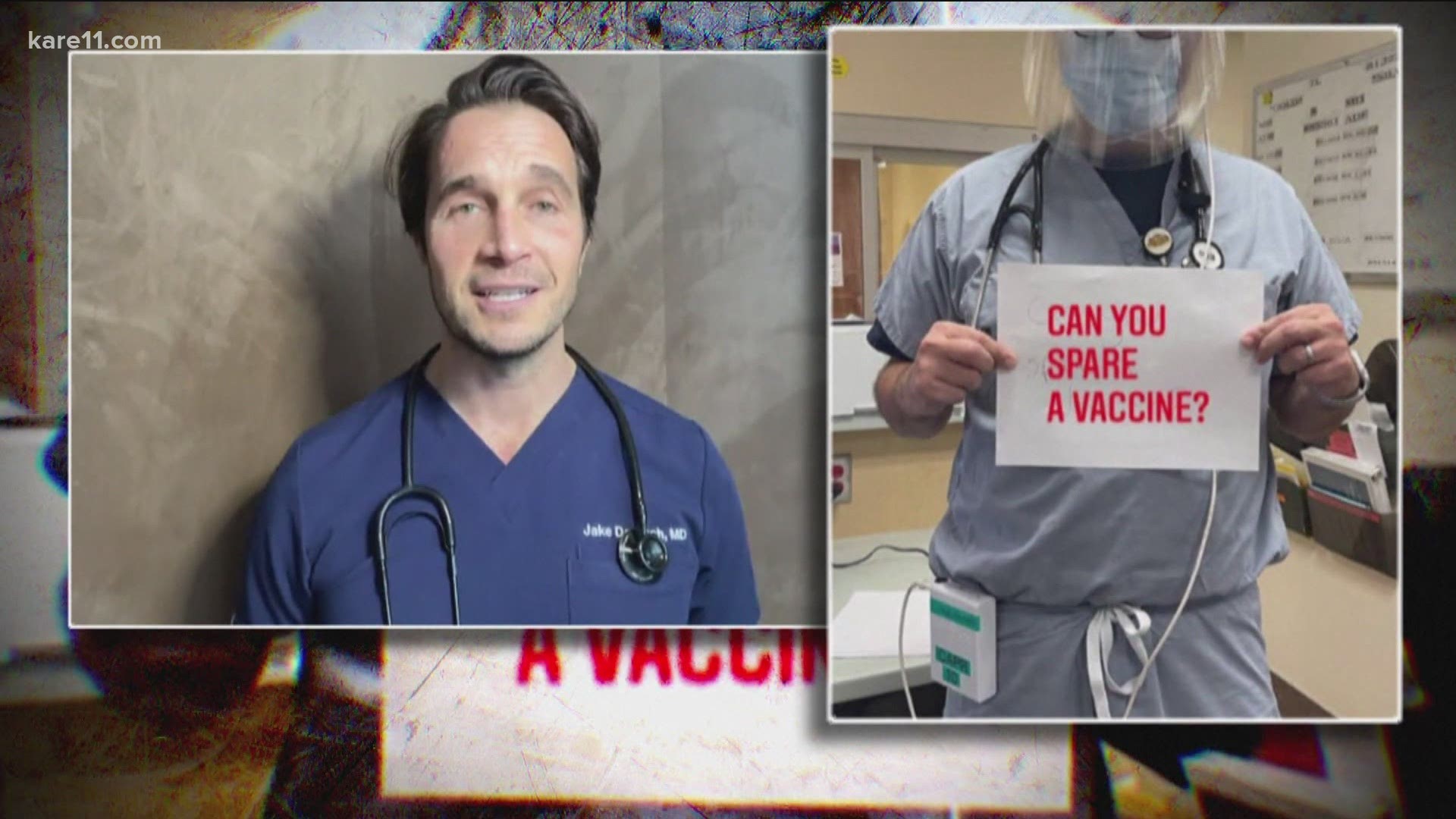
By Friday, nearly 50,000 doses of the vaccine had been administered nationwide, with millions more expected before year’s end. Amid a complex rollout that has already raised questions about the timely distribution of doses, the Food and Drug Administration (FDA) confirmed that it was safe to use every last drop of the Pfizer vaccine, including the excess amount used to fill the five-dose vials of the precious medicine—meaning many vials may have enough to immunize a sixth person.
Based on Thursday’s recommendation from a key panel of experts, the FDA is expected to approve a similar vaccine from Moderna as soon as Friday evening, with doses of that vaccine beginning to be administered by next week. The Moderna vaccine comes in smaller packages with less-demanding storage requirements, making it suitable for a wider distribution across smaller settings and remote areas.
Pharmacy chains CVS and Walgreens were set to begin administering shots to nursing home residents in Ohio, Connecticut, and Florida on Friday, as part of an agreement with the US government to vaccinate staff and residents in 75,000 long-term care facilities nationwide.
In an interview this week, Secretary of Health and Human Services (HHS) Alex Azar said that the vaccine could be widely available to the general public as soon as late February or early March. While it’s surely tempting to fixate on every setback, second guess every decision about prioritization and distribution, and fret over every isolated report of an adverse vaccine reaction, it will be important in the coming weeks to keep the big picture in mind: we are on the way to beating back the coronavirus. The end is nigh.
Applications for jobless benefits resumed their upward march last week as the worsening pandemic continued to take a toll on the economy.
More than 947,000 workers filed new claims for state unemployment benefits last week, the Labor Department said Thursday. That was up nearly 229,000 from the week before, reversing a one-week dip that many economists attributed to the Thanksgiving holiday. Applications have now risen three times in the last four weeks, and are up nearly a quarter-million since the first week of November.
On a seasonally adjusted basis, the week’s figure was 853,000, an increase of 137,000.
Nearly 428,000 applied for Pandemic Unemployment Assistance, a federal program that covers freelancers, self-employed workers and others who don’t qualify for regular state benefits.
Unemployment filings have fallen greatly since last spring, when as many as six million people a week applied for state benefits. But progress had stalled even before the recent increases, and with Covid-19 cases soaring and states reimposing restrictions on consumers and businesses, economists fear that layoffs could surge again.
“It’s very clear the third wave of the pandemic is causing businesses to have to lay people off and consumers to cut back spending,” said Daniel Zhao, senior economist for the career site Glassdoor. “It seems like we’re in for a rough winter economically.”
Jobless claims rose in nearly every state last week. In California, where the state has imposed strict new limits on many businesses, applications jumped by 47,000, more than reversing the state’s Thanksgiving-week decline.
The monthly jobs report released on Friday showed that hiring slowed sharply in early November and that some of the sectors most exposed to the pandemic, like restaurants and retailers, cut jobs for the first time since the spring. More up-to-date data from private sources suggests that the slowdown has continued or deepened since the November survey was conducted.
“Every month, we’re just seeing the pace of the recovery get slower and slower,” said AnnElizabeth Konkel, an economist with the job site Indeed. Now, she said, the question is, “Are we actually going to see it slide backward?”
Many economists say the recovery will continue to slow if the government does not provide more aid to households and businesses. After months of gridlock in Washington, prospects for a new round of federal help have grown in recent days, with congressional leaders from both parties signaling their openness to a compromise and the White House proposing its own $916 billion spending plan on Tuesday. But the two sides remain far apart on key issues.
The stakes are particularly high for jobless workers depending on federal programs that have expanded and extended unemployment benefits during the pandemic. Those programs expire later this month, potentially leaving millions of families with no income during what epidemiologists warn could be some of the pandemic’s worst months.
Britain’s medicine regulator said anyone with a history of anaphylaxis to a medicine or food should not get the Pfizer-BioNTech COVID-19 vaccine, giving fuller guidance on an earlier allergy warning about the shot.
Starting with the elderly and frontline workers, Britain began mass vaccinating its population on Tuesday, part of a global drive that poses one of the biggest logistical challenges in peacetime history.
The Medicines and Healthcare Products Regulatory Agency (MHRA) said there had been two reports of anaphylaxis and one report of a possible allergic reaction since rollout began.
“Any person with a history of anaphylaxis to a vaccine, medicine or food should not receive the Pfizer BioNTech vaccine,” MHRA Chief Executive June Raine said in a statement.
“Most people will not get anaphylaxis and the benefits in protecting people against COVID-19 outweigh the risks… You can be completely confident that this vaccine has met the MHRA’s robust standards of safety, quality and effectiveness.”
Anaphylaxis is an overreaction of the body’s immune system, which the National Health Service describes as severe and sometimes life-threatening.
The fuller guidance, clarifying that the main risk was from anaphylaxis specifically, was issued after consulting experts on allergies. The MHRA had initially advised anyone with a history of a “significant allergic reaction” not to take the shot.
Pfizer and BioNTech said they were supporting the MHRA’s investigation.
Last week, Britain’s MHRA became the first in the world to approve the vaccine, developed by Germany’s BioNTech and Pfizer, while the U.S. Food and Drug Administration (FDA) and European Medicines Agency (EMA) continue to assess the data.
A top U.S. official said on Wednesday that Americans with known severe allergic reactions may not be candidates for Pfizer’s COVID-19 vaccine until more was understood about what had happened.
Canada’s health ministry said it would look at the reported adverse reactions in Britain, but said adverse events were to be expected and would not necessarily change the risk/benefit of the shot, after the country approved the vaccine.
ALLERGIC REACTION
MHRA chief Raine told lawmakers such allergic reactions had not been a feature of the Pfizer’s clinical trials.
Pfizer has said people with a history of severe adverse allergic reactions to vaccines or the candidate’s ingredients were excluded from their late stage trials, which is reflected in the MHRA’s emergency approval protocol.
However, the allergic reactions may have been caused by a component of Pfizer’s vaccine called polyethylene glycol, or PEG, which helps stabilise the shot and is not in other types of vaccines.
Imperial College London’s Paul Turner, an expert in allergy and immunology, who has been advising the MHRA on their revised guidance, told Reuters: “As we’ve had more information through, the initial concern that maybe it affects everyone with allergies is not true.”
“The ingredients like PEG which we think might be responsible for the reactions are not related to things which can cause food allergy. Likewise, people with a known allergy to just one medicine should not be at risk,” Turner told Reuters.
The EMA said in an email that all quality, safety and efficacy data would be taken into account in assessing the vaccine, including data generated outside the EU.
In the United States, the FDA released documents on Tuesday in preparation for an advisory committee meeting on Thursday, saying the Pfizer vaccine’s efficacy and safety data met its expectations for authorization.
The briefing documents said 0.63% of people in the vaccine group and 0.51% in the placebo group reported possible allergic reactions in trials, which Peter Openshaw, professor of experimental medicine at Imperial College London, said was a very small number.
“The fact that we know so soon about these two allergic reactions and that the regulator has acted on this to issue precautionary advice shows that this monitoring system is working well,” he said.
However, Gregory Poland, a virologist and vaccine researcher with the Mayo Clinic in Rochester, Minnesota, said that the MHRA and NHS had overreacted initially.
“I would not have broadened to the degree they did,” he said.
“It’s reasonable to let the world know about this, and to be aware of it in terms of people who have had reactions like this to vaccines. I think to say medicines, foods or any other allergies is past the boundary of science.”





 HENRY KOTULA