The US healthcare sector added 64K jobs in February, an increase from recent months, but the gains were concentrated in provider offices and home health companies. Hospitals and nursing facilities, which have both struggled with widespread staffing shortages, saw more anemic job growth. In particular, nursing homes have lost 15 percent of their workforce, remaining significantly understaffed even though resident occupancy rates still lag pre-pandemic levels. This week, nursing home groups pushed back against President Biden’s call for minimum staffing levels, calling them unrealistic without federal funding.
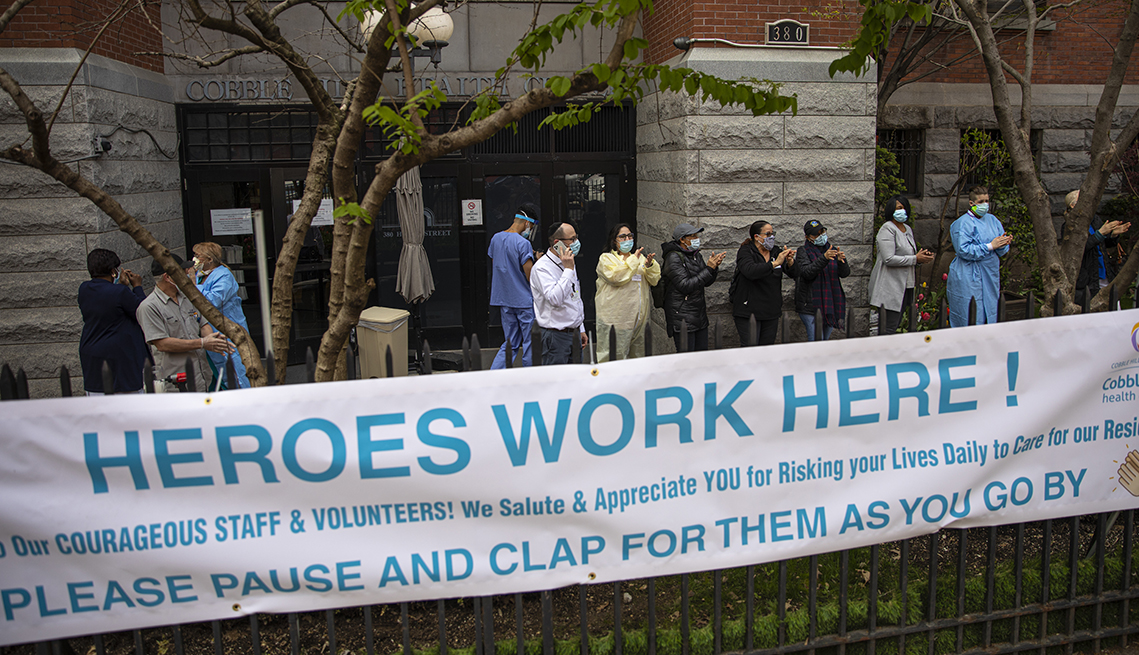
The Gist: Hospital and nursing facility workers have taken on some of the most taxing and dangerous jobs during the pandemic, caring for the sickest patients while personally risking COVID infection.
Healthcare workers are increasingly opting for safer, less intense jobs in outpatient care settings like physician offices, or are exiting direct patient care entirely. Even as the pandemic subsides, recruitment and retention of nurses and other caregivers will be of paramount importance, given rising vacancy rates and unabating staff shortages.
Congress cut billions of dollars in COVID-related funding from the broader government spending bill it just passed, jeopardizing President Biden’s plans for covering the costs of COVID testing and treatments, and making antiviral drugs available for free at pharmacies for those who test positive through the “test to treat” initiative.
However, a variety of other healthcare funding made it into the final package, including a five-month extension of COVID-era telehealth flexibilities for Medicare beneficiaries, and funds for pandemic preparedness. Congressional Democrats now plan to pass a separate COVID funding bill, although that effort will likely face stiff opposition from Senate Republicans.
The Gist: Removing COVID funding from the final spending package may signal the beginning of the end of federal pandemic relief spending, and could render the “test to treat” initiative, which has been praised by public health experts, dead on arrival.
Pharmacists, who have taken on a larger role in patient care during the pandemic, assisting with testing and vaccination of millions of Americans, have pushed for the ability to prescribe new antiviral therapies, but the American Medical Association criticized the initiative, maintaining that physicians should control the prescribing. Although the drug interactions and side effects cited by the AMA are important to manage, pharmacy-based “test to treat”would reduce time to treatment for those with COVID, and provide a sustainable mechanism for managing future surges of the disease.
The House passed a sweeping spending bill last night that omitted billions in Covid-19 aid. Biden administration officials had said the funds were urgently needed to maintain supplies of essential treatments and support further vaccine development, but Republicans disagreed. Some public health experts have expressed dismay that the pandemic relief money was cut, given the likelihood that new variants will continue to emerge. After all, viruses keep evolving until they run out of hosts to infect, and there are billions of people around the world—and millions in the US—who haven’t been vaccinated against Covid-19.
Cases continue to decline in the US, and a number of top voices in public health recently put out a report mapping when and how the country can transition out of the pandemic. Their recommendations include vaccinating at least 85 percent of the US population by 2023, improving indoor air quality in public buildings, and allocating additional funding for Covid-19 response and to prepare for future pandemics.
Welcome to Friday’s Health 202, where today we have a special spotlight on the pandemic two years in.
🚨 The federal government is about to be funded. The Senate sent the long-term spending bill to President Biden’s desk last night after months of intense negotiations.
Two years since the WHO declared a pandemic, what health-care system changes are here to stay?
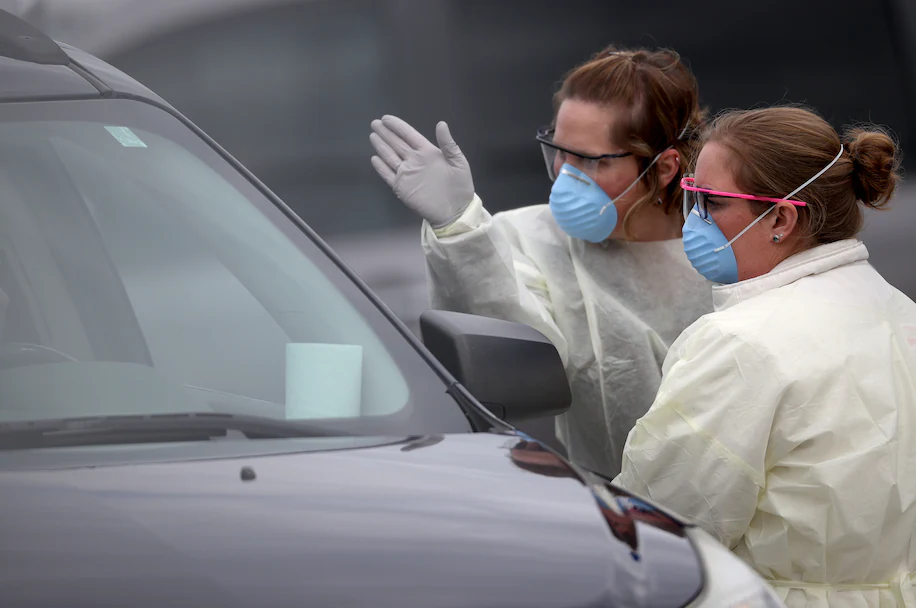
Nurses screened patients at a drive-through testing site in March 2020. (Win McNamee/Getty Images)
Exactly two years ago, the World Health Organizationdeclared the coronavirus a pandemic and much of American life began grinding to a halt.
That’s when the health-care system, which has never been known for its quickness, sped up. The industry was forced to adapt, delivering virtual care and services outside of hospitals on the fly. Yet, the years-long pandemic has exposed decades-old cracks in the system, and galvanized efforts to fix them.
Today, as coronavirus cases plummet and President Biden says Americans can begin resuming their normal lives, we explore how the pandemic could fundamentally alter the health-care system for good. What changes are here to stay — and what barriers are standing in the way?
A telehealth boom
What happened: Telehealth services skyrocketed as doctors’ offices limited in-person visits amid the pandemic. The official declaration of a public health emergency eased long-standing restrictions on these virtual services, vastly expanding Medicare coverage.
But will it stick? Some of these changes go away whenever the Biden administration decides not to renew the public health emergency (PHE). The government funding bill passed yesterday extends key services roughly five months after the PHE ends, such as letting those on Medicare access telehealth services even if they live outside a rural area.
But some lobbyists and lawmakers are pushing hard to make such changes permanent. Though the issue is bipartisan and popular, it could be challenging to pass unless the measures are attached to a must-pass piece of legislation.
“Even just talking to colleagues, I used to have to spend three or four minutes while they were trying desperately not to stare at their phone and explain to them what telehealth was … remote patient monitoring, originating sites, and all this wonky stuff,”said Sen. Brian Schatz (D-Hawaii), a longtime proponent of telehealth.
“Now I can go up to them and say, ‘So telehealth is great, right?’ And they say, ‘yes, it is.’ ”
A new spotlight on in-home care
What happened: The infectious virus tore through nursing homes, where often fragile residents share rooms and depend on caregivers for daily tasks. Ultimately, nearly 152,000 residents died from covid-19.
The devastation has sparked a rethinking of where older adults live and how they get the services they need — particularly inside their own homes.
“That is clearly what people prefer,” said Gail Wilensky, an economist at Project HOPE who directed the Medicare and Medicaid programs under President George H.W. Bush. “The challenge is whether or not it’s economically feasible to have that happen.”
More money, please: Finding in-home care — and paying for it — is still a struggle for many Americans. Meanwhile, many states have lengthy waitlists for such services under Medicaid.
Experts say an infusion of federal funds is needed to give seniors and those with disabilities more options for care outside of nursing homes and assisted-living facilities.
For instance, Biden’s massive social spending bill included tens of billions of dollars for such services. But the effort has languished on Capitol Hill, making it unclear when and whether additional investments will come.
A reckoning on racial disparities
What happened: Hispanic, Black, and American Indian and Alaska Native people are about twice as likely to die from covid-19 than White people. That’s according to age-adjusted data from a recent Kaiser Family Foundation report.
In short, the coronavirus exposed the glaring inequities in the health-care system.
“The first thing to deal with any problem is awareness,” said Georges Benjamin, the executive director of the American Public Health Association. “Nobody can say that they’re not aware of it anymore, that it doesn’t exist.”
But will change come? Health experts say they hope the country has reached a tipping point in the last two years. And yet, any real systemic change will likely take time. But, Benjamin said, it can start with increasing the number of practitioners from diverse communities, making office practices more welcoming and understanding biases.
We need to, as a matter of course, ask ourselves who’s advantaged and who’s disadvantaged” when crafting new initiatives, like drive-through testing sites, Benjamin said. “And then how do we create systems so that the people that are disadvantaged have the same opportunity.”
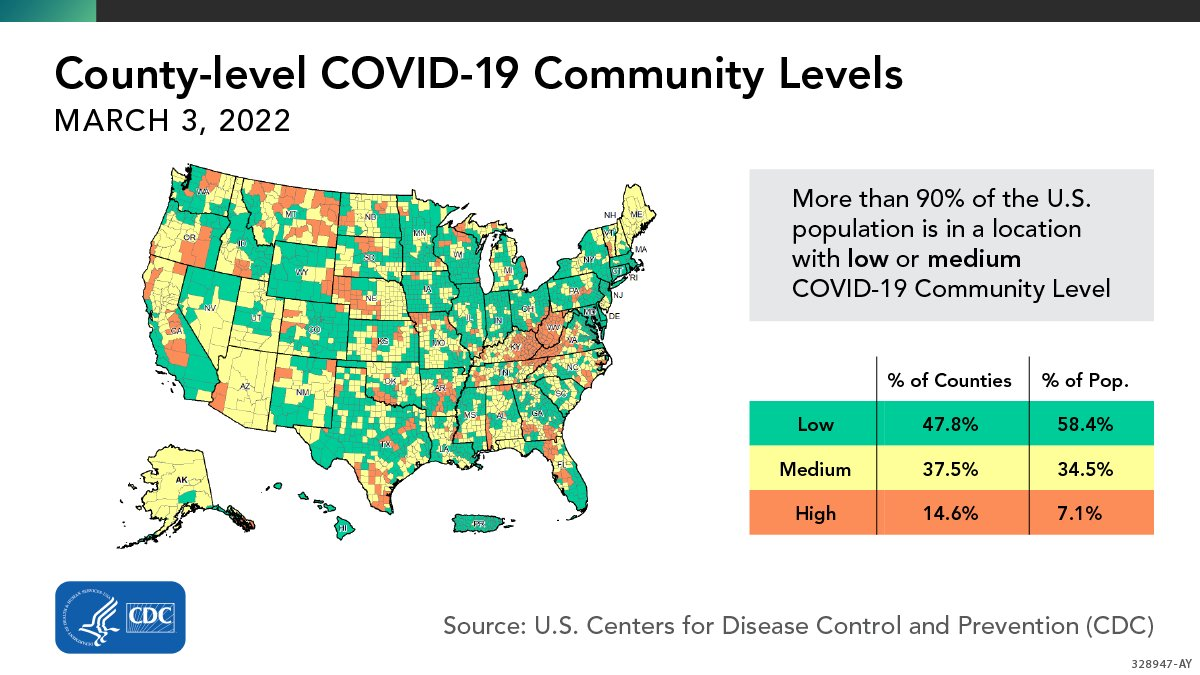
More than 90% of the U.S. population lives in an area with a “low” or “medium” risk of COVID-19, the U.S. Centers for Disease Control and Prevention (CDC) announced yesterday. Last week, the CDC changed the way it assesses county-level COVID-19 risk, using data on hospitalizations and health care capacity in addition to case counts. The CDC now recommends universal indoor masking only for counties that are at “high” risk under this system—which means that the vast majority of Americans are not currently advised to wear masks inside.
In May 2020, a 33-year-old mother of three in North Carolina started experiencing symptoms of COVID-19. Four days later, a different set of symptoms set in. She stopped sleeping well and started having paranoid delusions that people were tracking her through her cell phone—culminating in a frantic scene at a fast-food restaurant, in which she tried to pass her children through the drive-through window, where they’d be safe from the phones and other dangers.
A restaurant employee called 911, and emergency medical services workers arrived, gathered up the family, and hurried to the nearby emergency department of the Duke University Medical Center in Durham, where the mother was quickly attended to by physicians. “She was physically in the room, but she wasn’t making consistent eye contact,” says Dr. Colin Smith, who is now chief resident of the hospital’s internal medicine psychiatry program but was a second-year resident when he took care of the patient. “She was not really engaging all that much. Her thought processes were disorganized.”
Despite that, the patient acknowledged two things to Smith and the other doctors: She knew her behavior was out of character, and the changes all happened quickly after she was diagnosed with COVID-19.
There’s growing evidence that COVID-19 and new psychotic episodes are connected. The North Carolina case, reported in the British Medical Journal in August 2020, joins a slew of case reports published in medical journals during the pandemic that detail psychotic episodes following a COVID-19 diagnosis. In the July 2020 issue of BJPsyh Open, researchers reported that a 55-year old woman in the U.K., with no history of mental illness, arrived at a hospital days after recovering from a severe case of COVID-19 with delusions and hallucinations, convinced that the nurses were devils in disguise and that monkeys were jumping out of the doctors’ medical bags. In April 2021, other researchers wrote in BMJ Case Reports of a middle-aged British man, also with no prior mental health disorders, who had appeared at a London hospital experiencing auditory and visual hallucinations and banging his head against walls until he bruised his skin. (Weeks before, he had recovered from a bout with COVID-19 that had landed him in the intensive care unit.) In yet another case, published in the Journal of Psychiatric Practice in March 2021, a 57-year-old-man turned up at Columbia University’s New York Presbyterian Hospital insisting that his wife was poisoning him, that cameras had been planted throughout his apartment, and that the patients in the hospital’s emergency department were being secretly murdered.
“The situation was strikingly similar to one we’d expect from someone who had a schizophrenia spectrum illness,” says Dr. Aaron Slan, now a fourth-year psychiatry resident at Columbia University, who cared for the patient and co-authored the report. But this patient too had no history of mental health disorders and was too old for a first-onset case of schizophrenia, which typically occurs between ages 20 and 30 for men, Slan notes. What the patient did have, as a test in the hospital revealed, was COVID-19.
COVID-19-related psychotic breaks are rare—though researchers say that it’s too early to say exactly how rare—and plenty of experts believe that the connection between the two conditions, if any, is not causal. In a review published in 2021 in Neurological Letters, a group of researchers in the U.K. casts doubt on the emerging body of work on the COVID-19-psychosis link as “beset by both small sample size, and inadequate attention to potential confounding factors,” such as heightened stress, substance abuse, and socioeconomic hardship.
Still, researchers are investigating the link. One U.K. study published in the Lancet in October 2020 found that of 153 people who were diagnosed with COVID-19 early in the pandemic, 10 suffered new-onset psychotic episodes following their COVID-19 diagnosis, and seven exhibited the onset of psychiatric disorders, including catatonia and mania.
A study published last August in General Hospital Psychiatry took a broad view of the phenomenon, analyzing 40 scientific articles, which included 48 adults from 17 different countries who suffered psychotic episodes associated with COVID-19 infection, and tried to find commonalities among them. As with the Neurological Letters paper, the authors of this study found plenty of other variables that might muddy the link between COVID-19 and psychosis—like stress, substance use, and medications—but the relationship still held.
“We see post-infectious neuroinflammatory disorders associated with a variety of different viral illnesses,” says Dr. Samuel Pleasure, a neurology professor at the University of California, San Francisco (UCSF). “Normally we see it in very small numbers, but here we have [COVID-19] infecting tens of millions of people at the same time.” Even rare cases of psychiatric conditions will start to show themselves when the sample group of infected people is so large.
There are more questions than answers at this point. It’s still unclear whether the severity of COVID-19 symptoms plays any role in the likelihood of a psychotic break. “There seem to be clearly cases of neuropsychiatric consequences of COVID that are linked to cases that are not severe,” Pleasure says. “I believe that the quality of the studies at this point are so preliminary, and the ability to really capture these patients to study is really at early stages, so it’s hard to be definitive.” Similarly, Pleasure says, it’s impossible to say whether people suffering from Long COVID—symptoms that last for months after the infection is over—are more susceptible to psychotic symptoms.
There are multiple possible mechanisms at work, any one of which—or a combination—could be contributing to the neuropsychiatric symptoms associated with COVID-19. The most straightforward would be direct infection of brain tissue itself, according to Pleasure. If that’s so, the number of COVID-19 patients who suffer loss of the sense of taste and smell would suggest that the brain’s olfactory bulb may be struck by the virus first.
“There are documented cases where people have done MRIs early in the [COVID-19 disease] process and have seen some local inflammation in the olfactory bulb,” Pleasure says. “That has contributed further to the idea that maybe that’s the portal of entry.” Once that portal has been breached, the brain at large could be exposed.
Just how the COVID-19 infection reaches the brain is unclear, but Pleasure and his colleague Dr. Michael Wilson, associate professor of neurology at UCSF, conducted lumbar punctures of three teens with COVID-19 who had developed neuropsychiatric symptoms to examine their cerebrospinal fluid. In two cases, they found antibodies in the fluid that target neural antigens. That presented an apparent puzzle: the patients had SARS-CoV-2; if anything, they should be exhibiting antibodies to the virus, not to their own neural tissue. But Pleasure cites one study he conducted with a group from Yale University showing that antibodies specific to the coronavirus spike protein could also cross-react with nerve cells, attacking them as well.
“There was molecular mimicry between the spike protein and a neural antigen,” he says. “One of the main hypotheses is that if there’s an antibody that targets the virus, then, out of bad luck, you also see damage to the host.” In other words, he says, you start with an immune response adaptive to fighting the virus, and that turns into an autoimmune response.
That’s just one theory. There are still other routes by which COVID-19 can affect the brain. Upper respiratory infections can, on occasion, cause the immune system to go awry and develop antibodies against parts of the brain known as NMDA (N-methyl-D-aspartate) receptors, which are the main excitatory receptors that react to neurotransmitters. A broad attack on receptors spread throughout the brain can lead to quick and severe symptoms, says Dr. Mudasir Firdosi, a Consultant Psychiatrist at the Kent and Medway NHS and Social Care Partnership Trust and a co-author of the 2021 BMJ paper.
“[NMDA involvement] presents a very, very florid way to be psychotic,” Firdosi says. Slan agrees: “When someone has an abrupt onset of psychosis following a viral illness, NMDA antibodies are frequently invoked,” he says.
Yet another suspect in the development of neuropsychiatric symptoms is the so-called cytokine storm that often follows infection with SARS-CoV-2. Cytokines are proteins critical for cell signaling that are produced by the immune system and give rise to inflammation that in turn can fight infection. But if cytokine production spins out of control, extreme body-wide inflammation can follow, and brain tissue would not be spared the impact.
“The neurons themselves are not being invaded,” says Slan, “but what happens is that the systemic inflammatory response causes both stress and changes in signaling throughout the body. That includes the brain, and can precipitate these types of [psychotic] symptoms.”
One other bit of evidence that COVID-19 is linked to psychotic breaks comes not from the current scientific literature, but from history. Following the influenza pandemic of 1918 and 1919, there was a spike in what was called encephalitis lethargica, which was essentially a form of early-onset Parkinson’s disease that often didn’t appear for a number of years after the infection—but left patients in what was effectively a state of catatonia.
“That flu virus caused a post-infection inflammation that killed brain cells that in turn led to the Parkinson’s,” says Pleasure. The book and movie Awakenings, about patients who temporarily recovered consciousness and lucidity after treatment with l-dopa—a precursor of the neurotransmitter dopamine—was based on cases of people suffering from that form of Parkinson’s.
The good news is that unlike more chronic forms of psychosis, most cases seemingly related to COVID-19 do not appear to last. The symptoms can respond to antipsychotic medications like Risperdal (risperidone) and Zyprexa (olanzapine), say Smith and Slan. Intravenous immunoglobulin infusions—which reduce the overall load of abnormal cells and inflammatory agents—and steroids, which also reduce inflammation, can be effective as well.
By no means is the case for virus-triggered psychosis closed. Even Slan, who has first-hand experience treating a patient suffering from a seemingly virus-linked psychotic break believes that there is more work to be done—and acknowledges the doubts of the researchers who believe other psychological factors might be at play.
“Given the stress of COVID,” he says, “given the concerns about mortality, seclusion, all of these things represent huge psychosocial stressors, and they have the potential to precipitate oftentimes short-lived psychotic symptoms.”
Of course, even a transitory psychosis is still a psychosis—something no one wants to experience even fleetingly. That puts a premium on avoiding infection in the first place. “The best way to treat COVID-19 and the risk of psychosis is to prevent it,” says Smith. “Even if neurological complications are rare, getting vaccinated remains the smartest choice.”
Healthcare professionals in Oklahoma who have cared for COVID-19 patients throughout the pandemic are now facing a facility lockdown due to threats made against them.
Mercy Hospital Oklahoma City upped its security and locked down its intensive care unit following online threats against the facility and its staff, mostly revolving around COVID treatments and conspiracy theories, Becker’s Hospital Review reported.
Claims made during a recent protest outside the facility and online included that the hospital had a “Fauci protocol,” and that it received government vouchers for using certain medications or treatments for COVID patients, which Mercy Hospital denied, according to Becker’s.
Hospital officials released a statement to staff on Friday, which they shared with MedPage Today. “There is truly nothing more important to us than your safety. We have a team monitoring these online attacks in real time. Every level of our ministry is deeply concerned and committed to doing whatever it takes to protect our co-workers against these baseless attacks,” they said.
“We are proud to serve with you,” they added. “We know you are tired and weary, but please try your best to put these baseless claims out of your mind. Remember, you are called to serve our patients and each other. We are praying for peace and protection over each of you, as well as the protection of all our patients and visitors, while we take action on your behalf.”
Late last week, the hospital filed a restraining order against the founder and director of an Oklahoma church group that has been protesting outside the facility and making threats against its staff online, Oklahoma’s KFOR reported.
In a recent press release, the church group, known as Ekklesia Oklahoma, called Mercy Hospital an “evil Marxist controlled death camp.”
Court documents stated that the founder of the group called one of the hospital’s doctors a “murderer,” noting that members even posted the doctor’s home address online, according to KFOR.
Hospital officials told KFOR that they are thankful for local police departments that are providing extra security for staff and patients.
Other hospitals across the U.S. have also received threats to the safety of healthcare workers in recent days.
Last week, the Massachusetts Medical Society said it was “angered” over the recent neo-Nazi protest outside Brigham and Women’s Hospital in Boston that targeted two doctors whose work focuses on health equity.
Carole Allen, MD, MBA, president of the society, told MedPage Today that the protest outside Brigham and Women’s was a threat to healthcare workers who were just trying to do their jobs, as well as to patients, and was so disruptive that it “could endanger healthcare in general.”
House Republicans are demanding the Biden administration starts winding down the COVID-19 public health emergency, while hospital lobbying groups are pressing it to do the opposite.
A group of more than 70 House Republicans wrote Thursday to Department of Health and Human Services (HHS) Secretary Xavier Becerra asking to start the process to wind down the COVID-19 public health emergency (PHE), which was recently extended until April. At the same time, several hospital advocacy groups are hoping the agency keeps the PHE beyond this spring and wants a 60-day notice as to when it will end.
“Although the PHE was certainly necessary at the outset of the pandemic, it was always meant to be temporary,” according to the GOP letter led by Rep. Cathy McMorris Rodgers, R-Washington, ranking member of the House Energy and Commerce Committee.
Republicans want HHS to release a concrete timeline for when the agency plans to exit the PHE.
“We recognize that the PHE cannot end overnight, and that certain actions must be taken to avoid significant disruption to patients and healthcare providers, including working with Congress to extend certain policies like maintaining access to telehealth services for our nation’s seniors,” the letter added.
The PHE granted major flexibilities for providers to get reimbursed by Medicare for telehealth, but those powers will go away after the PHE. It also gave flexibility on several reporting requirements and eased other regulatory burdens.
Another major issue is that states are going to be able to start eligibility redeterminations for Medicaid, which have been paused since the PHE went into effect in January 2020. State Medicaid directors are seeking a heads-up on when the emergency will go away, as states can start to disenroll ineligible beneficiaries after the PHE expires.
Republicans also want Becerra to cite any programs that should be made permanent, and they want “swift action” to lift all COVID-19 vaccine mandates.
The Supreme Court upheld the Biden administration’s healthcare worker vaccine mandate, overturning a lower court’s stay that affected half of the country. The Centers for Medicare & Medicaid Services has deadlines for states to comply with the vaccination mandate, and facilities that don’t fully comply could risk losing participation in Medicare and Medicaid.
The Republicans charge that the mandates have not “stopped the spread of COVID-19 but have alienated many Americans and have caused staff shortages at hospitals and other healthcare facilities.”
Key drivers of the staff shortages, however, have been a massive surge of the virus overwhelming facilities caused by the omicron variant along with increased expenses facilities have faced for temporary nursing staff. Those lingering expenses are the reason hospital groups are pressing for HHS to do the opposite and extend the PHE beyond April.
The Federation of American Hospitals (FAH) also wrote to Becerra Thursday (PDF) seeking to continue to extend the PHE “well beyond its current expiration date in April 2022.” Even though the omicron surge appears to be easing, the virus is still creating major operational challenges for providers, FAH said.
It also wants the administration to give hospitals a 60-day heads-up when it plans to end the PHE.
“Unwinding the complex web of PHE waiver-authorized operations, programs and procedures—which will have been in place and relied on for more than two years—is a major undertaking that, if rushed, risks destabilizing fragile healthcare networks that patients rely on for care,” the letter said.
The American Hospital Association also wrote to congressional leaders Tuesday seeking for more relief from Congress to help systems overcome staffing shortages that have exacerbated due to the omicron surge.
“The financial pressures hospitals and health systems faced at the beginning of the public health emergency continue, with, for example, ongoing delays in non-emergent procedures, in addition to increased expenses for supplies, medicine, testing and protective equipment,” the letter said.
FAH President Chip Kahn told Fierce Healthcare on Friday that the issues Republicans address in the letter are different from the priorities of the FAH, namely that the association doesn’t focus on mask or vaccine mandates.
“What we are saying is that the PHE has many aspects to it, and so … we think [it] should be extended, but if you don’t then we need to have a lengthy or carefully thought through transition,” Kahn said.
He added that Becerra’s predecessor, acting Secretary Eric Hargan, told providers that they would get a 60-day notice before the end of the PHE. That deadline for such a 60-day notice is Feb. 15.
Kahn said he understands the administration may be under political pressure to end the emergency, but prior notice is absolutely needed.
“I don’t know how they will respond but if they do choose to pull out, we just want to make sure that it doesn’t leave anything behind,” he said.
As COVID-19 cases fall and hospitals tiptoe out from yet another surge, the nation is left collectively asking one major question: What comes next?
By now, health experts have made it clear COVID-19 will always be around in some capacity but have stressed uncertainty about the potential scope and severity of future surges.
While difficult to predict what the pandemic’s next act could look like, several potential scenarios have emerged in recent months.
Below are four possible paths the pandemic could take in the future, as outlined by physicians, epidemiologists and global health officials:
1. Delta rebound. Delta has seemingly fallen out of the collective pandemic lingo amid omicron’s dominance in recent months, though there is still a chance delta — thought to be the deadliest strain thus far — makes a comeback.
In a Jan. 24 op-ed for The Washington Post, Ashish Jha, MD, dean of Brown University’s School of Public Health in Providence, R.I., said “It is possible, though unlikely, that the delta variant returns and co-circulates with omicron in different populations, contributing to ongoing infections and hospitalizations.”
It’s important to note that delta is still dominant in some parts of the world, health experts toldThe Atlantic, adding that while unlikely, there is a chance it could morph into something that catches up with omicron, allowing the two to tag-team — a dangerous combination given delta’s brutality and omicron’s transmissibility.
2. COVID-19 may become a seasonal virus. Dr. Jha said this scenario is likely, whether delta makes a comeback or not.
“That means we are likely to see surges in Southern states this summer (as people there spend more time indoors) and in Northern states next fall and winter as the weather turns cold again,” he wrote in a Jan. 24 op-ed for The Washington Post.
Emerging evidence suggests COVID-19 may be a seasonal disease, though the research is still preliminary. A July 2021 study from the University of Pittsburgh projected a seasonal COVID-19 pattern in North America with three repeating waves: one starting in New England in the spring, the second starting in the South in the summer, and the third kicking off in the Dakotas in the fall. Based on these findings, researchers predicted the U.S. would see a summer 2021 wave in the South and a fall 2021 wave in North-Central states, which is similar to what happened with the delta and omicron surges. As of November 2021, the study had not been peer reviewed.
3. A new variant emerges. If there’s one thing on this list that’s near certain, it’s that there will be new variants in the future. Global health officials have said they expect future variants to be even more transmissible than omicron.
“Omicron will not be the last variant that you will hear us talking about,” Maria Van Kerkhove, PhD, the World Health Organization’s technical lead on COVID-19, said Jan. 25. “The next variant of concern will be more fit, and what we mean by that is it will be more transmissible, because it will have to overtake what is currently circulating.”
Health officials aren’t so much concerned about the emergence of new variants themselves but whether they will cause more or less disease severity. WHO officials have warned against assuming the virus will become milder as it continues to mutate.
“There is no guarantee of that,” Dr. Van Kerkhove said. “We hope that is the case, but there is no guarantee of that and we can’t bank on it,” she added, emphasizing the importance of interventions such as ramping up global vaccination coverage to prevent the emergence of new variants.
Health experts are also concerned white-tailed deer may become a reservoir for the virus to mutate and spread to other animals or back to humans in the form of a new variant.
“This is a top concern right now for the United States,” said Casey Barton Behravesh, who directs the CDC’s One Health Office, which focuses on connections among human, animal and environmental health. “If deer were to become established as a North American wildlife reservoir — and we do think they’re at risk of that — there are real concerns for the health of other wildlife species, livestock, pets and even people,” she told The New York Times.
Preliminary findings recently found white-tailed deer on New York’s Staten Island infected with omicron, the first time the strain has been detected in wild animals in the U.S. Scientists are still exploring a number of questions regarding the virus’s spread among deer, such as how they contract the virus, how the pathogen might mutate inside the host, and whether deer could pass the virus back to humans.
4. The omicron subvariant may spread globally, prolonging the current COVID-19 surge in some parts of the world.
Research shows BA.2 is more transmissible than BA.1, the original omicron strain, though there is no evidence to suggest the subvariant causes more severe illness. The WHO said it expects cases of the omicron subvariant to increase globally due to its growth advantage over BA.1.
“We expect to see BA.2 increasing in detection around the world,” Dr. Kerkhove said during a Feb. 8 media briefing.
In late January, Nathan Grubaugh, PhD, an epidemiologist at the Yale University School of Public Health in New Haven, Conn., toldThe New York Times he was “fairly certain” the subvariant will become dominant in the U.S. but is unclear on “what that would mean for the pandemic.”
The BA.2 variant could spur a new surge, but it’s more likely that U.S. cases will continue to decrease, according to Dr. Grubaugh. If anything, the variant may simply slow the decline.
Overall, most experts told the Times that BA.2’s presence would not significantly alter the course of the pandemic, and so far, data backs this up. COVID-19 cases have been falling nationwide since peaking in mid-January, and modeling from Rochester, Minn.-based Mayo Clinic predicts this trend will continue over the next 14 days.
The weekly number of BA.2 sequences identified in the U.S. has also fallen since mid-January, according to a Feb. 11 U.K. Health Security Agency’s report. The U.S. confirmed 191 BA.2 sequences in the week of Jan. 17, which fell to 116 in the week of Jan. 24. In the week of Jan. 31, just four sequences were confirmed, according to supplemental data from the report.
The U.S. may see an end to all pandemic restrictions, including mandatory mask-wearing, in the coming months, Anthony Fauci, MD, director of the National Institute of Allergy and Infectious Diseases, told the Financial Times Feb. 8.
He said he hopes that the end to these restrictions will come soon and explained that the response to the pandemic going forward will be concentrated at a local level.
“As we get out of the full-blown pandemic phase of COVID-19, which we are certainly heading out of, these decisions will increasingly be made on a local level rather than centrally decided or mandated. There will also be more people making their own decisions on how they want to deal with the virus,” he told the FT.
The National Institute for Allergy and Infectious Diseases is preparing for the next pandemic by monitoring viruses that are known to cause severe illness.









 HENRY KOTULA