Cartoon – Where Liberty Ends

Coronavirus recovery, Joe Biden and binge-watching: Top columns

In the Pandemic Era, Is It Safe to Go to Work?

In the Pandemic Era, Is It Safe to Go to Work?
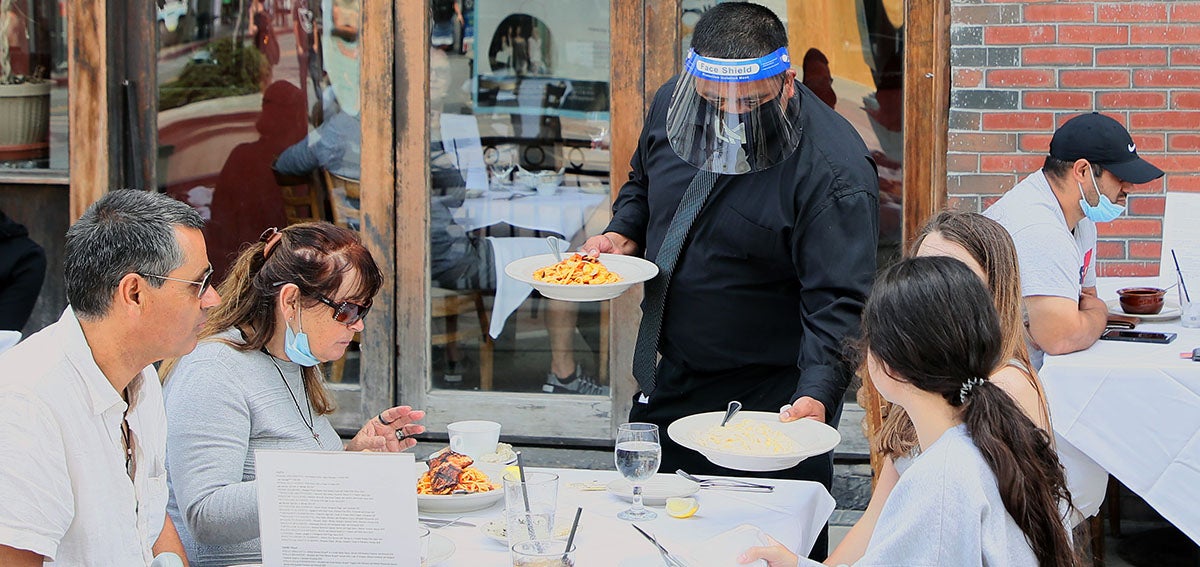
Waiter serves meal to customers wearing PPE

A waiter wearing a face shield and mask to protect himself and others from the coronavirus serves diners at a restaurant in Santa Monica, California, on June 21, 2020. Photo: David Livingston / Getty Images

Stories that caught our attention.

It’s a scary thing to go back and know you have low immunity.

—Patti Hanks, Virginia furniture store worker

Twelve million adults who are not working live with those higher risks in households with at least one full-time worker, thereby exposing them indirectly to the infection risks of housemates doing customer-facing or other service jobs during a pandemic.

The ability to earn income from home is a privilege, and the “impossible choice between lives and livelihoods falls mainly to lower-wage workers in service industries,” KFF President and CEO Drew Altman wrote in Axios. Here’s what it’s like to work in four jobs that require face-to-face interaction during the worsening COVID-19 crisis.

Patti Hanks, Virginia

Soon after finishing chemotherapy for ovarian cancer, Patti Hanks had to go back to her job processing transactions at a furniture and appliance store in Virginia. She was nervous about returning to work during the pandemic, but she couldn’t afford to lose employer-sponsored health insurance.

“It’s a scary thing to go back and know you have low immunity,” Hanks, 62, told Sarah Kliff in the New York Times. “But when it all boils down to it, I don’t think COVID-19 is going away any time soon. I don’t think you can hide from it.”

Nearly 60% of Americans under 65 have employer health coverage, according to the Peterson-KFF Health System Tracker. For people like Hanks, that makes work and health interdependent. Even without her furniture store job, she likely makes too much income from other sources (rental properties and raising cattle) to qualify for Medicaid.

So Hanks continues reporting to work. She wears a mask in the store, maintains distance from customers, and sanitizes shared objects like chairs and pens frequently. Still, there’s only so much she can control. The store has been busy since Virginia began lifting stay-at-home restrictions in May, and Hanks has assisted at least one customer who appeared to be unwell.

“You can’t crawl into a hole,” she told Kliff. “I think we’ve done everything we can to protect ourselves. . . . So I’ll just keep going.”

David Smith, Michigan

In normal times, David Smith, co-owner of the European-style eatery Café Muse in the Detroit suburb of Royal Oak, has one of his younger employees seat customers for dine-in service. But times are certainly not normal — nor are interactions with customers.

“I’ve been trying to do most of the seating, because it’s just really difficult when you have like an 18- or 19-year-old [employee] at the front having to enforce mask wearing,” he told Brenna Houck for her article in Eater Detroit.

The restaurant has been open for dine-in service for a only few weeks, and Smith has already had to call the police on an irate customer who refused to wear a mask when picking up a to-go order. Smith’s business partner, Greg Reyner, stepped in to ask the customer to wait for his food outside, and when the man refused, Reyner asked him to leave. The customer later called the restaurant and allegedly threatened the staff, leading Smith and Reyner to call the police.

The state of Michigan allowed restaurants and bars to reopen for indoor and outdoor dine-in service on June 8. Governor Gretchen Whitmer mandated that each customer must “wear a face covering over his or her nose and mouth . . . when in any enclosed public space, unless the individual is unable medically to tolerate a face covering.” Additionally, businesses are permitted to deny entry or access to anyone who refuses to comply with the mask rule.

That doesn’t mean it’s easy or pleasant to enforce the rule for the safety of staff and customers. “It is very upsetting,” Smith told Houck. “You’re shaking after having these conversations with people, because you just don’t know. What if someone got killed because they told [a customer] to wear a mask? You worry about it all the time.”

Amanda, Missouri

Nursing homes and assisted living facilities are hot spots for COVID-19 cases. Amanda (who asked that her last name be withheld) is a receptionist at a nursing home in St. Louis, and the last few months have been extremely stressful as she and her colleagues work to keep the facility free of COVID-19.

“I can’t sleep nowadays because I dream about being the cause of people dying,” she told Vox’s Luke Winkie. “That’s a horrifying thought for me. I’ve written up my resignation several times. But I don’t have the heart to do it because they need me there.”

So far, the nursing home has not had any cases, and Amanda attributes this to the facility’s early adoption of safety precautions. In February, the administrators advised staff to use personal protective equipment at work, regularly disinfect surfaces, and shelter in place at home when they weren’t working. The facility stopped admitting visitors, and when families dropped off presents for Mother’s Day, staff put the presents on hold for 24 to 72 hours before giving them to the residents.

[My family and I] never even hugged one another when I went to the emergency department because I don’t want to infect them.

—Marcial Reyes, emergency room nurse

Amanda and her colleagues take precautions not only at work, but also at home. “I won’t let my kids see their friends,” she told Winkie. “A lot of people are letting their kids see other kids, but I nipped that in the bud right away. My colleagues have done the same.”

As states reopen, Amanda is increasingly worried about the health of senior citizens like the ones she cares for. “I believe that our government hasn’t done anything,” she said. “Why don’t we have rapid testing in our facility right now? They should be in every hospital, every nursing home, and they should continue to produce them until they’re in schools and courthouses.”

Marcial Reyes, California

Fourteen years ago, Marcial Reyes emigrated from the Philippines to the US on a work visa to become a nurse. He’s been a US citizen for eight years. He was working as an emergency room nurse in Fontana, California, when the COVID-19 crisis struck, Josie Huang reported in LAist.

Reyes knew he was at high risk of contracting the coronavirus. When he started experiencing shortness of breath, he quarantined himself on the first floor of his house, away from his wife Rowena, who is also a nurse, and their five-year-old son. But the symptoms kept getting worse, and eventually he drove himself to the hospital — to the same emergency room where he usually cares for patients.

His health deteriorated so rapidly over the next few days that his doctors put him in a medically induced coma and hooked him up to a ventilator for 10 days. “[My family and I] never even hugged one another when I went to the emergency department because I don’t want to infect them,” he told Huang.

In California, nearly one in five registered nurses is of Filipino descent, according to a 2016 survey (PDF) by the California Board of Registered Nursing. California hospitals have recruited heavily from the Philippines for more than a century. Filipino nurses have stepped up to work in underserved areas and work on the front lines of health crises like the AIDS epidemic and COVID-19.

“It’s not uncommon for many Filipino families to produce multiple health care workers,” Huang wrote. The Reyes family is just one such example. Rowena Reyes and their son both also tested positive for COVID-19, though they recovered without hospitalization.

Marcial Reyes’ recovery will be much slower and more complicated. He needs to regain strength in his legs, and he still struggles with writing, Huang reported. Still, he is looking forward to the day when he can return to the emergency room as a nurse.


Pre And Post Coronavirus Unemployment Rates By State, Industry, Age Group, And Race

https://www.forbes.com/sites/mikepatton/2020/06/28/pre-and-post-coronavirus-unemployment-rates-by-state-industry-age-group-and-race/#65c42c6555eb

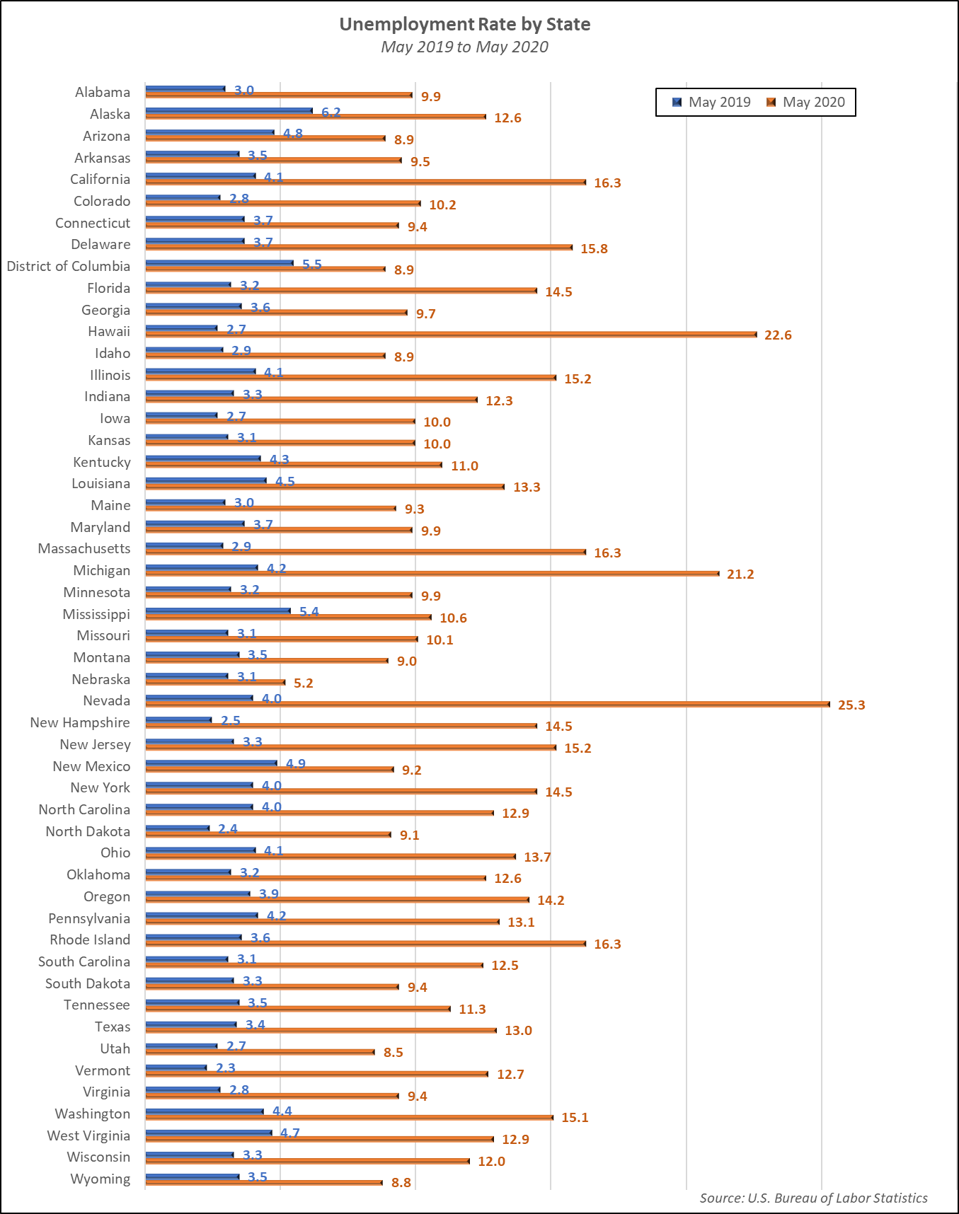
Unemployment by State-May 2019 to May 2020

The coronavirus has decimated the U.S. economy and benched nearly 40 million American workers. In the past several days, the U.S. has logged its highest number of new Covid-19 cases since the pandemic began. These combined with other factors, which we will discuss, is jeopardizing the future employment of millions of workers and the viability of thousands of businesses. Here’s how unemployment has increased for every state, industry, age group, and race, and why.

Unemployment by State

The coronavirus and subsequent stay at home orders hit the labor force especially hard. As states attempted to reopen, a resurgence in the virus is causing many businesses to close again, some by choice, others by government mandate.

Nevada has been hit the hardest as the unemployment rate in the Silver State rose from 4.0% in May 2019 to a whopping 25.3% in May 2020. Nevada’s economy is heavily reliant on leisure and hospitality, which had the brunt of the job losses. Hawaii, the second hardest hit state saw unemployment rise from 2.7% in May 2019 to 22.6% in May 2020. Which is the only other state with unemployment above 20% in May 2020? Michigan, where unemployment rose from 4.2% to 21.2% year over year. What state has fared best? Nebraska, which also has one of the most diverse economies of all states. Deriving nearly 50% of its total GDP from five different industries, unemployment in the Cornhusker State rose from 3.1% to a modest 5.2% from May 2019 to May 2020. Unemployment numbers for all states are shown in the following chart.

Unemployment by Industry

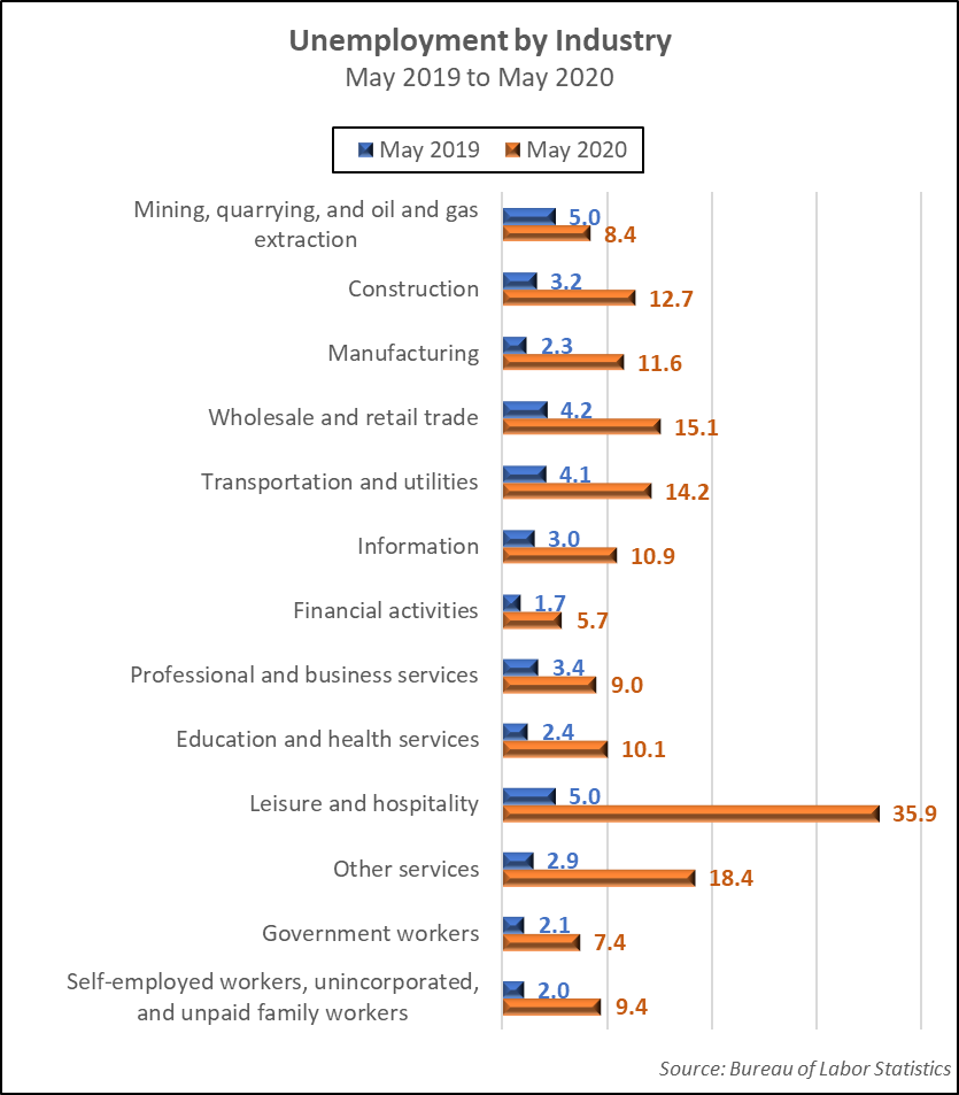
As mentioned in the previous section, the states that have fared best either have a more diverse economy or do not rely heavily on industries that have been hardest hit by the coronavirus. The most negatively affected is the leisure and hospitality industry where unemployment rose 618% from a low of 5.0% in May 2019 to a staggering 35.9% in May 2020. At a distant second, but still reeling, is the wholesale and retail trade industry, which saw unemployment rise from 4.2% to 15.1% during the same period. The rest of the industries are listed in the following chart.

Unemployment by Industry-May 2019 to May 2020

Unemployment by Age Group

Businesses need two things to exist: workers and customers. Without customers, there is no need for workers or the business for that matter. Some businesses require highly skilled workers while others operate well using unskilled labor. It is this unskilled labor group that has been hardest hit.

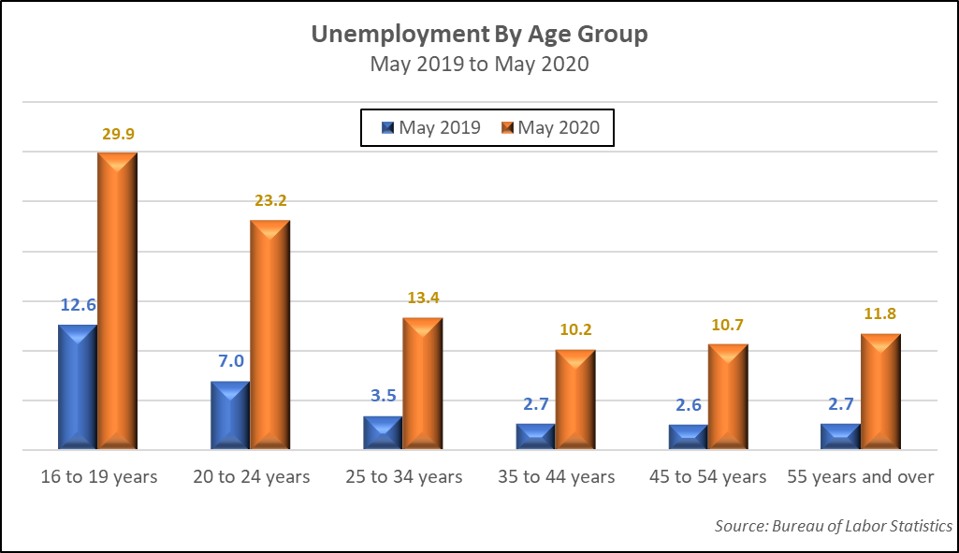
The greatest rise in unemployment is among workers under age 25. This is likely due to three factors. Younger workers typically have fewer marketable skills, less work experience, and less seniority. Many of these workers are in industries that have felt the greatest pain. Unemployment rates by age group are contained in the following chart.

Unemployment by Age Group-May 2019 to May 2020

Unemployment by Race/Ethnicity

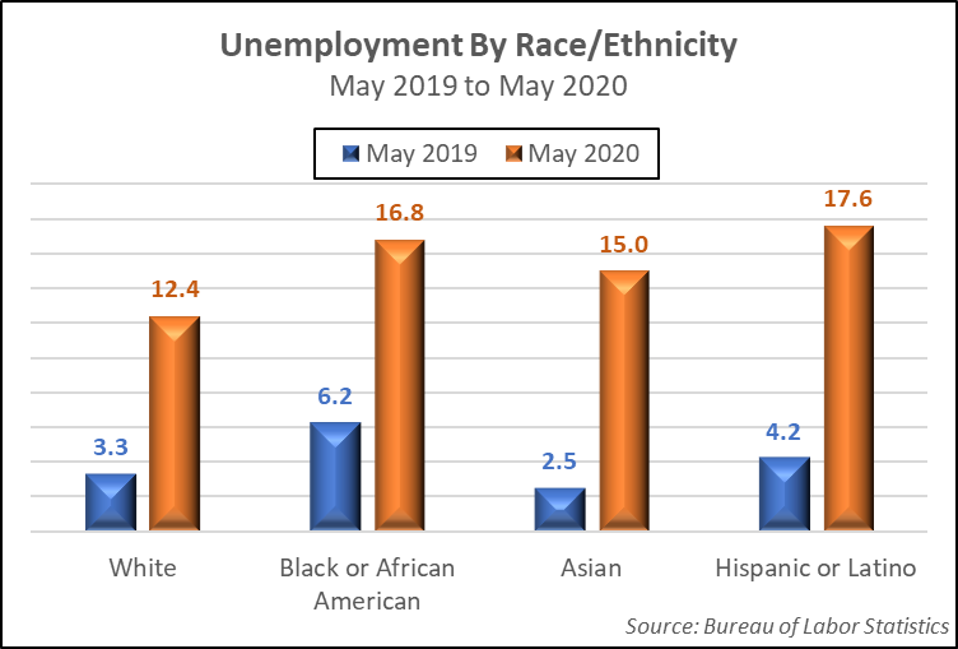
Question: Prior to Covid-19, was unemployment among blacks / African Americans at a record low as President Trump has claimed? Using the available data, which extends back to January 1972, the answer is yes. This new record low was achieved in October and November of 2019 when unemployment among black or African American workers fell to 5.1%. The previous record low was 5.2% in December 1973. The current rate is 16.8%, which is less than the highest rate of 20.7% logged in December 1982. The most recent high in unemployment for this group was 19.3% in March 2010. It has been steadily declining since then. Numbers for White, Asian, and Hispanic or Latino and black or African American workers are listed in the following chart.

Unemployment by Race or Ethnicity-May 2019 to May 2020

Businesses need workers, workers need businesses, and both depend on customers. Since the pandemic began, consumer demand has fallen sharply. With the probability that a vaccine will not be available until early 2021 at the soonest, plus a disregard for recommended safety protocols by many individuals, namely wearing masks and social distancing, it is highly unlikely that the economy will return to normal for several years.

Will the president continue to hold rallies? Will he set an example by wearing a mask? Will the protests and violence continue? Will other large gatherings continue? Unless Americans make a collective and conscious choice to mask up and social distance, we will be forced to live in a depressed economy for longer than necessary. The choice is up to us.


Pandemic Graphic of the Day

Image may contain: text

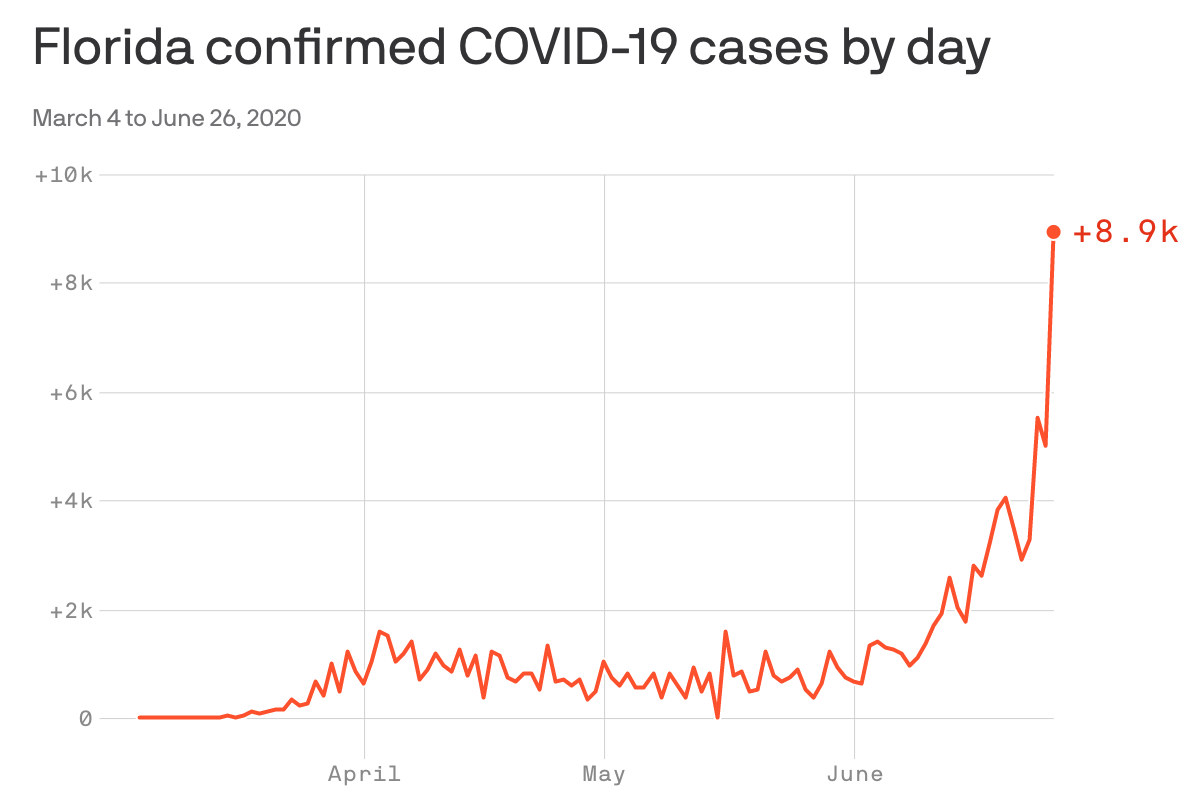
Florida reports massive single-day increase of 9,000 coronavirus cases

https://www.axios.com/florida-single-day-increase-coronavirus-cases-a6d5578b-527c-4be4-88e6-eb7289a7be97.html?stream=health-care&utm_source=alert&utm_medium=email&utm_campaign=alerts_healthcare

Florida reports massive single-day increase of 9,000 coronavirus ...

Florida on Friday reported nearly 9,000 new coronavirus cases in 24 hours totaling 122,960 cases.

Why it matters: The state is one of many that are experiencing a fresh surge of infections.

Go deeper: The coronavirus surge is real, and it’s everywhere


Coronavirus Dashboard

https://www.axios.com/coronavirus-latest-news-quick-highlights-57a186a3-7547-45bf-852a-83019849d8d5.html

Coronavirus dashboard: Catch up fast - Axios


  1. Global: Total confirmed cases as of 9 a.m. ET: 9,635,935 — Total deaths: 489,922 — Total recoveries — 4,861,715 — Map.
  2. U.S.: Total confirmed cases as of 9 a.m ET: 2,422,312 — Total deaths: 124,415 — Total recoveries: 663,562 — Total tested: 29,207,820 — Map.
  3. Public health: America’s workers still aren’t protected from the coronavirus — Gilead says coronavirus drug should likely cost no more than $2,800.
  4. White House: Trump administration asks Supreme Court to overturn ACA during pandemic.
  5. Sports: Universities cut sports teams, as they struggle with coronavirus fallout.


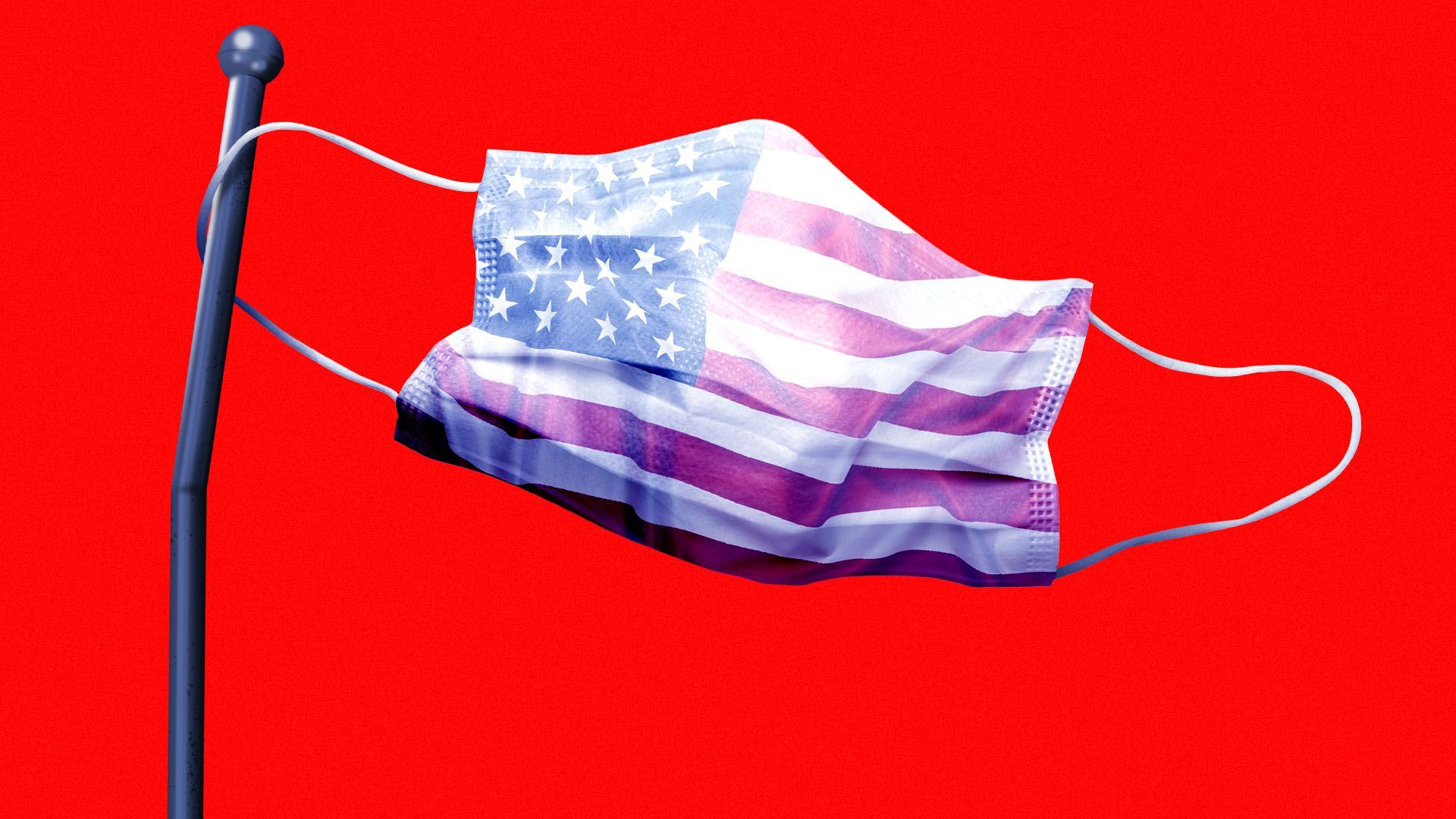
The U.S. divide on coronavirus masks

https://www.axios.com/political-divide-coronavirus-masks-1053d5bd-deb3-4cf4-9570-0ba492134f3e.html

Politics, not public health, drive Americans' attitudes toward ...

Mask-wearing has become the latest partisan division in an increasingly politically divided pandemic.

Why it matters: It’s becoming increasingly clear that wearing even a basic cloth mask is one of the most effective ways to prevent the spread of COVID-19. But whether or not people are willing to wear one has less to do with the risk of the pandemic than their political affiliation.

By the numbers: Results from months of the Axios-Ipsos coronavirus polls show a clear and growing political divide between Democrats and Republicans on mask-wearing habits.

  • Nationally, the percentage of Democrats who reported wearing a mask all the time when leaving home rose from 49% between April 10 and May 4 to 65% between May 8 and June 22.
  • During the same time period, the percentage of Republicans who reported constant mask-wearing rose from 29% to just 35%.

Context: The political divide Americans are reporting on mask use echoes one seen within nearly all levels of the government.

  • President Trump has not been seen to wear a mask, and he told Axios last week that attendees at his Tulsa campaign event on June 20 should “do what they want” on masks, which were not required at the rally.
  • Governors in many red states like Nebraska have refused to mandate facial masks in public, even as cases have begun to rise in recent weeks. At the same time, leaders in blue states — especially those that grappled with large outbreaks of COVID-19 — have urged residents to wear masks, with California Gov. Gavin Newsom mandating their use last week as cases in the state passed 4,000 a day.
  • The situation is even more divided at the local level, with leaders of red towns in blue states pushing back against mask mandates, and vice versa.

Flashback: Some of the blame for the divide can be traced back to muddled public health messaging on mask use in the early stages of the pandemic, when Americans were urged not to go out and buy masks in bulk because of concerns that there wasn’t enough personal protective equipment for front-line health care workers.

  • Those fears were real, as government virus expert Anthony Fauci pointed out in congressional testimony on Tuesday. And public health officials worried that pushing masks would inadvertently encourage Americans to continue going out in public at a moment when lockdowns demanded they stay inside.
  • Like the divide among experts on whether mass protests would increase coronavirus cases, just the perception that health advice might be based on politics rather than science gives cover to those who would forego masks, especially since the outbreak itself initially seemed like a blue state problem.

Health experts now know that cloth masks are most effective not so much at protecting individuals from infection as protecting the community from infected individuals. But that makes masks as much about social signaling as they are about public health.

  • Conservatives who prize individual autonomy over social responsibility experience “a massive pushback of psychological resistance” when presented with mask mandates, says Steven Taylor, the author of “The Psychology of Pandemics.”
  • That reaction is reinforced “if leaders like Trump downplay the significance of COVID-19 or if they won’t wear masks,” says Taylor. As a result, wearing a mask in conservative communities means visibly going against public opinion, while the opposite is true in communities where mask use is common.
  • The Axios-Ipsos data reflects this reality, showing that while Republicans in blue states use masks less than Democrats, they wear them at higher rates than Republicans in red states, just as Democrats in red states use masks at lower rates than Democrats in blue states.

What to watch: The one factor that seems capable of breaking the political deadlock is the outbreak itself. As cases have skyrocketed in red states like Arizona recently, there’s been a significant increase in Google searches for masks.


America’s workers still aren’t protected from the coronavirus

https://www.axios.com/americas-workers-vulnerable-coronavirus-944e3451-4458-4f1d-83d2-c86a1beb1117.html

America's workers still aren't protected from the coronavirus - Axios

Essential workers have borne the brunt of the coronavirus pandemic for months, but the U.S. is still doing relatively little to protect them.

Why it matters: With no end to the pandemic in sight, America’s frontline workers still must choose between risking their health and losing their source of income.

Driving the news: The Trump administration said this week that health insurers aren’t required to cover coronavirus diagnostic tests performed as part of workplace safety or public health surveillance efforts.

  • It didn’t say who is supposed to pay for these tests. If employers are stuck footing the bill, that makes the testing less likely to happen.

The big picture: There’s been no national effort or initiative to protect essential workers, and America is still failing to implement basic public health measures as new cases skyrocket.

  • Masks have become a political flashpoint and aren’t required in many of the states that are emerging coronavirus hotspots.
  • That means essential workers go to work each day without any guarantee that the people they’re interacting with will take one of the most basic and effective steps to prevent transmission of the virus.
  • No one is even talking about mass distribution of personal protective equipment beyond health care workers. And even some health care workers — particularly those who work in nursing homes — don’t have the protective gear that they need.

More broadly, the financial incentives for frontline workers, particularly those who are low-income, to keep working make it nearly impossible for them to avoid health risks.

  • At least 69 million American workers are potentially ineligible for the emergency paid sick leave benefits that Congress passed earlier this year, per the Kaiser Family Foundation.
  • An estimated 25-30 million people — particularly lower-wage workers in service industries — are unable to work from home but also face a high risk of severe infection, KFF’s Drew Altman wrote earlier this week.

What we’re watching: The line between essential workers and those who are required to return to the office by their employer has become blurry, and millions more Americans are facing dilemmas similar to those faced by grocers and bus drivers.

  • The sickest — and thus most vulnerable — Americans may feel the most pressure to return to work, as that’s often where they get their health insurance, the NYT points out.
  • Nearly a quarter of adult workers are vulnerable to severe coronavirus infections, per KFF.

The bottom line: Essential workers and their families will continue to feel the impact of America’s coronavirus failures most acutely.

Go deeper: “Disposable workers” doing essential jobs


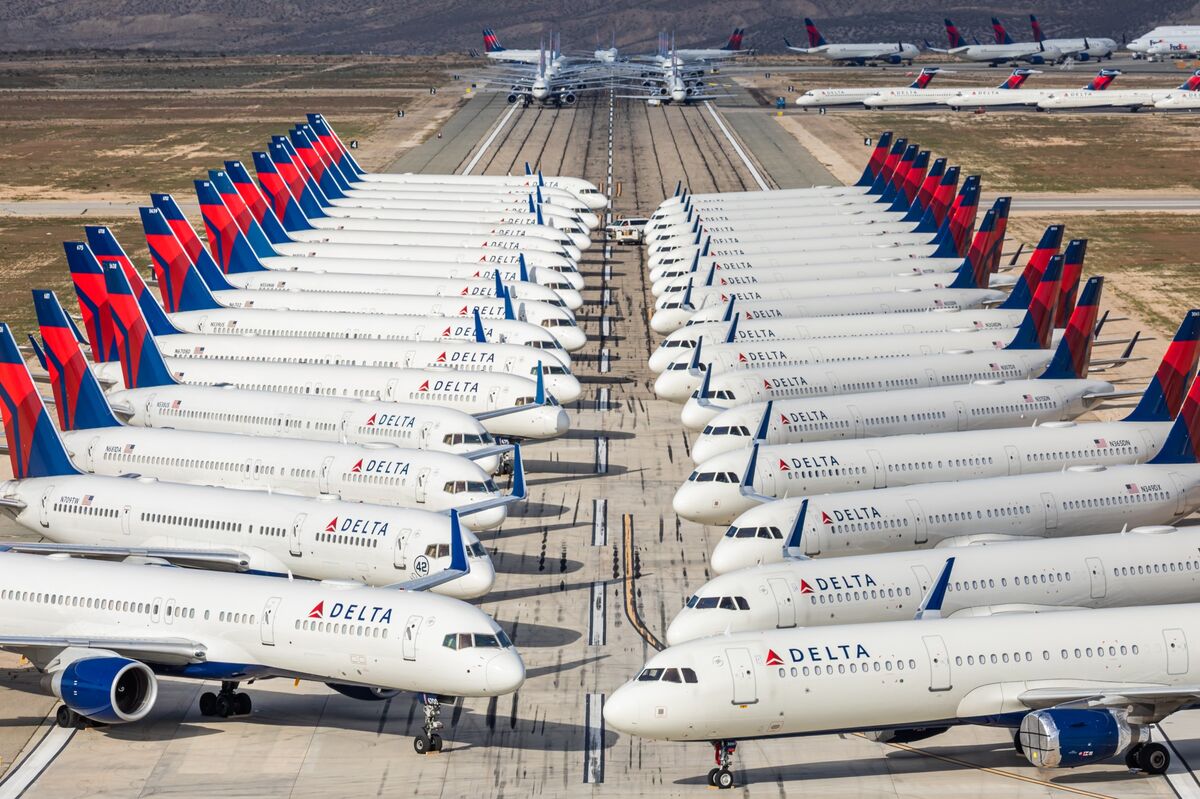
500 Delta Airline Staff Test Positive for Coronavirus, 10 Dead

https://www.newsweek.com/500-delta-airline-staff-test-positive-coronavirus-10-dead-1513016

Coronavirus Travel: What Happens to Planes Grounded by Covid-19 ...

Hundreds of staff at Delta Air Lines have tested positive for the novel coronavirus. Ten workers have died after contracting the virus, the company confirmed.

According to a transcript of the company’s latest shareholders meeting held on a phone conference June 18, Delta’s Chief Executive Officer Ed Bastian said: “We have had approximately 500 employees that have tested positive for COVID-19. The vast majority have recovered, thankfully. Unfortunately, we have lost 10 employees to the disease.”

Speaking to Newsweek, a spokesperson for Delta noted the latest tally of infected employees is “inclusive of all positive cases reported to us since March out of our 90,000 employees worldwide.

“Since initial reporting in March, Delta has seen a significant reduction in positive employee COVID-19 tests and is currently tracking at a rate five times lower than the national average.”

Bastian said: “We have recently announced that we are going to be testing all of our employees. In fact, we started this week in Minneapolis for both the blood serology, as to whether they have already been exposed to the disease and have antibodies, as well as the active test to see if they, indeed, are carrying the virus. And that test is being led by Mayo Clinic.”

“And we are also working very closely with Quest Diagnostics in that we will have all 90,000 of our employees available to be tested. And from getting a good baseline, we will be able to provide better protection for our people and then, eventually, certainly, our customers as we go forward,” Bastian confirmed on the call.

It is unknown whether the infected staff members are cabin crew or ground-level workers and which flights they may have been operating. The majority of Delta’s employees are reported to be flight attendants, pilots and airport agents, while less than 10,000 are administrative staff, most of whom are working from home, according to Bastian.

“Given that we are a frontline customer service business, the majority of our employees need to be at work to conduct business,” Bastian said.

On Monday, Delta announced it will resume flights between the U.S. and China. The carrier will operate a service between Seattle and China’s Shanghai Pudong International Airport via South Korea’s Incheon International Airport twice a week from June 25.

From July, the airline will operate weekly flights from Seattle and Detroit to Shanghai, also via Incheon International Airport. Delta is the first U.S. airline to resume services between the U.S. and China since the temporary suspension of flights in February following the outbreak.

Earlier this month, Delta announced it will be suspending flights to 11 U.S. airports from July 8 while “customer volume is significantly reduced,” the carrier confirmed in a statement.

These airports make up five percent of the airline’s domestic operations. “All of these airports will continue to receive service from at least one other carrier after Delta suspends its operations,” the statement added.

The 11 airport locations include Aspen in Colorado (ASE), Bangor in Maine (BGR), Erie, PA (ERI), Flint in Michigan (FNT), Fort Smith in Arkansas (FSM), Lincoln in Nebraska (LNK), New Bern/Morehead/Beaufort in North Carolina (EWN), Peoria in Illinois (PIA), Santa Barbara, California (SBA), Scranton/Wilkes-Barre, Pennsylvania (AVP) and Williston in North Dakota (XWA).

“Delta has announced an 85 percent reduction in our second-quarter schedule, which includes reductions of 80 percent in U.S. domestic capacity and 90 percent internationally,” including service to Canada’s Ottawa International Airport in the province of Ontario which was suspended indefinitely from June 21, the statement confirmed.

Last month, Delta also announced the temporary suspension of operations at airports in locations with “more than one Delta-served airport to allow more frontline employees to minimize COVID-19 exposure risk while customer traffic is low.”

“Delta will continue providing essential service to impacted communities via neighboring airports,” the statement said.

The 10 airports where operations were temporarily suspended include Chicago Midway International Airport (MDW) in Illinois, Oakland International Airport (OAK), Hollywood Burbank Airport (BUR) and Long Beach Airport (LGB) in California, T. F. Green International Airport (PVD) in Rhode Island, Westchester County Airport (HPN) and Stewart International Airport (SWF) in New York, Akron-Canton Airport (CAK) in Ohio, Manchester-Boston Regional Airport (MHT) in New Hampshire and Newport News/Williamsburg International Airport (PHF) in Virginia.

Services at Canada’s Saskatoon International Airport were also temporarily suspended last month.

Delta extended its waiving of change fees and the flexibility to travel through September 30, 2022, to customers with canceled flights through September 2020.

“Eligible customers include those who have upcoming travel already booked between now and September 30 as of April 17, 2020,” and those with “canceled travel on flights between March 2020 and September 2020,” the airline said.

From May 4, Delta has required all passengers to wear a face mask or other appropriate face covering on its flights. Other safety measures introduced include sanitizing all aircraft with electrostatic spraying before departure and disinfecting all high-touch points throughout the aircraft interior.

Aircraft are also equipped with “state-of-the-art air circulation systems with HEPA [high efficiency particulate absorbing] filters that extract more than 99.99 percent of particles, including viruses,” the company said in a statement Monday.

Last week, American Airlines flight crew asked a passenger to disembark a plane after the man refused to wear a mask on board a flight.

In the same week, a survey by the International Air Transport Association (IATA) found that 45 percent of travelers said they would fly within two months after the novel coronavirus is no longer seen as a threat, down from 60 percent in April.

The novel coronavirus, first reported in Wuhan, China, has infected more than 9.2 million people across the globe, including over 2.3 million in the U.S. More than 477,800 have died following infection, while over 4.6 million have reportedly recovered from infection, as of Wednesday, according to the latest figures from Johns Hopkins University.


Houston ICUs at 97 Percent Capacity as Texas Coronavirus Cases Break Records

https://www.newsweek.com/houston-icus-90-percent-capacity-texas-coronavirus-cases-break-records-1513077

Coronavirus Briefing: What Happened Today - The New York Times

Almost all intensive care unit beds at Houston hospitals were occupied on Wednesday as Texas reported a record number of statewide patient admissions related to the novel coronavirus.

During a City Council meeting Wednesday morning, Houston Mayor Sylvester Turner said 97 percent of the city’s ICU beds were filled. A report from the Texas Medical Center (TMC) said 27 percent of those beds were occupied by COVID-19 patients.

According to data published earlier this week by the TMC, a network of health care and research institutions based in Houston, 90 percent of the city’s ICU beds were filled as of Monday. Virus patients accounted for more than one-quarter of those occupancies.

The TMC’s latest report incorporated ICU admission numbers from seven affiliate hospitals in the Houston area: CHI St. Luke’s Health, Harris Health System, Houston Methodist, MD Anderson Cancer Center, Memorial Hermann, Texas Children’s Hospital and University of Texas Medical Branch. The hospitals can collectively admit 1,330 ICU patients at regular capacity, when 70 to 80 percent of total beds are typically occupied, according to the TMC.

The TMC’s Monday report noted that an additional 373 beds could become available under its “sustainable surge” plan, a procedure that would indefinitely increase ICU capacities as needed during the pandemic. Another 504 beds could be added to Houston ICUs under an emergency “unsustainable surge” plan, which the TMC would implement to address a “significant, temporary” influx of patients, according to its report.

Houston’s heightened ICU admissions were reported as cases and hospitalizations related to the coronavirus are spiking throughout Texas. Ongoing data released by the Texas Department of State Health Services show that of all the state’s regions, the Houston area is one of the hardest hit in terms of virus incidence and hospital admissions. The latest DSHS data estimated that 179 ICU beds were available at medical facilities located in the Greater Houston area as of Tuesday afternoon.

The number of patients hospitalized with the virus peaked in Texas on Tuesday, as the DSHS confirmed more than 4,000 current admissions. The state has set new records for hospitalizations related to COVID-19 every day since June 12, when 2,166 patients were reported.

On Monday, the Houston Health Department said hospitalizations due to the virus had increased 177 percent throughout the surrounding county since May 31. It also noted a 64 percent increase in ICU patients who had tested positive for the virus.

Texas also saw its highest daily increase in virus cases on Wednesday, with 5,489 new diagnoses confirmed. The latest single-day record surpassed its previous high of 4,430 new cases reported last Saturday. Cumulative diagnosis data reflected in graphics published by the DSHS show a sharp upturn in cases reported statewide since the start of June, when about 64,800 total cases were confirmed. As of Tuesday afternoon, the number had risen to more than 120,300. The DSHS estimated that roughly 47,400 of those cases remain active.

Businesses in Texas started to reopen at the beginning of May. Although Texas Governor Greg Abbott has not required residents to wear face masks in the state’s public spaces during the reopening process, he did encourage people to do so earlier this week in response to increasing case counts and hospitalizations.

“Wearing a mask will help us to keep Texas open. Not taking action to slow the spread will cause COVID to spread even worse, risking people’s lives and ultimately leading to the closure of more businesses,” he said during a news conference on Monday.